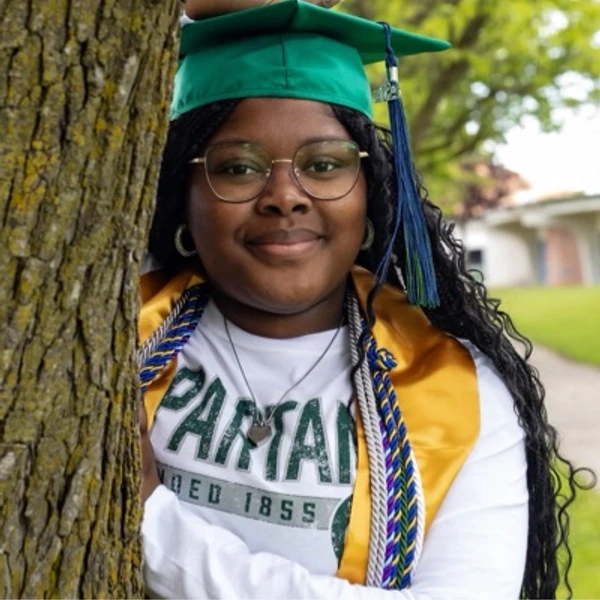
user profile avatar

Karleigh Anderson

1x

Finalist

General information

Hobbies & Interests

  • Acting And Theater
  • Public Speaking
  • Community Service And Volunteering
  • Student Council or Student Government
  • Government

Reading

  • Academic
  • Art
  • Christianity
  • Education
  • Family

I read books multiple times a month.

Bio

I am a sophomore at Michigan State University studying Social Relations and Policy with a passion for advocacy, leadership, and creating positive change in my community. As a first-generation college student, I am proud of the path I am creating for myself and determined to use my education to create opportunities for others. My commitment to service has grown through my volunteer experience with the Freedom School, where I have worked with young students and helped create engaging educational and leadership activities. This experience has shown me the importance of mentorship, education, and encouraging young people to recognize their own potential. I have also had the opportunity to serve as a Saginaw County Youth Commissioner, where I represent young people and contribute to conversations surrounding issues that affect my community. This role has strengthened my leadership, communication, and advocacy skills while showing me the importance of ensuring that young voices are heard. My long-term goal is to build a career centered around policy, advocacy, and social change. I want to use my education and experiences to help address inequalities, support underserved communities, and create opportunities for future generations. Scholarships would help me continue my education and gain the experiences necessary to turn my passion for service into lasting impact. I want my success to be measured not only by what I accomplish for myself, but also by the opportunities I can help create for others.

Education

Michigan State University

Bachelor's degree program

2025 – 2029

Majors:
  • Public Policy Analysis

Delta College

Associate's degree program

2024 – 2025

Heritage High School

High School

2021 – 2025

Miscellaneous

Desired degree level:
Bachelor's degree program
Medical school interest:
No

Career

  • Student Leader Intern

    Public Relations and Communications · Charles McNair Freedom Schools

    Jan 2026 – Jan 2026

Miscellaneous

Dream career field:
Public Policy
Work experience:
4 years
Has nursing license:
No
Sloane Stephens Doc & Glo Scholarship
The impact I want to make is rooted in one belief: education should not only change the life of the person receiving it; it should create opportunities for that person to change the lives of others. I want to use my education, career, and experiences to become someone who opens doors for people who may not have known those doors existed. As a Social Relations and Policy major at Michigan State University, I am learning to look beyond individual circumstances and understand the systems that shape people's opportunities. My education has strengthened my interest in law, public policy, and community advocacy because I have realized that lasting change requires more than identifying problems. It requires understanding why those problems exist and having the knowledge and courage to change them. One of the communities I care most about is my own. My experiences working with young people and serving my community have shown me how much potential exists in people when they are given encouragement, resources, and someone who believes in them. Working with youth has especially influenced the way I think about my future. A child who has access to a mentor, a safe environment, educational resources, or simply an adult who listens to them may approach their future completely differently. I want to be part of creating more of those opportunities. The people who inspire me are the individuals who have used their own success as a way to serve others. I am inspired by educators, community leaders, mentors, family members, and everyday people who continue showing up for their communities even when their work is not always recognized. They have taught me that leadership is not about having the loudest voice or the most impressive title. Leadership is about responsibility. It is about recognizing that if you have knowledge, resources, or influence, you have an opportunity to use them for something greater than yourself. My long-term goal is to pursue a career in law and public policy. I want to understand the systems that influence education, economic opportunity, housing, and access to resources and use that knowledge to advocate for meaningful change. I also want to mentor young people and help them see education as a tool for creating choices, not simply a requirement for obtaining a job. I want young people to understand that their circumstances may influence where they begin, but they do not have to determine where they finish. I know I cannot solve every problem by myself. My vision is to build partnerships among schools, community organizations, legal professionals, businesses, universities, and the people most affected by the issues being addressed. I want to help create programs that provide mentorship, financial education, career preparation, legal resources, and pathways to higher education and entrepreneurship. Ultimately, I want my education to become bigger than a degree hanging on a wall. I want it to become a tool for service. My definition of success is not simply reaching a position of influence; it is reaching that position and using it to make the path easier for the people coming after me. I want to leave every community I touch with more opportunity, more knowledge, and more hope than it had before I arrived.
Sabrina Carpenter Superfan Scholarship
I am a fan of Sabrina Carpenter because I admire how she has grown into an artist who is completely comfortable being herself. What inspires me most about her career is not just her music, but the journey it took for her to get to where she is today. She started as a young actress and performer, experienced years of being recognized but not always receiving the same level of attention as others around her, and continued working until she created a space that was uniquely hers. Watching that growth has reminded me that success does not always happen on someone else’s timeline. As a young woman figuring out college, my career, and the person I want to become, Sabrina’s journey has impacted me because I sometimes feel pressure to have everything figured out already. Her career reminds me that being overlooked at one point does not mean you will always be overlooked. There can be seasons where you are working, learning, and improving without receiving immediate recognition. That does not make the work meaningless. I also admire Sabrina’s confidence. She has developed a personality and artistic style that feel authentic to her rather than trying to fit into what everyone expects her to be. That has encouraged me to become more comfortable with my own personality and ambitions. I do not have to make myself smaller to make other people comfortable, and I do not have to follow someone else’s definition of success. Her career has also shown me the importance of persistence. Sabrina has experienced criticism, comparisons, and moments when people questioned her abilities, yet she continued developing her craft. Eventually, the qualities that may have once made her different became part of what made her successful. That lesson is meaningful to me because I want to build a career in law and public policy while making a positive impact on my community. I know there will be times when my goals seem difficult or when my efforts are not immediately recognized. Sabrina’s career reminds me that the path to success can be unpredictable, and being patient with the process is just as important as working hard. I am a fan of Sabrina Carpenter because she represents more than entertainment to me. She represents growth, confidence, and the courage to create your own definition of success. Her career has encouraged me to trust my timing, embrace who I am, and keep working toward the future I envision, even when I cannot see exactly how I will get there.
Olivia Rodrigo Fan Scholarship
One lyric from Olivia Rodrigo’s GUTS that resonates deeply with my experience is from “all-american b*tch”: “I know my age and I act like it.” While the lyric is simple, it represents something I have had to learn throughout my transition from high school into college: growing up does not mean having everything figured out. At nineteen, I am constantly reminded that I am becoming an adult while still learning who I am, what I believe, and what I want my future to look like. My journey has been shaped by ambition. I have always wanted to accomplish something meaningful with my life, and I have set high expectations for myself. Now that I am in college, those expectations sometimes feel heavier. I am working toward a degree, thinking about law school, building professional experience, applying for scholarships, and trying to create a future that I can be proud of. There are moments when I feel confident that I know exactly where I am going, and there are other moments when I wonder if I am doing enough. Rodrigo’s lyric reminds me that there is nothing wrong with being my age and still figuring things out. What makes the song especially meaningful is the way it challenges the expectation that a young woman has to fit perfectly into one version of herself. There can be pressure to be successful but not intimidating, confident but not too outspoken, independent but still agreeable, and mature while somehow never making mistakes. I have experienced the pressure to appear like I have everything under control even when I am still learning. College has taught me that maturity is not pretending to have all the answers. Sometimes maturity is admitting that I need help, changing my plans, learning from mistakes, and continuing forward. One of my biggest triumphs has been recognizing that I am capable of more than I once believed. Being involved in my community and gaining experiences that allow me to work with and serve others have helped me understand that my voice has value. I have become more confident in expressing my goals and taking opportunities that can help me reach them. At the same time, my journey has included uncertainty, pressure, and moments of self-doubt. I have had to learn that one setback does not determine my future. Not getting something right the first time does not make me unsuccessful, and changing direction does not mean I have failed. That is why this lyric resonates with me. I am nineteen, and I am allowed to act nineteen. I am allowed to be ambitious and uncertain, confident and still learning, independent and still need guidance. My journey is unique because I am not simply trying to become successful; I am trying to discover what success means for me while building a life that reflects my values. GUTS reminds me that growing up can be messy, but there is power in embracing that process instead of apologizing for it.
Joe Gilroy "Plan Your Work, Work Your Plan" Scholarship
My goals are to graduate from Michigan State University in 2028 with my degree in Social Relations and Policy, attend law school, build a career in law and public policy, and ultimately use my career to create greater opportunities for underserved communities. I want to become financially independent while also creating opportunities for my family and community. Reaching these goals will require intentional planning, education, professional experience, financial discipline, and a strong support system. My first priority is completing my undergraduate degree with strong academic performance. I currently have a 3.6 GPA, and I plan to maintain or improve it by using academic resources such as office hours, tutoring, study groups, advising, and writing support. I will also pursue internships, leadership opportunities, and community involvement that strengthen my understanding of policy and advocacy. During each academic year, I plan to apply for scholarships and paid internships so that I can gain experience without creating unnecessary financial burdens. Financial planning will be essential. My estimated annual college expenses include approximately $13,000 for books, supplies, transportation, and personal academic expenses beyond financial aid. I plan to cover these costs through scholarships, grants, part-time employment, internships, and careful budgeting. I will dedicate approximately $200 per month toward personal and academic expenses when possible, while building an emergency fund. My goal is to graduate from college with as little unnecessary debt as possible. After graduating in 2028, I plan to work in a position related to public policy, government, legal services, or advocacy while preparing for law school. This will allow me to gain professional experience, strengthen my résumé, develop relationships with mentors, and save money for future educational expenses. I will prepare for the LSAT using free and low-cost resources, practice exams, university resources, and, if financially possible, a structured preparation course. I will also apply broadly to law schools and seek scholarships, fellowships, and assistantships rather than relying solely on loans. During law school, my budget will prioritize tuition, housing, transportation, books, food, and professional expenses. I will compare financial-aid packages carefully and choose a school based on the overall value of the education, opportunities for public-interest work, employment outcomes, and total debt—not simply its name. I will also pursue summer internships, fellowships, and paid legal opportunities to gain experience and reduce financial pressure. I understand that plans sometimes change. If law school takes longer than expected or finances become a barrier, I will pursue related careers in public policy, government, nonprofit leadership, or community advocacy while continuing to work toward my long-term goals. If I receive an opportunity that changes my career direction, I will evaluate it based on whether it provides meaningful growth, financial stability, and the ability to serve others. Ultimately, my plan is built around flexibility without losing sight of my destination. I will measure my progress through my GPA, internships completed, scholarships earned, professional relationships developed, savings accumulated, and milestones toward law school. I know success will require patience and sacrifice, but with careful planning, mentorship, financial responsibility, and persistence, I believe I can turn my education into a career that creates lasting impact.
Arthur and Elana Panos Scholarship
My faith has been one of the strongest foundations in my life. As a Christian, I have learned that my relationship with God is not only about what I believe, but also about how I choose to live, treat others, and respond when life does not go according to my plans. There have been moments when I have questioned myself, felt uncertain about my future, or wondered whether I was capable of accomplishing the goals I had set for myself. During those moments, my faith has reminded me that I do not have to have everything figured out at once. I can trust God while continuing to work toward the purpose He has placed in my life. One of the greatest lessons my faith has taught me is perseverance. Being a college student and preparing for my future has challenged me in ways that I did not always expect. There are times when balancing responsibilities, academics, work, and my personal goals can feel overwhelming. My faith gives me the strength to keep going even when I cannot immediately see the outcome. Prayer allows me to step away from the pressure, reflect, and remind myself that a difficult season does not mean I am on the wrong path. My faith has also shaped how I understand service. I believe God calls us to use our gifts to help others, especially people who may not have the same opportunities or resources that we do. That belief is one reason I am passionate about pursuing a career involving law and public policy. I want to understand the systems that influence people's lives and use that knowledge to advocate for communities that have historically been overlooked or underserved. I do not want success to only benefit me. I want what I accomplish to create opportunities for others. As I enter my career, my faith will help me remain grounded in my values. A career in law and public policy can involve difficult decisions, competing interests, and situations where doing what is right may not always be the easiest or most profitable choice. My faith will remind me to lead with integrity, compassion, humility, and justice. It will challenge me to listen to people whose experiences may be different from my own and to remember that behind every policy, case, or statistic is a real person whose life can be affected by the decisions being made. Most importantly, I believe my faith will remind me that my career is a platform for purpose, not simply a measure of success. I want to work hard, achieve my goals, and make my family proud, but I also want my life to reflect the values I believe in. I pray that wherever my career takes me, I will have the courage to stand for what is right, the wisdom to make meaningful decisions, and the compassion to use my position to serve others. My faith gives me confidence that I am capable of becoming the person God has called me to be, and it gives me the purpose to make that journey meaningful.
Project “Investing in the Black”: Future Community Leaders Scholarship
My career goal is to use law and public policy to create greater economic opportunity for Black communities, particularly for young people and families who have historically been excluded from systems that create and sustain wealth. I do not want my career to be measured only by what I accomplish for myself. I want to use the knowledge, resources, and opportunities I gain to help create pathways for other people to succeed. To me, making a positive impact means helping communities move from simply surviving to having the power to build, own, and sustain wealth. One disparity I seek to reduce is the racial wealth gap. Wealth is more than the amount of money someone has in their bank account. It determines whether a family can afford college, purchase a home, start a business, handle an emergency, or leave something behind for the next generation. Black Americans have historically faced barriers to wealth creation, including redlining, discriminatory lending, employment discrimination, unequal educational opportunities, and limited access to capital. These historical barriers demonstrate that the wealth gap cannot be solved simply by telling individuals to work harder. We must also address the systems that determine who has access to opportunities in the first place. One strategy I would like to pursue is developing community-based financial and legal empowerment programs that connect Black families and young adults with resources for financial literacy, credit building, homeownership, entrepreneurship, estate planning, and access to capital. These programs could partner with universities, banks, local businesses, attorneys, and community organizations to provide both education and direct opportunities. For example, a young person interested in entrepreneurship could receive financial education, meet with a business mentor, receive assistance creating a business plan, and be connected with funding opportunities. A family interested in homeownership could receive credit counseling, financial planning, and legal guidance throughout the process. This approach reflects the principle of **Investing in the Black** because it does not view the Black community simply as a group that needs assistance. Instead, it recognizes Black people as investors, entrepreneurs, homeowners, professionals, and community builders. Resources should be directed toward strategies that create sustainable outcomes and allow wealth to circulate within communities. My perspective is informed by both history and my experiences serving my community. The success of Black business communities such as Tulsa’s Greenwood District demonstrates what can happen when Black people have opportunities to own businesses, employ others, and circulate resources within their communities. However, the destruction of Greenwood also demonstrates how vulnerable economic progress becomes when communities do not have equitable access to resources, political power, and protection. I would measure the success of this initiative through both short- and long-term outcomes. I would track participants’ changes in credit scores, savings, homeownership rates, businesses created, business revenue, access to capital, and financial stability. Over several years, I would also examine whether participants are creating jobs, purchasing property, investing in their communities, and building assets they can pass to future generations. Ultimately, I want my career to help transform opportunity from something people are expected to find individually into something communities can intentionally build together. My goal is not simply to enter systems of power, but to understand those systems well enough to help make them work better for the people and communities they have historically left behind.
Mad Genius Scholarship
**The Girl Who Refused to Follow the Blueprint** At 2:17 a.m., everyone else in the house was asleep. Everyone except Nia. She sat cross-legged on the floor of her bedroom, surrounded by crumpled notebook paper, highlighters, textbooks, and three empty cups of lemonade. Her laptop screen glowed against the darkness. Across the top of her notebook, she had written four words: **“There has to be more.”** Nia had always been told she was smart. Teachers called her “gifted.” Family members called her “the one who was going somewhere.” Adults smiled proudly when she talked about college and her future. But Nia hated being called smart. Smart sounded like a compliment. To her, it sounded like a cage. Because whenever people called her smart, they expected her to follow the rules that smart people were supposed to follow. Get good grades. Go to college. Get a respectable job. Keep your head down. Do everything correctly. Nia wanted to do something different. She wanted to understand *why* the rules existed in the first place. That was when her obsession began. She started collecting questions. Why do some neighborhoods have better schools than others? Why do some children grow up believing college is guaranteed while others grow up believing it is impossible? Why are young people constantly told they are the future but rarely invited to help create it? Why do people wait until someone becomes successful before believing they were capable? Her notebook filled with questions until there was barely room left for answers. One afternoon, Nia attended a youth leadership meeting where adults were discussing a problem affecting students in her community. An adult stood at the front of the room and said, “We need to figure out what young people need.” Nia raised her hand. The room became quiet. “What if you asked us?” The adults stared at her. “What?” “What if you stopped guessing what young people need and actually asked us?” Someone laughed nervously. But Nia didn't. She stood up and began explaining her idea. She wanted to create a youth-led program where students could identify problems in their community, research them, propose solutions, and present those solutions directly to community leaders. She didn't have a budget. She didn't have an office. She didn't even have permission. She had a notebook. And an idea. That was enough. Months later, students who had never spoken at a community meeting were standing behind microphones. They were presenting ideas about education, mental health, community safety, and opportunities for young people. Nia stood in the back of the room watching them. Someone walked up beside her. “You know,” the person said, “you really are a mad genius.” Nia smiled. Not because she thought she was crazy. Because she finally understood what the phrase meant. A mad genius isn't necessarily someone who invents something in a laboratory or builds a machine nobody else understands. Sometimes, a mad genius is the person who looks at a problem everyone has accepted and says, **“Why?”** It is the person who sees an empty seat at the table and builds a bigger table. It is the person who refuses to accept that something cannot be changed simply because nobody has changed it before. Nia closed her notebook. At the bottom of the last page, beneath hundreds of questions, she wrote one final sentence: **“The most dangerous person in the room is the one who believes she can change it.”** Then she started writing her next idea.
Ruthie Brown Scholarship
I understand that pursuing a college education can come with significant financial responsibilities, and I am committed to being proactive about managing my current and future student loan debt. Rather than waiting until graduation to think about repayment, I am already taking steps to reduce the amount I need to borrow and prepare myself financially for the future. One of the main ways I am addressing my educational expenses is by working during my summer break. Instead of viewing summer as simply time away from school, I use it as an opportunity to earn money that can help support my education and other college-related expenses. Working during the summer allows me to contribute financially toward my education while gaining valuable work experience and developing skills such as responsibility, time management, communication, and professionalism. I am also actively looking for employment opportunities on campus for the upcoming fall semester. Having a job on campus would allow me to continue earning an income while remaining close to my classes and academic responsibilities. I believe finding a position that works with my class schedule will help me balance employment and school while allowing me to contribute toward my college expenses throughout the academic year. In addition to working, I plan to continue pursuing scholarships and other forms of financial assistance. Scholarships are especially important to me because every dollar I receive reduces the amount I may ultimately need to borrow. I am committed to researching opportunities that align with my background, academic goals, community involvement, and career aspirations. I also plan to carefully evaluate my expenses and prioritize my educational needs so that I can make responsible financial decisions throughout college. My goal is not only to earn my degree but to graduate with a manageable financial burden. I recognize that student loans can affect my financial opportunities after college, so I want to be intentional about limiting unnecessary borrowing whenever possible. By working during school breaks, seeking an on-campus job, applying for scholarships, budgeting responsibly, and continuing to explore financial aid opportunities, I am taking steps now to prepare for my future repayment responsibilities. Ultimately, I see managing student loan debt as part of the larger responsibility of investing in my education. I am willing to work for the opportunities I have been given, and I want to make sure that the degree I earn from Michigan State University provides me with a strong foundation for my future without creating an overwhelming financial burden. My goal is to graduate prepared not only for my career, but also to manage my finances responsibly and use my education to create long-term stability for myself and my family.
Hines Scholarship
Going to college means much more to me than earning a degree. It represents opportunity, perseverance, and the ability to create a different future for myself and the people who will come after me. As a first-generation college student, I understand that my education is bigger than me. I am walking through a door that was not always available to the people in my family, and I want to make sure that door stays open for future generations. Attending Michigan State University has allowed me to grow academically, personally, and as a leader. As a Social Relations and Policy major, I am learning how social systems, policies, and institutions influence people’s lives. I chose this field because I want to understand the challenges communities face and learn how to create meaningful solutions rather than simply recognizing that problems exist. I want my education to give me the knowledge and confidence to turn my concerns into action. What I am trying to accomplish through college is to become someone who can advocate for people whose voices are often overlooked. My experiences as a Saginaw County Youth Commissioner and through my volunteer work with the Freedom School have shown me the importance of listening to young people and creating opportunities for them to be heard. I strongly believe that our youth are the next adults, leaders, and decision-makers, which means their voices should be some of the loudest when we discuss the future. College is also helping me become the role model I want to be. I want young people to see me and understand that their circumstances do not determine their potential. I want them to see someone who pursued higher education, overcame challenges, served her community, and used her voice to advocate for others. My involvement in my church and different ministries has also taught me how to lead through service, communicate through public speaking, and use my abilities to uplift others. Ultimately, I am trying to accomplish more than simply graduating. I want to build a career in policy, advocacy, or community leadership where I can help address inequality and create opportunities for people who have historically been overlooked. I want to use my education to develop policies and programs that make a meaningful difference in people’s lives. To me, college is the beginning of a legacy. I am working toward becoming the person who opens doors for others, encourages young people to believe in themselves, and turns personal success into community impact. I want my degree to represent not only what I accomplished, but everything I was able to help others accomplish because I chose to pursue it.
RonranGlee Literary Scholarship
**Plato’s Allegory of the Cave: The Responsibility of Seeing Beyond the Shadows** **Selected Passage — Plato, *The Republic*, Book VII** > “And if he were forcibly dragged up the steep and rugged ascent, and held fast until he was dragged into the presence of the sun, would he not suffer pain and irritation?” Plato’s *Allegory of the Cave* explores the difference between simply accepting what we are shown and actively pursuing a deeper understanding of truth. In this passage, Plato suggests that gaining knowledge is not always comfortable or easy; in fact, discovering a different way of understanding the world can initially feel painful. **Plato’s underlying meaning is that genuine education requires people to challenge what they have been taught, endure the discomfort that comes with new understanding, and ultimately use that knowledge to see the world differently and help others do the same.** The imagery of being “forcibly dragged” toward the sun is significant because Plato does not present education as an effortless or immediately enjoyable experience. The person leaving the cave does not instantly appreciate what they are being shown. Instead, the light hurts their eyes because they have spent so long looking at darkness. This represents the discomfort that often accompanies intellectual growth. When people have spent their lives believing that one version of reality is the truth, discovering that their understanding is incomplete can be difficult. Plato recognizes that people can become comfortable with familiar ideas, even when those ideas limit their understanding of the world. This idea makes the cave more than a story about ignorance. The prisoners are not necessarily unintelligent; their understanding has simply been restricted by their environment. They have spent their entire lives looking at shadows and have therefore learned to believe that the shadows are reality. Plato uses this situation to demonstrate how environment, education, and experience can influence what people believe to be true. Someone can confidently believe something without ever having been given the opportunity to question it. The sun represents a deeper level of understanding. However, Plato’s point is not that knowledge simply means collecting information. The journey toward the sun represents learning how to think critically and recognize that appearances do not always tell the complete story. True education changes the way a person sees. It forces individuals to question assumptions, examine their surroundings, and become willing to consider perspectives beyond their own experiences. Plato’s argument becomes even more meaningful when considering what happens after the individual leaves the cave. The person who has experienced the outside world does not simply remain there and enjoy their newfound knowledge. Eventually, they return to the cave. This suggests that gaining knowledge creates a responsibility to others. Education should not only benefit the individual who receives it; it should also create an opportunity to help others see possibilities beyond the limitations they have been given. This part of the allegory changes the way I understand leadership. A leader should not simply be someone who possesses knowledge, authority, or influence. A meaningful leader should use those things to help others develop their own understanding and confidence. Instead of keeping knowledge for personal advancement, a leader should create opportunities for other people to learn and recognize their own potential. This idea is especially relevant to young people. Young people are often told what they can or cannot become before they have had the opportunity to discover their own abilities. When they are exposed to education, mentorship, leadership, and different perspectives, they are given the opportunity to see beyond the “shadows” that may have limited their expectations. Helping someone recognize possibilities they could not previously see can be just as powerful as giving them an answer. Ultimately, Plato’s cave is not simply about escaping darkness and finding light. It is about recognizing that personal growth requires discomfort and that knowledge creates responsibility. The passage challenges me to consider whether I am willing to question what I have been taught, continue learning when the process is uncomfortable, and use what I learn to benefit others. For Plato, education is not simply about knowing more facts. It is about developing the ability to see beyond appearances and think independently. Once we learn to see beyond the shadows, we have a responsibility to help others discover that there is a greater world beyond them.
The Concrete Rose Scholarship Foundation
My story is one of perseverance, purpose, and wanting to create a better path for the people who come after me. As a first-generation college student, pursuing higher education has been more than a personal goal. It represents an opportunity to change the trajectory of my family and prove that circumstances do not have to determine where a person ends up. Growing up with financial challenges has taught me the value of hard work, sacrifice, and taking advantage of every opportunity placed in front of me. I am currently a sophomore at Michigan State University studying Social Relations and Policy. I chose this field because I want to understand the systems and policies that shape people’s lives and learn how to create meaningful change within those systems. My passion for advocacy has been strengthened by my experiences serving my community, particularly my work with young people. As a Saginaw County Youth Commissioner, I have had the opportunity to represent youth perspectives and participate in conversations about issues affecting young people in my community. I also volunteer with the Freedom School, where I work with students and help create educational and leadership experiences that encourage them to recognize their potential. These experiences have taught me that young people deserve to be heard because they are the next adults, leaders, and decision-makers. I want them to see someone who looks like them pursuing higher education, serving her community, and using her voice to make a difference. My involvement in my church and different ministries has further developed my leadership and public-speaking skills. Through these experiences, I have learned that leadership is not about having the loudest voice; it is about using your voice to uplift others and being willing to serve. The Concrete Rose Foundation Scholarship would have a meaningful impact on my journey by helping reduce the financial burden of earning my degree and allowing me to continue investing in my education, leadership, and community involvement. More importantly, receiving this scholarship would affirm that the work I am doing and the future I am working toward matter. My long-term goal is to pursue a career in policy, advocacy, or community leadership where I can advocate for underserved communities and help create policies and resources that provide people with greater opportunities to succeed. I want to use my career to address inequalities and make sure people—especially young people and women—have a voice in the decisions that affect their lives. I do not want my degree to be the end of my story. I want it to be the beginning of a legacy. I want to become someone who opens doors for others, creates opportunities where they did not exist before, and shows young people that their circumstances do not define their potential. This scholarship would help me take another step toward becoming that person and turning my education into a lifelong commitment to service and positive change.
Dr. Christine Lawther First in the Family Scholarship
Being the first person in my family to obtain a college degree means more to me than earning a diploma. It represents breaking barriers, creating a new path for my family, and proving that my circumstances do not determine my future. As a first-generation college student, I understand that I am pursuing something that others in my family did not have the opportunity to experience. I carry their sacrifices, encouragement, and hopes with me as I work toward my degree. I want my accomplishments to become a foundation that future generations of my family can build upon. I hope that my journey will show younger members of my family that college is possible and that they should never limit themselves based on where they come from. At Michigan State University, I am pursuing a degree in Social Relations and Policy because I want to understand how social systems, policies, and institutions affect people's everyday lives. My experiences have made me especially passionate about advocacy, youth empowerment, and creating opportunities for communities that are often overlooked. I want my education to give me the knowledge and skills to understand problems beyond the surface and develop meaningful solutions. I am particularly interested in how policy can be used to address inequality and improve opportunities for young people, women, and underserved communities. My experiences outside of the classroom have reinforced these goals. As a Saginaw County Youth Commissioner, I have had the opportunity to represent youth perspectives and participate in conversations about issues affecting young people in my community. Through my volunteer work with the Freedom School, I have also worked directly with youth, encouraging them to learn, use their voices, and recognize their potential. My involvement in my church and different ministries has strengthened my public speaking, leadership, and service skills. Each of these experiences has shown me that I want my career to involve more than simply having a job; I want to have an impact. My long-term goal is to build a career in policy, advocacy, or community leadership where I can help create positive change. I want to advocate for people whose voices are often ignored and help develop policies and programs that give individuals and communities greater opportunities to succeed. I especially want to continue working with young people because I believe our youth are the next adults, leaders, and decision-makers. Their voices should be some of the loudest in conversations about the future they will inherit. Ultimately, obtaining my college degree will be both a personal achievement and a responsibility. I want to use what I learn to open doors for others, advocate for meaningful change, and leave a positive impact on my community. My goal is to become the person I needed to see growing up and to make sure the people who come after me have an easier path to success.
Robert F. Lawson Fund for Careers that Care
I am a sophomore at Michigan State University studying Social Relations and Policy, and I am passionate about using my education, voice, and experiences to create opportunities for others. As a first-generation college student, my journey has taught me the importance of perseverance, representation, and having people who believe in your potential. My experiences have shaped me into someone who does not want to simply succeed for myself, but who wants to use my success to help others recognize that they can succeed too. A major part of who I am is my commitment to serving young people. I strongly believe that our youth are the next adults, leaders, parents, educators, and decision-makers of our communities. Because of this, I believe their voices should be some of the loudest voices in conversations about their futures. As a Saginaw County Youth Commissioner, I have had the opportunity to represent youth perspectives and participate in conversations about issues that affect young people in my community. This experience has shown me that young people have valuable ideas and solutions when they are given the opportunity to speak and be taken seriously. My volunteer experience with the Freedom School has strengthened that passion. Working with young students has allowed me to encourage them to learn, ask questions, express themselves, and recognize their own potential. I want the young people I interact with to see someone who looks like them pursuing higher education, serving her community, and using her voice. I believe representation matters because sometimes seeing someone else accomplish something is the encouragement a young person needs to believe that they can accomplish it too. My involvement in my local church has also contributed to the person I am becoming. Through public speaking and participating in different ministries, I have learned how to communicate confidently, serve others, and lead by example. These experiences have taught me that leadership is not about being the most important person in the room; it is about being willing to use your position, voice, and abilities to uplift others. Through my career, I hope to combine my passion for people, policy, and advocacy to address inequalities and improve opportunities for underserved communities. I want to pursue work that allows me to understand the challenges people face and help create policies, programs, and resources that respond to those challenges. I am particularly passionate about advocating for women, young people, and communities whose voices are often overlooked. Ultimately, I want my career to be about creating lasting impact. I want to be someone who opens doors for others, advocates when people cannot advocate for themselves, and encourages young people to recognize their power. My goal is not simply to become successful, but to make my success meaningful by using it to help others move forward. If I can leave the communities I serve stronger, more informed, and more empowered than I found them, I will consider that a successful career.
Lotus Scholarship
Growing up in a single-parent and low-income household has taught me that circumstances do not have to determine my future. I have experienced firsthand the sacrifices, challenges, and uncertainty that can come with limited financial resources. Rather than allowing those challenges to discourage me, they have motivated me to work harder and create opportunities for myself and others. As a first-generation college student at Michigan State University studying Social Relations and Policy, I am actively working toward building a future where I can use my education to advocate for communities that are often overlooked. My experiences have made me especially passionate about supporting young people and ensuring that they have access to opportunities, resources, and voices in the decisions that affect their futures. I am pursuing these goals through my education, community involvement, and leadership experiences. As a Saginaw County Youth Commissioner and through my volunteer work with the Freedom School, I have gained firsthand experience advocating for youth and serving my community. My involvement in my church and different ministries has also strengthened my commitment to leadership and service. I plan to use my life experiences as motivation to become an advocate for others who face financial and social barriers. I want my success to create a ripple effect—proving that where you come from does not determine where you can go and helping others believe that their circumstances do not limit their potential.
Sherman S. Howard Legacy Foundation Scholarship
My involvement in my local church has played an important role in shaping the way I understand service, leadership, and my responsibility to the people around me. Through my church, I have learned that being a leader is not simply about having a title or being recognized. Leadership is about being willing to serve, encourage others, and become an example that people can look to. One of the most meaningful ways my church involvement has contributed to my community service is by helping me understand the importance of being a positive figure for young people. I strongly believe that young people need people they can look up to. Our youth are the next generation of adults, leaders, parents, educators, and community members. Because of this, I believe the example we set for them today can influence the people they become tomorrow. Through my involvement in church, I have had opportunities to interact with younger members of my community and show them that they can use their voices, talents, and experiences to make a difference. I want young people to see someone who is actively pursuing her education, serving her community, speaking confidently, and remaining committed to becoming a better person. Public speaking has been another important part of my church experience. Having opportunities to speak publicly has helped me develop confidence and become more comfortable using my voice. Whether I am speaking to a congregation, participating in a church program, or sharing a message with others, I have learned that my voice can have an impact. I do not take that responsibility lightly. I want to use my voice to encourage people, bring attention to important issues, and remind others of their own value and potential. For young people especially, I hope seeing me speak confidently shows them that their voices deserve to be heard as well. My involvement in different ministries has also taught me that service does not have to look one particular way. Every ministry provides an opportunity to help, connect with others, and contribute something meaningful. Through these experiences, I have learned to work with different people, listen to their needs, and be willing to step up wherever I am needed. These lessons have carried over into my service outside of the church, including my involvement with youth and my leadership within my community. Most importantly, my church has taught me that service should be demonstrated through my actions. I want my life to reflect the values I speak about. If I encourage young people to use their voices, I need to use mine. If I encourage them to serve others, I need to serve. If I tell them that their dreams are possible, I need to pursue my own dreams with determination. My church involvement has therefore become more than simply participating in an organization. It has helped shape the person and leader I am becoming. I hope to continue being someone young people can look up to while using my voice, education, leadership, and service to positively impact my community. I want the youth who encounter me to leave knowing that they matter, their voices matter, and they have the power to become leaders themselves.
Cooper Congress Scholarship
To me, ensuring that “everyone has a voice” means creating spaces where people are not only allowed to speak, but where their opinions are genuinely heard, respected, and considered. I especially believe that young people deserve a strong voice because our youth are the next adults. The decisions being made today will shape the communities, policies, and opportunities that we inherit tomorrow. Because of that, I believe young people’s voices should not be treated as an afterthought—they should be some of the loudest voices in the room. I incorporate this value into my leadership by making an intentional effort to listen to the experiences and concerns of other young people. As a Saginaw County Youth Commissioner, I have had the opportunity to represent youth perspectives and participate in conversations about issues affecting my community. This experience has taught me that leadership is not always about being the person speaking the most; sometimes, it is about listening carefully, understanding different perspectives, and making sure those perspectives are represented when decisions are being made. I have learned that young people often understand the challenges within their communities in ways that adults may overlook, simply because we experience those challenges firsthand. My volunteer experience with the Freedom School has strengthened this belief as well. Working with young students has reminded me that children and teenagers have ideas, experiences, and perspectives that deserve to be taken seriously. I strive to create environments where they feel comfortable expressing themselves, asking questions, and recognizing that their opinions matter. I want the young people I work with to understand that their age does not make their experiences or ideas less valuable. I believe that giving young people a voice is an investment in the future. When we teach youth that their voices matter today, we help develop confident, informed, and engaged adults who understand their ability to influence their communities. I want my leadership to reflect that belief by listening, advocating, and creating opportunities for young people to participate in the decisions that affect their lives. To me, true leadership means making sure the people who will live with tomorrow’s consequences have a meaningful role in shaping tomorrow. Civic, Leadership, and Community Roles: • Saginaw County Youth Commissioner — [Summer of 2025] Role: Represented youth perspectives and participated in civic discussions and community initiatives. Verification Contact: [Gerald Little, Saginaw County Youth Commission, glittle@saginawcounty.com] • Freedom School — Volunteer/Youth Programming — [Jul 1-25, 2026] Role: Supported youth through educational activities, leadership development, mentorship, and community engagement. Verification Contact: [Karen Lawrence-Webster, Charles McNair Freedom School, charlesmcnairfreedomschool@gmail.com]
Linda Hicks Memorial Scholarship
My experiences have deeply shaped the way I view the struggles faced by African American women and have influenced my educational and career goals. One of the most meaningful experiences has been watching my aunt struggle with alcohol addiction. Seeing someone I love experience the effects of substance abuse made me realize that addiction is not simply an individual issue. It can affect a woman’s relationships, opportunities, confidence, and overall ability to feel supported and understood. Her experience also changed the way I view the challenges many Black women face. I began to recognize how difficult it can be for women to ask for help when they are already dealing with stigma, judgment, or limited access to resources. Instead of viewing these struggles from a distance, I began to see the importance of compassion, advocacy, and creating spaces where women feel safe enough to seek support. These experiences have strengthened my passion for studying Social Relations and Policy at Michigan State University. I want to better understand the social and systemic factors that contribute to issues such as substance abuse and domestic violence and learn how policies and community programs can provide meaningful support. My goal is to use my education to advocate for African American women and help create resources that address their experiences with dignity rather than judgment. Ultimately, my aunt's struggle has given my education a deeper purpose. I want to turn what I have witnessed into motivation to help other women feel heard, supported, and empowered to build healthier futures.
Karleigh Anderson Student Profile | Bold.org