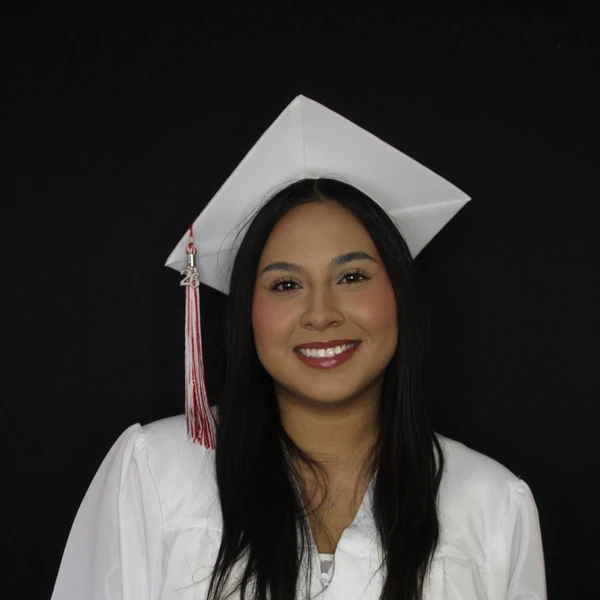
Ajo, AZ
Age
18
Gender
Female
Ethnicity
Hispanic/Latino
Religion
Christian
Church
Catholic
Hobbies and interests
Volleyball
Community Service And Volunteering
Reading
Mystery
Romance
Cultural
I read books multiple times per month
LOW INCOME STUDENT
Yes
FIRST GENERATION STUDENT
Yes
Karely Mendez Rodriguez
1x
Finalist1x
Winner
Karely Mendez Rodriguez
1x
Finalist1x
WinnerBio
Hello! I am Karely Mendez, and I am currently a high school Senior at Ajo High School in Ajo, Arizona. I am applying for scholarships to help fund my college education. I have been accepted to Grand Canyon University and Arizona State University, but I will be going to GCU! My major is Engineering with an Emphasis in Project Management. As a first-generation college student from a small rural community, I hope to use engineering and leadership to create opportunities and infrastructure that help underserved communities grow and thrive.
Education
Tohono O'Odham Community College
High SchoolGPA:
4
Ajo High School
High SchoolGPA:
4
Miscellaneous
Desired degree level:
Bachelor's degree program
Majors of interest:
- Civil Engineering
Career
Dream career field:
Civil Engineering
Dream career goals:
My goal is to become a civil engineer who designs sustainable infrastructure for rural and underserved communities. Growing up in Ajo, Arizona, showed me how important reliable roads, water systems, and public spaces are to a community's growth. I hope to use engineering to improve quality of life while protecting the environment for future generations.
Founder & Owner
Kaky's Creations2023 – Present3 yearsCook
Fat Cactus2025 – Present1 yearServer
Agave Grill2024 – 20251 year
Sports
Volleyball
Varsity2022 – Present4 years
Public services
Volunteering
National Honor Society / Ajo Community — Volunteer Tree Planter; assisted with planting trees, preparing planting sites, transporting materials, and working with other volunteers to improve community green spaces.2025 – PresentVolunteering
Ajo High School Student Council — Student Representative participating in planning events, volunteering, and supporting student initiatives.2024 – 2026Volunteering
Ajo High School — Volunteer helping organize appreciation activities and support school staff recognition events.2025 – 2026Volunteering
Ajo Unified School District — Volunteer assisting with event setup, activities, and community engagement.2024 – 2025Volunteering
National Honor Society — President; coordinated service projects, organized meetings, communicated with members, and helped lead community service initiatives.2025 – 2026Volunteering
National Honor Society — Volunteer assisting with event organization, student supervision, and activity support.2026 – 2026Volunteering
National Honor Society — Volunteer Event Staff assisting with setup, food service, cleanup, and guest support.2026 – 2026Volunteering
Empty Bowls / Ajo Community — Event Volunteer responsible for setup, guest assistance, serving food, and supporting fundraising activities.2026 – 2026Volunteering
Ajo High School National Honor Society — Volunteer Reader and Student Mentor2026 – 2026
Future Interests
Volunteering
Entrepreneurship
Michael Rudometkin Memorial Scholarship
The definition of selflessness is the willingness to put the needs of others before your own and give unselfishly; helping others with no expectation of receiving something in return. As I look back on my entire life, I have attempted to demonstrate selfless behavior through my community service, supporting those around me and utilizing my various leadership roles to make a positive difference.
While there are many examples of volunteerism that I could reflect upon, I am more interested in whether or not my actions have made a person feel supported, valued or cared for.
A particular example of selflessness that comes to mind is my experiences as the President of the National Honor Society (NHS) during my senior year. The primary responsibility as the President of the NHS was organizing, facilitating and implementing community service projects to assist and benefit local families and residents. There were two projects in which we implemented in order to assist our local families and residents.
One such project was a community spaghetti dinner fundraiser. In addition to the immediate purpose of raising funds for local families and residents, community events also provide a way for people to connect with each other. Many people in my small town depend on community events for both monetary assistance and socialization.
Along with other NHS members, I spent considerable amounts of time preparing for the spaghetti dinner. This included coordinating volunteers, setting-up, serving meals, etc., so that all aspects of the spaghetti dinner would run smoothly. During the spaghetti dinner, I talked with several community members, some of whom were elderly. They expressed how much these events mean to them.
One woman explained that she looks forward to attending community dinners because it provides her with an opportunity to spend time with others, reducing her feelings of isolation. Upon hearing her words, I realized that you do not necessarily have to give financially or physically to make an impact. Simply spending time, being kind and listening can make just as significant an impression on another person.
Another example of my selfless nature is through my continued efforts to participate in reading and mentoring programs within local elementary school classrooms. Through participating in these programs, I learned the value of encouraging others and being a positive influence. Most children simply need someone to listen to them, encourage them and believe in their ability to succeed. Witnessing young students become more confident and invested in learning reminded me that even small acts of service can have long-lasting effects on another individual.
In addition to the previously described structured volunteer work, I attempt to exhibit selflessness in my everyday life. Whether it is assisting classmates with homework, supporting team members, helping co-workers or simply making myself available to friends when they need someone to talk to, I firmly believe that kindness should be a choice we make every day as opposed to an infrequent occurrence. Typically, true selflessness occurs in quiet, momentary acts that are unseen by others.
As I move into higher education at Grand Canyon University, I intend to take these values with me. My ultimate goal is to utilize my education and future career as a vehicle for improving communities, specifically rural areas similar to the area where I grew up. Ultimately, I hope to create opportunities, address problems and enable others to construct improved futures for themselves and their families.
Ultimately, selflessness does not occur solely through a single large gesture. Rather, it is a consistent effort to serve others. Through dedicating my time, utilizing my knowledge/skills and demonstrating compassion while leading others.
Love Island Fan Scholarship
**Challenge name:** heart rate hideaway.
This is a Challenge to see just how much Islanders really get to know each other during all the fun, games, surprises and flirtations that will be going on.
**how it works:**
As soon as before the Challenge takes place, every islander gives their private responses to several personal questions. The questions can be light hearted or serious depending on how intimate they want to make things (ex:
-what is your biggest turn-off in a relationship?
-what physical attribute do you find yourself looking at first when meeting new people?
-if your current partner were to leave who would you like to hook-up with in the villa?
-who has been the most romantic towards you and what did they do?
-who in the villa do you trust the least?!).
Islanders' answers are kept secret!
Inside the villa is a huge maze called the "Heart Rate Hideaway". There are stations inside the maze that are identified by large glowing hearts. Each of these islands will enter in pairs however they will start from two separate entrances.
When an islander reaches a station they will read a question and an anonymous response to that question will appear on a screen. They then have to pick which islander gave them the answer. If they pick correctly they will receive a key. If they choose incorrectly they will receive a twist card.
A twist card may include something like:
-kiss another islander of your choosing for 10 seconds.
-reveal your celebrity crush.
-read a secret compliment that was written about you by another islander.
-tell the truth about something sexy.
After both members of the pair complete the maze they meet back in the middle of the house. Here they will use the total number of keys they earned to open treasure chests.
**the final twist:**
Every single chest will contain one of three possible options:
-a date for the pair.
-an opportunity for a luxury hideaway night.
-a mystery envelope.
Information contained within the mystery envelopes is based off data collected from the Challenge including:
-which islander received the most votes as "who do you think is hottest".
-who did everyone name most likely to have their head turned.
-who was mentioned as a potential "backup" the most times.
All of the above results are made public so everyone knows.
**why it would make great TV:**
-the challenges tests communication and trust.
-during the Challenge we will discover some interesting opinions.
-new opportunities for flirting and jealousy will develop.
-humorous situations will arise due to the Twist Cards.
-finally there will be public revealings that could upset some couples.
In short, this Challenge brings together love, competition, secrets, and drama – basically everything needed for an entertaining Love Island episode!
Our Destiny Our Future Scholarship
I grew up in Ajo, Arizona, which is a very small, rural community. I learned that being able to make an impact doesn't necessarily require money, power, or prestige. It can begin simply with showing up for others. Through my involvement in the National Honor Society, my participation in planning community events, and my experience as a mentor to younger students (and possibly some other ways), I realized that smaller acts of kindness can have a long-lasting impact. The lessons I've learned are what shape the type of person I am today, and will influence how I attempt to make a positive contribution to the world.
Throughout my time in high school, I have made it a priority to excel academically and to serve. Having been elected as the President of the National Honor Society and having graduated as Valedictorian of my high school graduating class has given me many opportunities to provide leadership to volunteer projects that were beneficial to my community. Those projects included organizing food drives and community dinner events; assisting in local events; and developing programs to read to younger students. In all of these instances, I saw firsthand how service could bring people together and contribute positively to building stronger communities. These examples also showed me that true leaders do not need to be "in charge" – they simply need to help others achieve success and open doors of opportunities for those around them.
While continuing my education at Grand Canyon University, I intend to earn a degree in Project Management. After completing my formal education, my ultimate objective is to utilize this knowledge and training to assist in improving and developing communities (specifically rural and under-resourced ones) similar to the one in which I grew up. There are several challenges that small communities often encounter relative to infrastructure, economic development, and access to basic resources. I would like to participate in the creation of projects that address those issues and ultimately improve the quality of life for future generations.
In addition to pursuing my professional objectives, I intend to maintain an active level of involvement in providing service throughout my entire lifetime. I would like to act as a mentor to students from rural areas, volunteer in my community, and support educational programs that promote higher education among youth. Coming from a small town, I recognize how important it is for students to have mentors/role models who believe in their capabilities. I would like to be that source of motivation for others.
It is changed not just by large achievements, but also by individuals who consistently demonstrate compassion, generosity, and a desire to give back through their service. Through my combination of formal education, leadership experience, and dedication to serving others, I intend to positively affect my environment, whether through my profession, volunteer activities, or daily interactions. I aspire to leave behind each community I am a part of in better condition than when I entered it.
Kayla Nicole Monk Memorial Scholarship
I wanted to continue with my education in the STEAM field so I could continue to find ways to innovate and solve problems and ultimately better society. In many of my classes throughout my time in high school – math, science, engineering related, etc. – I had to think critically and creatively. I found it enjoyable to analyze problems, develop solutions and see how an idea could become a project that makes a positive impact in someone’s life. All these areas interested me enough to seek out a STEAM-related field of study at Grand Canyon University.
Growing up in Ajo, AZ – a small, rural town – provided me with a different view of the importance of community development, planning and infrastructure. The quality of our roadways, public buildings and overall resources directly impacts the opportunity for residents. Growing up in such a small community helped inspire me to pursue a career where I can contribute to impactful projects that benefit communities like mine which are often underrepresented. My desire is to apply what I learn from my education to develop practical and long-lasting solutions.
Throughout my academic and leadership experience, I have demonstrated my dedication to education. I was the Valedictorian of my graduating class as well as the President of the National Honor Society and I currently hold a position as an Honors College student at Grand Canyon University. Alongside managing all of my academic commitments, I have also volunteered in local community service projects, participated in student leadership organizations and completed various extracurricular activities which have allowed me to grow my communication, teamwork and leadership abilities. Through all of these experiences I have learned the values of working diligently, persevering and giving back.
This scholarship will greatly influence my educational experience. As a first generation college student, I know that there are many financial barriers associated with pursuing higher education. This scholarship will greatly reduce some of the costs (tuition, housing, books, etc.) associated with attending college which will allow me to dedicate more time to studying and personal development. Additionally, it will give me the opportunity to participate in internships, leadership programs and hands-on learning opportunities that will assist me in preparing for my future career.
In conclusion, my ultimate objective is to utilize my education to positively affect the communities I serve. The funding for this scholarship is an investment not only in my future but also in the potential contributions I aspire to make via innovation, leadership and service. Your support of my academic objectives will enable me to transform my enthusiasm for STEAM into a career focused on making a lasting positive impact.
Edna McGrowder Memorial Scholarship
I grew up in Ajo, a small community. The influence it had on my pursuit of an education at a college or university is significant. Education is one way for individuals to create change — for themselves and for those in their immediate circle. Since I live in a rural area with limited options, I've seen first hand that education gives people the chance to open doors to possibilities they may never have thought possible. My parents' willingness to put forth tremendous effort each and every day to provide for our family has shown me the importance of persistence, selflessness, and responsibility. Seeing how serious they took their education, I decided I would do the same.
In high school, I got heavily involved in both academics and the community. I attempted to push myself in challenging academic classes (Advanced Placement) and leadership positions (National Honor Society president; student council). I found balancing challenging classwork, extra-curricular activities, playing volleyball, working, and volunteering to be difficult at times. However, those challenges gave me discipline and taught me how to persevere. Also, during that time I discovered how enjoyable it was for me to contribute positively to my school and local community.
Witnessing the need of my home-town directly has contributed significantly to my decision to go to college. By living in Ajo, I’ve witnessed firsthand the effects of aging structures, lack of funding/infrastructure, and few resources available to smaller communities. While I have seen many negative impacts of these factors on my community, I have also seen the beauty and rich history that define my community. This awareness of the benefits of growth while maintaining community identity/culture has developed into a strong interest in engineering/sustainable development. Through education, I believe I can obtain the knowledge and abilities necessary to better assist communities similar to mine while preserving what defines them.
Additionally, experiencing other students at leadership/community service events and hearing their plans/goals for the future after college strengthened my motivation to pursue my own educational goals. These experiences further reinforced my belief that education provides access to new opportunities/perspectives/contributions that will last long beyond graduation. That realization made me even more determined to push myself both academically/personally so I could be able to make positive contributions.
Attending college is important to me for reasons far greater than just receiving a degree. For me, pursuing a college education represents the ability to repay my family's sacrifices and serve as a role-model for younger students in my local community. Having pushed myself to achieve success in academics/service/leadership in addition to having stayed actively engaged within my community, I want to demonstrate to other students from small communities that they too can achieve their dreams. Ultimately, I plan to utilize my education to make a positive contribution through engineering/leadership/community involvement.
College will enable me to move forward in reaching my goals. College will give me the tools and knowledge to grow as a student/leader/individual while providing me with the ability to make a real difference in the communities that matter most to me.
Rev. and Mrs. E B Dunbar Scholarship
Growing up wasn't easy - hard times pushed me, yet those very moments built who I’ve become now. Early on, worry clung tight, whispering lies that messed with my confidence every single day. Meanwhile, life at home revolved around habits nobody talked about; smoke-filled rooms like it belonged there. By eleven or so, I’d already caught the hook myself, sucked into nicotine without even realizing how deep I'd fallen.
For ages, I was stuck - caught in a loop of panic and dependency. I wished to quit, yet had no clue where to start. Tossing out my vape pen never lasted; within days, I’d pick it up again. Every time I slipped back, the stress grew heavier, whispering that I couldn’t handle breaking free. After my granddad died of lung cancer, things changed overnight. Seeing him go through that pain hit me hard - suddenly it clicked: I was headed down the same road. That’s when I decided no way was I letting life just happen to me.
Stopping felt nearly impossible at first. Some days brought struggle, irritation, or shaky belief in myself - yet I kept moving forward anyway. Instead of falling back, I built new routines like popping mint gum, writing thoughts down, and staying sharp with classes. Slowly, my trust in who I was started growing; I realized getting better doesn’t mean doing everything right - it means showing up again and again. It's been twenty-four months now - I still don't use nicotine, and honestly, that feels pretty great.
Life’s tough moments showed me how to stay calm, care about people, and move forward with direction. When things get hard, I now treat them like chances to grow instead of roadblocks holding me back. Dealing with anxiety and substance issues pushed me toward civil engineering studies, so I can use solutions to help folks in real ways. Building eco-friendly structures matters most to me when they serve overlooked neighborhoods - places where solid, well-thought-out designs offer safety plus a reason to believe in better days.
Being the first in my family to go to college, I view school as a way to make a real difference. So far, I aim to take what I pick up in class and turn it into support for neighborhoods that need more care, also guiding people dealing with stress or substance issues along the way.
The challenges I've faced made me tougher, more understanding, one step at a time. Through them, I learned that no matter how stuck things get, movement’s still possible - so I’m aiming to turn what I learn into tools for someone else walking their own hard road.
Mikey Taylor Memorial Scholarship
Most of my life, I've dealt with constant anxiety. Not the type that fades away - but one that sticks around, popping up during routine stuff. Since childhood, I was scared of messing up, never measuring up, or disappointing others. In the beginning, I kept it under wraps. I used to believe being strong meant faking like nothing bothered me. Yet little by little, I figured out it's actually about truth, knowing yourself, or pushing forward no matter how loud the doubt gets.
Living through anxiety changed how I view life, as well as who I try to become. It showed me how to care more and stay calm. Everyone’s dealing with hidden struggles, I realized; now and then, just being decent flips someone’s day. Without grasping my anxiety, I’d drift apart, stuck in my head. Recently, I try to pay attention when people talk, staying focused on them.
Growing up, substance use was everywhere - dad and grandpa puffed constantly, so seeing smoke or vapor just seemed everyday stuff. At twelve, I tried nicotine too, never guessing it’d grip me so fast. Ditching it? Felt impossible back then. Swore every hit would be the final one, yet slipped right back within days. When my granddad died because of smoking-related illness, everything clicked - suddenly it made sense what addiction really does. It snapped me out of autopilot.
Getting past nicotine wasn't only tough on the body - it hit me hard in the feels. Each urge pushed my determination to the edge, and each slip-up made me doubt myself all over again. Still, bit by bit, things shifted. Writing down thoughts helped, staying present worked, and trading routines for better choices made a difference. Stopping showed me recovery doesn’t need to be flawless - just steady. Nearly 24 months on, I can honestly say no smoke or nicotine since then, while slowly seeing how mood and cravings tie together in ways I’d never noticed before.
Those moments changed how I see things - deeply. Vulnerability? It’s not softness; it’s where change begins. Sharing struggles with your mind isn’t just brave - it flips fear on its head. Strength ain’t about staying upright; it’s crawling forward after collapse. Healing kicks in when we stop pointing fingers and start showing up.
I’ve seen how mental wellness affects everyday life - so now I’m aiming for civil engineering. Not because it’s trendy, but because fixing real-world issues matters to me. Numbers? Sure, they’re part of it - but what really counts is building things that help neighborhoods thrive. My goal leans toward eco-friendly solutions, particularly in places overlooked before; solid infrastructure there doesn’t just upgrade homes - it lifts spirits too. Life’s taught me how much where we are - what we see, who we’re around, what we feel - shapes us daily. Maybe I can use this knowing when I design places people live or hang out, so they end up feeling steady, at ease, yet close to others.
Anxiety plus addiction used to leave me drained - now they act like tough coaches. One lesson after another popped up: how to stay steady and understand people better. These struggles quietly shaped a mission - noticing gaps in the talk around mental well-being, then stepping in to say change can happen, even when it feels out of reach.
Life's knocked me down plenty of times, yet each hit shaped how I see things now - someone who trusts growth can happen, cares deeply about others' pain, while hoping to create spaces where folks facing hard times know they're not by themselves.
Ethel Hayes Destigmatization of Mental Health Scholarship
For years, I carried anxiety like a shadow - always there, quiet but steady, coloring how I viewed myself and dealt with people around me. To everyone else, I seemed steady and in control; underneath, though, I was tangled in struggles most never noticed. Things like answering a question in school or talking in front of a group hit me with waves of dread. The fear of messing up - or being seen as flawed - ate at me, leaving me feeling cut off from others. Still, as time passed, I started seeing things differently: that anxiety didn't mean fragility - it meant deeper feeling, sharper focus, and a stronger push to change.
My battle with mental health showed me just how hidden suffering can be. It's hard to grasp what another person deals with inside, yet realizing this shifted my whole attitude toward folks. Instead of rushing to conclusions, I now try to hear them out, show care without needing all the details, or simply wait instead of reacting fast. Dealing with anxiety revealed that real power isn't faking okay - it's speaking up truthfully, asking for support when needed, then pushing ahead despite the weight.
My run-in with mental health ties back to my folks’ struggles with dependency. While growing up, I watched close-up how cravings could grip even those closest to you. Dad used to smoke, while grandpa battled nicotine nearly his whole life. Puffing on cigs or vaping surrounded me early on, so by twelve, I’d already gotten hooked. At first, it was just an interest - before long, that turned into reliance. I kept saying I’d stop whenever I wanted, yet each time I tried and didn’t make it, my self-belief got a little weaker.
When my granddad died of lung cancer, it hit me hard - like a punch to the gut. Seeing him struggle at the end cracked something deep inside. That loss made me face my smoking habit head-on, realizing I didn’t wanna end up like him. Still, kicking the habit? Not simple. Some days I slipped back, caving when cravings crushed whatever strength I had left. I cycled through guilt, then shame, yet kept going no matter what. Every stumble taught me something fresh about who I am - like what sets me off, how pressure messes with my head, also why taking it slow matters when moving forward.
That moment shifted how I see emotional well-being and getting better. Healing doesn’t move forward smoothly - instead, it twists through tough times, quiet thought, and inner strength. What stood out was how vital it is to speak up about things like dependency and worry. Lots of places downplay or skip these talks, so folks end up dealing with pain all by themselves. I’m hoping to shift things by sharing my own path. Talking openly has shown me how it nudges folks toward support; real talk sparks action. What matters most? Real voices telling true experiences, so no one feels isolated.
My path so far has influenced what I aim for in school and work. Studying civil engineering makes sense since it ties into solving real issues that boost community life over time. To me, this field isn’t just numbers or blueprints - instead, it's tied to making daily living better. My goal? Zeroing in on eco-friendly structures where support is low, given how much the surroundings impact emotional health. A secure, steady setting brings ease - much like turmoil or being ignored sparks worry and sadness. My goal? To show care through what I do - not simply making buildings, but growing optimism along the way.
Anxiety or addiction used to leave me drained - now I view them as pieces of what makes me tough. Through struggle came grit, deeper insight into myself, besides a real sense of empathy toward people around me. My bonds with others changed because of this, showing me that connection works best when it’s raw yet kind. Because of these shifts, my ambitions evolved, too, nudging me to mix solving puzzles with actually making a difference.
Mental health struggles taught me folks hide stuff no one sees, yet the best move is shining a light on it anyway. Telling my tale keeps alive what Ethel Hayes started - ending quiet suffering, swapping guilt for empathy, showing people recovery isn’t out of reach.
Learner Math Lover Scholarship
Math’s never just been digits or formulas for me - rather, it's like a code that shows why things happen. Whether it's why structures stay up or how stats guess what comes next, math plays a role in almost all we depend on. The thing I enjoy most? How it mixes imagination with reason. It pushes me to question deeply, spot order in what looks messy, yet tackle issues from fresh angles till an answer clicks.
From childhood on, figuring stuff out gave me real joy. Solving math puzzles showed me there’s always a way through if you take it step by step - what matters is sticking with it. When things seem too tough, breaking them down helps; looking closely, testing hunches, giving it another shot - all these moves slowly open doors. That same thinking spilled into other areas, like dealing with worry or feeling unsure about myself. Numbers taught me progress isn’t about getting everything right - it’s about pushing forward no matter what.
I'm aiming for a career in civil engineering - where numbers help shape everything we build. Instead of just theory, it's about solving problems like how much weight bridges hold or cutting down waste in cities. Math isn't just equations; it drives solutions that actually work outside the classroom. The idea of using formulas to fix everyday issues? That’s what gets me going each morning.
Math makes me feel sure of myself, brings order to my thoughts, while lighting up a path forward - proving how tough puzzles fall apart when you take your time, use clear reasoning. This is exactly why math clicks for me: it isn’t merely something I study, rather a mindset shaping how I create what comes next.
Ella's Gift
Ever since I was little, I’ve known the toughest fights happen inside your head - ones nobody else notices. Anxiety’s always been there, tagging along like an uninvited shadow, coloring how I see things, react, and act. Most days, I kept quiet about it, faking confidence while my mind spun and my breath got shallow. Instead of breaking down, I’d tell myself to toughen up, power forward - but that just cranked up the heat. Things shifted once I stopped fighting its existence; I saw it not as some flaw, but simply what shaped me.
My fight with anxiety slowly mixed into something else - substance dependence. At age twelve, I got hooked on nicotine for the first time. Back then, smoking and vaping were common sights at home. Dad used to light up regularly; meanwhile, Grandpa had puffed away nonstop since forever. Back then, it felt regular - like most folks did it just to unwind or handle stress. Yet after my granddad died of lung cancer, things shifted hard. Seeing him struggle to breathe, while our family cracked under pressure, snapped me into focus. It hit me: I’d been following his exact steps without knowing… that scared the hell outta me.
Stopping nicotine hit harder than almost anything else I've tried. It didn't work - over and over again. One minute I'd trash my vaporizer, but within days, there it was, a new one in hand. I kept swearing, "This ends now," yet somehow ended up right where I started. Every slip wore down my self-belief, pouring fuel on the fear whispering I couldn’t make it through. Still, I wouldn’t back down. Instead of sticking to the same routine, I started doing little things for myself - popping a piece of gum, taking strolls around the block, jotting down what was on my mind. My granddad’s voice in my head kept me steady, along with the thought of becoming who I once hoped to be. Bit by bit, smoke-free days piled up - weeks rolled into months, those stretched into years, one after another. Two full years have passed since I stopped, no looking back - and honestly? I’ve never felt more like me.
This trip showed me getting better isn't tied to flawlessness - it's fueled by keep going. At times I felt shaky, unsure - yet those became chances to stretch instead of proof I'd lost ground. Fixing things doesn't move straight ahead; it stumbles forward, rising after every drop with more grit. Along the way, I tapped into compassion for people wrestling their own battles. Folks usually feel embarrassed about addiction - yet lately, I've seen how kindness plus patience changes everything. My mission? Lend a hand so loved ones and neighbors uncover strength during their path back.
Studying’s been tough, but it’s made me tougher and sharper over time. When stress hits, I stick to routines - chopping huge tasks into tiny ones - and reaching out instead of shutting down.
Keeping things steady matters too - I treat my mind like part of the job, not something extra on top. That mix of thinking straight and caring for myself pushed me toward civil engineering, where fixing real-world problems fits right with how I’ve learned to handle my own. I’m aiming to build long-lasting systems that help neighborhoods thrive, particularly where support’s been lacking. What I’ve lived through revealed just how deeply surroundings - tangible or felt - influence people’s health, so my projects will carry that truth forward.
I'm still studying, yet I focus just as much on staying sober and helping others do the same.
Around me, there’s a circle of folks pushing good choices, while I use quiet moments to calm my mind early when stress shows up. On top of that, I told myself I’d keep digging into how mental health and substance issues work - along with what shapes them - because down the road, I want to reach out to anyone fighting their way through.
I might not have walked the same road as Ella, yet I’ve got that fire inside - pushing forward, learning every step, turning hurt into meaning. Anxiety and addiction didn’t write my story - they sharpened it. They brought grit, understanding, also a drive to guide others toward their own recovery.
Bick First Generation Scholarship
Being a first-generation student means carrying more than just my own dreams; it means carrying the hopes of my parents, my siblings, and even my community. I am pursuing college to make my family proud, to honor the sacrifices that brought me here, and to show others from my small desert town of Ajo, Arizona that it is possible to dream bigger than the limits placed in front of us. My motivation comes from my parents, who worked hard with so little, and from my hometown, whose history and character inspire me every single day.
Growing up, I didn’t have anyone at home who could explain college applications, FAFSA, or what credits I needed to graduate. I had to learn everything on my own, teaching myself step by step while balancing school, work, and sports. There were nights I came home after a long shift, exhausted from practice and still staring at homework that needed to be done. There were moments when I questioned whether I could juggle it all, the pressure, the exhaustion, the fear of failure. But quitting was never an option. I reminded myself that I wasn’t doing this just for me. I was doing it for my parents, who never had the chance to sit in a college classroom. I was doing it for my town, which rarely sees students leave to pursue engineering. I was doing it for the little version of myself who always believed there was something more waiting out there.
Now, I am pursuing civil engineering at Grand Canyon University. My dream is to design buildings that reflect the beauty and culture of Ajo, the warm earth tones, the unique Spanish-influenced architecture, and the sense of history visible in every brick and arch. But I don’t just want to build structures, I want to build responsibly. That is why I plan to specialize in sustainable engineering, creating designs that protect the environment and honor the land we stand on. I want future generations to grow up in communities that are both beautiful and sustainable, where progress and preservation can exist side by side.
This scholarship would lift a tremendous weight off my shoulders. The fear of college debt is something I carry silently; it follows me into every decision, every semester, every late night of studying. Winning this scholarship would mean relief, hope, and freedom. It would mean being able to tell my parents, with tears in my eyes, “Mom, I won a scholarship! We did it.” I want to give them that moment, something that proves their struggles were not in vain.
Being a first-generation student means walking into the unknown with courage, determination, and heart. I am ready to keep pushing, keep learning, and keep building a future I can be proud of. With your support, I will continue this journey and turn the dreams of my family, my community, and myself into something real — something permanent, like the structures I hope to create.
Women in STEM Scholarship
Ever since I was a child, I have been fascinated by how things are built, bridges, roads, and buildings that connect people and create opportunities. Math was always my favorite subject because it made sense to me; there was logic and order behind every problem. As I grew older, I began to see how engineering shapes the world we live in, not just through structures but through sustainability and innovation. That realization inspired me to pursue a degree in civil engineering, a field that combines my love for math with my passion for helping communities thrive.
Being a woman in STEM means pushing boundaries and challenging expectations. In middle school, I joined my school’s bike club, where we learned to repair bikes and understand mechanical systems. Although it wasn’t engineering in the traditional sense, it sparked my interest in how design and problem-solving could improve daily life. I realized that I wanted to be part of a field that not only builds but also protects, protects people, the planet, and the future.
Civil engineering, especially sustainable infrastructure, allows me to do just that. I want to design systems that make communities more resilient to climate change, use eco-friendly materials, and minimize environmental harm. Growing up in Arizona, I’ve seen firsthand how droughts and extreme temperatures affect people’s lives. It motivates me to think critically about how we can build smarter, more sustainable environments that support both human needs and the natural world.
As a woman entering this male-dominated field, I am aware of the challenges that come with it, doubt, underrepresentation, and the need to prove myself. However, I see these challenges as motivation. I am driven to not only succeed but to inspire other young women to pursue STEM with confidence. Representation matters; when girls see women thriving in engineering, it shows them that they belong there too.
Through my education and future career, I hope to make a meaningful impact by contributing to sustainable design and infrastructure that promotes equity and environmental responsibility. My ultimate goal is to work on large-scale projects that balance progress with preservation, ensuring that future generations inherit a planet that is both livable and thriving.
This scholarship would not only support my education financially but also affirm my commitment to breaking barriers and leading with purpose. Women bring creativity, empathy, and new perspectives to STEM fields, qualities that are essential to solving the world’s most pressing problems. I am determined to be part of that change, one design, one bridge, and one innovation at a time.
I Can and I Will Scholarship
I have always been a driven student, naturally drawn to subjects like math and problem-solving, but throughout high school, I faced a persistent challenge that wasn’t on any syllabus: anxiety. From the moment I stepped into middle school, even small tasks would trigger a nervous tension in my chest, a voice in my mind that whispered, “What if I fail?” For years, I carried this weight silently, not wanting anyone to see my struggles or think I was incapable.
Anxiety has shaped the way I see the world and interact with others. I have learned to value empathy and patience because I understand how invisible battles can affect daily life. With friends and family, my anxiety has sometimes made me hesitant to speak up or share my feelings. But it has also taught me the importance of authentic connection. I have learned to listen more, to notice the quiet struggles of those around me, and to offer support without judgment. These lessons have strengthened my relationships and helped me form bonds based on understanding and compassion.
My experiences with anxiety have also influenced my beliefs. I believe strongly in resilience, in the idea that personal challenges are not limitations but opportunities for growth. I have learned that success is not defined solely by grades or accolades, but by persistence, self-awareness, and the courage to seek help when needed. This mindset has shaped how I approach obstacles: instead of avoiding them, I plan, prepare, and tackle them step by step, just as I have done with my anxiety.
In choosing civil engineering as my career path, my experiences with mental health have played a subtle but significant role. Engineering requires analytical thinking, attention to detail, and perseverance, qualities I have honed in managing my anxiety. More importantly, I aspire to focus on sustainable infrastructure projects that positively impact communities, especially in underserved areas. I want to create solutions that not only serve functional needs but also improve quality of life, because I understand that small improvements in daily life can have profound effects on well-being. My anxiety has given me a unique perspective: I am deeply aware of how environments, physical, social, and emotional, affect individuals and communities.
Although anxiety has been a constant companion, it has not defined me. Instead, it has shaped my empathy, strengthened my relationships, and guided my career ambitions. It has taught me that perseverance, self-awareness, and compassion are just as important as intellect or skill. As I pursue higher education, I carry with me these lessons, determined to apply them not only in my studies and career but also in supporting others who face their own unseen challenges.
Future Women In STEM Scholarship
Numbers have always made sense to me in a way that stories or games didn’t. While other kids played freely, I found joy in solving puzzles, calculating distances, and spotting patterns in everyday life. Math has never just been a subject; it’s been a lens through which I understand the world. This fascination naturally drew me toward STEM, especially engineering, a field where math drives innovation and solves real-world problems.
Growing up in Ajo, Arizona, I was curious about how things worked. I watched my parents repair household items and my grandfather construct projects in his workshop. Seeing abstract ideas transform into tangible results mirrored the precision and creativity that math and engineering require.
One experience that shaped my path was participating in a bike club during middle school. The club focused not only on riding but also on understanding mechanics, calculating gear ratios, and improving performance for long-distance rides. I loved applying math to optimize speed, balance, and efficiency. Collaborating with friends to solve mechanical problems and plan routes showed me how calculations could directly guide practical solutions. That experience sparked my curiosity about designing systems where careful planning and math could make a meaningful difference, a foundation for my future in civil engineering.
Living in a rural area, I have also seen how infrastructure challenges, like uneven roads or unreliable water systems, impact communities. These experiences inspired my focus on civil engineering and sustainability. Math is at the heart of designing systems that are safe, efficient, and environmentally conscious, and I am determined to use these skills to improve the quality of life for others.
As a woman in a male-dominated field, I am motivated to contribute to a more diverse STEM community. Representation matters, and I hope to inspire other young girls to pursue math-driven careers and break barriers in engineering. By excelling in my studies and eventually taking on leadership roles, I aim to show that passion, curiosity, and determination can open doors in STEM.
In conclusion, my lifelong love of math, hands-on experiences like my bike club, and desire to improve communities through engineering have shaped my ambitions. STEM is not just a field of study for me; it is a way to create solutions that are precise, practical, and impactful. I am ready to use my skills to build a future where mathematics and engineering make a real difference in the world. I hope to prove that one person’s curiosity and dedication can inspire change far beyond themselves.
Se Vale Soñar Scholarship
My name is Karely, and I come from a family that has struggled with addiction for generations. Drugs and smoking have always been present in my life, and I’ve seen firsthand how they can break families apart. Yet, I’ve also learned that love and determination can help heal even the deepest wounds. My family’s story, and my own struggle with nicotine addiction, taught me the importance of self-control, perseverance, and the power of choosing a better path.
When I was twelve years old, I became addicted to nicotine. At that age, I didn’t realize the dangers or consequences of what I was doing, it just seemed normal. My father smoked, and my grandfather had smoked his entire life. Cigarettes and vapes were always around, and they didn’t seem like something dangerous at the time. But when my grandfather passed away from lung cancer, everything changed. Watching him suffer was heartbreaking. The hospital visits, the exhaustion, and the look on his face in those final days are memories I will never forget. His passing was my wake-up call. I realized that I was following in his footsteps, and that scared me.
I wanted to change, for myself, for my family, and for my grandfather’s memory. But addiction is not something that can be easily broken. I tried for two years to quit but constantly fell back into the same habits. I would tell myself, “I’ll quit after this one,” but that moment never came. Nicotine was always around me, and temptation felt impossible to escape. I’d go through moments of guilt and sadness, throwing away my vapes just to buy another one the next week. It became a painful cycle that affected my self-esteem and mental health.
What finally pushed me to stop was a moment of reflection. On my grandfather’s birthday, three years after his passing, my brother made a small picture frame of him with things he used to love surrounding it. I sat there in silence, remembering how much he suffered and how many times we had to rush him to the hospital. I realized that although he couldn’t change the past, I still had the chance to change my future. That day, I threw my vape away for good.
To fight my cravings, I started chewing gum, sometimes two packs a day, just to distract myself. It was hard, but slowly, I began to regain control over my choices. It’s now been two years since I quit nicotine, and I’m proud of the person I’ve become.
Through this experience, I learned that overcoming addiction isn’t about perfection; it’s about persistence. I learned that change takes time, but it’s possible when you truly want it. This journey has made me stronger, more self-aware, and more determined to live a healthy, meaningful life. It also taught me empathy for those who struggle with addiction, including members of my own family.
Even though temptation will always exist, I now understand that I have control over my life and my choices. What once felt like a curse has become one of my greatest lessons: no matter how broken things seem, love, strength, and perseverance can help rebuild them.
Stewart Family Legacy Scholarship
Leadership and science are the foundation of progress, working together to build a better, more sustainable world. Science gives us the understanding to solve complex problems, while leadership turns that knowledge into action. Now more than ever, our future depends on leaders who use science responsibly to create solutions that protect our planet and improve the lives of others.
Civil engineering is one of the clearest examples of how leadership and science intersect. Engineers rely on physics, chemistry, and environmental science to design the infrastructure that supports our daily lives, bridges, roads, water systems, and buildings. But beyond technical skill, leadership is essential. It takes leaders to envision sustainable designs, promote environmental responsibility, and ensure that progress doesn’t come at the cost of future generations.
Sustainability is the heart of modern civil engineering. Climate change, resource depletion, and urban growth all demand innovative solutions guided by scientific understanding and ethical leadership. For example, using renewable materials, reducing carbon emissions in construction, and creating resilient cities that can withstand natural disasters are all goals that require collaboration and forward-thinking leadership. Science gives us the tools; leadership determines how we use them.
As a future civil engineer, I aspire to be a leader who combines technical knowledge with compassion for both people and the environment. I want to design structures that not only serve communities but also respect the earth’s natural balance. My goal is to help create sustainable cities that promote safety, efficiency, and harmony with nature. Leadership to me means taking initiative, inspiring others, and using science to make a meaningful impact.
When leadership and science come together, they have the power to shape a brighter future. Civil engineers will continue to play a vital role in this process, building not just physical structures, but bridges toward a more sustainable and equitable world. With strong leaders who value both innovation and responsibility, science becomes more than discovery; it becomes the blueprint for a better tomorrow.
Chi Changemaker Scholarship
In my small town of Ajo, I’ve seen how many families and senior citizens struggle with food insecurity. I wanted to do something to help, so I reached out to my local food bank to volunteer. I called months ago, hoping to give out food and talk with the people who came in. They never called me back, but I haven’t given up. The food bank starts early in the morning, and I’m in school by then, but I plan to keep trying because helping others is something I truly care about.
What inspired me most was my grandma. She has dementia, and I’ve seen how hard life can be for her. She often forgets things, but I’ve learned that what she never forgets is kindness. Spending time with her taught me how important it is to care for our elders, not just with food or medicine, but with love, time, and understanding. When I sit and listen to her stories, I see how much she lights up knowing someone is there for her. That feeling is what motivates me to keep helping others, even when it’s difficult.
Even though I haven’t been able to start volunteering yet, I’ve realized that change starts with effort and heart. When I leave Ajo, I want to work closely with seniors and help make their lives easier. I love listening to their stories because they carry so much wisdom and history. I want to make sure they feel valued and heard. Helping people, especially the elderly, is something I know I’m meant to do, and I’ll keep working toward that goal no matter what obstacles come my way.
Big Picture Scholarship
WinnerI was just a kid, sitting cross-legged on the floor, surrounded by popcorn and laughter. When I first watched WALL-E, I didn’t expect a tiny, rusty robot to change the way I saw the world, or myself. But as I grew older and watched it again, I started to see something deeper: a lonely robot cleaning up a broken planet, doing his job even when no one was watching. Somehow, I saw myself in him, quietly trying to make sense of the mess around me, hoping that my small efforts could mean something.
WALL-E isn’t just a movie about robots and space. It’s a story about love, loneliness, and what happens when people stop caring. In the film, humans abandon Earth after filling it with trash. They float through space in comfort, disconnected from nature, from each other, and from purpose. But WALL·E stays behind. He doesn’t give up. Every day, he keeps cleaning, finding beauty in forgotten things: a tiny plant, an old lighter, a song from a worn-out VHS tape. His persistence taught me that hope doesn’t have to be loud. It can be quiet, steady, and patient.
That message hit me hard during moments when I felt small or overlooked. Growing up, I sometimes struggled to find my voice. I wasn’t always the loudest or most confident person in the room, but like WALL-E, I learned that leadership isn’t about being the center of attention; it’s about what you do when no one’s watching. Whether it’s staying up late to finish a project, helping a friend through something hard, or simply doing my part for the environment, I’ve learned that consistency and care speak louder than words.
The movie also opened my eyes to how powerful education is. The humans in WALL-E forgot how to think, question, and explore. They became so dependent on technology that they lost touch with the real world. Watching that made me realize how easy it is to lose curiosity, and how important it is to protect it. Education, to me, is the opposite of that lifeless comfort. It’s how we stay awake, aware, and connected. That’s why I want to pursue higher education: to learn not just for myself, but to help others see the value of learning, awareness, and action.
What stays with me most is how WALL-E finds love, not just romantic love, but love for life itself. He doesn’t need recognition or reward. His purpose comes from caring, from finding beauty where others saw only garbage. That’s something I carry with me every day. No matter how difficult life gets or how broken the world may seem, there is always something worth protecting, something worth believing in.
WALL-E reminded me that even the smallest spark can start a change. It showed me that kindness, curiosity, and courage can survive in even the harshest places. And most of all, it inspired me to lead with compassion—to be the kind of person who sees potential in everything and everyone, even when others have stopped looking.
Ja-Tek Scholarship Award
Drugs will always be present in my family. My family will always be broken, but there is nothing that love cannot fix. In my family, drugs have always been a huge factor in our lives. My experience with addiction has been personal and close; I’ve even struggled with it myself. My cousin has battled drug addiction since middle school, and I’ve also faced my own addiction to nicotine since I was 12. Although I’ve since stopped, it will always haunt me and remain a huge part of my life.
My father has smoked since he was young, and even my grandfather suffered the same fate. My grandfather passed away from lung cancer because of cigarettes, and that changed me. When he passed, it was like a wake-up call. I started questioning my choices and asked myself, “What am I doing?” I wanted to change, for myself, for my family, and for the memory of my grandfather. But addiction is hard to overcome. Still, I had to ask myself: would I rather keep suffering, or overcome the challenges in front of me?
I tried for two years to quit, but nicotine was always around me. At school, kids offered me vapes, and I would accept. For months, I repeated the same pattern, buying vapes, falling into a depressive state, then throwing them away, telling myself, “Once I finish this one, I’ll quit.” But that time never came. I was stuck in the same cycle, with the same excuses.
What finally brought me to my senses was my grandfather. On his birthday, three years after he passed, my brother made a small picture frame of him with the things he used to love surrounding it. I sat in silence, remembering how much he suffered, all the hospital trips, the pain, the regret. He suffered because of the choices he made, but I still had control over mine. That day, I threw my vape away for good and made a new routine. Every time I had a craving, I chewed a piece of gum. Some days, I went through two packs of gum just to satisfy the urge, but it worked.
I’ve been nicotine-free for about two years now, and I plan to continue that streak for the rest of my life. Temptation will always be around me, but I know I am in control of my own choices.