user profile avatar

Kanthi M

1x

Finalist

Bio

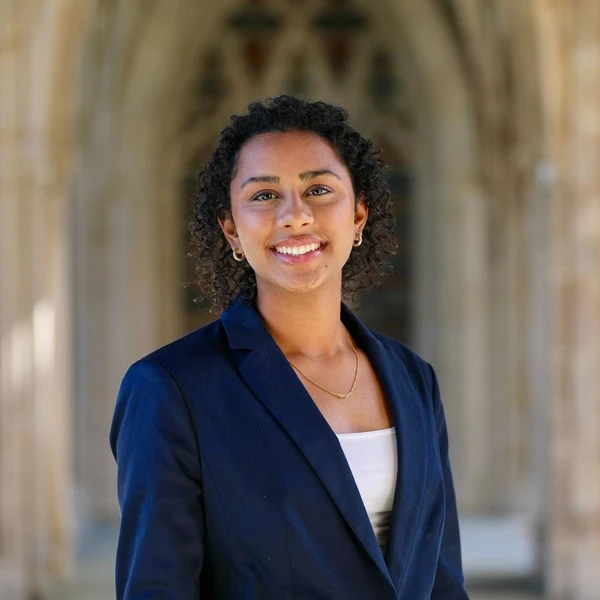
I am a junior at Duke University studying Computer Science and Education. I build technology that expands access to opportunity, including MedPull, an AI-powered multilingual patient intake platform, and YouUnited, which has connected over 35,000 students to internships, scholarships, and volunteer opportunities. I am passionate about using AI to make healthcare and education more accessible and empower individuals to take control of their futures.

Education

Duke University

Bachelor's degree program
2023 - 2027
  • Majors:
    • Computer Science
  • Minors:
    • Education, General

Mcneil High School

High School
2019 - 2023

Miscellaneous

  • Desired degree level:

    Master's degree program

  • Graduate schools of interest:

  • Transfer schools of interest:

  • Majors of interest:

    • Business Administration, Management and Operations
    • Computer Science
  • Not planning to go to medical school
  • Career

    • Dream career field:

      Computer Software

    • Dream career goals:

      Company Founder

      Future Interests

      Advocacy

      Volunteering

      Philanthropy

      Entrepreneurship

      Chris Jackson Computer Science Education Scholarship
      “What do you want to be when you grow up?” I ask Abdul, a nine-year-old from Afghanistan. We’re sitting in a trailer tucked into a corner of downtown Austin. “A teacher,” he says, eyes lighting up. That summer, I worked with refugee students through the Aspire Family Literacy Program. Our classroom was a patchwork of stories and languages, and it showed me a version of childhood very different from mine. What struck me was not a lack of ambition, but a lack of access. I left that summer thinking about how many doors stay closed simply because people do not know they exist or have the resources to reach them. I wanted to build something that could change that, and that was what first drew me to computer science. I taught myself JavaScript and built YouUnited, a platform that connects students to internships, scholarships, and volunteer opportunities. What started as a simple idea has grown to support over 35,000 students across 70 countries. What matters most to me is not the scale, but the stories: the student in Jordan who found a coding internship, the girl in Texas who partnered with a nonprofit to pass a bill protecting immigrant children. Building YouUnited showed me what happens when access and belief come together. As I kept building, I became interested not just in creating tools, but in understanding the systems behind them. I joined a research lab studying privacy risks in large language models and worked on satellite constellation design to improve internet access in underserved areas. I also built MedPull, a multilingual patient intake platform piloted at clinics and used by hundreds of patients, helping people communicate with providers and giving clinics more structured data. Through this, I started to see how small gaps in systems can scale into real barriers to care. The most important lessons I have learned have come from working directly with students. Teaching in Oman, in the remote coastal town of Khasab, reshaped how I think about education. When I asked the girls what they wanted to be, many said “housewives,” not because they lacked dreams, but because they had been raised to believe those were their only options. One of my students, Aya, was bright and curious, but had been told she could not go to college. By the end of the program, she and two others applied to schools in Switzerland and were accepted. Moments like these are why I want to keep building. I am especially drawn to entrepreneurship as a way to turn ideas into systems that can reach people at scale. I hope to continue building technology in education and healthcare that expands access. I keep thinking about Abdul, and students like Aya. Their curiosity, drive, and potential are not rare. They are everywhere. I want to keep building the kinds of tools that open doors and give people the opportunity to take control of their futures.
      Lyndsey Scott Coding+ Scholarship
      “What do you want to be when you grow up?” I ask Abdul, a nine-year-old from Afghanistan. We’re sitting in a trailer tucked into a corner of downtown Austin. For an hour, I am the teacher. The topic is careers. “A teacher,” he says, eyes lighting up. That summer, I worked with refugee students through the Aspire Family Literacy Program. Our classroom was a patchwork of stories and languages, and it showed me a version of childhood very different from mine. What struck me was not a lack of ambition. It was a lack of access. I left that summer thinking about how many doors stay closed simply because people do not know they exist, or do not have the resources to reach them. I wanted to build something that could change that. I taught myself JavaScript, learned web scraping, and built YouUnited, a platform that connects students to internships, scholarships, and volunteer opportunities. What started as a simple idea has grown to support over 35,000 students across 70 countries. What matters most to me is not the scale, but the stories. The student in Jordan who found a coding internship. The girl in Texas who partnered with a nonprofit to pass a bill protecting immigrant children. Building YouUnited showed me what happens when access and belief come together. As I continued building, I became interested not just in creating tools, but in understanding the systems behind them. I joined a research lab studying privacy risks in large language models, exploring how sensitive data can be memorized and exposed. I worked on satellite constellation design to improve internet access in underserved areas. I also built MedPull, a multilingual patient intake platform piloted at clinics, helping patients communicate with providers more easily and giving clinics more structured, usable data. Through this, I have started to see how small gaps in systems can scale into real barriers for people trying to access care. At the same time, the most important lessons I have learned have come from working directly with students. Teaching in Oman, in the remote coastal town of Khasab, reshaped how I think about education. When I asked the girls what they wanted to be, many said “housewives,” not because they lacked dreams, but because they had been raised to believe those were their only options. One of my students, Aya, was bright and curious, but had been told she could not go to college. By the end of the program, she and two others applied to schools in Switzerland and were accepted. Experiences like these have shaped what I want to keep doing. I want to build systems that expand access to education and healthcare, especially for communities that are often overlooked. I want to design technology that reflects the people it serves, not just in function, but in understanding. I keep thinking about Abdul, and students like Aya. Their curiosity, drive, and potential are not rare. They are everywhere. I want to keep building the kinds of tools that open doors and give people the opportunity to take control of their futures.
      Career Search Scholarship
      “What do you want to be when you grow up?” I ask Abdul, a 9-year-old boy from Afghanistan. We were in a trailer, quietly nestled into a crevice of downtown Austin. I was teacher for the hour–the topic: careers. Abdul shifts in his seat, quiet in thought. This summer, I had the opportunity to work with immigrant children at the ASPIRE family literacy program. This melting pot unraveled a reality very different from the one I had growing up. I listened to their stories. Abro walked a mile daily in the Texas heat to school. Krystal cared for her toddler sister while her single mom worked to provide for them. Many students went to schools with limited technology and few avenues to develop their interests. Eager to continue helping kids like Abro and Krystal, I founded FLY: a career-development program where high school students teach leadership and technology at under-resourced elementary schools. I started discussing with advisors from the nonprofit Communities in Schools about building curriculums. My supervisor, Wayne Williams, told me, “you cannot stand for someone without including them”. I realized I had forgotten step one: to collide vision with reality. Directly seeking student feedback would allow me to understand whether my program truly addresses their needs. Based on this feedback, I adapted the curriculums to include more interactive and game-based learning. I believe that the most successful leaders are those with a genuine desire to understand the people they serve. Months of debating with advisors, contacting schools, building curriculums–it was all built on the foundation of step one: listening to the students’ stories. FLY is now supporting over 340 students in 20 Austin schools. My passion for educational equity was first sparked during the pandemic. The pandemic’s endless hours magnified socioeconomic disparities, stunting intellectual growth for many students. I launched my nonprofit, YouUnited, driven by my vision: connecting students worldwide with career-development opportunities. Learning to program in Javascript, I coded the youunited.org website, providing a platform for students to share opportunities. Rallying support from over 400 volunteers worldwide, I hosted webinars connecting students and nonprofits and established a career mentoring program. YouUnited is now supporting over 4700 students from 73 countries. Through it all, I found that I love getting to know people–their struggles, their passions, their journey. “What do you want to be when you grow up?” My eyes focus back on Abdul. As I give an encouraging nod, I see the excitement in my smile light up his eyes. “A teacher,” he says. My smile grows wide. Abdul knew who he wanted to be. And for those that don’t, I want to instill them with the confidence to chase this question and provide the opportunities to explore the answer. We need equal access to education regardless of background. Through my career, I will continue to embrace diverse perspectives and relentlessly include those I serve. As a nonprofit entrepreneur, I aim to leverage technological innovation to further educational equity, especially in countries lacking educational infrastructure. The Career Search Scholarship will provide invaluable support for attending Duke University, where I can have the resources to explore my broad array of interests at the intersection of entrepreneurship, technology, and social work. By double-majoring in Computer Science and Economics, I want to develop the skills to run a social enterprise through both technological and operational perspectives. At Duke, I look forward to immersing myself in various organizations, while also serving as a champion in the surrounding community through nonprofit leadership. Through my career, I’ll continue to innovate so we can turn education from a commodity into a human right.