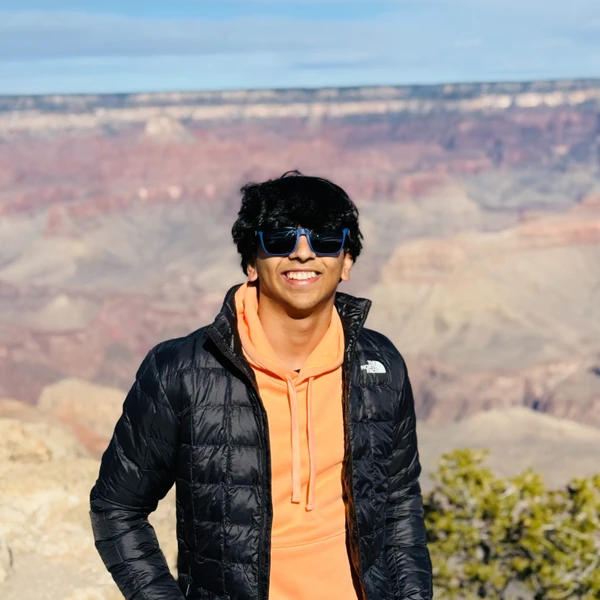
Hobbies and interests
Chess
Tennis
Coding And Computer Science
Math
Mathematics
Artificial Intelligence
Machine Learning
Computer Science
Boxing
Exercise And Fitness
STEM
Research
Kanav Agarwal
1x
Finalist
Kanav Agarwal
1x
FinalistBio
I am an incoming student at UIUC studying Computer Science who is passionate towards technology, and well versed with many computer programming languages. I love to help me community, by tutoring others with my strong academic skills to help them improve in those subjects. After High School, I wish to attend a top university to earn my bachelors and masters degree in computer science.
Education
University of Illinois at Urbana-Champaign
Bachelor's degree programMajors:
- Computer Science
University High School
High SchoolWest-Mec - Central Campus
Trade SchoolMajors:
- Computer Science
West High School (Torrance)
High SchoolMiscellaneous
Desired degree level:
Bachelor's degree program
Graduate schools of interest:
Transfer schools of interest:
Majors of interest:
- Computer Science
Career
Dream career field:
- Computer Software
Dream career goals:
Start a Technology Business
Multivariate Data Analysis Research Intern
Arizona State University2025 – 20261 yearYouth Fellow
AZ AANHPI for Equity2025 – 2025Research Intern
Arizona State University2025 – 2025
Sports
Tennis
Varsity2022 – 20242 years
Research
Computer Science
AP Research - University High School — Researcher2025 – PresentComputer Science
Arizona State University — Research Intern2025 – PresentSecurity Science and Technology
Arizona State University — Intern2025 – 2025Mechatronics, Robotics, and Automation Engineering
Grand Canyon University — Research Intern2025 – Present
Public services
Volunteering
Schoolouse.world — Tutor2024 – PresentVolunteering
Helping Hands Org — Tutor2022 – 2024
Future Interests
Volunteering
Entrepreneurship
Adrin Ohaekwe Memorial Scholarship
Chess taught me something most classrooms don’t - how to think several steps ahead while staying grounded in the present. That balance between vision and execution has shaped both how I approach problems and how I define my future. My career goal is to work at the intersection of computer science and artificial intelligence, building technology that expands access to education and empowers people at scale. I want to design systems that don’t just process information, but actually help people learn, think, and grow.
When I first started playing chess, I focused almost entirely on tactics - quick wins, flashy moves, and immediate results. But over time, I realized that strong players weren’t just reacting; they were planning. Every move had a purpose tied to a larger strategy. That shift from short-term thinking to long-term vision mirrors how I now approach my career. Success in fields like AI and software development isn’t about isolated achievements - it’s about building toward something meaningful over time, whether that’s mastering core concepts, developing impactful projects, or contributing to research.
Another key lesson chess has taught me is how to handle failure. In chess, mistakes are unavoidable, and one small oversight can cost the entire game. Early on, losses felt frustrating, but I learned to analyze them instead of avoiding them. I began asking: Where did my position start to weaken? What assumptions did I make that turned out to be wrong? That mindset directly applies to programming and research, where debugging and iteration are essential. Writing code that doesn’t work the first time isn’t failure - it’s part of the process. Chess trained me to stay patient, break down complex problems, and improve through deliberate practice.
Chess has also strengthened my ability to think under pressure. In timed games, there isn’t always enough time to calculate every possibility. You have to rely on intuition built from experience while still staying logical and composed. Similarly, in fast-paced environments like hackathons, competitions, or real-world problem solving, decisions often need to be made quickly but thoughtfully. Chess has helped me develop that balance between analytical thinking and instinct, which is critical in both computer science and leadership roles.
Finally, chess has taught me discipline and focus. Improvement doesn’t come from playing casually; it comes from studying openings, reviewing games, and consistently challenging yourself. That same discipline drives my academic and personal pursuits. Whether I’m preparing for competitions, working on coding projects, or tutoring students, I approach each task with intention and a desire to improve.
Ultimately, chess is more than a game to me - it’s a framework for thinking. It has shaped how I approach challenges, how I respond to setbacks, and how I plan for the future. As I pursue a career in artificial intelligence and technology, the lessons I’ve learned from chess - strategic thinking, resilience, adaptability, and discipline - will continue to guide me. They remind me that success isn’t about a single move, but about consistently making thoughtful decisions that lead toward a greater goal.
Christian Fitness Association General Scholarship
Education has always been more than a personal goal for me - it has been a responsibility. I believe knowledge becomes meaningful when it is used to help others grow. Whether through tutoring students across the world, leading academic clubs, or developing technology to support learning, I have tried to use every opportunity not only to challenge myself, but also to expand opportunities for those around me. My academic achievements and extracurricular involvement reflect a consistent commitment to learning, leadership, and service.
Academically, I have pursued the most rigorous opportunities available to me. Maintaining a 4.0 GPA while taking advanced coursework has required discipline and persistence, especially while balancing multiple responsibilities outside the classroom. I have taken several Advanced Placement courses across subjects including physics, statistics, and English, challenging myself in both analytical and communication-focused disciplines. Standardized testing has also been an important part of my academic journey. I earned a 31 on the ACT, including a 36 in Math and a 34 in Science, and scored a 1440 on the SAT with a 790 in Math. These results reflect my strong interest in quantitative problem solving and my commitment to mastering difficult concepts through consistent practice.
Beyond the classroom, I have been deeply involved in academic competitions and leadership roles. I co-founded and currently serve as the Vice President of my school’s Olympiads Club, an organization dedicated to preparing students for challenging math and science competitions such as the National Science Bowl and Math League. Starting the club required building interest among students, organizing meetings, and creating a collaborative environment where members could challenge one another while growing together. Through this club, I have helped cultivate a community of students who are excited about tackling complex problems and pushing the boundaries of their knowledge.
In addition, I serve as Treasurer of the Coding and Web Development program at West-MEC. In this role, I manage finances, help organize events, and support activities that strengthen our program’s community. Leadership in this position has taught me that successful organizations depend on both strong planning and teamwork. Whether organizing fundraisers or coordinating group activities, I have learned how to balance responsibility with collaboration.
Service has been one of the most meaningful aspects of my journey. As a volunteer tutor with Schoolhouse.world, I have dedicated more than 100 hours to helping students across the globe learn high school subjects and prepare for exams such as the SAT. Many of the students I work with do not have access to private tutors or extensive academic resources. Through tutoring sessions and SAT math bootcamps that I have hosted, I try to provide not just explanations, but also encouragement and confidence. Watching students who once struggled with basic algebra begin solving problems independently has been one of the most rewarding experiences of my life.
My interest in technology has also shaped how I think about solving problems. I am currently studying coding and web development through West-MEC, where I have gained experience programming in languages such as Python and Java. Recently, I began developing an AI-powered tutoring system designed to help students practice SAT math and receive feedback on their answers. The idea behind the project is simple: students everywhere deserve access to guidance when they are learning something difficult. If technology can help provide that support, even when a teacher or tutor is not available, it can become a powerful tool for expanding educational opportunity.
These academic, leadership, and service experiences have reinforced my long-term goal of working in computer science and artificial intelligence. I hope to study computer science in college and eventually develop technologies that make high-quality education more accessible and personalized. Artificial intelligence has the potential to transform how students learn by providing interactive explanations, practice opportunities, and feedback tailored to individual needs. I want to contribute to building systems that make those possibilities available to students regardless of their financial background or location.
Receiving this scholarship would allow me to continue pursuing these goals with greater focus and determination. Higher education represents a significant investment, and financial support would help reduce the burden on my family while allowing me to devote more time to research, learning, and service. More importantly, it would support the mission that has guided many of my activities so far: using knowledge and technology to expand opportunities for others.
Throughout my academic journey, I have tried to approach every challenge with curiosity and persistence. Whether solving a difficult physics problem, organizing a club meeting, or guiding a student through their first successful math solution, I have learned that growth comes from both effort and collaboration. I hope to carry those lessons with me as I continue my education and work toward creating technologies that empower students around the world.
For these reasons, I hope you will consider me for this scholarship. It would not only support my academic ambitions, but also help me continue pursuing my broader goal of using education and technology to make a meaningful difference in the lives of others.
Grover Scholarship Fund
My long-term career objective is to work at the intersection of artificial intelligence, computer science, and education. I hope to study computer science at a leading university and focus on artificial intelligence and machine learning. My goal is not only to advance the technical capabilities of AI systems, but also to apply those technologies in ways that expand access to education. I believe that AI has the potential to transform how students learn by making personalized instruction more accessible, scalable, and affordable.
My interest in this field grew from both my academic experiences and my work tutoring students. Through volunteering as an online tutor, I have worked with students from many different backgrounds who are preparing for exams such as the SAT. Many of these students are capable and motivated, yet they lack access to consistent academic support or tutoring resources. Seeing those gaps firsthand made me realize how uneven access to education can be. At the same time, studying computer science showed me how technology could help address this challenge. These experiences motivated me to begin developing tools that use AI to support learning, such as systems that generate practice questions and provide feedback to students as they work through problems.
In college and beyond, I hope to deepen my understanding of artificial intelligence and participate in research that explores how these technologies can be used responsibly and effectively. I am particularly interested in developing AI systems that assist students with problem-solving, explanation, and practice. Over time, I hope to build platforms that function like accessible, intelligent tutors, giving students guidance when teachers or mentors are not available. Ultimately, my career goal is to create technologies that help expand educational opportunity and empower students to reach their full potential.
Financial support will play an important role in helping me pursue these goals. Higher education represents a significant financial commitment, and scholarships and aid would allow me to focus more fully on my studies, research, and service rather than financial stress. Receiving financial assistance would not only reduce the burden on my family, but also give me the freedom to continue developing educational tools and participating in research projects that align with my long-term mission.
With the right educational opportunities and support, I hope to build a career that combines technical innovation with social impact. My goal is to contribute to a future where technology helps remove barriers to learning, ensuring that students everywhere have access to the knowledge and support they need to succeed.
Our Destiny Our Future Scholarship
For most of my life, I have believed that education is the most powerful way to change the world. Not because it guarantees success, but because it gives people the ability to shape their own futures. Yet the more I have worked with students as a tutor, the more I have realized that access to quality education is still deeply uneven. Some students have private tutors, advanced classes, and constant support, while others struggle alone with limited resources. My goal is to help close that gap by building technology that makes high-quality learning accessible to anyone.
I first began thinking seriously about this problem while tutoring students online through Schoolhouse.world. Many of the students who joined my sessions were talented and motivated, but they often lacked the support systems that others take for granted. Some had never been taught the reasoning behind the math they were expected to solve. Others simply needed more practice and feedback than their classrooms could provide. Seeing this firsthand made me realize that the barrier to learning is rarely ability; more often, it is access. That experience inspired me to begin exploring how technology could help provide the guidance that many students never receive.
As a student interested in computer science and artificial intelligence, I began experimenting with ways to combine education and technology. One project I have been developing is an AI-powered SAT math tutor that runs locally on a computer. Instead of simply giving answers, the system is designed to generate questions, evaluate student responses, and provide step-by-step feedback. My goal is for tools like this to function as a kind of virtual tutor - something that can guide students through difficult concepts even if they do not have access to expensive courses or private instruction. By making these tools free and accessible, I hope they can reach students who might otherwise be left behind.
Beyond building tools, I also want to contribute to research that pushes the boundaries of artificial intelligence while keeping human impact at the center. AI is becoming one of the most powerful technologies of our time, but its benefits are not always distributed equally. I want to work on systems that are not only advanced, but also responsible and accessible. Whether that means improving educational AI, developing tools that detect online harm, or creating technologies that support underserved communities, I want my work to focus on problems that genuinely improve people’s lives.
At the same time, I believe that technology alone is not enough. Real impact also comes from community and mentorship. Through tutoring and volunteering, I have seen how encouragement and guidance can transform a student’s confidence. Even as I pursue research and development in the future, I hope to continue mentoring students and supporting educational initiatives that expand opportunities for young learners.
Ultimately, the positive impact I hope to make is simple in principle, even if it is complex in practice: I want to use technology to make learning more accessible, more personalized, and more empowering. When students gain the knowledge and confidence to solve problems independently, the effects extend far beyond the classroom. Education does not just change individual lives; it strengthens entire communities. By helping more people access that opportunity, I hope to contribute to a world where potential is not limited by circumstance.
Arthur Walasek Computer Science Memorial Scholarship
What draws me to computer science is not just the technology itself, but the leverage it gives one person to impact thousands - sometimes millions - of lives. A well-written piece of code can scale beyond geography, income level, or background. That idea fascinates me. It feels like building tools that quietly reshape how people learn, work, and solve problems.
I first became interested in computer science through problem solving. There is something deeply satisfying about breaking a complex problem into smaller logical pieces and watching a solution come together line by line. Programming feels like structured creativity. You start with constraints - inputs, outputs, efficiency - and within those boundaries, you design something elegant. The moment when code finally runs after hours of debugging is more than relief; it is proof that persistence and logic can transform confusion into clarity.
Over time, my interest expanded beyond just writing programs. I became fascinated by artificial intelligence, especially language models and educational technology. I have spent time building and experimenting with AI-based systems that help students practice SAT math, generate questions, and receive feedback. What excites me most is not the complexity of the model itself, but the possibility of making high-quality tutoring accessible to students who might not otherwise have it. Education should not be limited by cost or location. Computer science makes it possible to challenge that limitation.
The field I see myself working in is artificial intelligence, particularly at the intersection of machine learning and education. AI systems are becoming more capable of understanding language, recognizing patterns, and adapting to user needs. If designed responsibly, they can personalize learning in ways that traditional classrooms struggle to achieve. A student who is confused about a concept does not need a generic explanation; they need one tailored to how they think. I want to work on systems that can do exactly that - models that diagnose misunderstandings, adjust difficulty dynamically, and explain reasoning clearly.
I am also drawn to the research side of computer science. There is something powerful about contributing to foundational advancements - improving model efficiency, optimizing training methods, or making systems more secure and interpretable. As AI systems grow larger, questions of fairness, transparency, and safety become even more important. I want to be part of shaping not only what these systems can do, but how they are built and governed.
Ultimately, computer science inspires me because it combines logic, creativity, and impact. It rewards curiosity and demands discipline. It allows someone with an idea and a laptop to build something that meaningfully improves lives. I do not just want to use technology; I want to create it. And I want that creation to expand access to knowledge, empower students, and make learning more equitable for everyone.
New Beginnings Immigrant Scholarship
Growing up as the child of immigrants has shaped nearly every part of who I am, from how I view education to how I define success. My parents immigrated to the United States in search of better opportunities, carrying with them not only their hopes but also the pressure to make sacrifices worthwhile. From a young age, I became aware that education was not just a personal goal in my household, but a responsibility. It was seen as the most reliable way to create stability, mobility, and the chance to give back what had been given to us.
Navigating two cultures simultaneously has been both challenging and formative. At home, I grew up speaking Hindi and staying closely connected to my family’s traditions and values. Outside, I learned to adapt quickly, communicate clearly, and advocate for myself in academic and social spaces that did not always reflect my background. At times, this dual identity created tension, especially when expectations felt unclear or when I struggled to explain my goals across cultural contexts. However, these experiences taught me resilience, adaptability, and empathy. I learned how to listen carefully, bridge gaps in understanding, and persist even when the path forward was uncertain.
These lessons carried directly into my academic journey. As a student at University High School who also studies Coding and Web Development at West-MEC, I challenged myself with rigorous coursework while pursuing opportunities in research, leadership, and community service. Technology became a space where curiosity and practicality met. Computer science, in particular, appealed to me because it offered a way to build solutions that could scale impact beyond one person or one community. I saw it as a field where hard work, creativity, and problem-solving mattered more than background, and where I could create tools that make opportunities more accessible to others.
My immigrant experience has strongly influenced my career aspirations. I hope to pursue a career in computer science focused on areas like cybersecurity, artificial intelligence, and educational technology. I am especially interested in using technology to protect vulnerable users and expand access to learning. Watching family members navigate complex systems, whether related to education, technology, or everyday services, showed me how confusing and inaccessible these systems can be. That perspective motivates me to design technology that is clear, inclusive, and built with real people in mind.
Beyond technical goals, I aspire to remain connected to mentorship and service. I want to support students who may feel unsure of their place in academic or professional spaces, just as I once did. Being the child of immigrants taught me that progress often comes from persistence and community rather than individual achievement alone. In the future, I hope to honor my family’s sacrifices by using my education not only to build a successful career, but also to uplift others. My immigrant experience has given me both direction and purpose, and it continues to guide the impact I hope to make through my work.
Lyndsey Scott Coding+ Scholarship
My goals in computer science are closely tied to my broader personal values and interests. As a senior at University High School who also studies Coding and Web Development at West-MEC, I have spent much of my time exploring how technology can be used to solve real problems. In computer science, my primary goal is to pursue a degree that allows me to build a strong foundation in algorithms, systems, and data analysis, with particular interests in cybersecurity, artificial intelligence, and educational technology. I enjoy working on problems that require both technical depth and creative thinking, especially when the outcome can improve how people learn or stay safe online.
Beyond computer science, I have goals that focus on service, mentorship, and personal growth. I value education deeply and hope to remain involved in teaching and mentoring, even if it is not my primary career. Tutoring students has shown me how access to guidance can change a person’s confidence and trajectory, and I want to continue supporting others as they navigate academic challenges. I am also interested in leadership and community-building, particularly in creating environments where students feel supported, challenged, and encouraged to explore their interests. These non-technical goals reflect my desire to contribute meaningfully to the communities I am part of.
I see my future as one where these goals are not separate, but connected. One way I plan to combine them is by developing technology that expands access to education. Through my experience tutoring, I noticed that many students struggle when learning independently and lack personalized feedback. This led me to work on an AI-based study assistant that provides step-by-step guidance rather than simple answers. Projects like this represent how I hope to integrate computer science with mentorship and service. By building tools that support learning, I can apply technical skills while staying connected to the human side of education.
My research experiences have further shaped this vision. Working in cybersecurity and machine learning research taught me that technology carries responsibility. Decisions made in code can affect privacy, safety, and trust. This awareness has influenced my non-computer science goals of ethics, empathy, and accountability. I want to approach technical work with a strong sense of responsibility, ensuring that systems are designed thoughtfully and inclusively.
In the long term, I hope to work in a role that allows me to build impactful technology while remaining engaged in teaching, mentorship, and outreach. Whether through open-source projects, educational platforms, or community programs, I want to use my computer science background to amplify my non-technical goals rather than replace them. By combining technical expertise with service and leadership, I aim to create solutions that are not only innovative, but also accessible, ethical, and meaningful to the people they serve.
Sunshine Legall Scholarship
My academic and professional goals are rooted in a desire to use knowledge as a tool for impact. As a senior at University High School who also studies Coding and Web Development at West-MEC, I have spent the past several years intentionally challenging myself through advanced coursework, research, and leadership opportunities. Academically, my goal is to pursue a degree in computer science at a research-focused university, where I can deepen my understanding of areas such as cybersecurity, artificial intelligence, and data-driven systems. Professionally, I hope to work on technology that addresses real-world problems, especially those related to education access and digital safety.
What motivates these goals is not just an interest in technology, but a belief that skills have the most value when they are shared. Giving back to my community has been a defining part of my journey and has shaped how I see my role in the world. One of the most meaningful ways I have contributed is through tutoring on Schoolhouse.world, where I help students prepare for AP exams and standardized tests. Many of the students I work with struggle not because they lack ability, but because they lack guidance or confidence. Seeing a student go from frustration to understanding, or from self-doubt to confidence, has been incredibly rewarding and has shown me the power of mentorship.
I have also given back through leadership roles in technology-focused programs. As Treasurer for my school’s Coding program, I help manage resources, organize fundraisers, and support collaborative projects that allow students to explore computer science together. Co-founding the Olympiads Club further allowed me to create a space where students could challenge themselves academically while supporting one another. These experiences taught me that leadership is not about authority, but about creating opportunities for others to succeed.
My involvement in research has also influenced how I think about impact. Through research internships in cybersecurity, machine learning, and computer vision, I learned how technical work can directly affect people’s lives, whether by protecting users from online scams or improving how systems interpret data. These experiences reinforced my desire to pursue work that is both technically rigorous and socially responsible.
Giving back to my community has inspired me to think beyond individual success. It has shown me that meaningful change often begins at a small, local level through tutoring, mentoring, and sharing knowledge. In the future, I hope to continue mentoring students and developing tools that make learning more accessible, particularly for those from underserved backgrounds. My academic and professional goals are driven by the belief that progress is most powerful when it is inclusive. By combining technical expertise with service and mentorship, I hope to make a difference that extends beyond my own achievements and contributes to a more equitable and informed world.
Justin Moeller Memorial Scholarship
I am a senior at University High School, and alongside my coursework there, I study Coding and Web Development at West-MEC. My interest in technology started early, driven by curiosity about how systems work and how software can solve real problems. Over time, that curiosity evolved into a focused interest in computer science, particularly in areas where technology intersects with security, data, and education. I enjoy working on projects that require both analytical thinking and creativity, and I am especially drawn to technology that has a meaningful impact beyond the screen.
One of the aspects of the technology field that interests me most is cybersecurity. I am fascinated by how systems can be protected against misuse and how data-driven tools can identify threats before they cause harm. This interest led me to pursue research opportunities, including a summer cybersecurity research internship at Arizona State University’s SEFCOM Research Lab. During that experience, I worked with a PhD mentor to analyze scam e-commerce kits and build Python-based tools for threat detection. The project introduced me to real-world security challenges and showed me how research, programming, and ethical responsibility intersect in information technology.
I am also deeply interested in machine learning and data analysis, particularly how algorithms can uncover patterns in complex data. Through research programs such as ASU’s Science and Engineering Experience, I explored causal machine learning and event detection on multivariate time series data. This work required me to engage with large datasets, experiment with models, and interpret results critically. I also participated in a research project at Grand Canyon University focused on AI and computer vision, where I worked on no-GPS navigation concepts and model evaluation under faculty mentorship. These experiences strengthened my technical skills and helped me understand how theoretical concepts are applied in practical research environments.
Beyond research, I am involved in several technology-focused clubs and leadership roles. I serve as Vice-President and Treasurer for my school’s Coding program, where I help manage finances, organize fundraisers, and support collaborative projects. I am also a co-founder of the Olympiads Club, where I compete in math and science competitions and help other students prepare. In addition, I tutor students through Schoolhouse.world, assisting peers with STEM subjects and reinforcing my own understanding through teaching.
Through these projects and activities, I have developed a strong interest in building technology that is both effective and accessible. I enjoy working at the intersection of problem-solving, collaboration, and innovation. As I continue my education, I hope to deepen my understanding of information technology and apply it to areas such as cybersecurity, artificial intelligence, and educational technology, using my skills to create solutions that are secure, inclusive, and impactful.
Richard Neumann Scholarship
One of the most meaningful things I have created began as a small personal project and gradually grew into something designed to help others. While tutoring students in math and computer science, I noticed a recurring problem: many students understood concepts during live sessions, but struggled when they practiced alone. They often did not know where they went wrong, and generic answer keys did little to address misconceptions. I realized that the problem was not a lack of effort, but a lack of personalized, immediate feedback.
To address this, I built a prototype of an AI-powered study assistant using Python. The tool allowed students to input their solution to a problem and receive step-by-step feedback rather than a simple correct or incorrect response. It analyzed common error patterns and provided hints tailored to the student’s approach. For me, the project was a way to combine tutoring experience with technical skills, but for students, it became a resource that reduced frustration and built confidence. Seeing students improve not just their scores, but their understanding, reinforced the value of building technology with real users in mind.
If I had the money and resources to expand this project, I would transform it into a fully accessible learning platform. The first step would be building a scalable backend capable of supporting large numbers of users while running locally or with minimal internet access. This would ensure students in under-resourced areas could still benefit. I would also invest in refining the natural language processing models so the system could better understand handwritten or typed responses across subjects, not just math.
The next phase would involve collaboration with educators to align the platform with curriculum standards and learning goals. Teachers could use dashboards to track student progress, identify patterns of misunderstanding, and tailor instruction accordingly. Students would have adaptive practice sets that adjust in difficulty based on performance, reinforcing mastery rather than speed. Importantly, the platform would prioritize privacy and transparency, ensuring students understand how their data is used and protected.
With additional resources, I would also focus on accessibility. This would include multilingual support, simplified interfaces for younger students, and accommodations for students with learning differences. Volunteers and educators could contribute curated problem sets, explanations, and mentoring sessions, turning the platform into a community-driven ecosystem rather than a static tool.
Ultimately, this project reflects how I approach problem-solving: start small, listen to users, and build with intention. Technology should reduce barriers, not create them. By expanding this tool with the right funding and support, I believe it could help students learn more confidently and independently, especially those who lack consistent academic support. Creating it taught me that the most impactful solutions come from understanding people’s struggles firsthand and designing with empathy, scalability, and long-term impact in mind.
Julie Holloway Bryant Memorial Scholarship
I am a senior at University High School, and alongside my coursework there, I study Coding and Web Development at West-MEC. I am someone who enjoys learning by building, whether that means writing code, tutoring other students, or working on long-term projects that challenge me to think critically. Much of my high school experience has been shaped by balancing rigorous academics with leadership, research, and community involvement. These experiences have helped me develop discipline, curiosity, and a strong sense of responsibility toward using my skills to help others.
After graduation, I plan to pursue a degree in computer science at a research-focused university. I am particularly interested in areas like cybersecurity, artificial intelligence, and technology for social good. Long term, I hope to work on systems that make education more accessible and technology safer, especially for communities that may not have equal access to resources or guidance. I also plan to stay involved in mentoring and tutoring, since supporting other students has been one of the most meaningful parts of my journey so far.
My first language is English, but I am also bilingual in Hindi. Growing up in a bilingual household shaped the way I communicate and understand the world. One of the challenges of being bilingual has been navigating situations where language becomes a barrier, especially when translating complex ideas or emotions between generations. At times, it required extra patience and effort to explain academic or technical concepts to family members in a way that made sense across languages and cultural contexts. This experience taught me to be clear, thoughtful, and adaptable in how I communicate.
At the same time, being bilingual has offered significant benefits. It has allowed me to connect more deeply with my family and cultural roots while also developing strong communication skills. Switching between languages has made me more aware of tone, context, and audience, skills that are especially valuable in leadership and collaborative environments. It has also helped me become a better listener and more empathetic, since understanding someone often requires more than just translating words.
Being bilingual has also influenced how I approach my goals. It has reinforced the importance of accessibility, whether in education, technology, or communication. I have seen firsthand how language can either open doors or create obstacles, and that perspective motivates me to design tools and systems that are inclusive and easy to use. In tutoring and mentoring, I try to be mindful of different learning styles and backgrounds, ensuring that students feel understood and supported.
Overall, my background, academic experiences, and bilingual identity have shaped both who I am and who I hope to become. As I move forward after graduation, I plan to continue learning, building, and giving back. I want to use my education not only to advance my own goals, but also to create opportunities for others, drawing on the adaptability, empathy, and perspective that come from being bilingual and deeply engaged in my community.
Learner Mental Health Empowerment for Health Students Scholarship
Mental health is important to me as a student because it directly affects how I learn, grow, and show up for others. For a long time, I believed that success meant constantly pushing myself without slowing down. As a high-achieving student involved in advanced coursework, research, leadership roles, and tutoring, I often measured my worth by productivity. Over time, I realized that ignoring mental health does not lead to long-term success. Instead, it leads to burnout, self-doubt, and exhaustion that can quietly undermine motivation and confidence.
I became more aware of this during a particularly demanding period when I was balancing school, research commitments, and extracurricular leadership. I was meeting deadlines and performing well on paper, but internally I felt overwhelmed and mentally drained. I struggled with the pressure to always perform at a high level and hesitated to talk about it, assuming others were handling similar workloads better than I was. Eventually, I learned that taking care of my mental health was not a sign of weakness, but a necessary part of sustaining growth and learning. I began setting healthier boundaries, managing my time more intentionally, and allowing myself space to rest without guilt.
As a result of this experience, I have become more intentional about advocating for mental health in my school and community. One of the ways I do this is through peer support. As a tutor and mentor, I make a conscious effort to check in with students beyond academics. When working with students who are struggling, I emphasize progress over perfection and remind them that setbacks are part of learning, not a reflection of their ability or worth. Creating a supportive environment where students feel comfortable asking questions or making mistakes helps reduce anxiety and builds confidence.
In my school community, I also advocate for mental health by being open about challenges in a balanced and responsible way. I try to normalize conversations about stress, burnout, and balance, especially among students who feel pressure to constantly excel. Sometimes advocacy looks like encouraging a friend to take a break, helping someone organize their workload, or simply listening without judgment. These small actions create a culture where students feel supported rather than isolated.
Mental health matters to me because it shapes how students experience education. When mental well-being is prioritized, students are more resilient, motivated, and capable of reaching their potential. I have learned that success is not just about achievement, but about sustainability. By advocating for mental health through empathy, communication, and support, I hope to contribute to a community where students feel valued not just for what they accomplish, but for who they are.
Valerie Rabb Academic Scholarship
I am a senior at University High School and also study Coding and Web Development at West-MEC, where I gain hands-on experience in programming, project management, and collaborative problem-solving. From an early age, I have been drawn to understanding how things work and creating solutions that make a tangible difference. This curiosity has shaped my academic path, leadership roles, and the way I spend my time outside of the classroom. Beyond academics, I dedicate time to tutoring students through Schoolhouse.world, helping peers prepare for AP exams and standardized tests. Volunteering has been one of the most rewarding parts of my high school experience because it allows me to see how guidance and support can transform confidence and opportunity.
I plan to pursue a career in computer science, focusing on creating technologies that expand access to education and improve digital security. I see computer science as a way to design systems that scale solutions for real-world problems, whether by building adaptive learning tools for students or developing algorithms that detect and prevent online scams. I want to use my skills to empower others, particularly those who lack access to reliable resources, mentorship, or guidance. Beyond technical work, I aim to mentor and teach, helping others develop both the knowledge and confidence to pursue opportunities in STEM fields.
One significant adversity I faced was during a summer research internship in cybersecurity at Arizona State University. I was tasked with analyzing scam e-commerce kits and building Python-based tools to detect threats. At first, I struggled with complex datasets and debugging code that repeatedly failed. Balancing the internship with my academic workload and tutoring responsibilities made the situation feel overwhelming, and I doubted my ability to succeed. I overcame this by breaking the project into smaller, manageable tasks, asking for guidance from my mentor, and dedicating consistent time to learning each new concept. Gradually, my tools began to function correctly, and my findings were presented at a poster symposium. This experience taught me resilience, problem-solving, and the importance of persistence and seeking help when needed.
Overcoming that challenge shaped my approach to both academics and life. I learned that setbacks are not failures but opportunities to grow and strengthen skills. It reinforced the value of patience, planning, and reflection, which I now carry into tutoring, club leadership, and research projects. I also developed greater confidence in my ability to tackle complex problems independently while collaborating effectively with others.
Looking ahead, I hope to combine technical expertise, mentorship, and community service to make a positive impact. By developing tools and systems that provide education, protect users, and expand opportunities, I aim to contribute to a world where knowledge and safety are more accessible. I also plan to mentor and inspire the next generation of students in STEM, helping them navigate challenges with persistence and confidence. My experiences have taught me that the most meaningful impact comes from combining skill, compassion, and dedication to service, and I intend to carry these principles into my career and beyond.
Simon Strong Scholarship
Adversity has a way of teaching lessons that no classroom ever could. For me, one of the most challenging periods came during my sophomore year when I took on an independent research project in cybersecurity while balancing a full course load and extracurricular commitments. The project involved analyzing scam e-commerce kits and building Python-based tools to detect online threats. At first, everything seemed manageable, but as the complexity of the research increased, I quickly realized that I was in over my head. I encountered code that didn’t work, datasets that were incomplete, and analysis methods I didn’t fully understand. At the same time, I had to maintain my academic performance and continue my tutoring and leadership responsibilities. The stress felt overwhelming, and I began doubting my ability to succeed.
I overcame this adversity by breaking the challenge into smaller, manageable steps and seeking guidance when necessary. I spent hours researching each problem, debugging my code line by line, and consulting my mentor for feedback. I also learned to manage my time more intentionally, creating a schedule that balanced research, academics, and personal well-being. Slowly, the project began to take shape. Each small success, whether a working algorithm or a clear finding, reinforced my confidence and showed me that persistence and strategic problem-solving could overcome even the most complex challenges.
This experience shaped me profoundly. It taught me that adversity is not just an obstacle but an opportunity for growth. I became more resilient, patient, and resourceful, and I learned to approach challenges with a structured mindset rather than panic or frustration. I also gained humility, recognizing that seeking help is a strength, not a weakness, and that learning from others is a critical part of success. Beyond technical skills, I developed leadership and time-management skills that I now apply in academics, tutoring, and extracurricular projects.
If I were to give advice to someone facing similar circumstances, I would say this: break problems into smaller steps, seek guidance when needed, and be patient with yourself. Focus on the process rather than the immediate outcome. Success rarely comes all at once, but consistent effort and willingness to learn will carry you further than talent alone. Adversity is not a sign of failure; it is a chance to build skills and character that will serve you for life.
Looking ahead, I carry these lessons into every aspect of my life. Whether tackling a complex research problem, leading a team in a competition, or mentoring students, I approach challenges with persistence, structure, and a willingness to learn. Adversity taught me that resilience is built through experience and reflection, and that mindset will guide me in future endeavors, both academic and personal.
Kalia D. Davis Memorial Scholarship
I am a senior at University High School, and I also study Coding and Web Development at West-MEC, where I gain hands-on experience in programming, project management, and collaborative problem-solving. From an early age, I have been drawn to understanding how things work and finding ways to make them better. This curiosity has shaped my academic path, my leadership roles, and my commitment to helping others. I enjoy learning independently, exploring projects in computer science, and tutoring students through Schoolhouse.world, helping them prepare for AP exams and standardized tests. Volunteering has been one of the most rewarding parts of my high school experience because it allows me to see how guidance and support can transform a student’s confidence and opportunity.
Beyond academics, I have taken on leadership roles that have strengthened my skills and sense of responsibility. I serve as Treasurer for my school’s Coding program, where I manage finances, organize fundraisers, and coordinate team-building events. I also co-founded the Olympiads Club, where I compete in math and science competitions and help other students prepare. These experiences have taught me how to organize, communicate, and collaborate effectively. I have also participated in multiple research internships, exploring cybersecurity, machine learning, and computer vision. These projects challenged me to apply theory in practical settings, work with mentors, and persist through uncertainty. Together, my academic, leadership, and service experiences have shaped me into someone who values curiosity, discipline, and the impact of helping others succeed.
This scholarship would provide critical support in continuing my education and pursuing opportunities that extend beyond the classroom. Financial assistance would allow me to focus more fully on research, mentorship, and academic growth without the pressure of balancing multiple jobs or cutting back on valuable learning experiences. More than that, receiving this scholarship would affirm that my efforts and goals are meaningful and worth investing in. It would help me continue developing skills that not only advance my own education but also allow me to contribute positively to my community.
I plan to use the opportunities this scholarship enables to give back in multiple ways. I will continue mentoring students, tutoring in STEM subjects, and sharing resources to make learning more accessible. I want to create tools and programs that expand access to education, especially for students who may lack support or resources. Long term, I hope to pursue a career in computer science that combines technical expertise with community impact, designing systems that solve real-world problems and empower others to succeed.
This scholarship would not just support my academic goals; it would also allow me to continue building projects, mentorship programs, and opportunities that benefit others. I see it as both an investment in my growth and a responsibility to pay that opportunity forward by supporting the next generation of learners and innovators.
Student Referee Scholarship
One of my favorite memories as a referee occurred during a tense middle school soccer match. It was the final game of a local tournament, and both teams were tied in the final minutes. The game was fast-paced, and emotions were running high. During a critical play, a player from one team collided with another, and both were on the ground. Parents and coaches immediately started shouting from the sidelines, each insisting I make a call in their favor. In that moment, I realized how much responsibility comes with officiating. I had to quickly assess the situation, apply the rules fairly, and communicate my decision clearly, all while keeping the players safe and the game moving. I called a foul but explained calmly to both teams why the decision was made. Seeing the players accept it, reset, and continue playing reminded me that fairness and clear communication can maintain trust, even under pressure. That moment reinforced why I love refereeing: it challenges me to remain composed, impartial, and confident in my judgment.
Refereeing has taught me lessons that extend far beyond the field. It has strengthened my ability to stay calm under pressure, make quick decisions, and handle conflict effectively. I have learned the importance of empathy and perspective, recognizing that players, coaches, and spectators all experience the game differently. Leadership as a referee does not come from authority alone, but from demonstrating fairness, maintaining control, and modeling sportsmanship. I have grown more confident in managing groups of people, resolving disputes, and communicating clearly—skills that transfer to school, work, and community projects.
Officiating sports has also reinforced discipline and accountability. Every game requires preparation, attentiveness, and adherence to rules. I have learned that consistency is key: players respect referees who are reliable and fair, and this consistency builds trust and credibility. Mistakes happen, but owning them, learning from feedback, and improving for the next game has shaped my character and taught me humility.
Looking ahead, I plan to continue officiating as I pursue higher education and professional goals. I hope to referee at more competitive levels and mentor younger referees, passing on the lessons I have learned about fairness, communication, and leadership. Refereeing has shown me that even in challenging or high-pressure situations, maintaining integrity and composure allows people to respect both the process and the individuals involved. I aspire to carry these principles into all aspects of my life, including future careers in STEM and leadership roles, using the skills honed on the field to guide decisions, manage teams, and positively influence my community.
Refereeing is more than a volunteer role or a pastime; it is an opportunity to practice leadership, develop resilience, and create environments where fairness and respect matter. That one tense game I will always remember embodies the lessons, growth, and responsibility I have gained, and it continues to inspire how I approach challenges both on and off the field.
Aserina Hill Memorial Scholarship
I am a senior at University High School, where I focus on rigorous coursework and participate in a variety of academic and extracurricular activities. On the side, I study Coding and Web Development at West-MEC, where I gain hands-on experience in programming, project management, and collaborative problem-solving. I have always been drawn to technology and problem-solving, which led me to explore computer science through both coursework and independent projects. Beyond academics, I dedicate time to tutoring students through Schoolhouse.world, helping peers prepare for AP exams and standardized tests. Volunteering has been one of the most rewarding parts of my high school experience because it allows me to see how guidance and support can transform confidence and opportunity.
In addition to tutoring, I am involved in several leadership and extracurricular roles. I serve as Treasurer for my school’s Coding program, where I manage finances, organize fundraisers, and coordinate team-building events. I also co-founded the Olympiads Club, where I compete in math and science competitions and help other students prepare. These experiences have taught me leadership, organization, and the importance of collaboration. I also dedicate time to community service projects, helping younger students learn coding and participating in local outreach initiatives. These experiences have shaped how I approach problem-solving and the value I place on service and mentorship.
After high school, I plan to pursue a degree in Computer Science at a university with strong research and innovation programs, such as MIT or a similar institution. I hope to focus on projects that expand access to education and strengthen cybersecurity, using technology to solve real-world problems. I want to combine technical skill with mentorship, ensuring that the next generation of students can benefit from guidance and opportunities that were instrumental in my own growth.
If I could start my own charity, its mission would be to make STEM education accessible to students from underserved communities. The organization would focus on providing tutoring, mentorship, and hands-on workshops that allow students to learn coding, robotics, and other STEM skills in a supportive environment. Volunteers would serve as mentors, tutors, and instructors, leading small-group lessons, organizing workshops, and providing one-on-one support. They would also help students develop problem-solving and critical thinking skills, encouraging curiosity and resilience. The goal would be to give students not only technical skills but also the confidence to pursue STEM opportunities, whether in high school, college, or future careers.
Through my academic work, leadership, and community service, I have learned the value of curiosity, persistence, and helping others succeed. My experiences have shaped my goals, and I hope to continue using my skills to make meaningful contributions. A charity focused on STEM education would allow me to extend those lessons to others, creating a positive impact that grows as students gain knowledge, confidence, and opportunity.
Nicholas Hamlin Tennis Memorial Scholarship
Tennis has shaped me in ways I didn’t fully understand when I first stepped onto the court. What stayed with me most weren’t the wins, but the moments when things went wrong and I had to decide how to respond. One match in particular still stands out. I was playing a tight third set in a local tournament, up a break, when I double-faulted twice in a row and lost the game. I remember walking to the baseline, angry and embarrassed, replaying those mistakes in my head. My coach caught my eye and simply mouthed, “Next point.” That moment forced me to reset. I took a deep breath, focused on my footwork, and committed to the next rally. I didn’t win the match, but I walked off the court realizing how powerful mental control really is. That experience stayed with me because it wasn’t about victory—it was about choosing how to respond under pressure.
That match taught me resilience in a way no lecture or textbook ever could. Tennis doesn’t give you time to dwell on mistakes. If you carry frustration into the next point, it shows immediately. Over time, I learned how to let go quickly, adjust my strategy, and stay present, even when the score or circumstances feel overwhelming. That mindset now guides how I handle academic pressure, research challenges, and setbacks in everyday life. Instead of panicking when things don’t go as planned, I focus on what I can control and take deliberate action to move forward.
Tennis also instilled discipline and patience. Progress comes from early morning practices, long drills, and matches where improvement is often invisible. I remember spending weeks struggling to maintain a consistent serve, practicing over and over until small improvements finally added up. Quitting was never an option, and those weeks taught me that consistent effort is more important than immediate success. That perspective carries into my studies, my research projects, and even tutoring, where persistence and attention to detail matter more than raw talent or short-term results.
Another lesson tennis gave me is accountability. On the court, every mistake is yours alone. There is no one else to blame. That responsibility pushed me to become more reflective and honest with myself. Instead of blaming conditions, opponents, or luck, I analyze my decisions, identify what I could improve, and take ownership of both successes and failures. That habit of reflection now informs how I lead in academic clubs, manage projects, and mentor others. I’ve learned to hold myself to high standards while maintaining humility and a willingness to learn from every experience.
Finally, tennis taught me humility and perspective. Competing against players of different ages, backgrounds, and skill levels reminded me that everyone has their own struggles and strengths. Wins require grace, and losses require perspective. Learning to respect opponents, listen to feedback, and stay composed under pressure shaped the way I interact with others both on and off the court.
Looking ahead, the lessons from tennis continue to guide me. The resilience, discipline, accountability, and humility I gained shape how I approach challenges, pursue goals, and interact with others. Tennis didn’t just teach me how to play a sport—it taught me how to handle life, work through obstacles, and persevere with focus and intention. Those values will continue to influence the person I strive to become, both in my studies and in the impact I hope to make in my community.
John Woolley Memorial Scholarship
I’m someone who sits at the intersection of curiosity and responsibility. I like understanding how things work, but I care just as much about who they work for. That mindset has shaped my academic path, my leadership roles, and how I spend my time outside the classroom. What makes me unique is not a single achievement, but the way I combine technical skill, service, and persistence to solve problems that matter to people.
A large part of my growth has come from being both a learner and a mentor. Through tutoring students from different backgrounds, I’ve seen how easily motivation can be limited by access. Some students simply needed clearer explanations or someone willing to stay with them until things clicked. Those experiences taught me patience, communication, and empathy, and they pushed me to create tools and resources that make learning more accessible. Teaching others also forced me to confront my own gaps in understanding, which strengthened my discipline and humility as a student.
I’m also driven by building and testing ideas in the real world. Research internships in cybersecurity, machine learning, and computer science challenged me to move beyond theory and apply knowledge under real constraints. Working with mentors taught me how to ask better questions, accept feedback, and persist through uncertainty. I learned that progress often comes from iteration, not perfection, and that small improvements can have meaningful impact. These experiences reinforced my belief that technology should be reliable, ethical, and designed with users in mind.
Leadership has played an important role in shaping who I am. Taking responsibility in academic clubs and service initiatives taught me how to balance expectations, support peers, and make decisions that affect others. I learned that leadership is less about authority and more about consistency and accountability. Showing up, listening, and following through matters more than recognition.
If awarded this scholarship, I would use the funds to directly support my education and development. This includes tuition, academic resources, and the flexibility to pursue research, mentorship, and service opportunities without financial strain. Reducing financial pressure would allow me to focus more fully on learning, contributing to my community, and continuing projects that align with my long-term goals.
Ultimately, I aim to use my education to build systems that expand access, protect users, and create opportunity. This scholarship would not only support my academic journey but also enable me to continue giving back through tutoring, mentorship, and community-focused projects. I would view this support as both an investment in my future and a responsibility to extend that opportunity to others.
Second Chance Scholarship
I want to make a change in my life because I no longer see growth as something that happens automatically. Over time, I realized that meaningful progress requires intentional choices - choosing responsibility over comfort and long-term purpose over short-term ease. As I’ve taken on more academic, leadership, and research opportunities, I’ve become more aware of the kind of person I want to be: someone who uses their skills not just to succeed individually, but to create opportunities for others.
The steps I’ve taken toward this goal have been deliberate and practical. Academically, I’ve challenged myself with rigorous coursework and independent learning, especially in STEM, to build strong foundations rather than rely on surface-level understanding. Outside the classroom, I sought out research internships in cybersecurity, machine learning, and computer science, where I learned how theory turns into real-world solutions. These experiences taught me how to work independently, communicate with mentors, and persist when results were unclear or difficult to achieve. They also showed me the importance of ethical thinking and accountability in technical work.
Equally important, I invested time in service and mentorship. Tutoring students globally and volunteering in my community helped me understand how access to guidance can shape confidence and opportunity. Teaching others forced me to communicate clearly, adapt my approach, and be patient. It also reinforced my belief that knowledge has the most value when it is shared. Through leadership roles in academic clubs, I learned to manage responsibility, support peers, and follow through on commitments, even when balancing multiple demands.
This scholarship would play a critical role in helping me continue on this path. Financial support would reduce the pressure to prioritize short-term work over long-term learning and allow me to fully engage in research, mentorship, and academic development. More than financial assistance, receiving this scholarship would affirm that my efforts and goals are worth investing in. That validation matters, especially when pursuing ambitious goals that require persistence and self-belief.
I plan to pay this opportunity forward by continuing to mentor and support others who are earlier in their journeys. I want to expand my tutoring efforts, mentor younger students interested in STEM, and create resources that make learning more accessible. In the future, I hope to support scholarship programs, outreach initiatives, or community organizations that remove barriers for students who may not yet see a clear path forward.
Ultimately, the change I want to make in my life is about direction and impact. I am committed to continuous growth, purposeful learning, and using my education to serve others. This scholarship would help me move closer to that goal, and I intend to honor that support by extending the same belief and opportunity to someone else.
Learner Tutoring Innovators of Color in STEM Scholarship
I chose to pursue a degree in STEM because it gives me a way to turn curiosity into impact. From an early age, I was drawn to problem-solving, whether that meant fixing technology that wasn’t working, teaching myself new skills, or helping others understand difficult concepts. Over time, I realized that STEM fields, especially computer science, are not just about technical ability. They are about designing systems that affect how people learn, communicate, and stay safe in an increasingly digital world.
My interest in STEM deepened as I balanced being both a student and a mentor. While tutoring students from different backgrounds, I saw how access to resources often determined success more than effort or ability. Some students had constant support, while others were motivated but lacked guidance. That gap pushed me to explore how technology could scale help in a fairer way. Through research internships and independent projects, I began working with machine learning, cybersecurity, and data-driven systems to address real problems, from detecting online scams to building tools that adapt to how students learn. STEM became meaningful to me not as an abstract field, but as a practical way to improve lives.
As a person of color, my perspective shapes how I approach STEM. Growing up as an Asian Indian student, I often saw representation in STEM reduced to stereotypes - either invisibility or assumptions of automatic success. In reality, representation is more nuanced. Many students from my background still lack access to mentorship, research opportunities, or leadership roles, especially at the local level. I have learned that visibility alone is not enough; inclusion requires guidance, support, and the confidence to take up space in technical environments.
I hope to make an impact in the STEM field by combining technical skill with mentorship and advocacy. Professionally, I aim to work on technologies that expand access to education and strengthen digital security, especially for communities that are often overlooked. Personally, I want to continue mentoring younger students, volunteering, and sharing my own experiences honestly, including challenges and failures. I believe seeing someone who looks like you, struggles like you, and still persists can make STEM feel more attainable.
Long term, I want to help reshape how success in STEM is defined. Instead of focusing solely on prestige or competition, I want to emphasize responsibility, ethics, and community impact. By building inclusive tools, supporting students early in their journeys, and advocating for equitable access to opportunities, I hope to contribute to a STEM field that reflects the diversity of the people it serves.
Pursuing a STEM degree is not just a career choice for me; it is a commitment to using knowledge responsibly. I want to be part of a generation that not only advances technology, but ensures that progress reaches those who need it most.
Zedikiah Randolph Memorial Scholarship
I am someone who has always been drawn to understanding how things work and how they can work better for people. Growing up, I spent a lot of time troubleshooting technology, helping others solve problems, and teaching myself skills when formal resources weren’t always available. Over time, that curiosity turned into responsibility: not just learning for myself, but using what I learned to support others. That mindset ultimately led me to choose computer science as my degree program.
I chose computer science because it sits at the intersection of logic, creativity, and real-world impact. Through tutoring students globally, leading academic clubs, and participating in research, I saw how technology could either widen gaps or help close them. I began using programming to create tools that explain difficult concepts step by step, adapt to individual learners, and protect users from online threats. What appealed to me most about computer science was its scalability. One well-designed system can reach thousands of people who might otherwise lack access to support, guidance, or safety.
My goal is to make a meaningful impact on my community by using technology to expand access to education and digital security. I plan to continue building and improving tools that support learners who do not have consistent academic help and systems that protect users from scams and online harm. Beyond technical work, I see impact as mentorship and visibility. By tutoring, volunteering, and working with younger students, I aim to show that technology is not reserved for a select group, but something that can be learned, shaped, and used for good by anyone willing to persist.
In computer science, representation is complex. While Asian Americans make up a significant portion of the computing workforce nationally, Asian Indians are a subset within that group, and representation varies widely by region, school, and socioeconomic background. In my own academic and local community, students from my background are still underrepresented in leadership, research, and outreach roles within STEM. Representation is not just about numbers, but about visibility, access, and opportunity.
I hope to inspire the next generation by being someone who is both technically strong and openly supportive. I want students to see that success in computer science does not come from being “naturally gifted,” but from persistence, curiosity, and learning from failure. By mentoring younger students, sharing my own challenges, and creating inclusive learning environments, I aim to lower the intimidation barrier that often keeps students from pursuing STEM fields. Increasing representation starts with showing students that someone like them belongs, can succeed, and can use their skills to help others.
Computer science is the degree I chose because it gives me the tools to build, protect, and uplift. My long-term goal is not just personal success, but creating pathways that make success more attainable for those who come after me.
Learner Online Learning Innovator Scholarship for Veterans
Most of my learning happens outside the classroom, not because classes are ineffective, but because I learn best when I can explore ideas on my own terms and test them in real situations. Online platforms and tools have become extensions of how I think, build, and refine my understanding across subjects, especially in computer science, math, and the sciences.
To strengthen fundamentals, I rely on structured platforms like Khan Academy, MIT OpenCourseWare, and Schoolhouse.world. Khan Academy helps me quickly identify and close gaps, whether that’s revisiting a calculus concept or reinforcing SAT-level math intuition. MIT OpenCourseWare goes a step further - it exposes me to how advanced ideas are taught and applied at a higher level, often reshaping how I approach problem-solving altogether. Instead of memorizing formulas, I start thinking in terms of assumptions, constraints, and trade-offs.
Schoolhouse.world has had the most unexpected impact. As a volunteer tutor, I don’t just review content - I teach it. Explaining AP Precalculus or SAT math problems to students from different backgrounds forces me to articulate ideas clearly and anticipate misconceptions. Teaching has trained me to slow down my thinking, break complex ideas into clean steps, and connect abstract concepts to intuition. That skill transfers directly to my own learning, especially when tackling difficult problems or debugging code.
For computer science, online tools turn theory into action. GitHub is where my ideas live and evolve - I study open-source projects to understand how experienced developers structure code, handle edge cases, and collaborate at scale. Writing and managing my own projects there has taught me discipline, version control, and the importance of readable, maintainable code. When I get stuck, I turn to official documentation and technical forums like Stack Overflow, not for quick answers, but to understand why certain approaches work better than others. Debugging through online resources has taught me patience and logical precision more effectively than any worksheet ever could.
When exploring advanced or emerging topics, especially in AI and optimization, I use arXiv papers, research blogs, and recorded lectures to go beyond standard curricula. These resources expose me to ideas that don’t have clean answers yet. To make sense of them, I use tools like Jupyter Notebooks and Python libraries to experiment immediately. Running simulations, visualizing results, and watching a model fail often teaches me more than reading a polished explanation. It’s in that gap between theory and implementation where real understanding forms.
Overall, these platforms have shifted how I learn. Instead of passively absorbing information, I actively test, teach, and apply it. Online resources give me the freedom to follow curiosity, the structure to build strong foundations, and the tools to turn abstract ideas into working systems. More importantly, they’ve taught me that learning isn’t about finishing a syllabus - it’s about continually refining how you think and what you can create.
Harry & Mary Sheaffer Scholarship
I have always believed that the most powerful kind of talent is not something you can measure with scores or awards. It is the ability to understand people, to listen fully, and to help others feel seen. Growing up, I often found myself in unfamiliar places, both academically and socially. Moving countries, adjusting to new cultures, and constantly rebuilding my sense of belonging pushed me to develop empathy in a very real way. I learned to look for the quiet signals others give when they are unsure, overwhelmed, or afraid to speak. Those moments shaped me more than any classroom ever could.
My strongest talent is turning understanding into action. That shows up the most in my work as a tutor. When I teach students from different backgrounds, I do not approach it as simply explaining math problems. I try to understand the fears behind the questions they hesitate to ask. I have met students who believed they were not smart enough, students who carried the weight of family expectations, and students who had convinced themselves that making a mistake was something to be ashamed of. My goal is to create a space where they can be honest about what they do not know and proud of the effort they put in. Helping someone rediscover confidence in their abilities is one of the most human forms of connection I know.
I hope to use that same mindset to build a more empathetic global community by working at the intersection of technology and education. Technology has incredible potential, but it also has the power to exclude people who do not have access, training, or support. My goal is to design tools that close those gaps rather than widen them. I want to create learning platforms that are intuitive, accessible, and culturally adaptive, especially for students who often feel overlooked. Whether it is creating AI systems that understand different communication styles or building resources for underfunded schools, I want to ensure that technology lifts people instead of leaving them behind.
Another skill I plan to bring into this work is my ability to connect people who might not ordinarily speak to each other. In group study sessions, I noticed that students often divide themselves based on confidence levels, friend groups, or assumptions about who belongs where. By encouraging collaborative problem solving and celebrating each person’s strengths, I saw people shift from working in silos to building genuine relationships. That experience taught me that communities grow stronger when people feel safe enough to share their struggles as well as their successes.
On a global scale, I hope to encourage that same kind of openness. Empathy is not built through perfection. It is built through shared vulnerability. I want to create spaces, both digital and in person, where people can learn from each other, discuss their challenges, and understand perspectives that are often ignored.
Ultimately, I believe that my talents in teaching, listening, and building trust will allow me to contribute to a world that values understanding over judgment. My goal is to help people see that every individual, regardless of background, carries potential that can be unlocked through patience, support, and genuine kindness. If I can help create that kind of community, then I will feel that I have used my abilities in the way they matter most.
Dream BIG, Rise HIGHER Scholarship
Education has always been more than a requirement for me — it has been the force that shaped my identity, guided my ambitions, and taught me what I want to stand for in the world. When I look back at the moments that pushed me toward computer science, teaching, and eventually building tools to make learning accessible, they all began with the idea that education is something powerful enough to change the direction of a life. And in many ways, it changed mine.
My earliest memory of feeling that power came from my mom. When I was younger, math was just another subject — something to memorize, something to get through. But my mother, who believed deeply in the value of learning, would sit with me after school and walk me through every concept with patience. She made me study harder than I wanted to, but she also made me fall in love with the feeling of understanding something that once confused me. Those extra hours shaped the discipline I would later use to compete in math Olympiads in India and sparked a curiosity that never faded. What I didn't realize until later was that she wasn’t just teaching me math — she was teaching me how to approach challenges, how to be persistent, and how to trust that effort eventually leads somewhere meaningful.
That lesson followed me across continents and into high school, where I took on one of the biggest challenges of my academic life: attending West-MEC, a technical school I go to right after regular school hours. My school day went from six hours to ten, and at first, it felt like I had signed myself up for something I wasn’t ready for. There were days I would come home exhausted, staring at lines of code that made no sense, wondering if I had pushed myself too far. But then I would think about why I enrolled in the program: to learn how to build software, to understand technology in a deeper way, and ultimately to create tools that could help other students learn the way I had been helped.
Little by little, the fear started turning into confidence. The projects that once seemed intimidating became exciting challenges. The debugging sessions that used to frustrate me became puzzles I wanted to solve. Most importantly, studying computer science made me realize that education and technology don’t just coexist — they can amplify each other. That realization gave me direction: I want to build things that make learning easier, fairer, and more accessible.
The turning point in how I viewed my purpose came when I started tutoring through Schoolhouse.world. I originally joined because I loved math and wanted to help other students prepare for the SAT. I had no idea how much the experience would shape me.
Tutoring over 100 hours taught me something that no textbook ever could — that education isn’t just about knowledge, it’s about confidence. Many of my students came into sessions afraid of math, convinced they weren’t smart enough. I recognized those fears because at one point, I had felt the same way. Helping them overcome that fear, seeing them finally understand a concept, or improve their scores, made me realize how powerful it is when someone believes in you. Education became something personal — something I wanted to share, not just achieve.
But this journey wasn’t without challenges. Balancing ten-hour school days with tutoring, extracurriculars, test prep, and the pressure of college applications sometimes felt impossible. There were moments where I doubted whether I was doing enough or whether I could handle everything on my plate. But each obstacle taught me something essential: that growth often looks like struggle, and that persistence isn't about never feeling overwhelmed — it's about choosing to keep going anyway.
These experiences shaped not just my goals, but the kind of person I want to become. I don’t want my education to end at earning a degree; I want it to become a tool I use to make a real impact. My long-term vision is to develop AI-powered educational platforms that bring personalized learning to students who don’t have access to private tutoring or high-quality instruction. I want a student anywhere in the world to be able to ask a question and get the kind of guidance that sparks understanding, confidence, and curiosity.
I hope to use my education to bridge the gap between what students need and what they have access to. I want to create a future where learning doesn’t depend on income, geography, or resources — where anyone with the will to learn has the tools to do so. I know that’s ambitious, but every step of my educational journey so far has shown me that hard work and passion can turn intimidating goals into achievable ones.
Education gave me direction when I felt unsure, strength when I felt overwhelmed, and purpose when I wondered what difference I could make. And now, it drives me toward a future where I can give others those same opportunities. My hope is simple: to use what I’ve learned — and what I will continue to learn — to build something that lifts people up, the way education has always lifted me.
Learner Math Lover Scholarship
Mathematics – in its complex syllables lies a long story – a story that began with the beginning of the universe, continues in present day, and will continue till the end of time. Mathematics is not just a subject that every child is compelled to study for at least 12 long years, but it is also a language we use to hopefully find aliens one day. Although this wasn’t the language I was born to speak in, it eventually became a part of my multilingual identity.
I vividly remember kindergarten-me sitting at a desk, staring off into the distance, waiting for my classmates to finish a test that I completed 10 minutes earlier. “Ten plus thirty-six, that was easy, forty-six, how hard can math be?”, I whispered to myself. And honestly, math did start to get boring at one point, because of how easy it felt. I kept asking, “where does math end?” In 3rd grade, my school started offering Math Olympiads, and my parents instantly decided to enroll me. That was when the real challenge began. From effortlessly gliding through in-class tests to spending long hours answering Olympiad problems until exhaustion brought tears to my eyes, I finally understood the never-ending expanse of math. No one could ever fully learn math.
Despite not having a visible goal, I pushed. Winning state level gold medals in India for 6 years consecutively confirmed my effort. I was taken aback when letters were introduced in the form of Algebra, but I soon realized how intuitive they were. In fact, almost everything in math is intuitive (apart from the derivative of trigonometric functions), which makes it easier to understand. Though I deeply enjoy the complexities of math, I haven’t found the answer to “how much math can I learn?”, and I never will.
Rev. and Mrs. E B Dunbar Scholarship
Moving from India to the United States in the beginning of ninth grade brought me both excitement and nervousness: I initially though that the hardest part would be making new friends. However, the real challenge was understanding and adapting to the new academic system.
In India, all students were given a structured curriculum with defined subjects. But in the US, I found myself lost in a maze of electives, prerequisites, and scheduling conflicts which often left me unable to register for courses I truly desired. While computer science and math were my strong suits, I was unable to enroll in accelerated versions of the STEM courses. I was told that my transcript from eighth grade did not meet the prerequisites. Being forced to study topics that I already knew, only because they were not documented, made me question if this were the right path. This new education system left me puzzling “huh?”
As I adjusted to the new environment, I started setting up meetings with my counselor, talked to my teachers, and studied the course offerings of my school independently. While I could not take the classes I necessarily wanted, I found new clubs that interested me and new electives that were worth a try. This new opportunity gave me a broader perspective, reminding me that when one door closes, many more open.
Looking back, this transition shifted my mindset, viewing challenges as a new path for learning instead of barriers. Over the past three and a half years, I have not only understood how the US high school system works, but I can now guide students into making the best of their high school experience. Through this transition, I learned that showing persistence by asking for help was as important as being capable. Not only that, but adapting to changing circumstances is the key to growth.
Chi Changemaker Scholarship
One issue I’ve noticed in my community is the lack of equal access to educational support. For many students, preparing for the SAT or AP classes can feel overwhelming. Some can afford tutors or test prep courses, while others are left to study on their own, often without guidance. I knew how much having support mattered in my own journey, especially in math, and I wanted to help other students who didn’t have the same opportunities.
I began volunteering through Schoolhouse.world, and what started as a few sessions turned into more than 100 hours of tutoring students from around the world. I mainly focused on SAT Math and AP-level courses. At first, I thought I would simply be teaching formulas and strategies, but I quickly realized that what students needed most was encouragement. Many of them came into sessions doubting themselves, convinced they “just weren’t good at math.” Watching their confidence grow as they started solving problems they once thought were impossible was incredibly rewarding. One student even told me they had always been afraid of math until our sessions, and that for the first time, they actually looked forward to it. Moments like that showed me that tutoring isn’t just about academics—it’s about helping students believe in themselves.
So far, I’ve seen my students improve their scores, but what has mattered most to me is seeing them carry new confidence into other areas of their lives. It’s proof that when someone invests the time to support you, it can completely change your outlook.
In the future, I hope to expand my efforts beyond one-on-one tutoring. My goal is to develop AI-powered learning platforms that can bring personalized guidance to students everywhere, especially those who cannot afford private instruction. I also want to continue creating safe, welcoming learning spaces where students feel supported, not judged. Education has the power to transform lives, and I want to use my skills in both teaching and technology to make sure no student feels left behind.
Learner Calculus Scholarship
When I first encountered calculus, I didn’t just see it as another subject. I saw it as a doorway into the deeper world of STEM, a language that explained the patterns and movements I had always been curious about. At first, the symbols and concepts felt intimidating—limits, derivatives, integrals—they looked like a new universe I wasn’t sure I could enter. But slowly, as I worked through the problems, I began to realize that calculus wasn’t just math on a page. It was a way of describing life itself.
Calculus is important in STEM because it takes abstract ideas and turns them into something real. It helps us understand change, growth, and movement, things that exist all around us. The slope of a curve isn’t just numbers—it’s velocity, acceleration, or the growth of a population. An integral isn’t just a fancy way of adding—it’s the area under a curve, the distance traveled, or even the way a computer can analyze images. For me, that realization was emotional because it made me feel connected to the world in a new way. Suddenly, math wasn’t separate from reality—it was reality, written in a language I could learn.
I’ll never forget the first time I solved a challenging calculus problem that linked directly to physics. Watching how the derivative explained acceleration hit me with awe—I could now measure something invisible, something that before had just felt like intuition. That was when I understood why calculus is the backbone of so much in STEM. Whether it’s engineering, computer science, or even medicine, calculus gives us the tools to model, predict, and innovate.
On a personal level, calculus has also humbled me. There were nights I stayed up late, frustrated because I couldn’t understand a problem, questioning whether I was even smart enough to get it. But each time I pushed through, I grew stronger. Those struggles taught me that hard work matters more than natural talent, and that understanding often comes after moments of doubt. That emotional journey—feeling stuck, persevering, and then finally breaking through—made me appreciate calculus not only as a subject, but as a metaphor for growth in life.
Calculus is important in STEM because it provides answers, but it’s equally important because it demands resilience, patience, and curiosity. For me, it has been a reminder that STEM isn’t about memorizing formulas—it’s about asking questions, exploring deeply, and finding meaning in complexity. That’s why calculus holds such a special place in my journey. It didn’t just teach me about numbers; it taught me about persistence, discovery, and the beauty of understanding the world in a new way.
Big Picture Scholarship
The movie that has had the greatest impact on my life is 3 Idiots. At first glance, it’s a lighthearted story about three friends trying to survive the pressure of engineering school, but for me, it became much more than just a comedy. It taught me about friendship, passion, and what it really means to succeed in life.
When I first watched the film, I was struck by how much pressure the characters faced. They were constantly judged by their grades, rankings, and whether or not they were following the “safe” path set by society. It reminded me of times in my own life when education felt like a race—a checklist of exams, scores, and achievements. But Rancho, the character who inspires his friends, showed a different way of learning. He asked questions, explored concepts, and studied because he loved knowledge, not because he feared failure. That message changed the way I saw my own education.
In elementary school, I treated math like just another subject, something to complete and move past. But my mom encouraged me to study harder, spending extra hours with me outside of school. At first it felt like a burden, but slowly, I began to feel the joy of solving problems and seeing patterns. Winning Math Olympiads in India showed me the reward of that effort, but more importantly, it taught me to love learning for its own sake. Watching 3 Idiots made me connect that experience to a bigger lesson: true success comes from passion, not pressure.
The film also shaped the way I think about my future. Rancho’s words—“Follow excellence, and success will chase you”—have stayed with me. That idea has guided me through long days at West-MEC, where I study coding and app development after my regular school hours. It’s not easy to spend ten hours a day in classes, and there are moments when it feels overwhelming. But I remind myself that I’m doing this because I truly enjoy technology and because I want to use it to help others. The film gave me the courage to believe that if I follow what I love, I can create a meaningful career.
Perhaps the most emotional part of 3 Idiots for me is the friendship between Rancho, Farhan, and Raju. They support each other through struggles, celebrate each other’s victories, and stay by each other’s side even when things fall apart. Their bond reminds me that life isn’t just about personal success—it’s about lifting others up along the way. That is part of why I devote so much time to tutoring. Helping students prepare for the SAT or guiding them through difficult subjects is my way of passing forward the encouragement I have received.
3 Idiots has stayed with me because it blends humor with lessons that feel deeply human. It taught me that education is not just about grades, but about curiosity. It taught me that success is not about chasing what others expect, but about following what gives you purpose. And most of all, it reminded me that kindness and friendship make the journey meaningful. That is why it is the movie that has impacted my life the most.
Learner SAT Tutoring Scholarship
Preparing for the SAT has been one of the biggest academic challenges I’ve faced so far, but it has also been one of the most rewarding. When I first began thinking about the test, I felt intimidated. Everyone around me seemed to treat the SAT as a huge milestone, one that could define the direction of college admissions and even shape future opportunities. At first, that pressure weighed on me heavily. But as I began studying, I started to see the SAT not just as a test, but as a way to prove to myself how much I’ve grown as a student and how much discipline I can bring to something that requires long-term commitment.
My preparation has been a mix of structure and flexibility. I started by identifying my strengths and weaknesses through practice tests. Math has always been a strong subject for me, thanks to my background in competitions and tutoring, so I felt confident there. Reading and grammar, however, required more focus. I began setting aside time each evening after school to read actively—not just to get through the passages, but to underline main ideas, question the author’s tone, and predict answers before looking at the choices. That practice has not only improved my test-taking skills but also made me a more thoughtful reader in general.
For math, I pushed myself not just to get the right answers but to solve problems in multiple ways. As a tutor, I’ve learned that there’s rarely only one path to a solution, and applying that to my own SAT prep has been surprisingly helpful. It has reminded me that understanding the “why” behind a problem is just as important as the “how.” This mindset has given me more confidence, especially on the no-calculator section, where creative problem-solving is key.
One of the most human parts of this process, though, has been the setbacks. There were times when I took a practice test and scored lower than I hoped, and I felt discouraged. I remember one night staring at my score report, frustrated that my mistakes came from small details—like rushing through a question or misreading a word. Instead of giving up, I learned to treat those mistakes as lessons. I started keeping a notebook of errors, writing down not just what I got wrong but why I got it wrong. That habit has been one of the most valuable parts of my preparation because it forces me to slow down, reflect, and avoid making the same mistakes twice.
My goals with the SAT are twofold. On a practical level, I want to achieve a score that will strengthen my college applications, ideally landing me in the range of the schools I aspire to attend. But on a personal level, I want the SAT to be a milestone that represents persistence and growth. I want to look back and know that I didn’t just cram for a test, but that I built habits—discipline, reflection, problem-solving—that will serve me in college and beyond.
In the end, the SAT has become less about numbers and more about the journey of preparation. It has challenged me, frustrated me, and motivated me, all at once. And while I certainly have a target score in mind, what matters even more to me is walking into test day with the confidence that I’ve worked hard, prepared thoughtfully, and proven to myself that persistence makes all the difference.
Kyle Lam Hacker Scholarship
I’ve always been a fan of technology, especially in its ability to surprise humans—to do something in a way they weren’t anticipating. For me, tinkering has always been about exploration: taking things apart, experimenting, and putting them back together differently or better. One moment that stands out in my journey with technology came when I was learning to code at West-MEC and built a finance tracker for a project competition.
At first, the idea seemed simple: create a program that could track income and expenses, produce reports, and display data visually. But I didn’t want to stop at just the basics. Instead, I decided to add features that went beyond the requirements. I built an auto-categorization dashboard that sorted spending into groups automatically, and I developed a savings estimate calculator that predicted how savings could grow over time. I also focused on designing an uncluttered, user-friendly interface so even people who weren’t comfortable with technology could navigate it easily.
The day I presented my project, I immediately saw the reactions from my classmates and teachers. My peers were impressed that something so practical could be built from scratch by one of their own, and my instructor was excited that I had gone beyond the assignment’s expectations. The best moment came when one of the judges smiled and said they wanted to use the tracker to manage their own family’s budget. Seeing others surprised by the details I had added—the “bells and whistles” that made the project feel professional—was one of the most satisfying experiences I’ve had as a coder.
That project taught me something important: tinkering isn’t just about solving problems—it’s about sparking delight by adding creativity and thoughtfulness. The small innovations and extra touches can transform an ordinary project into something memorable. Since then, I’ve carried that lesson into everything I create. Whether I’m experimenting with AI tools, building games with friends, or finding new ways to make studying interactive, I always look for opportunities to surprise others with something they didn’t expect.
What I value most is the joy it creates—not just for me, but for others as well. There’s something unforgettable about showing someone what you’ve built and seeing their eyes widen in amazement. Those moments remind me why I tinker in the first place. Technology can sometimes feel intimidating, but when it’s used to surprise, entertain, or make life easier, it becomes something that connects people rather than dividing them.
That’s why I know I’ll always keep hacking, tinkering, and creating. For me, technology is more than just tools and code—it’s about connection, creativity, and delight. And sometimes, the best part of building something new isn’t the code itself, but the unexpected happiness it brings to the people who experience it.
Sloane Stephens Doc & Glo Scholarship
I have always thought that where you come from influences how you perceive the world, and it has been true for me in every possible way. I was raised in a family that valued education, curiosity, and serving others, which became ingrained in me from a very young age. My mother, who was a schoolteacher, taught me the value of mentoring and inspiring others as a young child. Seeing her go all out for students taught me that school is not only about grades—it's about unlocking the doors of opportunity. That has influenced how I view hobbies and aspirations.
Technology was my first passion. I was not the child who spent hours playing video games, but the few that I did play—such as Minecraft—taught me to engineer. I enjoyed experimenting on building things, building systems, and even modeling objects such as atoms in the game. Gradually, the interest transformed into a passion for computer science. I am currently in high school and studying in the West-MEC Coding Program, where I learn programming and web development daily for three hours. That learning experience made me a better user of programming languages such as Python and Java and made me aware that technology is not only a job opportunity but also a means of addressing real-life issues.
In addition, I came to understand the extent to which I love to teach and assist people. I’ve spent over 100 hours volunteering as a tutor on Schoolhouse.world, working with students from around the world on SAT math and AP courses. I’ve also volunteered with organizations like Helping Hands and Meemli, teaching English and supporting underserved students in STEM programs. Each experience has taught me that even small acts of support can change the course of someone’s life. The longer I've been teaching, the more I've come to know that I need my future to merge my two passions: teaching and technology.
My dream is to design AI-driven platforms that bring education to more people, particularly those who do not have it. I've seen students otherwise capable being disadvantaged not because of what they can give, but simply because they cannot pay for the help they need. And therefore I hope to leverage my computer science training and passion for teaching to develop platforms that are able to tutor, mentor, and empower students everywhere in the world.
Along the way, I’ve also faced challenges that shaped me. Balancing school, coding projects, tutoring, and competitions has sometimes felt overwhelming, but it taught me resilience and time management. Competing in math and coding contests, from Math League nationals to FBLA state finals, showed me that success isn’t just about winning—it’s about growing, learning from mistakes, and supporting others on the same journey.
I envision myself today as someone who wishes to utilize technology and education as doors and not barriers. My experiences provided me with curiosity, my interests provided me with direction, and my experiences provided me with purpose. I realize that the ride will not be smooth at all times, but I am willing to continue learning, continuing to assist, and continuing to work toward a tomorrow when all students are provided with the tools to succeed. That is the story that has made me—and the story I am committed to continuing to share.
Bright Lights Scholarship
One night during a tutoring session, I was helping a student in rural India prepare for the SAT. The internet kept cutting out, and the audio lagged so badly that I had to type almost everything in the chat box. She was frustrated, saying she’d never be able to score high enough because she didn’t have a teacher who could explain the material in person. I remember staying on that call an extra hour, finding new ways to explain the same problem until she finally solved it on her own. The smile on her face—delayed by the lag—was worth every second. It made me realize something: technology, even when imperfect, could bridge gaps in education that geography and resources had created.
That’s what I want to spend my life doing—using artificial intelligence to make sure every student gets the help they need, no matter where they are. I plan to major in computer science with a focus on AI and machine learning. I’ve spent more than 250 hours tutoring students from different countries, each with their own challenges and learning styles. What I’ve learned is that education isn’t just about giving the right answer—it’s about adapting to the person in front of you, finding the explanation that makes the lightbulb finally turn on. I want to build AI tools that can give that same personalized support at scale.
AI also pulls me in on a technical level. The first time I used ChatGPT, it honestly blew my mind. I kept wondering how something made by humans could understand and respond to language so well. I dug into how large language models work—tokens, embeddings, neural network layers—and the more I learned, the more I wanted to create my own models someday. But I also know AI can be misused if we’re not careful, so my goal isn’t just to innovate, it’s to build responsibly—making tools that support teachers and students, not replace them.
This scholarship would be more than just financial support—it would give me the freedom to focus on projects that matter. I wouldn’t have to take on as many side jobs to cover costs, which means I could put more time into research, internships, and building prototypes for the AI-powered learning platform I’ve been planning. I don’t just want to graduate with good grades; I want to graduate having already built something that’s helping students.
Long term, I hope to launch a nonprofit or social enterprise that makes open-source AI tools for underserved schools. That could mean creating a program that teaches math in a student’s first language, or one that automatically adjusts the difficulty so no one feels left behind. The tools need to be affordable, culturally adaptable, and built to make students feel capable.
I know I’m still learning, and I won’t get everything right the first time—but that’s okay. What matters is that I keep building, keep improving, and keep helping others along the way. With this scholarship, I’d be one step closer to turning those late-night tutoring sessions into technology that could help millions of students succeed.
SnapWell Scholarship
There was a time when I believed that the best way to succeed was to constantly push myself—study longer, take on more responsibilities, and never slow down. For most of high school, I juggled advanced coursework, extracurricular activities, volunteer commitments, and personal projects without much thought about my own well-being. But in my junior year, I reached a breaking point. Between preparing for AP exams, volunteering multiple hours a week, and studying for standardized tests, I found myself physically drained and mentally scattered. I realized I was running on empty, and if I didn’t make my health a priority, all my hard work might amount to less than I hoped.
I decided to change the way I approached my schedule. The first step was being honest with myself about my limits. I started incorporating regular breaks into my study routine, setting clear boundaries on how late I worked at night, and carving out time to simply rest without feeling guilty. I also began practicing mindfulness—just a few minutes a day of breathing exercises or quiet reflection—which helped me feel calmer and more focused. In addition, I made a point to eat healthier and stay active, whether through playing tennis or going on short walks between study sessions.
This shift in mindset taught me that taking care of my mental, emotional, and physical health isn’t a distraction from success—it’s a foundation for it. I noticed that I was able to retain information better, think more clearly, and approach challenges with a level head. My productivity actually increased, but without the same sense of constant exhaustion.
One of the most important lessons I learned from this experience is that preparation for the future is not just about building skills—it’s also about building habits that keep you balanced and resilient. In school, it means I can sustain my focus through long projects without burning out. In work, it will mean maintaining the energy and clarity to perform well over the long term. In life, it means recognizing that success is not a sprint but a marathon, and pacing myself accordingly.
Now, as I prepare for college and my career, I keep these lessons at the center of my planning. I’ve learned how to assess my workload realistically, how to step back when needed, and how to prioritize my health as highly as my goals. I know that my future in technology, education, and community service will require both intellectual effort and emotional resilience, and the habits I’ve built will allow me to meet those demands without sacrificing my well-being.
Ultimately, making my health a priority was one of the best investments I’ve made in my own future. It taught me that caring for myself is not just self-preservation—it’s self-empowerment. By maintaining that balance, I’m not only preparing to succeed academically and professionally, but also ensuring that I can sustain that success and continue contributing meaningfully to my community for years to come.
Wicked Fan Scholarship
I’m a fan of Wicked because it completely changed how I view storytelling, friendship, and what it means to be “good.” When I first watched it, I expected a fun retelling of The Wizard of Oz—but what I got was something so much deeper. Wicked didn’t just flip the story on its head, it gave a misunderstood character a voice, and made me rethink how we label people and how easily we judge others without knowing their full story.
Elphaba instantly became one of my favorite characters of all time. Her strength, her values, and the way she stays true to herself—even when the world turns against her—was incredibly powerful to me. As someone who has often felt different or out of place in a crowd, her journey resonated with me on a personal level. She’s smart, passionate, and constantly underestimated, and yet she continues to stand for what she believes in. That’s the kind of hero I look up to.
The friendship between Elphaba and Glinda is also one of my favorite parts of the musical. It shows that people with totally different personalities, values, and experiences can still deeply respect and care for each other. Their relationship feels real—not perfect, but meaningful—and the song “For Good” never fails to hit me emotionally. It reminds me that every person we meet leaves a mark on us, and sometimes the most unexpected friendships are the most impactful.
The music, of course, is unforgettable. “Defying Gravity” gave me chills the first time I heard it—and still does. It’s a song about breaking free, rising above expectations, and owning your identity. Every time I hear it, I’m reminded to keep pushing toward my goals, no matter how impossible they seem.
I’m a fan of Wicked not just because it’s entertaining, but because it’s empowering. It’s a story about choosing integrity over popularity, embracing who you are, and finding light in the most unexpected places. That’s the kind of story that stays with you—for good.
Pastor Thomas Rorie Jr. Furthering Education Scholarship
Graduating with a college degree is more than a milestone for me—it is the beginning of a lifelong mission to use technology as a force for good. I plan to study computer science with a focus on artificial intelligence and human-centered design, and I aspire to use what I learn to create educational platforms that empower underserved students around the world. My goal is not just to build software but to build opportunity—by designing tools that bring personalized, accessible learning to communities often left behind by traditional systems. Achieving this goal will require years of study, research, collaboration, and outreach. With the support of this scholarship, I will be able to pursue my degree without financial barriers and stay fully focused on turning that mission into reality.
Since middle school, I have been passionate about using education and technology together. My love for computer science began with curiosity—tinkering with websites, solving puzzles, and eventually writing programs just to see what I could make. But it became something deeper once I started volunteering as a tutor. Over the past two years, I have spent more than 350 hours helping students around the world through platforms like Schoolhouse.world, Meemli, and Helping Hands. I’ve worked with students preparing for the SAT, struggling with AP subjects, or learning English for the first time. In every case, I’ve seen how deeply a student’s success is tied not just to effort, but to access—access to a teacher, to reliable technology, to learning tools that understand their needs.
This realization shifted the way I saw my own learning. I’m fortunate to have had mentors, teachers, and programs that encouraged my growth. I currently study in a 900-hour web development and coding program, where I’ve developed fluency in languages like HTML, CSS, Python, and JavaScript. I’ve participated in cybersecurity bootcamps through the AZ Cyber Initiative and will soon take part in a research internship at Arizona State University focused on cybersecurity and machine learning. But for every opportunity I’ve had, I know there are students who haven’t had the same. That knowledge fuels my career goal: to use AI to build free, offline-friendly, multilingual education tools for students with limited resources.
The kind of technology I want to create is different from the typical education apps on the market. Too often, these tools assume students have fast Wi-Fi, expensive devices, or parents who can guide them. I want to design platforms that function without those assumptions. Imagine an AI-powered mobile app that can tutor a student in SAT math or explain a science concept in their native language, even if they’re offline. A tool that adapts to their learning pace, offers voice-based feedback for struggling readers, and encourages exploration—not just memorization. This isn’t just a dream—it’s a necessary response to the global education gap, and I believe my degree will give me the foundation to make it happen.
Beyond building tools, I plan to start a nonprofit that partners with public schools, libraries, and youth centers to deliver this technology where it’s needed most. I want to work directly with educators and community leaders to understand local challenges and co-create solutions. I don’t just want to code in a vacuum—I want to be present, learning from the communities I hope to serve. This vision will take time, collaboration, and significant resources. That’s why I see college as more than just four years of study—it’s a launchpad into a life of purpose-driven innovation.
Receiving this scholarship would significantly support that launch. Financially, it would reduce the burden on my family and allow me to fully invest in my academic and professional growth. Scholarships like this one make it possible for students like me to take advantage of unpaid research opportunities, attend conferences, participate in hackathons, or join student organizations—all without sacrificing those chances due to financial constraints. These experiences are often where the most meaningful learning happens, and I want to be able to say yes to them without hesitation.
Academically, I plan to explore the intersection of computer science with fields like education, psychology, and design. I want to understand how people learn, how we make decisions, and how we interact with digital tools. This kind of interdisciplinary learning is at the core of ethical, inclusive innovation, and a scholarship would give me the flexibility to take classes outside my major, conduct independent research, and connect with mentors across fields.
Professionally, this support would allow me to pursue internships and research positions in education technology, AI ethics, and community-based design. I want to contribute to projects that are working to expand access to digital learning, safeguard student privacy, and use technology to amplify—not replace—the human connection in education. I believe deeply that the best technology is built when it starts from empathy, and I want to continue developing that mindset through hands-on experience.
I also want to use my college experience to grow as a leader. On campus, I hope to join innovation labs and tech-for-good student groups, where I can collaborate on social impact projects with peers who share my values. I want to learn how to work on diverse teams, how to pitch ideas, and how to turn prototypes into real solutions. These are skills I’ll need not only to build effective tools but to build a sustainable organization around them. I want to be the kind of leader who listens first, centers the needs of others, and uses every skill to serve a larger mission.
Long term, I hope to be involved in shaping policy around technology and education equity. I want to contribute to conversations about how we close the digital divide, how we build AI systems that respect student data and dignity, and how we ensure that innovation doesn’t leave the most vulnerable behind. I believe technologists should be part of these discussions—not just as engineers, but as advocates. With a strong foundation in computer science and a deep understanding of community needs, I hope to bridge the gap between innovation and equity.
Everything I hope to accomplish is rooted in a single belief: education should be a right, not a privilege. I’ve seen the difference it makes when students feel supported, challenged, and seen. I’ve worked with students who doubted themselves—who hesitated to speak up or ask questions—and I’ve watched their confidence grow with just a little encouragement. I’ve been that student myself. And I’ve learned that learning isn’t just about content—it’s about connection. That’s what I want to build through technology. Not just lessons, but learning environments that uplift and empower.
Graduating with a college degree will be the first major step in this journey. It will open doors, expand my thinking, and give me the tools I need to build systems that help others. But getting there—and getting the most out of the experience—requires support. This scholarship would not only ease financial stress but affirm the mission I’ve set out to accomplish. It would be an investment not just in me, but in the students I will one day serve.
In conclusion, my goal after graduating is to combine engineering, empathy, and education to build technology that transforms lives. I want to code with purpose, lead with heart, and build a future where learning is truly accessible to all. With the help of this scholarship, I will be able to dedicate myself fully to that vision—and take each step forward with the confidence that others believe in it too.
"Most Gen Z Human Alive" Scholarship
I am the most Gen Z person alive because I have mastered the art of procrastination to a level that should be studied. I’ll start an assignment due at midnight... at 11:57 p.m. With 12 tabs open, 3 of them playing music, 2 of them open to articles I’ll never read, and 1 of them titled “How to focus when your brain is everywhere.”
My phone is both my motivator and my greatest enemy. I’ll say I’m going to “take a 5-minute break” by scrolling TikTok, only to emerge 45 minutes later with absolutely no idea what I watched—but fully convinced I’m emotionally connected to a dog rescue video and a frog playing piano.
I’ve written full essays in the Notes app, forgotten about them, then rewritten the same essay from scratch like it's a normal Tuesday. BeReal always goes off while I’m lying in bed overthinking life decisions, but I’ll post late with a caption like “grind never stops” even though I’ve done absolutely nothing all day.
I procrastinate, yes—but with flair. I’ve turned procrastination into a personality trait. I’ll reorganize my entire desktop, make an aesthetic study playlist, and plan a 5-week productivity system... all while avoiding the one task that actually matters.
And yet, somehow, I still get it all done. Gen Z is chaos, but it’s creative, it’s resourceful, and it thrives under last-minute pressure.
Why am I the most Gen Z person alive? Because I procrastinate everything—except greatness.
David Foster Memorial Scholarship
At the start of my junior year, I was genuinely intimidated by AP Statistics. I had heard that the content was difficult, the concepts abstract, and that it was easy to fall behind. I walked into the class expecting endless formulas, long lectures, and a constant struggle to keep up. But all of that changed because of one person - my AP Statistics teacher.
From the very first week, she transformed the way I thought about the subject. Instead of jumping straight into lectures or textbook problems, she had us doing hands-on activities every day. We would collect data using candy, dice, or class polls, then turn those real-world experiences into lessons about probability, sampling, and inference. The classroom felt more like a lab or a workshop than a lecture hall. These activities didn’t just make learning fun - they made the concepts real, and suddenly statistics wasn’t scary anymore. It was exciting.
Her teaching style was interactive, clear, and full of energy. She never made us feel bad for not understanding something the first time - instead, she encouraged us to ask questions, discuss ideas, and learn from our mistakes. Slowly, the subject that once intimidated me became one of my favorites. I started recognizing statistics in everyday life - in sports, news articles, even in the way I made personal decisions. What seemed like just numbers and charts at first became a powerful way to understand the world.
Beyond the content, what made her so influential was how much she cared. She put in the effort to make sure every student felt included and capable. Her class was one of the few places where I truly felt comfortable being confused - because I knew she would guide us through it with patience and support. That kind of environment made me a better student, but more importantly, a more confident learner.
Looking back, her class didn’t just help me pass an AP exam - it reshaped how I approach new challenges. I learned that it’s okay to be uncertain, that learning is a process, and that with the right mindset (and the right teacher), even the most intimidating subjects can become manageable - and even enjoyable.
Because of her, I now approach technical subjects like computer science and data analysis with less fear and more curiosity. I carry that lesson forward in how I tutor other students, always remembering how powerful encouragement and creativity can be in making a difficult subject click.
Deborah Thomas Scholarship Award
My career goal is to use computer science—specifically artificial intelligence and educational technology—to make learning more accessible, inclusive, and empowering for students around the world. For me, computer science is not just about solving problems with code; it’s about solving problems for people, especially those who are often overlooked or underserved.
As someone who has volunteered over 150 hours tutoring students in math, computer science, and English, I’ve seen firsthand how transformative learning can be—when students feel safe, supported, and believed in. I’ve led SAT Math Bootcamps on Schoolhouse.world, where I worked with students from all over the world, many of whom lacked access to quality resources. I’ve helped teach English to non-native speakers through Helping Hands, and I’ve supported underserved middle schoolers in virtual STEM camps through Meemli. Across all of these experiences, one truth has remained: many students are eager to learn but lack access to personalized, affordable, and emotionally supportive tools.
That’s where I hope to make a difference. I plan to major in computer science with a focus on artificial intelligence, and my aspiration is to develop free or low-cost AI-powered tutoring platforms that are available even without internet access. These platforms would not only teach academic concepts, but also provide compassionate feedback and adapt to a student’s learning pace and confidence level. My vision is to create tools that serve students not just academically, but emotionally—building their self-esteem along with their skills.
My interest in this work is deeply personal. Coming from a family with limited financial resources, I know what it means to depend on free learning platforms, public libraries, and volunteer tutors. My experiences as both a learner and a teacher have shaped my belief that education is a right, not a privilege—and that technology should be used to break down barriers, not reinforce them.
Beyond my technical work, I’ve also contributed to my community through street cleanups with the City of Glendale. I believe that service, in any form—whether it’s picking up litter, tutoring a struggling student, or helping someone believe in themselves—is part of building a better world. As I grow in my career, I want to continue combining my technical skills with a strong sense of empathy and responsibility.
I understand that technology has immense power—but with that power comes the responsibility to ensure it’s used ethically and equitably. In a world increasingly shaped by AI, I want to be someone who brings a human-centered perspective to the table—someone who codes with compassion, builds with intention, and never loses sight of the people behind the programs.
Through my career, I hope to create tools that help millions of students realize their potential. But more than that, I hope to inspire a future where education is a bridge, not a barrier—where every learner, no matter their background, has the tools, support, and encouragement to succeed.
That is how I plan to make a positive impact—not just through technology, but through the values I build into it.
Michael Rudometkin Memorial Scholarship
To me, selflessness means choosing to put someone else’s needs above your own—not for recognition, but because it’s the right thing to do. It’s not always about grand gestures; often, it’s about the quiet moments when you pause your own plans to make someone feel heard, supported, or safe. I try to embody selflessness by consistently showing up for others—whether it’s in education, community service, or simply doing what needs to be done when no one else volunteers.
One of the most impactful examples of this came during my time tutoring on Schoolhouse.world. I was leading an SAT Math Bootcamp with students from all over the country, and one student who rarely participated stayed behind after class. She admitted she felt embarrassed to ask questions and was considering dropping out. From that point on, I met with her one-on-one outside of our scheduled sessions, walking her through topics at her pace. Those sessions didn’t earn me extra volunteer hours or recognition—but they did give her the confidence to re-engage, stay in the program, and ultimately improve her score. That’s what mattered to me.
Similarly, while volunteering with Helping Hands, I taught English to non-native speakers for over 150 hours. Many of my students were adults learning the language to support their families or get better jobs. I created customized lessons and often adjusted my schedule for time zone differences. It wasn’t always easy—but I saw it as a way to give others the tools they needed to succeed.
As a Teaching Assistant with Meemli, a nonprofit that runs virtual STEM camps, I supported students from underserved communities. When one student messaged me privately saying he didn’t understand the lesson, I stayed after class and walked him through the material step-by-step. At the end, he said, “No one has ever explained it like that before.” That moment reminded me why I do this—not for credit, but to help others feel capable and seen.
Beyond education, I’ve also worked to give back through hands-on community service. I’ve participated in street cleanups with the City of Glendale, helping remove trash from public spaces to make our neighborhoods cleaner and safer for everyone. It’s physically demanding work that often goes unnoticed—but I do it because I believe that improving a community starts with taking care of the space we all share. Whether it's tutoring or picking up trash on a hot morning, I never underestimate the impact of simply showing up.
Selflessness means doing what’s needed, even when it’s inconvenient or invisible. It means offering your time and energy because you care—because you believe someone else’s success, safety, or happiness is worth it. Whether I’m teaching a math problem, explaining grammar to a struggling learner, or helping beautify my city, I’m always looking for ways to serve.
And I’ll keep doing that—not because it’s easy, but because it matters.
CEW IV Foundation Scholarship Program
Being a purposeful, responsible, and productive community member means recognizing that our actions - no matter how small - affect others, and that we each carry the power to make a difference. For me, these qualities aren’t abstract ideals. They’re goals I strive to live by through every tutoring session I lead, every line of code I write, and every time I use my skills to support someone who’s been left behind.
To be purposeful is to act with intention and vision. I discovered my purpose through volunteering - as a tutor on Schoolhouse.world, as a camp assistant with Meemli, and as a virtual English teacher through Helping Hands. In each role, I’ve seen students who lacked confidence or access to learning tools finally begin to believe in themselves. That inspired me to think bigger. I realized my purpose isn’t just to succeed in computer science - it’s to use it to create meaningful change. I want to build AI-powered educational tools that help students - especially those in underserved communities - learn in ways that are compassionate, affordable, and accessible.
To be responsible is to acknowledge that the skills we gain come with the duty to use them ethically. I take this responsibility seriously, especially as I study computer science and artificial intelligence. Technology can widen opportunity - but it can also deepen inequality if we’re not careful. I plan to use my knowledge to design learning platforms that prioritize equity, privacy, and emotional safety. That means creating tools that don’t require constant internet access, that protect user data, and that respond to students with kindness instead of cold corrections.
Responsibility also means committing to the people around you. Even when I’m busy with school, I carve out time to mentor peers, help classmates, and continue volunteering. I’ve spent over 150 hours tutoring and mentoring because I believe that consistency and care are at the heart of community.
To be productive is not just to stay busy - it’s to build, contribute, and solve real problems. I’ve already started designing a local-first AI math tutor that interprets student answers and provides feedback without needing an internet connection. It’s still a prototype, but it reflects how I view productivity: not as output for output’s sake, but as creating solutions that serve people who need them the most. I also help organize coding and math competitions through school clubs, where I encourage students to collaborate, support one another, and grow together.
In the future, I want to embody these values by continuing to learn with humility, lead with empathy, and build technology with a conscience. I hope to create platforms that bring high-quality education to students across the globe and help break cycles of exclusion, especially for those who feel forgotten.
A purposeful, responsible, and productive community member doesn’t wait for change - they help create it. And as I move forward in college and career, I plan to keep using my time, talents, and heart to serve others - and to remind every student I meet that they belong, they matter, and they are capable.
TRAM Purple Phoenix Scholarship
My journey toward using technology for social good began not with a piece of code, but with a conversation. During a virtual SAT Bootcamp I was leading through Schoolhouse.world, a student stayed after class to talk. She had struggled with math for years, felt alone, and admitted that she didn’t ask questions in school because she was afraid of being laughed at. That moment reframed everything for me. I realized that academic achievement isn’t only about resources—it’s also about confidence, safety, and trust.
I’ve volunteered over 150 hours tutoring students in math, computer science, and SAT prep, working with learners from across the world—many of whom come from under-resourced schools or marginalized backgrounds. I’ve also taught English through Helping Hands and served as a teaching assistant in Meemli’s STEM camps. In every setting, I’ve learned that students don’t just need answers—they need advocates. They need someone who sees them not as a grade or a score, but as a whole person with fears, dreams, and untapped potential.
That realization is what drives my desire to pursue a degree in computer science. I want to build educational technologies that center empathy—platforms that are free, accessible offline, and tailored to support students not just academically, but emotionally. I’ve already begun working on a prototype of an AI-powered math tutor that runs locally without internet access and provides feedback in a compassionate, human-like tone. My vision is to create intelligent tools that respond to a student’s mindset as much as their mistakes, helping them grow in both skill and self-belief.
Coming from a family with limited financial resources, I know what it’s like to depend on free resources and community support. I’ve relied on public libraries, nonprofit platforms, and generous mentors to get where I am. My financial need isn’t just a hardship—it’s a perspective. It keeps me grounded in the experiences of students who are often left behind in tech-driven solutions. I want to ensure that the tools I create don’t cater only to the privileged few, but to every student with a dream and a desire to learn.
Through my degree, I hope to deepen my technical skills in machine learning, human-centered design, and ethical AI. But I also plan to keep volunteering, testing my ideas in real communities, and building with—not just for—the students I serve. I want to collaborate with educators, social workers, and youth organizations to ensure that my work reflects real needs, not just theoretical solutions.
Ultimately, I plan to launch an organization that builds AI-powered, emotionally intelligent educational tools and distributes them freely around the world—especially in areas with limited internet access or teacher shortages. Whether it’s a student in rural India learning algebra or a child in inner-city Chicago building confidence in reading, I want my work to reach them where they are, without judgment and with genuine support.
By combining my personal experience with financial struggle, my passion for education, and my training in computer science, I believe I can create tools that don’t just teach—but transform lives.
Harry & Mary Sheaffer Scholarship
As a student deeply immersed in computer science and volunteer tutoring, I’ve come to realize that empathy is just as essential as technical skill when solving problems—especially those that affect real people. I believe my unique talent lies not just in coding or math, but in my ability to use those skills to build learning spaces that are grounded in compassion, inclusivity, and emotional safety.
Throughout high school, I’ve volunteered over 150 hours tutoring students in math, SAT prep, and computer science on platforms like Schoolhouse.world and through organizations like Helping Hands and Meemli. What I’ve learned is that many students around the world—especially those from underserved backgrounds—don’t struggle because they’re incapable, but because they’ve never been given a safe place to learn, ask questions, or make mistakes without judgment. I’ve tutored students from rural areas, non-English-speaking homes, and unstable school systems. In every session, I focus on building a community where students feel heard, respected, and empowered.
That’s what an empathetic global community looks like to me—one where support and understanding cross borders, languages, and backgrounds. And I want to help build it with the tools I know best: education, technology, and open-hearted communication.
I plan to pursue computer science in college with a focus on artificial intelligence and machine learning. But I don’t just want to build smart systems—I want to build kind ones. I hope to create intelligent tutoring platforms that are freely accessible and emotionally responsive—tools that don’t just grade answers, but also encourage students, track their confidence levels, and offer feedback in ways that feel human. I want to code systems that adapt to the learner’s pace and mindset, not just their accuracy.
My long-term dream is to launch an AI-powered education app that runs locally—so students without internet access can still benefit—and that prioritizes emotional safety, much like the tutoring spaces I’ve cultivated in my volunteer work. I want to ensure that no child ever feels alone, ashamed, or excluded from learning because of their background or struggles.
To build a more empathetic world, we need more than global policies—we need global understanding. And that begins with every young person who gains the confidence to learn, ask, grow, and eventually teach others. Through my skills in tutoring, software development, and educational design, I hope to help shape a generation of learners who feel connected not just by information, but by shared support and dignity.
Whether I’m helping a student through a tough math problem or developing code that makes learning more accessible, my mission stays the same: to use my skills to uplift others. I want to build technology that reflects the best parts of humanity—our patience, our empathy, and our belief that everyone deserves a chance.
Sewing Seeds: Lena B. Davis Memorial Scholarship
One evening during an SAT Bootcamp I was hosting on Schoolhouse.world, a student stayed behind after the session ended. She had barely spoken during our group meetings, always keeping her camera off and hesitating to participate. That night, she opened up: she was falling behind in math, had no one at home to help her, and felt too embarrassed to ask questions in school because she was afraid of being laughed at. Her voice trembled as she admitted she thought she “just wasn’t smart enough.”
That moment changed me.
I had volunteered as a tutor because I enjoyed math and wanted to help others prepare for standardized tests. But talking to her made me realize that academic struggles often come with emotional pain. What she really needed wasn’t just a math tutor—she needed someone to believe in her and create a safe place to learn without judgment. I stayed after every session just for her, going over problems slowly, encouraging her to take her time, and reminding her she was capable. Over the weeks, she started speaking up more, turning her camera on, and solving problems on her own. By the end of the course, she had raised her SAT math score significantly—but more importantly, she believed in herself.
This experience shaped my aspirations in a profound way. I no longer want to just “be good at computer science” or “get into a great college.” I want to use technology to build tools that help students like her—especially those who are underserved or afraid to ask for help. I want to create AI-powered learning platforms that are free, safe, and emotionally supportive. Tools that don't just teach content, but that encourage, listen, and adapt to the needs of each learner.
But I can’t do that alone, and I can’t do it without further education. Financial need is a significant barrier for me and my family. Without scholarships, I would have to work long hours while studying, making it harder to focus on building the kind of technology and tutoring programs I dream about. With financial support, I can attend college full-time, gain advanced skills in computer science, and devote time to projects that serve real social needs.
I hope to honor that student—and others like her—by continuing to volunteer as a tutor, by designing education tools that put compassion at the center, and by always listening before I teach. Every time I code a new feature or help a student understand a difficult concept, I will be carrying her voice with me. Her courage in sharing her struggle inspired me to find a greater purpose for my skills.
That quiet moment after a tutoring session taught me something louder than any lecture: people don’t just need answers—they need to feel safe while looking for them. And I want to dedicate my future to building that safety into every learning experience.
Matthew E. Minor Memorial Scholarship
My name is Kanav Agarwal, and I am passionate about creating safe, inclusive, and accessible learning environments for students—both in my local community and around the world. As a volunteer tutor and mentor, I’ve dedicated over 150 hours to helping children succeed academically and emotionally. I’ve seen firsthand how a student’s environment—both in person and online—can affect their ability to learn, and I’ve made it my mission to help them feel safe, supported, and confident in themselves.
One of my most meaningful roles has been as a tutor with Schoolhouse.world, a free, global tutoring platform started by Sal Khan. There, I’ve led SAT Bootcamps and helped students with high school-level math and computer science. My sessions go beyond academics—they’re welcoming spaces where students feel comfortable asking questions, making mistakes, and supporting one another. I’ve worked with students from different backgrounds, many of whom come from under-resourced schools or face language and learning barriers. Helping them gain confidence and clarity in tough subjects has been one of the most rewarding parts of my life.
I also volunteer with Helping Hands, where I’ve taught English to students around the world, and I’ve served as a Teaching Assistant for Meemli’s virtual STEM camps, guiding younger students through hands-on lessons in math and science. These experiences taught me that the most important part of learning is feeling safe and supported—and that many students lack that security due to bullying, especially in online spaces.
Cyberbullying is a real issue I’ve encountered while tutoring and mentoring. Many students have shared their fears of being judged, mocked, or ignored, which stops them from participating fully in class or online learning. I always make it a point to build trust, enforce kindness, and show empathy in every session. On platforms like Schoolhouse.world, I follow and uphold strong community guidelines that prevent harassment and bullying. I also help students understand how to protect themselves online—how to keep personal information private, recognize harmful behavior, and speak up when something feels wrong. When working with younger students, I explain how digital spaces should feel just as safe as classrooms, and that asking for help is a sign of strength.
As I look ahead to college, I know that my academic journey will not be easy without financial support. My family is unable to afford the cost of higher education, and I will be relying on scholarships and aid to pursue my dream of studying computer science. My long-term goal is to use AI and technology to create free, accessible educational tools for students around the world. Financial assistance will give me the freedom to continue volunteering and innovating—without having to sacrifice my time for survival.
Education has changed my life, and I want to pass that gift on to others. Whether through tutoring, building safe online communities, or developing learning tools, I am committed to making education more inclusive, compassionate, and secure for every child.
Learner Math Lover Scholarship
To me, Math isn't just numbers used to calculate the height of a building or distance to the sun. Rather, it is a pathway to an entirely different world. Math has always been a subject that excites and challenges me. From the moment I first understood basic arithmetic, I realized that math is not just about numbers and equations; it’s about problem-solving and logical thinking. The beauty of math lies in its universality—it provides a framework for understanding the world around us. Whether it’s predicting outcomes, optimizing processes, or simply making sense of patterns in nature, math has endless applications that help us navigate our everyday lives.
One of the reasons I love math is the sense of satisfaction I get from solving problems. There is something incredibly fulfilling about taking on a complex problem, breaking it down into manageable parts, and eventually finding the solution. This process of discovery, where everything clicks into place, has fueled my passion for math. It’s not just about getting the right answer; it’s about the journey and the mental discipline required to get there.
Math also teaches me resilience. Sometimes, solutions aren’t immediately clear, and it can be frustrating to encounter roadblocks. However, the process of working through these challenges and figuring out new approaches has taught me persistence and patience. This mindset has carried over into other aspects of my life, especially in programming and problem-solving, where logic and persistence are crucial to success.
In addition to the personal rewards, math allows me to contribute to my community. Through math competitions and tutoring, I’ve been able to share my love for math with others. It’s gratifying to help others see the beauty and relevance of math in their own lives, and I believe that fostering a love for math in others can have a lasting impact on their education and problem-solving abilities.
Ultimately, math is a constant source of inspiration for me. It’s a language that connects us all and challenges us to think critically and creatively. That’s why I love math—because it’s not just about numbers; it’s about understanding, creating, and solving.