user profile avatar

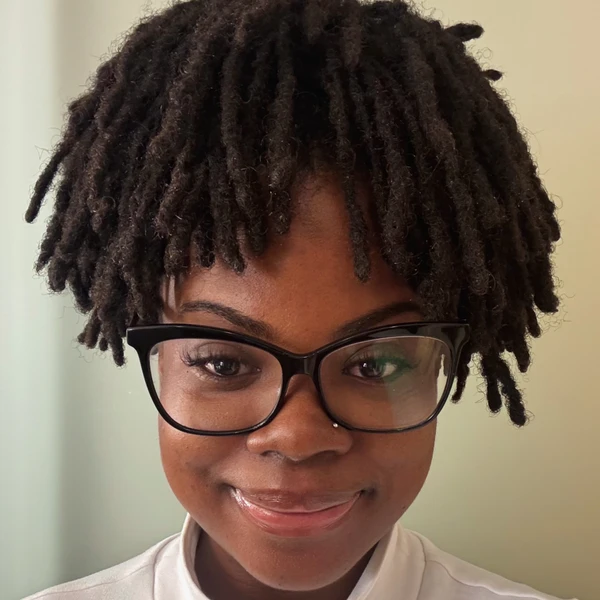
Kamarsha Potter

1x

Finalist

General information

Hobbies & Interests

  • Yoga
  • Exercise And Fitness
  • Reading
  • Music
  • Travel And Tourism

Reading

  • Literary Fiction

I read books multiple times a week.

Bio

I’m a Mental Health Counseling graduate student working toward becoming a licensed counselor. I’m passionate about helping people feel seen, understood, and supported, especially in Black, Caribbean, and other underserved communities. I hope to take a holistic approach to counseling by integrating traditional therapy with mind-body practices like movement, breathwork, and reflection. Ultimately, I want to make mental health care feel more accessible, culturally familiar, and rooted in the whole person.

Education

Fordham University

Master's degree program

2026 – 2029

Majors:
  • Clinical, Counseling and Applied Psychology
Marymount Manhattan College

Bachelor's degree program

2016 – 2020

Majors:
  • Communication, General

Miscellaneous

Medical school interest:
No

Career

  • Flight Attendant

    Airlines/Aviation · Delta Air Lines

    Jan 2022 – Present

Miscellaneous

Dream career field:
Mental Health Care
Work experience:
5 years
Has nursing license:
No

Future Interests

  • Advocacy
  • Volunteering
  • Philanthropy
  • Entrepreneurship
Brian J Boley Memorial Scholarship
My decision to pursue a degree in mental health counseling comes from knowing what it feels like to love someone who is struggling and not know how to help them. Growing up in St. Thomas, U.S. Virgin Islands, mental health was not something my family or community talked about openly. One of my older brothers was diagnosed with schizophrenia during his late teens. Before his diagnosis, we were very close, but as his illness progressed, our relationship became more complicated. Even with medication and therapy, he continued to struggle and eventually turned to drugs and alcohol as ways of coping. As a child and teenager, I did not fully understand his diagnosis, his substance use, or why someone I loved could sometimes seem so different from the brother I knew. At the same time, my family was grieving the death of my father, who passed away when I was thirteen. My mother was raising my younger sister and me while also trying to support my brother through serious mental illness. Looking back now, I recognize that we were a family carrying an enormous amount of grief and trauma without the support or language to fully understand what we were experiencing. My brother’s journey taught me that mental illness rarely affects only one person. It affects relationships, families, and communities. It also taught me how easily someone’s pain can become hidden behind behaviors that other people judge without understanding. His substance use did not erase the person he was. It showed me how desperately people sometimes search for relief when they do not have healthier ways to cope. Those experiences are a major reason I am pursuing my graduate degree in Mental Health Counseling at Fordham University. I want to become a licensed mental health counselor and provide the kind of support that could have made a difference for my brother and my family. I am especially interested in working with children and families because early support can change the way a person understands and responds to difficult experiences. I want children to have language for emotions that may otherwise feel overwhelming. I want parents who are trying their best while navigating mental illness, trauma, or behavioral health concerns to have someone who can help them understand their options and connect them with resources. I also hope to take a holistic approach to counseling. My own healing has taught me the value of therapy alongside movement, breathwork, reflection, and other mind-body practices. I want to explore ways of integrating those tools with evidence-based clinical care and making mental health resources more accessible and culturally familiar for Black, Caribbean, and other underserved communities. Ultimately, I cannot rewrite my brother’s story or change what my family experienced. What I can do is allow those experiences to shape how I serve others. I hope to create spaces where people feel safe enough to ask for help before they reach a point of crisis, where families feel supported rather than alone, and where a diagnosis does not cause us to lose sight of the person behind it. That is the difference I hope to make: helping people feel seen, understood, and supported while giving them healthier tools to carry what life has placed in their hands.
Fishers of Men-tal Health Scholarship
For much of my life, I did not have the language to describe the ways mental health had already shaped me. I thought I had experienced a relatively normal childhood with a few difficult circumstances along the way. It was not until adulthood, therapy, and a great deal of personal reflection that I began to understand how much grief, mental illness, silence, and resilience had influenced the person I became. I grew up in St. Thomas, U.S. Virgin Islands, in a family and community where mental health was rarely discussed openly. One of my older brothers was diagnosed with schizophrenia during his late teens. Before his diagnosis, we were very close. As his illness progressed, however, our relationship changed. His episodes could be unpredictable and frightening, and as a child and teenager, I did not understand what was happening or how I was supposed to process it. At the same time, I could see that my presence helped calm him. I did not have the terminology for it then, but I was already learning the power of making another person feel safe. My family was also grieving the loss of my father, who died when I was thirteen. My mother was suddenly raising my younger sister and me while trying to support my brother through the early stages of serious mental illness. There was no family therapist helping us understand what was happening. There was no one sitting with me and explaining how grief, fear, anger, and confusion could coexist. As an adult, I can look back with far more compassion for all of us. I can recognize how much my mother was carrying and understand that sometimes a family can desperately need support while simply lacking the capacity, knowledge, or resources to access it. Those experiences fundamentally shaped my beliefs about mental health. I no longer believe healing means erasing what has happened to us. I have learned that some experiences become part of our stories, and healing can instead mean learning how to carry those experiences with greater understanding and ease. I also believe strongly that behavior rarely tells the entire story. Behind what we see on the surface may be trauma, grief, fear, illness, unmet needs, or circumstances we know nothing about. My brother taught me, to look beyond a diagnosis or a difficult moment and remember the humanity of the person experiencing it. That belief has influenced my relationships as well. I have always naturally become the person others talk to, the friend, family member, coworker, and sometimes even stranger who people feel comfortable opening up to. As I have grown, however, my understanding of what it means to support someone has evolved. I once thought caring for people meant having an answer or finding a way to make things better. Therapy taught me something different. Sometimes people need a safe, unbiased space to sort through what they are feeling without being judged, rushed, or “fixed.” Beginning my own therapy journey in college was especially important because it allowed me to experience that kind of space for myself. Later, my understanding of healing expanded even further through practices such as movement, breathwork, journaling, and other forms of reflection. I began to see mental wellness as something that involves our bodies, environments, relationships, cultures, and lived experiences. That realization has also made me more intentional in my personal relationships. I value emotional safety, communication, empathy, and the ability to understand that two people can experience the same situation differently. I am learning that supporting others does not require taking responsibility for every emotion around me. Healthy relationships can include compassion and boundaries at the same time. That distinction has been especially meaningful for someone who became accustomed to being a source of comfort for others at a young age. Ultimately, my experiences with mental health have shaped not only how I relate to people but the career I feel called to pursue. I am now pursuing a graduate degree in Mental Health Counseling at Fordham University with the goal of becoming a licensed mental health counselor. I am especially drawn to working with children and families because I understand what it is like to be a child experiencing circumstances that are too complicated to understand alone. I want to become someone who can help children put language to what they are feeling while also helping parents and families navigate resources that can feel overwhelming during already difficult moments. I am currently particularly interested in pediatric behavioral health, while allowing my training to show me where my strengths can have the greatest impact. I hope to provide trauma-informed care while incorporating a holistic understanding of wellness. Traditional talk therapy is incredibly valuable, but my own experiences have shown me that movement, breathwork, mindfulness, and other mind-body practices can also support healing. I hope to eventually explore ways of making these approaches accessible and culturally familiar for Black, Caribbean, and other underserved communities. My work as a flight attendant has also prepared me for this next chapter. I have learned to remain calm under pressure, de-escalate tense situations, communicate clearly, and create a sense of safety when someone is overwhelmed. Those experiences have reinforced something I first learned years ago with my brother: sometimes the way we show up for another person matters tremendously. Long term, I want my impact to extend beyond individual counseling. I hope to become a resource for families who do not know where to begin, connect children and parents with appropriate services, and eventually contribute to or create programs that expand mental health access in underserved communities. Still, the therapeutic relationship will remain at the heart of the work I want to do. My experiences with mental health include some of the most painful chapters of my life, but they have also given me clarity. They taught me to see people more fully, to approach relationships with greater empathy, to understand healing as more than simply “getting over” something, and to recognize the importance of accessible support. I cannot change what my younger self or my family experienced. I can, however, allow those experiences to inform the kind of person and counselor I become. I want someone else, whether a grieving child, an overwhelmed parent, or a person struggling to understand their own mind, to receive the support, language, and sense of safety that could have made such a difference for my family. That is how my experience with mental health has shaped me, and it is the purpose I intend to carry forward.
Yaa Asantewaa Scholarship
One of the greatest challenges I have faced while pursuing my master’s degree has been figuring out how to make graduate school financially possible while continuing to support myself. I am beginning a graduate program in Mental Health Counseling while working full-time as a flight attendant. I am grateful to have a career that allows me to provide for myself, but balancing work and school requires constant planning. My job involves early mornings, long days, changing schedules, and time away from home, while graduate school requires an entirely different level of consistency, focus, and emotional presence. I have had to think carefully about how many hours I can realistically work without compromising my education, while also knowing that reducing my work hours affects my ability to pay my bills. The financial side of graduate school has been especially stressful. Changes surrounding federal financial aid have added another layer of uncertainty to an already expensive process. As a student, I have had to become much more intentional about understanding tuition, loans, scholarships, and how I will cover my living expenses while completing my degree. It can be intimidating to pursue a career centered on helping others while also wondering how much debt I may have to take on simply to enter the profession. Still, I refuse to allow financial uncertainty to determine the limits of what I can accomplish. Earning this degree is deeply meaningful to me. Growing up in St. Thomas, U.S. Virgin Islands, and later experiencing mental illness and loss within my own family shaped my desire to become a mental health counselor. My brother’s experience with schizophrenia showed me firsthand how devastating mental illness can be, not only for the person experiencing it, but for an entire family. It also made me aware of how stigma and limited conversations around mental health can prevent people from seeking support. My goal is to become a licensed mental health counselor and eventually work with children, families, and underserved communities. I am especially interested in a holistic approach to mental health that considers not only a person’s thoughts and emotions, but also their environment, relationships, physical well-being, and lived experiences. As a Black woman pursuing a graduate degree, I know that completing this program will require sacrifice, discipline, and creativity. I am learning how to balance ambition with sustainability. I do not want to reach my goal by completely exhausting myself along the way. The challenges I face are real, but so is my determination. I am building a career that will allow me to support others through some of the most difficult moments of their lives. Financial assistance would give me more room to focus on becoming the counselor I know I am capable of being, rather than constantly having to choose between earning enough to support myself and dedicating the time necessary to my education.
Dr. Jade Education Scholarship
When I imagine the life of my dreams, I don’t picture a life without challenges. I picture a life that feels purposeful, balanced, and fully mine. I am currently pursuing my graduate degree in Mental Health Counseling while continuing to work full-time as a flight attendant. Balancing work, school, finances, relationships, and simply finding time to take care of myself is not always easy, but I know what I am working toward. My dream is to become a licensed mental health counselor and build a career centered around helping people feel seen, supported, and safe enough to heal. My interest in mental health is deeply personal. Growing up in St. Thomas, U.S. Virgin Islands, I saw how easily conversations surrounding mental health could be avoided or silenced, particularly within Black and Caribbean families. My own family experienced profound loss, including my father’s death when I was young and my brother’s struggle with schizophrenia before his passing in 2022. Those experiences shaped the way I understand grief, mental illness, family, and the importance of having someone who is willing to listen without judgment. The life of my dreams allows me to turn those experiences into something meaningful. I envision myself working with children, families, and communities that may not always have easy access to mental health resources. I am especially interested in behavioral health and in taking a holistic approach to counseling, one that recognizes that mental wellness does not exist separately from the body, our environments, our relationships, or the experiences we carry with us. As someone who has found healing through therapy, movement, yoga, journaling, and learning to better understand myself, I hope to eventually incorporate some of those same mind-body principles into the way I support others. But my dream is bigger than a job title. I want a life where my career is meaningful without consuming me. For years, I believed achievement required putting other parts of my life on hold. I am learning that I do not have to choose between being ambitious and being present. I want the ability to build a family, travel, nurture my relationships, take care of myself, and still do work that changes lives. I want financial stability, not simply for comfort, but for the freedom to make decisions based on purpose rather than survival. Eventually, I would also love to create programs or an organization that expands access to mental health education and support in underserved communities, particularly communities like the one that raised me. I want younger generations to grow up with language for what they are feeling and the confidence to ask for help. The life of my dreams is not necessarily extravagant. It is a life of impact, freedom, love, wellness, and service. Most importantly, it is a life where the things I have lived through are not the end of my story, but part of what prepared me to help someone else write theirs.
Healing Self and Community Scholarship
My contribution would be helping make mental health care feel less intimidating, more relatable, and easier to access, especially for Black, Caribbean, and other underserved communities. Growing up, mental health was not something we really talked about, and my family did not always know what resources were available or where to turn for help. That experience has shaped the kind of counselor I want to become. I want to take a holistic approach to counseling and help people understand that healing can look different for everyone. Along with traditional therapy, I hope to incorporate practices like movement, breathwork, and reflection in ways that feel natural and culturally familiar to the people I serve. I also want to be a resource for families who feel overwhelmed or simply do not know where to start. Whether that is through schools, community programs, or clinical settings, I want to help make support easier to find and easier to trust. Ultimately, I want mental health care to feel like something people can actually see themselves using, not something that feels out of reach.
Kamarsha Potter Student Profile | Bold.org