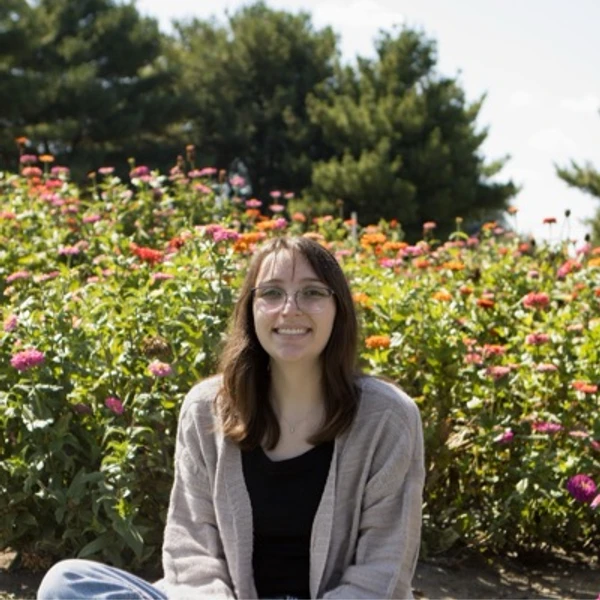
Loves Park, IL
Age
20
Gender
Female
Hobbies and interests
Reading
Community Service And Volunteering
Child Development
Reading
Horror
Action
Academic
Education
I read books multiple times per month
LOW INCOME STUDENT
Yes
FIRST GENERATION STUDENT
Yes
Kaelyn May
1x
Finalist
Kaelyn May
1x
FinalistBio
My name is Kaelyn May! I love to teach, and that is exactly why I am going to college to pursue a degree in Early Childhood Education.
As a sophomore at Illinois State University, I am excited to combine my passions with my studies. I love to read, watch horror movies, and thrift. In addition, I enjoy spending time giving back to my community!
Building on my love of education, during high school, I served on the student council and in Educators Rising, aiming to develop leadership and teaching skills. In Educators Rising, I volunteered at local schools and community organizations to gain practical exposure to education. Additionally, I competed in two competitions at Illinois State University: a storybook competition, where I collaborated to create, illustrate, and present a children's book to practice teamwork and creativity, and an individual mock interview competition to strengthen my communication and professional skills.
All of these experiences have led to my dream of teaching kindergarten and inspiring future generations!
Education
Illinois State University
Associate's degree programMajors:
- Education, Other
Harlem High School
High SchoolMiscellaneous
Desired degree level:
Bachelor's degree program
Graduate schools of interest:
Transfer schools of interest:
Majors of interest:
- Education, Other
Career
Dream career field:
- Education
Dream career goals:
Kindergarten Teacher
Part time employee
Kohls2022 – 20231 year
Public services
Volunteering
Harlem High School — Helper2022 – PresentVolunteering
Rockford rescue mission — Food service2024 – 2024
Future Interests
Advocacy
Volunteering
Poster Studio Express Visual Education Scholarship
My name is Kaelyn May, and I am currently a sophomore at Illinois State University. I am majoring in early childhood education with the goal of becoming a kindergarten teacher.
For this discussion, I have chosen the Common Core State Standards for Mathematical Practice, specifically CC.K-12.MP.5: “Use appropriate tools strategically.” I selected this standard because it is fundamental to building students’ capacity for problem-solving, critical thinking, and independent learning. In today’s complex, technology-driven world, students must develop not only mathematical skills but also the ability to select, use, and evaluate a range of tools—both physical and digital—to reason through problems and communicate their solutions effectively. By embedding this standard across all grade levels, educators prepare learners to be resourceful, adaptable, and proficient in real-world situations where strategic tool use is essential.
Visual elements—such as color theory, thoughtful layout, clear typography, and meaningful imagery—play a central role in helping students grasp and retain academic concepts connected to CC.K-12.MP.5. For example, color coding can distinguish between different mathematical tools or highlight key steps in a process, making it easier for students to quickly identify and select the most suitable tool for a given task. A well-organized layout presents information in a logical, accessible manner, guiding students’ attention and reducing cognitive load. Clear, age-appropriate typography increases readability, making it easier for students to follow instructions and understand mathematical language.
Imagery, such as diagrams, infographics, and photographs, bridges the gap between abstract mathematical concepts and real-world experiences. Showing students using protractors, measuring tapes, or digital graphing tools in context makes these resources more relatable and demystifies their use. Visual representations of data—like bar graphs and pie charts—reinforce the importance of selecting appropriate tools in mathematical reasoning. By seeing authentic examples, students gain a deeper understanding of the standard and are more likely to remember and apply these skills.
Visual learning is especially critical in today’s K-12 classrooms. Students are growing up in a highly visual culture shaped by digital media and multimedia experiences. Visual learning strategies tap into this familiarity, making lessons more engaging and relevant. Visual aids also support diverse learning needs, including English language learners and students with different learning styles or abilities. By providing multiple pathways to understanding, visuals help ensure equity and accessibility in the classroom.
Furthermore, visual learning fosters higher-order thinking by encouraging students to analyze, compare, and synthesize information. When students interpret visual data or create their own visual representations, they actively construct meaning rather than passively receive information. This enhances comprehension and boosts retention. Within the context of CC.K-12.MP.5, visual learning empowers students to make informed decisions about tool use, evaluate the effectiveness of strategies, and communicate their reasoning clearly. Integrating visual elements with strategic tool use prepares students for success in mathematics and beyond, equipping them with the skills needed to thrive in a visually complex, information-rich world.
Harry & Mary Sheaffer Scholarship
My name is Kaelyn May, and I am a first-generation college student at Illinois State University. As a sophomore majoring in Early Childhood Education, I hope to teach kindergarten. Navigating college has been challenging, but a supportive high school teacher helped me reach my goals.
I plan to use the skills I learned from educators in high school and college to better understand my students, their families, and the community. To create a broader impact, I must start small—working with my future students and their families to improve their lives. Helping in small ways can benefit individuals on a larger scale. Early childhood educators have a major influence on children. Teaching them at a young age shapes how they grow and contribute to their community.
When teaching, I want to encourage my students to be more empathetic. I believe it is very important to teach students to be kind to others and to be open to new things. When you have an open mind, it can lead to so many new things and great opportunities. I plan to use my skills of conflict resolution and patience to benefit my students as much as possible. As I said before, teaching young students is a small start, but it leads to amazing things. To elaborate, teaching students to be empathetic can instill core values that can stick with them forever. Those same students could become great things. For example, they could become leaders, doctors, nonprofit organization founders, and so much more.
On top of that, I will add to how I will incorporate empathy into my future classroom. I plan to use things like circle time, books, and cultural diversity to do that. Circle time can serve many beneficial purposes, but I think it is good for students to have time to talk about themselves. For example, sharing about something they did over the weekend, likes or dislikes, or even taking time to discuss feelings. By allowing all students to get time to share and reflect, it teaches them patience and how to be open with others.
In addition to circle time, I plan to incorporate diversity, which can make a huge impact on students and how they treat others. Not every student comes from the best home, so when my future students are in my classroom, I will do my best to teach them in the best ways I possibly can. Having books that include a variety of different backgrounds is a great way to teach empathy. Growing up, I never saw books with diversity; that needs to change. I believe children must see different types of families. For example, a family that includes an individual with a disability, a family with two moms or two dads, etc. By fostering empathy and including diverse perspectives in my classroom, I hope to empower my students to become compassionate, open-minded individuals who positively contribute to their communities.
Jeanne Kramme Fouke Scholarship for Future Teachers
I am pursuing a career in education, specifically early education, because I feel that it is crucial that students have a good view of school. I was fortunate enough to have an amazing kindergarten teacher, so I had a more positive outlook on school. Some people that I have talked to have told me that even just one not-so-good teacher ruined school for them as a whole.
I believe that if a student is put into a classroom with a teacher who is not fully passionate about what they do, then that will affect the student's feelings about school. I want to be able to be the educator who puts a positive view on school for my students. As a three to six-year-old, school is very new for you and may already seem scary, but the right teacher and environment can take away from that uncertainty. Whether it is how you teach, how you talk with your students, or even how you present yourself to your students, all of these things can very well determine a student's experience within your classroom.
So, the reason that I am pursuing a career in early education is to create a sense of security and freedom within the classroom. I want my students to know that it is completely okay to be wrong and that it is nothing to be embarrassed about. I want my students to know that they can talk to me about anything. I feel that I am fully capable of doing all of these things. I have been able to do this in the past also. I helped work within a kindergarten class for a few months as an intern through a class at my high school. I was able to build relationships with every one of my students and got to know how they each learn, communicate their emotions, and much more. By the time that it was my last week working with them, I was able to know exactly how to help each student with outbursts, their work, and meltdowns individually. Honestly, I never thought I would be able to accomplish this, but I am so glad I gave myself the shot I deserved.
I do not think that there is any other career that is for me, not like how much education is. To me this will not just be my career or job, it is my passion in life. Can all current teachers say the same thing?
Sandy Jenkins Excellence in Early Childhood Education Scholarship
I am pursuing a career in education, specifically early education, because I feel that it is crucial that students have a good view of school. I was fortunate enough to have an amazing kindergarten teacher, so I had a more positive outlook on school. Some people that I have talked to have told me that even just one not-so-good teacher ruined school for them as a whole.
I believe that if a student is put into a classroom with a teacher who is not fully passionate about what they do, then that will affect the student's feelings about school. I want to be able to be the educator who puts a positive view on school for my students. As a three to six-year-old, school is very new for you and may already seem scary, but the right teacher and environment can take away from that uncertainty. Whether it is how you teach, how you talk with your students, or even how you present yourself to your students, all of these things can very well determine a student's experience within your classroom.
So, the reason that I am pursuing a career in early education is to create a sense of security and freedom within the classroom. I want my students to know that it is completely okay to be wrong and that it is nothing to be embarrassed about. I want my students to know that they can talk to me about anything. I feel that I am fully capable of doing all of these things. I have been able to do this in the past also. I helped work within a kindergarten class for a few months as an intern through a class at my high school. I was able to build relationships with every one of my students and got to know how they each learn, communicate their emotions, and much more. By the time that it was my last week working with them, I was able to know exactly how to help each student with outbursts, their work, and meltdowns individually. Honestly, I never thought I would be able to accomplish this, but I am so glad I gave myself the shot I deserved.
I do not think that there is any other career that is for me, not like how much education is. To me this will not just be my career or job, it is my passion in life. Can all current teachers say the same thing?
Fred Rabasca Memorial Scholarship
I am pursuing a career in education, specifically early education, because I feel that it is crucial that students have a good view of school. I was fortunate enough to have an amazing kindergarten teacher, so I had a more positive outlook on school. Some people that I have talked to have told me that even just one not-so-good teacher ruined school for them as a whole.
I believe that if a student is put into a classroom with a teacher who is not fully passionate about what they do, then that will affect the student's feelings about school. I want to be able to be the educator who puts a positive view on school for my students. As a three to six-year-old, school is very new for you and may already seem scary, but the right teacher and environment can take away from that uncertainty. Whether it is how you teach, how you talk with your students, or even how you present yourself to your students, all of these things can very well determine a student's experience within your classroom.
So, the reason that I am pursuing a career in early education is to create a sense of security and freedom within the classroom. I want my students to know that it is completely okay to be wrong and that it is nothing to be embarrassed about. I want my students to know that they can talk to me about anything. I feel that I am fully capable of doing all of these things. I have been able to do this in the past also. I helped work within a kindergarten class for a few months as an intern through a class at my high school. I was able to build relationships with every one of my students and got to know how they each learn, communicate their emotions, and much more. By the time that it was my last week working with them, I was able to know exactly how to help each student with outbursts, their work, and meltdowns individually. Honestly, I never thought I would be able to accomplish this, but I am so glad I gave myself the shot I deserved.
I do not think that there is any other career that is for me, not like how much education is. To me this will not just be my career or job, it is my passion in life. Can all current teachers say the same thing?