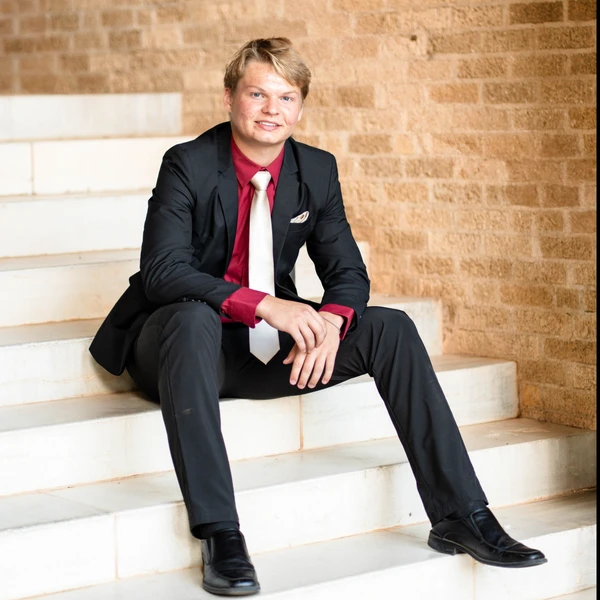
My name is Kaden McDonald, and I’m a high school student who’s spent the last several years pursuing a life built on hard work, service, and leadership. Whether I’m in the show ring with my swine project, leading a 4-H activity, debating agricultural policy, or working toward a future in agricultural law, I’ve always pushed myself to give everything I have. But behind all the success, leadership roles, and community involvement, there’s been another journey happening too one that’s taught me some of life’s most important lessons. That journey is my experience with mental health.
Mental health isn’t something I used to think much about until I had no choice. For a long time, I kept moving, pushing forward, and staying busy with school, debate, FFA, 4-H, and sports. From the outside, I seemed like I had it all together. But on the inside, I was struggling with things I didn’t yet have the words for: pressure, anxiety, fear of failure, and the quiet sense that I wasn’t enough, no matter how much I achieved.
What finally made me slow down wasn’t one big breakdown it was the slow realization that I was burning out. I felt drained even when nothing “bad” had happened. I started questioning everything, especially my worth, my purpose, and my future. And at the same time, my family was being deeply affected by my grandparents’ battles with cancer. Watching my dad carry the emotional and financial stress of caring for both of his parents while trying to stay strong for us added another layer of emotional weight. I could see it wearing on him and I felt it wearing on me too.
Mental health became something I couldn’t ignore.
Talking about it didn’t come easily. Like many people, I didn’t want to seem weak. I didn’t want to admit I wasn’t okay. But when I started opening up even just a little I found something surprising: people understood. Not everyone had the same struggles, but most people had their own versions. I started to realize I wasn’t alone, and I didn’t have to carry everything by myself.
That understanding became a turning point for me.
Mentally, I started building healthier habits slowing down, checking in with myself, and giving myself permission to rest. I stopped expecting perfection from myself and started focusing on growth instead. This shift changed the way I approached everything. In debate, I began speaking from a place of conviction, not just performance. In 4-H and FFA, I mentored younger members with more compassion, understanding that what you don’t see on the surface often matters the most. In sports, I stopped tying my value to wins and losses and focused on teamwork, effort, and showing up.
Emotionally, I became more empathetic. Seeing how my dad carried his mental weight in silence made me more aware of how others might be silently struggling too. I became more present with people friends, family, and even strangers because I understood that sometimes, the smallest kindness can make the biggest difference. Relationships that used to feel surface-level became deeper, more real. I stopped trying to be everything for everyone and started being more honest more myself.
These experiences also shaped my long-term goals. I’ve always been passionate about agriculture, but now I’m focused on how I can combine that passion with advocacy, mental health awareness, and rural resilience. I want to pursue a career in agricultural law and policy, not just to defend land and livelihoods, but to support the well-being of the people behind the farm gates. Rural communities often face stigma when it comes to mental health, and I’ve seen firsthand how that silence can weigh on individuals and families.
I want to be part of changing that narrative.
Mental health isn’t just about crises it’s about the everyday habits, mindsets, and systems that either support people or let them fall through the cracks. Whether it’s making policy more humane, creating space for open conversations, or simply being someone who listens I want to use my voice to help others the way I wish someone had helped me earlier.
My understanding of the world has shifted. I no longer see people as just what they produce or achieve I see the human underneath. I understand that success without peace is empty, and that strength looks different on everyone. I’ve come to believe that being vulnerable is not a weakness but a form of strength. It’s in those moments of quiet honesty where the real growth happens.
Mental health shaped my story not by breaking me, but by teaching me how to bend. It showed me that life isn’t about avoiding hard moments it’s about learning how to live through them with grace, purpose, and heart. I’m still growing. I still have hard days. But I’ve learned how to keep going, and how to reach out when I can’t do it alone.
That’s the kind of person I want to be one who understands, who advocates, and who helps others find their strength too.