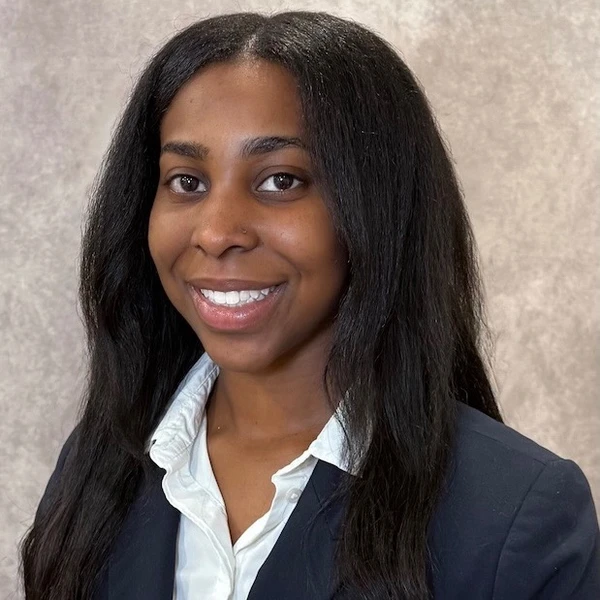
Growing up in a low income single parent household on Chicago's southside, my mother and I often relied on assistance programs such as welfare and food banks to provide food for us. For the first seven years of my life my mother and I shared a bed in the basement of my grandparents’ crowded house. In high school, my mother got laid off from her job which negatively impacted my access to a comfortable living situation. We oftentimes went without lights, water, and heat in Chicago winters. Due to the lack of access to a quality education and mentorship on the southside that many of my undergraduate peers had access to, I struggled with juggling the course work in my STEM classes. As I began undergrad, my mother worked multiple jobs to help circumvent the financial hole that was created from her 3 year lay off. This left me, a first generation STEM student, struggling financially. Due to these circumstances, at times I worked 30+ hours a week in order to qualify for food stamps, buy feminine products, and housing. Working as a full time student made it difficult for me to fulfill other premed requirements. This put a strain on me academically, mentally and emotionally. Although my life comes from a past that is rooted in pain and obstacles I have remained determined to pursue a medical education.
Being a trailblazer always comes with learning experiences disguised as failures. As someone who comes from a low income background, most of my peers were drug dealers, in jail, or had fallen victim to the gang violence that plagues Chicago. At the start of my STEM journey, I had no clue how to map out my journey to medicine and struggled to find my place.
My setbacks taught me that everyone’s journey is different. My approach to academics needed to be different because my background was different. Most of my classmates went to the best high schools, had a network of people who could assist them through their journey and didn’t have to work their way through college. I took advice from people who had never done what I was doing. As I matured in my academic journey, I realized that mentorship is vital in academic success.
Now, close your eyes and picture a beautiful Saturday morning, listen to the birds singing and people are mowing their lawns. The aroma of the pancakes and coffee my grandmother prepared woke the entire house up. My family from San Francisco was visiting for the week and like any only child, I was eager to spend as much time with my older cousins as I possibly could. After breakfast, my cousin went back to her room and I followed, imitating each step. She reached in her luggage and pulled out a clear ziplock bag with needles and a clear solution. She pulled her ankle length skirt up just enough to her thigh and began pumping solution into the needle. As I ran back to the door post afraid, I asked Alice “Why are you giving yourself a shot?” puzzled at the thought that someone would willingly give themselves a shot. She replied, “ This is my medicine to help me feel better.” She offered to let me get a front row seat , but being the timid seven year old kid I was, I turned the offer down. I watched her slowly with a spark of interest in my eyes as she punctured her skin with the needle. I later found out that she had been diagnosed with breast cancer years prior and that the “shot” was a part of her intramuscular chemotherapy. As she noticed my interest through the nature of my questions, she continued to invite me to watch her administer the medicine. As I grew more comfortable with seeing the needle, I took it upon myself to be her caretaker. This included disinfecting her leg and placing a bandaid, all of which I modeled after my experiences with my pediatrician. It wasn't until Alice called me “The best doctor in town” that my journey to fulfilling this prophecy began.
Months after Alice left, I saw a doctor’s set in a catalog and begged my mother to get it for me so that I could be “official.” Being seven, I was unable to shadow healthcare providers so I lived vicariously through the physicians I saw on television shows such as Grey’s anatomy and General hospital. Even begging my mom to buy me a doctor's set so that I could practice the techniques I learned on the shows.
Although shadowing was not available at the time, when I turned 16, I applied as a volunteer at a hospital near my high school. During this time I learned that the work of a physician was more than just the regular, sometimes forced, check ups I went through to satisfy a school requirement. To be a good physician you first need to embody an altruistic mindset.
My passion for wanting to become a physician is coupled with a deeper connection from my own firsthand experiences of medical deserts within my community. I witnessed first hand how health disparities negatively impacted me as well as the people around me. Due to the economic and social isolation in communities such as mine, I have watched people struggle with preventable illnesses, such as heart disease and cancer, be denied the proper health care they needed simply because of the lack of quality medical facilities/professionals.
As a first generation medical student, this scholarship will offset some of the financial burden that medical school brings. A medical school education will not only provide me with the ability to improve health outcomes by practicing within disadvantaged communities such as my own but through the scientific innovations, technological improvements, and public policies that can revolutionize the medical system on a global level.