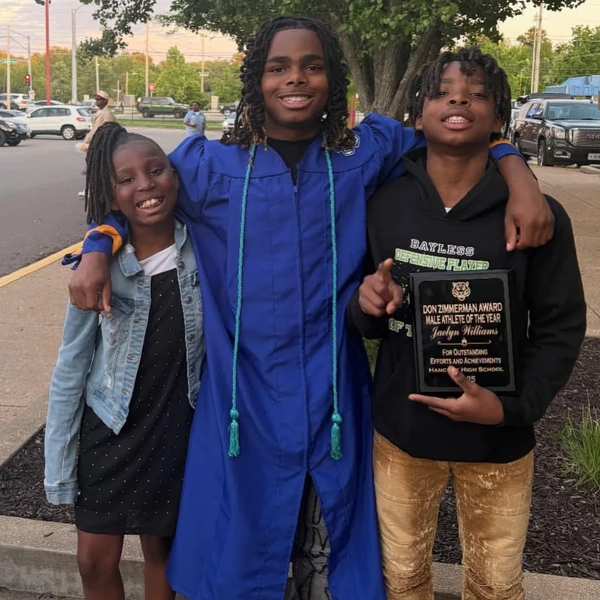
Hobbies and interests
Photography and Photo Editing
Football
Track and Field
Exercise Science
Counseling And Therapy
Reading
Religion
I read books daily
jaelyn williams
1x
Finalistjaelyn williams
1x
FinalistBio
I'm Jaelyn Williams, a psychology major and football player at Missouri Valley College. I plan to earn my master’s in psychology so I can become a therapist and better understand people—especially those who need support navigating life’s challenges. Playing football has taught me discipline and teamwork, and I bring that same energy to my academic and personal growth. I’m passionate about helping others and also love photography, which gives me a creative outlet to capture emotion and perspective in everyday moments.
Education
Missouri Valley College
Bachelor's degree programMajors:
- Psychology, General
GPA:
4
Miscellaneous
Desired degree level:
Master's degree program
Graduate schools of interest:
Transfer schools of interest:
Majors of interest:
- Clinical, Counseling and Applied Psychology
Career
Dream career field:
Hospital & Health Care
Dream career goals:
To become a therapist
Sports
Football
Varsity2023 – Present3 years
Research
Clinical, Counseling and Applied Psychology
Missouri Valley College — Researcher2025 – Present
Arts
Art club
Drawing2021 – 2025
Therapist Impact Fund: NextGen Scholarship
I was two years old when my father went to prison. That absence shaped my earliest understanding of emotional pain, silence, and survival. My mother raised me and my siblings on her own, working long hours and sacrificing her own dreams so we could have a chance at something better. In eighth grade, I lost my uncle—the man who stepped in as a father figure and believed in my potential. His death was sudden and devastating. I didn’t know how to process the grief, so I buried it and kept performing strength. That silence became the beginning of my awareness of emotional pain and the need for healing. It also became the foundation for my future goals.
These lived experiences have shaped my decision to pursue a career in mental health. I’ve seen how untreated trauma can shape a person’s life, and I’ve felt the weight of emotional isolation. As a psychology major and student-athlete, I’ve mentored peers, led conversations about emotional resilience, and used photography to capture the strength and vulnerability of those navigating mental health challenges. I want to become a trauma-informed therapist who understands not just the science of healing, but the humanity behind it. My goal is to create safe spaces where people—especially youth and families—can talk about grief, anxiety, and identity without shame.
If I could make one significant change to today’s mental healthcare system, it would be to build community-based mental health hubs that integrate therapy, education, and creative expression. These hubs would be located in schools, churches, and athletic centers—places where people already gather and feel safe. They would offer culturally responsive care, peer mentorship, and flexible access to services. Too often, therapy is treated as a luxury or hidden behind stigma. I want to help normalize it, especially in communities where emotional pain is often buried or misunderstood. Healing should not be reserved for the privileged—it should be a right, rooted in trust and representation.
Teletherapy has opened doors for many who previously lacked access to care. Its greatest benefit is flexibility—people can receive support from the comfort of their homes, without transportation barriers or geographic limitations. For students, parents, and those with demanding schedules, this can be life-changing. However, teletherapy also presents challenges: lack of privacy in shared living spaces, limited access to technology, and the difficulty of building trust through a screen. To better serve diverse communities, we must innovate by offering hybrid models, mobile therapy units, and partnerships with local organizations that provide safe, private spaces for virtual sessions. We must also train providers to deliver culturally competent care through digital platforms, ensuring that empathy and connection are never lost in translation.
My journey began in silence, but I’ve found my voice through grief, mentorship, and advocacy. I’m committed to turning my pain into purpose and using my story to help others heal. Whether through therapy, outreach, or creative storytelling, I plan to build a legacy rooted in compassion, representation, and systemic change.
Learner Mental Health Empowerment for Health Students Scholarship
I was two years old when my father went to prison. That moment didn’t just change my family—it shaped how I understood silence, survival, and emotional pain. My mother raised me and my siblings on her own, working long hours and sacrificing her own well-being to keep us afloat. We didn’t talk about mental health. We didn’t have the space to grieve. We just kept going. But beneath the strength was exhaustion, and behind the smiles were wounds we didn’t know how to name.
Mental health is important to me as a student because I’ve lived the consequences of emotional silence. In eighth grade, I lost my uncle—the man who stepped in as a father figure and believed in my potential. His death was sudden and devastating. I didn’t know how to process the grief, so I buried it and kept performing strength. That experience taught me that mental health isn’t optional—it’s foundational. It affects how we learn, connect, and grow. Without support, students carry invisible weight that impacts every part of their lives.
As a psychology major and football player at Missouri Valley College, I’ve made it my mission to advocate for mental health in my community. I mentor younger athletes, lead conversations about emotional resilience, and use photography to capture the strength and vulnerability of those navigating mental health challenges. I’ve organized peer-led discussions that normalize talking about grief, anxiety, and identity—especially among student-athletes who are often expected to be tough and silent.
I also advocate through storytelling. I share my own experiences with loss, emotional isolation, and healing to help others feel less alone. I believe vulnerability is powerful, and that when we speak openly, we create space for others to do the same. Whether it’s checking in with a teammate, supporting a friend through a tough time, or challenging stigma in the classroom, I show up with empathy and intention.
Beyond campus, I envision building community-based mental health hubs that blend traditional therapy with creative expression. I want to use photography, storytelling, and peer mentorship to help people find language for their pain and pathways to healing. I also hope to partner with schools, athletic programs, and nonprofits to bring mental health education directly into environments where young people gather. My goal is to make mental health care accessible, affirming, and rooted in cultural understanding.
Mental health matters because people matter. And as a student, athlete, and future therapist, I’m committed to building a world where healing isn’t hidden—but embraced, understood, and shared.
Robert F. Lawson Fund for Careers that Care
I was two years old when my father went to prison. That moment shaped my life in ways I didn’t understand until much later. My mother raised me and my siblings on her own, working long hours and sacrificing her own dreams so we could have a chance at something better. She taught me strength, faith, and perseverance—but even with her love, I often felt the weight of emotional silence. We didn’t talk about mental health. We didn’t have the space to grieve. We just kept going.
In eighth grade, I lost my uncle—the man who stepped in as a father figure, encouraged me to pursue football, and believed in my potential. His death was sudden and devastating. I didn’t know how to process the grief, so I buried it and kept performing strength. That silence became the beginning of my awareness of emotional pain and the need for healing. It also became the foundation for my future goals.
Today, I’m a psychology major and football player at Missouri Valley College. My experiences have taught me that healing begins with visibility, empathy, and safe spaces. I’ve mentored younger athletes, led conversations about emotional resilience, and used photography to capture the strength and vulnerability of those navigating mental health challenges. These efforts have shown me how powerful it is when someone feels truly seen and heard.
My career aspiration is to become a trauma-informed therapist who works with youth, student-athletes, and families affected by incarceration, grief, and systemic barriers. I want to open a practice that centers healing, representation, and outreach. I plan to partner with schools and nonprofits to bring mental health education directly into communities where therapy is often stigmatized or inaccessible. I also want to use creative tools like photography and storytelling to help people express what words sometimes can’t.
I believe that mental health care should be proactive, not reactive. I envision mobile clinics, school-based wellness programs, and community partnerships that meet people where they are. I want to help people before they reach a crisis point and ensure that no one feels invisible in the healthcare system.
I also want to advocate for policy changes that expand access to culturally responsive care. Too often, mental health services are designed without input from the communities they serve. I want to be a voice in that conversation—someone who understands the lived experience of trauma and can help shape systems that truly support healing. My dream is to help build a world where mental health support is not just available, but embraced, understood, and woven into everyday life.
I’m not just pursuing a degree—I’m building a legacy. Every challenge I’ve faced has prepared me to walk with others through theirs. I’m committed to turning my pain into purpose and using my voice, creativity, and compassion to uplift others. I may have started in silence, but I plan to make noise through healing, advocacy, and impact.
RELEVANCE Scholarship
I was two years old when my father went to prison. That absence shaped my earliest understanding of emotional pain, silence, and survival. My mother raised me and my siblings on her own, working long hours and sacrificing her own dreams so we could have a chance at something better. In eighth grade, I lost my uncle—the man who stepped in as a father figure, encouraged me to pursue football, and believed in my potential. His death was sudden and devastating. I didn’t know how to process the grief, and I didn’t have the language to express what I was feeling. That silence became the beginning of my journey toward healing and purpose.
Growing up in a single-parent household, I witnessed firsthand the emotional and physical toll that stress, grief, and limited access to healthcare can take on a family. My mother often put her own health last to make sure we had food, clothes, and a roof over our heads. We didn’t talk about mental health, and we didn’t have regular checkups. We just kept going. But I saw the cost of that silence—how untreated pain can shape a person’s life. That’s what inspired me to pursue a career in medicine.
I want to become a trauma-informed healthcare professional who understands not just the science of healing, but the humanity behind it. My experiences have taught me that resilience isn’t just about pushing through—it’s about learning how to rebuild. I’ve mentored younger athletes, led conversations about emotional wellness, and used photography to capture the strength and vulnerability of those navigating mental health challenges. These moments have shown me how powerful it is when someone feels truly seen and heard.
As a future healthcare provider, I want to bring that same compassion into clinical spaces. I want to work with underserved communities, especially youth and families affected by incarceration, grief, and systemic barriers. I plan to advocate for culturally responsive care, mental health integration, and outreach programs that meet people where they are. I believe healthcare should be accessible, affirming, and rooted in trust.
I also want to help reimagine how care is delivered—through mobile clinics, school-based wellness programs, and community partnerships. I believe healing should be proactive, not reactive. My goal is to help people before they reach a crisis point, and to make sure no one feels invisible in the healthcare system.
Every challenge I’ve faced has prepared me to walk with others through theirs. I’m not just pursuing a degree—I’m building a legacy of healing, representation, and impact. And I’m ready to turn my story into a source of strength for my patients, my community, and the future of healthcare.
Raise Me Up to DO GOOD Scholarship
I was two years old when my father went to prison. That absence shaped my earliest understanding of emotional pain, silence, and survival. My mother raised me and my siblings on her own, working long hours and sacrificing her own dreams so that we could have a chance at something better. She taught me strength, faith, and perseverance—but even with her love, I often felt the weight of emotional isolation. We didn’t talk about mental health. We didn’t have the space to grieve. We just kept going.
In eighth grade, I lost my uncle—the man who stepped in as a father figure, encouraged me to pursue football, and believed in my potential. His death was sudden and devastating. I didn’t know how to process the grief, so I buried it and kept performing strength. That silence became the beginning of my awareness of emotional pain and the need for healing. It also became the foundation for my future goals.
Being raised in a single-parent household taught me resilience, but it also showed me the cost of unspoken pain. I’ve seen how many young people—especially student-athletes—struggle silently with mental health. I’ve mentored teammates, led conversations about emotional resilience, and used photography to capture the strength and vulnerability of those navigating mental health challenges. These experiences have shaped my belief that healing begins with visibility and empathy.
Even though I’m still exploring my exact career path, I know I want to use my talents to help others. Whether I become a therapist, educator, or advocate, my goal is to create safe spaces where people—especially youth and families—can talk about grief, anxiety, and identity without shame. I want to normalize mental health conversations and make healing accessible in communities where therapy is often stigmatized or unavailable.
I also hope to use creative tools like photography and storytelling to help people express what words sometimes can’t. I believe art can be a bridge to healing, especially for those who feel unseen or unheard. My upbringing didn’t just shape my story—it gave me a mission. I’m committed to turning my pain into purpose and using my voice, creativity, and compassion to uplift others.
I may not know exactly where I’ll end up, but I know I’ll be doing good, helping people, and building a legacy rooted in healing and hope. I carry my family’s sacrifices with me, and I plan to honor them by becoming the kind of person who helps others find light in their darkest moments.
Autumn Davis Memorial Scholarship
My name is Jaelyn Williams, and I’m a psychology major and football player at Missouri Valley College. I come from a single-parent household in Saint Louis, Missouri, where my mother raised me and my siblings with strength, sacrifice, and faith. My father went to prison when I was two years old, and in eighth grade, I lost my uncle—the man who stepped in as a father figure and inspired me to pursue sports. His death was sudden and devastating. I didn’t know how to process the grief, so I buried it and kept moving. That silence became the beginning of my journey with mental health.
Growing up, mental illness wasn’t something we talked about. We were taught to be strong, to survive, and to keep going. But I’ve learned that survival isn’t healing, and silence isn’t strength. My personal experience with grief, emotional isolation, and the pressure to perform has shaped my beliefs about mental health. I believe that healing requires visibility, empathy, and safe spaces—especially for young men and athletes who are often expected to carry pain without showing it.
These experiences have also shaped my relationships. I’ve learned to listen more deeply, to show up for others even when I don’t have the answers, and to create space for vulnerability. I mentor younger athletes, lead conversations about emotional resilience, and use photography to capture the strength and vulnerability of those navigating mental health challenges. I’ve seen how powerful it is when someone feels truly seen and heard, and I want to be that presence for others.
My career aspiration is to become a trauma-informed therapist who works with youth, student-athletes, and families affected by incarceration, grief, and systemic barriers. I plan to open a practice that centers healing, representation, and outreach. I want to partner with schools and nonprofits to bring mental health education directly into communities where therapy is often stigmatized or inaccessible. I also want to use creative tools like photography and storytelling to help people express what words sometimes can’t.
Mental health isn’t just my field of study—it’s my calling. Every challenge I’ve faced has prepared me to walk with others through theirs. I’m committed to turning my pain into purpose and making a lasting impact on the world—one conversation, one community, and one life at a time.
I also hope to advocate for mental health access on a broader scale, working toward policy changes and community-based solutions that make care more equitable. My dream is to help build a world where mental health support is not just available—but embraced, understood, and woven into everyday life.
ADHDAdvisor Scholarship for Health Students
I was in eighth grade when I lost my uncle—the man who stepped in as a father figure after my dad went to prison. His death hit me hard, but I didn’t know how to talk about grief. I buried the pain and kept moving, performing strength while struggling silently. That experience opened my eyes to how many people—especially young men—carry emotional weight without support or language to express it.
Since then, I’ve made it my mission to help others feel seen, heard, and supported. At Hancock Place High School, I mentored younger athletes and led conversations about emotional resilience. I saw how many of my peers were battling anxiety, depression, and identity struggles behind closed doors. I listened, shared my story, and reminded them they weren’t alone. Now, as a football player and psychology major at Missouri Valley College, I continue that work—on the field, in the classroom, and in my community.
I use photography to capture the strength and vulnerability of those navigating mental health challenges. I believe images can tell stories that words sometimes can’t, and I use that creative outlet to raise awareness and spark dialogue. I also plan events and peer-led discussions that normalize mental health conversations among student-athletes.
My future goal is to become a trauma-informed therapist who works with youth, athletes, and families affected by incarceration, grief, and systemic barriers. I want to open a practice that centers healing, representation, and outreach—and partner with schools and nonprofits to bring mental health education directly into underserved communities.
Mental health isn’t just my field of study—it’s my calling. Every challenge I’ve faced has prepared me to walk with others through theirs. And I’m committed to turning my pain into purpose, one conversation and one life at a time.
Dr. Samuel Attoh Legacy Scholarship
To me, legacy means creating something that lasts beyond your lifetime—something rooted in healing, impact, and love. It’s not about fame or wealth. It’s about the lives you touch, the cycles you break, and the doors you open for others. Legacy is the quiet strength passed down through generations, and the bold decision to rewrite the narrative when that strength wasn’t enough.
I was two years old when my father went to prison. His absence shaped my childhood in ways I couldn’t fully understand until I got older. My mother raised me and my siblings on her own, working long hours and sacrificing her own dreams so we could have a chance at something better. She taught me resilience, faith, and how to keep going even when life felt heavy. But behind her strength was exhaustion, stress, and emotional silence. We didn’t talk about mental health. We didn’t have the space to grieve. We just survived.
In eighth grade, I lost my uncle—the man who stepped in as a father figure, encouraged me to pursue football, and believed in my potential. His death was sudden and devastating. I didn’t know how to process the grief, so I buried it and kept moving. That silence became the beginning of my awareness of emotional pain and the need for healing. It also became the foundation for my dream: to become a trauma-informed therapist who helps others navigate the same struggles I’ve faced.
My upbringing taught me how to be strong, but it also showed me the cost of unspoken pain. I plan to break the cycle by creating spaces where people—especially youth and student-athletes—can talk about grief, anxiety, and identity without shame. I want to open a practice that centers healing, representation, and outreach. I want to partner with schools and nonprofits to bring mental health education directly into communities where therapy is often stigmatized or inaccessible.
I’m currently a psychology major and football player at Missouri Valley College. I mentor younger athletes, lead conversations about emotional resilience, and use photography to capture the strength and vulnerability of those navigating mental health challenges. I believe healing begins with visibility, and I want to help others feel seen, heard, and supported.
Legacy, to me, is about turning pain into purpose. It’s about using your story to uplift others and build something that lasts. And I’m ready to carry that legacy forward—one conversation, one community, and one life at a time.
Elizabeth Schalk Memorial Scholarship
My name is Jaelyn Williams, and I’m a student-athlete at Missouri Valley College, majoring in psychology with the goal of becoming a trauma-informed therapist. My journey has been shaped by loss, resilience, and a deep desire to help others heal—especially those navigating mental illness in silence.
I was two years old when my father went to prison. His absence created a void that I didn’t fully understand until I was older. My mother raised me and my siblings on her own, working long hours and sacrificing her own dreams so we could have a chance at something better. She carried the weight of our family with quiet strength, but behind that strength was exhaustion, stress, and emotional strain. I didn’t realize until later that she was battling depression—something she never named, but something I felt in the way she sometimes withdrew or carried sadness behind her smile.
In eighth grade, I lost my uncle—the man who stepped in as a father figure, encouraged me to pursue football, and believed in my potential. His death was sudden and devastating. I didn’t know how to process the grief, and I didn’t have the language to express what I was feeling. I buried the pain and kept moving, performing strength while struggling internally. That silence became the beginning of my awareness of mental health—not just as a personal challenge, but as something that affects entire families.
Mental illness has shaped my understanding of the world. It’s taught me that pain doesn’t always look like what we expect. It’s taught me that people suffer in silence, especially in communities where therapy is stigmatized or inaccessible. It’s taught me that healing requires more than advice—it requires empathy, representation, and safe spaces.
Now, I’m committed to turning my story into a source of strength for others. I mentor younger athletes, lead conversations about emotional resilience, and use photography to capture the strength and vulnerability of those navigating mental health challenges. I plan to open a practice that centers healing, outreach, and culturally responsive care. I want to work with youth, student-athletes, and families affected by incarceration, grief, and systemic barriers.
Mental illness has touched my life in quiet but powerful ways. And it’s given me a mission: to help others feel seen, heard, and supported—especially when they don’t know how to ask for help. I want to be the kind of therapist who not only understands trauma but knows how to walk with people through it. My experiences have taught me that healing is possible, even when the path begins in pain. And I’m ready to carry that truth into every community I serve.
Ethel Hayes Destigmatization of Mental Health Scholarship
I was two years old when my father went to prison. I don’t remember the moment, but I’ve lived with the echo of it my entire life. His absence wasn’t just physical—it was emotional, spiritual, and psychological. It shaped the way I saw myself, the way I moved through the world, and the way I learned to survive. Growing up in a single-parent household, I watched my mother carry the weight of our family with quiet strength. She worked long hours, sacrificed her own dreams, and gave everything she had to make sure we had a chance. But even with her love, there were things I didn’t know how to name—grief, confusion, loneliness, and a deep sense of emotional isolation.
In eighth grade, I lost my uncle—the man who stepped in when my father couldn’t, the man who encouraged me to play football, and the man who believed in my potential when I didn’t yet believe in myself. His death was sudden and devastating. I didn’t know how to process it. I didn’t know how to talk about it. So I did what I had always done—I stayed silent. I buried the pain, put on a strong face, and kept moving forward. That moment changed me. It was the beginning of a journey I never expected—one that led me to healing, purpose, and a calling in mental health.
Mental health wasn’t something we talked about in my family. It wasn’t something we understood. We were taught to be strong, to keep going, to survive. But survival isn’t the same as healing. And silence isn’t the same as strength. I learned that the hard way—through sleepless nights, emotional numbness, and a growing sense of disconnection. I didn’t know how to ask for help, and I didn’t know who would listen if I did. So I turned to sports. I ran track, played basketball, and poured myself into football. Athletics gave me structure, discipline, and a sense of belonging. But even there, I saw how many of my teammates were struggling silently. I saw how performance often masked pain, and how few safe spaces existed for young men—especially Black men—to talk about grief, anxiety, or identity.
That realization changed everything. I began to see mental health not just as a personal challenge, but as a collective one. I started mentoring younger athletes, leading conversations about emotional resilience, and using photography to capture the strength and vulnerability of those navigating mental health struggles. I spoke openly about grief, masculinity, and identity in spaces where those conversations were often avoided. And I began to understand that healing requires more than advice—it requires empathy, representation, and safe spaces.
Now, I attend Missouri Valley College, where I play football and major in psychology. My goal is to become a trauma-informed therapist who specializes in working with youth, student-athletes, and families affected by incarceration, loss, and systemic barriers. I want to open a practice that centers healing, representation, and outreach. I want to partner with schools, athletic programs, and nonprofits to bring mental health education directly into the environments where young people gather. I believe that therapy should be accessible, affirming, and rooted in cultural understanding. It shouldn’t be reserved for those who can afford it or know how to ask for it. It should be a right—not a privilege.
My experience with mental health has shaped my goals in profound ways. It’s taught me that pain doesn’t discriminate, and support shouldn’t either. It’s taught me that healing isn’t linear, and strength isn’t about never breaking—it’s about learning how to rebuild. It’s taught me that representation matters, and that seeing someone who looks like you, understands your story, and validates your experience can be life-changing. I want to be that person for others. I want to be the kind of therapist who listens deeply, sees beyond the surface, and helps clients turn survival into strength.
It’s also shaped my relationships. I’ve learned to be more patient, more empathetic, and more intentional. I’ve learned that people carry invisible battles, and that kindness can be a lifeline. I’ve learned to show up—not just when it’s convenient, but when it’s needed. I’ve learned to hold space for others, even when I don’t have the answers. And I’ve learned that vulnerability isn’t weakness—it’s courage. My relationships have become more honest, more grounded, and more meaningful because of these lessons. I strive to be someone who listens without judgment, supports without condition, and loves without fear.
My understanding of the world has also shifted. I see how trauma, poverty, and systemic injustice shape mental health outcomes. I see how stigma, lack of access, and cultural disconnects keep people from getting the help they need. I see how communities are hurting, and how healing must be collective. I believe that mental health care must be reimagined—not just as a clinical service, but as a community effort. I envision mobile mental health hubs, peer-led support groups, and culturally responsive education embedded in schools, churches, and athletic programs. I believe in blending traditional therapy with creative expression—art, photography, storytelling—to help people find language for their pain and pathways to healing.
This journey hasn’t been easy. I’ve had to navigate college applications, financial aid, academic pressure, and emotional healing without a roadmap. I’ve had to learn how to advocate for myself, how to build support systems, and how to stay grounded in my purpose. But every challenge has strengthened my determination. Every setback has deepened my empathy. And every moment of growth has reminded me why I chose this path.
I’m not just pursuing a degree—I’m building a legacy. I want to break generational cycles, create safe spaces, and help others rewrite their stories. I want to be a reminder that healing is possible, even when the path begins in pain.
Bright Lights Scholarship
I was two years old when my father went to prison. That absence shaped my earliest understanding of emotional pain, silence, and survival. My mother raised me and my siblings on her own, working long hours and sacrificing her own dreams so that we could have a chance at something better. In eighth grade, I lost my uncle—the man who stepped in as a father figure, encouraged me to pursue football, and believed in my potential. His death was sudden and devastating. I didn’t know how to process the grief, and I didn’t have the language to express what I was feeling. That silence became the beginning of a journey I never expected—one that led me to healing, purpose, and a calling in mental health.
I graduated from Hancock Place High School in Saint Louis, Missouri, where I ran track and played basketball and football. Sports gave me structure, motivation, and a sense of belonging. They also revealed how many student-athletes struggle silently with mental health. I saw how performance often masked pain, and how few safe spaces existed for young men—especially Black men—to talk about grief, anxiety, or identity. These experiences inspired me to pursue psychology and become a trauma-informed therapist.
Now, I attend Missouri Valley College, where I play football and major in psychology. My goal is to open a practice that centers healing, representation, and outreach. I want to work with youth, student-athletes, and families affected by incarceration, loss, and systemic barriers. I also plan to partner with schools and nonprofits to bring mental health education directly into communities where therapy is often stigmatized or inaccessible. I believe that mental health care should be culturally responsive, affordable, and rooted in trust.
This scholarship would help me continue my education and deepen my impact. It would relieve financial pressure, allowing me to focus more on my studies, internships, and community work. It would also help me pursue certifications in trauma-informed care and mental health advocacy—tools that will strengthen my ability to serve others. I’m not just pursuing a degree—I’m building a legacy of healing, advocacy, and empowerment.
In addition to therapy, I plan to use photography as a tool for awareness and healing. Capturing emotion through images allows me to tell stories that words sometimes can’t. I want to highlight resilience, vulnerability, and the beauty of growth—especially in communities where those stories are often overlooked. I also hope to mentor younger athletes and students, helping them navigate identity, stress, and emotional wellness.
Every challenge I’ve faced has prepared me to walk with others through theirs. I’m committed to turning my story into a source of strength for my community—and for generations to come.
Hines Scholarship
I was two years old when my father went to prison. That absence shaped my earliest understanding of family, identity, and emotional survival. My mother raised me and my siblings on her own, working long hours and making sacrifices so we could have opportunities she never had. In eighth grade, I lost my uncle—the man who stepped in as a father figure, encouraged me to play football, and believed in my potential. His death was sudden and devastating. I didn’t know how to process the grief, and I didn’t have the language to express what I was feeling. That silence became the beginning of a journey I never expected—one that led me to healing, purpose, and a calling in mental health.
To me, going to college means breaking generational cycles. It means stepping into rooms my family never had access to and carrying their hopes with me. It means turning pain into purpose and using my story to uplift others. As a first-generation college student, I’m not just earning a degree—I’m building a legacy of healing, advocacy, and empowerment.
I graduated from Hancock Place High School in Saint Louis, Missouri, where I ran track and played basketball and football. Sports gave me structure, motivation, and a sense of belonging. They also revealed how many student-athletes struggle silently with mental health. I saw how performance often masked pain, and how few safe spaces existed for young men—especially Black men—to talk about grief, anxiety, or identity. These experiences inspired me to pursue psychology and become a trauma-informed therapist.
Now, I attend Missouri Valley College, where I play football and major in psychology. My goal is to open a practice that centers healing, representation, and outreach. I want to work with youth, student-athletes, and families affected by incarceration, loss, and systemic barriers. I also plan to partner with schools and nonprofits to bring mental health education directly into communities where therapy is often stigmatized or inaccessible. I believe that mental health care should be culturally responsive, affordable, and rooted in trust.
This journey hasn’t been easy. I’ve had to navigate college applications, financial aid, and academic pressure without a roadmap. But every challenge has strengthened my determination. I’m actively working toward my goals by mentoring peers, leading conversations about emotional resilience, and using photography to capture the strength and vulnerability of those navigating mental health struggles.
Going to college is more than a personal achievement—it’s a promise to my family, my community, and my future clients. I’m here to prove that healing is possible, even when the path begins in pain. And I’m committed to turning that healing into hope for others.
Healing Self and Community Scholarship
I was two years old when my father went to prison, and in eighth grade, I lost my uncle—the man who stepped in as a father figure and inspired me to pursue football. Growing up in a single-parent household shaped my understanding of emotional pain, silence, and survival. These experiences led me to study psychology and pursue a career as a trauma-informed therapist.
My unique contribution to making mental health care affordable and accessible is rooted in community-based outreach. I plan to create mobile mental health hubs that partner with schools, athletic programs, and local organizations. These hubs would offer free or low-cost therapy, peer support, and culturally responsive education—meeting people where they are, both physically and emotionally. By embedding care into everyday environments, we reduce stigma and eliminate barriers like transportation, cost, and mistrust.
I’m actively working toward this vision by mentoring student-athletes, leading conversations about emotional resilience, and using photography to capture the strength and vulnerability of those navigating mental health challenges. I believe healing begins with visibility, and I want to help others feel seen, heard, and supported.
Mental health care shouldn’t be a privilege—it should be a right. My life experience has taught me that pain doesn’t discriminate, and support shouldn’t either. I’m committed to building systems that reflect that truth and empower others to heal.
Bick First Generation Scholarship
I was only two years old when my father went to prison. That absence shaped my childhood in ways I couldn’t fully understand at the time. I watched my mother carry the weight of our family, working long hours and sacrificing her own dreams so that I could chase mine. In eighth grade, I lost my uncle—the man who stepped in, motivated me to play football, and believed in my potential. His death was devastating. I didn’t know how to process the grief, and I didn’t have the language to express what I was feeling. That silence became the beginning of a journey I never expected—one that led me to healing, purpose, and a calling in mental health.
Being a first-generation college student means I’m walking into spaces my family never had the opportunity to enter. It means I carry their hopes, sacrifices, and struggles with me into every classroom. But it also means I’ve had to learn how to navigate systems without a roadmap—figuring out financial aid, balancing academics with athletics, and managing the emotional weight of being “the first.” These challenges have shaped my career goals in a profound way. I don’t just want to earn a degree—I want to use it to create access, healing, and representation for others who feel unseen.
I’m currently attending Missouri Valley College, where I play football and major in psychology. My dream is to become a trauma-informed therapist who specializes in working with youth, student-athletes, and families affected by incarceration, grief, and systemic barriers. I plan to open a practice that centers healing, representation, and outreach, and partner with schools and nonprofits to bring mental health education directly into underserved communities.
This scholarship would help me continue my education and deepen my impact. It would support my journey toward becoming a therapist who not only understands trauma but knows how to walk with people through it. I’m not just pursuing a degree—I’m building a legacy of healing, advocacy, and empowerment. Every challenge I’ve faced has prepared me to help others face theirs. And I’m ready to turn my story into a source of strength for my community—and for generations to come.
Lotus Scholarship
Growing up in a single-parent, low-income household taught me how to persevere through adversity with resilience and faith. My father went to prison when I was two, and my mother raised me with unwavering strength, working tirelessly to provide for our family. In eighth grade, I lost my uncle—the man who stepped in as a father figure and inspired me to pursue football. His death was devastating, and for a long time, I carried that grief in silence. These experiences shaped my understanding of emotional pain and gave me the drive to turn survival into purpose.
I graduated from Hancock Place High School in Saint Louis, where I ran track and played basketball and football. Sports gave me structure and motivation, but they also revealed how many student-athletes struggle silently with mental health. Now, I play football at Missouri Valley College and major in psychology with the goal of becoming a trauma-informed therapist. I want to specialize in working with youth, athletes, and families affected by incarceration, grief, and systemic barriers.
I’m actively working toward my goals by mentoring peers, leading conversations about emotional resilience, and using photography to capture the strength and vulnerability of those navigating mental health challenges. I plan to open a practice that centers healing, representation, and outreach, and partner with schools and nonprofits to bring mental health education directly into underserved communities.
My life experience has shown me that healing is possible, even when the path begins in pain. I’m committed to using my story to uplift others and create spaces where people feel seen, heard, and empowered. This scholarship would help me continue that mission and build a legacy of hope and transformation.
Stephan L. Wolley Memorial Scholarship
My name is Jaelyn Williams, and I’m a proud graduate of Hancock Place High School in Saint Louis, Missouri. During high school, I was a three-sport athlete—I ran track and played both basketball and football. Sports gave me structure, motivation, and a sense of belonging during some of the most challenging years of my life. Today, I continue my athletic journey playing football at Missouri Valley College, where I’m majoring in psychology with the goal of becoming a trauma-informed therapist.
My family dynamic has shaped everything about who I am and what I hope to become. My father went to prison when I was just two years old, and that absence left a deep emotional imprint. My mother raised me with strength and sacrifice, doing everything she could to keep our family together. In eighth grade, I lost my uncle—the man who stepped in as a father figure, encouraged me to pursue sports, and believed in my potential. His death was devastating, and for a long time, I didn’t know how to process the grief. I carried that pain silently, performing strength on the outside while struggling internally.
It wasn’t until high school that I began to understand the importance of mental health. I saw how many of my peers—especially student-athletes—were dealing with anxiety, depression, and trauma without the tools or support to cope. I realized that mental health challenges don’t always look like breakdowns; sometimes they look like quiet withdrawal, perfectionism, or emotional numbness. These realizations inspired me to speak up, mentor younger athletes, and lead conversations about emotional resilience and identity.
Now, as a college student, I’m committed to turning my story into a source of strength for others. I plan to become a therapist who specializes in working with youth, athletes, and families affected by incarceration, grief, and systemic barriers. My long-term goal is to open a practice that centers healing, representation, and outreach. I want to partner with schools and community organizations to bring mental health education directly into the environments where young people gather. I believe therapy should be accessible, affirming, and rooted in cultural understanding.
I also plan to use photography as a tool for advocacy and healing. Capturing emotion through images allows me to tell stories that words sometimes can’t. I want to highlight resilience, vulnerability, and the beauty of growth—especially in communities where those stories are often overlooked.
Every challenge I’ve faced has prepared me to walk with others through theirs. I’m not just pursuing a degree—I’m building a legacy of healing, advocacy, and empowerment. And I’m ready to carry that purpose into every classroom, locker room, and community I serve.
Phoenix Opportunity Award
Being a first-generation college student means I’m stepping into spaces my family never had the chance to enter. My journey began with loss—my father went to prison when I was two, and my uncle, who became my mentor and motivator, passed away when I was in eighth grade. Those experiences taught me how deeply trauma can shape a person’s life, especially when there’s no safe space to process it. That’s why I chose psychology: I want to become a trauma-informed therapist who helps others find healing where I once felt silence.
Navigating college as the first in my family has been both empowering and challenging. I’ve had to learn how to manage financial aid, balance academics with athletics, and carry the emotional weight of being “the first.” But these challenges have sharpened my purpose. I don’t just want to earn a degree—I want to use it to create access, representation, and emotional safety for others who feel unseen.
My career goal is to open a practice that centers culturally responsive therapy, outreach, and education. I want to work with youth, student-athletes, and families affected by incarceration, grief, and systemic barriers. I also plan to partner with schools and nonprofits to bring mental health resources directly into communities where therapy is often stigmatized or inaccessible.
Being first-generation has taught me that breaking cycles requires courage, support, and vision. It’s given me the drive to not only succeed but to serve. I want to be the kind of therapist who helps others turn survival into strength—and who reminds them that their story matters.
Abbey's Bakery Scholarship
My name is Jaelyn Williams, and I’m a recent graduate of Hancock Place High School in Saint Louis, Missouri. I attend Missouri Valley College and I major in psychology with the goal of becoming a therapist. As a student-athlete and mental health advocate, I’ve learned that emotional resilience is just as important as physical strength—and that healing begins when we feel safe enough to speak.
My journey with mental health began long before I understood what it meant. When I was two years old, my father went to prison. That absence shaped my childhood in ways I couldn’t fully articulate. Then in eighth grade, I lost my uncle—the man who stepped in, encouraged me to play football, and believed in my potential. His death was sudden and devastating. I didn’t know how to process the grief, and I didn’t have the language to express what I was feeling. I carried that silence into high school, where I learned how to perform strength while struggling internally.
Over time, I began to understand that mental health isn’t just about crisis—it’s about everyday survival. I saw how many of my peers were dealing with anxiety, depression, and trauma, often in silence. I realized that mental health challenges don’t always look like breakdowns; sometimes they look like perfect grades, packed schedules, or quiet withdrawal. I learned that healing requires more than advice—it requires empathy, representation, and safe spaces.
At Hancock Place, I started mentoring younger athletes and leading conversations about emotional resilience. I used photography to capture the vulnerability and strength of people navigating mental health struggles. I spoke openly about grief, masculinity, and identity in spaces where those conversations were often avoided. These experiences taught me that awareness begins with honesty—and that one story can open the door for many others.
As I move into college, I plan to apply what I’ve learned by continuing to advocate for mental health on campus. I will create peer support groups for student-athletes, collaborate with counseling services to promote culturally responsive care, and use creative outlets like photography and storytelling to raise awareness. I want to help normalize therapy in communities where it’s often stigmatized and make sure that young people—especially Black youth—see themselves reflected in the care they receive.
My long-term goal is to open a practice that centers healing, representation, and outreach. I want to specialize in trauma-informed therapy and work with youth, families, and survivors of violence and incarceration. I believe that mental health care should be accessible, affirming, and rooted in community. Every challenge I’ve faced has prepared me to walk with others through theirs—and I’m ready to turn my story into a source of strength for others.
Mental health is not just my field of study—it’s my purpose. And I plan to carry that purpose into every classroom, conversation, and community I serve.
Robert & Sharon Lee Memorial Scholarship
I was only two years old when my father went to prison. That absence shaped my earliest understanding of emotional pain, identity, and silence. Then in eighth grade, I lost my uncle—the man who stepped in, motivated me to play football, and believed in my potential. His death was sudden and devastating. I didn’t know how to process the grief, and I didn’t have the language to express what I was feeling. That silence became the beginning of a journey I never expected—one that led me to psychology, to healing, and to a calling far greater than myself.
I am pursuing a degree in psychology with the goal of becoming a trauma-informed mental health provider. My focus is on the intersection of mental health and community care, especially for youth, student-athletes, and families affected by incarceration, grief, and systemic inequities. I chose this path because I’ve lived the realities that many people only study. I’ve felt the weight of loss, the confusion of unspoken trauma, and the pressure to perform strength while struggling internally. These experiences didn’t break me—they built me. They gave me empathy, resilience, and a deep desire to help others heal.
Mental health isn’t just a career choice for me—it’s a mission. I want to be the kind of therapist who doesn’t just treat symptoms but listens deeply, validates lived experience, and helps clients turn survival into strength. I want to specialize in trauma-informed care, with a focus on culturally responsive therapy that reflects the realities of marginalized communities. Too often, mental health services are designed without considering the cultural, spiritual, and social contexts of the people they aim to serve. I plan to change that.
Once I earn my degree, I plan to give back to my community in multiple ways. First, I want to open a practice that centers healing, representation, and outreach. This space will offer therapy, mentorship, and creative expression—especially for youth who feel unseen or misunderstood. I also want to partner with schools, athletic programs, and nonprofits to bring mental health education directly into the environments where young people gather. By embedding care into everyday spaces, we can reduce stigma, increase access, and normalize help-seeking behavior.
Second, I plan to use photography as a tool for advocacy and healing. I’ve already begun capturing the strength and vulnerability of people navigating mental health challenges, and I’ve seen how powerful it is when someone feels truly seen. Visual storytelling can break down barriers, spark conversations, and remind people that they’re not alone. I want to continue using this medium to highlight resilience and raise awareness—especially around issues like athlete identity, grief, and emotional wellness.
Third, I want to mentor the next generation of mental health advocates. As a Black man in psychology, I represent a small but growing percentage—less than 4% of psychologists in the U.S. are Black, and even fewer are Black males working in trauma-informed care. That underrepresentation matters. It means many young people don’t see themselves reflected in the professionals meant to support them. I want to change that. I want to show young people—especially Black boys—that it’s okay to feel deeply, to ask for help, and to pursue careers rooted in compassion and justice.
Giving back isn’t just about offering services—it’s about shifting culture. I want to help create a world where mental health care is accessible, affirming, and rooted in community. I want to help break generational cycles of silence and stigma. And I want to be a reminder that healing is possible, even when the path begins in pain.
This scholarship would help me continue my education and deepen my impact. It would support my journey toward becoming a therapist who not only understands trauma but knows how to walk with people through it. I’m not just pursuing a degree—I’m building a legacy of healing, advocacy, and empowerment. Every challenge I’ve faced has prepared me to help others face theirs. And I’m ready to turn my story into a source of strength for my community—and for generations to come.
Fuerza de V.N.C.E. Scholarship
I was in eighth grade when I lost my uncle—the man who stepped in when my father went to prison, the man who encouraged me to play football, and the man who believed in me when I didn’t yet believe in myself. His death was sudden and devastating. I didn’t know how to process the grief, and I didn’t have the language to express what I was feeling. That silence became the beginning of a journey I never expected—one that led me to social work, to healing, and to a calling far greater than myself.
I chose social work because I wanted to be a voice for those who feel unheard. Growing up in a household shaped by loss, incarceration, and emotional survival, I saw firsthand how trauma can ripple through families and communities. I also saw how powerful it can be when someone shows up—not to fix, but to listen, to guide, and to walk alongside you. Social work felt like the most honest and impactful way to turn my pain into purpose. It offered a path where empathy, advocacy, and action could meet.
Since starting the program, my understanding of social work has deepened. Initially, I saw it as a way to help individuals navigate crisis—connecting them to resources, offering emotional support, and helping them rebuild. But now I see it as a bridge between personal healing and systemic change. Through my coursework and conversations with professors and peers, I’ve come to understand how social work challenges injustice, dismantles barriers, and reimagines what care can look like. It’s not just about helping people survive—it’s about helping communities thrive.
My vision has expanded. I no longer just want to be a counselor—I want to be a changemaker. I want to work with youth, families, and survivors of trauma, especially those in underserved communities. I want to specialize in trauma-informed care and mental health advocacy, creating spaces where people feel safe enough to heal and strong enough to grow. I also want to collaborate with schools, nonprofits, and athletic programs to bring mental health education to the forefront—especially for student-athletes and gifted youth who often carry invisible burdens.
Giving back isn’t just a goal—it’s a responsibility. I plan to open a practice that centers healing, representation, and outreach. I want to mentor young people, advocate for policy reform, and help normalize therapy in communities where it’s often stigmatized or inaccessible. I want to be the kind of social worker who doesn’t just respond to crisis, but helps prevent it—by building trust, fostering resilience, and empowering others to rewrite their stories.
This journey began with loss, but it’s led me to purpose. Social work has given me the tools to transform my experiences into impact. And I’m ready to use those tools to uplift my community—one conversation, one breakthrough, and one life at a time.
Lieba’s Legacy Scholarship
I was in eighth grade when I lost my uncle—the man who stepped in when my father went to prison, the man who encouraged me to play football, and the man who believed in me when I didn’t yet believe in myself. His death was sudden and devastating. I didn’t know how to process the grief, and I didn’t have the language to express what I was feeling. I just knew something in me had shifted. That silence, that ache, became the beginning of a journey I never expected—one that led me to psychology, to healing, and to a calling far greater than myself.
As I grew older, I began to understand that my pain wasn’t isolated. I saw it in my peers—especially those who were gifted, sensitive, or different in some way. I noticed how often gifted children were misunderstood, labeled as “too much” or “too intense,” when in reality, they were simply experiencing the world more deeply. I saw how their emotional and intellectual needs were often overlooked in environments that prioritized conformity over creativity, and discipline over empathy. I saw myself in them.
That’s why I chose to pursue a degree in psychology. I want to become a trauma-informed therapist who specializes in supporting gifted children—especially those from marginalized communities. These children often carry invisible burdens: the pressure to perform, the fear of being misunderstood, the loneliness of feeling different. Many are emotionally intense, spiritually curious, and intellectually advanced, yet they struggle to find spaces where they can be fully themselves. I want to create those spaces. I want to help them feel seen, heard, and valued—not just for what they can do, but for who they are.
My own experience with mental health has shaped every part of this vision. Growing up without my father and losing my uncle left emotional scars that I carried silently for years. But those experiences also gave me empathy, resilience, and a deep desire to help others heal. I’ve mentored peers, led conversations about emotional well-being, and used photography to capture the strength and vulnerability of people navigating mental health challenges. I’ve learned that healing doesn’t come from fixing people—it comes from walking with them, listening to them, and helping them rediscover their voice.
In my program, I represent a small but powerful percentage. Black men make up less than 4% of psychologists in the U.S., and even fewer specialize in gifted education or trauma-informed care. That underrepresentation matters. It means that many gifted children—especially those of color—don’t see themselves reflected in the professionals who are supposed to support them. I want to change that. I want to be a face of compassion, strength, and cultural understanding in a field that desperately needs more diversity.
My long-term goal is to open a practice that centers healing, representation, and advocacy. I want to work with schools, families, and community organizations to identify and support gifted children who are often overlooked. I want to develop programs that integrate mental health care with creative expression, mentorship, and culturally responsive education. I want to help gifted children not just survive, but thrive—emotionally, intellectually, and spiritually.
To inspire the next generation, I plan to lead by example. I want to show young people—especially Black boys—that it’s okay to feel deeply, to ask big questions, and to care about others. I want to challenge the stigma around mental health and redefine what strength looks like. I want to be the kind of therapist who tells a gifted child, “You are not too much. You are exactly enough.”
This scholarship would help me continue my education and deepen my impact. It would support my journey toward becoming a therapist who not only understands trauma and giftedness, but who knows how to hold space for both. I’m not just pursuing a degree—I’m pursuing a mission. One rooted in empathy, justice, and the belief that every child deserves to be nurtured, not just noticed.
My uncle’s belief in me planted the seed. My experiences with grief and resilience watered it. And now, I’m ready to help others grow.
Zedikiah Randolph Memorial Scholarship
I was only two years old when my father went to prison, and that absence shaped my understanding of emotional pain long before I had the words to describe it. Then in eighth grade, I lost my uncle—the man who stepped in, motivated me to play football, and believed in my potential. His death was devastating, and for a while, I struggled to stay focused in school. But those experiences planted a seed in me. I realized that trauma doesn’t just affect individuals—it ripples through families and communities. That realization is what led me to choose psychology as my degree program. I want to become a therapist who helps people heal, especially those who’ve been silenced, overlooked, or misunderstood.
As a psychology major at Missouri Valley College, I’ve learned how mental health is deeply connected to identity, resilience, and opportunity. I’ve mentored peers, led conversations about emotional awareness, and used photography to capture the strength and vulnerability of people navigating mental health challenges. These experiences have shown me how powerful it is when someone feels truly seen. They’ve also confirmed that my calling is to walk with others through their pain and help them rediscover hope.
In my program, I represent a small but growing percentage of Black men pursuing careers in mental health. According to the American Psychological Association, only about 4% of psychologists in the U.S. are Black—and even fewer are Black men. That underrepresentation matters. It means that many people from marginalized communities don’t see themselves reflected in the professionals who are supposed to help them heal. I want to change that. I want to be a face of empathy, strength, and cultural understanding in a field that desperately needs more diversity.
My goal is to specialize in trauma-informed therapy and open a practice that centers healing, representation, and community outreach. I want to work with youth, student-athletes, and families affected by incarceration, grief, and sexual violence. I also plan to collaborate with schools and nonprofits to bring mental health education to the forefront—especially in communities where therapy is often stigmatized or inaccessible. I believe that healing should never be a privilege. It should be a right.
To inspire the next generation, I lead by example. I speak openly about my journey, my losses, and my growth. I challenge stereotypes about masculinity, mental health, and vulnerability. I show young people—especially Black boys—that strength isn’t just about toughness. It’s about honesty, compassion, and the courage to ask for help. I want them to know that they belong in spaces of healing, leadership, and transformation.
This scholarship would help me continue my education and deepen my impact. It would support my journey toward becoming a therapist who not only understands trauma but knows how to walk with people through it. I’m not just pursuing a degree—I’m building a legacy of healing, advocacy, and empowerment. Every challenge I’ve faced has prepared me to help others face theirs. And I’m ready to turn my story into a source of strength for my community—and for generations to come.
Arnetha V. Bishop Memorial Scholarship
I was only two years old when my father went to prison. That absence shaped my childhood in ways I couldn’t fully understand at the time—but it planted a seed in me. I grew up watching my mother carry the weight of our family, and I learned early what it means to survive, to sacrifice, and to stay strong even when the world feels heavy. Then in eighth grade, I lost my uncle—the man who stepped in, motivated me to play football, and believed in my potential. His death was devastating. I didn’t know how to process the grief, and I didn’t have the language to talk about what I was feeling. That silence, that confusion, is what first made me realize how important mental health is—and how dangerous it can be when it’s ignored.
These experiences shaped my beliefs in a deep way. I no longer see mental health as something separate from everyday life—it’s the foundation of how we think, feel, and connect. I believe that healing isn’t just possible, it’s necessary. I’ve seen how trauma can pass from one generation to the next, and I’ve made it my mission to break that cycle. I believe that vulnerability is strength, and that asking for help is one of the bravest things a person can do. These beliefs didn’t come from textbooks—they came from surviving, reflecting, and choosing to grow.
As a psychology major at Missouri Valley College, I’m working toward becoming a trauma-informed therapist. I want to specialize in serving marginalized communities—especially Black youth, student-athletes, and families affected by incarceration, grief, and sexual violence. I’ve already begun this work by mentoring peers, leading conversations about emotional resilience and identity, and using photography to capture the strength and vulnerability of people navigating mental health challenges. These experiences have shown me how powerful it is when someone feels truly seen. They’ve also confirmed that my uncle’s belief in me wasn’t misplaced—I’m doing the work he always knew I was capable of.
Mental health has also shaped my activism. I’ve challenged the stigma around therapy in my community and used my platform as a student-athlete to promote emotional awareness among my teammates. I’ve spoken openly about grief, masculinity, and mental health in spaces where those conversations are often avoided. I’ve learned that advocacy doesn’t always look like a protest—it can look like a conversation, a listening ear, or a photograph that tells the truth. My activism is rooted in empathy, and my goal is to create spaces where people feel safe enough to heal.
In the future, I plan to open a practice that centers healing, representation, and community outreach. I want to normalize therapy in underserved communities and help break the cycles of silence and stigma that keep people from seeking help. I want to work with schools, nonprofits, and youth programs to bring mental health education to the forefront. My education is more than a personal achievement—it’s a tool I’ll use to uplift others. I’m not just pursuing a degree; I’m building a legacy of healing, advocacy, and empowerment.
Every challenge I’ve faced has prepared me to walk with others through theirs. I’m ready to turn my story into a source of strength for my community—and to help others write new stories of their own.
Rev. and Mrs. E B Dunbar Scholarship
I was only two years old when my father went to prison, and that absence shaped my life in ways I’m still unpacking. Growing up without him meant watching my mother carry the weight of our family alone and learning to navigate emotional challenges without a consistent male role model. Then in eighth grade, I lost my uncle—the man who stepped in, motivated me to play football, and believed in my potential. His death was devastating, and for a while, I struggled to stay focused in school. Grief and confusion clouded my path, but those experiences gave me a deeper understanding of pain, resilience, and purpose.
Pursuing higher education hasn’t been easy. I’ve had to overcome emotional trauma, financial stress, and the pressure of being a student-athlete while managing my mental health. There were moments I questioned whether I belonged in college—times when the weight of my past felt heavier than my future. But I kept going, driven by the belief that my story could help someone else. Each obstacle has strengthened my commitment to becoming a therapist. I’m currently majoring in psychology at Missouri Valley College, and my goal is to earn a master’s degree so I can support others who are facing similar challenges.
I’ve already begun giving back by mentoring peers and leading conversations about emotional resilience and identity. I use photography to capture the strength and vulnerability of people navigating mental health struggles, and I’ve seen how powerful it is when someone feels truly seen. I’ve learned that healing doesn’t always come from having the right answers—it comes from showing up, listening, and creating space for others to be honest about their pain.
Faith has also played a major role in my journey. In the absence of my father and the loss of my uncle, I leaned into prayer and reflection. My faith gave me the strength to keep moving forward when everything felt uncertain. It reminded me that my life has purpose, and that even the hardest chapters can be rewritten. That belief fuels my desire to become a therapist—not just to help people cope, but to help them rediscover hope.
In the future, I plan to open a practice that centers healing, representation, and community outreach. I want to normalize therapy in underserved communities and help break the cycles of silence and stigma that keep people from seeking help. My education is more than a personal achievement—it’s a tool I’ll use to uplift others. I’m not just pursuing a degree; I’m building a legacy of healing, advocacy, and empowerment.
Eden Alaine Memorial Scholarship
I was in eighth grade when I lost my uncle, and that moment changed the course of my life. He wasn’t just a relative—he was my motivator, my role model, and the person who first encouraged me to play football. His belief in me gave me confidence I didn’t yet have in myself. He saw potential in me before I understood what that meant, and his support helped me find purpose during a time when I felt lost. When he passed away unexpectedly, I didn’t know how to process the grief. I just knew something in me had shifted.
His death was the first time I truly felt the weight of loss. It wasn’t just emotional—it was spiritual. I found myself asking questions I didn’t have answers to, searching for meaning in the pain. That’s when I began leaning into my faith. I started praying more, reflecting more, and trying to understand why someone so important could be taken so soon. Through that process, I discovered that grief doesn’t have to be the end of the story—it can be the beginning of a new chapter. My uncle’s absence became a source of strength. I realized that honoring his memory meant living with intention and heart.
His influence didn’t stop with football. It extended into how I saw myself and the kind of impact I wanted to have on others. I began to notice how many people around me were struggling—friends dealing with depression, peers facing trauma, and families carrying emotional burdens in silence. I saw how easy it was to feel alone, and how powerful it could be to have someone simply listen. That realization sparked my interest in psychology and mental health. I wanted to understand how people heal, how trauma affects the mind, and how support can change someone’s life.
Now, as a psychology major at Missouri Valley College, I’m working toward becoming a therapist. I want to help people process their pain, find strength in their stories, and build futures that feel different from their past. My uncle’s death taught me that healing is possible, but it requires compassion, patience, and someone willing to walk beside you. That’s the kind of therapist I want to be—someone who listens deeply, advocates fiercely, and helps others rediscover hope.
His loss also taught me the importance of breaking generational cycles. Growing up with my father in prison added another layer to my understanding of trauma and resilience. I’ve seen how emotional pain can ripple through families and communities, and I’m committed to being part of the solution. I want to use my education, my experiences, and my faith to help others heal—not just individually, but collectively.
This scholarship would help me continue my education and move closer to becoming the kind of therapist who understands trauma not just academically, but personally. I’m not just pursuing a degree—I’m pursuing a mission. One rooted in empathy, resilience, and the belief that loss can be transformed into purpose. My uncle’s life—and his death—taught me that. And I plan to carry that lesson with me for the rest of mine.
Mikey Taylor Memorial Scholarship
I’ve been surrounded by mental health challenges for as long as I can remember. My father has been in prison since I was two years old, and growing up without him left a hole I didn’t know how to fill. Then in eighth grade, I lost my uncle—the man who stepped in, motivated me to play football, and believed in me when I didn’t believe in myself. That loss hit hard. I didn’t know how to process the grief, and I didn’t have the language to talk about what I was feeling. That silence, that confusion, is what first made me realize how important mental health is—and how dangerous it can be when it’s ignored.
Those experiences shaped my beliefs in a deep way. I no longer see mental health as something separate from everyday life—it’s the foundation of how we think, feel, and connect. I believe that healing isn’t just possible, it’s necessary. I’ve seen how trauma can pass from one generation to the next, and I’ve made it my mission to break that cycle. I believe that vulnerability is strength, and that asking for help is one of the bravest things a person can do. These beliefs didn’t come from textbooks—they came from surviving, reflecting, and choosing to grow.
My relationships have changed too. I’ve learned to be more open, more empathetic, and more intentional with the people I care about. I’ve seen how many people carry pain they don’t talk about—friends who’ve struggled with depression, peers who’ve battled suicidal thoughts, and family members who’ve been through more than they let on. Because of my own journey, I’ve become someone others can turn to. I listen without judgment, and I try to create space for honesty and healing. That’s not just who I am—it’s who I want to be for the rest of my life.
That’s why I’m studying psychology at Missouri Valley College. I want to become a therapist who understands trauma not just academically, but personally. I want to work with youth, families, and survivors of sexual violence—people who’ve been silenced, overlooked, or misunderstood. I want to help them find their voice, process their pain, and build lives rooted in hope. I’ve already started this work by mentoring peers, leading conversations about emotional resilience, and using photography to capture the strength and vulnerability of people navigating mental health challenges. These experiences have confirmed that this is more than a career path—it’s a calling.
My long-term goal is to earn a master’s degree in psychology and open a practice that centers healing, representation, and community. As a Black man, I know how rare it is to see someone who looks like me in this field. I want to change that. I want to challenge the stigma around therapy in underserved communities and show that mental health care is for everyone. I want to be the kind of therapist who not only helps people survive—but helps them thrive.
Mental health has shaped every part of who I am—my beliefs, my relationships, and my future. It’s taught me that pain doesn’t have to define us, and that healing is possible when we’re willing to face it. I’m committed to walking that path with others, one conversation, one breakthrough, and one life at a time.
Brooks Martin Memorial Scholarship
I was in eighth grade when my uncle passed away unexpectedly, and that loss changed everything. He wasn’t just family—he was my motivator, my role model, and the person who first encouraged me to play football. His belief in me gave me confidence I didn’t yet have in myself. Losing him felt like losing a part of my foundation, and for a while, I struggled to find direction. But over time, his absence became a source of strength. I realized that honoring his memory meant living with purpose, and that’s when I began to see my future more clearly.
His death was the first time I truly understood the weight of grief. It taught me that pain doesn’t always show on the surface, and that people carry invisible battles every day. That realization sparked my interest in psychology. I wanted to understand how people heal, how trauma affects the mind, and how support can change someone’s life. I decided I wanted to become a therapist—not just to study mental health, but to walk alongside people as they navigate it. My uncle’s passing didn’t just shape my grief; it shaped my calling.
Since then, I’ve experienced other forms of loss, including growing up with my father serving a long prison sentence. That absence added another layer to my understanding of emotional pain and resilience. It also deepened my commitment to breaking generational cycles and creating a legacy built on healing. I’ve seen how trauma can ripple through families and communities, and I want to be part of the solution. I want to help people process their experiences, find strength in their stories, and build futures that feel different from their past.
As a psychology major at Missouri Valley College and a student-athlete, I’ve learned how to balance discipline, empathy, and leadership. I’ve mentored peers, led conversations about emotional resilience, and used photography to capture the strength and vulnerability of people navigating mental health challenges. These experiences have shown me how powerful it is when someone feels truly seen. They’ve also confirmed that my uncle’s belief in me wasn’t misplaced—I’m doing the work he always knew I was capable of.
His loss continues to influence the way I live my life. I carry his memory with me in every game I play, every class I attend, and every person I support. He taught me that impact doesn’t always come from grand gestures—it comes from showing up, believing in others, and living with heart. That’s the kind of therapist I want to be. Someone who listens deeply, advocates fiercely, and helps others find light in their darkest moments.
This scholarship would help me continue my education and move closer to becoming the kind of therapist who understands trauma not just academically, but personally. I’m not just pursuing a degree—I’m pursuing a mission. One rooted in empathy, resilience, and the belief that loss can be transformed into purpose. My uncle’s life—and his death—taught me that. And I plan to carry that lesson with me for the rest of mine.
Virginia Douglas Memorial Scholarship for Change
I was only two years old when my father went to prison. That absence shaped my understanding of trauma before I even had the words to describe it. Then in eighth grade, I lost my uncle—the man who inspired me to play football and believed in my potential. These experiences taught me how deeply pain can affect a person’s sense of identity, safety, and hope. They also sparked my passion for psychology and my decision to become a therapist. I want to help people heal from the invisible wounds that trauma leaves behind, especially survivors of sexual violence who often carry their pain in silence.
As a psychology major at Missouri Valley College, I’ve come to understand how trauma rewires the brain, affects relationships, and impacts every part of a person’s life. Survivors of sexual violence often struggle with anxiety, depression, PTSD, and shame. Many don’t seek help because they fear being judged, misunderstood, or retraumatized. That’s why I want to become a trauma-informed therapist—someone who creates a safe space for survivors to speak, process, and rebuild. Therapy isn’t just about coping; it’s about reclaiming power, restoring dignity, and helping people reconnect with themselves.
I’ve already begun this work by mentoring peers and leading conversations about emotional resilience, identity, and mental health. I’ve seen how powerful it is when someone feels truly heard. I’ve also used photography as a tool to capture emotion and raise awareness—highlighting the strength and vulnerability of people navigating mental health challenges. These experiences have shown me that healing is possible when people feel seen, supported, and empowered.
My long-term goal is to earn a master’s degree in psychology and specialize in trauma therapy. I want to work with survivors of sexual violence, especially in communities where mental health care is often inaccessible or stigmatized. As a Black man, I understand the importance of cultural sensitivity and representation in therapy. I want to challenge the silence around trauma in underserved communities and help rewrite the narrative around what healing looks like. I also plan to collaborate with schools, nonprofits, and advocacy groups to create outreach programs that combine education, creative expression, and therapeutic support.
This scholarship would help me continue my education and deepen my impact. It would support my journey toward becoming a therapist who not only understands trauma but knows how to walk with people through it. I’m not just pursuing a career—I’m answering a calling. One rooted in empathy, resilience, and the belief that every survivor deserves to heal on their own terms.
Nabi Nicole Grant Memorial Scholarship
In 2020, when I was in the eighth grade, my uncle passed away—and my world shifted. He wasn’t just family; he was my motivator, my role model, and the person who first encouraged me to play football. His belief in me gave me confidence I didn’t yet have in myself. Losing him felt like losing a piece of my foundation. I didn’t know how to process the grief, and for a while, I lost my drive. Football didn’t feel the same without him cheering me on. Life didn’t feel the same without his presence.
In the weeks after his death, I found myself searching for answers. I was angry, confused, and heartbroken. That’s when I turned to my faith—not because I had all the right words to pray, but because I didn’t know where else to go. I started talking to God in the quiet moments, asking for strength, for peace, and for a way to keep going. I didn’t hear a loud voice or see a sign, but I felt something shift inside me. I began to believe that my uncle’s spirit was still with me, and that honoring him meant continuing the path he helped me start.
Faith became my anchor. It reminded me that pain has purpose and that love doesn’t disappear—it transforms. I started showing up to practice with a new mindset. Every sprint, every rep, every game became a tribute to my uncle. I played not just for myself, but for the man who saw greatness in me before I saw it in myself. My faith helped me turn grief into motivation and loss into legacy.
That experience shaped how I approach every challenge now. Whether it’s academic pressure, personal struggles, or moments of doubt, I lean on my faith to guide me. It’s not about having all the answers—it’s about trusting that I’m not alone in the journey. My uncle’s death was one of the hardest moments of my life, but it also deepened my relationship with God and gave me a sense of purpose that still drives me today.
As I continue my education and football career at Missouri Valley College, I carry my uncle’s memory with me. I’m majoring in psychology with plans to become a therapist, and I know that faith will continue to play a role in how I support others. I want to help people find strength in their own stories, just like I found strength in mine. Because when we lean into faith during our darkest moments, we discover light we didn’t know we had.
Ethan To Scholarship
I was only two years old when my dad went to prison. I don’t remember the moment he left, but I’ve felt the weight of his absence every day since. Growing up without him shaped how I saw the world—and how I saw myself. It taught me early that life can be unfair, that pain can be quiet, and that some cycles are hard to break. But it also gave me a purpose: I want to become a therapist so I can help others carry the weight of their stories and break the generational curses that hold them back.
Mental health has always been close to me—not just because of my own experiences, but because of what I’ve seen around me. I’ve lost people I cared about to suicide. I’ve watched friends battle depression in silence, afraid to speak up because they didn’t think anyone would understand. I’ve seen how trauma, especially in Black communities, often goes unspoken and untreated. We’re taught to be strong, to keep moving, to survive. But I believe we deserve more than survival—we deserve healing.
That belief is what led me to major in psychology at Missouri Valley College. As a student-athlete, I’ve learned how to balance pressure, expectations, and emotional challenges. But I’ve also learned how important it is to have someone in your corner—someone who listens, who sees you, and who reminds you that you’re not alone. I want to be that person for others. I want to create a space where people can be honest about their pain and feel safe enough to begin healing.
My goal is to earn my master’s degree in psychology and become a licensed therapist. I want to work with youth and families, especially those affected by incarceration, trauma, and mental illness. I know what it’s like to grow up with questions you can’t ask and emotions you don’t know how to name. I want to help others find those words, process their pain, and build a future that feels different from their past.
I’ve already started gaining experience in the mental health field by mentoring younger athletes and peers on campus. I’ve led conversations about stress, identity, and emotional resilience, and I’ve seen how powerful it is when someone finally feels heard. I also use photography as a way to tell stories and express emotions that are hard to put into words. Through my lens, I try to capture the strength and vulnerability that exist side by side in all of us.
This career path isn’t just something I chose—it’s something that chose me. It’s rooted in my story, my struggles, and my hope for something better. I want to be the first in my family to break the cycle, to turn pain into purpose, and to help others do the same. I believe that therapy can be a lifeline, and I want to extend that lifeline to as many people as I can.
Receiving this scholarship would bring me one step closer to that dream. It would support my education, my growth, and my mission to make mental health care more accessible, especially in communities that have been overlooked for too long. I’m not just working toward a degree—I’m working toward change. And I’m ready to do the work it takes to make that change real.
Shanique Gravely Scholarship
I was just two years old when my dad went to prison. I don’t remember the moment, but I’ve lived with the impact every day since. Growing up without him created a void that shaped how I saw myself and the world. I used to wonder what life would’ve been like if he were there to teach me, guide me, or just show up at my games. That absence became one of the most defining events of my life—and the reason I’m determined to break the generational curse that has followed my family for too long.
As I got older, I began to understand the weight of his sentence—not just on him, but on me, my mom, and our entire family. I saw how incarceration affects more than the person behind bars. It affects the child who wonders why their dad isn’t home, the mother who carries the burden alone, and the young man who grows up searching for direction. That young man was me. And instead of letting that pain consume me, I chose to turn it into purpose.
Football gave me structure and a sense of belonging. It taught me discipline, teamwork, and how to channel my emotions into something positive. But it was in the classroom, studying psychology, that I found my true calling. I want to become a therapist—not just to understand people, but to help those who feel trapped by their past, like I once did. I want to be the person who listens, who validates, and who helps others find their way out of cycles they didn’t choose.
My dad’s incarceration has had a dramatic impact on my life, but it’s also given me clarity. It’s made me passionate about mental health, especially in communities where therapy is misunderstood or stigmatized. I want to normalize healing, especially for young Black men who are taught to be tough but not taught how to cope. I want to show that vulnerability is strength, and that asking for help is a step toward freedom—not weakness.
Photography has also become a way for me to express what words sometimes can’t. Through the lens, I capture emotion, resilience, and the quiet strength of people who carry heavy stories. I plan to use my art to raise awareness, tell untold stories, and inspire others to see beauty in their own journey.
This scholarship would help me continue my education and move closer to becoming the kind of therapist who understands generational trauma and is committed to breaking it. I’m not just pursuing a degree—I’m pursuing transformation. For myself, for my family, and for every person who’s ever felt stuck in a cycle they didn’t create.
My father’s story is part of mine, but it’s not the end. I’m writing a new chapter—one filled with healing, purpose, and hope. I carry his absence not as a burden, but as a reminder of why I’m doing this. I’m determined to break the curse, build something better, and help others do the same.
Kim Moon Bae Underrepresented Students Scholarship
Growing up as a young Black man in America, I’ve always been aware that my identity carries weight—sometimes in ways that inspire pride, and other times in ways that present challenges. From the football field to the classroom, I’ve had to navigate assumptions, stereotypes, and expectations that didn’t always reflect who I am or what I’m capable of. But instead of letting those barriers define me, I’ve used them as motivation to push harder, dream bigger, and carve out a path that reflects both my resilience and my purpose.
As a student-athlete at Missouri Valley College, I’ve learned that being part of an underrepresented minority means constantly proving yourself—not just in performance, but in presence. I’ve seen how few Black men pursue careers in psychology, and even fewer go on to become therapists. That reality has fueled my passion to change the narrative. I’m majoring in psychology with the goal of earning a master’s degree and becoming a therapist who understands the unique emotional and cultural experiences of people like me. I want to be someone who listens, supports, and empowers others—especially those who feel unseen or misunderstood.
My identity has shaped the way I view mental health. In many Black communities, mental health is still a taboo subject. We’re taught to be strong, to keep things to ourselves, and to push through pain without asking for help. I’ve seen how that silence can lead to suffering, and I want to be part of the solution. By becoming a therapist, I hope to create safe spaces where people can speak freely, heal deeply, and grow without shame. I want to normalize therapy in communities that have been taught to fear it, and I want to show young Black men that vulnerability is not weakness—it’s strength.
Being underrepresented also means learning how to advocate for yourself in systems that weren’t built with you in mind. Whether it’s navigating college, accessing resources, or finding mentors, I’ve had to be proactive and persistent. These experiences have taught me how to lead, how to communicate, and how to build bridges between people and opportunities. I plan to use those skills not only in my career but in my community—mentoring youth, collaborating with schools, and promoting mental health education that reflects cultural understanding.
Photography has also become a powerful part of my journey. Through the lens, I capture stories that often go untold—moments of joy, struggle, and resilience in everyday life. As a Black creative, I use photography to challenge stereotypes and highlight the beauty and complexity of my culture. I believe that storytelling, whether through images or words, is a tool for healing and connection. It’s another way I plan to support others and amplify voices that deserve to be heard.
My path hasn’t always been easy, but it’s been meaningful. Every challenge I’ve faced as a member of an underrepresented minority has taught me something valuable—about perseverance, empathy, and the power of representation. I carry those lessons with me as I work toward becoming a therapist, a mentor, and a changemaker. This scholarship would not only support my education but also affirm the importance of my journey. I’m committed to using my identity not as a limitation, but as a source of strength—and to helping others discover that same power within themselves.
Annie Pringle Memorial Scholarship
I was in high school when I first learned that one of my relatives had been diagnosed with breast cancer. At the time, I didn’t fully understand what that meant, but I saw the fear in my family’s eyes and the confusion in my own. What struck me most was how little we knew—about symptoms, treatment options, or even how to talk about it. That experience planted a seed in me: I wanted to learn more, not just for myself, but so I could help others feel less alone and more informed.
Breast health education is important to me because I’ve seen firsthand how a lack of knowledge can lead to fear, delayed action, and missed opportunities for early intervention. As a psychology major at Missouri Valley College and someone who plans to become a therapist, I believe education is one of the most powerful tools we have—not just for physical health, but for emotional resilience. When people understand their bodies, they’re more likely to advocate for themselves, seek help early, and feel empowered in their decisions.
I also believe breast health education should be accessible to everyone, regardless of gender, background, or identity. Too often, conversations about breast health are limited to certain groups, leaving others—especially men, trans individuals, and nonbinary people—out of the loop. As a football player and a young Black man, I want to challenge the idea that breast health is only a “women’s issue.” We all have a role to play in supporting awareness, encouraging screenings, and breaking the stigma around talking about our bodies.
In my future career as a therapist, I plan to integrate breast health education into mental health conversations. Many people dealing with breast-related conditions—whether it’s cancer, surgery, or body image concerns—also struggle with anxiety, depression, and trauma. I want to be the kind of therapist who sees the whole person, not just the diagnosis. By combining psychological support with health education, I hope to help clients feel more in control and less overwhelmed.
Photography is another way I plan to raise awareness. I love capturing real moments—emotion, strength, vulnerability—and I believe visual storytelling can be a powerful way to educate and inspire. I want to create photo projects that highlight breast cancer survivors, healthcare workers, and everyday people who are learning to care for their bodies. These images can spark conversations, build empathy, and remind us that breast health is about more than just medicine—it’s about humanity.
Receiving this scholarship would allow me to continue my education and deepen my commitment to making a difference. It would help me pursue my master’s degree in psychology, invest in community outreach, and develop creative projects that promote breast health awareness. Most importantly, it would affirm my belief that education saves lives—not just through facts and figures, but through connection, compassion, and courage.
Breast health education matters because it gives people the knowledge to act, the confidence to speak up, and the hope to heal. I want to be part of that movement—not just as a student, but as a future therapist, advocate, and storyteller. Because when we understand our bodies, we don’t just survive—we thrive.
Sammy Hason, Sr. Memorial Scholarship
I still remember the moment I watched my teammate struggle to breathe after a tough practice. He had a rare lung condition I didn’t fully understand at the time, but I could see the fear in his eyes and the frustration in his body. That moment stuck with me—not just because I cared about him as a friend, but because I realized how invisible and isolating rare medical conditions can be. It was the first time I saw how powerful healthcare could be in restoring not just physical health, but dignity and hope.
As a psychology major and football player at Missouri Valley College, I’ve learned that health isn’t just about the body—it’s about the mind, the emotions, and the relationships that hold us together. I plan to earn my master’s degree in psychology and become a therapist, with a focus on helping people who live with chronic lung disease and rare medical conditions. These individuals often face not only physical challenges but also emotional ones: anxiety, depression, isolation, and the feeling that no one truly understands what they’re going through. I want to be the person who does.
My goal is to improve lives by offering compassionate, personalized mental health care that acknowledges the complexity of living with a rare condition. I want to create a space where patients feel safe to talk about their fears, their frustrations, and their dreams—without judgment. I believe therapy should be a partnership, where the patient’s voice is central and their experience is honored. For people with lung disease, that might mean helping them cope with the unpredictability of their condition, manage stress that can worsen symptoms, and rebuild confidence in their daily lives.
I also plan to advocate for better awareness and education around rare diseases. Too often, these conditions are misunderstood or overlooked, leaving patients feeling invisible. Through community outreach, workshops, and social media, I want to help others understand what it’s like to live with a rare condition and how we can support those who do. I’ll use my photography skills to tell stories that humanize these experiences—capturing not just the struggle, but the strength and resilience that define these individuals.
In addition, I hope to collaborate with healthcare providers to integrate mental health support into treatment plans for patients with chronic lung conditions. By working alongside doctors, nurses, and respiratory therapists, I can help ensure that psychological care is not an afterthought but a vital part of healing. Whether it’s teaching coping strategies, facilitating support groups, or simply being a consistent presence in a patient’s journey, I want to make mental health care accessible and relevant.
Ultimately, I believe that helping others starts with listening. My experiences as an athlete have taught me discipline, empathy, and the importance of showing up for others. My passion for psychology has given me the tools to understand human behavior and emotion. And my personal encounters with people facing rare conditions have shown me the urgency of this work. Through a career in healthcare, I will combine these strengths to serve, support, and uplift those who need it most.
This scholarship would help me continue my education and deepen my commitment to making a difference. I’m not just pursuing a degree—I’m pursuing a purpose. And I’m ready to do the work it takes to help others breathe easier, live fuller, and feel seen.
Mental Health Profession Scholarship
Growing up, I always appeared confident and outgoing, especially as an athlete. But behind the scenes, I struggled with anxiety that I didn’t fully understand or know how to talk about. The pressure to perform on the football field, keep up with school, and meet expectations often left me feeling overwhelmed. I didn’t want to admit I was struggling because I thought it would make me look weak. For a long time, I kept those feelings to myself, hoping they would go away on their own.
Eventually, I realized that ignoring my mental health was affecting every part of my life—my focus, my relationships, and even my performance on the field. I started opening up to people I trusted, including teammates and coaches, and found that many of them had gone through similar challenges. That gave me the courage to seek help and learn more about how to manage my anxiety. I began practicing mindfulness, journaling, and using photography as a creative outlet to express emotions I couldn’t always put into words. These tools helped me feel more grounded and gave me a sense of control over my mental health.
As a psychology major at Missouri Valley College, I’ve become even more passionate about understanding mental health—not just for myself, but so I can help others. I plan to earn my master’s degree in psychology and become a therapist, especially for young people and athletes who feel like they have to hide their struggles. I want to be the kind of therapist who listens without judgment and helps people feel seen, heard, and supported. My own experience has taught me that healing starts with connection, and I want to create that space for others.
Moving forward, I will continue to support mental health awareness by sharing my story and encouraging open conversations. I believe that visibility matters—when people see someone they relate to talking about mental health, it helps break the stigma. I’ve already started using my photography to capture emotions and moments that reflect the reality of mental health challenges. I plan to create a photo series that highlights resilience and vulnerability, and I hope to share it on campus and social media to spark dialogue.
I also want to work with student organizations and athletic departments to promote mental health resources and peer support. Athletes are often expected to be tough and unbreakable, but we’re human too. By advocating for mental health education and accessible counseling services, I hope to make it easier for others to ask for help without fear or shame.
Overcoming anxiety has been a journey, and I still have days where I struggle. But I’ve learned that strength isn’t about pretending everything is fine—it’s about facing challenges head-on and growing through them. I’m proud of how far I’ve come, and I’m committed to using my experience to uplift others. Mental health affects everyone, and I believe that with compassion, awareness, and action, we can build a future where no one feels alone in their struggle.