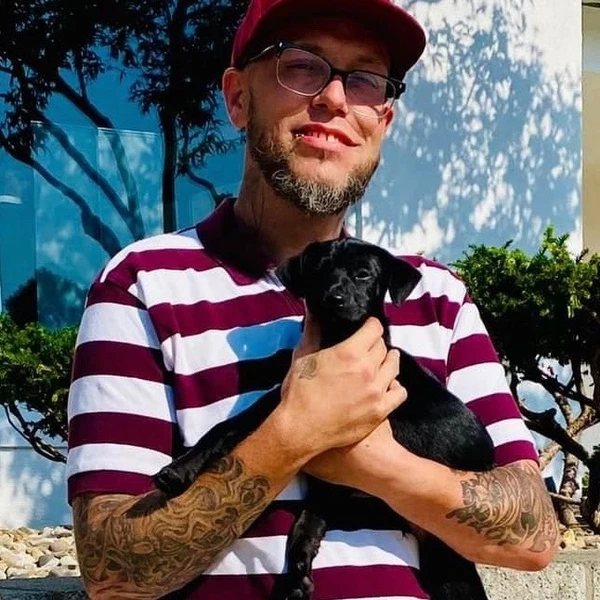
user profile avatar

Justin Mahoney

1x

Finalist

1x

Winner

Bio

I am a student, writer, and community advocate shaped by direct experience with systems that often fail the people most in need of care. I have lived through misdiagnosis, incarceration, addiction, homelessness, and a serious brain tumor diagnosis—not as defining identities, but as experiences that exposed the gap between policy, practice, and human reality. These experiences compelled me to understand how public health, mental health, reentry, and social service systems operate at ground level, where fragmented care and stigma can have lasting consequences. My education is not a personal escape or symbolic achievement; it is a tool for accountability and change. Alongside my academic work and public service, I am the author of Scars as Scripture, a book that examines suffering, recovery, faith, and resilience through lived experience and critical reflection. The book is not written for inspiration alone, but to confront how individuals are shaped by both trauma and the systems meant to support them, and how meaning and responsibility can emerge from adversity. Long term, my goal is to work at the intersection of public service, policy, and community-based solutions, helping design and strengthen evidence-based, humane responses to addiction, mental health, homelessness, and reentry. I believe education carries responsibility, and I intend to use mine to challenge ineffective practices, advocate for dignity-centered care, and contribute to systems that respond to people as they are—complex, vulnerable, and worthy of more than survival.

Education

Oral Roberts University- Online

Bachelor's degree program
2026 - 2028
  • Majors:
    • Philosophy and Religious Studies, Other
  • Minors:
    • Philosophy and Religious Studies, Other
  • GPA:
    3

Somerset Community College

Associate's degree program
2023 - 2025
  • Majors:
    • Liberal Arts and Sciences, General Studies and Humanities
  • Minors:
    • Public Policy Analysis
    • Public Administration and Social Service Professions, Other
    • Rhetoric and Composition/Writing Studies
    • Public Health
    • Community Organization and Advocacy
    • Behavioral Sciences
  • GPA:
    3

Miscellaneous

  • Desired degree level:

    Doctoral degree program (PhD, MD, JD, etc.)

  • Graduate schools of interest:

  • Transfer schools of interest:

  • Majors of interest:

    • Religion/Religious Studies
    • Philosophy and Religious Studies, Other
    • Theological and Ministerial Studies
    • Community Organization and Advocacy
    • Mental and Social Health Services and Allied Professions
    • Social Work
  • Not planning to go to medical school
  • Career

    • Dream career field:

      Civic & Social Organization

    • Dream career goals:

      My long-term career goal is to build a life of integrated work that brings together intellectual rigor, lived experience, and tangible impact. I am pursuing advanced education not simply to write or teach, but to develop the depth, credibility, and discernment required to operate at the intersection of theology, psychology, public ethics, and systems-level change. I want to work in spaces where ideas are not ornamental but consequential—where they shape policy, reform broken institutions, and influence how society understands suffering, responsibility, and human worth. Whether through academic study, consulting, program development, or public leadership, my aim is to contribute frameworks that move beyond surface solutions and address root causes. Practically, I see my career unfolding across multiple domains: higher education and curriculum development, faith-based and secular nonprofit leadership, advocacy and reform work related to incarceration, addiction, mental health, and reentry, and mission-driven initiatives that translate vision into action. I want to help build and guide organizations, develop programs, secure funding, and steward partnerships that produce measurable, humane outcomes—not just compelling narratives. Teaching and writing remain essential, but they serve a larger purpose: equipping people, influencing systems, and helping communities recover moral clarity and courage. Ultimately, my goal is to occupy roles of responsibility and trust where I can think clearly, act decisively, and leave behind structures that continue doing good long after my direct involvement ends.

    • Peer support specialist

      MADE foundation
      2023 – 20241 year
    • Night auditor

      Holiday Inn express
      2026 – Present7 months
    • Homeless Outreach Advocate providing support, resources, transportation assistance, community engagement, and recovery encouragement for individuals experiencing homelessness and hardship in Somerset, Kentucky.

      Help the homeless of Somerset Kentucky
      2023 – Present3 years

    Sports

    Track & Field

    Junior Varsity
    1997 – 19992 years

    Awards

    • no

    Research

    • Public Health

      Community Harm Reduction Initiative — Harm Reduction Researcher and Community Advocate
      2023 – Present

    Arts

    • City ink

      Graphic Art
      2005 – 2010

    Public services

    • Advocacy

      Dream.org — Community Speaker / Advocate
      2024 – Present
    • Advocacy

      Project S.H.I.F.T. — Founder and president
      2026 – Present
    • Volunteering

      Help the Homeless of Somerset, Kentucky — Outreach Coordinator
      2023 – Present
    • Public Service (Politics)

      Independent Community Advocacy — Community Policy Advocate
      2023 – Present
    • Advocacy

      M.A.D.E. — I personally purchased two vending machines and repurposed them to dispense Narcan 100% free in my community
      2023 – Present

    Future Interests

    Advocacy

    Volunteering

    Philanthropy

    Entrepreneurship

    Debra S. Jackson New Horizons Scholarship
    What $35 Can Become On November 23, 2022, I walked out of prison after nearly six years with $35 and a bus ticket. Twenty-two days later, I walked into detox. I was homeless, newly sober, and beginning to understand that a second chance is not merely a door someone opens for you; it is a responsibility you accept, one decision at a time. Now, at forty-one, I am not pursuing higher education because my life finally became easy. I am pursuing it because hardship clarified what I owe the world. Incarceration taught me how quickly a human being can be reduced to the worst thing he has done, while addiction taught me that pain left unnamed does not disappear; it recruits destruction. Recovery gave me a different definition of redemption: not escaping consequences, but becoming useful to people still trapped inside what nearly killed me. Those experiences built my life around accountability, dignity, faith, and service. After completing treatment and sober living, I enrolled in college and earned an associate degree in Humanities. I am now pursuing a B.A. in Christian Thought at Oral Roberts University, with plans to earn an M.A. and Ph.D. in Contextual Theology. My studies bring theology into conversation with psychology, addiction, incarceration, and social exclusion. I want to carry rigorous scholarship into places it rarely reaches—to people who know what a locked door, an empty stomach, a relapse, or a criminal record that follows them into every application feels like. I have already begun through my published book, Scars as Scripture, which treats suffering not as spectacle, but as material that can be transformed into service. My community work is not theoretical. Here in Somerset, Kentucky, I purchased and placed two 24-hour harm-reduction vending machines—one near the Pulaski County Detention Center and one at Volunteers of America—so people can obtain free Narcan and fentanyl/xylazine test strips without cost, shame, or permission. I have served people experiencing homelessness, advocated for recovery and reentry, and earned certifications in peer support, supported employment, and community outreach. I do not serve from a safe distance. I recognize the face across from me because I have worn its fear. After I began rebuilding, doctors found two brain tumors. Radiation failed to stop the primary tumor, surgery was judged too dangerous, and I now receive palliative care while living with hearing loss, vertigo, and severe fatigue. The diagnosis did not make education less important; it made delay feel dishonest. Time is no longer an abstraction to me. However many years I am given must become more than an account of what happened to me; they must become an answer to it. My goal is to become a writer, teacher, and public theologian who helps churches and communities respond to addiction, incarceration, mental illness, and poverty with informed compassion rather than slogans or stigma. I want to create recovery and reentry resources that join rigorous scholarship to lived reality, helping people recover not only sobriety, but dignity, belonging, and a future. This scholarship would reduce the pressure created by tuition, medical expenses, and limited income. More importantly, it would protect the time and stability I need to remain enrolled, write, and continue serving. I know what can grow from $35 and a second chance. With the Debra S. Jackson Scholarship, I will carry that second chance farther—not away from the people I once stood beside, but back toward them.
    Max Bungard Memorial Scholarship
    There are twenty-two days between November 23, 2022 and December 15, 2022. On paper, that is not much time. A few weeks. A small gap on a calendar. For me, it was the distance between coming out of incarceration with $35 and a bus ticket, and finally walking into detox because I knew I was not going to survive myself much longer. I did not leave incarceration with a plan that looked impressive. I left with damage. I left with pride that had been beaten thin, but not dead. I left with addiction still whispering in the background, still offering the same old escape route, still promising relief while quietly demanding my life in return. Nashville became the place where I ran out of excuses. I was homeless. I was tired in a way sleep could not fix. I had lived long enough in chaos to know its smell, and I could smell it on me. Addiction made me smaller before it almost killed me. That is what I learned. It does not only take substances and turn them into a master. It takes your honesty first. Then your discipline. Then your relationships. Then your future. Eventually, you are not choosing anymore—you are just obeying a hunger that has learned how to wear your voice. Detox was where I stopped pretending. Recovery has taught me that growth is not dramatic most days. It is quiet. It is uncomfortable. It is making the phone call. Showing up. Keeping the appointment. Sitting through the feeling instead of medicating it. Letting people correct you. Letting God rebuild the parts of you that you once tried to numb, hide, or destroy. That changed the way I see education. School is not just a career step for me. It is part of my recovery. It is structure where there used to be collapse. It is discipline where there used to be impulse. It is a way of taking the mind I once used to justify destruction and training it toward service. After graduating from Somerset Community College this past December, Im continuing my education at ORU for my bachelor’s because I want my life to become evidence that people can come back from places that looked final. My future goals are tied to the people addiction tries to erase. I want to write, teach, serve, and advocate for people who are still fighting for breath—spiritually, emotionally, and sometimes literally. During my freshman year I used my leftover financial aid to buy and repurpose two vending machines to dispense Narcan 24/7 and 100% free in my community, one sits in front of our Jail and the other at a Volunteers of America. Those machines are personal to me. They are not charity from a distance. They are a refusal to let death have easy access while help stays locked behind office hours. I cannot talk about recovery without talking about responsibility. Sobriety gave me my life back, but it also gave me work to do. I plan to move forward by continuing my education, staying rooted in service, and helping create more bridges between survival and hope for people affected by addiction. Addiction never gets the final right to define a human being. Not my life. Not anyone’s. This scholarship would help me keep building from the life I almost lost. And I do not take that lightly.
    Students Impacted by Incarceration Scholarship
    Incarceration did not just interrupt my life. It stripped it down to the bones. I lost years. I lost freedom. I lost the illusion that a man can keep making small compromises and somehow avoid a large consequence. Prison taught me that destruction does not usually arrive all at once. It starts quietly—with excuses, resentment, pride, fear, and the belief that I could outrun the truth without eventually being buried by it. I could write about incarceration like it was only something done to me, but that would be dishonest. It also revealed me. It showed me the parts of myself I did not want to face. The anger. The selfishness. The wasted gifts. The intelligence I used without wisdom. The pain I tried to survive by becoming harder instead of becoming whole. When I was released on November 23, 2022 after six years, I came out with almost nothing—just $35 and a bus ticket. I was instantly homeless in Nashville before deciding I could do better with my life and found a random stranger to help me get into a detox. From there, I went through treatment, sober living, outpatient care, and the slow, humiliating work of learning how to become a man who could be trusted with freedom. That process did not feel inspirational while I was living it. It felt like shaking hands, sleepless nights, cheap food, long walks, and choosing the next right thing when every old part of me wanted to run. What I learned is that freedom is not the absence of bars. Freedom is responsibility carried willingly. That lesson changed my education. College stopped being a decoration for my life and became a form of repentance. Not guilt. Not shame. Repentance in the truest sense—a turning. I graduated from Somerset Community College and continued my education because I believe the life I almost destroyed now has to be spent building something that outlives me. My academic path in Christian thought, theology, and future graduate study is not separate from my incarceration. It was born out of it. I want to write, teach, serve, and advocate for people society has learned to ignore—people in addiction, people coming home from prison, people carrying records, wounds, and names they are terrified will define them forever. I know what it feels like to be reduced to your worst chapter. I also know what it means for someone to look at you and still see a future. This scholarship would not simply help pay for school. It would help carry the weight of a calling I did not choose lightly. Incarceration taught me what happens when potential is undisciplined. Education is teaching me what happens when pain is surrendered to purpose. I cannot get those years back. But I can make sure they are not wasted.
    Brian C Jensen Scholarship
    Andrea Worden Scholarship for Tenacity and Timeless Grace
    After reading the essay instructions and seeing the line, “Your story doesn’t have to be polished or perfect—just honest,” I stopped for a moment longer than I expected. I’ve never had a polished story. I’ve never had a perfect one either. What I have is a life that’s been dismantled and rebuilt more times than I can count, shaped less by tidy turning points and more by the raw, unfiltered honesty I spent years trying to avoid. And the truth is that “being honest” wasn’t just part of my story—it was the defining moment. The first time I told the truth about myself out loud, I didn’t tell it to be believed. I told it because I couldn’t survive another day hiding behind the version of myself the world had decided was easier to understand. It didn’t happen in an office or a classroom or anywhere meant for confession. It happened within two weeks of my release from prison in November 2022, when I was homeless in downtown Nashville—carrying a backpack, a few dollars, and a future I wasn’t convinced I’d live long enough to see. I was sitting on the edge of the sidewalk near the Greyhound station, scrolling through social media posts of people who helped the homeless. I found the page of a man I’d never met. My fear was louder than my hope, but something in me finally broke past the instinct to pretend. I messaged him and spoke the truth I had never said out loud to another human being: I just got out of prison. I have nowhere to go. I don’t know how to start my life over. Can you help me? No applause. No reassurance. No validation. Just a moment where I waited to see if honesty would cost me more than silence ever had. But I didn’t walk it back. And that small act became the beginning of everything that followed. It didn’t erase the years behind me or stabilize the chaos I was still living in. But it cracked open something that had been sealed shut for most of my life—an understanding that if I wanted a life I didn’t have to run from, it would begin with truth, however unpolished and uncomfortable that truth might be. Nothing about my path through education has been traditional. I tried to finish high school while sleeping in abandoned boats. I tried to rebuild after two prison sentences. I tried to restart my life after addiction became the only way I knew to numb the trauma I carried. Then earlier this year came the diagnosis—a brain tumor so complex that treatment quickly shifted into conversations about quality of life instead of cure. If perseverance is measured by the distance between who you were and who you refuse to stop becoming, then my education is the clearest map of that distance. I didn’t return to school because circumstances were easy. I returned because learning became the one line I refused to let go of, even when my health faltered, even when trauma resurfaced, even when every part of my life felt temporary or fragile. But perseverance alone doesn’t make a person. Compassion does. Kindness does. I learned that from the people who helped me survive when I didn’t look like someone worth investing in. A homeless man gave me an extra tent and showed me where to find water. He didn’t ask who I had been. He didn’t care why I was there. He simply saw another human being struggling to stay alive. That moment tattooed something onto my understanding of what it means to be human: compassion is not about fixing someone—it’s about refusing to abandon them. Everything I’ve done since—advocating for overdose prevention, helping the unseen and unheard, writing words people carry with them through the darkest nights—comes from that understanding. I know what it feels like to be overlooked. I know what it feels like to be dismissed as too complicated, too broken, too far gone. And I know how life-changing it is when someone refuses to let you disappear. Earning my degree, preparing for graduate studies, writing books that speak to people no one else speaks to—none of this came from stability. It came from that first moment of honesty on a sidewalk in Nashville. That was the beginning of integrity. That was the beginning of purpose. That was the beginning of stepping into a life I never believed I’d live long enough to reach. I can’t undo where I’ve been. I can’t rewrite the years that collapsed behind me. But I can take all of it—all the pain, all the perseverance, all the hard-won truth—and build a future grounded not in what I survived, but in who I am choosing to become. I used to believe my story was defined by what broke me. Now I know it’s defined by the fact that I refused to stay broken.
    Trudgers Fund
    I did not stumble into addiction like someone tripping over a loose stone—I hurled myself into it like a man trying to outrun his own shadow. By the time I realized the shadow was me, I was already lost in the dark. Addiction was not just a chemical hook in my veins; it was the language I used to silence grief, the armor I wore against a world that misnamed me before I could speak for myself. I was locked up as a teenager while my mother was dying of cancer, and when the world should have taught me how to live, it taught me how to numb. Drugs were not my rebellion; they were my refuge, until the refuge became a prison with no walls. I spent years moving between cages—prison cells, psych wards, shelters, abandoned houses—each one echoing the same lie: that I was broken beyond repair. And I believed it. Addiction convinced me that obliteration was safer than hope, that silence was wiser than prayer. But somewhere between the overdose scares, the beatings, the hunger, and the endless funerals, I began to see the truth: I wasn’t addicted to substances alone. I was addicted to forgetting. And forgetting almost killed me. Sobriety was not a miracle that descended on me one morning. It was the slow, excruciating work of remembering—remembering my mother’s voice, remembering the boy I was before I gave up, remembering that pain does not have to be wasted. My first sober breath was not freedom; it was fire. It burned away the excuses. It forced me to look at the ruins and ask myself: Do you rebuild, or do you rot here? I chose to rebuild. And education became my scaffolding. School is not just a classroom for me—it is defiance. Every textbook I open is an act of rebellion against the system that wrote me off. Every degree I chase is a tombstone overturned, a lie exposed. When I sit in a lecture hall, I do so as someone who has slept under bridges and in jail bunks, and my presence there says: we do not stay where we were left. But I do not pursue education for myself alone. Addiction taught me what happens when people are misdiagnosed, mislabeled, and misunderstood. It taught me how silence can be deadlier than any drug. My goal is to use my degree in Humanities and Christian Thought not just to preach, but to dismantle the barriers that keep people from healing. I want to teach others—especially those written off by poverty, prison, and pain—that their scars are not the end of their story. I want to bring recovery out of the basements and into the classrooms, out of hushed shame and into public courage. This scholarship will not simply help me pay for school. It will fund a living testimony that wholeness is possible even when healing never came, that sobriety is not the absence of struggle but the presence of purpose. My education will not make me forget where I came from. It will make me dangerous to the lies that once held me captive. Because if I can turn my ruin into a classroom, then maybe someone else will realize they can turn their relapse into a resurrection. I am not applying as a man who once lost everything. I am applying as a man who found that even in the ashes, there are seeds. And with your help, I intend to see them grow
    Lost Dreams Awaken Scholarship
    I wasn’t supposed to make it here. By the time I was a teenager, I had a file thicker than my schoolbooks — behavior reports, court papers, psych evals that never asked me directly what was going on in my head. The diagnoses came and went, but the truth was simple: I was breaking faster than anyone knew how to catch me. Then came the years that stripped everything. Prison gates closing behind me. Nights on sidewalks and in abandoned boats. My mother dying while I was locked up. The kind of loneliness that doesn’t fade when people are around. And later, the thing in my head doctors call a tumor, reminding me daily that time isn’t a promise. Addiction didn’t just take my freedom — it convinced me I wasn’t worth saving. Recovery began the moment I stopped trying to make peace with that lie. It wasn’t heroic. It was ugly, shaky, and relentless. But it was mine. Today, recovery means I no longer measure my life by what I’ve avoided, but by what I’ve built. It’s my family answering my calls without fear. It’s the dignity of looking someone in the eye without hiding. It’s turning my history into a map for those still trapped in theirs. Recovery didn’t give me back the life I lost — it gave me one I never believed I could deserve. And I will guard it with everything I have, because I know exactly what waits if I don’t
    Sloane Stephens Doc & Glo Scholarship
    I was never meant to disappear. But the world tried to make me vanish — through diagnoses, through detention, through silence. I didn’t grow up with a roadmap. I grew up with warning signs. “Behavioral problem.” “Oppositional.” “Too much.” I was labeled before I was listened to. And when you’re young and misunderstood, you start to believe that misunderstanding is your identity. I didn’t know I had schizoaffective disorder. I just knew my mind was loud when the world wanted quiet. I didn’t know I had PTSD. I just knew I flinched at kindness because it felt like a setup. I didn’t know I had ADHD. I just knew I couldn’t sit still in a system built to break spirits that don’t conform. By the time I was a teenager, I had already been processed — through classrooms, courtrooms, and confinement. I spent my 18th birthday incarcerated while my mother was dying of cancer. I never got to say goodbye. That grief didn’t just shape me. It hollowed me out. And I filled that hollow with motion — years on the road, selling magazines door-to-door, crossing states and countries like a ghost with a pitch. Addiction came next. Not as a choice, but as a drowning. After my second prison sentence, I learned that violence wasn’t an event — it was the atmosphere. I was beaten nearly to death for refusing extortion. My body healed. My sense of safety didn’t. I learned to manipulate, to anticipate, to survive. And survival, in that world, meant losing pieces of yourself just to stay breathing. I’ve slept in tents, on boats, under bridges. I’ve bartered stories for shelter. I’ve learned that generosity and desperation often share the same face. I’ve met people who had nothing but still gave. I’ve met people who had everything but couldn’t see me. And somewhere in that chaos, I found clarity: I wasn’t broken. I was buried. Faith didn’t save me. It challenged me. I’m now pursuing a degree in Christian Thought, not to escape my past, but to confront it. I want to study Contextual Theology because I believe God doesn’t live in ivory towers — God lives in the margins, in the trauma, in the tents. I want to challenge the systems — medical, legal, theological — that failed me and fail so many others. I want to build a theology that doesn’t ask people to be healed before they’re welcomed. I don’t wear masks anymore. I don’t shrink to fit comfort zones. My mental health journey has made me allergic to performance. I value people who can sit in the storm with me — not because they understand it, but because they respect it. I’ve learned that truth isn’t always palatable, but it’s always necessary. This scholarship isn’t just a lifeline. It’s a megaphone. It’s a chance to speak for the ones still silenced, still mislabeled, still surviving in systems that don’t see them. I’ve been called too much, too unstable, too far gone. But I’m still here. And I’m not asking to be accepted. I’m demanding to be heard. Because I was never meant to disappear. I was meant to disrupt
    Ethel Hayes Destigmatization of Mental Health Scholarship
    Winner
    I didn’t grow up thinking I was “mentally ill.” I grew up thinking I was wrong. Wrong for the classroom, wrong for the family I was in, wrong for the world that kept trying to contain me. Adults slapped labels on me before I even knew what they meant — behavioral problems, oppositional defiance, ADHD — but no one ever asked what was actually happening inside my head. They listened to my mother, my teachers, my probation officers. They never listened to me. By the time I was a teenager, my life was already a crash site. My mother’s shotgun marriage to my stepfather ignited a resentment that bled into everything. My rebellion wasn’t strategic — it was reflex. I sabotaged, I destroyed, I lashed out. I was placed in special classes, sent to juvenile programs, locked in rooms at home, and eventually locked away from home. I learned early that if the world was going to misunderstand me anyway, I might as well give it something to misunderstand. I didn’t know then that I had schizoaffective disorder, PTSD, and ADHD. I didn’t know that the paranoia, the voices, the derealization weren’t just me “acting out.” I only knew my mind didn’t work like other people’s — and that difference was treated like a crime. The misdiagnoses stacked up, consequences got heavier, and my rap sheet started reading like a biography. I spent my 18th birthday incarcerated while my mother was dying of cancer. I never got to say goodbye. That loss became the silent undertow that pulled at me for years. I buried it under movement. For nearly 15 years, I lived on the road as a door-to-door magazine salesman, crisscrossing all 50 states and parts of seven countries. Selling kept me alive, but also kept me running. I became a master of adapting, reading people, and using charm as currency. But you can’t outrun your mind forever. Addiction crept in after my second prison sentence in Tennessee, where violence wasn’t occasional — it was the air we breathed. I was beaten nearly to death for refusing extortion, my body left fractured and my sense of safety permanently rewired. In that world, manipulation and vigilance weren’t character flaws — they were survival skills. On the outside, those same skills made me dangerous to myself. I self-medicated to erase the memories, to drown the static in my head. Homelessness followed, as it often does. I slept in tents, abandoned boats, and whatever shelter I could hustle my way into. I learned the economy of the streets — how generosity and desperation can exist in the same handshake. When a man named John, also homeless, offered me his extra tent and the last of his food, I realized that relationships in my world were rarely built on status or convenience. They were built on mutual recognition: I see you because I am you. Mental health, for me, has never been a neat arc of decline and recovery. It’s been a lifetime of recalibration. Some seasons, the symptoms own me. Other seasons, I own them. And now, with a brain tumor pressing against my brainstem — untreatable, inoperable — I live with the knowledge that my body’s timeline may be shorter than I’d like. Oddly, that’s sharpened my clarity. I no longer waste time on shallow connections or unexamined ambitions. My goals now aren’t about climbing ladders I don’t believe in. They’re about tearing down the walls that keep people like me — the misunderstood, the misdiagnosed, the ones written off as too far gone — from being heard. I’m working toward a B.A. in Christian Thought, with plans to earn my M.A. and Ph.D. in Contextual Theology. Not because I want letters after my name, but because I want to challenge the systems — medical, legal, theological — that failed me and fail so many others. My advocacy is rooted in lived experience; my scholarship will be, too. In relationships, my mental health journey has made me allergic to performance. I don’t care for the masks people wear to make others comfortable. I value people who can sit in the discomfort of my truth without trying to fix it or dilute it. That’s a small circle, and I keep it that way. My past taught me that trust isn’t earned by words or promises — it’s earned by presence. I no longer assume that authority equals wisdom, or that a clean record means a clean conscience. I know that people commit quiet acts of cruelty every day in the name of order, and that entire systems are built to process human beings like defective products. I also know that kindness can survive anywhere — in prison rec yards, under highway overpasses, in strangers’ living rooms. And when you’ve been where I’ve been, you stop measuring the world by its beauty and start measuring it by its capacity for mercy. Destigmatizing mental health isn’t about glossy campaigns or buzzwords. It’s about telling the truth — the whole truth — even when it’s ugly, even when it doesn’t fit the recovery narrative people prefer. It’s about standing up in rooms that don’t expect you to be there and making sure they can’t ignore you. My story isn’t wrapped in a bow. I’m still navigating symptoms, addiction triggers, medical uncertainty, and the unpredictable weather of my own mind. But I’ve stopped treating that as a disqualification. If anything, my mental health journey has taught me that my life isn’t defined by what’s “wrong” with me. It’s defined by what I do with it. And I intend to do something that matters — for the ones still stuck in the cycle, for the ones whose diagnoses were death sentences to their dreams, for the ones who’ve been told they are too much, too broken, or too far gone. Because I’ve been all of those things. And I’m still here