Hobbies and interests
Cooking
Reading
Reading
Art
I read books daily
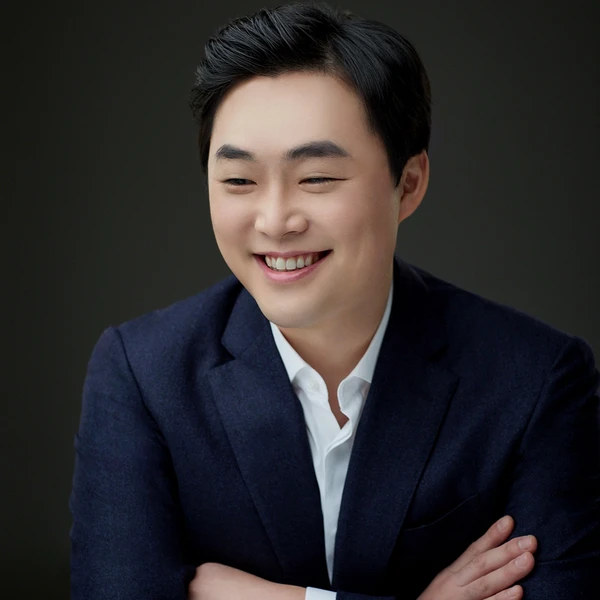
Junho Kim
1x
FinalistJunho Kim
1x
FinalistBio
My name is Junho Kim, a Master of Music student in Composition at the New England Conservatory of Music. Coming from a low-income household, I’ve learned to approach music not just as an academic discipline, but as a vital means of expression and resilience. My work is rooted in both traditional classical structures and contemporary experimental techniques, often drawing inspiration from lived experiences and social realities. Through composition, I aim to create music that connects deeply with people, evokes emotion, and reflects the complexity of our times.
As a first-generation graduate student navigating the challenges of life and art, I am passionate about making music education and performance more accessible. I believe music has the power to bring communities together and give voice to those often unheard. My journey is driven by purpose, and I hope to contribute to the field not only as a composer but as an advocate for inclusive, transformative artistry.
Education
The New England Conservatory of Music
Master's degree programMajors:
- Music
Miscellaneous
Desired degree level:
Doctoral degree program (PhD, MD, JD, etc.)
Graduate schools of interest:
Transfer schools of interest:
Majors of interest:
- Music
Career
Dream career field:
composer
Dream career goals:
Teacher
University2019 – 20256 years
Sports
Swimming
Club1997 – Present29 years
Research
Music
University — Author of the paper2020 – 2022
Arts
University
MusicCD2007 – Present
Public services
Volunteering
Chuncheon puppet festival — Staff2011 – 2011
Eden Alaine Memorial Scholarship
Ten years ago, I lost my father to cancer. I was 27 years old at the time, still trying to find my path in life. His death shook my world—not just emotionally, but practically. With his passing, our family lost more than a loved one; we lost our provider, our stability, and the quiet strength that held us together.
Since then, my life has never been the same. As the eldest in my family, I had to grow up quickly. I found myself stepping into responsibilities I wasn’t prepared for—financial, emotional, and familial. Most of my peers had the freedom to explore, study, and even fail without fear. I didn’t. I had to make every decision count. Every mistake cost not just me, but those who depended on me.
Unlike many students who may have financial or emotional support systems, I’ve had to navigate higher education almost entirely on my own. Now, as a husband and father of two young children, that weight has only grown heavier. I'm currently pursuing a Master of Music degree at the New England Conservatory, after working for years as a composer in South Korea. Although I’ve been recognized for my work and have had my compositions performed internationally, financial sustainability has always been a struggle.
With no father to turn to for advice, encouragement, or help with tuition, I carry this burden myself. My wife and children remain in Korea, and being away from them is one of the greatest sacrifices I’ve ever had to make. Recently, my family had to move out of their home due to rising housing prices in Korea. I had no choice but to use the money I had saved for my next semester’s tuition to help secure a new home for them. These moments test my limits, but they also remind me why I continue.
My father's passing taught me how fleeting and precious life is. It forced me to think deeply about what kind of legacy I want to leave—not just as a father or a husband, but as an artist. I compose music that blends Korean traditional sounds with modern classical forms. My compositions explore themes of loss, resilience, and memory—because those are the things I live with every day. Through my work, I try to give voice to the grief that shaped me and the hope that keeps me going.
I don’t have the luxury of academic comfort. Every step I take in this journey is uphill. But my father’s absence has given me a deep sense of responsibility—to my family, to my art, and to those who may find healing in the music I create. If I receive this scholarship, it will not only ease a significant financial burden, but it will also honor the journey that began the day I lost him. His absence has shaped me into someone who knows the value of perseverance, purpose, and compassion.
I carry my father’s memory with me in every note I write, and I hope to build a life that would make him proud.
STEAM Generator Scholarship
Entering higher education in the United States has been one of the most rewarding and challenging experiences of my life. As an immigrant and someone who came from outside the American educational system, I have often felt like an outsider—not only to the academic structure, but also to the culture, the language, and even the unspoken rules that others seem to intuitively understand.
Before coming to the U.S., I worked for many years as a composer in South Korea. I had achieved a level of professional recognition: my works were performed internationally, including at the Berlin Philharmonie and the Korea National Gugak Center. I received awards and taught at a university. Still, despite these accomplishments, the classical music industry in Korea offered limited opportunities, particularly for artists like me who work to fuse Korean traditional music with contemporary classical expression. Supporting my wife and two children through music alone became increasingly unsustainable.
Choosing to study abroad at the New England Conservatory was not just a professional decision. It was deeply personal and emotional. I left behind everything familiar—my home, my language, my career, and most painfully, my family. My wife remains in Korea, taking care of our six-year-old son and three-year-old daughter. Every day, I feel the distance between us, not just in miles but in missed moments, birthdays, and everyday joys. There are times when the weight of being apart from them feels unbearable. And yet, it is this very love for my family that gives me strength to keep going.
Being an immigrant in an elite academic institution has amplified my sense of being an outsider. Many of my peers grew up in environments that prepared them for this world. I, on the other hand, have had to navigate everything from visa paperwork to cultural misunderstandings while trying to maintain my academic and artistic focus. But my immigrant experience has also made me more resilient, more curious, and more committed to growth. I am learning not only a new system, but how to find my place within it without losing who I am.
My hopes for higher education are grounded in this tension. I hope that my time in the U.S. will allow me to grow as an artist, yes, but also as a bridge between cultures. I want to create music that speaks across borders and identities, rooted in the complexity of who I am—a Korean father, composer, immigrant, and student. My goal is to build a career that allows me to support my family, mentor younger musicians, and contribute to the global music community with authenticity.
This journey is not easy. But I believe that stepping into an unfamiliar system with courage and purpose is exactly what education is meant to be. It stretches us, redefines us, and—if we let it—makes us better versions of ourselves. I may be an outsider, but I bring with me a deep well of experience, perspective, and hope. And I believe there is space for that in this system, too.
Nabi Nicole Grant Memorial Scholarship
Faith has always been a quiet but powerful force in my life. As a composer, husband, and father, I have faced moments of uncertainty and fear. But it was during a recent turning point that my faith became more than just a part of me—it became the compass that led me forward.
For years, I worked as a composer in South Korea. I had built a career with recognition: my works were performed at the Berlin Philharmonie, the Sofia Music Festival, and the Korea National Gugak Center. I received awards from the Seoul Foundation for Arts and Culture and taught composition at a national university. Yet despite all this, I found myself struggling to support my wife and our two young children. The classical music scene in Korea, while culturally rich, offered limited opportunities to composers like me who blend Korean traditional sounds with modern classical language.
As the pressure mounted, I began to question everything. Should I stop composing? Was I being selfish by continuing in a career that could not provide for my family? I felt stuck—torn between responsibility and calling.
In that season of doubt, I turned to my faith. I prayed. I searched my heart. I asked not just what I wanted, but what I was called to do. Through prayer and reflection, a quiet truth became clear: I was meant to continue. Not for fame, but to serve—to serve my family with courage, and to serve others through music that heals and connects.
That faith gave me strength to take a risk. I applied to the New England Conservatory in the U.S., trusting that the right door would open if it was meant to. When I was accepted, it felt like a confirmation. I left my home country to begin again in a foreign land—not because it was easy, but because faith told me it was worth it.
Since starting my studies in Boston, my faith has continued to sustain me. The academic and artistic environment has helped me grow, but challenges remain. Recently, our landlord in Korea asked my family to move out. With housing costs skyrocketing, I had to use my saved tuition money for a deposit on a new home. Again, I faced a painful choice: continue my studies, or protect my family’s security. I chose my family, trusting again that things would work out.
Faith doesn’t always remove hardship, but it gives us the courage to walk through it. In every setback, I remind myself of the calling that brought me here. I believe that music can be a vessel of hope. My dream is to create music that reflects struggle and resilience, tradition and transformation—just like my own journey.
Through faith, I have learned that real strength is not the absence of fear, but the will to act in spite of it. That is how I continue—one step at a time, holding onto hope, and believing that my path has purpose beyond myself.
American Dream Scholarship
To me, the American dream is not about achieving wealth or fame. It is about the opportunity to pursue a life of meaning, growth, and contribution, even in the face of risk or uncertainty. As a Korean composer, father, and student, I have come to understand the American dream as a space where one’s passion and purpose can align, where the pursuit of art and a better life are not mutually exclusive.
Back in South Korea, I lived a busy life as a composer. My works were performed in venues such as the Berlin Philharmonie and the Korea National Gugak Center. I received multiple awards, including the UK International Music Competition Master Prize and honors from the Seoul Foundation for Arts and Culture. I taught at a national university and earned an MFA from the Korea National University of Arts. On paper, it looked like success. But the reality was different.
Despite all the accolades, it became increasingly difficult to support my wife and two children through music alone. Korea's classical music industry, especially for composers blending traditional Korean elements with modern forms like I do, is limited in opportunities and financial support. I found myself at a painful crossroads: either give up music for a stable job, or take a leap of faith.
After many late-night conversations with my wife, we chose to embrace the risk. We agreed that the American dream, for us, meant choosing a life where I could continue creating meaningful work without giving up on family or survival. I applied to and was accepted into the Master of Music program at the New England Conservatory. My first semester was a transformative experience. Studying under world-class professors who understand my artistic voice has reignited my creative spirit. I now feel I am in a place where I can truly grow.
However, our journey has not been easy. Recently, our landlord in Korea asked my family to move out. With housing prices in Korea soaring, I had to use my tuition savings for their new deposit. It was heartbreaking, knowing I might have to pause my studies not because of a lack of passion or progress, but because of financial instability.
And yet, I still believe in the American dream.
Because to me, the American dream is not a destination. It’s the right to try. It is the belief that effort, creativity, and integrity can lead to a better life. It is the space where someone like me, a Korean composer with a passion for fusing East and West, for telling emotional, human stories through music, can be heard and can contribute.
With support, I want to keep writing music that explores the tension and harmony between cultures. I want to mentor young musicians, especially those from underrepresented backgrounds, and offer them the same encouragement I now seek. My dream is to create music that moves people and to live a life that proves that art and family, risk and reward, tradition and innovation can coexist.
The American dream, to me, is not about guarantees. It’s about possibility. And I am determined to make the most of it, not just for myself, but for those I can reach through my work.
Second Chance Scholarship
I am Junho Kim, a Korean composer whose work bridges traditional Korean music and contemporary classical expression. My journey as a musician has been defined by a deep desire to create works that reflect both the beauty of East Asian heritage and the complex emotional landscape of modern life. I believe music can speak to the pain, isolation, and resilience of people today, transcending cultural boundaries while remaining rooted in identity.
I was born in 1988 and have spent over a decade composing for orchestras, chamber ensembles, and soloists. My works have been performed at esteemed venues such as the Berlin Philharmonie, Sofia Music Festival, and Korea National Gugak Center. I have been honored to receive several awards, including the UK International Music Competition Master Prize and recognition from the Seoul Foundation for Arts and Culture. I also hold an MFA from Korea National University of Arts and have taught composition and harmony at Gyeongin National University of Education.
Despite these achievements, the reality of the classical music market in Korea has made it incredibly difficult to support a family through music alone. I am a father of two young children, and although I remained active with many projects, it became clear that financial sustainability was out of reach. My wife and I had long conversations about our future — whether I should give up music altogether, and if so, what path I could take. In the end, we decided that rather than give in to fear, we would take a leap forward, no matter the risk.
That decision led me to the United States, where I am now pursuing a Master of Music degree at the New England Conservatory. It has been a transformative experience. The feedback I’ve received has been encouraging, and the opportunity to study under professors who truly challenge and understand my artistic voice has reignited my creative vision. My music continues to evolve — I strive to fuse Korean traditional elements with Western forms to create works that explore memory, identity, and the emotional struggles of contemporary life.
However, an unexpected financial challenge now threatens to interrupt this progress. Recently, the landlord of our apartment in Korea asked my family to move out. Due to the dramatic rise in housing costs, I was forced to use the tuition I had saved for the next semester as a deposit for their new home. With a six-year-old son, a three-year-old daughter, and a wife navigating this move alone back home, I feel torn between my responsibilities as a father and my pursuit of this essential artistic growth.
This scholarship would allow me to continue my education without sacrificing the safety and stability of my family. It would also be a meaningful investment in the kind of music I am committed to — music that honors tradition, embraces innovation, and speaks to the shared human experience.
In the future, I plan to pay this support forward by mentoring young composers, especially those from underrepresented backgrounds. I want to be a source of encouragement for others facing the same uncertainties I have faced. Through music and education, I hope to continue building bridges — between cultures, between generations, and between people’s inner worlds.
Thank you for considering my story. Your support would not only sustain one artist’s journey but ripple outward in meaningful ways, through both the music I create and the lives I hope to inspire.