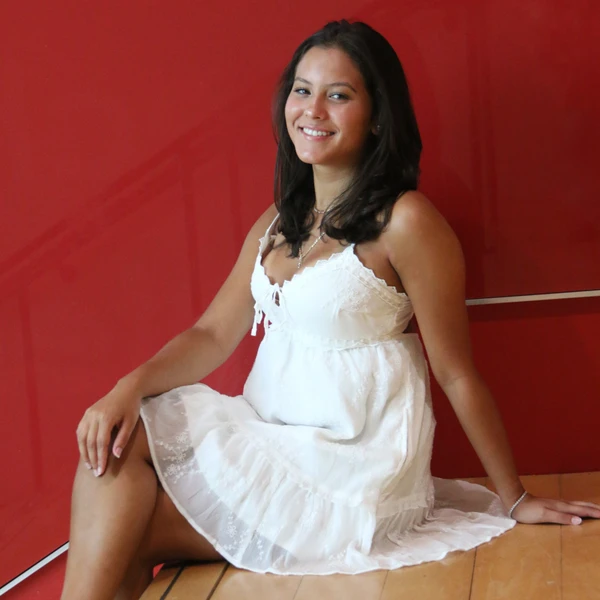
Hobbies and interests
Dance
Ballroom Dancing
Child Development
Nursing
Pediatrics
US CITIZENSHIP
US Citizen
LOW INCOME STUDENT
No
FIRST GENERATION STUDENT
Yes
Julianna Miessau
1x
Finalist
Julianna Miessau
1x
FinalistBio
My name is Julianna Miessau and I am a senior at Waterbury Career Academy High School. After I graduate, I intend to pursue a career in the nursing field, as I’ve been highly interested in this career for years. During high school, I’ve taken on a thorough workload, including many honors and college classes, specifically UConn Early College Experience classes. On top of that, I’ve also taken classes related to the health field all four years, this year being a UConn EMT course. I’ve kept a 3.8 GPA and always challenged myself by taking higher level classes. I take pride in that and will continue to push myself. In regard to activities, I was on the cheerleading my freshman year. Outside of school, I do competitive dance and have been since I was two and a half. Dance has taught me dedication, teamwork, and leadership. Leadership as in helping everyone perfect and clean the routines down, but also teamwork comes in at the same time. I’ve learned to balance dance and school my entire life, strengthening my time management skills and responsibility. Both in and out of school, I push myself all the time because I know I can do it, I don’t give up. Additionally, there are personal health problems I have that I continue to push through everyday and they’ve made me who I am. As a student, and a person, I look forward to continue growing in not only the academic aspect, but also the personal one, especially in the nursing field.
Education
Waterbury Career Academy
High SchoolMiscellaneous
Desired degree level:
Bachelor's degree program
Majors of interest:
- Registered Nursing, Nursing Administration, Nursing Research and Clinical Nursing
Career
Dream career field:
Hospital & Health Care
Dream career goals:
Associate
Starbucks2025 – Present1 year
Sports
Dancing
Club2010 – Present16 years
Awards
- I've received multiple overall high-score trophies and banners, including multiple top awards at regional and national competitions
Arts
Children's Dance Workshop
DanceAnnual Dance Recital2010 – Present
Public services
Volunteering
Ansonia Rescue Medical Services — EMT Ride-Along Student2025 – Present
Future Interests
Advocacy
Volunteering
Dashanna K. McNeil Memorial Scholarship
When I think about what drives me to become a nurse, two big aspects of my life come into play.
Growing up, my parents worked quite a bit, so my grandmother took care of me a good amount of the time. My grandmother, unemployed now but back in her prime, used to work in the health field. She started as a geriatric nurse in a nursing home, then moved to the hospital setting as a unit service assistant, and ended her career as a home health nurse. She would tell me endless stories of her time at the hospital and homes, and she still does. Those simple words had a profound influence on me. She has the kindest soul and will always put others' needs before her own; it’s something I appreciate. Helping others was a part of her; it wasn’t just something she did. It was a norm to her, as she took care of her disabled brother her whole life, and still does. Watching her do so was a beautiful sight; it’s where I get my desire to help others and the compassion I carry with me everywhere.
I’ve gained that caring quality she instilled in me since I was a young girl. From that, I want to see others flourish and be the best part of their day. Those qualities I carried since I was young. Even in school, the health classes made me become more and more curious about the human body. That also strengthened my interest in nursing and aligns with the compassion I carry. I want to mirror my grandmother’s kindness and be someone that they can trust. Someone that they won’t fear, as comfort is very important. If I can leave a remarkable impact on even one person, that’s enough for me. Patient care matters to me, so that’s one of my main focuses.
My grandma will always have an everlasting impact on my choice of profession, but that’s not all. My own personal health matters affect my choice as well. Experiencing a childhood with scoliosis and owning hearing aids is extremely hard on the mental, physical, and emotional health. It makes you have a horrible body image of yourself, makes you feel alone in these problems, and brings down your self-esteem drastically. I know what it feels like to be a young kid with medical conditions; it will take a toll on you as you feel not normal. That experience is also why I want to be a nurse, to make a difference in the lives of kids like me. To tell them that you are normal, you aren’t alone in your worries. In doing that, I’ll care for them as much as I can, help them not only physically, but emotionally and mentally as well.
Ultimately, these experiences are what gave me the most motivation to pursue nursing. I want to make a difference in people's lives. It would make me happy knowing I played a positive role in someone's life, leaving them with a smile on their face. My eventual goal is to become a NICU nurse, as I have a strong love for babies and want to give them the best possible start in their lives. Nursing, something I have always felt drawn to. It’s something I won’t stop trying to get at, even when things get difficult; I’m committed to my journey. I hope to comfort and cheer up many people; in that sense, it’s more than just a career to me. With that, it’s exactly what I plan on doing.
Wicked Fan Scholarship
I'm a huge fan of the Wicked because it captures the magic of the beloved musical while elevating it into something cinematic and emotionally resonant. The visuals are breathtaking. Vibrant sets, intricate costumes, and seamless blends of practical and CGI elements bring the land of Oz to life in a way that feels expansive and immersive, far beyond what the stage can achieve. The world-building rivals the best fantasy epics, with the Emerald City sparkling and Shiz University bustling with whimsical detail.
What truly hooked me are the powerhouse performances. Cynthia Erivo as Elphaba delivers raw power and vulnerability, especially in "Defying Gravity," where her voice soars with defiance and heartbreak—it's a career-defining moment that left theaters erupting in applause. Ariana Grande as Glinda brings charm, wit, and surprising depth; her "Popular" is bubbly perfection, and her chemistry with Erivo makes their friendship arc feel genuine and moving. The songs hit harder on screeN. The emotional weight of moments like the Oz Dust Ballroom scene lands with greater intimacy and impact.
The film's themes of prejudice, friendship, propaganda, and self-discovery feel timely and profound, wrapped in spectacle that doesn't overshadow the heart. Jon Chu's direction shines in the choreography and staging, making numbers like "Dancing Through Life" electric and fluid.
Personally, my connection deepened because last year I danced in a local production inspired by the Wicked movie. Rehearsing those iconic sequences—channeling Elphaba's isolation and Glinda's poise—gave me a new appreciation for the choreography's emotional layers. Performing the ensemble pieces, feeling the swell of the music, and embodying the story's messages of defying expectations made the film's release feel like a full-circle triumph. Seeing it on the big screen was exhilarating; every song and scene echoed the sweat and joy of those rehearsals. It's more than entertainment—it's inspiring, empowering, and utterly enchanting.
Tawkify Meaningful Connections Scholarship
Option 2.
In an era where algorithms curate our social feeds, virtual meetings replace boardrooms, and AI companions simulate conversation, the essence of authentic human connection—those raw, empathetic bonds that define our humanity—faces unprecedented challenges. Technology, while a marvel of efficiency, often fragments our attention, fostering superficial interactions over deep ones. Yet, this digital dominance isn't inevitable doom; it's an opportunity to preserve, strengthen, and reimagine connections with intentionality. By blending tech's tools with timeless human practices, we can navigate this landscape without losing our relational core.
Preserving authentic connection starts with mindful boundaries. Consider the "digital detox" ritual: designate tech-free zones or times, like family dinners, to reclaim undivided prescence. In workplaces, hybrid models can preserve bonds by prioritizing in-person brainstorming sessions over endless Zoom calls, ensuring non-verbal cues—smiles, gestures—aren't lost in pixels. Educationally, schools can integrate "unplugged" curricula, teaching kids to value playground chatter over app notifications, fostering lifelong habits of genuine engagement.
Strengthening connections involves leveraging technology as an amplifier, not a replacement. Video platforms like FaceTime or Zoom, when used thoughtfully, bridge geographical divides, allowing grandparents to witness a child's first steps in real-time. Social media, often vilified, can deepen ties if curated for quality—joining niche communities for shared passions, like book clubs on Discord, builds camaraderie beyond likes. Apps like Forest encourage focused interactions by gamifying attention, while wearables track shared fitness goals, turning solitary runs into collaborative motivations. In relationships, "tech-assisted vulnerability" exercises, such as sharing daily gratitude via voice memos, layer emotional depth onto digital convenience. The key is selectivity: use tech to facilitate, not fabricate, intimacy.
Reimagining connection demands creativity, envisioning hybrid human-digital ecosystems. Virtual reality spaces could simulate shared experiences, like strolling a digital park with a distant friend, blending immersion with authenticity. AI might personalize connections, suggesting conversation prompts based on past interactions, but only as a scaffold. Humans must supply the soul. Community initiatives, such as "tech-tethered" events where devices enhance participation, reframe isolation. Globally, projects like internet cafes in remote villages connect elders to diaspora families, reimagining kinship across borders. Yet, equity matters: ensuring access prevents tech from widening divides, promoting inclusive designs that honor diverse cultural expressions of connection.
A poignant example lies in neonatal nursing, where human connection with families is paramount amid high-tech interventions. In neonatal intensive care units (NICUs), premature infants are surrounded by monitors, ventilators, and incubators—technology that saves lives but can alienate parents from their newborns. Nurses preserve authenticity by facilitating skin-to-skin contact, known as kangaroo care, where parents hold their fragile babies against their chests, fostering bonding through warmth and heartbeat synchronization, countering the cold sterility of machines.
To strengthen these ties, nurses employ tech thoughtfully: video calls allow extended family to "visit" virtually, sharing milestones without risking infection. Apps track feeding schedules, empowering parents with data while nurses provide empathetic guidance, blending metrics with emotional support. Family-centered rounds, where parents join multidisciplinary teams via tablets, amplify voices, ensuring decisions reflect relational needs.
Reimagining connection in this field involves innovative hybrids. VR simulations let parents "enter" the incubator environment from home, reducing anxiety through virtual presence. AI-driven chatbots offer 24/7 answers to common queries, freeing nurses for deeper interactions, like grief counseling or celebrating tiny victories. Yet, the core remains human: nurses' compassionate listening during uncertain nights builds trust, transforming clinical spaces into sanctuaries of shared hope.
Ultimately, preserving, strengthening, and reimagining human connection in a tech-driven world hinges on balance—harnessing innovation without surrendering our innate need for unmediated empathy. By prioritizing presence, purpose, and people, we ensure technology serves humanity, not supplants it. In neonatal nursing and beyond, these bonds remind us: amid circuits and code, the human heart endures.
Beverly J. Patterson Scholarship
My passion for nursing stems from a deep-rooted desire to make a tangible difference in people's lives, especially during their most vulnerable moments. Growing up I had medical needs and the nurses who cared for me weren't just medical professionals—they were beacons of compassion, offering not only clinical expertise but also emotional support that eased suffering and uplifted my family. This experience ignited a fire within me, revealing nursing as a calling where science meets humanity. What draws me most is the opportunity to help children in need of medical care with unwavering compassion. Children, innocent and resilient yet so fragile, often face health challenges that can alter their futures. I am passionate about being the gentle hand that guides them through pain, the voice that reassures them in fear, and the advocate who ensures their needs are met with kindness and dignity. Nursing, to me, is more than a job; it is transforming lives one patient at a time.
In my career as a nurse, I hope to gain fulfillment on multiple levels. Professionally, I aspire to continually grow my skills through ongoing education and hands-on experience, evolving from a novice to a seasoned expert who can mentor others. Personally, I seek the intrinsic rewards of seeing patients recover and thrive—those moments when a child's smile returns after treatment, or a family's anxiety melts into gratitude. Nursing will challenge me to build resilience, deepen my emotional intelligence, and foster a sense of purpose that transcends daily routines. Ultimately, I hope to achieve a balanced life where my work aligns with my values, allowing me to contribute to society while nurturing my own well-being. The career promises lifelong learning, from mastering advanced technologies to understanding diverse cultural perspectives in healthcare, all while building meaningful connections that enrich my soul.
The area of nursing I hope to enter is neonatal care. Neonatal nursing captivates me because it focuses on the tiniest and most delicate patients—newborns in intensive care units (NICUs) who require specialized attention to survive and flourish. These infants need round-the-clock monitoring, precise interventions, and tender loving care. I am drawn to the blend of high-tech medicine coupled with the nurturing aspects of skin-to-skin contact and developmental support. The NICU environment demands quick thinking, collaboration with multidisciplinary teams, and an unyielding commitment to evidence-based practices. It's a field where every shift can mean the difference between life and loss, and I feel called to it because of my innate patience and affinity for pediatrics.
In my specific specialty of neonatal nursing, I aim to make a lasting impact by prioritizing family-centered care. I will assist families with empathy and understanding, recognizing that a sick newborn affects the entire unit—parents grappling with fear, siblings feeling neglected, and extended relatives offering support. By communicating clearly about diagnoses, treatment plans, and progress, I will empower parents to participate actively in their baby's care, fostering bonding through kangaroo care or breastfeeding guidance. My compassion will extend to emotional support, offering a listening ear during breakdowns or celebrating milestones like a first feed. I envision advocating for underserved communities, perhaps by initiating programs that address disparities in neonatal outcomes, such as for low-income or minority families. Through research and quality improvement initiatives, I'll contribute to advancing protocols that reduce infection rates or improve neurodevelopmental outcomes. Ultimately, my impact will be measured in healthier babies going home, stronger families equipped to thrive, and a healthcare system that's more humane. By embodying compassion daily, I hope to inspire colleagues and pave the way for future nurses, creating ripples of positive change in neonatal care.
Community Health Ambassador Scholarship for Nursing Students
My journey toward pursuing a degree in nursing is deeply rooted in my personal experiences, particularly my diagnoses of scoliosis and hearing loss that requires hearing aids. These challenges have not only shaped my resilience but have also ignited a profound empathy for others facing health adversities, compelling me to dedicate my career to caregiving. From a young age, I navigated the physical discomfort of scoliosis—a curvature of the spine that caused chronic pain and limited my mobility during adolescence. Doctor visits, physical therapy sessions, and the emotional toll of feeling "different" from my peers taught me the vulnerability inherent in illness. Similarly, my hearing impairment, diagnosed in elementary school, introduced me to the world of assistive devices. Wearing hearing aids daily meant dealing with social stigmas, communication barriers, and the frustration of missing out on conversations. These experiences exposed me to the healthcare system firsthand, where compassionate nurses made all the difference. They didn't just administer treatments; they listened, reassured, and humanized the process. Inspired by their impact, I realized nursing isn't merely a profession—it's a calling to alleviate suffering and empower individuals.
Growing up in Waterbury, Connecticut, a community with diverse socioeconomic backgrounds and access challenges to quality healthcare, I've witnessed how health disparities affect families. My own struggles amplified my awareness of these issues. For instance, managing scoliosis involved bracing and exercises that made me feel.isolated at times, while my hearing aids required regular adjustments amid financial strains on my family. These hurdles fostered in me a determination to support others in similar positions. Nursing appeals to me because it combines scientific knowledge with human connection, allowing me to apply anatomy, pharmacology, and patient care skills while addressing holistic needs. I envision myself in a role where I can advocate for patients with disabilities, ensuring their voices—literally and figuratively—are heard. The rigor of a nursing program, with its clinical rotations and evidence-based practice, will equip me to handle complex cases, from pediatric orthopedics to audiology support.
As a nurse, I hope to contribute to my community by fostering inclusive healthcare environments. In Waterbury, where industrial history has left legacies of environmental health concerns, I aim to work in local clinics or hospitals, focusing on preventive care and education. For example, I could lead workshops on managing chronic conditions like scoliosis, teaching posture techniques or ergonomic adaptations to prevent worsening. With my hearing aid experience, I'd advocate for better accommodations, such as amplified devices in medical settings or sign language integration, reducing isolation for the hearing-impaired. Compassion will be at the core of my practice; I plan to treat each patient with the empathy I craved during my treatments—taking time to explain procedures, validating emotions, and tailoring care to individual needs. This approach not only improves outcomes but builds trust in underserved populations. Beyond direct patient care, I aspire to volunteer in community health fairs, screening for early scoliosis detection. Ultimately, nursing will allow me to transform my personal adversities into communal strengths, promoting equity and healing.
In summary, my diagnoses have been pivotal, turning obstacles into motivation. As a nurse, I'll contribute by delivering compassionate, informed care, advocating for accessibility, and uplifting Waterbury's residents. This path promises fulfillment, knowing I'm making tangible differences—one patient, one community initiative at a time.
Losinger Nursing Scholarship
1. My journey toward a career in nursing is deeply rooted in my own experiences with chronic health challenges, which have not only shaped my resilience but also ignited a profound desire to support others facing similar struggles. From a young age, I was diagnosed with scoliosis, a condition that curved my spine and caused persistent pain, requiring braces, physical therapy, and will eventually need corrective surgery. Navigating the medical system as a teenager taught me the vulnerability of being a patient—the fear of the unknown, the frustration of limited mobility, and the gratitude for compassionate caregivers who made the process bearable. Think forward of those nurses who will my hand during pre-op anxiety or patiently explained post-surgical care aren't just professionals; they are lifelines, demonstrating how empathy can transform a clinical encounter into a healing one.
Compounding this, I also live with hearing loss, which began subtly in childhood and progressed to the point where hearing aids became essential. Simple interactions, like classroom discussions or family conversations, turned into obstacles, amplifying feelings of isolation. It was my audiologist who empowered me, teaching me adaptive strategies and advocating for my needs. Their holistic approach—addressing not just the physical impairment but the emotional toll—inspired me to view healthcare as a bridge to dignity and independence.
These personal medical needs have fueled my passion to "pay it forward." Having benefited from dedicated nurses who saw beyond my diagnoses to my potential, I want to extend that same support to patients, especially those with disabilities. Nursing, for me, is about advocacy, education, and human connection—helping individuals reclaim control over their lives. I aim to be the advocate I once needed.
Pursuing nursing isn't just a career choice; it's a calling born from adversity. Through education and clinical training, I'm committed to turning my challenges into strengths, fostering inclusive care that empowers others. In a field where every interaction matters, I hope to inspire hope, just as I was inspired.
2. The phrase "human touch" evokes for me the profound, irreplaceable essence of genuine human connection—both literal and figurative—that transcends mechanical or technological interactions. It represents empathy, compassion, presence, and the subtle ways we affirm another's humanity through warmth, understanding, and physical or emotional closeness. In a world increasingly dominated by algorithms, screens, and efficiency-driven systems, "human touch" reminds us that healing often requires the intangible spark of one person truly seeing and responding to another. It's the opposite of cold detachment; it's the quiet reassurance that says, "You are not alone."
In patient care, "human touch" profoundly impacts outcomes by addressing both physical and emotional needs that technology alone cannot fulfill. While modern healthcare excels in diagnostics, treatments, and remote monitoring, it risks dehumanizing patients if the relational element is overlooked. Physical touch—such as a reassuring hand on a shoulder or holding a patient's hand during difficult news—serves as a powerful therapeutic tool. In clinical settings like intensive care or oncology, a comforting touch can communicate "I am here for you" non-verbally, deepening trust and the nurse-patient bond.
Beyond physiology, human touch fosters emotional security and reduces feelings of isolation or touch deprivation, which can exacerbate suffering in vulnerable patients. For instance, a brief moment of eye contact paired with a supportive hand during patient education or a cancer diagnosis can transform the experience from clinical to compassionate, boosting self-esteem, easing psychosocial distress, and even enhancing adherence to care plans.
Even as technology advances, the "human touch" remains essential for holistic care. It bridges emotional gaps, triggers positive neurochemical responses (like oxytocin release), and reinforces that medicine is not just about curing bodies but caring for people. In an era of AI and automation, preserving this element ensures care feels humane, not mechanical, ultimately leading to better patient satisfaction, emotional resilience, and potentially improved recovery.
Nicholas J. Fillmore Opportunity Scholarship
I am applying for this scholarship because it represents a meaningful opportunity to pursue my dream of becoming a neonatal nurse while significantly reducing the financial strain on my family, particularly my father.
From a young age, I have been drawn to the field of nursing, inspired by the compassion and dedication of healthcare professionals who care for the most vulnerable. My passion deepened when I myself endured several medical challenges. Also, seeing tiny premature babies fight for life, supported by skilled and empathetic nurses, left a profound impact on me. I knew then that I wanted to dedicate my career to caring for newborns and their families during their most critical moments. Becoming a neonatal nurse means providing specialized care to premature and critically ill infants, helping them thrive, and offering comfort and guidance to anxious parents. This role combines advanced medical knowledge with deep emotional support, which aligns perfectly with my strengths in science, patience, and genuine care for others.
My educational journey toward this goal has already begun, as I am pursuing a Bachelor of Science in Nursing (BSN) degree. The program is rigorous, involving challenging coursework in anatomy, physiology, pharmacology, and pediatric nursing, along with extensive clinical rotations. While I am committed to excelling academically and gaining hands-on experience, the cost of tuition, books, supplies, and living expenses has created a heavy burden for my family.
My father has been the primary supporter of my education. As a hardworking single parent, he has sacrificed a great deal to ensure I have the opportunity to attend college. He works long hours and often takes on extra shifts at the firehouse to cover expenses. Despite his efforts, the rising costs of higher education have caused significant stress and financial strain. Receiving this scholarship would directly help lower the burden of college tuition costs for my father by reducing the out-of-pocket expenses we will face each semester. This relief would allow him to focus more on his health and well-being rather than worrying constantly about bills and loans.
This scholarship is incredibly important to me not only for the financial assistance but also for the peace of mind it would bring to my family. Easing my father's stress would mean the world to me—he has given so much, and I want to honor his sacrifices by achieving my goals without adding to his worries. With this support, I can fully concentrate on my studies, clinical training, and preparing to become the best neonatal nurse possible.
In the future, I hope to work in a NICU, advocating for infants and supporting families through difficult times. I also aspire to pursue advanced certifications and perhaps contribute to neonatal research or education. This scholarship would be a pivotal step toward making that vision a reality, allowing me to graduate with less debt and enter the workforce ready to make a positive impact.
Thank you for considering my application. I am deeply grateful for the opportunity this scholarship provides and am committed to using it to fulfill my dream while honoring my father's unwavering support.
Maxwell Tuan Nguyen Memorial Scholarship
Living with scoliosis and hearing aids has profoundly shaped my life, presenting both challenges and opportunities for growth. From a young age, I was diagnosed with scoliosis, a condition that caused my spine to curve abnormally, leading to visible asymmetry in my posture. Shortly before that diagnosis, I began wearing hearing aids due to moderate hearing loss, which made everyday interactions, like conversations in noisy environments, more difficult. These conditions often made me feel different from my peers, amplifying feelings of isolation during my formative years.
In high school, the impact on my self-esteem and confidence was particularly acute. I remember dreading group discussions where I strained to hear, fearing I'd miss key points and appear disengaged. Socially, I withdrew, avoiding parties or team sports because I worried about judgment—kids whispering about my "weird back" or the subtle hum of my hearing aids. This led to a cycle of low self-esteem; I doubted my abilities. I felt like an outsider, convinced my conditions defined me negatively.
However, high school also became the turning point where I overcame these issues. With the support of my family and close friends, I started reframing my perspective. I learned mindfulness techniques to manage anxiety and began advocating for myself—requesting front-row seating or explaining my needs to teachers without shame. By senior year, I had transformed: I spoke up in debates, and even mentored younger students facing similar struggles. Overcoming these hurdles taught me resilience, empathy, and the power of vulnerability—qualities that now define my strength.
These experiences have directly influenced my future goals. Having navigated the medical system myself—endless doctor visits, fittings for braces and aids, and the emotional toll—I've developed a deep desire to help others, especially young children facing medical challenges. I want to become a nurse because I've seen firsthand how compassionate care can make a difference. Nurses were my lifelines during tough times, offering not just medical support but emotional reassurance. Inspired by this, I aim to specialize in pediatric nursing, focusing on helping kids with chronic conditions build confidence and manage their health proactively.
My end goal is to become a neonatal nurse working in the NICU. The fragility of newborns, many with conditions requiring intensive care, resonates with my own early struggles. I envision providing critical support to premature infants and their families, drawing from my empathy to ease their journeys. Pursuing a nursing degree, I'll gain the skills in patient care, advocacy, and holistic support needed for this role. Ultimately, I hope to contribute to research on congenital conditions like scoliosis, turning my personal story into a force for positive change. These challenges haven't held me back; they've propelled me forward, fueling a purposeful future dedicated to healing others.
Gabriel Martin Memorial Annual Scholarship
Living with scoliosis and hearing aids has profoundly shaped my life, presenting both challenges and opportunities for growth. From a young age, I was diagnosed with scoliosis, a condition that caused my spine to curve abnormally, leading to visible asymmetry in my posture. A few years prior, I began wearing hearing aids due to moderate hearing loss, which made everyday interactions, like conversations in noisy environments, more difficult. These conditions often made me feel different from my peers, amplifying feelings of isolation during my formative years.
In high school, the impact on my self-esteem and confidence was particularly acute. I remember dreading group discussions where I strained to hear, fearing I'd miss key points and appear disengaged. Socially, I withdrew, avoiding parties or team sports because I worried about judgment—kids whispering about my "weird back" or the subtle hum of my hearing aids. This led to a cycle of low self-esteem; I doubted my abilities. I felt like an outsider, convinced my conditions defined me negatively.
However, high school also became the turning point where I overcame these issues. With the support of my family and close friends, I started reframing my perspective. I learned mindfulness techniques to manage anxiety and began advocating for myself—requesting front-row seating or explaining my needs to teachers without shame. By senior year, I had transformed: I spoke up in debates, and even mentored younger students facing similar struggles. Overcoming these hurdles taught me resilience, empathy, and the power of vulnerability Those qualities are just a few that now define my strength.
These experiences have directly influenced my future goals. Having navigated the medical system myself—endless doctor visits, fittings for braces and aids, and the emotional toll—I've developed a deep desire to help others, especially young children facing medical challenges. I want to become a nurse because I've seen firsthand how compassionate care can make a difference. Nurses were my lifelines during tough times, offering not just medical support but emotional reassurance. Inspired by this, I aim to specialize in pediatric nursing, focusing on helping kids with chronic conditions build confidence and manage their health proactively.
My end goal is to become a neonatal nurse working in the NICU. The fragility of newborns, many with conditions requiring intensive care, resonates with my own early struggles. I envision providing critical support to premature infants and their families, drawing from my empathy to ease their journeys. Pursuing a nursing degree, I'll gain the skills in patient care, advocacy, and holistic support needed for this role. Ultimately, I hope to contribute to research on congenital conditions like scoliosis, turning my personal story into a force for positive change. These challenges haven't held me back; they've propelled me forward, fueling a purposeful future dedicated to healing others.
Women in Healthcare Scholarship
My journey into healthcare began in the quiet corridors of my own childhood struggles, where pain and insecurity shaped my early worldview. Diagnosed with scoliosis at a young age, I wore an overnight brace for years, a constant reminder of my body's betrayal. The brace restricted my movements, making sleep feel like Herculean tasks. Compounding this was my moderate hearing loss, requiring hearing aids from a young age. The devices, while helpful, often drew stares and whispers from classmates, amplifying my sense of being "different." These physical challenges bled into emotional ones; I grappled with low self-esteem and wavering confidence. In middle school, fearing judgment, I kept myself to a small friend group, convinced my conditions made me unworthy of more at times. Those years were marked by isolation, tears in front of mirrors, and a persistent doubt that whispered I could never be "enough."
As I entered high school, however, a shift occurred. Supportive teachers and a compassionate pediatrician encouraged me to view my struggles not as weaknesses, but as sources of strength. Physical therapy for my scoliosis taught me resilience, while audiologists helped me embrace my hearing aids as tools for empowerment rather than shame. Gradually, I overcame these hurdles—my spine stabilized without surgery, and I learned to advocate for myself, even turning my experiences into a school presentation on body positivity. By graduation, the girl who once hid had become a confident young woman, ready to channel her past into purpose.
This personal evolution ignited my passion for healthcare. Pursuing a nursing degree feels like a natural extension of my life story; it's a field where empathy meets action, allowing me to heal others as I've been healed. Nursing, in particular, appeals because it's hands-on, patient-centered, and deeply relational. Healthcare isn't just a career—it's my way to repay the system that supported me.
As a woman in healthcare, I hope to make a profound positive impact, especially for children facing similar adversities. In a field still dominated by gender disparities—where women comprise the majority of nurses but face barriers in leadership—I aim to be a role model. Representation matters; young girls need to see women thriving in STEM and caregiving roles, breaking stereotypes that nursing is "women's work" while advocating for equity. Specifically, as a female nurse, I want to specialize in pediatrics, focusing on chronic conditions. I have ambitions to be a neonatal nurse and work the NICU one day. I envision creating support programs in hospitals, where kids can share their fears without judgment, much like the groups that helped me. By fostering environments of inclusivity, I'll help build their self-esteem, teaching them that vulnerabilities can become superpowers.
Moreover, I'll push for systemic changes: advocating for better accessibility in medical devices, inclusive education on disabilities, and mental health resources integrated into pediatric care. Women bring unique perspectives to healthcare—nurturing, intuitive, and resilient—and I intend to leverage mine to amplify underrepresented voices. Ultimately, my goal is to inspire a ripple effect: one child at a time, turning struggles into stories of triumph, ensuring no one feels alone as I once did. Through nursing, I'll not only heal bodies but uplift spirits, proving that empathy, forged in personal fire, can change lives.
Raise Me Up to DO GOOD Scholarship
Growing up in a blended family has profoundly shaped who I am today, teaching me resilience, empathy, and the importance of adaptability. Through the week, I lived with my father in a structured, rule-oriented household. It was just he and I. He owns a multi-family home, in which my grandmother lives upstairs. Which brought her own personality and needs into the mix. Weekends meant transitioning to my mother's house, where the vibe was warmer, more relaxed, and filled with the lively energy of her new partner and my half-siblings. Switching environments every few days required constant adjustment—different routines, parenting styles, expectations, and emotional tones.
This arrangement wasn't always smooth. There were times I felt torn between two homes, missing one parent while at the other's house or struggling to feel completely settled in either place. Sibling dynamics could be complicated, and navigating conflicts over attention or resources built my patience and communication skills. Yet these challenges also fostered deep emotional growth. I learned to read people's moods quickly, express my own needs clearly, and find ways to connect despite differences. Most importantly, I came to understand that families don't have to look traditional to be loving and supportive. Love can be messy, imperfect, and still incredibly strong.
This upbringing heightened my empathy, especially toward those experiencing change, loss, or instability. Seeing how my parents worked through their own adjustments while prioritizing our well-being showed me the quiet strength required to support others during tough times. It sparked a desire to help people—particularly children—who feel vulnerable or overlooked when life feels uncertain.
These experiences directly fuel my future goals. I want to become a nurse, focusing on pediatric care to help children with medical needs. Whether it's supporting kids with chronic conditions, guiding them through hospital stays, or assisting in recovery after surgery, I aim to provide compassionate, skilled care that makes a real difference. My time navigating two households has given me insight into how family dynamics affect a child's emotional state during medical challenges. I want to be the steady, kind presence who explains procedures in age-appropriate ways, offers comfort when parents are stressed or absent, and helps young patients feel safe and understood.
In my ideal future, I picture myself working in a children's hospital or pediatric clinic, using my talents to ease fear, reduce pain, and bring moments of hope. I see myself advocating for family-centered approaches that consider the whole child's world—not just their diagnosis. My blended family background has equipped me with the emotional tools to build trust quickly and offer genuine support. Becoming a nurse will let me transform personal lessons into meaningful action, helping vulnerable children heal physically and emotionally. That is how I want to use my life—to do good, one caring moment at a time, making the world a little kinder for those who need it most.
SuperDad Scholarship
As a single dad, the biggest challenges come from carrying every role at once. A provider, nurturer, disciplinarian, chauffeur, chef, counselor ate some of the roles, solo. There's no one to tap out to when I'm sick, burned out, or just emotionally drained. The mental load is relentless. Remembering appointments, permission slips, clothing needs all while also tracking my own work deadlines. Loneliness creeps in during quiet evenings after bedtime There's no partner to share the funny stories or vent about the tough ones.
Financial strain is constant. One income has to cover everything from the mortgage, groceries, extracurriculars, to unexpected emergencies. I've learned to budget ruthlessly, hunt for deals, and pick up freelance work when the schedule allows. Time scarcity is brutal too. Mornings feel like a timed obstacle course: wakeup my daughter, breakfast, school drop-off, then race to work. Evenings are homework, dinner prep, drop of to dance, baths, stories, and trying to carve out real connection time before lights out. Weekends often become errand marathons and deep-clean catch-up rather than pure fun.
Guilt is the quietest but heaviest weight. I sometimes wonder if they're missing out on a "normal" family setup, if my impatience shows too much, if I'm enough. Dating feels almost impossible. Between responsibilities and protecting their hearts from potential heartbreak, it's low priority.
Day-to-day, I survive through structure and small efficiencies. We run on routines: set wake-up times, a visual chore chart, batch-cooked meals on Sundays, and a shared digital calendar everyone can see. I delegate age-appropriate tasks such as loading the dishwasher, folding her own clothes so she build skills and I get breathing room. Self-care is minimal but protected: early-morning coffee alone, quick workouts, occasional time out. A tight circle helps too—my mother covers the occasional pickup, dad friends swap playdates, and dance provides me a few extra moments of me time.
Motivation comes straight from my dsughter. She is my world. Her giggles, her pride when she nails a exam or places well in a dance competition, the way she still comes over to me each day for hugs. I want her to feel deeply loved and secure, to know I showed up fully even when it was exhausting. I also want to model grit for her. Life can be hard, but you keep building something good. On the darkest days, I remind myself this intense phase is temporary; she is growing fast, and every consistent, loving day now shapes who she'll become. That thought gets me out of bed and moving forward, one intentional step at a time.
Sarah Eber Child Life Scholarship
No kid should have an unnecessary fear of sleeping over their friend’s house because they are different. They should be able to have fun without comparing themselves to what “normal” looks like. Fear impacted me so deeply that I still battle with it today. It’s mind-blowing how life has a way of throwing unexpected curveballs at you when you least expect it.
These worries arose in elementary school. It all came rushing at me like a speeding car I couldn’t outrun.
Age six: hearing aids
I was labeled “the hearing aid girl,” constantly getting questions like, “Are you deaf?” or “What are those?”. My concerns did not end there though. A few years later, I was thrown another one.
Age eight: scoliosis
Both of these combined threw me for a whirlwind; I became the most insecure girl out there. I wasn’t normal. At the time, I viewed my differences as flaws, things that made me less than everyone else.
Different
That’s what I was. The way I used to navigate life changed; everything changed.
When it came to friends and sleepovers, it was internally very difficult for me. I struggled with it as I was not normal like my girlfriends. The hearing aids were inconvenient for me as I had to take them out every time before going to bed. The fear of judgment is what terrified me. Hearing aids, which everyone else at my age didn’t have, what would people think? I grew so self-conscious, and having scoliosis didn’t help that.
At this point, I had a nighttime brace, having to sleep with it every night. It made me want to cry every time I stayed at someone’s house; it was such a hassle. My physical appearance changed. My spine wasn’t straight; it was now very visible when you looked at my back. I began to lose love for my body image.
As time went on, I continuously stared at myself in the mirror. Each time, wondering why me out of everyone? But eventually, my mind was no longer submerged; I wasn’t suffocating. Being normal was basic, and normal was not me. I chose to come out of hiding because I was over letting fear take over me, so I began to push myself out of my comfort zone. I went to sleepovers, and when asked, I would explain my hearing aids. Rather than being hidden, I allowed myself to be seen. Enduring my troubles made me have a different perspective on life and other people. They built empathy in me and allowed me to understand that I am not alone in my troubles.
Fast forward to now, I’ve grown to love myself more, despite not being like anyone else. My differences don’t define me. I’ve learned to accept my differences and just grow with them. I view life differently now because of these challenges I faced. I no longer go after what’s “normal”, I actually value authenticity, empathy, and resilience. What once felt like my greatest weakness has now become one of my greatest strengths.
Ed and Flora Pellegri Scholarship
No kid should have an unnecessary fear of sleeping over their friend’s house because they are simply different. They should be able to have fun without comparing themselves to what “normal” looks like. Fear impacted me so deeply that I still battle with it today. As a young kid, experiencing these curveballs can be quite difficult to adapt to, physically, mentally, and emotionally. I had a tough time with them, which is why I wouldn’t wish these worries on anyone, although you’ll become accustomed to them over time, as I did.
These worries arose in elementary school, first grade. Such a young girl, unaware of what she’d have to deal with for the rest of her life. It all came rushing at me like a speeding car I couldn’t outrun.
Age six: hearing aids
I was labeled “the hearing aid girl,” constantly getting questions like, “Are you deaf?” or “What are those?”. My concerns did not end there though. A few years later, I was thrown another one. This one, affecting me the most.
Age eight: scoliosis
Both of these combined threw me for a whirlwind; I became the most insecure girl out there. Having nobody to relate to and feelings of isolation took over me; I wasn’t normal.
Different
That’s what I was. Normal walked out the door for me at an early age, I had to accept that. The fear arose, the word “different” played repeatedly in my mind. No one I knew was like me; I was the odd one out.
When it came to friends and sleepovers, it was internally very difficult for me; I wasn’t normal like my girlfriends. The hearing aids were inconvenient for me as I had to take them out every time before going to bed. The fear of judgment is what terrified me. Hearing aids, which everyone else at my age didn’t have, what would people think? I grew so self-conscious, and having scoliosis didn’t help that.
At this point, I had a nighttime brace, having to sleep with it every night. It made me want to cry every time I stayed at someone’s house; it was such a hassle. That’s what really made me feel insecure; my physical appearance changed. I began to lose love for my body image, for myself.
As time went on, I continuously stared at myself in the mirror. Each time, wondering why me out of everyone? With that simple question, thoughts flooded my mind, until they didn’t. Being normal was basic, and normal was not me. Enduring my troubles made me have a different perspective on life and other people. They built empathy in me and allowed me to understand that I am not alone in my troubles. These experiences alone further expanded my understanding of how patients encounter these same feelings of fear and uncertainty with their own bodies.
Fast forward to now, I’ve grown to love myself more, despite not being like anyone else. My differences don’t define me. I’ve learned to accept my differences and just grow with them. From these experiences, I’ve gained a desire to pursue nursing. I want to be someone who helps and changes those feelings of insecurity and differentness people feel, because I have felt them firsthand; I know what it’s like. My main goal is to work with children, specifically the NICU, in hopes of providing support to the babies in need. Generally, I just want to be that comfort, to be able to give reassurance when needed, to remind everyone that being different doesn’t make you any less of a person; you are worth it.
Evan James Vaillancourt Memorial Scholarship
When I think about what drives me to become a nurse, two big aspects of my life come into play.
Growing up, my parents worked quite a bit, so my grandmother took care of me a good amount of the time. My grandmother started as a geriatric nurse in a nursing home, then moved to the hospital setting as a unit service assistant, and ended her career as a home health nurse. She would tell me endless stories of her time at the hospital and homes, and she still does. Those simple words had a profound influence on me. She has the kindest soul and will always put others' needs before her own; it’s something I appreciate. Helping others was a part of her; it wasn’t just something she did. It was a norm to her, as she took care of her disabled brother her whole life, and still does. It’s where I get my desire to help others and the compassion I carry with me everywhere.
I’ve gained that caring quality she instilled in me since I was a young girl. From that, I want to see others flourish and be the best part of their day. Even in school, the health classes made me become more and more curious about the human body. That also strengthened my interest in nursing and aligns with the compassion I carry. I want to mirror my grandmother’s kindness and be someone that they can trust. Someone that they won’t fear, as comfort is very important. Patient care matters to me, so that’s one of my main focuses.
My grandma will always have an everlasting impact on my choice of profession, but that’s not all. My own personal health matters affect my choice as well. Experiencing a childhood with scoliosis and hearing aids is extremely hard on the mental, physical, and emotional health. I know what it feels like to be a young kid with medical conditions; it will take a toll on you as you feel not normal. That experience is also why I want to be a nurse, to make a difference in the lives of kids like me. To tell them that you are normal, you aren’t alone in your worries. In doing that, I’ll care for them as much as I can, help them not only physically, but emotionally and mentally as well.
Ultimately, these experiences are what gave me the most motivation to pursue nursing. My eventual goal is to become a NICU nurse, as I have a strong love for babies and want to give them the best possible start in their lives. As someone who aspires to be a nurse, I intend to give compassionate, patient focused care and be that person all families can lean on during the tough moments. In doing so, that’s how I’ll make a difference in my community. Patients' emotional state is just as important as their physical, so I hope to work in a hospital that supports that. Nursing, something I have always felt drawn to. It’s something I won’t stop trying to get at, even when things get difficult; I’m committed to my journey. I hope to comfort and cheer up many people; in that sense, it’s more than just a career to me. With that, it’s exactly what I plan on doing.