user profile avatar

Jugaad Sandhu

1x

Finalist

1x

Winner

Bio

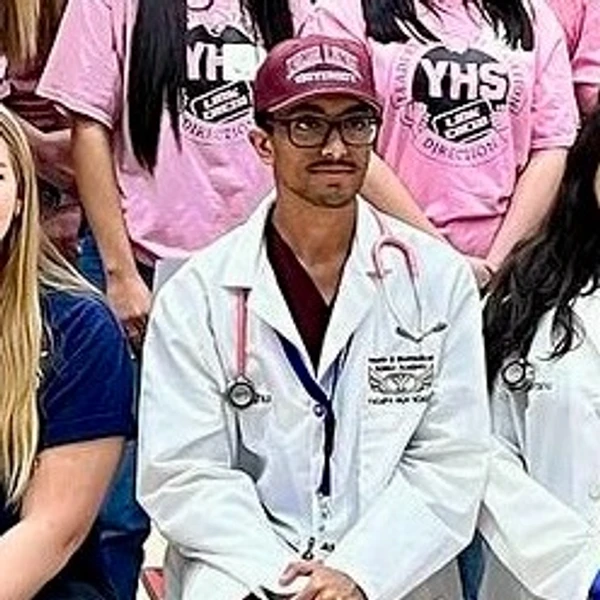
Intrigued in the aspects regarding patient care and cardiovascular disease, I am an incoming freshman at UC Berkeley this Fall 2025 Semester, double majoring in Chemical Biology and Anthropology. As a first-generation college student, I am pursuing a pre-med track that aligns with my passion for research and acquiring of clinical experience to further my future goal of becoming a cardiovascular trauma surgeon.

Education

University of California-Berkeley

Bachelor's degree program
2025 - 2029
  • Majors:
    • Anthropology
    • Biochemistry, Biophysics and Molecular Biology
San Bernardino Valley College

Technical bootcamp
2023 - 2025
  • Majors:
    • Allied Health and Medical Assisting Services
  • GPA:
    4

Colton-Redlands-Yucaipa Rop

High School
2022 - 2025
  • GPA:
    4

Yucaipa High

High School
2021 - 2025
  • GPA:
    4

Miscellaneous

  • Desired degree level:

    Doctoral degree program (PhD, MD, JD, etc.)

  • Graduate schools of interest:

  • Transfer schools of interest:

  • Majors of interest:

    • Biological and Physical Sciences
    • Biological and Biomedical Sciences, Other
    • Biology, General
    • Biochemistry, Biophysics and Molecular Biology
    • Medicine
    • Anthropology
    • Health and Medical Administrative Services
    • Alternative and Complementary Medicine and Medical Systems, General
    • Human Biology
    • Cell/Cellular Biology and Anatomical Sciences
    • Neurobiology and Neurosciences
    • Allied Health and Medical Assisting Services
    • Medical Clinical Sciences/Graduate Medical Studies
    • Sociology and Anthropology
  • Planning to go to medical school
  • Career

    • Dream career field:

      Medicine

    • Dream career goals:

      Physician in Trauma Surgery

    • Game Moderator

      Roblox Platform
      2016 – Present10 years
    • Founder

      MedNow
      2025 – Present1 year
    • Co-Founder

      Stonehaven County Roblox Platform
      2018 – 20191 year
    • Bug Tester

      Synapse Softworks LLC
      2020 – 20222 years
    • Career Technical Education Ambassador

      Colton Redlands Yucaipa Regional Occupational Program
      2023 – 20252 years
    • Lecturer

      Colton Redlands Yucaipa Regional Occupational Program
      2023 – 20252 years
    • Brand Ambassador

      Soleya Scrubs
      2024 – Present2 years
    • Trust & Safety Moderator

      Roblox Platform
      2016 – Present10 years
    • Founder & Community Manager

      Vikings Community
      2018 – Present8 years
    • Medical Assistant

      Pulse Cardiology
      2022 – Present4 years

    Sports

    Soccer

    Intramural
    2017 – 20203 years

    Research

    • Medicine

      UC Berkeley — Student
      2025 – Present
    • Biological and Biomedical Sciences, Other

      Yucaipa High School — Student
      2024 – 2025

    Arts

    • Roblox

      Graphic Art
      Stonehaven County, Mano County, Remmington City Police Department
      2017 – 2020

    Public services

    • Volunteering

      Loma Linda University Health — Hospitality Services Volunteer
      2024 – 2025
    • Advocacy

      Colton Redlands Yucaipa Regional Occupational Program — CTE Ambassador
      2023 – 2025
    • Volunteering

      UC Berkeley Residential Life — Health Worker
      2025 – Present

    Future Interests

    Advocacy

    Politics

    Volunteering

    Philanthropy

    CF Boleky Scholarship
    My best friend is my best friend because I met her on the worst night of her life, and somehow that moment turned into a bond that changed both of us. It was Halloween night and we were out trick or treating. When we got back to the dorms, I saw a girl on the floor outside, rolling around in her own vomit. It was horrifying. Her friends were standing around her just frozen and unsure of what to do. My medical assistant background kicked in before my emotions did. I went straight into assessment mode. Everything about the situation screamed overdose, and I was looking at a patient who could aspirate, stop breathing, or be gone before help arrived. I always carry Narcan; I started doing that because I care about harm reduction and I have been involved in making sure more people on campus have access to it. But in that moment, it stopped being something I carried “just in case”; It became the only thing between her and a body bag. I gave her Narcan and told my friend to call 911. The ambulance took a long time, and that wait felt endless. I stayed with her the entire time, watching her breathing, keeping her as safe as I could, making sure she stayed conscious and did not choke. Then it worked. After the Narcan, she shot up like you see in the movies. It was shocking. One second she looked like she was slipping away, and the next she was sitting up, confused, scared, and alive. The paramedics finally arrived and started doing their thing, and I felt my body finally realize how tense it had been. As they got her onto the stretcher and started loading her into the ambulance, she looked at me and said she wanted to exchange social media. She kept saying thank you. She said I saved her life. Hearing that from someone who had just been dying a few minutes earlier did something to me. It made everything feel real in a way I cannot unfeel. I expected that to be the end of it. I thought I would just carry it as a scary memory and move on. But college is weird like that. A little while later, without planning anything, I went to eat at one of our dining halls. She was working there that day. I recognized her immediately. She recognized me too. She smiled like we already knew each other, like that night created a language between us. She gave me an extra piece of chicken and joked that she “owed me for saving her.” I laughed, but I also felt this wave of relief that she was standing there, alive, just existing in a normal moment. Since then, we actually became real friends. Not a pity friendship. Not a trauma-only connection. We talk. We check in. We study. We laugh. We hold each other accountable. She reminds me that people are more than their lowest moment, and I remind her that she deserves to be here. This friendship matters to me because it represents impact in the simplest form: showing up. That night sharpened my drive to stay in healthcare and keep pushing toward medicine, because I saw how quickly life can change and how much it matters when someone has the knowledge and the courage to act. My best friend taught me that strength can also mean letting someone care about you back. She is my best friend because we did not just survive a moment. We turned it into something meaningful.
    Rodney James Pimentel Memorial Scholarship
    Winner
    At 1:17 a.m., my phone lit up with a text from someone down the hall: “Can you talk.” When I opened my door, my friend was standing there with a look I recognized. We sat on the floor outside our rooms while they admitted they were thinking about switching out of STEM. Not because they hated science, but because they felt behind. A midterm went badly, discussion sections felt humiliating, and they were convinced everyone else at Berkeley was naturally smarter. I did not start with a pep talk. I asked one question: “Do you actually want out, or do you want out of feeling like you are failing?” Then I listened. I let them say the quiet parts out loud, the guilt of calling home, the fear of being “exposed,” the constant comparison to classmates who seemed effortless. I told them what I wish someone had told me earlier: struggling in STEM is not proof you do not belong. It is proof you are doing something hard in a place where people are very good at hiding how hard it is. After that, I got practical. I asked what they still enjoyed and what they dreaded in their day-to-day. I pulled up the major requirements with them so the unknown felt concrete. We talked about the difference between leaving because your interests changed versus leaving because you are scared. I also shared how I approach big decisions as a first-generation student: I try to separate identity from outcome. A bad exam is data, not a verdict. So we built a next step that did not require a life-altering choice at 1 a.m. We picked one professor to visit in office hours. We wrote a two-sentence email together. We found tutoring and a study group. I told them I would walk with them to that first office hour, because sometimes what you need is someone who makes asking for help feel normal. Before they went back to their room, I said, “Whatever you choose, I want it to be a choice you make without shame.” That is how I would handle a major life decision someone brings me. I do not believe in forcing people to stay in a path that is wrong for them. I also do not believe fear should be the reason someone leaves a field they genuinely care about. My goal is to help them name what they want, understand what is happening, and take a next step that brings clarity. I learned to do that because I have had to navigate STEM without a map. One of the biggest challenges I have faced in my pursuit of STEM is building consistency while carrying responsibilities outside the classroom. I came to Berkeley as a first-generation student from a low-income household, and I have long held serious caregiving responsibilities in my family. In STEM, you are rewarded for steady repetition and uninterrupted focus. Real life rarely offers either. In my first year, I hit an academic wall that made me question myself. I remember sitting in lecture with the material flying, feeling my confidence drop with every slide. I could feel the old voice in my head get louder: maybe this is not for you. For students like me, it is easy to spiral, because the cost of “falling behind” feels bigger than a grade. It feels like letting your family down. So I treated it like a research problem. I stopped asking, “Am I smart enough,” and started asking, “What is the bottleneck.” I realized my bottleneck was not effort. It was structure. I was spending hours rereading notes, studying alone, and waiting too long to ask questions. I changed my system. I started going to office hours even when I was embarrassed. I built a weekly plan that included previewing lectures, not just reviewing them. I used active recall, and I forced myself to explain concepts out loud, because if I could not teach it, I did not understand it. I joined study groups so I could get feedback earlier and feel less alone in the struggle. That shift did more than improve my performance. It changed my relationship with STEM. I stopped treating struggle like a personal flaw and started treating it like part of the process. I became someone who can stay steady in discomfort, which is a skill I will need in medicine and research. I am pursuing Chemical Biology on the pre-med track because I want to connect rigorous science to real people’s lives, especially people from communities where education can feel like a locked door. I want to be a physician who explains without judgment, who makes space for questions, and who notices the student or patient who is quietly convinced they do not belong. RJ’s legacy centers on learning, teaching, and pulling others into the community. That is the impact I want to carry forward. The greatest value of education is not only what you know. It is who you become while you are learning, and who you choose to bring with you.