Hobbies and interests
Aerospace
Business And Entrepreneurship
STEM
Education
Information Technology (IT)
Reading
Education
Politics
Leadership
I read books multiple times per week
Joshua Todd
1x
FinalistJoshua Todd
1x
FinalistBio
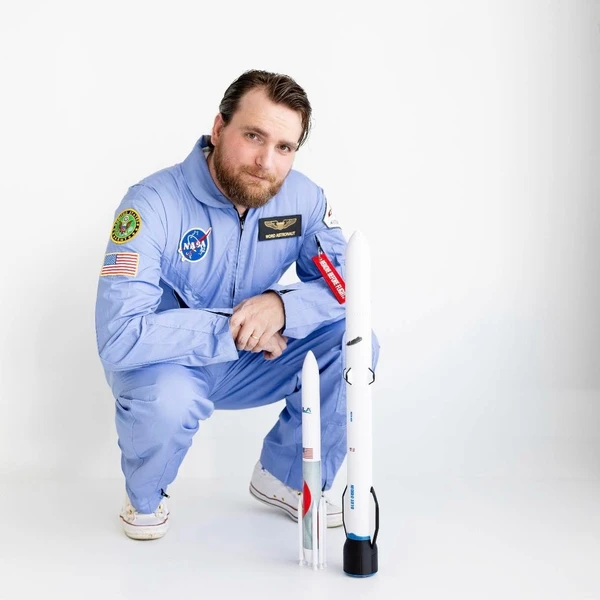
I am a U.S. Army disabled veteran and second-generation college student graduating from American Military University with a 4.0 GPA in Technical Management, concentration in Information Systems. My career has centered on leadership, technology, and service from managing military operations to building education programs that inspire the next generation in STEM and space exploration. I am the founder of The Word Astronaut and the Astronauts in Training (AIT) program, where I combine my background in aerospace and technical writing to create accessible STEM learning opportunities for children.
My long-term goal is to complete an MBA and technical graduate programs with later pursuing doctoral studies so I can serve as a leader in digital transformation, operations, and technology management. I am passionate about bridging the gap between innovation, education, and community, and I strive to set an example for my three young daughters that perseverance, service, and education can open doors to opportunity.
Education
American Public University System
Bachelor's degree programMajors:
- Computer/Information Technology Administration and Management
Bossier High School
High SchoolMiscellaneous
Desired degree level:
Master's degree program
Graduate schools of interest:
Transfer schools of interest:
Majors of interest:
Career
Dream career field:
Information Technology and Services
Dream career goals:
Program manager - heavy weapons
Army2013 – 20163 yearsProgram manager
Damac2016 – 20171 yearCorp management
K&N management2017 – 20192 yearsSr technical communication leader
Blue origin2022 – 20242 yearsAnalyst / technical writer
Amazon2019 – 20223 yearsTechnical advisor
Government agency2024 – 20251 yearDigital ecosystem / Operational excellence PM
Xbow systems2025 – Present1 year
Sports
Football
Varsity2006 – 20082 years
Public services
Advocacy
Astronauts in training — Mission commander2024 – Present
Future Interests
Advocacy
Politics
Volunteering
Philanthropy
Entrepreneurship
Dr. Samuel Attoh Legacy Scholarship
Legacy to me is not just about what we accomplish in our lifetime, but about the impact we leave behind on others. It is the lessons we pass down, the values we live by, and the example we set for those who come after us. Legacy is about shaping a future that extends beyond our own.
My upbringing taught me both the weight and the opportunity of legacy. Growing up in a military family, I saw firsthand the sacrifices that come with service and the responsibility of wearing the uniform. From an early age, I understood that commitment, discipline, and integrity were more than words—they were expectations. When I enlisted myself, I carried those same values forward, but my experiences also gave me a deeper awareness of the costs of service. PTSD and the challenges of transitioning back to civilian life showed me that legacies aren’t always clean or easy—they can come with scars. But they also showed me that cycles can be broken, and that new paths can be created.
I have chosen to use my education to build a different kind of legacy for my family and community. Returning to school at American Military University with a focus on Technical Management and Information Systems has given me the tools to take the discipline I learned in the Army and apply it to leadership, technology, and innovation. I carry a 4.0 GPA because I know my daughters are watching, and I want them to grow up seeing that hard work and perseverance pay off. For me, legacy is not just about professional success, it is about showing my children that even in the face of struggle, growth is possible.
Through my nonprofit program, Astronauts in Training, I also work to create opportunities for kids in my community to see themselves in STEM careers. I design space-themed missions and programs that spark imagination while teaching problem-solving and teamwork. When I watch a child put on an astronaut suit and proudly complete their “mission,” I see the beginnings of a legacy that stretches beyond my own story. I am showing the next generation that they can dream big, explore, and lead.
At the same time, I am committed to breaking cycles that hold veterans back. Too often, we return from service feeling disconnected and unseen. My goal is to use my education and career to advocate for veterans in the workplace and create opportunities where they can thrive. I believe that legacy means not only carrying forward the values we inherited, but also changing what needs to be changed so others don’t face the same barriers.
Legacy is personal, but it is also collective. My legacy is one of resilience, service, and hope. I want my children to know that their father worked to make life better for others, and I want other veterans to know that they are not forgotten and that their stories matter. That is how I plan to continue the cycle of service I was raised in, while also breaking the cycles of silence and struggle that too many veterans carry alone.
Monti E. Hall Memorial Scholarship
My time in the Army shaped me in ways that I carry with me every day. The military taught me discipline, responsibility, and the importance of serving something bigger than myself. It also gave me the ability to stay calm under pressure and lead through challenges. But when I transitioned out of the service, I realized that those same strengths didn’t automatically translate into the civilian world. I had to learn how to adapt them into new environments, and that became one of the main reasons I decided to go back to school.
Returning to school at American Military University has given me the chance to take the lessons I learned in the Army and pair them with education that applies directly to business, technology, and leadership. In the service, I managed people, missions, and resources. Now, through my coursework, I’ve learned how to connect that experience to areas like information systems, operations, and management. My 4.0 GPA isn’t just a reflection of hard work—it’s a reflection of the dedication the military instilled in me, and my drive to honor that experience by excelling in everything I take on.
Education for me is not just about advancing my career; it’s about impact. I’ve already started to use what I’m learning to build programs in my community, such as Astronauts in Training, a STEM initiative I created to inspire kids to see themselves as future explorers, engineers, and leaders. My military background taught me that mentorship can change lives, and education has given me the tools to design programs that do exactly that. Seeing children light up when they solve problems or complete a mission shows me that knowledge, when shared, can spark opportunities for the next generation.
In my community, I also work to support other veterans who are transitioning out of service. I know firsthand how isolating that process can feel. By continuing my education, I want to set an example that it’s never too late to learn, grow, and move forward. I hope to use my MBA to create stronger bridges between veterans and industries that need their skills. Too many veterans feel like their experience doesn’t translate, when in reality they bring discipline, leadership, and adaptability that any organization would benefit from.
The Army gave me the foundation. Returning to school gave me the direction. My goal now is to bring both together to make a positive difference in my community by inspiring kids, empowering veterans, and showing that education is one of the strongest tools we have to build a better future.
Bryent Smothermon PTSD Awareness Scholarship
Living with service-related PTSD has taught me more about myself than I ever expected. When I first came home, I thought I could handle everything on my own. I pushed people away and tried to bury my struggles under work, school, and routine. What I eventually learned was that ignoring PTSD doesn’t make it disappear—it only makes it grow stronger. Accepting that I needed help was the first step toward healing, and it changed the way I view myself and the world around me.
One of the biggest lessons I’ve learned is patience. PTSD doesn’t run on a schedule. Some days are good, others are harder, and progress doesn’t happen in a straight line. I had to learn how to give myself grace, to celebrate small victories, and to understand that setbacks don’t erase growth. That patience has carried over into how I parent, how I lead, and how I serve in my community.
I’ve also learned the value of connection. For a long time, I thought no one would understand, but when I started opening up, I realized how many other veterans were fighting the same battles. Talking with others reminded me that I wasn’t alone and that there’s strength in sharing experiences. It showed me that vulnerability is not weakness—it’s one of the strongest tools we have to build trust and heal together.
I want to use my experience to help other veterans who are suffering right now. One way I do that is through outreach in my community and my nonprofit work in STEM education. When I mentor kids or lead programs, I talk openly about discipline, resilience, and overcoming setbacks. Veterans who volunteer with me see that purpose and community can help fill the gaps that PTSD leaves behind. My hope is to create more opportunities for veterans to get involved in programs like mine, where they can find belonging, purpose, and a reminder that they still have something important to give.
I also want to use my education to be a voice for change. As I work toward my MBA, I plan to advocate for better awareness and resources in workplaces so veterans don’t feel like they have to hide their struggles to succeed professionally. Too many of us have the skills and discipline to lead, but stigma keeps doors closed. By sharing my story, I hope to open some of those doors for others.
PTSD has taught me resilience, patience, and the importance of community. It has also given me a mission—to show other veterans that there is life and success after trauma. We may carry invisible wounds, but together we can remind each other that healing is possible and that every veteran still has value, purpose, and a future.
Learner Online Learning Innovator Scholarship for Veterans
As a veteran returning to school, online platforms and tools have been essential to my success. Balancing coursework with work, family, and community commitments requires flexibility, and I’ve learned how to use these resources not just to complete assignments, but to actually apply what I’m learning.
At American Military University, I rely heavily on the online classroom, discussion boards, and digital library. Having access to peer-reviewed research at any time of day allows me to dive deeper into business and technology topics when my schedule allows, whether that’s late at night after my kids are asleep or early in the morning before work. Beyond just reading, I’ve learned to connect theory to practice by pulling examples from my professional environment into class discussions.
Outside of school, I use tools like LinkedIn Learning, Coursera, and YouTube tutorials to strengthen skills in areas such as project management, data visualization, and digital systems. These platforms allow me to explore topics in real time when I face a challenge at work. For example, when I was building a workflow automation in Webcon at X-Bow Systems, I used tutorials to troubleshoot coding errors and improve reporting functions. What started as “extra studying” turned into a solution that my company adopted company-wide to streamline IT requests. Without the flexibility of online resources, I wouldn’t have been able to bridge what I was learning in the classroom with a real-world solution that saved time and money.
I also use ChatGPT and other AI tools as study partners. For me, these are not shortcuts but resources that help me think critically, review material, and practice problem-solving in new ways. When preparing for exams or working on essays, I’ll run practice questions or outlines through these tools to make sure I’ve covered key points. It’s like having a tutor on demand, and it has helped me achieve and maintain a 4.0 GPA throughout my program.
One of the most rewarding applications of online tools has been in my nonprofit STEM program for kids, Astronauts in Training. I use Canva and other design platforms to create weekly flyers for parents and build engaging digital content for lessons. Many of the activities I design come directly from skills I’ve gained in my online coursework and trainings. Watching children light up as they complete their “missions” reminds me that online education isn’t just about passing tests—it can create opportunities that reach far beyond the classroom.
As I move into my MBA program, I’ll continue to rely on these platforms to keep pushing forward. For veterans like me, online learning tools provide more than convenience—they are a lifeline. They allow us to balance service, family, and professional responsibilities while still striving for excellence. They have not only helped me succeed academically, but they’ve also given me the chance to apply my knowledge in ways that make a real difference for others.
Kyle Lam Hacker Scholarship
One of the first times I realized tinkering could actually make a difference was during my time in the Army. We had a broken system for tracking equipment. It slowed us down, stressed everyone out, and made it way too easy to miss something important. Instead of just complaining about it, I stayed up late working on spreadsheets and figuring out how to simplify the process. It wasn’t fancy, just a mix of formulas and some common sense, but it cut our work time down by hours and gave us confidence that nothing would slip through the cracks. My squad’s reaction made it worth it. Seeing them actually trust the system again showed me that tinkering can make life better for other people, not just for me.
That mindset has carried over into everything I’ve done since. At my current job with X-Bow Systems, I saw the same type of frustration with IT requests. The system we had was scattered and nobody had visibility into what tools were being used across the company. I built a workflow in Webcon that pulled everything together. It wasn’t something I was asked to do, it was me messing around, trying to fix a headache I saw every day. What came out of it was a way to track requests, cut down on duplicate tools, and save money. The best part was watching the reaction across the company when people realized it wasn’t another “new system” to fight with, it was something that actually worked and saved them time.
But the project I’m proudest of is with Astronauts in Training, the STEM program I built for kids. We didn’t have a huge budget, so I had to get creative. I hacked together astronaut kits with simple supplies, turned everyday items into mission gear, and built a mission control setup from tools I already had. Watching kids light up as they put on their astronaut suits and completed their missions reminded me why tinkering matters. Parents told me their kids came home inspired to talk about science, space, and even college. That hit me hard, it showed me that simple ideas can create big impact.
For me, tinkering isn’t about breaking things apart just to see how they work. It’s about finding a better way forward. It’s about looking at what’s in front of you, experimenting, and not being afraid to fail until it clicks. From the Army, to my company, to the kids in my program, I’ve learned that small hacks can make a huge difference. That’s something I’ll carry with me into my MBA and beyond, because leadership isn’t just about giving orders, it’s about solving problems in ways that make people’s lives better.