Gender
Female
Ethnicity
Caucasian
Religion
Other
Hobbies and interests
Research
Basketball
Reading
Anthropology
History
Science
Academic
Leadership
Psychology
Politics
Social Issues
I read books multiple times per week
US CITIZENSHIP
US Citizen
LOW INCOME STUDENT
Yes
FIRST GENERATION STUDENT
Yes
Joy Lambert
1x
Finalist
Joy Lambert
1x
FinalistBio
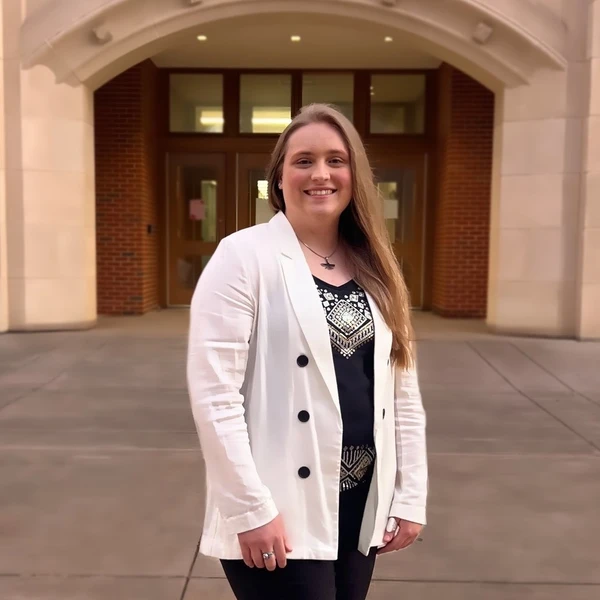
I'm a graduate from the University of Oklahoma with a Bachelor of Science in Biomedical Engineering Magna cum Laude. I have two years experience as a research assistant in the Translational Regenerative Medicine Laboratory and successfully defended my senior thesis, "Chondroinductive Peptide Discovery and Synergistic Glycosaminoglycans for Cartilage Regeneration."
Beyond my research experience, I contributed to the development of an innovative medical device designed to immobilize the head and neck of cancer patients during radiation treatments for my senior capstone project. During my undergraduate studies, I won numerous awards, scholarships, and fellowships for my research, presentations, and papers. My most recent scholarship was for the anthropological paper "Silenced Identities: The Suppression and Discrimination of Iranian Gender and Sex Minorities" winning the first place Libraries Undergraduate Research Award and published on SHAREOK.org.
In addition to my academic and research pursuits, I am gaining clinical experience to bridge the gap between engineering and healthcare. I have my Certified Phlebotomy Technician (CPT I) Certificate and completed clinical prerequisites at UCSD. I am currently pursuing my Master's in Nursing at the University of California, Irvine. This combination of technical and clinical skills will allow me to contribute effectively to both biomedical innovation and patient care.
Education
University of California-Irvine
Master's degree programMajors:
- Registered Nursing, Nursing Administration, Nursing Research and Clinical Nursing
Minors:
- Community Organization and Advocacy
GPA:
4
University of California-San Diego
Bachelor's degree programMajors:
- Medical Clinical Sciences/Graduate Medical Studies
Minors:
- Health Professions and Related Clinical Sciences, Other
GPA:
4
University of Oklahoma-Norman Campus
Bachelor's degree programMajors:
- Biomedical/Medical Engineering
Minors:
- Engineering, Other
GPA:
3.8
Miscellaneous
Desired degree level:
Doctoral degree program (PhD, MD, JD, etc.)
Graduate schools of interest:
- University of California-Irvine
Transfer schools of interest:
Majors of interest:
- Biomedical/Medical Engineering
- Registered Nursing, Nursing Administration, Nursing Research and Clinical Nursing
- Medical Clinical Sciences/Graduate Medical Studies
- Medicine
Career
Dream career field:
- Medical Practice
Dream career goals:
Own a private clinic and contribute to equity in healthcare
Phlebotomist CPT I
Phlebotomy Training Specialists2025 – 20261 yearSenior Capstone Design Project Team Member: Head/Neck device for cancer patients
University of Oklahoma2023 – 20241 yearOil/acrylic portrait painter
Self Employed2016 – 2016Waitress
Mazzio's Pizza2018 – 2018Cashier
GAP, Inc.2018 – 20191 yearDelivery Driver
Doordash/Uber2022 – 20242 yearsUndergraduate Research Assistant
University of Oklahoma2022 – 20242 years
Sports
Softball
Varsity2016 – 20171 year
Awards
- None
Basketball
Club2009 – 20167 years
Awards
- Oklahoma Lady Federal Ballerz Loyalty Award
Research
Anthropology
University of Oklahoma — Research paper publication2023 – 2024Biomedical/Medical Engineering
University of Oklahoma — Undergraduate Research Assistant and Senior Thesis2022 – 2024
Arts
Self-employed
PaintingPortrait2016 – 2017
Public services
Volunteering
University of Oklahoma — Undergraduate Research Mentor2023 – 2023Advocacy
University of Oklahoma — Undergraduate Research/Writer2023 – 2024Volunteering
YMCA — Coach2019 – 2020
Future Interests
Advocacy
Politics
Volunteering
Philanthropy
Entrepreneurship
Bick First Generation Scholarship
Being a first-generation college student means learning how to navigate a path that no one in my immediate family has walked before. It means figuring out college applications, financial aid, scholarships, academic opportunities, and career decisions without having someone at home who has already experienced them. For me, being first-generation has also meant learning to believe that I belong in places I had never imagined entering.
At nineteen, I left an emotionally abusive family environment and became financially independent. I supported myself while working for $7.25 an hour and relied on Pell Grants, scholarships, Medicaid, food assistance, and my own employment to continue my education. There were times when pursuing college felt less like following a predetermined path and more like building the path while walking on it.
I learned to ask questions, seek out mentors, apply for opportunities, and keep going when I did not know what would happen next. I eventually earned my bachelor's degree in Biomedical Engineering from the University of Oklahoma, graduating magna cum laude. During college, I worked as a DoorDash and Uber Eats driver while conducting research in the Translational Regenerative Medicine Laboratory. I received research fellowships, completed and defended an optional senior thesis, and worked on a senior capstone project developing a head-and-neck immobilization device for radiation oncology patients.
My journey has not been without setbacks. After graduation, I accepted a position as a Biomedical Engineering Patent Examiner with the United States Patent and Trademark Office. Shortly before I was scheduled to begin training, my offer was rescinded because of the federal hiring freeze in 2025. After months of searching for another opportunity, I realized I had to decide what to do with the situation I had rather than the situation I had planned for. I chose to return to school and pursue nursing.
I am now beginning the Master’s Entry Program in Nursing at the University of California, Irvine. My long-term goal is to earn a Doctor of Nursing Practice and eventually establish a clinic providing accessible, compassionate, whole-person care, particularly for underserved communities and patients with complex healthcare needs.
Being first-generation has taught me that I do not have to know exactly where the path leads to take the next step. It has taught me resilience, independence, and the importance of creating opportunities when they do not already exist. This scholarship would help me continue that journey by reducing the financial burden of graduate school and allowing me to focus more fully on my education and clinical training. More importantly, it would help me continue building a future that I hope will extend beyond myself. I want to use my education to help others who face barriers to healthcare and education, and to keep the door open for those who come after me.
To me, being first-generation means being the first, but not wanting to be the last.
Sloane Stephens Doc & Glo Scholarship
I have always believed that education is more than a way to build a career. It is an opportunity to change the direction of your life and, eventually, use what you have learned to make someone else's path a little easier.
My own path to higher education was not easy. At nineteen, I left an emotionally abusive family environment and became financially independent. I worked for $7.25 an hour and relied on the Pell Grant, scholarships, Medicaid, food assistance, and my own employment to continue my education. I learned early that circumstances don't have to determine where your life ends. Sometimes, you simply have to keep coming back and find another way forward.
I earned my bachelor's degree in Biomedical Engineering from the University of Oklahoma, graduating magna cum laude. Through research, engineering projects, and experiences in healthcare, I discovered that I wanted to work directly with the people behind the science. I'm now beginning the Master’s Entry Program in Nursing at the University of California, Irvine, with a concentration in Community and Population Health.
My goal is to become a nurse who sees the whole person rather than only the diagnosis. I want to understand what my patients are experiencing physically, emotionally, socially, and financially because all of these factors influence health. My own experiences have taught me how frightening and isolating it can feel when you are facing circumstances that other people cannot see. I want to use that understanding to make healthcare feel less intimidating and more human.
I also recognize that, despite the challenges I have experienced, I am privileged in many ways. I have had opportunities, mentors, scholarships, educational resources, and people who believed in me. I do not want to take those opportunities for granted. I want to use the privilege I have to help underserved communities and to keep the door open for the people coming behind me. To me, success is not simply getting through the door, but it's making sure that someone else can walk through it after you.
After earning my nursing degree, I plan to pursue a Doctor of Nursing Practice and eventually establish a clinic focused on accessible, compassionate, evidence-based care. I am particularly interested in serving underserved communities and patients with complex healthcare needs. I want to explore how principles of individualized care can be brought to communities that traditionally have less access to personalized healthcare.
I also hope to bring my background in biomedical engineering and research into nursing. I am currently collaborating with a professor at the University of Oklahoma on research using OpenSim, coding, and AI-assisted approaches to study adolescent resistance training and biomechanics. I believe technology can improve healthcare, but it should support human connection rather than replace it.
The people who inspire me most are those who create opportunities for others after they have achieved success themselves. That is what I admire about Sloane Stephens and the mission behind her foundation. Her story reminds me that success becomes more meaningful when it creates opportunities for someone else.
I want my education to become more than a degree. I want it to become a way to give back. I hope to take everything I have learned from the challenges I have overcome, the people who helped me along the way, and the education I am fortunate enough to receive, and use it to make healthcare more accessible and compassionate for the people who need it most.
Ultimately, I want to leave the world a little better than I found it and keep the door wide open for the people who come after me.
Sabrina Carpenter Superfan Scholarship
What I admire most about Sabrina Carpenter is not simply her talent. It is her willingness to evolve. From Maya Hart on Girl Meets World to an internationally recognized musician and performer, Sabrina has continually reinvented herself without losing the humor, personality, and authenticity that made people connect with her. That journey resonates with me because I have also had to learn that becoming successful does not always mean following the path you originally imagined.
One Sabrina song that especially speaks to me is “Feather.” The lyric “I feel so much lighter” captures something I have experienced when I finally allowed myself to let go of expectations that no longer belonged to me. For years, I thought success meant following one predetermined career path. When that path changed, I initially saw it as a setback. Eventually, I realized that letting go could create room for something better.
I earned a Bachelor of Science in Biomedical Engineering from the University of Oklahoma, graduated Magna Cum Laude, and spent two years conducting translational regenerative medicine research. I eventually accepted a position with the U.S. Patent and Trademark Office, believing I had found the beginning of my professional career. When that opportunity disappeared because of a federal hiring freeze, I had to reconsider what I wanted my future to look like. Instead of seeing that setback as the end of my story, I allowed myself to evolve.
I discovered that what motivated me most was not simply engineering or scientific discovery, but the opportunity to improve people's lives. This fall, I will begin the Master's Entry Program in Nursing (MEPN) at the University of California, Irvine, concentrating in Community and Population Health. My long-term goals are to earn a Doctor of Nursing Practice (DNP), continue clinical research, and establish a community-centered clinic that expands access to personalized healthcare.
Sabrina's career reminds me that changing direction does not mean failing. Sometimes it means discovering that you have outgrown the version of yourself who made the original plan. I also appreciate the confidence and humor she brings to her work. Her ability to be playful without taking herself too seriously reminds me that pursuing ambitious goals does not require becoming someone else. There is value in taking your work seriously while still allowing yourself to enjoy the journey.
My journey has included financial uncertainty, unexpected setbacks, difficult decisions, and several changes in direction. I began college relying on the Pell Grant, food assistance, scholarships, and my own work to make my education possible. Today, I am preparing to enter graduate nursing school and build a career centered on service. Sabrina Carpenter has shown me that there is no single timeline for becoming successful. You can change, grow, start again, and still move forward. Sometimes becoming who you are requires becoming someone new first.
Olivia Rodrigo Fan Scholarship
Some of the most meaningful lessons I have learned did not come from a textbook. They came from realizing that becoming who I wanted to be meant accepting that my life would not always follow the plan I originally imagined. That is one reason Olivia Rodrigo’s music resonates with me. Her songs capture something I have experienced repeatedly: growing up means learning to live with uncertainty while still choosing who you want to become.
One lyric that especially resonates with me comes from “making the bed”. “I got the things I wanted, it’s just not what I imagined.” That line captures a feeling I have experienced at several turning points in my life. Sometimes we work incredibly hard toward a future, only to discover that achieving what we thought we wanted does not necessarily mean it is where we are meant to stay.
At nineteen, I left home and began building my future independently. I worked for minimum wage while relying on the Pell Grant, food assistance, scholarships, and other support to attend college. I did not have the financial security that many students take for granted, but I continued moving forward.
I graduated Magna Cum Laude with a degree in Biomedical Engineering from the University of Oklahoma and spent two years conducting translational regenerative medicine research. I thought I had found my professional path when I accepted a position with the U.S. Patent and Trademark Office. When that job offer was rescinded because of a federal hiring freeze, I faced another unexpected turn. I had achieved something I had worked toward, yet suddenly it was no longer part of my future. Instead of seeing that moment as the end of my plan, I began asking what I actually wanted my life to accomplish. The answer was nursing.
This fall, I will begin the Master's Entry Program in Nursing (MEPN) at the University of California, Irvine, concentrating in Community and Population Health. My long-term goal is to earn a Doctor of Nursing Practice (DNP), continue clinical research, and establish a community-centered clinic that makes high-quality healthcare more accessible to underserved patients.
Olivia Rodrigo’s music reminds me that growing up is not about having everything figured out. It is about confronting the parts of yourself and your circumstances that are uncomfortable, learning from them, and continuing forward anyway. I cannot control every circumstance that enters my life. I can control what I do with it. Sometimes the life we imagined is not the life we ultimately receive, but that does not mean the life ahead cannot be even more meaningful.
Manuela Calles Scholarship for Women
The values that guide my life are curiosity, compassion, equity, and courage. Together, they have shaped every major decision I have made, from leaving a life where I could not be my authentic self to pursuing a career dedicated to improving healthcare for others.
Growing up as a closeted lesbian in a traditional religious community, I learned what it felt like to question whether I belonged. When I left home at nineteen, I worked for $7.25 an hour while relying on the Pell Grant, Medicaid, food assistance, and scholarships to complete my education. During that time, I also sought mental health care through an LGBTQ+ community center. For the first time, I experienced what it meant to be treated with dignity, empathy, and acceptance. That experience changed my understanding of healthcare. Mental health is not simply about treating illness. It's about creating spaces where people feel safe enough to heal.
Curiosity has always driven me to ask how systems can work better. It led me to earn a Bachelor of Science in Biomedical Engineering, conduct two years of translational regenerative medicine research, and now pursue the Master's Entry Program in Nursing (MEPN) at the University of California, Irvine, with a concentration in Community and Population Health. Engineering taught me how to solve problems. Nursing is teaching me who those solutions should serve.
Compassion reminds me that every patient brings a story shaped by circumstances we cannot see. My experiences as a caregiver, phlebotomist, and researcher have shown me that health is influenced by far more than biology. Mental health, financial hardship, discrimination, transportation, housing, and access to care all influence whether someone can truly recover.
These values also shape my vision as an entrepreneur. My long-term goal is to earn a Doctor of Nursing Practice (DNP) degree and establish a clinic that integrates primary care, mental health services, preventive medicine, and community outreach. I hope to study how principles of concierge medicine, such as continuity, accessibility, and relationship-centered care, can be adapted for underserved communities and patients with complex chronic conditions. I also plan to establish a nonprofit arm of the clinic, supported through grants and community partnerships, so financial circumstances never become the reason someone goes without care.
To me, entrepreneurship is not simply about building a successful business. It is about building a sustainable mission. A clinic should strengthen the community around it, expand access to care, create opportunities for research and education, and improve health outcomes for generations to come. My values have taught me that meaningful change begins by seeing people not as diagnoses or statistics, but as whole human beings. That is the kind of nurse, leader, and entrepreneur I hope to become. Thank you for this opportunity to share my journey.
Joe Gilroy "Plan Your Work, Work Your Plan" Scholarship
2026–2028: Foundation
In September 2026, I will begin the Master's Entry Program in Nursing (MEPN) at the University of California, Irvine with a concentration in Community and Population Health. During these two years, my priorities are to earn RN licensure, develop strong clinical judgment, and complete a master's project exploring how principles of concierge medicine, used for greater continuity, accessibility, and longer patient visits, can be adapted to improve care for underserved populations rather than remain a luxury service.
2028–2032: Experience & Leadership
After graduation, I plan to work as a registered nurse in California while continuing clinical research and quality improvement initiatives. My biomedical engineering background and experience in translational regenerative medicine taught me that research should solve real problems, and I hope to continue publishing work that brings attention to healthcare inequities while proposing evidence-based solutions. During this time, I will also strengthen my understanding of healthcare administration, reimbursement, and clinic operations by working closely with interdisciplinary teams and community organizations.
2032–2035: Advanced Practice
My next milestone is earning a Doctor of Nursing Practice (DNP). This will prepare me to lead healthcare teams while expanding my knowledge of population health, quality improvement, and healthcare policy. I also plan to develop relationships with community organizations, federally qualified health centers, and grant agencies that share my commitment to expanding healthcare access.
2035 and Beyond: Building a Sustainable Clinic
My ultimate goal is to establish an independent nurse practitioner practice in California, beginning with the formation of a professional business entity and obtaining credentialing with Medicare, Medi-Cal, and commercial insurance providers. Accepting insurance is essential because access to quality healthcare should never depend on a patient's financial circumstances.
To ensure no patient is turned away, I plan to implement a sliding-fee scale for uninsured individuals while developing a nonprofit partner that secures grants, philanthropic donations, and community partnerships to subsidize care for patients who cannot pay at all. I also hope to create internship opportunities for nursing students and use the clinic as a site for clinical research evaluating innovative models of patient-centered care. The long-term goal is to demonstrate that high-quality, relationship-based healthcare can be both equitable and financially sustainable.
Resources & Budget:
Achieving this plan requires strategic investment at every stage. My immediate expenses include MEPN tuition (approximately $60,000), housing ($56,000), transportation to clinical sites ($10,000), textbooks and educational supplies ($5,000), licensing examinations ($1,500), and living expenses ($24,000) while completing graduate school. Following graduation, I anticipate expenses associated with a DNP degree ($100,000–120,000), research dissemination through conference travel and publication fees ($10,000–15,000), professional conferences ($5,000), establishing my professional practice ($2,000–5,000), credentialing with Medicare, Medi-Cal, and commercial insurance providers ($3,000–5,000), implementing an electronic health record system ($10,000–20,000), malpractice insurance ($3,000–6,000), and legal and accounting services ($8,000–12,000). Long-term, I plan to pursue federal, state, and private foundation grants to support the nonprofit arm of my clinic so financial hardship is never a barrier to receiving care.
My objective is not simply to build a clinic, but to build a financially sustainable model where insurance reimbursement, grant funding, and operational efficiency work together to expand access for patients regardless of income. Joe Gilroy believed in "Plan Your Work, Work Your Plan." That philosophy reflects how I have approached every stage of my education, from biomedical engineering to nursing, and how I intend to spend my career. My dream is ambitious, but it is no longer simply a dream. It is a carefully designed plan that I am already putting into action, one milestone at a time. Thank you for this opportunity to share my future journey.
ACHE Southern California LIFT Scholarship
1. My career goal is to become a Doctor of Nursing Practice (DNP) nurse leader in community and population health, focusing on integrated care models that address clinical and social determinants of health. I am particularly interested in developing community-based programs that combine primary care, mental health support, and preventive services for underserved and LGBTQ+ populations. This award would allow me to continue my graduate training at the University of California, Irvine with reduced financial strain, enabling me to fully invest in developing clinical expertise and leadership.
My academic foundation is in biomedical engineering from the University of Oklahoma, where I spent two years in a translational regenerative medicine laboratory studying cartilage regeneration. My senior capstone project focused on designing a medical device to improve comfort for head and neck cancer patients, reinforcing my commitment to patient-centered design and systems thinking.
Beyond academics, I have experienced healthcare from many perspectives. I have supported my partner through chronic illness, navigating diagnostic uncertainty, care coordination, and treatment. I also worked throughout college while relying on the Pell Grant, Medicaid, and food assistance to remain enrolled and financially stable. These experiences shaped my understanding of how structural barriers affect health outcomes long before patients reach a clinical setting.
I have demonstrated leadership by mentoring students in research environments and supporting peers navigating academic and clinical pathways. These experiences strengthened my ability to communicate complex information, support others through uncertainty, and remain steady in high-responsibility environments. My long-term goal is to open a community clinic serving underserved populations while advancing equitable healthcare through research and systems improvement.
2. My goals align with ACHE of Southern California's mission to advance excellence in healthcare leadership because I am pursuing a career at the intersection of clinical care, community health, and systems improvement. As a Master's Entry Program in Nursing (MEPN) student at the University of California, Irvine with a concentration in Community and Population Health, I am learning how healthcare systems function beyond individual patient encounters and how leadership decisions influence population health.
My interest in health administration and public health comes from recognizing that many of the greatest barriers to care are structural rather than clinical. Through my experiences in biomedical engineering, caregiving, and clinical exposure, I have seen how fragmented systems, limited coordination, and inconsistent access to services negatively impact patients, particularly those with chronic illness and underserved communities.
ACHE's focus on ethical leadership, operational excellence, and improving community health outcomes aligns with my vision of healthcare leadership. I am particularly interested in how administrative decision-making can improve continuity of care, integrate behavioral and physical health services, and reduce disparities for vulnerable populations.
I plan to earn my Doctor of Nursing Practice degree, open a clinic serving underserved communities, and continue research evaluating public health systems, care delivery models, and patient-centered interventions. Ultimately, I hope to help design healthcare systems that are more coordinated, equitable, and responsive to the needs of diverse populations across Southern California. Thank you for this opportunity.
Charles B. Brazelton Memorial Scholarship
If someone had asked me growing up what my "awkward thing" was, I probably would have said that I ask too many questions. I have always wanted to understand why things work the way they do. As a child, that meant asking questions without simple answers. Sometimes it frustrated teachers, sometimes it made conversations awkward, and sometimes I wondered if I should simply stop asking. Thankfully, I never did.
That curiosity has shaped every part of my life. It led me to earn a Bachelor of Science in Biomedical Engineering, where I spent two years researching cartilage regeneration in a translational regenerative medicine laboratory. It inspired me to design a medical device to improve comfort for head and neck cancer patients. Today, it has led me to nursing because I realized the most important questions are no longer just about disease, but about people.
Why are some patients afraid to ask for help, why do some communities have fewer opportunities to receive quality healthcare, or why does one person feel seen by their nurse while another leaves feeling invisible? A simple conversation with me can turn into a discussion about healthcare systems, philosophy, biology, or how we might redesign something to work better. I enjoy connecting seemingly unrelated ideas. My biomedical engineering background, research experience, caregiving for family with chronic illness, and now nursing all influence the way I think. Rather than seeing separate disciplines, I naturally look for connections.
There was another part of me that once made me feel different. Growing up as a lesbian in a conservative religious community, I learned to carefully measure my words and hide parts of myself to fit in. For years, I thought belonging meant becoming smaller or quieter. Looking back, I realize that experience taught me something just as valuable as my curiosity: the importance of creating spaces where people feel safe enough to be fully themselves. I learned that the safest places are not the ones where everyone is the same. They are the ones where no one has to pretend to be.
For years, I worried that thinking differently or living differently meant I didn't quite fit in. Now I realize healthcare needs people who ask difficult questions and genuinely want to understand the people in front of them. Curiosity leads to discovery, empathy leads to trust, and together they improve lives. That same curiosity is shaping my future. During my Master's Entry Program in Nursing, I hope to explore whether aspects of concierge medicine can be adapted to better serve underserved communities. Not as a luxury for those who can afford it, but as a model that gives every patient the time, attention, and individualized care they deserve. My long-term goal is to earn my Doctor of Nursing Practice degree and open a clinic where patients feel comfortable, emotionally safe, and genuinely known.
Charles's story reminds me that what makes us different is often what makes us memorable. Some people are left-handed. Some love differently. And I ask too many questions. My journey taught me what it feels like to wonder whether I truly belong. My clinic will be a place where no one feels they have to hide the parts of themselves that make them unique. A place where every person's story, quirks, and experiences are welcomed because they are part of what makes them human. I have learned that the best healthcare begins with curiosity. Not only about science, but about the person sitting in front of you. If asking one more question helps someone feel truly seen, then I hope I never stop asking "why?"
Eric Maurice Brandon Memorial Scholarship
My decision to pursue nursing comes from a deep understanding that care is not just about treating illness, but about showing up for people in their most vulnerable and often unseen moments.
I was raised in a traditional and religious community in Oklahoma, where I learned early on what it meant to navigate spaces where I did not always feel fully seen or understood. As a lesbian woman from a lower middle-class background, I often found myself balancing different parts of my identity in environments that did not always offer acceptance or support. That experience shaped how I understand vulnerability, not as weakness, but as something that requires trust, safety, and compassion.
At 19, I made the decision to leave home and begin supporting myself. I worked low-wage jobs while navigating the emotional weight of leaving a difficult environment. During that time, I sought support through an LGBTQ+ center, where I accessed mental health resources for the first time. That experience showed me what it means to be met with understanding when you feel completely alone, and it reinforced how critical safe, compassionate care can be.
My path into healthcare began through biomedical engineering at the University of Oklahoma, where I earned my Bachelor of Science. As a first-generation college student, I worked throughout my education while relying on the Pell Grant, Medicaid, and food assistance to remain in school. These experiences gave me a deeper understanding of the barriers many patients face outside of clinical settings. Additionally, I spent two years conducting research in a translational regenerative medicine laboratory research novel peptides for cartilage regeneration and completed a capstone project designing a medical device for head and neck cancer patients, focusing on both function and comfort.
During that time, I began to notice something that changed my direction. Even the most advanced technologies could not fully address what patients needed most, the feeling of being cared for. I saw how much small, human moments mattered: the way a patient is spoken to, how they are made physically comfortable, or whether they feel safe enough to express their needs. I realized I wanted to be present in those moments.
What draws me most to nursing is the ability to care for people in both visible and invisible ways. Eric’s life reflects that kind of care. Through his service in the military, caring for soldiers during times of war, and later providing tracheostomy care for children, he demonstrated compassion that extended far beyond clinical skill. He offered comfort, consistency, and presence for patients who depended on him. His story reminds me that some of the most meaningful acts of care happen when no one is watching.
Now, as I pursue my Master’s Entry Program in Nursing (MEPN) at the University of California, Irvine, I am working toward becoming a skilled clinician and compassionate advocate. My long-term goal is to earn my Doctor of Nursing Practice (DNP) degree and open a clinic that serves underserved communities, including LGBTQ+ individuals. I want to create a space where patients feel safe, respected, and cared for as whole people.
Nursing, to me, is not just a profession. It is a commitment to being present for others in the moments that matter most, even when that care goes unseen. That is why I chose nursing, and like Eric, it is the kind of impact I hope to carry forward. Thank you for this opportunity to share my story and for supporting nurses who will revolutionize the healthcare system one patient, one act of love at a time.
Dashanna K. McNeil Memorial Scholarship
My decision to pursue an advanced degree in nursing comes from a realization that meaningful change in healthcare requires both clinical skill and the ability to lead, advocate, and build systems that better serve patients. My journey into healthcare began through biomedical engineering at the University of Oklahoma, where I earned my Bachelor of Science. I was drawn to understanding how to improve patient outcomes through design and innovation, and I spent two years conducting research in a translational regenerative medicine laboratory working to discover novel peptides to regrow cartilage. I also completed a capstone project designing a medical device for head and neck cancer patients, with a focus not only on function, but on comfort and quality of life.
Through these experiences, I began to recognize a gap that technology alone could not fill. Patients did not just need effective treatments. They needed to feel supported, understood, and cared for in deeply human ways. I found myself drawn less to the devices themselves and more to the people using them. I realized I wanted to be directly present in those moments of care.
My path has also been shaped by personal and financial challenges. As a first-generation college student, I worked throughout my undergraduate education while relying on the Pell Grant, Medicaid, and food assistance to remain in school. Navigating these systems gave me firsthand insight into the barriers many patients face outside of clinical settings. It showed me that healthcare is not isolated, but it's deeply connected to access, stability, and support.
After graduating, I received a job offer with the U.S. Patent and Trademark Office as a biomedical engineer patent examiner, but due to a federal hiring freeze, the position was rescinded. While this was a difficult setback, it became a turning point. It gave me the clarity to pursue nursing and to move toward a role where I could directly impact patient care.
I am currently pursuing the Master’s Entry Program in Nursing (MEPN) at the University of California, Irvine, with a concentration in community and population health. This advanced degree supports my goal of becoming a nurse leader focused on addressing both individual patient needs and broader community health disparities. However, recent federal policy changes have reduced loan availability for nursing students by no longer classifying nursing as a professional degree in the same way as other healthcare fields, creating significant financial challenges as I continue my education. This scholarship would help support me as I continue my education.
In the future, I plan to earn my Doctor of Nursing Practice (DNP) degree and open a clinic that serves underserved populations, including LGBTQ+ individuals. My goal is to create a healthcare environment that prioritizes accessibility, prevention, and dignity, where patients feel safe, seen, and supported. I am particularly passionate about integrating mental health services and community-based outreach into care, recognizing that health extends far beyond clinical treatment.
What inspires me most about advancing my education is the opportunity to expand my impact. Nursing allows me to care for patients directly, but an advanced degree will allow me to advocate for systemic change, improve care delivery, and mentor future healthcare professionals like Dashanna K. McNeil did throughout her career. Her legacy of dedication, education, and service reflects the kind of nurse I hope to become. Through my continued education, I am committed not only to growing as a clinician, but to building a future in healthcare that is more equitable, compassionate, and accessible for all.
Thank you for this opportunity to share my journey and for supporting nurses, like myself, to help revolutionize the healthcare system.
Pay It Forward Scholarship
I am pursuing a career in nursing because I have come to understand that healthcare is not only about treating illness, but about caring for people in the moments they are most vulnerable. My path to healthcare has not been linear. I began my academic journey as a first-generation college student at the University of Oklahoma, where I earned my Bachelor of Science in Biomedical Engineering. During that time, I worked throughout my degree while relying on the Pell Grant, Medicaid, and food assistance to remain in school. These resources were not just helpful, but essential. They allowed me to continue my education despite financial instability and limited guidance navigating higher education.
Through my studies, I was drawn to improving patient outcomes through innovation. I spent two years working in a translational regenerative medicine laboratory conducting research on novel peptides to regrow cartilage and completed a capstone project designing a medical device for head and neck cancer patients. My work focused on both functionality and comfort, and it was during this time that I began to recognize something deeper. Even the most advanced technology cannot replace the human experience of care. Patients do not just need solutions. They need to feel safe, respected, and understood.
After graduation, I received a job offer with the U.S. Patent and Trademark Office, where I would have worked as a biomedical patent examiner approving new patents. However, due to a federal hiring freeze, that opportunity was rescinded just before I was set to begin. While this was a difficult loss, it became a turning point in my life. It pushed me to reflect on what I truly wanted, and I realized that I did not want to be removed from patient care. I wanted to be present in it. That realization led me to pursue nursing.
Now, I have been accepted into the Master’s Entry Program in Nursing (MEPN) at the University of California, Irvine, with a concentration in community and population health. As I enter this next phase, I face new financial barriers. Recent changes in federal policy have reduced loan availability for nursing students by no longer classifying nursing as a “professional degree” in the same way as other healthcare fields. This has significantly limited access to federal funding, creating additional challenges for students like myself.
Despite these obstacles, my goal remains clear. I plan to earn my Doctor of Nursing Practice degree (DNP) and open a clinic that serves underserved communities, including LGBTQ+ individuals. I want to create a space where patients feel financially, physically, and emotionally safe, where care is not only effective, but compassionate and equitable.
The legacy of Dr. Michael Paglia and Dr. Albina Claps-Paglia reflects a lifelong commitment to both excellence and compassion in medicine. As a first-generation student with limited financial resources, I understand how critical support and mentorship can be in reaching one’s goals. This scholarship would not only help alleviate financial barriers, but would also represent encouragement to continue pursuing a path centered on service and impact.
I chose nursing because it allows me to combine my background in engineering, my lived experiences, and my commitment to advocacy into one purpose: to care for people in a way that acknowledges both their medical needs and their humanity. In the future, I hope to use my degree to build a healthcare environment that reflects that same level of compassion, dedication, and impact that Dr. Paglia and Dr. Claps-Paglia demonstrated throughout their lives. Thank you for this opportunity to share my story and for supporting healthcare leaders like myself to help change the world.
Wieland Nurse Appreciation Scholarship
My decision to pursue nursing comes from a realization that care is not only about treatment, but about how a person feels in the moments they are most vulnerable. I began my academic journey studying biomedical engineering at the University of Oklahoma, where I was drawn to understanding how systems and devices could improve patient outcomes. During this time, I worked in a translational regenerative medicine laboratory for two years to discover novel peptides to regrow cartilage. Additionally, I completed a capstone project designing a medical device for head and neck cancer patients. My focus was on improving both function and comfort during treatment.
Through these experiences, I began to notice something that changed the direction of my career. I remember watching patients sit through long treatments, adjusting their posture, searching for relief in small ways that often went unnoticed. Even the most advanced technologies could not fully address what they needed most in those moments such as comfort, dignity, and human connection. I realized that comfort is not secondary to care. It is care.
This understanding deepened when I began working more directly with patients as a phlebotomist and through personal caregiving experiences. I saw how a patient’s experience is shaped not only by clinical outcomes, but by the smallest interactions such as the tone of a voice, the patience of a provider, or the effort to make them physically at ease. Those moments, though quiet, carry lasting impact.
What resonates deeply with me about Wieland Healthcare is the belief that comfort is essential to healing. Just as your organization designs spaces and products that support patients in vulnerable moments, I strive to bring that same philosophy into my practice as a nurse. I want every patient interaction to reflect that same attention to dignity, presence, and care.
As a first-generation college student, I also understand how systems can shape access to care. I worked throughout my undergraduate education while relying on the Pell Grant, Medicaid, and food assistance to remain in school. Now, as I enter nursing, I face a new barrier: recent changes in federal loan classifications have drastically reduced funding for nursing students by removing it from certain “professional degree” designations. This scholarship would help bridge that gap, allowing me to stay focused on my training and growth.
Now, as I pursue my Master’s Entry Program in Nursing (MEPN) at the University of California, Irvine, I am working toward combining my background in engineering with clinical care. My goal is to earn my Doctor of Nursing Practice (DNP) degree and open a clinic that serves underserved communities, including LGBTQ+ individuals. I want to create a space where patients feel physically comfortable, emotionally safe, and fully seen.
Nursing allows me to bring these perspectives together, to not only help patients heal, but to ensure they feel supported, respected, and at ease in the process. At the center of everything I hope to build is a simple belief: when patients feel truly cared for, not just treated, they begin to heal in ways that extend far beyond medicine. Thank you for this opportunity to share my story and for supporting nurses, like myself, help change the world one patient at a time.
I found out about this scholarship through Bold.org.
Christian Fitness Association General Scholarship
One of the most defining challenges I faced during my education was learning how to build stability in the absence of it. I grew up in a traditional and deeply religious community in Oklahoma, where faith shaped how we understood the world and ourselves. From a young age, I was taught the importance of discipline, perseverance, and service. After high school, I attended a Bible college, hoping to deepen my understanding of faith and purpose. However, during that time, I also witnessed experiences that were difficult to reconcile. There were moments of hypocrisy, racism, and discrimination that challenged the way I had understood community and belonging in the body of Christ.
That experience forced me to reflect more deeply on what faith truly means. Rather than walking away from it, I began to understand it differently. I came to believe that faith is not defined by institutions or perfection, but by compassion, humility, and how we show up for others. I found meaning in the truth that “The Lord is close to the brokenhearted and saves those who are crushed in spirit” (Psalm 34:18). That understanding stayed with me, that God is not distant, but present in moments of struggle, and in the quiet work of caring for others.
At 19 years old, I made the decision to leave my home. It was not a decision made lightly. It meant stepping away from everything familiar and choosing uncertainty over stability. I left without financial support, knowing that I would have to build a life for myself from the ground up.
I began supporting myself while working for $7.25 an hour, trying to afford rent, food, and basic necessities. I relied on food assistance, Medicaid, and the Pell Grants to stay stable. There were moments when I questioned if I would be able to keep going. But even in those moments, I held onto the belief that education could change my life.
I enrolled at the University of Oklahoma and pursued a degree in biomedical engineering, one of the most academically rigorous paths I could have chosen. Balancing coursework with work and financial stress was not easy. There were long nights where I came home from work exhausted, only to begin hours of studying and lab work. There were times when I felt isolated from peers who did not carry the same responsibilities. Over time, I learned how to be disciplined with my time, intentional with my goals, and resilient in the face of uncertainty.
During my undergraduate studies, I spent two years working in a translational regenerative medicine laboratory, where I conducted research on chondroinductive peptides for cartilage regeneration. This work became the foundation of my senior thesis and is now part of a larger manuscript being prepared for publication in the "Nature" academic journal. I also completed a biomedical engineering capstone project designing a medical device to improve comfort and quality of life for head and neck cancer patients, reinforcing my commitment to patient-centered care.
Despite these challenges, I graduated Magna Cum Laude with a Bachelor of Science in Biomedical Engineering. That achievement represents not only academic success, but also perseverance through instability. After graduation, I received a job offer with the U.S. Patent and Trademark Office, but due to the federal hiring freeze last year, the position was rescinded. While this was a setback, it became a turning point. It pushed me to reflect on what I truly wanted, to be present in people’s lives, not just in innovation, but in care.
Today, I have been accepted into the Master’s Entry Program in Nursing (MEPN) at the University of California, Irvine, where I will focus on community and population health. My long-term goal is to earn my Doctor of Nursing Practice degree and open a clinic serving underserved communities. I want to build a space where care is compassionate, accessible, and grounded in dignity, where patients feel seen, supported, and safe.
I am especially guided by the words of Jesus in Matthew 25: “For I was hungry and you gave me something to eat, I was a stranger and you invited me in...Truly I tell you, whatever you did for one of the least of these brothers and sisters of mine, you did for me.” These words reflect the kind of life and work I feel called to pursue, serving those most in need with compassion and dignity. I believe that when we care for people’s most basic and personal needs to create space for them to experience love in a tangible way. In those moments, care becomes more than clinical, but becomes a reflection of Christ’s love in action.
As I enter graduate school, I am facing increased financial strain due to reduced access to federal loan support for nursing education. Recent changes in how nursing education is classified at the federal level have limited access to certain federal loan programs, as nursing is no longer categorized alongside other “professional” degree pathways. This shift has significantly reduced the amount of federal funding available, cutting loan support by nearly half and creating a substantial financial gap for students like myself pursuing nursing. This scholarship would help me focus on learning to be a servant leader as a nurse while relieving financial pressures.
Through my struggles, I have felt the hand of the Lord guiding me through uncertainty, hardship, and moments where I could not see the path ahead. Each step has shaped not only my resilience, but my purpose to build a better life for myself while serving others in meaningful ways. With this opportunity, I hope to continue answering that calling with compassion, humility, and dedication, just as Christ calls us to do. My journey hasn't been defined by the obstacles I faced, but by the faith that carried me through them, and the purpose it has given me moving forward. Thank you for this opportunity to share my journey and for your support of students like myself, to continue their true callings to change the world.
Bulkthreads.com's "Let's Aim Higher" Scholarship
I want to build a healthcare space where patients, especially those from underserved and LGBTQ+ communities, do not have to brace themselves before being seen. A place where they are not silently wondering if they will be judged, misunderstood, or dismissed, but instead feel relief.
This vision comes from my own experiences navigating systems that were not always built with me in mind. As a first-generation college student, I worked throughout my undergraduate education while relying on the Pell Grant, Medicaid, and food assistance just to remain in school and stable. There were times when I was unsure how I would pay rent, but I kept going because I believed that education could change my future.
At the same time, I was navigating my identity in environments where I did not always feel safe being fully myself. I learned how to filter what I said, how to read a room before speaking, and how to carry parts of myself quietly. That experience shaped how I understand vulnerability, especially in spaces like healthcare, where people are already at their most exposed.
My perspective is also shaped by my experiences across biomedical engineering, phlebotomy, and now nursing. Through engineering, I learned how to design for function and efficiency. Through working directly with patients as a phlebotomist, I learned what it feels like to be on the other side of care, where small actions, tone, and presence can change a patient’s experience. Now, through nursing, I am learning how to bring those pieces together into patient-centered care.
Across these experiences, I have come to understand something simple but powerful: people do not just need care that works but care that feels right. In engineering, I saw that devices must be not only functional, but comfortable. In clinical settings, I learned that comfort is everything. Making a patient feel at ease, seen, and respected in small moments can transform their experience. Because of this, I know that care is not only about treating illness, but about whether a person feels safe enough to be honest when they need help the most.
Now, as I pursue my Master’s in Nursing with a concentration in community and population health at the University of California, Irvine, I am working toward a larger goal: earning my Doctor of Nursing Practice degree and building a clinic that reflects these values. I want to create a space where patients do not have to advocate for their own dignity before receiving care, where mental health is treated as essential, and where identity is understood as part of the whole person. This clinic would provide not only care, but connection through community outreach, education, and support for those who may not have felt welcomed in traditional healthcare settings.
Building this future is deeply personal to me. It is shaped by the moments I felt uncertain, unsupported, or invisible, and by the belief that no one should have to feel that way when seeking care. With your help, I can build just that.
Ethel Hayes Destigmatization of Mental Health Scholarship
My understanding of mental health has been shaped by experiences I carried in silence for many years. I grew up in a traditional and deeply religious community in Oklahoma, in a home where my parents’ beliefs shaped how the world was understood. Mental health was not openly discussed, and identity was often framed in rigid terms of right and wrong. Within that environment, there were also patterns of emotional abuse that made it difficult to express myself openly or feel safe in my own thoughts. As a teenager, I struggled in ways I did not have the language to explain. I had no one to talk to about what I was feeling, especially as I began to understand my identity.
There were times when I believed that something was inherently wrong with me, that I was a sinner, that I was destined for punishment, and that there was no place for me to exist fully as myself. During that time, I experienced thoughts of harming myself. It felt like a silent battle I was fighting alone, one that no one around me seemed to see, understand, or even acknowledge as real. In my community, these feelings were not something you spoke about but suppressed. I learned how to carry my thoughts quietly, how to present a version of myself that felt acceptable, and how to push through emotional pain without understanding what I was experiencing. Over time, that silence became heavier, and the isolation deeper.
As a teenager, while I was working and beginning to find small ways to support myself, I was also searching quietly for something that felt different. That search eventually led me to an LGBTQ+ center, where for the first time I encountered a space where people spoke openly about identity, mental health, and belonging. Here, I was finally allowed to go to therapy for the first time in my life. I realized that what I was feeling was not something I had to carry alone. Even though I was still navigating fear and uncertainty, that space showed me that support and understanding were possible.
At 19, I made the decision to leave my home and come out of the closet as a lesbian woman. It was not an easy choice, but it was necessary. I was navigating not only my identity, but also an environment that had become emotionally harmful. I began supporting myself, working for $7.25 an hour while relying on food assistance to afford basic needs. There were moments where I was unsure how I would pay rent or whether I would be able to keep going, but I knew I needed to create a different path for myself.
That path led me to the University of Oklahoma, where I pursued my Bachelor of Science in Biomedical Engineering. During this time, I continued to work while also relying on programs such as the Pell Grant, Medicaid, and food assistance to remain in school. While those years were challenging, they also became a turning point in my life. I had a more open community with access to mental health services through the university. Through that support, I was able to begin processing experiences I had carried for years of religious trauma, gender dysphoria, and internalized homophobia.
That process changed my life. It helped me understand that what I had experienced was not a personal failure, but the result of environments that lacked understanding, openness, and support. It gave me the language to understand my experiences and the tools to begin healing. For the first time, I was not just surviving. I was beginning to understand myself.
These experiences have shaped how I view relationships and the world around me. I have learned how important it is to create spaces where people feel safe to speak honestly, especially about things that are often hidden. I have also developed a deep sense of empathy for those who are struggling silently, because I know how invisible that struggle can be.
As I continued my academic journey, I also explored these themes through research. I published an ethnographic paper at the University of Oklahoma, titled “Silenced Identities: The Suppression and Discrimination of Iranian Gender and Sex Minorities.” This work was especially meaningful to me because it reflected a universal experience within queer identity of being hidden, regulated, or made unsafe. While the cultural context was different, the emotional reality of invisibility felt deeply familiar.
Now, as I continue my education in a Master's of Nursing at the University of California, Irvine, I carry all of these experiences with me. I understand that mental health is not separate from a person’s identity, environment, or access to care. It is deeply intertwined with all of them. I also understand how much courage it takes for someone to speak about what they are feeling, especially if they have spent years believing they had to stay silent.
In the future, I plan to earn my Doctor of Nursing Practice (DNP) degree and open a clinic dedicated to underserved communities, including LGBTQ+ individuals. My goal is to create a space where patients feel safe not only physically, but emotionally, where mental health is treated as an essential part of care, and where no one feels like they have to hide parts of themselves to be understood. I want to build the kind of environment that I once needed, where people are met with compassion, not judgment, and where their experiences are acknowledged as real and valid.
My journey has taught me that silence can be one of the most damaging parts of mental health, but it has also shown me that silence can be broken. By speaking openly, by creating spaces where people feel safe to be honest, and by acknowledging the struggles that so many carry unseen, we begin to bring that darkness into the light.
In honoring that truth, I hope not only to share my story, but to help create a future where fewer people feel alone in theirs.