Hobbies and interests
Soccer
Community Service And Volunteering
Cooking
Bowling
American Sign Language (ASL)
Foreign Languages
Ceramics And Pottery
Art
Music
Orchestra
Movies And Film
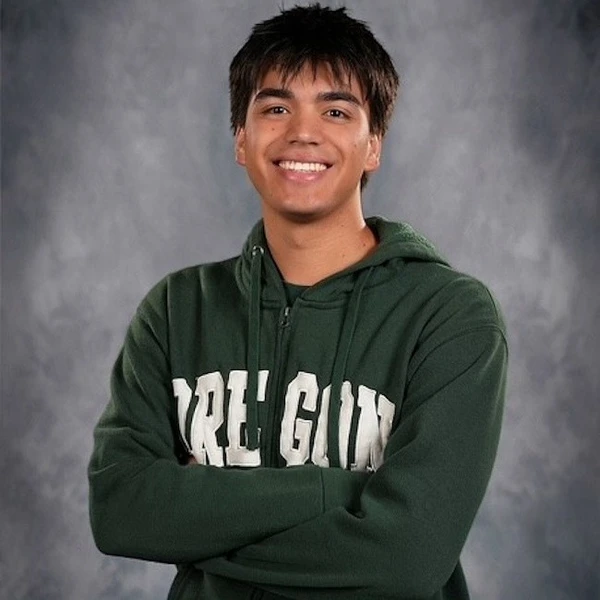
Josue Hernandez
1x
Finalist
Josue Hernandez
1x
FinalistBio
I’ve always believed that the spaces we build quietly shape the lives we live. Long before I knew the term Architectural Engineering, I understood that thoughtful design could make someone feel welcome, supported, or inspired. That belief has grown into a commitment: I want to create structures that strengthen communities and expand what’s possible for the people who use them.
I challenge myself academically because I see learning as preparation for impact. Maintaining a 4.42 weighted GPA and ranking in the top 8% of my class reflects how curiosity becomes powerful when paired with discipline and direction. Service is where my purpose feels the most real. Through National Honor Society, Interact Club, Link Crew, and my work at the Amphitheater Clothing Bank, I’ve seen how small acts of support can ripple outward. Being multilingual in English, Spanish, and ASL has taught me how communication opens doors and why design must include those who are often overlooked.
Music, culture, and teamwork have shaped me as much as academics. Playing in the CDO Symphony Orchestra and joining clubs centered on creativity and community helped me grow into someone who values collaboration and expression.
Growing up in a multigenerational household, I’ve seen how space can hold a family together, and I’ve watched relatives sacrifice so the next generation could have room to grow. That experience grounds me and drives my determination to design environments that honor the people who rely on them and create opportunities for families like mine to thrive.
Education
Canyon Del Oro High School
High SchoolMiscellaneous
Desired degree level:
Bachelor's degree program
Majors of interest:
- Architectural Engineering
- American Sign Language
Career
Dream career field:
Architecture & Planning
Dream career goals:
My long‑term goal is to specialize in designing safe, resilient educational and community facilities that reduce risk and support healthier, more connected neighborhoods.
Guest Service Specialist
Jerry Bob's Restaurant2025 – 20261 year
Sports
Soccer
Club2022 – Present4 years
Awards
- Captain's Award
- Student-Athlete Award
Soccer
Varsity2022 – 20253 years
Awards
- High School Captain's Award
Research
History and Political Science
Canyon del Oro International Baccalaureate Program — Analytical Research Assistant2024 – 2025Architectural Engineering
Canyon del Oro High School — Structural Design Engineer2025 – Present
Arts
Canyon del Oro Symphony Orchestra
MusicABODA Festival (Superior with Distinction Rating)2022 – 2025
Public services
Advocacy
Canyon del Oro American Sign Language (ASL) Club — Vice President2024 – PresentVolunteering
YDA Soccer Camp — Youth Soccer Camp Assistant Coach2024 – 2025Volunteering
Amphitheater Clothing Bank — Community Service Volunteer2025 – PresentVolunteering
Canyon del Oro Interact Club — Community Engagement Member and Volunteer2024 – Present
Future Interests
Advocacy
Volunteering
Philanthropy
Simon Strong Scholarship
The World Cup saved my life. Adversity entered my life quietly my freshman year. After a successful middle school experience, I expected high school to feel like a bigger, brighter version of what I already knew. Instead, it felt heavier. Each day dragged, every class felt isolating, and I couldn’t shake the sense that I didn’t belong. I’d always been confident. I’d been anchored by soccer, academics, and a close‑knit family, but suddenly I felt unmoored. The one thing that kept me going was the World Cup.
I woke up at three in the morning just to watch matches before school, savoring even five minutes of play. Those quiet mornings that were just me, the game, and the hum of a world connected through sport, became my refuge. The passion of the fans, the unity across cultures, and the sense of belonging they shared gave me something I couldn’t find in my own hallways. Soccer reminded me that connection exists even when you can’t feel it yet. It gave me something to look forward to when I didn’t feel seen any place else.
As I moved deeper into high school, the adversity I faced evolved. I no longer needed the World Cup to get through the day, but I continued to wrestle with the feeling I didn't belong. I spent six formative years in Mexico and the rest of my life in the United States. In Mexico, I was “the American.” In the U.S., I was “the Mexican.” I felt suspended between two cultures, two languages, and two narratives about who I was supposed to be.
My family’s story made that tension even more real. My father spent a decade navigating the long, uncertain path to U.S. citizenship while working as a tailor, meticulously stitching together garments even as he tried to stitch together a more stable future for us. My mom worked as a library aide, helping students discover stories even as she worked to build our own. We live with my grandparents, whose home is a place where language, tradition, and change blend together. Watching my family work tirelessly taught me that belonging is something people fight for, often quietly and persistently.
I overcame my own challenges by embracing the complexity of my identity rather than trying to simplify it. I found community through leadership captaining my soccer teams, mentoring students through Link Crew, volunteering at the Amphitheater Clothing Bank, and coaching kids at YDA Soccer Camp. I found belonging through service, language, and connection. And I found purpose in understanding that adversity can sharpen your empathy if you let it.
These experiences ultimately shaped my academic and career goals. I want to study Architectural Engineering because I believe the built environment can either reinforce exclusion or repair it. Too often, marginalized communities receive infrastructure that's functional but stripped of cultural relevance or dignity. I want to design spaces that honor memory, identity, and community. I want to design places where people feel seen rather than simplified.
If someone were facing the same circumstances that I did, like feeling out of place, being caught between cultures, or feeling overwhelmed by change, I would tell them that belonging is something you build. Sometimes you start small, like watching a soccer match before dawn because it reminds you that the world is bigger than your hardest day. And sometimes you build it through people, service, or the spaces you help create. Adversity taught me that pain is temporary but meaningful, and that it can guide you toward the kind of person and the kind of leader you hope to become.
Julius Quentin Jackson Scholarship
When you grow up watching your parents work tirelessly just to keep our multigenerational household steady, you learn quickly what it means to fight for your future. The challenges I have faced have shaped me into someone who values hard work, service, and responsibility. My mom works as a middle and elementary school library assistant, and my dad is a tailor. Both of them work tirelessly, often taking on extra tasks to provide our basic needs. Sharing a home with my grandparents has strengthened my understanding of sacrifice and the importance of supporting one another, especially when resources are limited. Our home is full of love, but financially, we live with very little margin.
College presents a significant financial challenge for my family. My parents’ incomes cover our basic needs, but there is no realistic way for them to afford tuition, housing, or the specialized materials required for an Architectural Engineering degree. I have worked part‑time in food service and sports coaching to contribute where I can, but even with my efforts, the cost of higher education remains overwhelming. This scholarship would relieve a tremendous burden and allow me to focus fully on my studies rather than constantly worrying about how each semester will be paid for.
The obstacles I’ve faced have shaped my desire to serve others through my future career. Volunteering at a clothing bank, helping young children at soccer camps, and working on collaborative engineering projects have taught me that service is about showing up, listening, and doing what you can to make someone’s day easier. These experiences helped me realize that Architectural Engineering is more than a technical field. It’s a way to create environments that support people’s dignity and daily lives. I want to design structures that are safe, accessible, and built with intention. I want to design spaces that strengthen communities rather than limit them. This scholarship would not only make my education possible. It would honor the sacrifices my family has made and allow me to pursue a career where I can give back. I hope to use what I learn to build spaces that uplift others, just as my family and community have uplifted me.
Overcoming Adversity - Jack Terry Memorial Scholarship
Some stories don’t just inspire you. They challenge you to rethink what resilience really means. Jack Terry’s life is one of those stories. Surviving the Holocaust as a child, losing his entire family, and arriving in the United States at fifteen without knowing English and only an elementary education, he had every reason to give up. Instead, he rebuilt his life piece by piece. He became an engineer, a physician, a soldier, an athlete, and a mentor. What inspires me most is not only the adversity he overcame, but the way he transformed his suffering into service. In choosing to share his story to empower others, he demonstrates that hardship can become a foundation for growth, and that our true identity is shaped by what we build from it.
My own challenges are different from Jack Terry’s, but his story resonates deeply with me, especially because of my Jewish grandfather and great‑grandparents whose histories taught me early that identity, safety, and belonging can never be taken for granted. My adversity has been shaped by navigating life between two countries, two cultures, and two narratives about who have been allowed to be. I spent six formative years in Mexico and the rest of my life in the United States. In Mexico, I was “the American.” In the United States, I was “the Mexican.” Those labels were meant to simplify me, but they only made me feel split. I was caught between worlds, yet fully claimed by neither.
My father’s decade‑long journey to U.S. citizenship made that tension even more real. Watching him navigate endless paperwork, interviews, and uncertainty showed me how fragile belonging can feel when your future depends on systems that are slow and exclusionary. His persistence taught me that dignity is something people fight for, often quietly and at great personal cost. That experience shaped my understanding of adversity. It’s not always dramatic. Sometimes it is the daily weight of being misunderstood, mislabeled, or made to feel like you must justify your place.
What I learned from these experiences is that belonging is not just emotional. It’s also structural. The spaces we live in, the neighborhoods we build, and the systems we design either welcome people or push them to the margins. This is why I want to study Architectural Engineering. I see engineering not only as a technical field but as a form of social responsibility. The built environment can reinforce inequity, or it can repair it. Too often, marginalized communities receive infrastructure that is functional but stripped of cultural relevance, beauty, or accessibility. I want to change that.
My goal is to design spaces that honor cultural memory, promote equity, and reflect the identities of the people who use them. I want to work with communities, both locally and internationally, to create housing, public spaces, and community centers that make people feel seen rather than simplified. In doing so, I hope to give back by making belonging tangible, especially for those who have been told they don’t fit neatly into one box. Jack Terry rebuilt his life with courage and used his education to uplift others. I hope to follow that example by using Architectural Engineering to build spaces where dignity is not conditional, and where every person regardless of language, culture, or history feels they have a place to belong.