user profile avatar

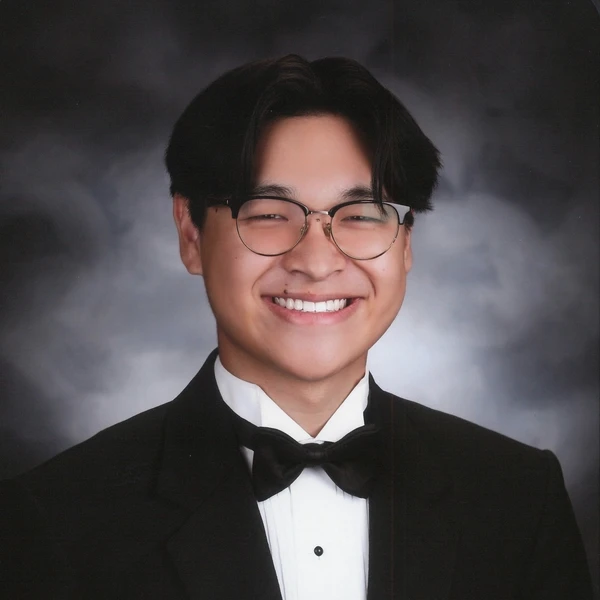
Joshua Wu

1x

Finalist

1x

Winner

Bio

I am interested in biology and oncology and have conducted research on glioblastoma for the past 3 years, focused on finding a new, more effective treatments. Through my work, I have qualified for the International Science and Engineering Fair 3 consecutive times, winning 3rd place (2024), 2nd place (2025), and 3rd place (2026) grand awards.

Education

Dublin High

High School
2022 - 2026

Miscellaneous

  • Desired degree level:

    Doctoral degree program (PhD, MD, JD, etc.)

  • Majors of interest:

    • Biological and Biomedical Sciences, Other
  • Not planning to go to medical school
  • Career

    • Dream career field:

      Biotechnology

    • Dream career goals:

    • Independent researcher

      UCSF
      2023 – Present3 years

    Sports

    Water Polo

    Varsity
    2022 – 2022

    Research

    • Biological and Biomedical Sciences, Other

      UCSF — Independent researcher
      2023 – Present
    Bio-Rad Northern California Scholarship
    Winner
    Sitting in Chinese class, I learned when ancient alchemists searched for the elixir of immortality, they accidentally stumbled upon gunpowder. Ironically, their attempt to evade death eventually delivered it to millions. I, too, became haunted by the idea of living forever. Immortality would change the world forever. Diving headfirst into TED Talks and literature, I learned that our cells already carry an enzyme called TERT that can slow aging. By maintaining protective caps on the ends of our chromosomes, TERT gives cells endless replicative abilities, allowing them to stay alive long after they normally would. It seemed almost magical but it seemed too good to be true. If we already had the key to immortality within our cells, then why isn’t it used? I later found my answer: Cancer. It turns out that when TERT is active, that “immortality” becomes cancer. Paradoxically, the same enzyme that could make you live forever could also kill you. But I saw something more. If TERT lets cancer divide indefinitely, couldn’t taking it away make cancer die off? I lay in bed unable to sleep, fantasizing over my new fixation. At first, the answer seemed obvious: destroying TERT equals no cancer. But looking into it further, I found that TERT did have a role in healthy cells by maintaining stem cells, so destroying TERT directly would spell disaster. Seemingly hopeless, I wondered what other interventions were possible. That question drove me to Dr. Costello’s UCSF Lab where I became obsessed, not with TERT itself, but with GABP, the protein that turns TERT on in only cancer cells. Rather than target TERT directly, if I could control TERT activation in only cancer cells, I could end cancer immortality while keeping stem cells alive. I envisioned sending GABP to the cell’s recycling system, destroying it entirely. It failed. On paper, it made perfect sense. But in real cancer cells, weeks of meticulous design amounted to nothing. After another round of reviewing and redesigning, I finally saw the slowed cancer growth I was pursuing. By attaching a “degrader” I was able to weaponize a subunit of GABP against itself, causing GABP to be sent to the proteasome and degraded, preventing it from ever activating TERT in cancer cells. While on the stage of the International Science and Engineering Fair, receiving my Second Place Grand Award, I came to a realization that my experiments were never just about cancer. My search started with immortality, but I had stumbled upon something far more significant. The next major scientific advancement will not be immortality itself, but the ability to precisely control the protein pathways that determine how cells function. For centuries, medicine has relied on treating symptoms, but scientists are learning how to control the root cause of those symptoms by regulating proteins. However, transcription factors, the main regulators of the cell, have remained difficult. Due to their size and lack of small molecule binding sites, traditional drugs refuse to work. However, my approach finally allows for an effective way to target transcription factors through degradation. And this is only the beginning. By manipulating transcription factors, altering signaling pathways, and changing protein expression, we can reprogram cells at the proteomic level. We can cure genetic diseases without the need for invasive changes in the DNA. Researchers are already exploring ways to stimulate the growth of new teeth, restore hearing, and regenerate limbs. Rather than treat thousands of diseases individually, we may gain the ability to rewrite the pathways that cause them. Those same technologies may one day repair spinal cord injuries, reverse neurodegenerative disorders, or even, grant true immortality.