user profile avatar

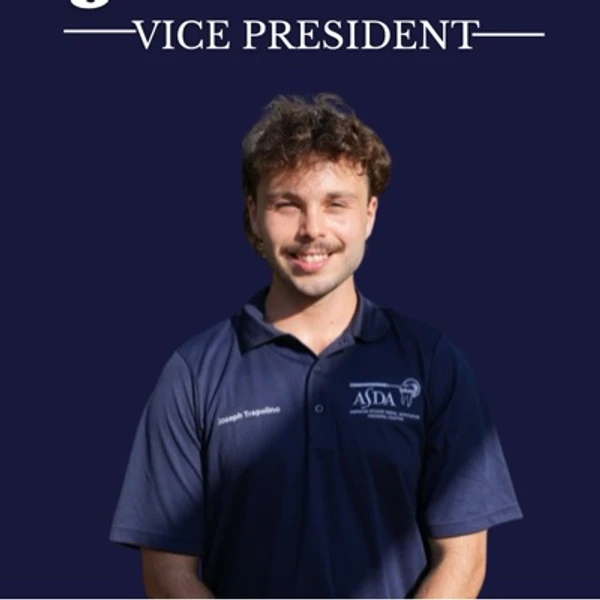
Joseph Trapolino

80x

Nominee

1x

Finalist

Bio

Born and raised in India and Texas, Joseph Trapolino is passionate about dentistry, mentorship, and creating meaningful connections that strengthen his community. He is an aspiring dentist with interests in pediatric and orthodontic care, aiming to combine clinical excellence with compassionate, patient-centered service. Joseph currently attends the University of Houston, where he is majoring in Integrated Studies, an unorthodox, multidisciplinary program offered almost exclusively at UH that allows him to minor in Business, History, and Science, with a strong emphasis in Biology. This unique academic path reflects his belief that dentistry is not just a science, but a blend of leadership, empathy, and understanding of human stories. As Vice President of the American Student Dental Association (ASDA) at UH, he leads initiatives that empower pre-dental students through mentorship, outreach, and professional development. His leadership in ASDA has helped grow the organization’s Family Program into a vibrant community of students dedicated to collaboration and support. Outside of ASDA, Joseph has gained extensive hands-on experience assisting at Healthcare for the Homeless Houston, providing dental care to underserved populations. Through this experience, he has deepened his appreciation for the role of empathy and teamwork in healthcare. -------------------------- www.linkedin.com/in/joseph-trapolino-11a961157 ---------------------------

Education

Geneva College

Master's degree program
2026 - 2027
  • Majors:
    • Microbiological Sciences and Immunology
  • GPA:
    4

University of Houston

Bachelor's degree program
2024 - 2026
  • Majors:
    • Biology, General
  • Minors:
    • Microbiological Sciences and Immunology
  • GPA:
    3.8

Texas State University

Bachelor's degree program
2022 - 2023
  • Majors:
    • Biochemistry, Biophysics and Molecular Biology
  • Minors:
    • History and Political Science
  • GPA:
    3.8

Miscellaneous

  • Desired degree level:

    Doctoral degree program (PhD, MD, JD, etc.)

  • Graduate schools of interest:

  • Transfer schools of interest:

  • Majors of interest:

    • Biological and Biomedical Sciences, Other
    • Biochemistry, Biophysics and Molecular Biology
  • Planning to go to medical school
  • Career

    • Dream career field:

      Medical Practice

    • Dream career goals:

      Company founder (open a dental firm)

    • RDA

      Health Care for the Homeless
      2022 – Present4 years

    Sports

    Pickleball

    Club
    2025 – 20261 year

    Awards

    • 1st place 2025 UH pickleball tournament

    Research

    • Soil Sciences

      Gardening Club + A&M school of Agriculture — Soil Sample collector and lab conclusion leader
      2021 – 2022

    Public services

    • Advocacy

      Sig Nu Fraternity — Historian
      2024 – Present
    • Advocacy

      Ronald E. McNair Scholars Program — McNair Scholar
      2022 – Present
    • Advocacy

      SSS-STEM TRIO Program Texas State University — SSS-STEM TRIO Scholar
      2022 – Present
    • Advocacy

      University of Houston Student Government — University of Houston Student Government Senator
      2026 – Present
    • Volunteering

      Texas Mission of Mercy (TMOM) — Dental Assistant Volunteer
      2023 – Present
    • Volunteering

      Project C.U.R.E. – Houston — Medical Supply Volunteer
      2024 – Present
    • Advocacy

      ASDA — Pre-Dental Pathway Mentor – Student Panel Outreach
      2024 – Present
    • Volunteering

      San José Clinic — RDA
      2024 – Present
    • Volunteering

      Cathedral & HOMES Clinic Volunteer — RDA
      2024 – Present
    • Advocacy

      ASDA — Dental shadowing chair
      2024 – 2025
    • Advocacy

      American Dental Student Association — Vice President
      2025 – 2026
    • Volunteering

      Health Care for the Homeless — RDA
      2024 – Present
    • Advocacy

      Cooking Club — I helped lead the coordinating team to decide what themes would be presented at our next meeting and which location would hold it.
      2020 – 2022
    • Advocacy

      Medical Club — I was in charge of creating questions with the activities coordinator as prepping for the seminars.
      2021 – 2022

    Future Interests

    Advocacy

    Volunteering

    Philanthropy

    Entrepreneurship

    Bick First Generation Scholarship
    Being a first-generation student means stepping into unfamiliar territory without a guidebook. When I began my journey toward higher education, there was no one in my immediate family who could explain college applications, financial aid, prerequisite courses, or professional school admissions. Every milestone required learning through trial and error, asking questions, and finding mentors willing to help me navigate a system that was completely new to me. My father, a single parent raising eight children, taught me the value of perseverance and service. While many families pass down knowledge about college and professional careers, my siblings and I learned by watching him work tirelessly to create opportunities for us. His sacrifices inspired me to pursue an education not only for myself, but for my family and the communities I hope to serve. Throughout my academic journey, I have faced challenges that tested my determination. Growing up with dyslexia meant that learning often took more time and effort than it did for my peers. Rather than allowing that obstacle to define me, I developed resilience, discipline, and a willingness to seek help when needed. Those qualities have continued to serve me throughout college as I work toward becoming a dentist. My passion for dentistry was shaped by experiences both at home and abroad. As a child living in Hyderabad, India, I witnessed children suffering from untreated dental disease and pain because they lacked access to care. Years later, while volunteering at Healthcare for the Homeless Houston, I saw similar barriers affecting underserved populations in my own community. One experience that remains with me involved helping fit a woman with dentures after nearly ten years without teeth. As she embraced me with tears in her eyes and said she had nothing to give except her prayers, I realized that dentistry restores far more than smiles- it restores dignity, confidence, and hope. My dream is to become a dentist who serves underserved communities while mentoring students who come from backgrounds like mine. I want to show future first-generation students that their circumstances do not determine their potential. This scholarship would help reduce the financial burden of my education and allow me to continue focusing on academics, service, and dental school preparation. More importantly, it would represent an investment in a future healthcare professional committed to giving back. As a first-generation student, every achievement has required courage, persistence, and faith. This scholarship would help me continue turning those qualities into a lifetime of service.
    100 Bold Points No-Essay Scholarship
    300 Bold Points No-Essay Scholarship
    1000 Bold Points No-Essay Scholarship
    $25,000 "Be Bold" No-Essay Scholarship
    500 Bold Points No-Essay Scholarship
    Josh Gibson MD Scholarship
    Finance Your Education No-Essay Scholarship
    Robert F. Lawson Fund for Careers that Care
    Growing up, I learned that service is not something you do when it is convenient; it is a responsibility. My father, a single parent raising eight children, dedicated much of his life to helping others. When I was ten years old, our family relocated to Hyderabad, India, where he worked to establish an orphanage. Although I did not fully understand it at the time, those experiences would shape the course of my life. In India, I spent my days playing alongside children whose lives looked very different from my own. As I grew older, I began noticing the challenges many of them faced: poverty, limited access to healthcare, inadequate sanitation, and untreated disease. One thing that stood out to me was the amount of visible dental pain and oral disease among children and adults. I remember feeling helpless as I watched people suffer from conditions that could have been prevented or treated with proper care. When my family eventually returned to the United States, those memories stayed with me. As a first-generation college student from a low-income background, pursuing higher education often felt like navigating unfamiliar territory. I had to learn how to seek opportunities, overcome obstacles, and advocate for myself. Living with dyslexia also taught me resilience and perseverance. Every challenge reinforced my belief that meaningful goals are worth pursuing, even when the path is difficult. Today, I am pursuing a career in dentistry because I have seen firsthand how healthcare can transform lives. Through my volunteer work at Healthcare for the Homeless Houston, Texas Mission of Mercy, and community dental clinics, I have worked alongside providers serving individuals who otherwise might not receive care. One experience that deeply impacted me involved helping fit a woman with dentures after nearly ten years without teeth. After receiving them, she hugged me through tears and said she had nothing to give me except her prayers. That moment showed me that dentistry restores much more than a smile. It restores confidence, dignity, and the ability to fully participate in life. My goal is to become a dentist who serves underserved communities and expands access to oral healthcare. I want to work with populations who face financial and social barriers to treatment and ensure that quality dental care is available to those who need it most. I also hope to mentor students from backgrounds like my own, helping them navigate higher education and healthcare careers. The positive impact I hope to make is simple but meaningful: I want people to feel seen, valued, and cared for. Whether through treating a patient in pain, volunteering in community clinics, or mentoring future students, I hope to spend my career improving lives one person at a time. Just as others invested in me and helped me reach this point, I want to dedicate my life to creating opportunities and restoring hope for others.
    Sloane Stephens Doc & Glo Scholarship
    When I was ten years old, my family relocated to Hyderabad, India, where my father was working to establish an orphanage. What began as an adventure quickly became an education in inequality. I spent my days playing alongside local children, building friendships that crossed language and cultural barriers. Yet as I grew closer to them, I became increasingly aware of the hardships they faced. Many lived without reliable access to clean water, adequate healthcare, or proper sanitation. Among the most visible signs of these challenges were untreated dental infections, missing teeth, and chronic pain that often went ignored because there were more immediate concerns for survival. At the time, I felt powerless to help. However, those experiences planted a seed that would later grow into my purpose. Years later, while volunteering at Healthcare for the Homeless Houston, I encountered many of the same barriers to care that I had witnessed as a child. One patient had lived nearly ten years without teeth. I helped fit her with dentures and watched as she saw her new smile for the first time. Through tears, she hugged me and said she had nothing to give me except her prayers. In that moment, I realized that dentistry restores far more than oral function. It restores dignity, confidence, and a person’s ability to fully participate in life. The impact I hope to make is rooted in that understanding. As a future dentist, I want to expand access to oral healthcare for underserved communities, particularly those who face financial, geographic, or social barriers to treatment. Too often, dental care is viewed as a luxury when it is an essential part of overall health and well-being. I want to help change that reality by providing compassionate, high-quality care to individuals who might otherwise go without it. My father remains one of my greatest inspirations. As a single parent raising eight children, he taught me that meaningful change begins with service. His decision to dedicate himself to helping others showed me that success is measured not only by personal achievement but by the lives we improve along the way. His example continues to guide my commitment to community service and healthcare. Beyond treating patients, I hope to mentor students from backgrounds similar to my own. As a first-generation college student, I understand how intimidating higher education and professional careers can seem without a clear roadmap. I want to help others see possibilities they may not yet see for themselves. My vision for the future is simple: a world where access to quality oral healthcare is not determined by income, circumstance, or zip code. Through dentistry, service, and mentorship, I hope to create lasting change- one patient, one student, and one community at a time.
    Bold.org No-Essay Community Scholarship
    400 Bold Points No-Essay Scholarship
    TRAM Panacea Scholarship
    A national and global health issue I feel deeply passionate about is the lack of access to oral healthcare. Although dental care is sometimes treated as separate from overall health, I have seen how untreated oral disease can affect nearly every part of a person’s life. Dental pain can interfere with eating, speaking, sleeping, working, learning, and self-confidence. For many people, especially those who are uninsured, unhoused, low-income, or living in underserved communities, oral healthcare is delayed until pain becomes unbearable or infection becomes severe. My concern for this issue began when I was ten years old and living in Hyderabad, India, where my family had relocated because of my father’s dream of establishing an orphanage. I spent time with children who were joyful, curious, and welcoming, but I also saw the harsh realities they faced: poor sanitation, limited access to clean water, unstable housing, and untreated health problems. What stood out to me most were their smiles, or sometimes their inability to smile freely. I saw swollen gums, decayed teeth, and children in visible pain. One boy my age approached me with tears running down his swollen cheeks, unable to explain what he was feeling. I remember feeling helpless because I could see his suffering but could do nothing to relieve it. Years later, that same feeling returned in a different setting when I began volunteering at Healthcare for the Homeless Houston. There, I saw how oral health disparities were not only a global issue but also a local one. Patients came in with missing teeth, infections, severe decay, and years of delayed treatment because cost, transportation, insurance, housing instability, or fear had stood in the way. Many had learned to live with pain as if it were normal. Others covered their mouths when they spoke or avoided smiling altogether. One patient I will never forget had gone nearly ten years without teeth. When she received her dentures, her reaction showed me that dentistry restores far more than function. She looked in the mirror, began to cry, and hugged me before leaving. She told me she had nothing to give me but her prayers. That moment changed how I understood oral healthcare. It was not just about replacing teeth; it was about restoring dignity, confidence, and a person’s ability to feel seen again. I care about oral health disparities because they reveal how deeply health is connected to opportunity. A person with untreated dental disease may struggle in school, avoid job interviews, withdraw socially, or delay care until a preventable problem becomes an emergency. This issue is especially important because it affects people who are already carrying other burdens, including poverty, homelessness, lack of insurance, and limited access to transportation. Through my experiences at Healthcare for the Homeless Houston, Texas Mission of Mercy, San José Clinic, and mobile dental clinics, I have learned that access to compassionate dental care can change the way people carry themselves. I hope to become a dentist who helps close these gaps by serving underserved communities and treating patients with both clinical skill and empathy. To me, oral healthcare is not a luxury. It is part of human dignity, and everyone deserves the chance to live, speak, eat, and smile without pain.
    Pay It Forward Scholarship
    Vivid streams of colored powder erupted into the sky as chanting locals danced exuberantly through the streets. Holi was in full bloom, and at ten years old, I was captivated by a world so unlike my American upbringing: boundless, vibrant, and free. Each color thrown felt infinite, each laugh an invitation into something larger than myself. My family had relocated to Hyderabad, India, driven by my father's dream of establishing an orphanage. Within this soulful atmosphere, community became an inseparable part of my life. Soon, I found myself among local children, building sandcastles, rummaging through garbage, and lighting small fires. Yet beneath our innocent adventures lay stark reminders of poverty. Each passing day exposed me further to the harsh conditions these children endured: dilapidated homes, inadequate sanitation, and scarce clean water. But most jarring were their smiles, or rather, their inability to smile freely. Oral health neglect was glaringly visible: swollen gums, decaying teeth, and persistent agony. One afternoon, a boy my age approached me, tears silently streaming down his swollen cheeks, pain robbing him of his voice. I was struck by profound helplessness and the realization that I could not alleviate his suffering. In that moment, my family's good intentions felt insufficient; for me, this was temporary, but for these children, it was an inescapable lifetime. Determined not to remain helpless, I sought opportunities to combat oral health disparities. This led me to Healthcare for the Homeless Houston, an organization providing holistic medical and dental care to Houston's underserved populations. At HHH, I encountered familiar faces of poverty grounded in new surroundings. Patients grappled with severe dental pain, decay, and diminished self-esteem, mirroring the struggles I had witnessed in India. Here, however, I was no longer a passive observer but a proactive participant. Donning scrubs for the first time in HHH's federally subsidized dental clinic was profoundly empowering. Surrounded by antiseptic scents and the hum of dental tools, I felt connected to my purpose. Yet the excitement was initially overshadowed by fear: fear of inadequacy, of making mistakes, and of disappointing those who trusted me. Through mentorship from Drs. Lee, Grygo, Safar, Lam, and the compassionate guidance of D4 students on rotation, I gradually found confidence in my voice and abilities within the clinic. Slowly, fear turned into assurance, and uncertainty transformed into determination. Patients began to thank me warmly, offering heartfelt words like “bless you,” and some even embraced me tearfully. These connections reminded me of my childhood experiences, except now I could actively contribute to meaningful change. My initial struggles also taught me that empathy is often quiet, found in simple, compassionate gestures rather than grand declarations. Each time a patient entrusted me with their fears, pain, and vulnerabilities, I felt the powerful significance of presence. One particularly poignant moment came with a patient receiving her first dentures after nearly a decade without teeth. Witnessing her stunned reflection transform into tears of joy and relief reinforced my conviction that empathy, at its core, is about restoring dignity, a value I now see as synonymous with dentistry. I chose dentistry because it allows me to combine science, service, and human connection in a way that directly improves lives. With my degree, I hope to serve underserved communities, expand access to compassionate oral healthcare, and help patients regain not only their health, but also their confidence and dignity. From the vibrant streets of Hyderabad to the bustling clinics of Houston, I recognize dentistry not merely as a profession, but as an embodiment of empathy: those fleeting yet profound exchanges that remind us we belong to one another.
    Maxwell Tuan Nguyen Memorial Scholarship
    My interest in the medical field began long before I fully understood the language of healthcare. Growing up, I saw how easily access to care could shape a person’s life. During my childhood, I spent time in Hyderabad, India, where my father’s work with an orphanage exposed me to communities where basic health needs were often unmet. I saw people living with conditions that would have been preventable or treatable if care had been more accessible. Those experiences stayed with me because they showed me that healthcare is not just a profession; it is a form of service that can change the direction of someone’s life. As I grew older, dentistry became the field where that calling felt most personal and tangible. Through my volunteer work at Healthcare for the Homeless Houston, I witnessed how oral health affects far more than teeth. I helped serve patients who had gone years without consistent dental care, many of whom were living with pain, missing teeth, difficulty eating, and embarrassment when speaking or smiling. One moment that especially shaped me was helping fit a patient with new teeth after she had gone nearly ten years without them. Afterward, she cried, hugged me, and told me that she had nothing to give me but her prayers. That moment changed the way I understood healthcare. It showed me that treatment can restore function, but it can also restore dignity, confidence, and a person’s ability to feel seen again. My path has also taught me resilience. As a student with dyslexia and as someone from a first-generation, low-income background, I have had to learn how to advocate for myself, work through setbacks, and keep going even when the path felt uncertain. Those challenges have not discouraged me from pursuing healthcare; they have made me more committed to it. They help me understand that patients often carry invisible barriers of their own, including financial stress, fear, shame, lack of transportation, language barriers, or past negative experiences with healthcare systems. I want to become the kind of provider who recognizes the whole person, not just the condition in front of me. In my future career as a dentist, I hope to make a difference by expanding access to compassionate, high-quality oral healthcare for underserved communities. I want to serve patients in low-income urban and rural areas, participate in community clinics, and use my training to help people who may otherwise delay or avoid care. My goal is not only to treat dental disease but also to educate patients, prevent future problems, and create an environment where people feel respected regardless of their background or financial situation. This scholarship would help me continue taking the advanced science courses I need to strengthen my academic foundation for dental school, including Immunology. These courses are expensive, but they are essential to becoming the kind of healthcare provider I aspire to be. With this support, I would be one step closer to entering a career dedicated to restoring health, dignity, and opportunity through dentistry.
    Bold Science Matters Scholarship
    It is safe to conclude that the majority of the numerous entries to this scholarship will be concise, straightforward, and pertaining to a big concept, if not a revolutionary one, such as the atom. Yet what I have to offer is not so much the discovery of an acknowledgment of a functional part of our reality but the discovery of potential. Specifically, the finding potential of The Bacteria phage; there are more phages on earth than any other organism combined, including bacteria. Billions are on your hands, in your intestines, and on your eyelids right now. However, this should not cause concern because they only eliminate bacteria; in fact, they kill up to 40% of all bacteria in the oceans daily. Like any other primary virus, they need a host to inject their DNA to replicate; as a result, they've become specialized over the years. Making phages very technical killers of specific bacteria, so specific that humans are entirely immune to them. This fact is the reason researchers are testing to see if we can use Bacterial phages to target threatening forms of bacteria. Recently they’ve started looking into injecting millions of them into our bodies due to the growing threat of antibiotic-resistant bacteria. This has already been successfully tested on a patient; the bacteria Pseudomonas Aeruginosa, one of the most feared bacteria, infected the man's chest cavity. After years of suffering, they injected a few thousand phages into his chest, and after a few weeks, the infections had completely disappeared. Additionally, in 2016 the largest phage clinical trial began, marking the growing interest and potential they have in the medical world. These efforts are significant due to the closing gap between antibiotic-resistant bacteria and the overuse of antibiotics and pave the way for a solution.
    Act Locally Scholarship
    The crises in Modern-day agriculture in a broader sense are primarily overlooked and often dismissed as something of little importance- but I would argue that conflicts surrounding our food output are something that we should pay close attention to. This is especially true today because, with a growing demand on the rise and food shortages already prevalent throughout the underdeveloped world, it is estimated that within the next ten years, we will expect to see a media shift towards the farming world and its impending doom. In fact, within America alone this year, food prices soared to record heights in February; global food prices also followed suit posting a 20.7% increase in the global food price index compared to last year. These statistics also follow in conjunction with Joseph Glauber, the senior research fellow International food policy research Insitute, stating, "These are the highest prices we have seen since the last ten years- Stock levels, the lowest levels since 2007." Although failure to support a sustainable clean way of producing the global food supply is not the only reason, this crisis has evolved, with covid-19 having severe implications on the price of goods, services, and commodities. Moreover, just as we enter a recovery period from the pandemic, a massive geopolitical outbreak contributes to an already growing restraint on the global food supply. Making the war in Ukraine the final nail in the coffin to the surge in food prices. The UN World food program chief even warned that a potential global food crisis might be on the horizon on a scale not seen since WWII. The reason why the shutdown of Russia and Ukraine in food production is so destructive to the world mostly comes down to the fact that 12% of total calories traded around the globe come from these two countries. In fact, in 2021, Russia exported 37.3 billion dollars worth of agricultural products to the rest of the world, with Ukraine exporting more than 27 billion. However, Ukrainian grain exports last month were a quarter what they were in February. Also, as a direct result of the Russian invasion, the cost of fertilizers, with prices soaring for raw materials like ammonia, nitrogen, and nitrates, are up 30% since the start of 2022- Making the production of agricultural products more difficult. Meanwhile, food prices in the U.S. are rising at historical rates, while prices for commodities like wheat and corn are at their highest levels in a decade. What’s more, the U.S. Department of Agriculture predicts that food-at-home prices will see an increase of up to 4% by the end of 2022. Yet, with all this doom and gloom on the horizon, what you can do locally for your own community can drastically impact food insecurity. The first thing you can set out to do is donate non-perishable food items to local food drives or food banks, you can also volunteer at local soup kitchens and feeding programs to help supply those in need of a meal. Additionally, you can donate money to national hunger organizations or start your own fundraiser and give the money you raise to a local food charity. Although the most effective and, in my opinion, fun way to bring your community together while also solving food insecurity is to grow a community garden. Within my own community, I helped establish a local garden that fed over 55 people over the first two months it was established. Not only did it bring us closer together, but it also aided in helping the more at risk in our community. Even though the war in Ukraine is still ongoing and prices are expected to go up, I hope by preparing and informing the inhabitants of your surroundings, the future will be in manageable hands.