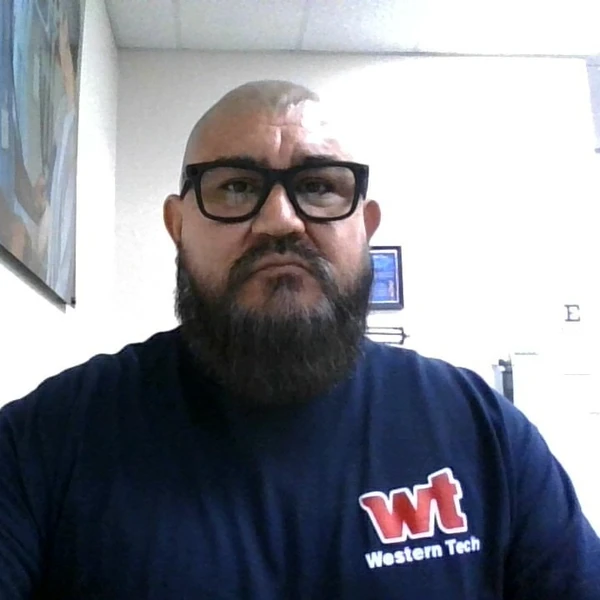
Jose Mata
1x
FinalistJose Mata
1x
FinalistBio
I am a U.S. Army veteran with over a decade of experience in operations, logistics management, and commercial driving, now transitioning into a career in healthcare. After sustaining service-related disabilities that ended my trucking career, I’ve committed to becoming a Certified Medical Assistant so I can continue serving my community particularly fellow veterans, through compassionate, skilled healthcare.
I bring discipline, attention to detail, and a proven ability to work under pressure from my military and professional background. My medical training includes knowledge of medical terminology, anatomy, HIPAA compliance, patient scheduling, and clinical procedures, supported by strong administrative and technical skills.
My goal is to work for the Department of Veterans Affairs, helping others navigate the same physical and emotional challenges I have faced. I view my career change not as a setback, but as an opportunity to refocus my service on what I can do: make a meaningful difference in the lives of patients every day.
Education
Western Technical College
Trade SchoolMajors:
- Allied Health and Medical Assisting Services
Miscellaneous
Desired degree level:
Trade School
Graduate schools of interest:
Transfer schools of interest:
Majors of interest:
Career
Dream career field:
Medical Practice
Dream career goals:
First Sergeant
U.S. Army2001 – 201918 yearsFirst Sergeant
377th Heavy Transportation Company2015 – 20172 years
Sports
Archery
Club2012 – Present14 years
Awards
- Silver Medal at the 2012 Warrior Games
Research
Military Systems and Maintenance Technology
377th Heavy Transportation Company — First Sergeant2015 – 2017
Public services
Volunteering
El Paso VA — I volunteer across multiple departments within the VA and support newly separated Soldiers in successfully navigating the VA benefits and enrollment process.2024 – Present
Trudgers Fund
Scholarship Essay: Trudgers Fund
By Jose A. Mata Jr.
There was a time in my life when I thought I had lost everything. Addiction crept into my world quietly, and before I knew it, I was trapped in a cycle that nearly destroyed me. What began as an escape from emotional pain and the weight of life’s pressures turned into a long battle that cost me relationships, peace, and years I will never get back. But it also gave me something unexpected: a deeper understanding of resilience, humility, and the power of starting over.
My struggle began in 2020, the year everything changed. I was a veteran trying to adjust to civilian life, carrying invisible wounds that did not show up on any medical chart. I made mistakes, including a possession charge that landed me on deferred adjudication. For three years, I worked hard to rebuild. I completed probation, attended a VA outpatient program for substance use, and received behavioral health therapy. Through those years, I learned how addiction can take everything but also how recovery can give it all back if you are willing to fight for it. I have been drug free since January 2020, and that is a sentence I am proud to say out loud.
Sobriety is not a single victory; it is a daily choice. Some days it comes easy, and others require every bit of strength I have. But every morning I wake up clear, grounded, and grateful for another chance to live a meaningful life. I have rebuilt relationships with my family, returned to school full time, and found purpose again through education. Today, I am pursuing my medical assistant certification at Western Technical College with plans to continue into phlebotomy and EKG certification. My goal is to work in healthcare, a place where my story, my patience, and my compassion can make a real difference for people who are struggling physically or emotionally.
I know what it feels like to sit in a waiting room and believe you have run out of options. I want to be the person on the other side of that desk who looks someone in the eye and says, “You still have time to turn it around.” Addiction took a part of my past, but it will not define my future. My education gives me the tools to serve others with dignity, understanding, and empathy, values that only life experience can teach.
This scholarship would not just help me pay for school. It would honor the years of hard work it took to get here. It would represent a bridge between my past and the life I am building through service and learning. My journey through addiction taught me that recovery is not about perfection; it is about progress, honesty, and staying true to the promise you make to yourself to never go back.
Today, I walk a path of purpose, one built on second chances, steady hands, and the belief that it is never too late to become the person you were meant to be.
Track to the Trades
Scholarship Essay: Track to the Trades
By Jose A. Mata Jr.
The first time I felt the power of the trades up close was in a clinic waiting room during a long El Paso summer. The air conditioning struggled, lights flickered with a brief power dip, and the room shifted from calm to uneasy in seconds. Then the crew arrived. In less than an hour the room cooled, the lights steadied, and people relaxed again. Watching that quiet professionalism reminded me that the trades do more than build systems. They keep people safe, steady, and able to live their lives with dignity. That moment is why I try to carry the values of generosity, respect, innovation, and teamwork into everything I do.
Generosity to me means service that goes beyond the task at hand. I am a veteran and a trade school student who believes in giving more than I take. I volunteer at the VA and at community events because I know how much a steady hand can mean to someone who is worried or in pain. In the trades, generosity looks like showing a new apprentice how to measure twice and cut once, or staying an extra hour to make sure a family has cooling during a heat wave. I try to live that standard daily. I help classmates master skills, share study notes, and pass on tips that helped me. When I serve my community, I see the same gratitude I once felt in that waiting room, and it keeps me focused on the people behind every project.
Respect is the foundation for how I work and how I lead. Seventeen years in the Army taught me to respect time, tools, safety rules, and the people beside me. In the trades, respect looks like following code without shortcuts, wearing proper protection, and treating a customer’s home as if it were your own. It also means listening to the most experienced person on site and to the quietest apprentice as well. I believe everyone has something to teach. I have carried that mindset into school and into life after service. It keeps me humble, careful, and consistent.
Innovation is not only new technology. It is the daily habit of improvement. I have learned to ask better questions, to map a process before I touch it, and to look for small changes that will raise quality and save time. I study how teams stage materials, how they label circuits and lines, and how they document their work so the next person can pick up without guesswork. I track mistakes and close the loop on what caused them so they do not repeat. In the trades, innovation is a simple tool that fits your hand, a better sequence that reduces rework, or a layout that makes service safer in the future. I try to bring that mindset everywhere I go.
Teamwork is the value that ties all the others together. I have stood in sandstorms and in quiet offices where urgent decisions still had to be made. I learned to communicate clearly and to place safety above pride. In a shop or on a site, teamwork means clear assignments, honest updates, and trust. If one person cuts corners, everyone is at risk. If one person goes the extra mile, everyone looks good and the client remembers. My goal is to be that person who lifts the group, steadies the pace, and keeps the standard high.
This scholarship will help me strengthen these values with education and the tools that make learning possible. The funds will go toward tuition, required materials, and certification costs so I can spend more time practicing the work and less time balancing bills. It will also allow me to join more hands on projects, from community fix days to shadow opportunities with skilled crews, where I can learn the craft from people who live it every day.
G R I T is not a slogan to me. It is a daily practice. Generosity keeps me focused on people. Respect keeps me grounded in safety and standards. Innovation keeps me improving. Teamwork keeps me accountable and useful to others. The trades change lives in simple and profound ways. With your support, I will continue to grow into a professional who brings calm, skill, and care to every room I enter, just like the crew who restored comfort on that hot summer day.
Calvin C. Donelson Memorial Scholarship
Scholarship Essay: Calvin C. Donelson Memorial Scholarship
By Jose A. Mata Jr.
When I was young, I spent countless hours watching my grandfather repair and build things around the house. He worked quietly but with purpose, whether it was fixing a loose cabinet or building a wooden bench for the porch. He used to tell me, “If your hands can build it, your heart can be proud of it.” Those words have stayed with me ever since. They shaped how I approach every task in life and inspired me to choose a trade where I can use my hands, mind, and heart to help others. Today, that trade is medical assisting.
Although medical assisting is not traditionally viewed as a trade like carpentry or mechanics, it is still a skilled profession built on technical training, precision, and compassion. My passion for this work began after serving 17 years in the United States Army. During my service, I learned discipline, leadership, and the importance of caring for those around me. After being medically discharged, I received care through the VA, where medical assistants played a major role in my recovery. Their professionalism and kindness left a lasting impression on me. They treated me not as a patient number but as a person rebuilding his life. That experience inspired me to enter this field so I could do the same for others who are trying to get back on their feet.
I am currently pursuing my certification at Western Technical College, where I am gaining hands-on experience in clinical procedures, phlebotomy, patient care, and administrative tasks. I take pride in the fact that this trade requires both technical ability and human connection. Every blood draw, every checkup, and every conversation with a patient is an opportunity to help someone heal. It is a craft that combines science with compassion, and I see it as my way to continue serving my community beyond my military career.
My journey has not been easy. Returning to school as a veteran and father comes with challenges, especially balancing tuition, family responsibilities, and clinical requirements. But I approach this trade the same way my grandfather approached his workbench, with patience, focus, and pride in doing things right. The Calvin C. Donelson Memorial Scholarship would allow me to continue my training with less financial stress and more focus on perfecting my skills. It would help me afford the supplies, uniforms, and certification exams that are essential for completing my education.
What makes this opportunity especially meaningful is Mr. Donelson’s legacy. His passion for craftsmanship and his belief that hard work builds purpose reminds me of the same values my family instilled in me. Like Mr. Donelson, I believe success comes from mastering a skill, working with integrity, and using that skill to serve others. My goal is to bring that spirit into healthcare by providing compassionate care and mentoring young men in my community to explore trade careers that give them purpose and stability.
Receiving this scholarship would not only honor Mr. Donelson’s memory but would also help me carry forward his message that a strong work ethic, creativity, and community service can build a legacy that lasts long after the work is done. I hope to follow that example by using my hands and heart to heal others and make a positive difference every day.
Courtney R. Smith Trades Scholarship
Scholarship Essay: Courtney R. Smith Trades Scholarship
By Jose A. Mata Jr.
When I was a child, I used to watch my father repair anything that broke in our home, from rewiring outlets to fixing broken furniture. He taught me that working with your hands was not just a way to earn a living but a way to build pride, stability, and purpose. Those lessons stayed with me through my 17 years of military service and now guide me as I pursue a new trade in medical assisting at Western Technical College. For me, this scholarship represents more than financial help; it is an opportunity to continue a lifelong mission of service, learning, and community.
How this scholarship will assist me with my studies
This scholarship would relieve a significant financial burden as I continue my education and prepare for certification. It would help cover essential costs such as textbooks, uniforms, certification exams, and transportation to clinical sites. As a full-time student, father, and veteran, I manage my resources carefully to stay focused on my studies. Receiving this support would allow me to dedicate more time to mastering my skills and less time worrying about financial limitations. My goal is to graduate fully prepared to provide professional, compassionate, and dependable care to every patient I encounter.
How I will use this scholarship to advance my community and chosen field
I plan to use my education to serve the veteran and underserved communities in El Paso. Having received care through the VA myself, I know how meaningful it is to have medical professionals who truly understand your struggles. I hope to one day work within the VA healthcare system, where I can help other veterans navigate their care and recovery with dignity. In addition, I want to mentor young minority men who may not realize that healthcare can be a rewarding trade career. My vision is to create community outreach workshops that introduce them to medical assisting, EKG, and phlebotomy, showing that hands-on service can take many forms and can change lives just as it changed mine.
My motivation to pursue this field
My motivation to pursue medical assisting comes from my own journey of recovery. After my military discharge, I received behavioral health care at the VA that helped me rebuild my life. The kindness and professionalism of those healthcare workers inspired me to follow in their footsteps. I want to provide the same comfort, respect, and understanding that I once received. Every class I take, every skill I practice, and every volunteer hour I give back reminds me why I chose this path, to make a difference in people’s lives when they need it most.
What makes me stand out from other candidates
What sets me apart is the combination of my life experience, resilience, and commitment to service. I have faced adversity both during and after my military career and used those experiences to grow stronger. I bring leadership, discipline, and empathy to every situation, qualities that cannot be taught in a classroom but are essential in healthcare. My background as a soldier and veteran gives me a deep understanding of teamwork, accountability, and integrity. I am not just pursuing a new trade; I am building a new way to serve others with the same dedication that once defined my military career.
Conclusion
The Courtney R. Smith Trades Scholarship embodies the values of hard work, perseverance, and community, the same values I strive to live by each day. With this support, I will continue to develop my skills, strengthen my community, and honor the legacy of Mr. Smith by using my trade to uplift others. My journey from military service to healthcare service reflects one simple belief: that true purpose comes from helping others heal, rebuild, and succeed.
Bryent Smothermon PTSD Awareness Scholarship
My Path to Becoming a Medical Assistant
I chose to pursue a career as a medical assistant because my life experiences have given me a deep commitment to helping others, especially fellow veterans. For over a decade, I served proudly in the U.S. Army, dedicated to my mission and my team. My service ended before I could reach 20 years due to multiple service-connected disabilities, with posttraumatic stress disorder (PTSD) being the most significant.
When left untreated, my PTSD affected every part of my life. I turned to drugs, alcohol, and gambling to escape the painful memories and constant anxiety. At the time, I thought I was coping, but those choices only created new problems and distanced me from the person I wanted to be. I was on a path that could have destroyed my health, my relationships, and my future.
The turning point came when I sought help through the Department of Veterans Affairs (VA) and Behavioral Health services. Through counseling, structured treatment, and the guidance of professionals who understood the struggles of combat veterans, I was able to face the root causes of my PTSD. Recovery was not easy, there were setbacks and hard days, but over time, I learned healthier ways to manage my symptoms. I have moved forward drug-free, rebuilt my life, and enrolled in college to start a new career in healthcare.
My PTSD has impacted my educational journey by showing me the importance of mental health in achieving academic success. There are still moments when my symptoms make it challenging to study, but I’ve learned how to plan ahead, use available resources, and stay focused on my goals. The discipline I gained in the military, combined with the coping strategies I’ve developed in therapy, has given me the resilience to keep moving forward.
Independence now means something different to me. Before, I believed it meant doing everything without help. Today, I understand that true independence is about knowing when to ask for support, adapting to challenges, and living a meaningful life despite limitations. It’s not about ignoring my past, it’s about managing it and using it to help others.
Completing my medical assistant training will promote and sustain my independence by providing a stable, adaptable career that fits within my capabilities. My goal is to work for the Department of Veterans Affairs, caring for veterans who may be struggling with the same feelings of isolation and loss of purpose that I once faced. I can offer them both professional medical care and the understanding that comes from shared experience.
This education will also allow me to provide for my family without compromising my mental or physical health. It will give me the opportunity to turn my own struggles into empathy and encouragement for others. I know how powerful it can be to have someone who listens without judgment and believes in your ability to heal, that is the kind of medical professional I want to be.
Living with PTSD has taught me that while the past shapes us, it does not define us. My journey from self-destructive coping to recovery and education has been difficult but transformative. By becoming a medical assistant, I will honor my military service, continue to serve my community, and show that even the deepest wounds can lead to a life of purpose, compassion, and strength.
Ray Aplin Memorial Scholarship
My Path to Becoming a Medical Assistant
I chose to pursue a career as a medical assistant because my life experiences have strengthened my commitment to helping others, especially my fellow veterans. For over a decade, I served proudly in the U.S. Army, dedicated to my mission and my team. My career was cut short before reaching 20 years of service due to multiple service-connected disabilities, including posttraumatic stress disorder (PTSD), intervertebral disc syndrome with degenerative arthritis, radiculopathy, peripheral neuropathy, tinnitus, and several joint, nerve, and musculoskeletal injuries. These conditions not only ended my military career but also made it impossible to continue working as a truck driver, a profession I held after my service.
My disabilities have deeply impacted my educational journey. Chronic pain and limited mobility mean I must pace myself, take breaks, and sometimes adjust how I complete assignments. PTSD adds another challenge, requiring me to actively manage my mental health so I can remain focused and calm in stressful situations. There have been moments when my symptoms made studying difficult, but instead of giving up, I have learned to adapt, use available resources, and stay focused on my goals. These adjustments have strengthened my problem-solving skills and determination, qualities I will carry into my career.
Independence has taken on a new meaning since my injuries. Before, I thought independence meant doing everything on my own without limitations. I could work long hours, move without pain, and handle both physical and mental stress without help. Now, independence means living a full and self-sufficient life by adapting to my circumstances. It’s about having the skills, confidence, and resources to contribute meaningfully to my family, my community, and my country, even if I must approach tasks differently than before.
Completing my medical assistant training will help me maintain and strengthen my independence. This career offers a stable and adaptable work environment that fits within my physical capabilities while allowing me to use my personal experiences as an asset. My ultimate goal is to work for the Department of Veterans Affairs, where I can provide medical care and emotional support to veterans who face similar challenges. I understand the isolation and frustration that can come with service-related disabilities, and I want to be a source of encouragement, understanding, and professional care.
This education will also give me the ability to provide for myself and my family without sacrificing my health. It will allow me to focus on what I can do, turning my challenges into tools for helping others. My training will equip me with both clinical and administrative skills, patient communication, record management, and procedural support, that will enable me to serve effectively in any healthcare setting.
In many ways, this career will be a continuation of my service to my country, just in a different uniform and with a new mission. My military experience taught me discipline, teamwork, and perseverance, and my disabilities have taught me patience, adaptability, and empathy. These combined experiences will make me not only a skilled medical assistant but also someone who can truly connect with patients on a personal level.
Living with disabilities has not ended my ability to serve, it has simply changed the way I do it. By completing my medical assistant training, I am taking control of my future, reclaiming my independence, and committing myself to a career defined by service, compassion, and resilience.