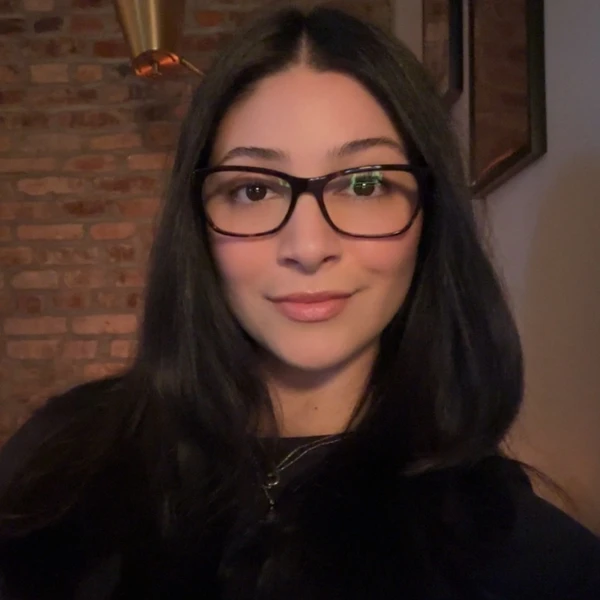
Jordana Ulloa-Marquez
1x
FinalistJordana Ulloa-Marquez
1x
FinalistBio
First-gen EdD student in Kinesiology (Motor Learning) at Columbia University. Passionate about equity in STEM, disability advocacy, and helping children with movement disorders thrive through research, teaching, and community work.
Education
Teachers College at Columbia University
Doctoral degree program (PhD, MD, JD, etc.)Majors:
- Sports, Kinesiology, and Physical Education/Fitness
California State University-San Marcos
Master's degree programMajors:
- Sports, Kinesiology, and Physical Education/Fitness
California State University-Sacramento
Bachelor's degree programMajors:
- Sports, Kinesiology, and Physical Education/Fitness
Career
Dream career field:
Higher Education
Dream career goals:
Professor
Research
Sports, Kinesiology, and Physical Education/Fitness
Teachers College, Columbia Unviersity — Researcher2021 – 2025
Bulkthreads.com's "Let's Aim Higher" Scholarship
I want to build a space for collective healing that recognizes how our mental, physical, and emotional well-being are shaped by the environments we live in and the communities we move through. As a first-generation doctoral student at Columbia University studying health science, I have had the privilege of working with children with disabilities and their families, many of whom face systemic barriers to care. Their resilience inspires my vision: to build a community wellness studio rooted in equity, culture, and connection.
This studio would serve as a home for creative, affordable, and accessible mental health care. It would offer sliding-scale services integrating trauma-informed art therapy, movement-based workshops, and support groups facilitated by BIPOC practitioners. What makes it unique is its ecological approach. Healing would not only happen within four walls but would extend into nearby parks, sidewalks, and community spaces, using the environment as a resource for self-awareness and regulation. Through creative movement and embodied learning, participants would be encouraged to reconnect with their bodies and find strength in shared experience.
Building this space means creating something that did not exist for many of us growing up: a culturally affirming, inclusive place where mental health is supported rather than stigmatized. In my own life, finding access to care was not always easy. I often relied on community-centered outlets such as dance, storytelling, and shared meals to process and heal. Those experiences taught me that healing does not always come in clinical packages. It can come from connection, visibility, and being in a space where you feel safe enough to be yourself.
This studio is not just a professional goal but a personal commitment to reimagining how we care for each other. I want to contribute to a future where youth, especially BIPOC and disabled youth, have tools to understand their minds and bodies without shame or isolation. Where care is preventative rather than reactive. Where art and movement are recognized as valid forms of expression, healing, and strength.
The process of building this will take collaboration with artists, clinicians, families, and organizers. It will require listening closely to what each community needs instead of assuming what is best. I am committed to this long-term work because I believe health equity begins with rebuilding the systems and spaces we move through every day.
In building this studio, I am also building a future that feels more honest, creative, and just—for myself and for every young person who deserves access to care that reflects who they truly are.
Healing Self and Community Scholarship
Mental health is not a privilege; it is a necessity. Yet for many BIPOC youth, it remains inaccessible due to systemic barriers like cost, cultural stigma, and lack of culturally responsive care. As a doctoral student in biobehavioral sciences, I hope to contribute to the world by creating interventions that blend community-based art and evidence-based therapy to support overall health in under-resourced populations.
In my work with children with disabilities, I’ve seen firsthand how deeply mental and physical health are intertwined; and how isolation and inaccessibility compound that burden. I envision opening a community wellness studio that offers sliding-scale services, trauma-informed movement therapy, and peer-led workshops facilitated by BIPOC practitioners.
Rooted in an ecological approach to healing, this space would utilize our environments—parks, streets, art studios, and movement spaces—as tools to explore how our bodies carry stress and resilience. We would guide participants in reconnecting with their physical selves through creative movement, environmental engagement, and collective care.
I want young people, especially from historically excluded backgrounds, to feel empowered to care for their mental health and see themselves reflected in the healing spaces they enter. By merging culturally grounded health education, artistic expression, and ecological awareness, we can de-stigmatize mental illness and build systems of care that are affordable, embodied, and community-based.
B.R.I.G.H.T (Be.Radiant.Ignite.Growth.Heroic.Teaching) Scholarship
The first time I had a direct and lasting impact on a child’s life was during my very first experience working as an interventionist at a rehabilitation summer camp for children with cerebral palsy. It was also my first time working with children, especially children with disabilities, and I walked in that morning feeling a mix of nerves and determination. I arrived at 8 a.m. to set up the table with therapy games and activities I had planned for the day. About 30 minutes later, I heard the soft rumble of a metal grocery cart rolling down the hallway, something New Yorkers often call a “granny cart.” Peeking just over the edge of the cart was a tiny hand waving and a cheerful “Hello!”
That was Vic.
She was seven years old, full of energy, and excited to be dropped off at summer camp. Waving goodbye to her mom, she came in ready to meet new friends and play all day. At first glance, she was just like any outgoing kid. But Vic had bilateral cerebral palsy with dystonia, which significantly affected her motor function and balance - particularly in her legs, torso, and right arm. Our primary therapeutic goals for her were improving postural control, balance, and bimanual coordination.
The first day was all about getting to know each other; figuring out what made each child feel supported, what motivated them, and what methods worked best. But the following days presented challenges. One thing I quickly learned is that for children with CP, even simple movements like reaching for a toy or sitting up require intense focus. The body has to be retrained to move more efficiently using both limbs, which doesn’t always come naturally. These tasks take more time, more energy, and often lead to emotional fatigue. It can be incredibly frustrating for a child to know what they want to do but feel stuck in their own body.
Vic had a few of these moments - tears, setbacks, and a lot of “I cant’s.” But with time, patience, and open communication, we made progress. We learned to talk through her frustration and celebrate small wins. She pushed through the hard moments, and slowly, her confidence began to shine.
What struck me most wasn’t just the physical progress Vic made, but the emotional shift. Despite her diagnosis, Vic, and every child at that camp, reminded me that they weren’t defined by cerebral palsy. They were kids, simply enjoying their summer: laughing, playing, singing, and moving in whatever way they could. I realized that this work isn’t just about motor training or functional gains, it’s about creating moments where children feel like children, free from the constraints of diagnosis or limitation.
The moment that truly stayed with me came one afternoon when Vic turned to me and asked, “Can you help me make a birthday card for my brother?” She explained that she had never made one before because using her hands was so difficult. Together, we folded the paper, drew pictures, and wrote a sweet message. For her, it was more than a craft, it was independence, agency, and love expressed in a new way.
That day, I saw the real impact of this work. Academic research and publications are important, but witnessing the joy, pride, and growth in just one child makes it all worthwhile. Vic helped me understand the deep value of patience, presence, and belief in potential. That summer changed my path; and it started with one little girl and a birthday card.
Reimagining Education Scholarship
If I could create a class that all K-12 students were required to take, it would be a mindfulness course. This class would teach students how to be present in their bodies and minds through mindfulness meditation and body awareness practices. The core of the course would focus on emotional regulation, attention control, and developing self-awareness; skills that are foundational not only for academic success but also for healthy social interactions and personal well-being.
Throughout childhood and adolescence, students undergo rapid mental, physical, and emotional development. During these critical years, they’re expected to sit still, focus, get along with peers, and perform academically, all while navigating intense internal changes. Yet very few schools give students the tools to manage their emotions, understand their stress, or pause before reacting. A mindfulness course would fill this gap.
This class wouldn’t be about promoting silence or stillness for the sake of discipline, but rather about cultivating curiosity and kindness toward one’s inner experience. Students would learn how to recognize what they’re feeling, identify where that emotion is held in the body, and make intentional choices about how to respond. This doesn’t just support emotional health, it fosters social-emotional learning and promotes empathy, which can drastically reduce conflict and bullying in schools.
A key benefit of mindfulness is its ability to enhance focus and attention. Every school day is full of demands that require students to shift between tasks, absorb new information, and perform under pressure. Often, educators use phrases like “be intentional” or “stay focused,” but without direct teaching on how to do that, these phrases can feel abstract or frustrating to students. Mindfulness offers students concrete strategies that help them build those skills. Starting the day, a test, or even a difficult conversation with a clear and calm mindset can be transformative.
I also believe this course would shift the culture of the classroom. Instead of viewing education solely as an external process of memorizing and performing, mindfulness invites an inward turn, a chance to pause and reflect before acting. It honors the inner world of the student, which is too often overlooked in traditional schooling. Imagine a generation of young people who know how to name their feelings, how to return to the present moment, and how to treat themselves and others with compassion. The ripple effects of that would be profound.
Personally, mindfulness has played a key role in my academic and emotional journey. As a student and researcher, I’ve learned that showing up with presence, not perfection, makes the greatest difference in my ability to engage and connect with others. I’ve often started study sessions, difficult tasks, or community events with a moment of stillness or reflection, and I’ve seen firsthand how much more grounded and productive that makes me. I believe that if I had been taught these tools earlier in life, I would have had a better foundation for handling stress, advocating for myself, and forming meaningful relationships.
In a fast-paced world that prioritizes productivity, performance, and constant stimulation, this course would offer students something different: a pause. A way to come home to themselves. A way to listen- not just to teachers or peers, but to their own thoughts, bodies, and emotions. It would teach them that their inner world matters just as much as their outer achievements.
Ultimately, a mindfulness class would equip students with tools they could carry far beyond the classroom, into their relationships, their communities, and their future careers. It would help them become more aware, more compassionate, and more resilient human beings.