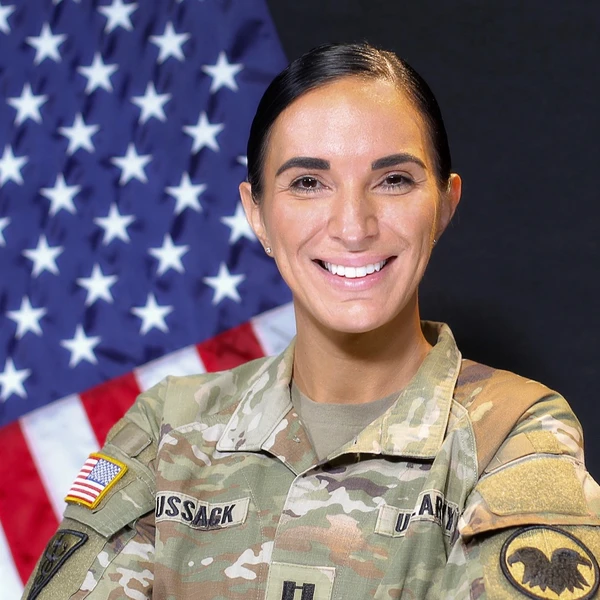
The military has fundamentally transformed how I view both myself and my country. When I first began working within the military community, I understood service in the abstract—something honorable and essential, but somewhat removed from my personal experience. That changed when I deployed during the withdrawal from Afghanistan. Providing acute crisis care to soldiers in the midst of such a high-stakes operation brought the emotional, psychological, and human cost of military service into sharp focus. I began to see the military not as an institution, but as a community of people—people who carry invisible wounds, extraordinary burdens, and often go unseen in their suffering.
Through my work as a Licensed Clinical Social Worker, I have specialized in combat loss and suicide prevention. These are not just clinical areas of interest—they are deeply personal commitments. I have sat across from soldiers who are battling the weight of trauma, moral injury, and isolation. I have listened to the stories of those struggling to find meaning after loss, and I’ve stood beside leaders trying to navigate how best to care for their troops in a culture where vulnerability is often misunderstood as weakness. These encounters have profoundly shaped my sense of self and my professional identity.
Before my involvement with the military, I saw myself as a mental health provider—trained, competent, and compassionate. But working with service members has deepened that identity. I’ve learned that being present in the moment of someone else’s crisis is not just about offering a diagnosis or treatment plan—it’s about bearing witness. It’s about validating pain, building trust, and helping people reconnect to a sense of purpose when all they feel is despair. The military taught me how to show up more fully for others, but also how to show up for myself. I’ve become more resilient, more grounded, and more committed to leading with empathy.
The military also changed how I view leadership. In this environment, leadership is not measured by rank or formality—it’s measured by who steps up in hard moments, who listens, and who creates space for others to heal. I’ve watched soldiers and leaders advocate for one another, stay late to check in on a struggling peer, and quietly do the emotional labor of keeping their units together. That has inspired me to lead in the same way—through presence, consistency, and compassion.
My view of the country has evolved as well. Before my deployment, I saw America as a nation defined by values—freedom, service, unity. I still believe in those values, but I now see how they are often tested. I’ve witnessed the real challenges that service members face upon returning home: barriers to mental health care, stigma around psychological struggles, and a culture that doesn’t always make space for vulnerability. At the same time, I’ve seen the best of this country in the people who serve it—diverse in background and belief, yet united by a common purpose. Their stories have made me more aware of both the promises and the shortcomings of our national identity.
The military has also changed how I relate to people in general. It has shown me the power of connection—how a conversation, a check-in, or a moment of shared understanding can make all the difference. I’ve learned that mental wellness is not just a clinical goal but a cultural one. We have to normalize help-seeking, reduce stigma, and create environments where people feel safe enough to be honest about their struggles. These lessons have stayed with me outside of uniform too, shaping how I show up in my community, my relationships, and my broader sense of purpose.