user profile avatar

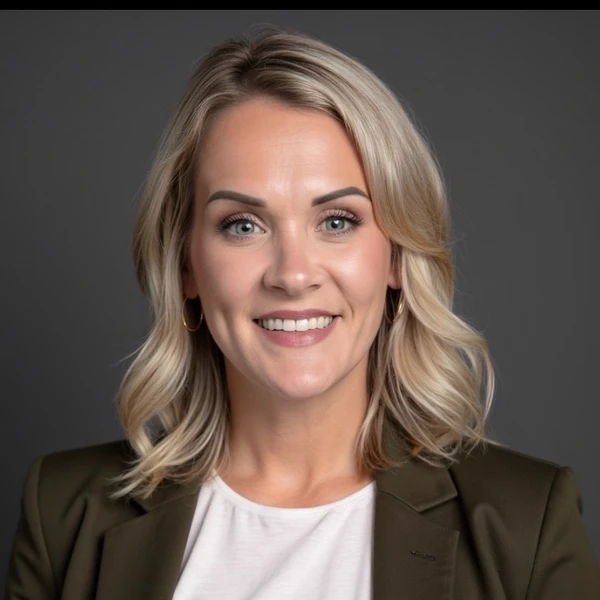
Jordan McLane

1x

Finalist

Bio

Jordan McLane is a doctoral student in Criminal Justice at Walden University and a professional working within court systems and behavioral health services. Her work and academic goals are deeply shaped by both frontline experience and personal lived experience involving substance use disorder, mental health struggles, trauma, incarceration, and recovery. After surviving addiction and rebuilding her life through recovery, Jordan dedicated her career to helping justice-involved individuals navigate treatment, behavioral health services, recovery, and reentry. Having personally experienced the realities of instability, stigma, withdrawal, and criminal justice involvement, she understands firsthand how addiction and untreated mental health concerns can alter a person’s life, identity, and opportunities. Today, Jordan works directly with individuals facing many of the same struggles she once faced herself. Her lived experience allows her to connect with people beyond textbooks or theory and fuels her passion for advocacy, systems reform, and evidence-based approaches to public safety and rehabilitation. Jordan’s long-term goals include advancing research and policy surrounding addiction, trauma, violence, and criminal justice reform while helping create systems that prioritize healing, prevention, treatment access, and community wellness alongside accountability. Through advocacy, education, research, and lived experience, she hopes to help bridge the gap between public safety and compassionate, effective justice-system responses.

Education

Walden University

Doctoral degree program (PhD, MD, JD, etc.)
2026 - 2028
  • Majors:
    • Criminal Justice and Corrections, General
Ohio State University-Main Campus

Master's degree program
2024 - 2025
  • Majors:
    • Social Work

University of Cincinnati-Main Campus

Bachelor's degree program
2022 - 2024
  • Majors:
    • Criminal Justice and Corrections, General
    • Social Work

Miscellaneous

  • Desired degree level:

    Doctoral degree program (PhD, MD, JD, etc.)

  • Graduate schools of interest:

  • Transfer schools of interest:

  • Majors of interest:

    • Criminal Justice and Corrections, General
    • Law
  • Not planning to go to medical school
  • Career

    • Dream career field:

      • Government Administration
    • Dream career goals:

    • Criminal Justice Social Worker

      Center for Addiction Treatment
      2025 – Present1 year

    Sports

    Soccer

    Club
    1998 – 20035 years

    Future Interests

    Advocacy

    Politics

    Volunteering

    Learner Mental Health Empowerment for Health Students Scholarship
    More Than Survival: Why Mental Health Advocacy Matters to Me Mental health is important to me because I know what it feels like when people only see behavior, mistakes, addiction, or criminal charges, instead of seeing the human being underneath the pain. As a graduate student, social worker, and someone with lived experience navigating trauma, substance use disorder, the criminal justice system, and recovery, I have learned that mental health is not separate from education, success, or opportunity. It influences every aspect of a person’s ability to function, heal, connect, and grow. For many students, mental health struggles are invisible. People see the assignment turned in late, the missed class, the emotional shutdown, the anxiety, or the frustration, but they often do not see the trauma, depression, panic attacks, grief, addiction, or survival mode happening underneath. I understand this personally. There were moments in my life when simply staying alive felt harder than any exam or degree program. Yet those experiences also shaped the person I became. They taught me resilience, empathy, and the importance of creating systems that treat people with dignity instead of shame. Today, I am pursuing my doctoral education in criminal justice while working directly within behavioral health and court systems. My advocacy for mental health is rooted both in my education and my lived experience. I work with justice-involved individuals who are often struggling with co-occurring mental health and substance use disorders. Many have experienced homelessness, trauma, incarceration, violence, and systemic barriers long before entering treatment. Too often, society responds to these individuals through punishment rather than support. I advocate for mental health in my community by helping bridge gaps between courts, treatment providers, probation departments, and recovery services. I work to ensure individuals are connected to treatment instead of simply cycling through incarceration. I also advocate by educating others about the realities of addiction and mental illness. Substance use disorders and mental health conditions are frequently misunderstood as moral failures when they are deeply connected to trauma, neurobiology, environment, and survival. Changing that narrative matters. Outside of my professional role, I use my voice openly. I speak honestly about recovery, trauma, and the importance of mental health awareness because silence continues stigma. Many people suffer alone because they fear judgment or believe asking for help makes them weak. I want others to know healing is possible and that their past does not define their future. As a student, mental health has taught me the importance of balance, boundaries, and perseverance. Graduate education is demanding, especially while working in emotionally intense systems, but I have learned that success is not about pretending to be unaffected. It is about learning how to keep moving forward while acknowledging your humanity. Mental health advocacy is important because people deserve more than survival. They deserve support, opportunity, understanding, and hope. Through my education, career, and advocacy, I hope to continue helping create communities where mental health is treated with the same seriousness, compassion, and urgency as physical health.
    Lost Dreams Awaken Scholarship
    Recovery, to me, is far more than abstinence. As a PhD student and professional working within behavioral health and criminal justice systems, I often tell my clients that if your goal is a million-dollar house, there are a million goals, objectives, and decisions that have to happen first in order to build it. Recovery works the same way. People often say recovery is “just for today,” and while I understand the meaning behind that phrase, I believe true recovery is even deeper. Recovery is every millisecond, every behavior, every choice, and every response to the world around you. Every decision has the power to immediately impact your future, your family, your career, and your life. Recovery taught me that healing is not just about putting substances down. It is about rebuilding your thinking patterns, learning accountability, repairing relationships, and choosing growth even when it is uncomfortable. It means understanding that one impulsive decision can destroy years of progress, while one healthy decision can completely redirect your future. My recovery journey gave me purpose. It allowed me to pursue higher education, work within systems that once could have defined me differently, and advocate for individuals who feel overlooked or written off. Recovery means becoming someone I once believed I could never be. It means freedom, responsibility, and the understanding that healing is a lifelong commitment made one decision at a time. Not just one day at a time.
    Max Bungard Memorial Scholarship
    There was a time in my life when I genuinely did not believe I would survive long enough to think about a future, let alone pursue a doctoral degree. Addiction stripped away my stability, my confidence, my relationships, and eventually my sense of identity. What started as substance use slowly became survival mode. I lost sight of who I was and began believing that my life would always be defined by poor decisions, trauma, and the stigma attached to addiction. Some of the darkest moments of my life occurred while withdrawing from fentanyl and benzodiazepines while incarcerated. I remember feeling physically and emotionally broken, terrified, and disconnected from reality. At one point, I truly believed people I loved had died. Looking back now, I realize how severe my addiction and mental health struggles had become and how close I came to losing everything, including my life. Recovery was not instant, and it was not easy. I had to rebuild myself completely. I had to learn accountability, rebuild trust, face the consequences of my actions, and begin believing that my past did not have to determine my future. Over time, I discovered purpose through helping others who were facing the same struggles I once faced myself. Today, I work within court systems and behavioral health services helping justice-involved individuals navigate treatment, recovery, and reentry. Many of the individuals I work with are battling the same feelings of hopelessness, shame, and instability that once consumed me. My lived experience allows me to connect with people in a way that goes beyond textbooks or clinical training. It reminds them that recovery and transformation are possible. I am currently pursuing a Doctor of Criminal Justice degree with goals of contributing to research, policy reform, and systems change surrounding addiction, trauma, and violence. I want to help create systems that focus not only on punishment, but also on healing, prevention, and rehabilitation. The story behind the Max Bungard Memorial Scholarship deeply resonates with me because Max’s struggle with addiction did not define who he was as a person. Addiction is a devastating disease that takes some of the strongest people imaginable. Applying for this scholarship represents my commitment to continue moving forward, continuing recovery, changing behaviors, and continuing the daily fight against substance use and addiction-related struggles. I believe every person who survives this battle and chooses to help others gives a voice back to those who lost theirs too soon. In many ways, continuing to live with purpose, compassion, and recovery allows Max’s story and the stories of so many others to continue making an impact. May Max rest in peace, knowing that his story continues inspiring others to keep fighting.