Hobbies and interests
Sports
Reading
Writing
Music
Jonathan Muzaffar
1x
FinalistJonathan Muzaffar
1x
FinalistBio
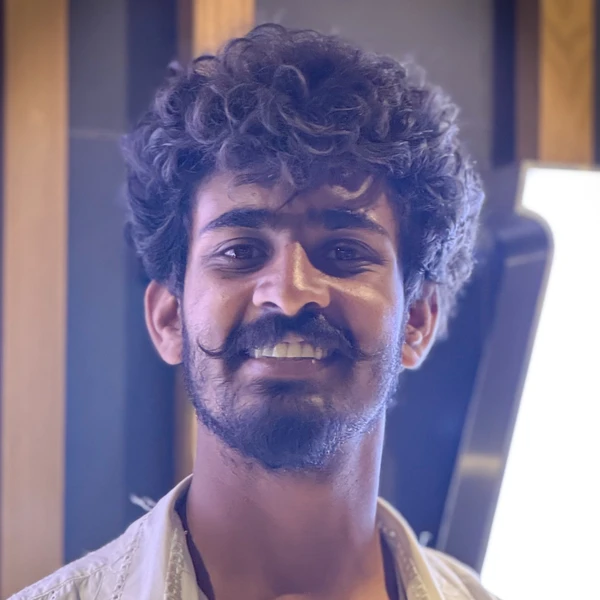
Jonathan Muzaffar is a passionate evangelist and youth leader based in Quetta, Balochistan. He serves as the Media & Communication Manager at Christian Fellowship Church, working under Pastor Muzaffar Munawar. With a heart for outreach, Jonathan actively engages in ministry among Afghan refugees and underserved communities, leading healing meetings, discipleship programs, and sports-based outreach.
He is currently pursuing studies in Christian Studies and Applied Linguistics, combining theological insight with academic growth. Jonathan has also interned at Pak Mission Society (PMS), receiving training in Project Cycle Management, Leadership, and Integral Mission.
In addition, he runs M. Productions, a creative media initiative specializing in photography, videography, and digital content for social impact and businesses.
Education
Geneva College
Bachelor's degree programMajors:
- Bible/Biblical Studies
Miscellaneous
Desired degree level:
Doctoral degree program (PhD, MD, JD, etc.)
Graduate schools of interest:
Transfer schools of interest:
Majors of interest:
Career
Dream career field:
Higher Education
Dream career goals:
Tutor
Open Theological Seminary2021 – 20232 yearsSalesman
Wilson’s Impressions2015 – 20172 years
Sports
Cricket
Club2020 – Present6 years
Awards
- Yes
Research
Theological and Ministerial Studies
Open Theological Seminary — Author and General Editor2025 – 2025
RonranGlee Special Needs Teacher Literary Scholarship
Where I come from, creativity runs deep in our roots—our communities are filled with brilliant minds: fine artists, fashion designers, sportsmen, musicians, poets, and actors. Yet, a painful reality shadows these talents: the absence of art schools and specialized institutions. As a result, societal pressure forces these gifted individuals into careers they don’t love—mainly medical or engineering fields—draining the joy and potential from their lives. I carry a burden in my heart to stand in the gap for these young people, to help them rediscover their passions, embrace their uniqueness, and learn in ways that affirm their identity and creativity.
This calling is what fuels my passion to become a special education teacher. I want to nurture not just skills but the person—their dreams, their self-expression, their “sense of presence.”
Professor Harold Bloom once said, “I have learned that the purpose of teaching is to bring the student to his or her sense of his or her own presence.” I understand this statement to mean that teaching is not merely transferring knowledge—it is awakening. It is the sacred task of guiding a student to recognize their own identity, voice, purpose, and place in the world. For a student with special needs, this journey may be layered with silence, hesitation, or difference—but that does not mean absence of potential. Their presence might not conform to society’s expectations, but it is equally powerful, equally radiant, and deeply worth nurturing.
My mission as a future special education teacher is to create spaces where students feel seen, heard, and safe to be their true selves. I want to build an educational model rooted in love, patience, art, and creativity. I believe that learning through the arts—whether it be painting, music, movement, or storytelling—can unlock new worlds for these students. Artistic expression helps individuals connect with their emotions and environment in powerful ways, and I want to help students discover these tools for themselves. When a child does what they love, they do it with joy, generosity, and integrity—it becomes not just an activity but a way of life. My ultimate dream is to establish an artistic education school where such learners can thrive freely and holistically, regardless of their abilities.
Fairy Tale:
“The Kingdom of Forgotten Colors”
Once upon a time, in the gray Kingdom of Normania, children were only taught how to build machines or mix potions. They were told that colors, music, and dance were foolish. But hidden behind the mountains lived a girl named Johara who saw the world differently. She saw music in the wind, colors in the clouds, and poems in the silence of those who couldn’t speak.
One day, Johara heard the cries of children whose colors had been taken from them. They were forced to wear gray cloaks and sit still for hours. Johara, with her brush, drum, and heart full of courage, journeyed into Normania. She painted murals in the schools, played songs in the courtyards, and whispered to the silent ones, “You are seen. You are enough.”
As she taught them to express themselves, colors returned—first faintly, then boldly. The once-gray kingdom bloomed with life again. And so, Johara built a grand school called The House of Presence, where every child—regardless of ability—could learn, create, and thrive in the light of their own truth.
And they lived—beautifully, brilliantly, and boldly—ever after.
Reimagining Education Scholarship
If I could create a class that all students from Kindergarten through 12th grade were required to take, it would be a course titled “Emotional Intelligence and Empathy in Action.” This class would focus on helping students understand their emotions, build meaningful relationships, communicate effectively, and develop the ability to see the world through the eyes of others. While traditional academic subjects like math and science are essential, I believe the heart of human development lies in our ability to connect with ourselves and one another.
The course would be designed to grow with students as they progress through school. For younger students, the focus would be on identifying emotions, managing feelings, and practicing kindness through storytelling, role-playing, and games. As students advance, the curriculum would introduce more complex topics such as conflict resolution, cultural understanding, leadership with empathy, and navigating social challenges with maturity. By high school, students would explore global issues through the lens of empathy, engage in real-world community service, and participate in peer mentorship programs.
This class would have a profound and lasting impact on both individuals and society. First, it would help students develop strong self-awareness, which is essential for mental well-being. In a time where anxiety, depression, and social isolation are on the rise among youth, teaching students how to process emotions and ask for help would be life-saving. Emotional intelligence also fosters resilience, giving students tools to overcome challenges and bounce back from failure.
Second, this class would greatly improve the school climate by reducing bullying and promoting inclusion. When students are taught to recognize and respect differences, whether cultural, physical, or emotional, they become better equipped to create safe and welcoming environments. Empathy is the foundation of social justice and peaceful coexistence; it encourages students to stand up for what’s right, listen to differing perspectives, and work toward solutions that benefit all.
Finally, the long-term impact of this class would be seen in future leaders, parents, teachers, and citizens who value compassion over competition, cooperation over conflict. A generation raised to understand themselves and others would be better prepared to tackle global challenges—from climate change to inequality—with unity and understanding.
In conclusion, making “Emotional Intelligence and Empathy” a required course would not only enrich students’ academic experience but also transform schools into places of healing, growth, and connection. While facts may fuel the mind, empathy fuels the heart—and in a divided and complex world, we need both. This course could plant the seeds of compassion early, helping young people grow into kind, thoughtful, and emotionally healthy adults ready to make a meaningful difference in the world.
TOMORROW X TOGETHER (TXT) MOA Scholarship
My name is Jonathan, and I come from a region where opportunities are scarce, but hope still dares to rise. I serve as an evangelist and youth mentor, working among Afghan refugees and underprivileged communities along the Afghanistan-Pakistan border. I’ve spent the last few years leading Bible studies, distributing food to displaced families, developing contextual discipleship content, and encouraging young people through sports and media-based initiatives. It’s not always easy, but I know I’m walking in a purpose greater than myself.
I’m currently pursuing my Master’s degree in Christian Studies, a path I chose not just for personal growth, but to build something that can impact generations. I plan to establish training and counseling centers, starting with Messiah’s Center of Study (MCS), to equip new leaders, restore broken lives, and create safe spaces where people—especially youth and Afghan converts—can discover their identity, purpose, and hope. I want to raise a generation that lives not in fear or trauma, but in light and truth.
Paying for my studies is a challenge. I come from humble means and have no family backing me financially. Most of my ministry is self-funded through small freelance media jobs I do under my creative startup, M. Productions. I’m currently relying on scholarships, donations, and God’s provision to complete my degree. Every rupee I invest in my studies feels like a seed, planted in the soil of future transformation.
Interestingly, a unique and surprising source of encouragement on this journey has been music—specifically, the K-pop group TXT (Tomorrow X Together). I became a MOA during a period of personal burnout and loneliness. Their music entered my life like a gentle voice that understood the silent battles I was fighting. Unlike many other groups, TXT speaks to young people not with glamor, but with honesty. They sing about confusion, identity, friendship, and pain—and that vulnerability felt like healing to me.
TXT’s music helped me reconnect with the creative part of me I had almost forgotten. Their album The Dream Chapter: Eternity especially stood out, with songs like “Maze in the Mirror” and “Can’t You See Me?” reflecting inner turmoil in ways I had never heard before. I saw myself in those lyrics—someone trying to navigate responsibility, heartbreak, and purpose. Their journey from boyhood to maturity mirrors my own journey from confusion to clarity, and their courage to express emotions openly taught me that strength and vulnerability can coexist.
Among all the members, Beomgyu inspires me the most. His joy, emotional depth, and sensitivity make him more than just a performer—they make him a quiet leader. He reminds me that leadership is not just about charisma or being at the front; sometimes it’s about presence, consistency, and care. That’s the kind of leader I want to be.
TXT has influenced me not just as a fan, but as a builder of culture. Through their impact, I’ve learned to combine my ministry with creativity—telling stories through media that heal, comfort, and awaken purpose in others. Their artistry helped me realize that faith and creativity aren’t separate; both can be vessels of light in a dark world.
In the end, I hope to be someone who, like TXT, speaks life into people. Whether through music, teaching, counseling, or storytelling—I want others to see that tomorrow can still be beautiful, even if today is hard.
Bright Lights Scholarship
It was during a quiet moment at the border of Afghanistan and Pakistan, surrounded by Afghan refugee families who had fled violence and hopelessness, that I fully understood my life’s purpose: to serve those living in the margins, to empower broken communities through faith, education, and compassion, and to build something that would outlast me. That moment—and many like it—continues to shape both my present work and my vision for the future.
My future plans are deeply rooted in holistic transformation—spiritually, educationally, and socially. I envision establishing a chain of learning and discipleship centers across underserved areas, particularly Balochistan, where Christian voices are few, and spiritual resources are limited. Under the initiative called Messiah’s Center of Study (MCS), I aim to train young people, equip emerging church leaders, and provide contextual discipleship materials for Afghan converts and Pakistani believers who are hungry for truth and guidance.
Alongside this, I hope to continue expanding M. Productions, my creative media venture which originally began as an event-based photography company but is now transitioning into media for change. Through this platform, I plan to produce content that gives voice to the voiceless, shares testimonies from persecuted communities, and promotes hope-filled stories across social media and beyond. I believe storytelling, when rooted in truth and purpose, has the power to influence culture and uplift entire communities.
This scholarship will be a crucial stepping stone in turning these dreams into reality. Financial barriers have long limited the scope and pace of my growth. While I’ve always tried to serve faithfully with what little I have—whether it be through food distribution among Afghan families, organizing youth sports for healing, or teaching Scripture to house churches—I recognize that to go further, I need academic preparation, spiritual mentorship, and financial support. Your scholarship would not only relieve the burden of educational expenses but would also empower me to give more time and energy to the people I serve.
As a current M.A. Christian Studies student, I am already applying what I learn to the field. Every module deepens my understanding of leadership, theology, and pastoral care—knowledge I immediately translate into my evangelistic and teaching work. This scholarship would help me complete my degree with excellence and multiply my ministry’s effectiveness on the ground.
I’m not just investing in my own future—I’m preparing to raise a generation of leaders, believers, and change-makers who will stand boldly in faith, serve with humility, and bring light into some of the darkest corners of our region.
Thank you for considering my application. Your support will not go to waste—it will bear fruit in many lives through me.
I Can and I Will Scholarship
My journey with mental health, deeply intertwined with my Christian faith, has profoundly shaped my beliefs, relationships, and career aspirations. Through the teachings of Christ and the truths of Christian theology, I have found both a framework to understand my struggles and a source of hope and purpose that transforms my challenges into meaningful growth.
Belief is the foundation of how I approach mental health. In Christian theology, we learn that we are fearfully and wonderfully made (Psalm 139:14), loved unconditionally by God, and never abandoned, even in our darkest moments. My experience with mental health difficulties has revealed to me the depth of God’s grace and His sustaining power. When anxiety or despair threatened to overwhelm me, I turned to Scripture and prayer, finding peace in God’s presence and reassurance in His promises. This has strengthened my belief that mental health struggles are not a sign of weakness or failure but an opportunity to experience God’s mercy and healing. Christ’s teachings on love, compassion, and service have inspired me to see mental health not just as a personal issue but as a communal concern where care and support are vital.
My relationships have also been transformed by my understanding of mental health through a Christian lens. I have learned to approach others with greater empathy and patience, recognizing that everyone carries unseen burdens. Christ taught us to “love your neighbor as yourself” (Mark 12:31), and this command calls me to be present, to listen, and to walk alongside those who suffer mentally and emotionally. Through my own vulnerability, I have built deeper connections based on honesty and mutual support. The church community has become a source of encouragement and accountability, reminding me that we are called to bear one another’s burdens (Galatians 6:2) and to foster environments of healing and hope.
These experiences have deeply influenced my career aspirations. I feel called to serve others in a way that integrates my faith and my awareness of mental health challenges. Whether through ministry, counseling, or community work, I want to be a light to those struggling with mental health issues, sharing the love of Christ practically and compassionately. My goal is to develop programs or initiatives that address mental wellness holistically, emphasizing spiritual, emotional, and social healing. I believe that by combining theological truths with mental health awareness, I can contribute to breaking the stigma around mental illness and offer hope that is rooted in God’s eternal love.
In summary, my experience with mental health, guided by Christian theology and Christ’s teachings, has deepened my faith, enriched my relationships, and shaped a career vision dedicated to serving others with compassion and grace. This journey continues to teach me that even through trials, God’s purpose and love prevail.
From Anna & Ava Scholarship
From an early age growing up in Quetta, Pakistan, I have been deeply aware of the challenges faced by marginalized communities, especially in areas affected by poverty, conflict, and social unrest. Witnessing the struggles of families living under difficult circumstances has deeply moved me and inspired my desire to pursue a career in Biblical Studies. I believe that by developing a strong foundation in theology and ministry, I can serve and empower people in need with compassion, faith, and hope, offering them not only spiritual guidance but also practical support in their daily lives.
My passion for Biblical Studies grew through my active involvement with the Christian Fellowship Church in Quetta, where I serve as the media and communications manager. In this role, I have been able to use storytelling and digital media to share testimonies of faith, healing, and transformation within communities that often face persecution, hardship, and discrimination. Through this work, I have come to understand the profound power of God’s Word to bring comfort, healing, and social change to individuals and families. Additionally, I have learned the importance of clear and compassionate communication in ministry and how to effectively connect with people from diverse cultural and social backgrounds.
Alongside my church involvement, I completed a six-month internship at Pak Mission Society in Islamabad, where I was trained in Project Cycle Management, Social Mobilization, and Integrity Leadership. This experience exposed me to community development from a biblical perspective, teaching me how to lead with humility, integrity, and a servant’s heart while serving others. I also had the privilege to organize a career counseling workshop for youth, helping them set goals that are grounded in purpose and faith. These practical experiences reinforced my desire to deepen my biblical knowledge so I can better guide, support, and encourage those I serve in my community.
Pursuing an undergraduate degree at Geneva College in Biblical Studies is a vital next step in my education and personal growth. This scholarship would provide crucial financial support to:
• Fully dedicate myself to my studies without the distraction of financial stress.
• Access quality theological education and mentorship that will prepare me for effective ministry and leadership.
• Equip myself to serve my community with biblical wisdom and practical skills, enabling me to contribute to healing and hope in Balochistan and beyond.
I firmly believe that this scholarship will not only support my academic growth but also empower me to become a servant leader who shares God’s love through both word and action. I am truly grateful for your consideration and hopeful for the opportunity to learn and grow at Geneva College.
B.R.I.G.H.T (Be.Radiant.Ignite.Growth.Heroic.Teaching) Scholarship
If I could change anything in education, I would reshape it to reflect the needs of the marginalized — especially children from underserved and displaced communities. My work with Afghan refugee families and low-income groups in Balochistan has shown me that while education is often described as a right, it remains a distant dream for many. But the deeper issue is not just access — it’s relevance. I believe education must be contextualized: rooted in the language, culture, and lived realities of the communities it aims to serve.
In my hometown of Quetta, and during visits to nearby regions like Chaman and Qilla Saifullah, I’ve met children who’ve never entered a classroom. Others have attended school briefly but dropped out because they couldn’t understand the lessons being taught in Urdu or English. One boy named Sulaiman, a bright and eager Afghan child, left school because he couldn’t comprehend the language or relate to the textbooks. His father told me, “It’s useless — he just stares at the blackboard.” That sentence stayed with me. It wasn’t a lack of desire to learn. It was the system’s failure to meet them where they were.
Through my engagement in sports ministry, youth work, and discipleship efforts, I began to experiment with non-formal methods of education. I organized cricket camps where children not only played but also learned teamwork, leadership, and basic literacy. I incorporated storytelling, memory games, and lessons in their mother tongue — primarily Pashto and Dari — to ensure comprehension. It was in these informal spaces that I saw transformation begin. Children who were once silent became confident and expressive. They began asking questions, taking initiative, and even dreaming about their futures.
This experience taught me a powerful lesson: education is not just about classrooms or textbooks. It’s about connection. When a child hears a story in their own language or solves a problem related to their environment, they feel seen — and that feeling is the beginning of true learning.
Balochistan — like many underserved regions globally — needs an education system that is flexible and locally grounded. Standardized national curricula often fail children whose cultural identities and social realities are not represented in them. In response, I envision a model of education that includes:
• Mother-tongue instruction, especially in early years;
• Trauma-informed teaching for refugee and conflict-affected children;
• Activity-based and mobile learning centers for those without access to schools;
• And community involvement, where elders and local leaders contribute to shaping the curriculum.
One of the most powerful tools in this transformation is technology. Even in resource-limited settings, solar-powered tablets or radio-based lessons can extend education to remote areas. I hope to help develop such models in the future — combining digital innovation with cultural wisdom.
My passion for education is deeply rooted in my upbringing. My father, Pastor Muzaffar Munawar, has served as a pastor for over three decades. Though not a formal teacher, he was an educator in every sense. I watched him disciple youth, teach moral values, and counsel families with compassion and wisdom. His life taught me that education is not just about what is taught, but how it is lived. Inspired by his example, I have committed myself to building lives — especially among those who are ignored or forgotten.
In my view, the goal of education should not be conformity, but empowerment. It should not strip children of their identity in the name of modernization. Rather, it should affirm who they are while equipping them to shape their own future.
I hope to be a part of this change — not just as an advocate, but as a practitioner. My dream is to launch contextual education programs in refugee communities and rural areas, using sports, local language, and storytelling to reach hearts and minds. I want to help reimagine education as something living, accessible, and deeply human.
We cannot transform lives through systems that were never designed for the marginalized. But we can build new systems — ones that start with empathy, creativity, and local ownership. Every child deserves an education that reflects their voice, their story, and their worth.