user profile avatar

Joi Dupard

1x

Finalist

Bio

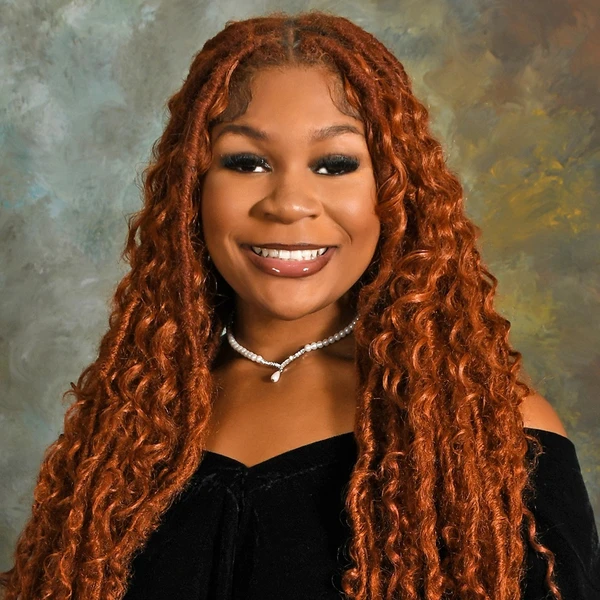
I am Joi Dupard, a Level Four senior in the Dance Department at the New Orleans Center for Creative Arts (NOCCA), an artist, singer, and advocate. Since I began dancing at age three, dance has been more than movement. It has been my voice, my passion, and my source of strength. It has taught me discipline, resilience, and confidence while helping me embrace my identity as a Black, curvy dancer. I live with Tourette Syndrome, ADHD, OCD, and panic disorder, challenges that have required me to work harder and advocate for myself throughout my education. I have also faced my parents' separation and the heartbreaking loss of my grandmother. Through it all, dance became my safe place where I could heal, grow, and keep moving forward. Despite these challenges, I have remained committed to my education, artistic growth, leadership, and community involvement. This fall, I will attend Spelman College to pursue a Bachelor of Fine Arts degree in dance. My dream is to become a professional dancer, travel the world, and return to New Orleans to open a dance studio that inspires, empowers, and creates a safe space for young artists to discover their own voices. My parents have sacrificed so much to help me pursue my dreams, and I am determined to honor their support through hard work and perseverance. Every scholarship brings me one step closer to turning my passion into purpose and using dance to uplift others.

Education

New Orleans Center for Creative Arts

High School
2021 - 2026
  • GPA:
    3.9

New Orleans Center for Creative Arts

High School
2021 - 2026
  • GPA:
    3.9

Miscellaneous

  • Desired degree level:

    Bachelor's degree program

  • Majors of interest:

    • Dance
    • Business/Managerial Economics
    • Business, Management, Marketing, and Related Support Services, Other
    • Marketing
    • Arts, Entertainment, and Media Management
    • Visual and Performing Arts, General
    • Visual and Performing Arts, Other
    • Fine and Studio Arts
    • Drama/Theatre Arts and Stagecraft
  • Not planning to go to medical school
  • Career

    • Dream career field:

      • Marketing and Advertising
    • Dream career goals:

      Dance with a commercial dance company while marketing my talents in dance and fashion

    • supporting applicants at job fairs, greeting personnel, maintaining employee records through data entry, and managing uniform inventory. Supporting recruitment and onboarding activities.

      L&R Security Services Inc.
      2024 – Present2 years

    Sports

    Artistic Gymnastics

    Intramural
    2012 – 20186 years

    Awards

    • national,
    • regional
    • , local

    Arts

    • New Orleans Center for Creative Arts

      Dance
      yes
      2021 – 2026

    Public services

    • Volunteering

      The NOCCA Foundation — Perform and speak at events to raise money
      2022 – 2026

    Future Interests

    Advocacy

    Volunteering

    Philanthropy

    Entrepreneurship

    Marcia Bick Scholarship
    The day I opened my Spelman College acceptance letter should have been one of the happiest moments of my life. Instead, it was followed by a difficult conversation about how we were going to afford it. On paper, the state believes my mother earns too much money for us to qualify for significant financial assistance. In reality, that number does not reflect the responsibilities our family carries or the sacrifices she makes every day to keep us moving forward. Since my grandmother passed away, my mother has taken on even more financial and family responsibilities. Although our income may appear higher than the eligibility limits for many grants, much of it goes toward supporting our family and meeting obligations that financial aid formulas cannot measure. We are often told we make too much money to qualify for assistance, but that does not mean paying for college is easy. Families like mine are often overlooked because our financial reality is far more complicated than what a number on paper suggests. Even with these challenges, I have never allowed my circumstances to define my future. I have worked hard to become a dedicated student, artist, and leader. As a senior in the Dance Department at the New Orleans Center for Creative Arts, I challenged myself academically while pursuing my passion for dance. I served in leadership roles, volunteered in my community, and used dance to inspire, educate, and connect with others. Living with Tourette syndrome, ADHD, OCD, anxiety, and panic disorder has created obstacles that many people cannot see, but those experiences have taught me resilience, discipline, and perseverance. Every challenge has strengthened my determination to succeed. I believe motivated students from disadvantaged backgrounds deserve scholarships because potential should never be determined by financial circumstances. Many students work incredibly hard, earn strong grades, give back to their communities, and still struggle to afford college. Scholarships provide more than financial support. They provide opportunity, hope, and the ability to focus on learning instead of constantly worrying about how to pay for an education. Receiving this grant would bring me one step closer to earning my degree at Spelman College and pursuing my dream of becoming a professional dancer, choreographer, and eventually opening my own dance studio in New Orleans. More importantly, it would show that determination, resilience, and hard work matter, even when financial aid formulas fail to tell the whole story. I am committed to making the most of every opportunity I receive and using my education to inspire others, give back to my community, and create opportunities for future generations.
    Sola Family Scholarship
    When people hear the phrase "growing up with a single mother," they often imagine someone who has always been raised by one parent. My story is a little different. It has only been almost two years since my mom has truly been raising me on her own, but those two years have shaped me in ways I never expected. Watching my mom navigate this new chapter has shown me what real strength looks like. She has carried the weight of providing for our family while making sure I never stopped believing in my dreams. There were days when I knew she was stressed, exhausted, or worried about finances, but she still made time to ask about dance, help me with scholarship applications, celebrate my accomplishments, and remind me that I was capable of achieving anything I set my mind to. As a dancer, I have learned that growth often comes through discomfort. I see that same lesson reflected in my mom's life. Instead of letting difficult circumstances define her, she chose to keep it moving. Watching her persevere has inspired me to do the same. Whether I was preparing for performances, balancing schoolwork, or facing challenges related to my Tourette syndrome, ADHD, anxiety, and OCD, she never let me believe that my obstacles were greater than my potential. These past two years have also taught me to appreciate the sacrifices that parents make. My mom has worked hard to give me opportunities she never had. She has spent countless hours researching scholarships, driving me to rehearsals, encouraging my passion for dance, and helping me prepare for college. Knowing how much she has poured into my future motivates me to work even harder so that her sacrifices are never in vain. Growing up during this season has made me more independent, compassionate, and resilient. It has taught me that family is built on love, commitment, and showing up for one another, especially during life's hardest moments. I have learned to value perseverance over perfection and to face challenges with determination instead of fear. As I begin my journey at Spelman College, I will carry those lessons with me. I hope to use my education and my love for dance to inspire others, advocate for people whose voices are often overlooked, and create opportunities for young artists in my community. More than anything, I want my mom to see that every sacrifice she made helped build the person I am becoming. Although we have only been almost two years, that time has changed me forever. My mother's resilience has become the foundation of my own, and because of her, I know that strength isn't about never struggling, it's about choosing to keep going with faith, hope, and love.
    Kristinspiration Scholarship
    My tics started getting worse during Algebra 2. My shoulder would jerk. My neck would snap to the side. I could feel several eyes burning into the back of my skull, but my pencil had to keep moving across the page. For me, this was a typical day. Tourette syndrome, anxiety, ADHD, and OCD were constant companions during every class, test, and presentation. What I did not know was that the hardest challenge of my life would not come from a diagnosis, but from losing my grandmother. I remember walking into her hospital room and immediately feeling that something had changed. My grandmother was still there, but the warmth that had always filled every room was gone. She was my safe place, my compass. As a social worker, she treated our entire community like family. She never passed a homeless person without offering help and never turned away someone in need. What hurt me most was not only losing her, but watching the world fail her in ways she had never failed others. The church she devoted herself to barely helped with her funeral, and the more I learned about the hospitals that denied her the care she needed, the angrier I became. At just fourteen years old, I learned one of life's hardest lessons: the most giving people are not always shown the same grace in return. For months, that anger sat in my chest like an anchor. I was helping care for my grandfather, and my Tourette syndrome and anxiety became worse than I had ever experienced. Some mornings I woke up exhausted before the day had even begun. Yet somewhere in that pain, I found clarity. My grandmother had spent her life serving others even when they could give nothing back. If I allowed grief to make me bitter, I would be dimming the very light she spent her life growing. I began volunteering in my community, joined student government to advocate for mental health resources, and learned that courage is not the absence of struggle. Sometimes it is simply taking a deep breath and continuing anyway. The only place my tics seemed to disappear was in the dance studio. The moment the music started, my body stopped fighting itself and started telling a story. Every movement transformed my struggles into something beautiful. Through dance, I discovered that art has the power to heal in ways words sometimes cannot. At my performing arts school, I watched classmates in dance, visual art, culinary arts, fashion design, and other disciplines use creativity to process grief, trauma, and anxiety. Those experiences inspired my passion for art therapy. This fall, I will attend Spelman College as a double major in Dance and Psychology. My goal is to become an art therapist and build nonprofit organizations that make mental health support more accessible through creative expression. I envision programs for high school students that combine art therapy, affordable counseling, family support services, and scholarships for students who might not otherwise have the opportunity to pursue higher education. My grandmother taught me that one person's compassion can ripple through an entire community. I want to spend my life creating ripples of my own. The Marsha Cottrell Scholarship for Art Therapists would bring me one step closer to an affordable education and allow me to honor her legacy by building programs that help others heal through the transformative power of art.
    Learner Mental Health Empowerment for Health Students Scholarship
    I used to think that if I stayed quiet enough, no one would notice. During class, I would try to ignore my tics, hoping they would not get worse. When my shoulder jerked, or my neck snapped to the side, I could feel people looking at me. I worried that they would only see my Tourette's syndrome instead of seeing me. It took time for me to realize that everyone is carrying something, even if it is invisible. That realization completely changed the way I view mental health. As a student, mental health is important to me because it affects every part of a person's life. It influences how we learn, build relationships, handle stress, and believe in ourselves. I know what it feels like to struggle with Tourette syndrome, anxiety, ADHD, OCD, panic attacks, and grief while trying to keep up with school. There were days when simply making it through class felt like an accomplishment. Those experiences taught me that success is not just about earning good grades. It is also about having the support and resources needed to keep going, even when life feels overwhelming. Instead of hiding behind my experiences, I chose to use them to help others feel less alone. I became involved in student leadership because I wanted to advocate for students whose voices are often overlooked. Though it took me some time, I have learned to encourage conversations about mental health by helping create spaces where students feel comfortable asking for support without fear of being judged. I have learned that advocacy is not always standing out in front. Sometimes it is listening without interrupting, checking on a friend, or reminding someone that asking for help is a sign of strength, not weakness. I am a Teacher's Assistant at Dancing Grounds, a nonprofit organization in New Orleans, where I mentor younger students through dance. Many young people carry stress and emotions they don't always know how to express. I have seen how movement, creativity, and encouragement can build confidence and provide an emotional outlet. Dance became a place where my own mind could finally be quiet, and I love helping others discover that same peace. Mental health advocacy is important to me because I know what it feels like to believe you have to face everything alone. Nobody should feel ashamed of needing support. We celebrate physical health, and I believe mental health deserves that same compassion. As I begin life at Spelman College in the fall, I hope to continue advocating for mental health while studying Dance and Business. My dream is to create community arts programs that combine creative expression with mental health support so that young people have safe spaces to heal, grow, and discover their confidence. My experiences have taught me that healing looks different for everyone, but no one should have to walk it alone. If I can help even one student feel seen, understood, and hopeful, then I know I am making the kind of difference that truly matters.
    Ruthie Brown Scholarship
    I still remember opening my financial aid package and feeling two completely different emotions at the same time. I was celebrating because I had been accepted to Spelman College, a school I had dreamed about attending. Then I looked at the numbers. My excitement quickly turned into the realization that following my dream would also mean taking on a significant financial burden. That moment did not make me question whether I wanted to go to college. It made me realize, "Joi, you need a plan". I have spent hours searching for scholarships, writing essays, and applying for every opportunity I qualify for because I know every scholarship brings me one step closer to graduating with less debt. I see each application as an investment in my future. Instead of feeling discouraged by the cost of college, I have chosen to be proactive and do everything I can to reduce the amount I will need to borrow. I also plan to continue working while I am in college whenever possible. As someone who has experience teaching and mentoring younger dancers, I hope to continue sharing my passion in ways that also help support my education. I plan to pursue internships that will allow me to gain experience in both dance and business so that I can graduate with not only a degree but also valuable professional experience. My goal is to double major in Dance and Business because I want to combine creativity with leadership. One day, I hope to open a nonprofit dance organization that gives young people a safe place to express themselves through the arts while also providing access to mental health resources. I do not want student loan debt to become the reason I have to put off those dreams. I want to spend my energy building programs that help others instead of worrying about the financial stress that could have been reduced as much as possible through careful planning today. Receiving this scholarship would do more than help my financial burden. It would allow me to focus more fully on my education, leadership, and service while preparing for the career I have worked so hard to build. I know that paying for college is ultimately my responsibility, and I am committed to doing everything I can to graduate with as little debt as possible. Every scholarship I earn is another step toward that goal and another opportunity to create the future I have envisioned for myself and the communities I hope to serve.
    RollinOn 3 Kentucky Presents D.B.C. Scholarship
    The tics started getting worse during Algebra 2. My shoulder would jerk. My neck would snap to the side. I would feel several eyes burning into the back of my skull, but my pencil had to keep moving across the page. For me, this was the norm. Tourette syndrome, anxiety, ADHD, and OCD were constant companions during every class, test, and presentation. What I did not know was that the hardest challenge of my life would not come from a diagnosis, but from the passing of my grandmother. I remember walking into a cold hospital room and immediately feeling that something had changed. My grandmother was still there, but the warmth that had always filled every room was missing. The grief was unlike anything I had words for. The hardest part was watching the world fail her when she had never failed anyone else. She never passed a homeless person without offering help and never turned away someone in need. The church she devoted herself to barely helped with the funeral. People she would have sacrificed everything for did not show up. At fourteen years old, I was learning one of life's cruelest lessons: the most giving people are not always given the same care. I was furious. Anger sat in my chest like a heavy anchor on a tiny boat. I was helping care for my grandfather, and my Tourette syndrome and anxiety became worse than I ever imagined. Somewhere in that pain, I found clarity. My grandmother spent her entire life giving to others even when they could not give back. She showed me that real kindness is measured by what you are willing to give when no one is watching. If I let her death make me bitter, or let my challenges become excuses, I would be dimming the light she spent her life growing. I began volunteering at a community center, listening to people the way she had listened. I became involved in student leadership to advocate for mental health resources because I knew what it felt like to need them. When my tics became severe during presentations, I learned to pause, breathe, and keep moving forward. The only place my tics seemed to disappear was in the dance studio. The moment the music started, my body stopped fighting itself and started telling a story. Every movement transformed my struggles into something beautiful. As someone trying to manage Tourette syndrome, panic attacks, OCD, grief, and the responsibility of helping care for my grandfather, I discovered that art creates a unique kind of healing. At my performing arts school, I watched not only my own growth but also the way dance and other art forms helped my classmates process their own pain. Those experiences inspired my passion for art therapy. As a double major in Dance and Business at Spelman College this fall, I plan to build organizations that make mental health support more accessible through the arts. I hope to create nonprofit programs that provide safe spaces where young people can heal through dance and creative expression. The RollinOn3 Kentucky Scholarship would bring me one step closer to an affordable education and allow me to honor my grandmother's legacy by creating opportunities, resources, and communities where young people know they are seen, supported, and never alone. My diagnoses have shaped my journey, but they have never defined my future. Instead, they have given me the compassion, resilience, and purpose to help others heal through the power of art.
    Christian Fitness Association General Scholarship
    The tics started getting worse during Algebra 2. My shoulder would jerk. My neck would snap to the side. I would feel several eyes burning into the back of my skull, but my pencil had to keep moving across the page. For me, this was a typical day. Tourette's syndrome, anxiety, and ADHD were constant companions present during every class, test, and presentation. However, what I didn't know was that the hardest challenge of my life wouldn't come from a diagnosis, but the passing of my grandmother. I clearly remember walking into a cold hospital room and immediately feeling that something had changed. My grandmother was still there, but the warmth that had always filled every room was missing. My safe place, my compass, was gone. My grandmother was a social worker who treated our entire community like family, never passing a homeless person without offering help, and never turning away someone in need. The grief I experienced was unlike anything I had words for. But the grief wasn't the hardest part. What hurt me most was watching the world fail her the way she had never failed anyone else. The church she devoted herself to barely helped with the funeral. The people she would have sacrificed everything for didn't show up. And the more I learned about how the hospitals handled her illness and the treatment she deserved and didn't receive, the angrier I became. At fourteen years old, I was learning one of the cruelest lessons life has to offer: that the most giving people are not always given the same grace in return. For months, I was furious. The anger settled in my chest like an anchor on a small boat. But I had my grandfather to care for now, and my Tourette's and anxiety got worse than I knew they could. Some mornings I'd wake up exhausted before the day even started, my mind already racing with everything I had to do on my plate. Somewhere in that anger, I found a new sense of clarity. My grandmother had spent her entire life giving to others, even when they couldn't give back. She'd shown me that real kindness is measured by what you're willing to give when no one's watching. If I let her death make me bitter, if I let my challenges become excuses, I'd be dimming the very light she'd spent her life growing. I started volunteering at a community center, listening to people the way she had listened. I joined the student government to advocate for mental health resources because I knew what it felt like to need them. When my tics got bad during presentations, I learned to pause, breathe, and keep moving forward. Always a struggle, though. The only thing that I would erase my tics like they didn't even exist with was dance. Every move would disperse all of my hardest struggles into this beautiful energy that explodes through every part of my body. As someone who felt like I had very little control over my life, struggling to manage my tics, panic attacks, OCD, my grandfather's medications, and the weight of missing my grandmother. I realised that art, no matter what field art brings a unique kind of peace. You can heal your entire being with expression. I graduated as the top-ranked dancer from my performing arts school. Attending a performing arts school, I got to closely observe my peers, with challenges of their own fall deeply into their art, whether it was Dance, Visual Art, Culinary, Fashion Design, and more. I watched the way it healed their traumas in seconds. This observation is what ties me to art therapy. My grandmother taught me that one person's compassion can ripple through an entire community. She taught me that a life well-lived is measured by what you give when no one is watching, and nothing is guaranteed. I intend to carry that value for the rest of my life. Now I want to create systems that amplify that ripple. As a double major in Dance and Psychology at Spelman College this fall, I plan to make Art Therapy my life. In order to build organizations that make support more accessible to the people who need it most. I envision Art Therapy programs for Highschool Students, at the same time providing affordable counseling and family support services. I hope to establish nonprofit programs that promote mental health awareness for teens, creating safe spaces for young people through community arts and dance initiatives inside or outside of Schools. It's important to me to also donate most of my profit to fund scholarships for students pursuing higher education who may not otherwise have the financial situation to do so. My goal is to help millions of people. I want to build institutions and programs that continue serving communities long after I am gone, the same way my grandmother's compassion continues to shape my life today. The Christian Fitness Association General Scholarship brings me one step closer to an affordable higher education and to honoring my grandmother’s legacy the way she deserves: by creating opportunities, resources, and support systems that help those in need through Art. Growing passions that push past trauma.
    WCEJ Thornton Foundation Low-Income Scholarship
    The tics started getting worse during Algebra 2. My shoulder would jerk. My neck would snap to the side. I would feel several eyes burning into the back of my skull, but I kept my pencil moving across the page. For me, this was a typical day. Tourette's syndrome, anxiety, and ADHD were constant companions present during every class, test, and presentation. However, what I didn't know was that the hardest challenge of my life wouldn't come from a diagnosis, but the passing of my grandmother. I clearly remember walking into a cold hospital room and immediately felt that something had changed. My grandmother was still there, but the warmth that had always filled every room was missing. My safe place, my compass, My proof that happiness is a choice you make every day was gone. My grandmother was a social worker who treated our entire community like family, never passing a homeless person without offering help, and never turning away someone in need. The grief I experienced was unlike anything I had words for. But the grief wasn't the hardest part. What hurt me most was watching the world fail her the way she had never failed anyone else. The church she devoted herself to barely helped with the funeral. The people she would have sacrificed everything for didn't show up. And the more I learned about how the hospitals handled her illness and the treatment she deserved and didn't receive, the angrier I became. At fourteen years old, I was learning one of the cruelest lessons life has to offer: that the most giving people are not always given the same grace in return. For months, I was furious. The anger settled in my chest like an anchor on a small boat. But I had my grandfather to care for now, and my Tourette's and anxiety weren't going to pause for my grief, so I had to keep going. Some mornings I'd wake up exhausted before the day even started, my mind already racing with everything I had to manage: schoolwork, tics I couldn't control, my grandfather's medications, and the weight of missing her. But somewhere in that anger, I found something else: clarity. My grandmother had spent her entire life giving to others even when they couldn't give back. She'd shown me that real kindness isn't measured by what you receive, it's measured by what you're willing to give when no one's watching. If I let her death make me bitter, if I let my challenges become excuses, I'd be dimming the very light she'd spent her life building. This motivated me to make a choice. I started volunteering at a community center, listening to people the way she had listened. I joined student government to advocate for mental health resources because I knew what it felt like to need them. When my tics got bad during presentations, I learned to pause, breathe, and keep moving forward. When anxiety told me I couldn't handle another responsibility, I proved it wrong. I finished top of my class not because everything was easy, but because I'd learned that perseverance is about moving forward despite all obstacles. My grandmother taught me that one person's compassion can ripple through an entire community. She taught me that a life well-lived is measured by what you give when no one is watching and nothing is guaranteed. I carry that with me every day, and I intend to carry it for the rest of my life. Now I want to create systems that amplify that ripple. As a double major in Business and Dance at Spelman College this fall, I plan to build organizations that make support more accessible to the people who need it most. I envision opening wellness centers that provide affordable counseling, financial guidance, and family support services. I hope to establish nonprofit programs that promote mental health awareness, create safe spaces for young people through community arts and dance initiatives, and fund scholarships for students pursuing higher education who may not otherwise have the opportunity. My goal is to help millions of people. I want to build institutions and programs that continue serving communities long after I am gone, the same way my grandmother's compassion continues to shape my life today. The WCEJ Thornton Foundation Low-Income Scholarship brings me one step closer to an affordable higher education and honoring my grandmother’s legacy in the way she deserves: by creating opportunities, resources, and support systems that help those in need.
    Sloane Stephens Doc & Glo Scholarship
    The tics started getting worse during Algebra 2. My shoulder would jerk. My neck would snap to the side. I would feel several eyes burning into the back of my skull, but my pencil had to keep moving across the page. For me, this was the norm. Tourette's syndrome, anxiety, and ADHD were constant companions present during every class, test and presentation. However, what I didn't know was that the hardest challenge of my life wouldn't come from diagnosis, but the passing of my grandmother. I remember walking into a cold hospital room and immediately felt something change. My grandmother was still there, but the warmth that had always filled every room was missing. The grief was unlike anything I had words for. Worst part was watching the world fail her the way she had never failed anyone else. Never passing a homeless person without offering help, and never turning away someone in need. The church she devoted herself to barely helped with the funeral. People she would have sacrificed everything for didn't show up. At fourteen years old, I was learning one of the life's cruelest lessons: the most giving people are not always given the same care. I was furious. Anger sat in my chest, like a heavy anchor on a tiny boat. I had my grandfather to care for, and my Tourette's and anxiety got worse than I knew they could. Somewhere in that I found a sense of clarity. My grandmother spent her entire life giving to others even when they couldn't give back. She'd shown me that real kindness is measured by what you're willing to give when no one's watching. If I let her death make me bitter, if I let my challenges become excuses, I'd be dimming the very light she'd spent her life growing. I started volunteering at a community center, listening to people the way she had listened. I joined student government to advocate for mental health resources because I knew what it felt like to need them. When my tics got bad during presentations, I learned to pause, breathe, and keep moving forward. Only thing that would erase my tics like they didn't even exist was dance. Every move disperses all of my hardest struggles into this beautiful energy that explodes through every part of my body. As someone who felt like I had very little control over my life, struggling to manage my tics, panic attacks, OCD, my grandfather's medications, and the weight of missing my grandmother, I realized that art brings a unique kind of peace. You can heal your entire being with expression. I graduated as the top ranked dancer from my performing arts school. Attending a performing arts school, I got to closely observe my peers fall deeply into their art. I watched the way it healed their traumas. This observation is what ties me to art therapy. As a double major in Dance and Business at Spelman College this fall, I plan to build organizations that not only make support more accessible. I envision Art programs focusing all forms of art as a therapy for our youth. I will establish nonprofit organizations that promote mental health awareness for teens, creating safe spaces for young people through community arts and dance initiatives. I want to build institutions and programs that continue serving communities long after I am gone. The Sloane Stephens Doc & Glo Scholarship brings me one step closer to an affordable education and honoring my grandmother’s legacy the way she deserves: by creating resources, and support systems that help those in need through Art.
    Marsha Cottrell Memorial Scholarship for Future Art Therapists
    The tics started getting worse during Algebra 2. My shoulder would jerk. My neck would snap to the side. I would feel several eyes burning into the back of my skull, but my pencil had to keep moving across the page. For me, this was the norm. Tourette's syndrome, anxiety, and ADHD were constant companions present during every class, test and presentation. However, what I didn't know was that the hardest challenge of my life wouldn't come from diagnosis, but the passing of my grandmother. I remember walking into a cold hospital room and immediately felt something change. My grandmother was still there, but the warmth that had always filled every room was missing. My grandmother was a social worker who treated everyone like family/. The grief was unlike anything I had words for. Worst part was watching the world fail her the way she had never failed anyone else. The church she devoted herself to barely helped with the funeral. People she would have sacrificed everything for didn't show up. At fourteen years old, I was learning one of the life's cruelest lessons: the most giving people are not always given the same care. I was furious. Anger sat in my chest, like a heavy anchor on a tiny boat. I had my grandfather to care for, and my Tourette's and anxiety got worse than I knew they could. Somewhere in that I found a sense of clarity. My grandmother spent her entire life giving to others even when they couldn't give back. She'd shown me that real kindness is measured by what you're willing to give when no one's watching. If I let her death make me bitter, if I let my challenges become excuses, I'd be dimming the very light she'd spent her life growing. I started volunteering at a community center, listening to people the way she had listened. I joined student government to advocate for mental health resources because I knew what it felt like to need them. When my tics got bad during presentations, I learned to pause, breathe, and keep moving forward. Only thing that would erase my tics like they didn't even exist was dance. Every move would disperse all of my hardest struggles into this beautiful energy that explodes through every part of my body. As someone who felt like I had very little control over my life, struggling to manage my tics, panic attacks, OCD, my grandfather's medications, and the weight of missing my grandmother, I realized that art brings a unique kind of peace. You can heal your entire being with expression. I graduated as the top ranked dancer from my performing arts school. Attending a performing arts school, I got to closely observe my peers fall deeply into their art. I watched the way it healed their traumas. This observation is what ties me to art therapy. As a double major in Dance and Psychology at Spelman College this fall, I plan to build organizations that make support more accessible. I envision Art Therapy programs for Highschool Students while providing affordable counseling and family support services. I hope to establish nonprofit programs that promote mental health awareness for teens, creating safe spaces for young people through community arts and dance initiatives. I want to build institutions and programs that continue serving communities long after I am gone. Marsha Cottrell Scholarship for Art Therapists brings me one step closer to an affordable higher education and honoring my grandmother’s legacy the way she deserves: by creating opportunities, resources, and support systems that help those in need through Art Therapy.
    Ethel Hayes Destigmatization of Mental Health Scholarship
    The biggest takeaway I've learned from improving my mental health is the importance of generational growth and breaking cycles to do better than the people who came before you. I didn't understand the importance of this until recently. I used to struggle with anxiety and depression from a young age, but over the years through therapy and my art, I learned to regulate my emotions. Thankfully, my mother has always had me in therapy, even when I was feeling okay, she made sure I had a safe space to talk and a way to learn how to deal with emotions with a therapist, even on days when I didn't want to go. I knew it came from her wanting for me what she didn't have growing up, but I never understood why until later. My dance journey started at age 8 with an amazing community of dancers. Everyone was forced to go even when I was tired out of my mind. Not until a time I seriously was struggling mentally. This was caused by my transition to dancing pre-professionally in high school. different beautiful skin tones, and sizes navigating space with a passion and desire to connect deeply with any movement. I was taught to dance with the power of those who came before me. I always received the compliment when dancing that I always carried emotion and expression throughout my entire body. Transitioning to dancing at a very traditional performing arts high school was hard for me. The first day all I noticed was how my body did not match the traditional mold of any of the other dancers in the room. Being a black girl, there were not many people who looked like me in this room, and on top of that no one was even shaped like me. Thoughts consumed me like “I don't belong here,” I wondered if the teachers and my peers thought the same thing. Dance became a self-conscious restriction. The worry of not looking like the other girls caused me to overthink to the point that I didn’t even recognize my movement. I had no freedom in dance. I didn't move as big, and the emotion slowly faded from my performance. I lost my motivation to even try. Until my second year when I noticed another curvier girl had been accepted into the program. Consumed in self-doubt myself, I couldn't wish that kind of consumption on anyone. This is when my mom's persistence made so much sense to me. She didn't want me to go through what she did. She wanted better for me, and I wanted better for her. Something in me switched that day. Something in me didn't want to see another girl lose her love for such a beautiful, sentimental art. From that day on, I was inspired to be great and work hard every day so that she had the role model I never did. My decision to be a role model pushed me to eventually be ranked in the top three dancers in the entire department. This not only unleashed my true growth and undeniable talent but led me to my life's dream of one day creating an inclusive talent agency for dancers of all sizes. For me, dancing has always been my expression of joy, passion, and peace. Sometimes, dance could grab hold of all my struggles and worst moments in life and disperse them with every step. Continuing to dance in that environment for the next four years not only enhanced my technique but also strengthened my mindset, fighting for girls like me who lost their spark in dance. But my vision extends far beyond the dance world. My experiences with mental health struggles and finding healing through movement have inspired me to create systemic change through a nonprofit organization that uses creative arts as mental health therapy for young people. I plan to open dance studios specifically designed to promote mental wellness, create scholarship programs for students experiencing mental health challenges, and implement comprehensive mental health programs in schools. Today's students face unprecedented pressure from social media and digital stimulation that previous generations never experienced. They need accessible, creative outlets and coping mechanisms. If I am granted this scholarship, I am granted the opportunity to not only dance unapologetically for every curvy girl who's ever felt out of place, but to build the foundation for a future where no young person has to navigate mental health struggles alone. I want every child to walk into any space with power that radiates confidence, creativity, and hope.