Hobbies and interests
Violin
Basketball
Ukulele
Music
Reading
Realistic Fiction
I read books multiple times per month
John Bessman
1x
Finalist1x
Winner
John Bessman
1x
Finalist1x
WinnerBio
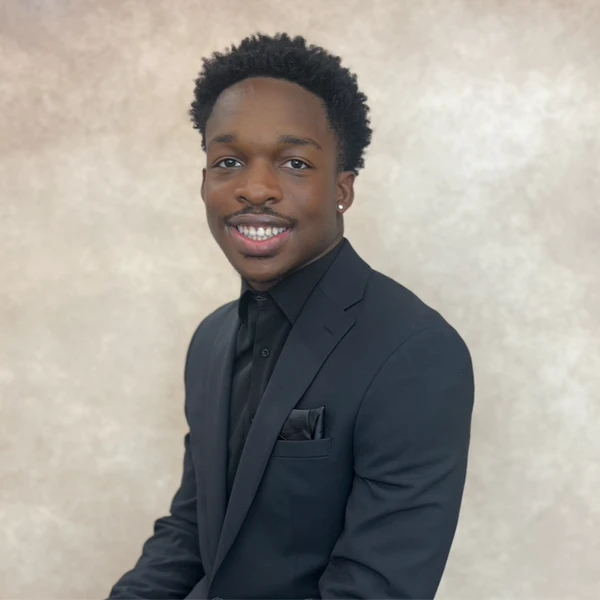
My name is John Bessman, and I am a computer science student at the University of Minnesota with a passion for mentorship, technology, and entrepreneurship. As a first-generation Liberian American, I grew up watching my parents work tirelessly to create opportunities for my sister and me. Their perseverance taught me the importance of discipline, service, and giving back to the people around me.
Those values shaped many of the experiences that matter most to me today. Through organizations like Kodely, Rooted in STEM, and NSBE, I mentor younger students and help introduce them to technology in ways that feel approachable and encouraging. Seeing students gain confidence in themselves reminds me why representation and mentorship are so important in STEM spaces.
My passion for computer science also comes from its ability to create access and solve meaningful problems. That passion has led me to pursue opportunities such as my upcoming software engineering internship at U.S. Bank and entrepreneurial projects like Pathfinder, a platform designed to help underrepresented students discover internships, scholarships, mentorship programs, and other opportunities earlier in their academic journeys.
Outside of academics and technology, I enjoy going to the gym, spending time with friends and family, and playing the violin and ukulele. No matter what path I pursue in the future, I hope to continue using technology, leadership, and mentorship to create opportunities for others and positively impact my community.
Education
University of Minnesota-Twin Cities
Bachelor's degree programMajors:
- Computer Science
Hill-Murray School
High SchoolMiscellaneous
Desired degree level:
Bachelor's degree program
Majors of interest:
- Computer Science
- Computer Programming
- Computer Software and Media Applications
Career
Dream career field:
- Computer Software
Dream career goals:
Software Engineer at a Fortune 500 Company
Sports
Basketball
Varsity2019 – 20212 years
Track & Field
Varsity2019 – 20234 years
Awards
- Varsity letter
Arts
Orchestra
Music2014 – Present
Public services
Volunteering
Todays Harvest — Stock food2022 – Present
Future Interests
Advocacy
Volunteering
Philanthropy
Entrepreneurship
Joe Gilroy "Plan Your Work, Work Your Plan" Scholarship
Everyone has goals. Far fewer have a roadmap.
My roadmap is clear: graduate from the University of Minnesota with a degree in Computer Science, minimize my student loan debt, and build technology that creates opportunities for students who may never discover them otherwise.
My first priority is graduating with as little debt as possible. I currently have approximately $55,000 in student loans, so I treat scholarship applications like a part-time job. Because I pay for my own rent, groceries, and day-to-day living expenses while in college, I've learned to budget carefully and prioritize long-term goals over short-term wants. My goal is to apply for three scholarships every day. Every scholarship I earn means less money spent on interest and greater flexibility to pursue my long-term goals. Alongside scholarships, I'll continue working while in school and avoid taking on unnecessary debt during my final year.
After graduation, I plan to begin my career as a software engineer at U.S. Bank, where I've already accepted a full-time offer after my internship. The role will strengthen my technical skills, expose me to experienced engineers, and provide the financial stability to continue building my business without rushing its development. To give myself the greatest flexibility, I plan to live at home during the early years of my career, save a significant portion of my income, aggressively pay down my student loans, and avoid unnecessary lifestyle inflation. I'll also build an emergency fund so I can take calculated risks without sacrificing financial stability. My goal isn't simply to graduate with less debt. It's to graduate with the freedom to pursue entrepreneurship without financial pressure dictating every career decision.
Long term, my goal is to become an entrepreneur. This year, I was accepted into the University of Minnesota's Entrepreneurship in Action program, a year-long startup accelerator where student teams receive mentorship from experienced entrepreneurs and compete for up to $15,000 in funding to launch real companies. The program emphasizes customer discovery, validating assumptions, and refining ideas through continuous feedback rather than building products in isolation. I'm excited to develop those skills while working alongside experienced entrepreneurs and apply them directly to building my own company. My goal is to validate ideas with real users, test prototypes early, and improve through continuous iteration rather than assuming I already know the right solution.
The company I'm building is Pathfinder, a personalized college and career roadmap platform that helps high school students explore careers, discover opportunities, and build step-by-step plans based on their interests, goals, and individual circumstances. Instead of relying on chance or personal connections, students receive personalized guidance toward scholarships, internships, mentors, organizations, summer programs, and other opportunities they may never have discovered on their own. Rather than trying to build everything at once, my plan is to launch a focused MVP, test it with high school students, identify which features they actually use, gather continuous feedback, and improve the platform one iteration at a time. My goal isn't to build the biggest platform first. It's to build one that genuinely helps students navigate their futures.
If Pathfinder doesn't immediately become sustainable, I'll continue developing it during evenings and weekends while working full-time as a software engineer. That way, I continue making progress regardless of the outcome.
My plan depends on more than determination. It relies on mentors, professors, entrepreneurship education, scholarships, disciplined financial planning, and consistent execution. Joe Gilroy believed in "Plan Your Work, Work Your Plan." I believe the same thing. Ambition determines where you want to go. A plan determines whether you ever get there.
Bright Lights Scholarship
“I give up. This is never going to work.”
A student I was teaching through Kodely sat frozen in front of their computer, convinced they were not capable of coding. Instead of solving the problem for them, I sat beside them and walked through the code step by step. When their code finally worked, their frustration turned into excitement, and they immediately wanted to keep trying. Watching that transformation reminded me that the greatest opportunities in life often begin with someone who believes in you. It also reinforced why I chose to pursue computer science: technology has the power to create those same opportunities for thousands of people.
Growing up as a first-generation Liberian American, I watched my parents make sacrifices so my sister and I could pursue opportunities they never had. They taught me that education was never just about earning a degree. It was about creating possibilities that could change the future of our family and the lives of others. Their resilience shaped the way I approach both my education and my future.
When I entered college, I quickly realized that talent alone was not enough. Many opportunities, from scholarships to research and leadership programs, were never discussed in class. I learned about many of them only because mentors took the time to guide me. During my first year, I struggled academically and questioned whether I belonged in computer science. Professors, mentors, and peers encouraged me to persevere and reminded me that setbacks were opportunities to grow rather than reasons to quit. Their investment in me changed my confidence and inspired me to give that same encouragement to others.
Because others invested in me, I feel a responsibility to invest in others. Through Kodely, I teach elementary students how to code and build confidence through problem-solving. Through Rooted in STEM, I mentor students exploring STEM careers. As a volunteer with the Page Grant program, I tutor fourth-grade students in math and reading. I also teach Sunday School, work with children at New Horizon Academy, and help build community as Membership Chair of the National Society of Black Engineers. Every experience has reinforced my belief that success is most meaningful when it creates opportunities for someone else.
Looking ahead, my goal is to begin my career as a software engineer while continuing to develop Pathfinder, a personalized college and career roadmap platform for high school students. The idea grew from watching students struggle to navigate their futures because they did not know what opportunities or experiences would best prepare them for their goals. Pathfinder helps students explore careers and build personalized roadmaps with recommended classes, clubs, internships, summer programs, scholarships, mentors, and other opportunities based on their interests, goals, and individual circumstances. My software engineering internship at U.S. Bank showed me how thoughtfully designed software can improve thousands of lives. Through Entrepreneurship in Action, I am learning how to turn Pathfinder into a resource that helps students confidently prepare for college and their future careers.
Receiving the Bright Lights Scholarship would reduce my financial burden, allowing me to spend less time worrying about debt and more time investing in my education, mentoring students, and building Pathfinder. More importantly, it would be an investment in a future where technology expands opportunity rather than limits it.
My parents dreamed of giving me opportunities they never had. My dream is to ensure those opportunities are no longer determined by someone's background, but by their ambition. Through software engineering, mentorship, and Pathfinder, I hope to build a future where every student has the guidance and opportunities to pursue their full potential.
Chris Jackson Computer Science Education Scholarship
“I give up. This is never going to work.”
A student I was teaching through Kodely sat frozen in front of their computer, convinced they were not capable of coding. Instead of solving the problem for them, I sat beside them and walked through the code step by step. When their code finally worked, their frustration turned into excitement, and they immediately wanted to keep trying. In that moment, I saw how mentorship could transform self-doubt into confidence. It also made me realize that computer science offers a unique opportunity to create technology that removes barriers, solves real problems, and expands opportunity at scale. The opportunity to help thousands inspired me to pursue a computer science degree.
Growing up as a first-generation Liberian American, my parents constantly emphasized education because they knew it could open doors they never had. During my first year of college, I struggled academically and questioned whether I belonged in computer science. Professors, mentors, and older students reminded me that setbacks were part of learning, not proof that I could not succeed. Their encouragement changed my perspective and inspired me to become the same source of support for others. More importantly, it showed me that mentorship can change a person's trajectory, but computer science gives me the opportunity to multiply that impact through technology.
As I continued studying computer science, I realized another barrier students faced. I did not fully understand many career opportunities until my sophomore year, while many classmates had known about them for years. That experience showed me students do not lack ambition or ability. They simply lack exposure, guidance, and access to opportunity.
My dream is to begin my career as a software engineer while continuing to develop Pathfinder, a personalized college and career roadmap platform for high school students. The idea grew from watching talented students struggle because they did not know how to prepare for their goals. Pathfinder helps students explore careers and build personalized roadmaps with recommended classes, clubs, summer programs, internships, scholarships, mentors, and other opportunities based on their interests, goals, and individual circumstances. During my software engineering internship at U.S. Bank, I saw how thoughtfully designed software could improve thousands of people's daily lives. That experience reinforced my belief that technology can expand opportunity far beyond what I could accomplish through mentoring alone.
I believe I am a strong candidate because I am working toward the impact I hope to make. Through Kodely, I teach elementary students how to code. Through Rooted in STEM and the National Society of Black Engineers, I mentor students pursuing STEM careers. I also serve children through New Horizon Academy and Sunday School because I believe investing in people is just as important as building technology. Like Chris Jackson, I understand the financial challenges of earning a computer science degree, but I also believe technology is most meaningful when used to serve others. Receiving this scholarship would help me continue building a career dedicated to expanding opportunity through mentorship, software, and Pathfinder.
Byte into STEM Scholarship
While teaching a Kodely coding class, one of my students stared at their screen and quietly said, “I give up. This is never going to work.” Instead of solving it for them, I sat beside them and walked through the code step by step. When it finally worked, their frustration turned into excitement, and they immediately wanted to keep trying. In that moment, I saw how mentorship and patience can transform self-doubt into confidence.
That moment felt personal because I understood how they felt. During my first year of college, I struggled academically and failed exams that many of my peers seemed to pass easily. As a first-generation Liberian American, the pressure went far beyond grades. My parents sacrificed so much to create opportunities for me, and I became terrified of disappointing them. For the first time, I questioned whether I truly belonged in computer science.
What helped me push through was mentorship. Professors, mentors, and older students reminded me that struggling did not mean I was failing and that growth often comes through discomfort. Those experiences changed how I viewed learning and became the foundation of my passion for mentorship, leadership, and technology.
As I learned more about technology, I realized there were many opportunities I had never been exposed to earlier. I did not fully understand what internships were until my sophomore year of college, while classmates casually discussed programs like Google STEP and Microsoft Discovery as if everyone knew about them. That experience showed me that many students do not lack ambition or ability. They simply lack exposure, guidance, and representation in STEM spaces.
Because of that, I began sharing opportunities with my younger sister, her friends, and students around me. I helped them find scholarships, summer programs, leadership opportunities, and internships by manually searching online and using AI tools to match opportunities to their interests. Watching my sister secure leadership positions and an accounting internship while still in high school showed me how powerful early guidance can be.
Today, I continue investing in others through the communities I am part of. Through Rooted in STEM and NSBE, I mentor students by discussing college life, resumes, internships, and leadership opportunities. At New Horizon Academy and through Sunday school, I work with children during important stages of their development. As a Kodely Leader, I teach coding through Minecraft Education, micro:bit, and Tinkercad, helping make technology feel approachable rather than intimidating.
These experiences inspired me to develop Pathfinder, a four-year planning platform for underrepresented high school students. Pathfinder would help students interested in fields like business, engineering, medicine, or computer science understand what opportunities and experiences could prepare them throughout high school. The platform would use AI to help students discover internships, scholarships, summer programs, mentorship opportunities, and leadership organizations based on their goals.
My computer science degree at the University of Minnesota will help me build tools like Pathfinder that can impact students at scale. More importantly, it will allow me to create pathways for students who may not already have strong mentorship or access to opportunity.
To me, service is not separate from STEM. It is the reason I chose this field. I want to build technology that reflects the needs of the communities I care about and helps students feel seen before they ever have to question whether they belong.
I know what it feels like to question whether you belong in STEM. Because of that, I want to help create a future where more Black students feel confident pursuing technology, leadership, and opportunities they may never have believed were possible.
Anthony Belliamy Memorial Scholarship for Students in STEAM
I did not become driven by accident. I became driven by watching my parents work long hours, guided by faith and determination, so that education could open doors they never had access to. Growing up as a first-generation Liberian American, I saw what perseverance, sacrifice, and responsibility looked like up close. My parents carried the weight of survival so that I could focus on learning, and knowing that shaped how I approach every opportunity I am given. Because I understand where I come from, wasting those opportunities never felt like an option.
That sense of responsibility eventually became one of the biggest challenges I have faced: perfectionism. As a student pursuing a degree in computer science within the STEAM field, I held myself to unrealistic standards, believing that anything less than perfect meant I had failed. In college, especially in demanding STEM courses, mistakes are unavoidable. Code breaks, projects do not work the first time, and understanding takes time. Early on, though, I treated every setback as a personal failure. I remember sitting in late-night labs staring at code that refused to compile, convinced that struggling meant I did not belong. Instead of motivating me, this mindset led to burnout and self-doubt.
Over time, I realized that my perfectionism came from gratitude and a desire to honor my parents’ sacrifices, but it was not sustainable. Growth in STEAM does not come from avoiding mistakes. It comes from learning how to respond to them. I began reframing failure as part of the learning process rather than proof that I was falling short. I started attending office hours, collaborating more openly with classmates, and focusing on progress instead of perfection. This shift strengthened my academic performance and helped me build resilience, adaptability, and confidence.
Volunteering and leadership roles played a major role in helping me overcome this challenge. As a Rooted in STEM mentor and a Kodely leader, I work with younger students who are often encountering STEM concepts for the first time. Many of them are afraid of getting things wrong, especially students from underrepresented backgrounds who already question whether they belong. Teaching them reminded me that leadership is not about having all the answers, but about encouraging patience, curiosity, and growth. Helping students learn through trial and error allowed me to extend that same grace to myself.
Faith has also been a central pillar in my journey. During moments of stress and uncertainty, my faith grounded me and reminded me that perseverance does not require perfection. It requires integrity, discipline, and trust. Faith taught me to see challenges not as barriers, but as opportunities to grow in character and resilience. This perspective helped me remain hopeful and focused even when the path forward felt overwhelming.
These experiences have shaped my career goals in STEAM. I am pursuing a career in computer science to become a software engineer who builds technology that serves real people and creates meaningful impact. I am especially interested in areas such as healthcare and community-centered technology, where ethical leadership and responsibility matter deeply. I also hope to mentor students from underrepresented backgrounds and help create pathways into STEM for those who may not initially see themselves reflected in these spaces.
The Anthony Belliamy Memorial Scholarship honors values that resonate deeply with my story: faith, resilience, integrity, and service. Like Anthony Belliamy, I strive to lead by example and rise above challenges with courage and optimism. I work hard not because I fear failure, but because I understand the weight and privilege of opportunity. I hope to honor that opportunity by building technology with integrity and by lifting others as I continue forward.
Aspiring Musician Scholarship
Music has profoundly shaped the way I view the world. Imagine waking up on two different mornings—one to the cheerful melody of birds outside your window, the sizzle of breakfast being prepared, and the neighborhood coming to life, and the other to the sound of a thunderous storm, distant sirens, and the hustle and bustle of a city awakening. What's the only difference between these two mornings? The soundtrack, the music.
Throughout my life, I've always had a deep love for music. It's been my constant companion, whether I'm in the shower, getting ready for the day, or on a long car ride. In today's digital age, we have access to an incredible array of music at our fingertips, covering new tunes and the classics that our parents grew up with, all just a click away, and often for free.
My journey with music began early on. I joined my school's orchestra in the 3rd grade, and by the time I reached 9th grade, I had used my own money to purchase a ukulele, teaching myself to play. What I find most rewarding about playing an instrument is the ability to bring joy to important moments in the lives of those I care about. My little sister plays the cello, and together, we've performed duets at various family events. I'll never forget playing as my Aunt Tracy walked down the aisle during her wedding or the surprise we gave my mom on Mother's Day with a heartfelt rendition of "A Song for Mama" by Boyz II Men.
One of the remarkable things about music is its versatility. No matter my mood or the situation, there's always a song that fits perfectly. It's fascinating to see how every culture has its own unique music, a language that transcends barriers, even when the lyrics are in different languages. My parents immigrated from Liberia, and I take pride in staying connected to my roots. Music has played a significant role in bringing the Liberian community together at various events, celebrating our shared culture through the universal language of music.
At its core, music is an art form that allows us to express our deepest emotions. It captures the essence of joy, sorrow, love, and everything in between. It unites people across boundaries and generations, fostering connections and understanding. For me, music isn't just entertainment; it's a lens through which I see the world, a way to connect with others, and a source of comfort and self-expression. As I continue on my life's journey, I'm confident that music will remain a faithful companion, shaping my experiences and enriching my perspective on the world.
Stephan L. Daniels Lift As We Climb Scholarship
From a young age, my interest in STEM has been apparent. For as long as I can remember, my favorite classes have always been math and science. Throughout elementary school, I loved when the class would play games like the "King of the Hill" multiplication edition, and in middle school, I was a core member of the math club. In high school, classes like anatomy and biology fascinated me. With these interests in mind, I wanted to do something revolving around these subjects; however, I was uncertain what exactly I wanted to study.
It wasn't until one early school morning my dad sent me a Youtube video titled "biomedical engineering and why it is the best major." After discovering what Biomedical Engineering entailed, it clicked: that is what I was called to do. I started researching the degree and looked for ways to learn more. Last year, I joined my school's HOSA (Health Occupations Club of America). In HOSA, we have been preparing for the midwinter conference. To prepare for the conference, my teammates and I have been learning about how to separate DNA using a method called DNA electrophoresis. I have also set up a time to shadow my uncle, a chemical engineer so that I can learn more about what a day in the life of an engineer looks like.
I am drawn to biomedical engineering because of the positive impact it can have on people who are suffering. The opportunity to create medical devices, such as prosthetics or wearable health monitoring devices, that can enhance the quality of life for individuals with disabilities or chronic health conditions is incredibly motivating for me. Despite the challenges of rigorous engineering school, I know that my passion for biomedical engineering will drive me to persevere.
Community is of utmost importance to me. My parents are immigrants from Liberia, so I understand that nothing is achieved alone. I firmly believe in the African proverb, "It takes a village to raise a child." The support of my community has been instrumental in getting me to where I am today. In high school, I actively served the less fortunate by volunteering at food pantries like Today's Harvest and participating in a summer internship through my church. Witnessing the struggles of people in close proximity to my own community has shaped my outlook on life.
As a first-generation American, I am determined to make a difference. Whether it's through designing medical devices, donating my time to serve others, or establishing scholarships like the ones that allowed me to attend a private school my whole life, I am committed to positively impacting the lives of those around me. I eagerly look forward to a fulfilling career in biomedical engineering, where I can use my skills and passion to make a meaningful difference in the lives of individuals and communities in need.