Hobbies and interests
Basketball
Exercise Science
Exercise And Fitness
Business And Entrepreneurship
Gaming
Reading
Sports and Games
I read books multiple times per month
Joesiah Johnson
1x
Finalist1x
Winner
Joesiah Johnson
1x
Finalist1x
WinnerBio
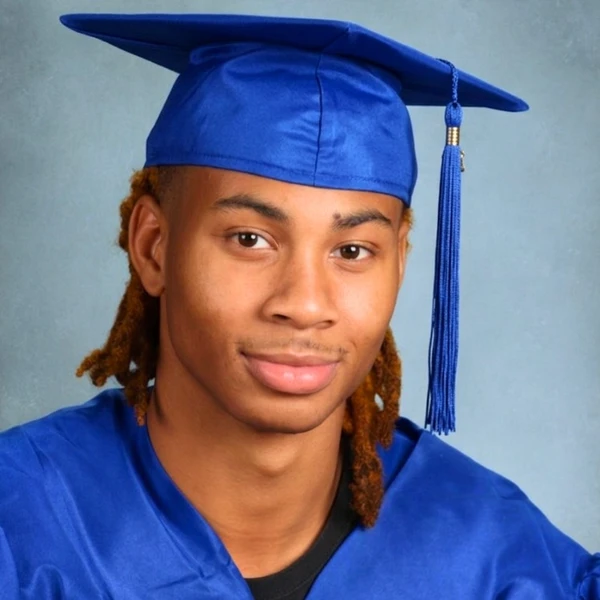
Joesiah Johnson is a resilient and relentless leader and Class of 2026 graduate from Dunbar Vocational Career Academy who maintains a 3.7 GPA. A dedicated student-athlete with extensive experience in varsity and AAU basketball, he has translated his passion for the sport into community leadership roles, including mentoring youth and serving as a Teen Ambassador for the Chicago Architecture Center. Joesiah is now focused on pursuing a degree in exercise science and sport management.
Education
Dunbar Vocational Career Acad High School
High SchoolMiscellaneous
Desired degree level:
Bachelor's degree program
Majors of interest:
- Sports, Kinesiology, and Physical Education/Fitness
- Business, Management, Marketing, and Related Support Services, Other
Career
Dream career field:
Sports
Dream career goals:
Teen Leader
Companies that Care2025 – 2025
Sports
Basketball
Varsity2022 – 20264 years
Awards
- All-Conference
- Captain
- Conference Champions
Research
Business, Management, Marketing, and Related Support Services, Other
Construction — Intern2022 – 2023
Arts
Chicago Architecture Center
Architecture2025 – 2025
Public services
Volunteering
Animal Welfare Organization — Dog caretaker2024 – 2026
Treye Knorr Memorial Scholarship
In the last ten years I have been to eight schools. I have lived in six different houses with six different people. Growing up, I did not care about my future because I did not think I would have one. I was not sure I would make eighteen. My freshman year of high school I got shot at and my mom took me out of school because she was afraid I was not safe. I missed my second semester of freshman year. I was a mad kid because I had a lot to be mad about. I got into trouble because I did not know how to manage my anger. I was not thinking about my future, I was trying to survive.
When everything around me felt unstable, basketball was my only anchor. I still remember walking into the Washington Park fieldhouse as a nervous ten-year-old for the first time. After a few months, my mentor there told me to stick to hooping because there was nothing else out there but the streets. Basketball became my everything. It gave me purpose and it gave me discipline. But I never got to play on a team because no one that I was living with could afford it. That did not change until my sophomore year. My eighth-grade teacher signed up to be my legal guardian and one of the first things she did was get me to a tryout for a basketball team. My whole life started to change. I got good enough that I am now going to be a scholar-athlete and play basketball in college.
This experience is what started me on my chosen career path. I got to travel AAU basketball, but a lot of the friends that I grew up with still could not. I think it is wrong that sports are now a big business that excludes kids who honestly need it the most. By pursuing a degree in business, specifically sports management and exercise science, I am choosing a path that allows me to develop sports that are accessible to all young people. I want to create opportunities for kids like me from places like I came from to start to train and take their sport seriously when they are younger, before they start to make the wrong choices.
I am not on this journey alone; I am carrying a village of mentors with me. First is my godmother. When I was drowning in instability, she stepped in to become my legal guardian. Alongside her, I carry my basketball coaches, who kept me anchored, and my high school counselor, who helped me realize that I am more than just the game that I love.
This scholarship will directly meet my needs as I move toward these dreams. Postsecondary education to me is more than earning a degree. First, it will provide the professional stability I lacked during a childhood of constant displacement. It represents my chance to build a life founded on purpose, security, and financial independence. Second, this scholarship will give me the tools to turn my passion into a career. I want to learn how sports can support mental health, confidence, and leadership.
One day, I want to fly right back to where I was born and grew up: the South Side of Chicago. I want to return when I am a young man with my degree, educated, mentally healed, and ready to be the person that I needed when I was growing up. By mastering the business side of sports, I will make sure that the basketball court stays a sanctuary of hope and healing for everyone. This scholarship gives me the ultimate pair of wings to return to the South Side not just as a survivor, but as a leader—proving to the next generation that our circumstances do not define our future.
Tammurra Hamilton Legacy Scholarship
Mental health and suicide prevention are important topics among my generation because many young people are dealing with trauma and do not feel safe talking about it. As a Black teenage boy, it has been hard to open up because the message from social media and people around me is to just tough it out. I think the more people talk about mental health, the more young people, especially people like me, will feel safe to talk and heal.
My beliefs come from my own experiences. Growing up on the South Side of Chicago, I faced a lot of instability. I went to eight different schools and lived in six different houses with six different people. I did not care about my future because I did not think I would make eighteen. I was not thinking about my health; I was trying to survive.
The night I was taken from my mom’s house by the police and sent to a foster home, I cried all night. I knew the people there could hear me, but no one came. I was ten and decided to just stop crying because it felt like no one cared. I did not cry again for five years. I often felt angry, overwhelmed, anxious, or sad, but I never talked about it.
Basketball became my outlet. When I first walked into Washington Park as a twelve-year-old, I found structure, purpose, and positive role models. The older players and staff encouraged me to stay focused and avoid the dangers that surrounded many young people in my neighborhood. Basketball gave me something to work toward when everything else felt uncertain.
As I began playing organized basketball, I faced a different challenge: anxiety. Before games, I would worry about making mistakes, letting down my teammates, or being pulled. I felt pressure to perform and prove that I belonged. Like many young people, I kept those feelings to myself because I thought I was supposed to handle them alone.
That changed during my junior year when a teacher introduced Kevin Love's story about mental health. Hearing a professional athlete talk about his struggles helped me realize there was not anything wrong with me. That essay helped me start therapy for anxiety and post-traumatic stress disorder. In therapy, I am learning mindfulness techniques, healthier ways to manage anger, and how to ask for help.
Those experiences changed my beliefs. I no longer see mental strength as pretending everything is okay. I know that real strength comes from being honest about what you are facing and taking steps to care for yourself. Therapy has helped me become a better basketball player and person.
My experiences shaped my career goals. I plan to study exercise science and sport management because sports positively affect well-being. One day, I want to mentor young athletes and create programs that provide both athletic opportunities and emotional support. I want young people to know that it is okay to prioritize their mental health.
Basketball helped save my future because it connected me to mentors, purpose, and therapy. Therapy is one of the reasons I will achieve my goal of attending college as a scholar-athlete. After college, I will use my education to provide those same opportunities to young people growing up with the same challenges as I did.
Andrea N. Santore Scholarship
In the last ten years I have been to eight schools. I have lived in six different houses with six different people. Growing up, I did not care about my future because I did not think I would have one. I was not sure I would make eighteen. I was not thinking about career paths, I was trying to survive.
When everything around me felt unstable, basketball was my only anchor. I still remember walking into the Washington Park fieldhouse as a nervous ten-year-old for the first time. After a few months, my mentor there told me to stick to hooping because there was nothing else out there but the streets. Basketball became my everything. It gave me purpose and it gave me discipline. I would go to the fieldhouse every day after school. I would do dribbling drills in my apartment until the neighbors yelled at me to stop. I played as much as I could.
But I never got to play on a team. I dreamed of playing organized basketball, but I could not play and have teammates and a coach because no one that I was living with could afford it. That did not change until my sophomore year. My eighth grade teacher signed up to be my legal guardian and one of the first things she did was get me to a tryout for a basketball team. My whole life started to change. I was getting better, I was learning how to play smart, and I got good enough that I am now going to be a scholar athlete and play basketball in college.
This experience is what started me on my chosen career path. I got to travel AAU basketball and have a lot of opportunities, but a lot of the friends that I grew up with still could not. I am grateful that I had these chances, but I think it is wrong that sports are now a big business that excludes kids who honestly need it the most. By pursuing a degree in business, specifically sports management, I am choosing a path that allows me to develop sports that are accessible to all young people. I want to create opportunities for kids like me from the places like I came from to start to train and take their sport seriously when they are younger, before they start to make the wrong choices.
Earning a degree in this field will completely change my life. Instead of focusing on surviving I will be a leader in my community helping other people going through what I went through. First, it will provide the professional stability I lacked during a childhood of constant displacement. College represents my chance to build a life founded on purpose, financial independence, and structural knowledge.
Second, this degree will give me the skills and knowledge and network I need to make youth sports more equitable and accessible. With everything that I have been through, combined with what I learn in college as part of my business degree, I will be able to support young aspiring athletes in their physical, academic, and emotional growth. I will be the person that I needed. By mastering the business side of sports I will make sure that the basketball court stays a sanctuary of hope and healing not just for wealthy people, but for everyone.