Hobbies and interests
Animals
ATV Riding
Bible Study
Camping
Foreign Languages
Shooting
Reading
Realistic Fiction
Thriller
I read books multiple times per month
Joel Rodriguez
1x
FinalistJoel Rodriguez
1x
FinalistBio
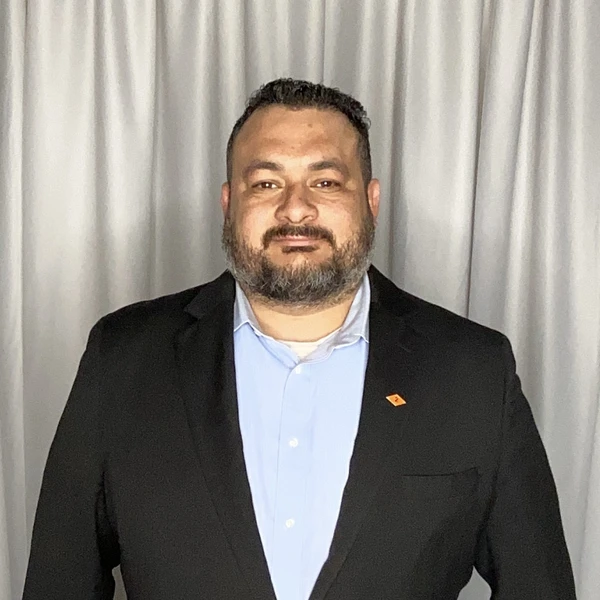
My name is Joel Rodriguez, and I am a first-generation Hispanic college student from a low-income family who has served honorably in the United States Military for over ten years. During my service, I was deployed multiple times in support of the Global War on Terrorism, where I witnessed firsthand the critical role technology plays on the battlefield.
I am currently pursuing a Bachelor’s degree in Mechanical Engineering at Saint Martin’s University in Washington. My goal is to work for the Department of Defense developing and improving robotic drone systems. Having seen their capabilities in combat, I understand both their strengths and their limitations, and I am motivated to help advance this technology to better support service members in the field.
With strong problem-solving skills and a mindset shaped by military discipline and real-world experience, I am committed to using my education to contribute meaningfully to national defense and technological innovation.
Education
Saint Martin's University
Bachelor's degree programMajors:
- Mechanical Engineering
Miscellaneous
Desired degree level:
Bachelor's degree program
Graduate schools of interest:
Transfer schools of interest:
Majors of interest:
- Mechanical Engineering
Career
Dream career field:
Mechanical or Industrial Engineering
Dream career goals:
Become system engineer
Squad Leader - Reconnaissance Platoon
2nd Ranger Battalion 75th Ranger Regiment2009 – 20156 yearsLead Peer Mentor
South Puget Sound Community College2021 – 20221 yearInfantryman
2nd Ranger Battalion 75th Ranger Regiment2005 – 20072 yearsFire Team Leader
2nd Ranger Battalion 75th Ranger Regiment2007 – 20092 yearsTeam Lead
Stars Restaurant2003 – 20052 years
Sports
Track & Field
Junior Varsity2000 – 20044 years
Cross-Country Running
Varsity2000 – 20044 years
Public services
Volunteering
Calvary Chapel - Olympia — Greet, meet, and interact with people2025 – PresentVolunteering
Blookworks Northwest — Donate Blood2024 – 2025
Tinkerer’s Path Scholarship
From a young age, I’ve been driven by curiosity and a desire to understand how things work. As a kid, I would take apart RC cars—not to break them, but to learn from them. I remember using those parts to build a remote-controlled drill, experimenting through trial and error until I could make something functional out of what others might have discarded. That experience taught me that creativity isn’t about having the best resources—it’s about using what you have in new and meaningful ways.
That mindset has stayed with me throughout my life. During my military career, I developed a disciplined and methodical approach to problem-solving, often working in high-pressure situations where adaptability and precision were essential. I learned how to analyze problems quickly, improvise when needed, and stay focused on practical outcomes. These experiences strengthened my ability to think critically while remaining hands-on in my approach.
Today, as an engineering student, I continue to apply that same curiosity and drive through my involvement in robotics and maker spaces. In my robotics class and club, I am actively building and experimenting with systems that combine mechanical design and control. One of the most meaningful projects I’m currently working on through the Lacey Maker Space is a dog-toboggan concept—an assistive robotic system designed to help transport supplies and reduce physical strain in outdoor environments.
This project reflects how I approach problem-solving: I start with a real-world need, then explore how engineering can provide a practical solution. Working on the dog-toboggan has required me to consider mobility, durability, and efficiency, while also collaborating with others who bring different perspectives and skills. It’s not just about building something that works—it’s about building something that helps.
Tinkering continues to be both a passion and a way for me to think through challenges. Whether I’m working in a maker space or developing ideas on my own, I find that hands-on experimentation allows me to learn faster and push my creativity further. It also helps me stay grounded and motivated by constantly asking how something can be improved or reimagined.
Through my volunteering and academic journey, I want to continue applying this mindset to solve real-world problems, especially for communities with limited resources. I believe engineering should be practical, accessible, and impactful. My goal is to design solutions that make everyday life easier, safer, and more efficient.
Tinkering has shaped not only my skills, but my perspective. It has taught me resilience, creativity, and the importance of learning by doing. Most importantly, it has shown me that even small, hands-on ideas can grow into solutions that make a real difference.
Hazel Joy Memorial Scholarship
My older sister, Vanessa, was born in August of 1987. To me, she was more than a sibling — she was my confidant, my best friend, and my comforter. She was the person I turned to when I needed advice, reassurance, or simply someone to listen. She understood me in a way that no one else did. With her, I felt safe.
On February 4, 2023, Vanessa died by suicide.
The loss was sudden and devastating. Grief came with shock, confusion, and countless unanswered questions. The silence she left behind felt overwhelming. I could no longer text her when I had good news or call her when I was struggling. Everyday moments became reminders of her absence. The person who had always grounded me was suddenly gone, and I felt untethered.
In the months that followed, I struggled deeply. Grief is not something you move past; it is something you learn to carry. There were days when concentrating in school felt nearly impossible. Simple tasks required extraordinary effort. I was balancing academic responsibilities while trying to process a heartbreak that felt too heavy to explain. From the outside, life appeared to continue as normal, but internally, everything had shifted.
Despite the pain, I knew one thing: Vanessa would not have wanted my life to stop because hers had. She always believed in my potential, often more than I believed in myself. Remembering her encouragement became my motivation to keep going.
Perseverance, for me, did not look dramatic. It looked like getting out of bed on difficult mornings. It looked like attending class even when my mind was clouded by grief. It meant completing assignments through tears and refusing to let tragedy dictate my future. Strength became a quiet, daily choice.
Losing Vanessa has permanently changed my perspective on life. I have become more aware of how fragile time is and how deeply people can struggle beneath the surface. Her death opened my eyes to the importance of mental health and genuine connection. I listen more closely when someone says they are “fine.” I check in more often. I approach others with greater compassion because I understand that pain is not always visible.
Her absence will always be part of my story, but so will her love. Every goal I pursue and every challenge I overcome is fueled by a desire to honor her memory. When I doubt myself, I remember how fiercely she believed in me. When I succeed, I carry the quiet hope that she would be proud.
I cannot change what happened on February 4, 2023. But I can choose how I move forward. I choose to persevere in my education. I choose to pursue my goals with passion. And I choose to dedicate my future to living fully and intentionally.
Vanessa was my comforter in life. In her absence, I have discovered resilience within myself that I did not know I possessed. Though the loss will always remain, so will the love and strength she instilled in me — and that is what continues to guide me forward.
Lost Dreams Awaken Scholarship
Recovery means choosing to live when it would be easier not to.
I have been sober from alcohol for one year and six months, and clean from nicotine for eight months. My recovery began after years of therapy through the VA’s Addiction Treatment Center and Vet Center groups, but the true turning point came after losing my sister. I realized that alcohol was destroying me physically, emotionally, spiritually, and financially. After a decade of struggling with PTSD, addiction, and suicidal ideation, I made a decision: I would not abandon my family, and I would not surrender my future.
Recovery means accepting that I am in control of my destiny. It means accountability. It means doing the hard work even when no one is watching.
For me, recovery has brought clarity, self-worth, and self-respect. I can think clearly now. I can focus. I can set goals and follow through. Sobriety is directly tied to my return to school. Without it, I would not have the discipline or stability to pursue my degree in Mechanical Engineering.
Recovery is not just the absence of alcohol. It is the rebuilding of a life with intention, integrity, and purpose.
Emerging Leaders in STEM Scholarship
My interest in STEM is rooted in both curiosity and survival.
During my ten years of service in the United States Army, I witnessed firsthand how technology can determine outcomes in high-stakes environments. Communication systems, surveillance tools, and unmanned technologies were not abstract concepts—they were lifelines. I became deeply interested in how these systems worked, how they were designed, and how they could be improved to better protect the people who rely on them.
However, my path into STEM has not been traditional.
After years of service, I was medically retired due to complex PTSD. Transitioning out of the military was disorienting. I struggled with alcoholism, grief from losing friends in combat, and the invisible weight of trauma. Later, a severe shoulder injury required a full replacement surgery, forcing me to step away from school for over a year to recover. At one point, I questioned whether rebuilding my life was even possible.
Choosing to pursue Mechanical Engineering was my decision to fight forward.
Engineering appealed to me because it demands logic, discipline, and problem-solving—qualities that align with both my military training and my personal growth. STEM is not just a field of study to me; it is structure, purpose, and forward momentum. It represents the ability to transform adversity into innovation.
As a minority and first-generation college student, entering a rigorous STEM program has presented its own challenges. Representation matters, and there are not many students who share my background—older, African American, veteran, and managing a disability. I currently do not work due to severe anxiety in crowded environments and the need for a service dog, which means I am pursuing my degree while living on a fixed income. Financial strain adds another layer of pressure to an already demanding academic path.
Yet, these obstacles fuel my ambition rather than limit it.
My long-term goal is to contribute to advancing drone technology within the Department of Defense. Having served in environments where risk is constant, I understand the importance of engineering solutions that enhance safety and operational effectiveness. I want to help design systems that reduce direct human exposure to danger while improving precision and efficiency. Innovation in unmanned systems has the potential to save lives, and I want to be part of that progress.
Beyond defense applications, I am committed to expanding access to STEM education within underserved communities. Many minority students are not exposed to engineering in ways that feel attainable. I want to mentor first-generation and veteran students who may doubt their place in technical fields. Intelligence is universal—opportunity is not. By sharing my journey, I hope to demonstrate that STEM is not reserved for a select few; it is accessible to anyone willing to persist.
The adversities I have faced—military trauma, addiction recovery, physical injury, financial strain—have strengthened my resilience. STEM requires perseverance. It requires failure, iteration, and problem-solving. In many ways, my life has prepared me for exactly that.
I am not pursuing engineering simply to earn a degree. I am pursuing it to build systems that protect others, to represent minority voices in technical spaces, and to show that setbacks do not define potential.
STEM gave me direction when I felt lost. Now I intend to use it to create meaningful impact.
First Generation Scholarship For Underprivileged Students
As a first-generation African American college student, pursuing higher education has never felt like a default path—it has felt like a deliberate act of courage.
I grew up without a roadmap for college. My parents worked hard, but higher education was unfamiliar territory in our household. There were no conversations about navigating financial aid, choosing a major, or understanding academic culture. Everything I have learned about college—from applications to course planning—has been self-taught, researched late at night, or discovered through trial and error.
At forty years old, I am not only a first-generation student—I am a nontraditional student rebuilding my life through education. After serving ten years in the United States Army, I was medically retired due to complex PTSD. Transitioning to civilian life was one of the most difficult periods I have ever faced. I struggled with direction, battled alcoholism, and carried the grief of losing friends in war and family members to mental illness. Later, a shoulder replacement surgery forced me to step away from school for over a year.
When I returned, I did so with clarity: education would be my foundation for transformation.
Today, I am pursuing a degree in Mechanical Engineering. Choosing such a demanding field as a first-generation student has not been easy. Engineering programs are rigorous, competitive, and often lack representation of students who look like me—especially those who are older, veterans, or managing disabilities. I currently do not work due to severe anxiety in crowded environments and my need for a service dog, which means I am balancing coursework while living on a fixed income. Every semester requires sacrifice and discipline.
But that is exactly why my journey matters.
Representation changes what feels possible. When first-generation students see someone navigating engineering at forty, after military service, after trauma, after setbacks, it challenges the narrative that success has a narrow timeline. My story is proof that higher education is not reserved for those who inherit guidance—it belongs to those willing to persist.
I plan to inspire other first-generation students in three concrete ways. First, through mentorship. I want to work with veteran support centers and first-generation student programs to provide guidance on navigating STEM majors, financial planning, and managing academic stress. Many first-gen students do not struggle with intelligence—they struggle with access to information. I want to be the person I did not have.
Second, I intend to advocate for greater technological access in underserved communities. STEM exposure often begins long before college. By volunteering in community programs and schools, I hope to introduce engineering concepts to students who may never have considered themselves “engineering material.”
Finally, I aim to lead by visibility. Simply staying the course—earning my degree, pursuing advanced technical work, and contributing meaningfully in my field—sends a powerful message. Success is not linear. It is resilient.
Being first-generation has shaped my values: self-reliance, humility, and a commitment to lifting others as I rise. I understand the quiet doubts that come from entering spaces where you feel unfamiliar. I also understand the strength that comes from pushing through them.
This scholarship would ease financial strain, but more importantly, it affirms that first-generation students belong in higher education. I am determined not only to earn my degree, but to make sure others believe they can earn theirs as well.
Debra S. Jackson New Horizons Scholarship
At forty years old, I made the decision to rebuild my life with intention.
For ten years, I served in the United States Army. During that time, I deployed overseas and carried the responsibility of supporting my family financially and emotionally, even from thousands of miles away. The military shaped my discipline, leadership, and resilience. It taught me how to operate under pressure, solve complex problems, and put mission before self. But it also left lasting scars.
After years of service, I was medically retired due to complex PTSD. Transitioning to civilian life was far more difficult than I expected. I struggled with alcoholism and felt as though I had lost my sense of purpose. I was grieving friends lost in war and family members lost to mental illness. The weight of that loss was overwhelming. Compounding these challenges, I suffered a severe shoulder injury that required a full shoulder replacement, forcing me to step away from school for a year and a half to recover.
Today, I do not work outside the home due to my fear of crowds and the need for a service dog to manage my condition. Living on a fixed income while balancing married life and rigorous coursework presents constant financial and emotional challenges. However, these limitations have not defined me. Instead, they have clarified my purpose.
Returning to school at this stage in my life is not about correcting the past—it is about building a meaningful future. I am pursuing a degree in Mechanical Engineering because I have always been drawn to understanding how systems function and how they can be improved. Engineering provides structure, logic, and innovation—qualities that align with both my military training and my personal growth. It gives me a constructive path forward.
My long-term goal is to work with the Department of Defense to help advance drone technology. Having operated in environments where technology can mean the difference between life and death, I understand the importance of innovation that protects service members and enhances mission effectiveness. I want to contribute to safer, more efficient systems that reduce risk for those who continue to serve.
Beyond professional goals, my education represents hope and responsibility. I am committed to increasing technological access and education within my community, particularly for veterans and nontraditional students who may feel that higher education is out of reach. Many adult learners carry invisible burdens—trauma, financial strain, family obligations—and need reassurance that growth is still possible. I want to mentor others navigating similar challenges and demonstrate that resilience is not the absence of struggle but the decision to move forward despite it.
Debra S. Jackson’s story resonates deeply with me. Like her, I am returning to school not because the path is easy, but because it is transformative. Education is giving me renewed direction, stability, and the ability to contribute meaningfully to society.
This scholarship would significantly reduce the financial pressure of pursuing my degree while living on a fixed income. More importantly, it would affirm that second chances matter—that perseverance at forty carries just as much promise as ambition at twenty.
I am not defined by my injuries, my diagnosis, or my setbacks. I am defined by my determination to grow beyond them and to use my education to serve others once again.
Anderson Engineering Scholarship
I am pursuing mechanical engineering because I am driven by problem-solving, innovation, and the desire to overcome obstacles—both technical and personal. My background as an infantryman breacher in the 2nd Ranger Battalion, 75th Ranger Regiment taught me how to analyze complex problems under pressure and find solutions where others see barriers. In the military, obstacles were literal. We were trained to assess structural systems, calculate minimum and maximum safe distances, understand fragmentation patterns, and execute technical demolitions with precision. That experience shaped how I think: evaluate the system, identify constraints, and engineer a safe, effective solution.
Mechanical engineering feels like a natural extension of that mindset. I have always been curious about how things work. As a child, I built small engines out of RC toys just to understand their internal components. I enjoy math, physics, and learning how forces, materials, and motion interact. Engineering allows me to take that curiosity and apply it in meaningful ways—designing systems, improving efficiency, and creating solutions that serve communities.
Although I am not currently in a co-op program, I have actively pursued hands-on experience through laboratory coursework and technical skill development. In materials and manufacturing labs, I have worked directly with testing equipment, analyzed material properties, and observed how theory translates into real-world performance. These labs strengthened my understanding of mechanical behavior and production processes. I have also developed foundational skills in Autodesk Inventor, machining, and Python. While my CAD experience is still growing, I am committed to refining these skills to become a more versatile engineer.
My military background provided additional hands-on technical experience that continues to influence my engineering approach. Working with demolitions required precise calculations, structural awareness, risk assessment, and disciplined execution. I also mentored and trained others, which strengthened my leadership and communication skills. Engineering, like military operations, demands accountability, teamwork, and attention to detail. These experiences have given me confidence in high-stakes environments and a strong work ethic that I carry into my academic journey.
As a BIPOC student in engineering, I have faced challenges with representation and perception. At times, I have felt misunderstood because of my accent or assumptions about my background. I have often felt isolated in academic spaces where few people look like me or share similar life experiences. However, these challenges have strengthened my determination rather than weakened it. I am motivated to prove—to myself and to others—that capability is not defined by appearance or speech, but by effort, discipline, and results.
I am also driven by the goal of being the first in my family to earn a college degree. Engineering represents not only personal achievement, but generational progress. I want to build a career that provides stability for my family while also contributing to my local community. Innovation thrives when diverse voices are included, and I want to be part of expanding representation in engineering.
Mechanical engineering challenges me intellectually and pushes me to grow continuously. My journey—from military service to higher education—has prepared me to face adversity with resilience and purpose. I am not pursuing engineering simply as a career, but as a commitment to solving problems, serving others, and breaking barriers for those who come after me.
Trudgers Fund
In 2015, after being medically retired from the military, I felt like I had lost my identity. The structure, purpose, and sense of belonging that once defined my life disappeared overnight. Struggling with PTSD, depression, and anger, I turned to alcohol to quiet my thoughts. What began as a coping mechanism quickly became a dependency. From 2015 to 2019, I was almost constantly intoxicated. I have very few clear memories from those years. Instead of easing my pain, alcohol intensified it. My anxiety became so severe that I developed a fear of leaving the house. I experienced worsening PTSD symptoms, emotional instability, and moments of hallucination.
My addiction affected every part of my life. I could not concentrate in school, and my grades fell to the point that I was placed on academic probation. I withdrew from friends and nearly lost my marriage. When my sister passed away, my drinking escalated as I tried to numb the grief. In that state, I broke my shoulder while intoxicated—an incident that forced me to confront how far I had fallen. I was living in a cycle of self-destruction, burdened by constant suicidal thoughts and the fear that I would lose everything that mattered.
The turning point came when I realized my marriage was close to ending and my relationships were deteriorating. Loved ones confronted me with honesty and support, and for the first time, I allowed myself to accept that I needed help. I understood that if I continued down this path, I might not survive it. Choosing sobriety was not easy, but it was necessary. It was a decision to fight for my life instead of escaping from it.
Today, I have been sober for a year and a half. Sobriety has given me clarity, stability, and the ability to fully experience life again. I can remember conversations, milestones, and meaningful moments. I have worked hard to rebuild trust with my family and restore stability in my marriage. I am calmer, more emotionally aware, and better equipped to manage challenges without turning to alcohol. Most importantly, I feel hopeful. Sobriety has given me a second chance to build the future I once thought I had lost.
I am currently pursuing a Bachelor of Science in Mechanical Engineering. Returning to school represents more than earning a degree—it represents discipline, perseverance, and finishing what I started before joining the military. Engineering challenges me to think critically and solve problems, skills that mirror my own recovery journey. Completing my degree will allow me to build a stable life for my family and demonstrate that setbacks do not define a person’s potential.
I hope to use my education not only to advance professionally but also to inspire others who are struggling with addiction, especially veterans facing similar challenges. Addiction often convinces people that they are beyond repair. I want others to see that change is possible. Recovery is not easy, and it requires accountability and support, but there is light at the end of the tunnel. If I can overcome years of alcoholism, rebuild my relationships, and pursue an engineering degree, others can believe in their ability to rebuild as well.
As a low-income student returning to school later in life, financial support would ease the burden of tuition and allow me to focus fully on my education and continued sobriety. My past shaped me, but it does not define me. My resilience, growth, and ambition do.
Jim Maxwell Memorial Scholarship
This opportunity is deeply meaningful to me because it supports both my educational goals and the values that have shaped my life—faith, service, and perseverance. As a financially underprivileged student, pursuing higher education has required constant sacrifice, and this scholarship would ease the financial burden that often competes with my ability to remain focused on my studies. More than financial assistance, this opportunity affirms the importance of faith-driven ambition and commitment, values that I strive to live by daily.
My journey has been shaped by both military service and faith. Serving in the military taught me discipline, accountability, and the importance of being prepared in all situations. At the same time, my faith gave me the strength to endure difficult seasons, moments of uncertainty, and personal challenges. Financial hardship, academic pressure, and life transitions often tested my resolve, but my faith reminded me to trust God’s plan even when the path ahead was unclear.
My involvement at Calvary Chapel in Olympia, Washington has been central to my spiritual growth. I volunteer as an usher and greeter, welcoming people into the church each week. This role has reinforced the value of serving others with humility and consistency. Being present, dependable, and welcoming has strengthened my sense of purpose and reminded me that service is an essential expression of faith. Through my church community, I have found encouragement, accountability, and spiritual grounding that continue to guide my decisions.
My decision to pursue a degree in mechanical engineering is deeply connected to both my military experience and my faith. During my time in service, I learned the importance of situational awareness, problem-solving, and understanding how systems function under pressure. Mechanical engineering reflects those same principles—analyzing complex systems, anticipating challenges, and designing solutions that improve safety and reliability. My faith has reinforced my desire to use these skills responsibly, with integrity and service in mind, rather than solely for personal gain.
There were moments when financial strain made continuing my education feel uncertain. At times, I had to choose between essential expenses and school-related costs. Through prayer and reliance on God, I learned perseverance and patience. Each obstacle strengthened my determination to complete my degree and build a future that honors both my service and my faith.
Looking ahead, I plan to use my faith as a guiding force as I complete my mechanical engineering degree and enter the workforce. I hope to apply my education to create solutions that serve others, contribute to my community, and uphold the values instilled in me through faith and military service. The Jim Maxwell Memorial Scholarship represents encouragement, support, and belief in students who strive to grow despite adversity. I would honor this opportunity by continuing to pursue excellence, serve faithfully, and lead with purpose.
Veterans Next Generation Scholarship
Hello, my name is Joel Rodriguez, and I am the son of a United States Army combat veteran whose service has shaped every major decision in my life. My father served over 25 years in the Army Reserves and deployed twice during Operation Iraqi Freedom in 2003 and 2005. While I was proud of his service, I also witnessed the lasting effects of combat when he returned home. He became hypervigilant, easily startled, and struggled with anger—challenges that many veterans face but few families are prepared to understand.
At the time, I did not have the knowledge or emotional maturity to recognize that my father was dealing with the invisible wounds of war. However, those experiences left a deep impression on me. After the events of 9/11, I felt a strong sense of duty to serve, and in 2005 I made the decision to enlist in the Army. Financial hardship also played a major role in that decision. After completing my first year at a local university, I could no longer afford tuition. Coming from a household already strained by medical and transitional challenges, continuing my education without financial support was not possible. Military service became both a calling and a necessity.
I went on to serve ten years in special operations, completing eight combat deployments to Iraq and Afghanistan. My service demanded constant problem-solving, adaptability, and accountability—skills that shaped my work ethic and sense of responsibility. However, when I left the Army in 2015, I began to experience many of the same struggles I had once observed in my father. I faced difficulty adjusting to civilian life, battled anxiety and anger, and spent several years trying to cope through counseling, medication, and unhealthy self-medication. These challenges made it difficult to maintain stability, employment, and long-term financial security.
Returning to school was a turning point, but it was not an easy one. As a nontraditional student and veteran, I continue to face significant financial barriers. Tuition, textbooks, and living expenses place constant pressure on my ability to persist academically. Despite working and using limited benefits, I often must choose between covering basic necessities and investing fully in my education. This scholarship would directly impact my ability to remain enrolled and focused on my studies.
I chose to pursue mechanical engineering because it aligns with both my military experience and my desire to build a stable future. In special operations, I learned to assess environments, anticipate failure, and design solutions under pressure. Mechanical engineering allows me to apply those same principles in a constructive way—solving real-world problems and contributing to systems that support safety, efficiency, and resilience.
Being the son of a veteran taught me perseverance, sacrifice, and responsibility long before I understood them. This scholarship represents more than financial assistance; it is recognition of the sacrifices made by military families and an investment in my ability to break cycles of instability through education. With this support, I will continue building a future defined by purpose, resilience, and meaningful contribution—honoring both my father’s service and my own.
I then started going to school. I chose to be a mechanical engineer because of the missions I was doing, i needed to be aware of my surroundings and ready for anything.
J. L. Lund Memorial Scholarship
Life gives us challenges, and those challenges shape who we become. For me, the most defining moments of my life came from my service in the U.S. Army. As a first-generation college student and the primary provider for my family, I joined the military at nineteen because I needed to support my family and keep my brother with special needs safe and cared for. What started as a practical decision became the beginning of a chain reaction that changed the course of my life.
In 2005, while struggling to pay for college, an Army recruiter called and offered an opportunity: financial stability, education benefits, and the chance to serve. I shipped out within months and was eventually assigned to the 2nd Ranger Battalion at Joint Base Lewis-McChord. During my ten years of service, I endured difficult training, multiple deployments, and the realities of combat. But the event that changed me most—the moment that truly reshaped my perspective and future—was losing my closest friend during a deployment.
His death shattered me. I blamed myself, believing I wasn’t a good enough leader to prevent what happened. For a long time, I carried that guilt, and it blurred my sense of identity. But through time, reflection, and support, I learned a lesson that became the turning point in my life: I can only control what I can control—but what I can control, I must give everything to. That realization reshaped how I view responsibility, service, and purpose.
This loss also sparked the path to my chosen field of study. Throughout my military career, I worked closely with aircraft, equipment, and systems used in high-risk environments. I saw firsthand how mechanical systems, sensors, and identification technologies can be the difference between safety and tragedy. My friend’s death motivated me to pursue mechanical engineering with a goal of working for the Department of Defense or the Department of the Army. I want to apply my engineering education to develop aircraft systems and identification technology that reduce friendly-fire incidents and protect service members in the field.
The challenge that once broke me has now shaped my purpose. I am studying mechanical engineering not just to build machines, but to build solutions that protect the people who serve—because I know exactly what’s at stake.
Anthony Belliamy Memorial Scholarship for Students in STEAM
My name is Joel Rodriguez, and I am a forty-year-old veteran student. For more than a decade, I put my life on hold to serve my country in the United States Army. Those years shaped me in ways I never imagined—through hardship, sacrifice, and eventually, healing. Now, as I return to school, I carry those lessons with me and use them to guide my goals for the future.
I was raised in a single-parent household by my mother, a hardworking and loving woman who, despite having little education, always told me that school was the key to a better life. In 2005, I enrolled at a university in Texas with a partial scholarship for cross country and track. While the scholarship covered housing, I struggled to pay for everything else—books, meals, and supplies. Despite my best efforts, it became clear that I could not afford to continue.
After long conversations with my mom, I made the difficult choice to enlist in the Army. At nineteen, I believed military service would provide me with the stability and opportunity I needed. During my ten-plus years in uniform, I deployed eight times—four to Iraq and four to Afghanistan. Those deployments were the hardest experiences of my life. I lost friends and colleagues in combat, and I also lost pieces of myself. The weight of those years followed me home, and after my final deployment I was diagnosed with severe, complex Post-Traumatic Stress Disorder.
PTSD was a battle I wasn’t prepared for. Sleepless nights, intrusive memories, and the crushing emptiness left me feeling hopeless. There were moments I thought I could not go on. What saved me was my faith, my wife, and the unwavering support of close friends. My faith reminded me that I was not alone, and that God’s love could heal what I could not fix on my own. My wife stood by me through my darkest days, reminding me of my worth when I couldn’t see it myself. Intensive inpatient therapy also gave me tools to cope and begin rebuilding my life.
The experience changed me forever. It taught me that resilience is not about never falling—it’s about finding the courage to rise again. It showed me the importance of community, of leadership rooted in service, and of carrying hope even in the darkest times.
Now, as a student once again, I am pursuing a career in [insert your STEAM field here] because I want to transform my story of hardship into one of purpose. My goal is to not only succeed academically, but to use my education to help others who feel overwhelmed by challenges. Whether through mentorship, service, or innovation, I want my work to reflect the values that carried me through: faith, perseverance, and integrity.
Anthony Belliamy’s legacy resonates deeply with me. Like him, I believe in leading with courage and optimism, and in using hardship as fuel for growth. This scholarship would not only honor my journey, but also allow me to continue building a future rooted in resilience, service, and hope.
José Ventura and Margarita Melendez Mexican-American Scholarship Fund
My name is Joel Rodriguez, and I am passionate about being a first-generation, Mexican-American college graduate because I am setting a new standard for what is possible in my family. For me, earning a degree isn’t just about personal success—it’s about breaking generational barriers and opening doors that were never opened for those before me. I want my younger relatives to see that success is possible, even when the odds are stacked against you.
I was raised by my mother, a strong and determined woman who often worked two or three jobs just to keep food on the table, pay the bills, and maintain transportation. Watching her struggle and sacrifice made it clear to me from a young age that nothing in life is handed to you. That work ethic became part of who I am.
To support my education and my future, I enlisted in the United States Army. I joined initially to help pay for school, but my service turned into something much deeper. I sacrificed time, relationships, and even parts of myself to serve this country. I’ve experienced war, endured long separations from family, and missed moments of peace and happiness that many take for granted. My path to college hasn’t been traditional. I’m not a teenager fresh out of high school—I’m a man who’s faced life head-on and come out stronger on the other side.
Still, I continue to push forward. Why? Because I believe in creating a better life—not just for myself, but for the generations that will follow me. I want my life to mean something, and I want my accomplishments to inspire change. I’ve always been curious about how things work, what drives systems, and how we can build a better future. That curiosity led me to pursue a degree in mechanical engineering.
Today, I am learning more than just technical concepts. I’m learning how to navigate higher education—how scholarships work, what opportunities exist, and how to advocate for myself. Applying for this scholarship is a big step, because for most of my life, I didn’t believe in asking for help. But I’ve realized something important: in order to take care of others, I first need to take care of myself. I am not just a student—I am a provider, a soldier, and a leader.
Being a first-generation, Mexican-American college graduate is my mission—and I carry it with pride, responsibility, admiration, and purpose.
Lynch Engineering Scholarship
My long-term career goal is to work with the Department of Defense (DoD) in the development of advanced robotics and drone technologies—specifically to help counter the growing threat these systems pose on the modern battlefield. As warfare evolves, especially in conflicts like the war between Ukraine and Russia, unmanned systems are playing a critical role. I want to be part of the engineering teams that design innovative solutions to protect soldiers and uphold national security.
My long-term career goal is to work with the Department of Defense (DoD) to develop advanced robotics and drone technologies—specifically, systems that can counter the increasing use of unmanned machines on the battlefield. As warfare evolves in conflicts like the war between Ukraine and Russia, autonomous and remotely operated weapons are playing a larger and more dangerous role. I want to help design and engineer the technologies that can meet these threats head-on—technologies that protect soldiers, enhance mission effectiveness, and uphold national security.
I am currently pursuing a degree in mechanical engineering because it aligns with both my passions and my professional mission. I’ve always been fascinated by how things work, and I enjoy breaking down complex systems, solving problems, and building tools that serve a real purpose. Engineering allows me to turn curiosity into impact—and impact is what drives me.
My values were forged through experience. Before I became a student, I served ten years in the U.S. Army as an infantryman and designated breacher. In that role, I overcame physical and tactical barriers using both mechanical tools and explosive charges. I calculated safe standoff distances using kinematic equations, leveraged tools for efficiency, and worked under pressure in high-risk environments. These were not just military tasks—they were acts of applied problem-solving that introduced me to the power of engineering.
Through that experience, I learned the importance of preparation, adaptability, and responsibility—values I carry with me today. I also gained a deeper understanding of the cost of war and the value of life. I know what it feels like to be on the ground, facing evolving threats with limited tools. That’s why I want to be on the other side now—designing the next generation of tools that save lives and give our service members the edge they need.
At my core, I’m driven by service. My military service may have ended, but my sense of duty has not. I want to continue contributing to something larger than myself—this time through innovation, research, and design. My goal isn’t just to build machines; it’s to build solutions that directly support the people who wear the uniform, just as I once did.
This scholarship would not only support me financially—it would enable me to complete my degree and continue serving my country in a new and meaningful way. It would empower me to combine my past experiences with my academic goals to become the kind of engineer who doesn’t just work on machines—but who understands exactly what’s at stake when those machines are deployed.