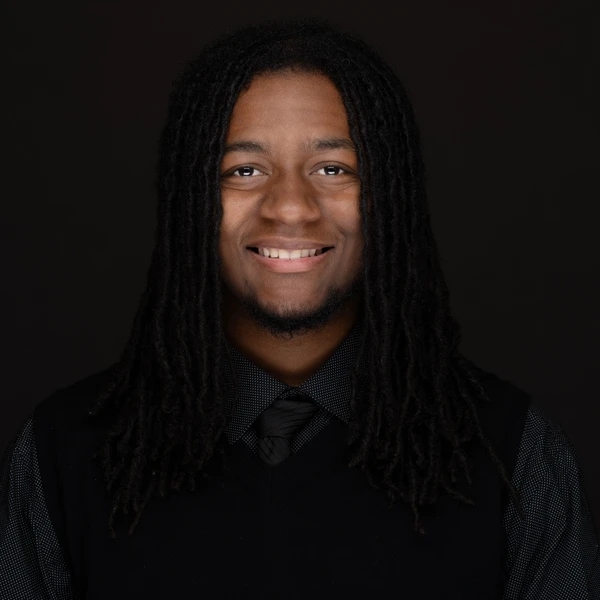
In Native American culture, storytelling is not merely a form of entertainment; it is a survival mechanism. It is the vessel through which history, identity, and vital knowledge are transmitted across generations to ensure the community endures. As a young man of Black and Native American heritage growing up in Oklahoma City, I often searched for my own way to contribute to this tradition. For a long time, I struggled to find the connection between the ancient traditions of my ancestors and my modern passion for technology. However, a recent experience bridged that gap and defined my path forward: I realized that computer code is simply the modern evolution of storytelling.
My journey began with a fascination for the logic of how things work. Whether I was building a gaming PC, troubleshooting a network issue, or writing a script in C#, I loved the structure of technology. Currently, I am finishing my Associate degree in Computer Information Systems while working full-time as a Help Desk Technician. My days are spent speaking the language of technical support and programming, solving problems for users, and maintaining digital infrastructure. Yet, despite my professional progress, I felt a cultural disconnect. In the fast-paced world of IT, it is easy to feel isolated, especially as a minority in a field where Native representation is scarce.
To reconnect with my roots, I recently made the decision to enroll in an online Cherokee language course. This was the defining experience that reshaped my goals. As I sat down to study the Cherokee syllabary, studying the shapes and sounds that my ancestors spoke, I noticed a profound parallel to my work in IT. Learning Cherokee requires understanding syntax, structure, and intent, exactly like learning a programming language. I realized that whether I am writing a line of code to execute a task or speaking a phrase in Cherokee to preserve a thought, I am engaging in the same act: using language to command reality and preserve information.
This realization has fueled my ambition to pursue a Bachelor of Technology in Cybersecurity. In our digital age, a Cybersecurity Specialist is essentially a modern guardian. Just as the storytellers of the past protected the truth and history of the tribe, cybersecurity professionals protect the integrity of our modern infrastructure. We defend the "stories" of the sensitive data, the identities, and the digital lives of our communities.
My professional goal is to advance from my current role to become a Tier 3 Technician and eventually a Cybersecurity Specialist. I want to be the person who understands the system deeply enough to defend it against threats. However, my drive goes beyond just career advancement. I am motivated by the desire to increase Native representation in the tech sector. I want to demonstrate that we belong in these high-tech spaces, not in spite of our heritage, but because of it.
By walking in two worlds, studying the ancient Cherokee language and the futuristic language of Cybersecurity, I am bridging the gap between where I come from and where I am going. I am a candidate who understands that preservation requires action. Whether I am debugging a security script or practicing my Cherokee vocabulary, my goal is the same: to keep the line of communication open, secure, and alive for the next generation.