user profile avatar

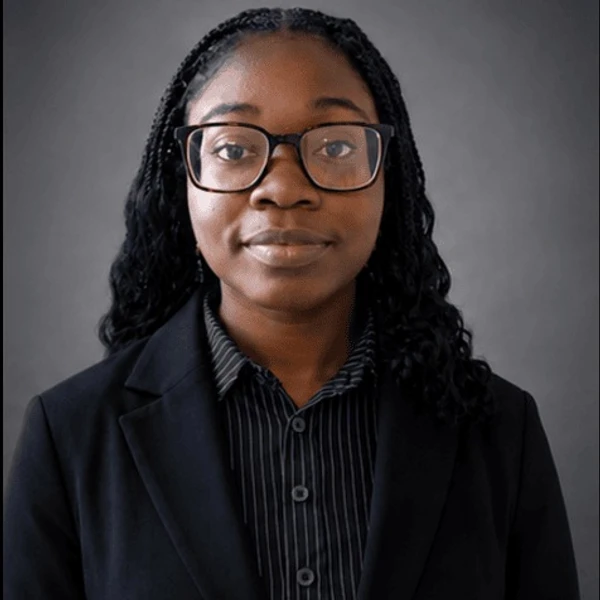
Jinolla Louis

1x

Finalist

Bio

I am a first generation Haitian American and biology major at the University of South Florida with aspirations of becoming a physician specializing in women's imaging. My passion for healthcare is driven by a desire to combine scientific discovery with compassionate patient care while improving health outcomes for women and underserved communities. Outside the classroom, I enjoy serving my community through volunteer work, STEM education, and mentorship. I have volunteered through church food drives, community service initiatives, and as a summer science camp counselor, where I encouraged children to explore science through hands on learning. These experiences have strengthened my commitment to service and reinforced my belief that education and healthcare have the power to transform lives. In the future, I hope to become a physician, contribute to research that advances medical imaging and early disease detection, and establish a nonprofit dedicated to women's health education, mentorship, and scholarships. Through my career, I aspire to expand access to quality healthcare, inspire future healthcare professionals, and create opportunities that empower others to pursue their own dreams.

Education

University of South Florida-Main Campus

Bachelor's degree program
2025 - 2029
  • Majors:
    • Human Biology

Winter Haven Senior High School

High School
2021 - 2025

Miscellaneous

  • Desired degree level:

    Doctoral degree program (PhD, MD, JD, etc.)

  • Graduate schools of interest:

  • Transfer schools of interest:

  • Majors of interest:

    • Medicine
  • Planning to go to medical school
  • Career

    • Dream career field:

      Medicine

    • Dream career goals:

      Radiologist

    • Food Servicer

      University of South Florida Dining Services | Student Dining Assistant
      2026 – Present7 months
    • Crew Member

      Popeyes
      2026 – 2026

    Research

    • International/Globalization Studies

      Researcher
      2023 – 2024

    Public services

    • Advocacy

      Interact Club — Member
      2020 – 2022
    • Volunteering

      Local Library Center — Volunteer
      2021 – 2023
    • Volunteering

      Local Church — Volunteer Member
      2024 – 2025
    • Volunteering

      Winter Haven Hospital — Guest Welcome and Cashier Manager (non-paid role)
      2022 – 2023

    Future Interests

    Advocacy

    Politics

    Volunteering

    Philanthropy

    Entrepreneurship

    Henry Respert Alzheimer's and Dementia Awareness Scholarship
    Growing up in a Haitian immigrant family, I learned that family is not simply an important part of life. It is the foundation of who we are. We celebrate together, support one another through hardships, and care for our loved ones without hesitation. My grandmother embodied those values more than anyone I knew. Before she suffered multiple strokes and developed dementia, she was the heart of our family. She welcomed everyone with kindness, always put the needs of others before her own, and found joy in caring for the people she loved. She was patient, generous, and resilient, teaching me that love is measured by how we serve others. As the oldest daughter in my family, I admired her long before I understood how deeply her example would influence the person I would become. Although dementia changed many aspects of her life, it never changed the lessons she left behind. My grandmother suffered her first stroke while I was still in high school. My family held onto hope that rehabilitation would help her recover, but over time she experienced additional strokes, and eventually dementia became part of our daily reality. At first, the changes seemed small. She repeated conversations, misplaced familiar items, and occasionally forgot details that once came naturally to her. As the disease progressed, those moments became more frequent and more painful. One of the most difficult experiences I witnessed was when she asked my mother where my uncle was. My uncle had passed away years earlier, but dementia had erased that memory. I watched my mother gently explain that her son was gone, and I watched my grandmother grieve that loss as though she had just learned the news. My mother cried alongside her because she was forced to relive the loss of her brother all over again. That moment stayed with me because I realized dementia does not simply steal memories from the person living with the disease. It also asks families to relive their greatest heartbreaks repeatedly. As her health declined, my grandmother eventually moved into a nursing home, where she continues to live today. Accepting that transition was difficult for my entire family. No matter how compassionate the staff was, it was painful to know that someone who had spent her life caring for others now needed others to care for her. Every visit became precious because we never knew exactly what to expect. Some days she recognized us and smiled in the familiar way I remembered from my childhood. Other days confusion overshadowed those moments, reminding us how unpredictable dementia can be. Each visit reminded us to cherish the present because tomorrow was never guaranteed. Throughout her journey, I became one of her caregivers. I helped remind her to take her medications, assisted with bathing and eating, encouraged her through therapy exercises after her strokes, and translated conversations during medical appointments when language became a barrier. Those responsibilities taught me lessons that no classroom ever could. I learned that caregiving requires patience even when progress feels slow. I learned that preserving someone's dignity matters just as much as providing physical care. Most importantly, I learned that compassion should never depend on whether someone remembers your name or recognizes your face. Love is not measured by what we receive in return. It is measured by our willingness to continue showing up, even when the journey becomes difficult. Growing up in a Haitian household also shaped the way I viewed caregiving. In my family, caring for our elders was never considered an inconvenience or a burden. It was a way of honoring the people who had sacrificed so much for us. Watching my parents devote countless hours to supporting my grandmother despite financial stress, emotional exhaustion, and countless responsibilities demonstrated what unconditional love truly looks like. Their example reinforced the values my grandmother had taught me throughout my childhood. Those experiences showed me that strength is often found in quiet acts of service. Whether it was sitting beside my grandmother during a difficult day or simply making sure she felt safe and loved, every small act of care carried meaning. While my grandmother was facing the challenges of dementia, I was beginning one of the most important chapters of my own life. I became the first person in my family to pursue a bachelor's degree. That accomplishment represents far more than earning a college education. It represents generations of sacrifice, resilience, and hope. Pursuing my degree while watching my grandmother's health decline was emotionally challenging because I constantly felt pulled between my responsibilities as a student and my desire to support my family. I balanced rigorous biology and chemistry courses while working to help support myself financially and volunteering in my community. There were nights when I worried about my grandmother long after everyone else had gone to sleep before spending the rest of the night studying for an exam. Even while sitting in lectures, I often found myself wondering whether she was comfortable, whether she had eaten, or whether she remembered that we had visited. Although those thoughts weighed heavily on me, they also strengthened my determination to persevere. Every obstacle reminded me why continuing my education mattered. During this same period, volunteering became an important source of purpose. Through my church, I helped prepare meals for families experiencing homelessness and assembled care packages for people in need. I also served as a summer science camp counselor because I wanted young students to experience the same curiosity for science that had inspired me. Those experiences reminded me that compassion is not limited to hospitals or clinics. It can be expressed through a warm meal, an encouraging conversation, or simply making someone feel seen during a difficult time. Every opportunity to serve others reminded me of my grandmother, who believed kindness should be practiced daily, not reserved for special occasions. Watching healthcare professionals care for my grandmother transformed my understanding of medicine. They could not reverse the damage caused by her strokes or stop dementia from progressing, but they consistently treated her with patience, respect, and dignity. They listened to our family's concerns, answered our questions with compassion, and recognized that they were caring for a person rather than simply treating a diagnosis. Their example taught me that healing is not always measured by curing disease. Sometimes healing means preserving someone's dignity, providing comfort during uncertainty, and helping families feel supported through circumstances that medicine cannot yet change. My grandmother's journey also changed the way I think about medical research. Before experiencing dementia within my own family, I viewed research primarily as scientific discovery. Today, I understand that every clinical trial, every published study, and every medical breakthrough represents hope for families searching for answers. Research is about far more than developing new treatments. It is about preserving memories, extending independence, and giving families more meaningful time with the people they love. Although I hope to become a physician specializing in women's imaging because of my passion for early detection and preventive care, I also hope to contribute to medical research throughout my career. Diseases like Alzheimer's and other forms of dementia remind us that there is still so much left to discover. I want to be part of a generation of healthcare professionals that continues asking difficult questions, advancing scientific knowledge, and improving the lives of patients and families facing these devastating illnesses. Looking back, dementia changed far more than my grandmother's memory. It changed the way I understand family, resilience, and service. It taught me that true strength is often quiet, appearing in caregivers who continue to love without expecting recognition and families who remain united through unimaginable challenges. It taught me that compassion is not simply a quality but a decision we make every day. Those lessons continue to shape the person I strive to become. My grandmother may never remember every milestone I achieve. She may never fully understand what it means for me to become the first person in my family to earn a bachelor's degree or one day attend medical school. Yet that does not diminish the role she has played in my journey. Every accomplishment I achieve is rooted in the values she instilled in me long before dementia entered our lives. Her kindness taught me compassion. Her resilience taught me perseverance. Her unconditional love taught me that the greatest measure of a life is not what we achieve, but how we care for others. Although dementia has taken many of her memories, it has never taken away the impact she has had on my life. I cannot return what this disease has stolen from her, but I can honor her legacy by caring for others, advancing medical knowledge, and treating every patient and family with the compassion my grandmother deserves. That is the legacy she has given me, and it is the legacy I hope to carry forward for the rest of my life.
    Zelaya Creativity Scholarship
    The morning of my physics exam, I lost my favorite mechanical pencil. Most people would have considered it a ridiculous thing to panic over. After all, I had a backpack full of pens and pencils, and someone immediately offered to lend me one. Yet this wasn't just any pencil to me. It had been with me through biology lectures, chemistry labs, late nights in the library, and nearly every exam since my first semester of college. Somewhere between endless pages of notes and countless practice problems, I had convinced myself it was lucky. As the minutes ticked by, I searched every pocket of my backpack, retraced my steps through the library, and even asked the front desk if anyone had seen it. By the time I accepted defeat and walked into my exam with a borrowed pencil, I was convinced I had already lost before I had even begun. To my surprise, the exam felt normal. The equations I had practiced were still there. The concepts I had spent hours learning still made sense. My borrowed pencil moved across the page just as easily as my old one ever had. A week later, I received one of the highest scores in the class. While cleaning out my backpack that afternoon, I found my "lucky" pencil tucked inside a tiny zippered pocket I had completely forgotten about. I couldn't help but laugh. The pencil had never been responsible for my success, and neither had luck. As a first-generation Haitian American and biology major, I have learned that the biggest obstacles are not always the obvious ones. Balancing college, work, and the pressure of being the first in my family to pursue this path has taught me resilience, but it has also shown me how easily doubt can disguise itself as logic. Losing my pencil made me realize I had unknowingly convinced myself that success depended on having the perfect circumstances. In reality, every accomplishment I had earned came from preparation, perseverance, and believing in myself. The pencil had simply become a place where I stored my confidence. That lesson continues to shape the way I approach my future. My dream is to become a physician specializing in women's imaging, a field built on seeing what others cannot. Ironically, losing something as small as a pencil helped me see something I had overlooked in myself. Patients will not remember whether their physician carried a lucky pencil or followed the same routine every morning. They will remember whether someone listened, showed compassion, and gave them confidence during moments of uncertainty. Beyond practicing medicine, I hope to contribute to research that advances early breast cancer detection, mentor first-generation students pursuing careers in STEM, and establish a nonprofit that provides women's health education and scholarships for underserved communities. I want my career to improve lives not only through medicine but also through education, advocacy, and service. Today, that mechanical pencil still sits in my desk drawer. I keep it not because I believe it brings me luck, but because it reminds me that confidence cannot be found in an object. It is built through hard work, resilience, and the courage to trust yourself when things do not go as planned. Most people would call losing a pencil a trivial problem, and they would be right. Yet that small inconvenience became one of the most meaningful lessons of my college journey, reminding me that the strongest tool I will ever carry is not in my hand, but within myself.
    Anthony Belliamy Memorial Scholarship for Students in STEAM
    Growing up as the oldest daughter in a Haitian immigrant household meant I had responsibilities heavier than my twelve-year-old shoulders could bear. I cooked and cleaned to create a safe space for my younger siblings after long school days. I helped them with homework even when I was still learning the lessons myself. I learned that strength is not about doing everything alone. It is about showing up for the people who depend on you and making sure they feel supported. Life at home was hard. Some nights the lights went out because the bills were not paid. We ate what we had, sometimes cold, sometimes barely enough. At school, kids made fun of my hair, my clothing, and the way I spoke. It hurt and made me feel small. I often wondered if anyone could see how much I was struggling. Still, I kept showing up. I refused to let my struggles define me. Real perseverance is quiet. It does not always look like anyone is watching but it builds character in the shadows. When my grandmother had her third stroke, everything shifted. Her body that once moved freely became fragile. I became her translator, her helper, and her constant support. I guided her through exercises and reminded her to keep going when frustration set in. I celebrated every small victory with her because those were the moments that mattered. Caring for her taught me patience, empathy, and attention to the smallest details. I realized the human body is like a complex machine. Every movement, every nerve, every muscle has a purpose and understanding that system fascinated me. I became curious about how science could explain recovery and how technology could enhance it. This curiosity led me to medicine, and more specifically, radiology. I was drawn to the way imaging reveals what the eye cannot see. X-rays, MRIs, and CT scans can uncover hidden conditions, guide treatment, and save lives. I loved the mix of science and technology, the precision of math and physics, and the creativity required to interpret images and problem-solve. Radiology is not just a job; it is a puzzle that combines analysis, observation, and care. Observing my grandmother’s therapists and later volunteering with children, I realized that medicine could merge science with service in a way that made a real impact. Leadership is not a title. It is persistence. It is showing up even when no one notices. I became someone others could rely on. I tutored children, helped with school projects, and encouraged people who felt invisible. I kept volunteering because I had learned how much small consistent acts can matter. Every hour I gave strengthened my purpose. It showed me that impact does not have to be loud to be real. Volunteering also helped me see that the challenges I faced were not just my own. They connected me to others who were struggling, and I realized the strength that comes from lifting each other up. Academically, I pushed myself to excel despite constant pressure. I balanced challenging courses with family responsibilities and volunteer work. Some days it felt impossible, but I kept going. I discovered that discipline and consistency could push me through even the heaviest days. Science became a refuge and a guide. Understanding biology and anatomy helped me make sense of my grandmother’s recovery. Learning about technology in school sparked ideas about innovations I could use to improve patient care. These experiences pointed me toward medicine and radiology. Observing, caring, and helping people sometimes quietly and behind the scenes felt like exactly where I belonged. I want to inspire students who feel like there is no path for them. I want them to see that perseverance, curiosity, and care can open doors they never imagined. I carry my family’s sacrifices with me every day. They remind me that obstacles are not walls. They are doors. Doors that guide us toward purpose. Leadership is measured by the care we give and the lives we touch. Every responsibility, every volunteer hour, every academic achievement has strengthened my vision. I am ready to take those lessons and turn them into hope, opportunity, and impact for those who need it most. I want to be the example for the next generation that hardship can become purpose, struggle can become motivation, and care can become leadership. Science and technology will be my tools, empathy and determination my guide, and radiology my way to make a difference.