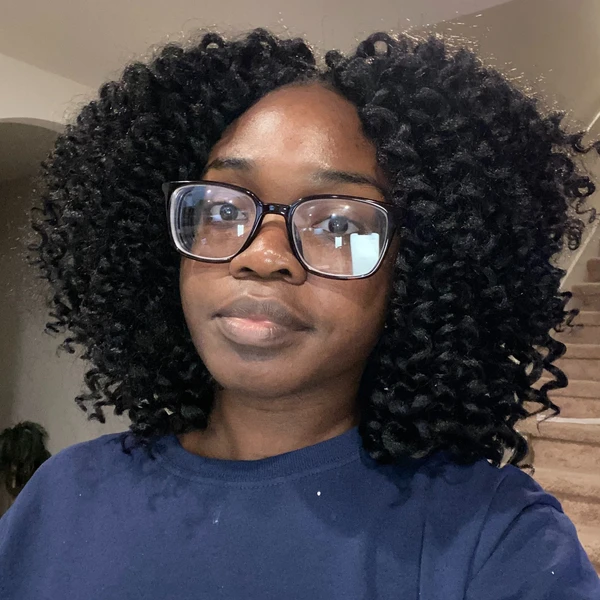
Winter Haven, FL
Age
19
Gender
Female
Ethnicity
Black/African
Religion
Christian
Church
Baptist (American)
Hobbies and interests
Crocheting
Volunteering
Reading
Realistic Fiction
I read books multiple times per month
US CITIZENSHIP
US Citizen
LOW INCOME STUDENT
Yes
FIRST GENERATION STUDENT
Yes
Jinolla Louis
1x
FinalistJinolla Louis
1x
FinalistBio
I am a first-generation Haitian American biology major aspiring to become a radiologist physician. My journey of overcoming challenges, caring for loved ones, and serving my community has shaped my passion for uncovering what is unseen and inspiring others, especially young Haitian women, to reach for possibilities they may have never imagined. My goal is to leave a lasting mark through mentorship, scholarships, and compassionate care.
Your kind financial opportunity will greatly help my continued academic success. Thank you for taking the time to consider!
Education
University of South Florida-Main Campus
Bachelor's degree programMajors:
- Human Biology
Winter Haven Senior High School
High SchoolMiscellaneous
Desired degree level:
Doctoral degree program (PhD, MD, JD, etc.)
Graduate schools of interest:
Transfer schools of interest:
Majors of interest:
- Medicine
Career
Dream career field:
Medicine
Dream career goals:
Radiologist
Crew Member
Popeyes2025 – 2025
Research
International/Globalization Studies
Researcher2023 – 2024
Public services
Volunteering
Local Library Center — Volunteer2021 – 2023Volunteering
Local Church — Volunteer Member2024 – 2025Advocacy
Interact Club — Member2020 – 2022Volunteering
Winter Haven Hospital — Guest Welcome and Cashier Manager (non-paid role)2022 – 2023
Future Interests
Advocacy
Politics
Volunteering
Philanthropy
Entrepreneurship
Nabi Nicole Grant Memorial Scholarship
“I despise my life; I would not live forever. Let me alone; my days have no meaning.” Job’s words once frightened me because I understood them too well. I had memorized scripture growing up, but I learned early that knowing verses does not mean you truly believe. Faith is not about recitation or looking pious. Faith is about holding on when the world tries to break you, when people you love fade from your life, and when you feel powerless to change your circumstances. I learned that you can know God exists, but believing in Him, trusting Him, and relying on Him is what sustains you through darkness.
My faith was tested most deeply through my grandmother. She survived three strokes, and each one made her dementia worse, slowly erasing the woman who raised me. Eventually, she forgot me entirely. Watching her connected to wires, confused and fragile, broke a piece of me I did not know could break. I was her eldest granddaughter, yet I became a stranger in her eyes. Loving someone who can no longer remember you is a grief that never fully leaves. It was painful to see her struggle, but it taught me patience, compassion, and the quiet power of presence. My prayers became my way of showing love when words or recognition could not.
At the same time, I navigated college as a low-income Haitian woman with no roadmap. I was the first in my family to pursue medicine and even aim for a four-year degree. There was no one to explain how to navigate prerequisites, lab work, or volunteer opportunities. Many days, I felt lost, overwhelmed, and exhausted. I cried. I questioned myself. I even felt my sanity slipping. Yet, each day I chose to show up, study, and persevere. Prayer was the anchor that reminded me I was not alone, and belief in God gave me the courage to keep walking a path that had never been walked by someone like me in my family.
My grandmother’s condition and my faith inspired my work in service and healthcare. Volunteering at my local church and tutoring children in science and math gave me a sense of purpose. Helping kids understand lessons they initially struggled with reminded me how much encouragement matters. Packing hygiene kits and preparing meals for those experiencing homelessness taught me that small acts of care have a ripple effect. Each hour I gave was a way to translate my faith into action. It was not just about helping others; it was about showing up faithfully, even when recognition was absent.
I realized that the lessons from memorized scripture only matter when I live them. Belief without action does not honor God or the people He places in my life. My experiences shaped my desire to pursue medicine and research. I want to work with patients who feel powerless in their bodies, who are unseen, or who are struggling silently. I want to combine scientific knowledge with compassion to make a tangible difference. My grandmother may never regain her memory, but her strength and the love we shared inspire the work I do. I carry her with me in every volunteer hour, every class, and every step forward. God did not promise an easy path, but He gave me the faith and determination to keep going. That belief is what fuels my purpose and guides my hope to uplift others. Receiving this scholarship would help me continue my education and give me the tools to inspire future generations of students, especially those from underrepresented communities, to pursue their dreams with faith.
Goths Belong in STEM Scholarship
I am a piece of art. I am made of color, contrast, and complexity, and I refuse to limit myself to what society says is acceptable. As a Black woman growing up in a Haitian household, wearing piercings, colored hair, tattoos, or alternative clothing often came with judgment. People assumed I was rebellious, irresponsible, or not serious. Expressing myself is not rebellion. It is survival, it is identity, and it is a reason to keep showing up, keep learning, and keep dreaming. I believe everyone deserves the freedom to express their art, both to themselves and to the world, and that belief has shaped every step of my journey in STEM and medicine.
Being visibly alternative has been both a challenge and a strength. In classrooms and labs, people sometimes questioned my commitment because of how I looked. They assumed that someone who dresses differently could not be precise, professional, or dedicated. I have learned that resilience comes from persistence and authenticity. I studied biology and anatomy with rigor, volunteered with children and patients, and pursued radiology because it combines observation, technology, and compassion. My alternative identity has taught me that curiosity, care, and discipline are not defined by appearance. They are defined by action.
My identity has also shaped how I connect with people in STEM and healthcare. Patients often feel more comfortable opening up when they see someone who is authentic, someone who embodies difference without apology. My style and presence show that I belong, that I am capable, and that science is inclusive. Being alternative is not a barrier. It is a bridge. It allows me to combine empathy, precision, and observation in ways that others might overlook. I see patterns, hidden details, and possibilities that are often missed, and I translate that insight into care, understanding, and guidance.
The road has not been easy. I have faced judgment from family, peers, and even mentors who struggled to separate identity from capability. Growing up, I was expected to fit a mold, to be conventional, and to silence creativity and expression. I chose instead to pursue curiosity and to show up authentically in science labs, volunteering spaces, and classrooms. I realized that breaking assumptions is a form of leadership. It requires confidence, persistence, and the courage to be seen fully while still excelling. Each experiment, each patient interaction, and each volunteer hour has reinforced that my presence and my expression are both valuable and powerful.
I carry this lesson into my vision for the future. I want to be a radiologist who uses science and technology to uncover what cannot be seen while showing that identity, expression, and professionalism can coexist. I want to mentor other Black women and alternative students in STEM, proving that curiosity and creativity belong to everyone, not just those who fit society’s expectations. My art, my presence, my voice, and my style are my way of contributing to the future of STEM, making it innovative, inclusive, and human. I am a piece of art, and so are the patients, students, and communities I hope to inspire. Science is stronger when it reflects the full spectrum of human experience, and I will bring all of myself to make it so.
Receiving this scholarship would not only help me continue my education but would affirm that being true to myself, embracing my identity, and pursuing my passions in STEM are valued and powerful. I hope to honor this opportunity by using my education and identity to make meaningful contributions in medicine and to inspire the next generation of diverse, alternative scientists and healthcare professionals.
Rev. and Mrs. E B Dunbar Scholarship
Pursuing higher education has often felt like walking a path without a map. As a Black Haitian immigrant and the first in my family to pursue a bachelor’s degree, I had no mentors, role models, or relatives who could guide me through the process. No one around me knew how to apply to college, navigate financial aid, or balance academics with overwhelming responsibility. I learned everything on my own, often questioning whether I even belonged in higher education.
Growing up in a low income household, financial instability made focusing on school difficult. There were periods without electricity or water, and school lunch was sometimes my only reliable meal. Education became both my refuge and my pressure. I knew that succeeding academically was my opportunity to change my circumstances, yet the lack of guidance made each step intimidating. I often felt unprepared and unworthy compared to peers who had support systems I lacked.
At the same time, I carried emotional burdens that extended beyond academics. With no mentors or examples of success within my family, self doubt followed me constantly. I questioned whether my dreams were unrealistic and whether someone like me could truly succeed in higher education. These feelings intensified during recent ICE related events, which created an atmosphere of fear and uncertainty within immigrant communities. Even though I remained focused on my education, the anxiety weighed heavily on me. I felt powerless, distracted, and at times invisible. It was difficult to concentrate on exams and assignments while worrying about the safety and stability of families like mine. Those moments made me feel small and replaceable, as if my efforts could disappear overnight.
Despite these challenges, I persisted. When my grandmother suffered a stroke, I became one of her primary caregivers while continuing my education. Balancing school with caregiving taught me discipline, resilience, and time management. I also found purpose in serving others. Through volunteering, including organizing hygiene drives and preparing meals for individuals facing food insecurity, I learned that even without guidance, I could still create impact.
As a biology major, I plan to pursue a career in radiology. I want to serve underserved communities that often lack access to quality healthcare and representation. More importantly, I want to become the mentor I never had. I hope to guide first generation and immigrant students through higher education, offering reassurance, resources, and visibility. My education will allow me to give back through compassionate medical care, mentorship, and advocacy.
I may have walked this path alone, but I am determined to ensure others do not have to.
Immigrant Daughters in STEM Scholarship
There was a secret hiding in plain sight, and I was the only one who noticed. To be fair, it wasn’t obvious unless you had the right light. I had always been drawn to the things that people overlooked, particularly the small details that whispered their presence only to those paying attention. Something about uncovering what others missed thrilled me, and I carried that curiosity into everything I did.
Growing up in a Haitian immigrant household, everything I did had to meet my parents’ standards. How I dressed, how I spoke, and even what I viewed online had to be just right in their eyes. Being the oldest daughter meant I was extremely sheltered. One day, I asked my teacher if I could go to the school book fair. My family had little money, but I had always loved books. She agreed to go with me, and I wandered among journals, posters, and colorful novels. What caught my eye most was a pink invisible pen. I loved that I could write on my skin, and no one would see it unless they had the right light. That small object gave me a thrill of discovery I would carry with me for years.
School was miserable. Students bullied me for the way I spoke, the clothes I wore, and for being Black. They saw me, but no one saw how I felt. At home, life was even harder. There were nights without water or electricity because bills went unpaid and days when school lunch or moldy bread was all we could eat. I carried the weight of these struggles on fragile shoulders. I learned quickly that I could not rely on anyone else to make life easier. I had to figure out ways to survive while maintaining my responsibilities.
When my grandmother had a stroke and moved in with us, I became her primary caregiver. I helped her relearn everything she had lost. I bathed her, fed her, reminded her to take medications, and taught her to read again. I organized her schedule, encouraged progress, and found ways to keep her motivated. The work was exhausting and overwhelming, yet it required patience, attention to detail, and consistent responsibility. Through this, I learned that caring for someone was more than love. I discovered strength I never knew I had.
I extended this sense of responsibility to my community. I joined my high school Interact Club and founded a project to collect hygiene products for families in need. I spent weekends preparing meal bags, tutoring children, and assisting those with disabilities. Each small action reminded me of the invisible pen from my childhood; the quiet marks I left on others’ lives were as meaningful as anything visible. These experiences taught me that resourcefulness is about seeing what is needed and taking action even when the task feels impossible.
Just as I learned to notice the unseen and provide care, I am drawn to radiology, where precision and attention reveal what others might miss. Being a biology major allows me to combine curiosity, diligence, and compassion. I aim to become a radiologist who improves lives through careful observation, patient care, and advocacy. I want to inspire others, especially young Haitian women, to pursue paths they may never have imagined. My struggles taught me resilience, patience, and the importance of responsibility, and I hope to turn the lessons I learned into a lasting impact. For most of my life, I have carried the weight of being invisible. Now, I want to turn that invisibility into impact.
SnapWell Scholarship
Not all superheroes wear capes. One of mine has always been Serena Williams. From a young age, she showed me that a Black woman can dominate a world sport regardless of gender and race. Growing up with immigrant parents, I learned from her that strength isn’t just about power on the court but about breaking barriers. While I could write an essay about her inspiration, I mention her for another reason: I’m typing this with a painful case of tennis elbow. Serena redefined strength on the court; Christopher Reeve redefined it in life. In 1995, he fell from a horse and woke up paralyzed from the neck down. Most would have stopped. He did not.
When my grandma had a stroke, she lost most movement in her arms. Her physical therapist became a part of our lives. Watching him guide her felt like seeing a superhero at work. Every arm raise and wrist stretch carried a quiet power that made even the hardest moments feel possible. He showed me how to help her when he wasn’t there. I felt part of the mission, learning the skills of a hero alongside him. While volunteering at my library, I saw disabled children working with their therapists, reminding me of the same care my grandma received. In high school, it was hard for me to balance classes and family responsibilities while watching my #1 superhero struggle. I began to develop an eating disorder and lose focus in class. It was exhausting, but I kept showing up. My grandma did not stop. Neither did I.
Physical therapy was never just about movement. I struggled with my self-image because I was severely overweight. How people treated me growing up made me feel powerless. With every squat and lunge, I was building more than muscle; I was building courage to face myself. Looking in the mirror, I learned to tell myself I am worthy. I am not defined by bullying or my grandma’s struggles. Physical therapy showed me my mind could be stronger than fear. It proved I could survive impossible days and still stand tall. I was enough, even when my mind doubted it.
Witnessing my grandma’s happiness and the people I helped inspired me to give back. I joined my high school Interact Club and created a project to collect hygiene products for classmates and individuals facing hardships. I also volunteered to pack meals for my local church’s food pantry. Volunteering felt personal; my family had depended heavily on charitable assistance when I was younger. Giving back transformed my past struggles into strength. These experiences showed me that prioritizing the health of others through care, patience, and attention can be as important as caring for oneself. I also learned that prioritizing my mental and emotional health was as important as caring for others. I began recognizing when I needed breaks, seeking support, and allowing myself moments of self-care.
I hope to bring the same dedication to healthcare, helping others discover the power of their bodies and minds, just as physical therapy showed me.
Every superhero faces a villain, a challenge that threatens everything. The next villain will always arrive, but each small victory builds the armor to face it. In that fight, I discovered this truth: we are stronger than we ever knew. I have learned to prioritize my mental, emotional, and physical health and to face each challenge with courage and resilience, lessons I will carry into school, work, and life.