Hobbies and interests
Anthropology
Biomedical Sciences
Politics and Political Science
Public Speaking
Speech and Debate
Reading
Academic
Classics
Drama
Young Adult
I read books multiple times per week
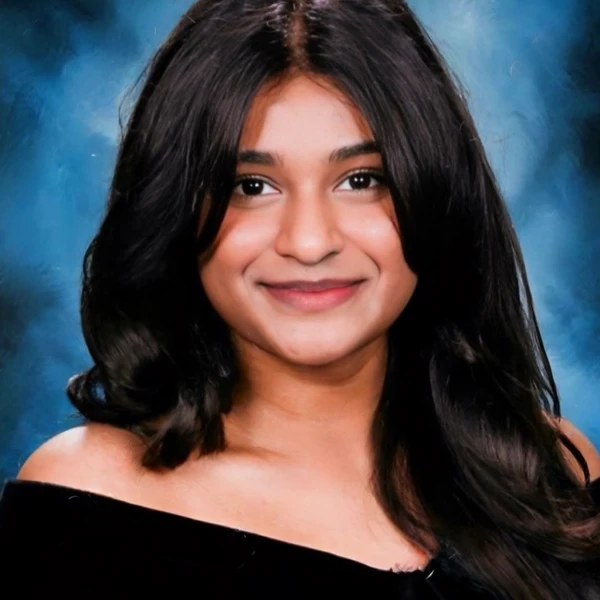
Jewel Joseph
1x
FinalistJewel Joseph
1x
FinalistBio
I am an undergraduate student at the University of South Florida majoring in Biomedical Sciences with a minor in Biomedical Anthropology, on a pre-medical track. My academic interests center on the intersections of biological science, public health, and mental well-being. Through my coursework, volunteer experience, and research interests, I am committed to understanding not only how the human body functions, but also how medical systems impact individuals and communities.
I have consistently prioritized academic excellence while balancing extracurricular involvement in science-based organizations and volunteer outreach. My long-term goal is to attend medical school and become a physician specializing in adolescent and community medicine. I aim to contribute to the medical field through culturally informed, compassionate care that addresses both physical and mental health, especially for underserved populations.
Education
University of South Florida-Main Campus
Bachelor's degree programMajors:
- Biological and Biomedical Sciences, Other
Miscellaneous
Desired degree level:
Doctoral degree program (PhD, MD, JD, etc.)
Graduate schools of interest:
Transfer schools of interest:
Majors of interest:
Career
Dream career field:
Medicine
Dream career goals:
Server
Raja Indian Cuisine and Bar2023 – 2023
Sports
Lacrosse
Junior Varsity2020 – 20211 year
Arts
School
Music2017 – 2022
Public services
Volunteering
Davita Dialysis — Shadowing2023 – 2024Volunteering
Speech and Debate — Judge2021 – 2024
Future Interests
Advocacy
Volunteering
Entrepreneurship
Manny and Sylvia Weiner Medical Scholarship
From the time I was a child, I was always curious about how the human body worked. I used to check out anatomy books from the library just to learn the names of bones and muscles. But my desire to become a doctor grew much deeper after watching members of my family suffer without adequate care, particularly mental health care. I’m a second-generation South Indian student, raised in a household full of expectations but not always equipped with understanding. As a result, I turned to school as my refuge. I studied hard, earned every opportunity, and never took a single moment for granted. Becoming a physician isn't just a career goal for me; it’s a mission to create the kind of support system I wish my family had access to, both emotionally and physically.
The road to medical school, however, is one that feels increasingly steep. Although I’ve been fortunate to attend college and pursue a pre-med track, my financial situation weighs heavily on every decision I make. My family cannot afford to support me, and I’m currently working part-time and applying for every scholarship I qualify for. I’ve also had to take on medical bills of my own recently, which has made budgeting for essentials, like rent and groceries, a constant source of stress. Sometimes it feels like I’m walking a tightrope: managing classes, labs, MCAT prep, and work all at once. I do all of this not because it’s easy, but because I believe in the purpose behind it. Still, the financial pressure sometimes makes me feel like my dream is slipping away.
There have also been emotional and cultural obstacles. In my community, mental health struggles are rarely acknowledged, and pursuing medicine as a woman, especially one who prioritizes emotional care, is not always encouraged. I have had to fight to defend my goals, to be taken seriously, and to continue even when I felt isolated. But that fight has become part of who I am. It has made me more empathetic, more attentive, and more determined to be the kind of doctor who listens just as carefully as they treat.
I believe that these personal challenges will one day make me a better physician. When I walk into a patient’s room, I won’t be someone who only understands struggle from a textbook. I’ll understand what it feels like to choose between medication and groceries. I’ll know how it feels to be dismissed or misunderstood. I’ll remember what it meant to have someone believe in me when I almost gave up. These experiences have given me more than resilience; they’ve given me purpose.
Receiving this scholarship would not only ease my financial burden; it would serve as a symbol that others believe in me, too. It would bring me one step closer to a future where I can give back through care, especially in communities like my own that often go unseen. I am not just pursuing medicine for myself. I am doing it for the families who sit in waiting rooms and wonder if they’ll be heard. I’m doing it for the younger version of me who needed a doctor that didn’t just treat symptoms, but treated the person.
Thank you for considering my story. I am deeply committed to honoring the memory of Emanuel and Sylvia Weiner by becoming the kind of doctor whose care reflects both scientific excellence and human understanding.
RonranGlee Literary Scholarship
“Say to yourself in the early morning: I shall meet today inquisitive, ungrateful, violent, treacherous, envious, uncharitable men. All these things have come upon them through ignorance of real good and evil. But I have seen the beauty of good, and the ugliness of evil, and have recognized that the wrongdoer has a nature akin to my own, not of the same blood or seed, but sharing in the same mind, the same fragment of divinity. Therefore, I cannot be harmed by any of them, for no one can involve me in what is degrading. I cannot be angry with my kinsman, or hate him. We were born to work together, like feet, hands, eyelids, or the rows of upper and lower teeth. To work against one another is therefore contrary to nature, and it is acting against one another to be angry or to turn away.” - Marcus Aurelius’s Meditations (Book 2, Paragraph 1)
In this passage from Meditations, Marcus Aurelius asserts that the foundation of personal peace and ethical strength lies in seeing others, however flawed, not as enemies, but as extensions of the same human divinity. By reframing confrontation through empathy and shared purpose, he reveals a radical worldview: resistance to harm is best achieved through unity, not retaliation.
This reflection, which opens Book 2 of Meditations, is not simply a motivational note to start the day. It is a Stoic blueprint for how to endure the world without becoming its victim. Rather than focusing on the actions of those he expects to encounter, “ungrateful, violent, treacherous”, Marcus begins by reminding himself of their ignorance. Their behavior is not a calculated moral failure, but a reflection of blindness to “real good and evil.” This subtle shift allows him to depersonalize harm. People act in ugly ways not because they are irredeemable, but because they do not yet see what he sees. This is not a condescending excuse, but a compassionate one. Their cruelty is not about him. It is about their own lack of clarity.
This understanding leads to the heart of Marcus’s point: the shared “fragment of divinity.” Despite their wrongdoings, the individuals he meets are still kindred. They possess a rational soul; the same divine faculty that makes humans capable of reason, ethics, and virtue. This belief, rooted in Stoic cosmology, elevates moral disagreement from a battlefield of egos to a moment of spiritual divergence. If we are made of the same substance, harming another is self-harm. This reorientation transforms the adversary from a threat to an opportunity for deeper practice.
The most striking part of this passage is its metaphor of bodily cooperation: “We were born to work together, like feet, hands, eyelids...” Marcus does not choose idealized or glamorous metaphors; instead, he grounds his philosophy in the practical image of the human body, a system that functions best in harmony. Teeth grind against each other not in conflict, but in support of digestion. Eyelids do not argue about blinking. These examples are not just poetic, they are profoundly humbling. If a hand slapped the other, the body would be considered ill. Likewise, social disharmony is not merely frustrating, it is unnatural. Division, in this light, is a sickness of the collective soul.
What makes Marcus’s writing so compelling is that he never denies the reality of suffering. He acknowledges in the very first line that he will “meet today” these types of people. This is not a fantasy about a peaceful world, but a strategy for surviving a difficult one without succumbing to hatred or vengeance. “I cannot be harmed by any of them,” he says; not because they are harmless, but because he chooses not to absorb their harm. His resistance lies in integrity. He refuses to be “involved in what is degrading.” The ultimate shield, for him, is not revenge but detachment from degradation.
At the ethical core of the passage is a quiet, demanding challenge: Do not turn away. “To be angry or to turn away” is, in his view, to abandon our nature. This is perhaps the most difficult part of his Stoic command. The modern instinct is often to cancel, to avoid, to cut off. Marcus calls us to face what is ugly with grace. Not to excuse it, but to remain in relation with it without becoming it. The strength here is not passive endurance, but active commitment to humanity, even when humanity disappoints.
In an era increasingly marked by polarization, outrage, and division, Marcus’s ancient wisdom feels especially relevant. The idea that we are “born to work together” is not a soft moral plea; it is a philosophical stance that demands personal courage. It takes real strength to meet cruelty with calm, to witness ignorance and not be consumed by it. But in doing so, we resist the very forces that seek to divide and degrade.
This passage from Meditations offers more than a guide to daily patience, it is a spiritual ethic for living in an imperfect world. Marcus Aurelius does not offer comfort, but clarity. We are connected, always. To forget that is to act against nature. To remember it, even in hardship, is to remain whole.
Eitel Scholarship
As a dedicated student pursuing a degree in Biomedical Sciences with a minor in Biomedical Anthropology, I am committed to building a career that not only fulfills my personal aspirations but also serves my community and the world around me. The determination to earn my degree comes with challenges, especially as a woman balancing my educational journey with responsibilities at home. This scholarship would greatly ease the financial burden, enabling me to continue my education without the constant worry of how to afford tuition and living expenses.
Growing up in a big city with a high poverty rate such as Philadelphia has shaped my values and ambitions, and I’ve always been motivated by the belief that education is a tool for empowerment. Despite my passion for learning, the rising costs of higher education have often felt like an insurmountable obstacle. This scholarship would directly contribute to my ability to focus on my studies, reduce my financial stress, and continue my journey toward a career in Medicine.
With this scholarship, I will be able to pursue my dreams of attending medical school, fully immersing myself in the academic opportunities that will enable me to contribute meaningfully to my community and profession. My vision is to use my degree to not only excel professionally but also to advocate for women's health and empower other mothers to pursue their own educational and career goals, no matter the obstacles.
Thank you for considering my application for this scholarship. It would truly be an honor to receive this financial support to continue pursuing my dreams and witnessing to others through my work.
Luis Escobar III Foundation Scholarship
From a young age, I’ve been fascinated by how things work; taking apart old radios, tinkering with wires, and always asking “why.” Over time, this curiosity evolved into a passion for engineering. I saw it not just as a career path but as a calling. A way to solve real-world problems with integrity, creativity, and faith. I believe God designed me with both a technical mind and a compassionate heart, and I want to use both to serve others and bring Him glory.
I am currently a Sophomore at the University of South Florida in Florida, maintaining a GPA above 3.0 while preparing to pursue a degree in Biomedical Sciences. My academic journey has been shaped by both excitement and challenge. While I’ve been blessed with the support of my family and church community, the rising costs of higher education have placed a heavy burden on my shoulders. As someone who dreams of making an impact in underserved communities through sustainable engineering solutions, the financial weight of tuition and resources often feels like an obstacle between me and that dream.
But my faith keeps me grounded. I attend church weekly and serve actively in our youth and tech ministries. Whether it’s volunteering for local missions, helping manage sound for worship services, or mentoring younger students in STEM, my goal is always to reflect Christ’s love through action. As I enter new phases of life, I intend to stay rooted in a faith community whether that means joining a college ministry, attending Bible study, or using my gifts in campus outreach.
My long-term vision is to specialize in Medical devices and work on projects that uplift marginalized communities. I see engineering not just as a science but as a service. Through it, I hope to design systems that meet essential needs: clean water, stable housing, or efficient healthcare delivery, while also sharing Christ through my words and example. The world doesn’t just need smart engineers; it needs godly ones.
Receiving this scholarship would be a profound blessing. It would relieve some of the financial stress that currently limits my focus and allow me to invest more fully in both my academics and my service. More importantly, it would be a reminder that God provides through people who believe in nurturing the next generation of Christian leaders. With this support, I would be able to move forward with confidence studying hard, growing in faith, and preparing to engineer change for good.
Thank you for considering me for this opportunity.
Sloane Stephens Doc & Glo Scholarship
Growing up as a South Indian, second-generation child in a culturally traditional household, I was raised with high expectations, unspoken rules, and the constant weight of representation. I was expected to be obedient, to marry within my caste, to never challenge the status quo. But from a young age, I felt a different calling; a desire to understand, to care, and most of all, to carve out a future that felt like mine.
School became my refuge. While home was filled with pressure and the sting of emotional wounds, especially from a brother whose words often cut deeper than silence. School offered me structure, purpose, and escape. I poured myself into learning because it gave me something no one could take away: possibility. It was through books, labs, and late-night study sessions that I began to dream of becoming a doctor; not just to succeed, but to help others navigate pain and uncertainty with the compassion I longed for myself.
Now, I’m pursuing a dual degree in Biomedical Sciences and Biomedical Anthropology at the University of South Florida. I chose this path because I believe medicine isn’t just about biology, it’s about people, culture, empathy, and the systems that shape health. I currently serve as Social Media Manager for the Biomedical Anthropology Club, where I help amplify conversations around global health and representation. I also shadow a dialysis nurse at DaVita, where I’ve seen how critical it is to care for patients with more than just treatment plans; with dignity, listening, and presence.
My dream is to become a physician who serves not just the body, but the whole person, especially for youth and communities who are too often overlooked. I want to address both physical and mental health, and advocate for equity in care. One day, I hope to open a community clinic focused on culturally competent healthcare and wellness education for underserved populations.
But this journey isn’t without challenges. Moving away from home to pursue school and healing came with financial stress, emotional distance from my mother (the one person I still feel tied to), and the difficult reality of choosing myself over tradition. I’ve applied for scholarships, taken on leadership roles, and said no to paths that didn’t align with who I’m becoming. And through it all, I’ve held onto one truth: I’m allowed to dream bigger than the boxes I was placed in.
The values of resilience, kindness, and self-belief that guided Sloane Stephens through her journey resonate deeply with me. Like her, I know what it means to push forward when the odds feel stacked against you. I know what it means to build something meaningful not just for yourself, but for the people who come after you. Receiving the Doc & Glo Scholarship would be more than financial support, it would be an affirmation that I am walking the right path, even when it’s the hardest one to follow.
Thank you for seeing the strength in stories like mine.
Baby OG: Next Gen Female Visionary Scholarship
My name is Jewel Joseph, and I’m a Biomedical Sciences and Biomedical Anthropology major at the University of South Florida. I am a second-generation South Asian student driven by a deep desire to create space in medicine for empathy, equity, and representation. Growing up, I found strength in academics when other areas of my life felt out of control. I care deeply about mental health, especially in young people and underrepresented communities, because I know firsthand how isolating it can feel to carry heavy expectations and not feel seen. What drives me is the belief that healing should be holistic and accessible and that I have a role to play in reshaping what care looks like.
I feel deeply connected to the issue of youth mental health. For many young people, especially students of color, mental health struggles are dismissed, misunderstood, or met with silence. In my own life, I’ve had to unlearn the stigma surrounding vulnerability and learn how to prioritize emotional well-being without guilt. Watching friends suffer quietly and seeing how many never get the help they need drives me to speak up and act. It’s a personal mission rooted in empathy and lived experience.
If I had the power, I would integrate culturally competent mental health education into school systems and medical training programs. I would create accessible community-based programs led by professionals who understand the cultural nuances of their audience. I’d also use storytelling through social media, public health campaigns, and student-led initiatives to reduce stigma and humanize mental health struggles. My dream is to help design a future where asking for help is a sign of strength, not shame.
I chose Biomedical Sciences because I want to understand the science of healing, and Biomedical Anthropology because I want to understand the people behind the diagnoses. I’ve always been fascinated by how cultural beliefs, identity, and environment shape health outcomes. My goal is to become a physician who not only treats symptoms but sees the whole person. I want to be someone who listens, empowers, and bridges the gap between medicine and humanity.
In the next five years, I want to enter medical school. To get there, I’m prioritizing strong academic performance, gaining clinical experience through shadowing and internships, and engaging in meaningful volunteer work. I’m also working on building my leadership and communication skills so I can be a more effective advocate for patients and peers. I know this journey won’t be easy, but I’m fully committed to the long nights, hard work, and growth it requires.
Education has shown me that I am more than what others expect of me. It has helped me reclaim my voice, discover what matters to me, and shape a purpose rooted in care, service, and social justice. Through classes, clubs, and clinical exposure, I’ve learned that I want to heal but not just through medicine. I want to heal broken systems, overlooked communities, and outdated mindsets. Education has made that vision feel not just possible, but necessary.
Being a woman, especially in STEM, means constantly navigating spaces where I feel the need to prove my worth. In my culture, being outspoken or ambitious can be frowned upon but I’ve learned to take pride in my goals, not apologize for them. My identity pushes me to work harder and speak louder not just for myself, but for other young women who are told to shrink themselves. It’s also made me more compassionate toward others who feel unseen.
Leadership means creating space for others to thrive, not just leading from the front. I’ve embodied this through my role as Social Media Manager for USF’s Biomedical Anthropology Club, where I amplify the voices of my peers and promote awareness around global health issues. I’ve also led by example in group projects and classroom settings always striving to make sure everyone feels heard, respected, and empowered. Leadership, to me, is rooted in empathy and inclusion.
One of the most defining times I had to be resilient was choosing to move out and pursue school on my own terms, despite cultural pressure to follow a more traditional path. Financially, emotionally, and socially, it was hard but it taught me that I’m capable of carving out a life that’s authentic. I learned that resilience isn’t about being unaffected by struggle it’s about choosing to keep going with grace and purpose.
This scholarship would allow me to focus more fully on my academics, research, and community work without the burden of financial stress. It would open doors to opportunities I might otherwise have to turn down. More than anything, it would be a vote of confidence in my vision an affirmation that my identity, voice, and dreams matter in spaces where people like me are still underrepresented. Your support would bring me one step closer to becoming the physician and advocate I aspire to be.
Kalia D. Davis Memorial Scholarship
My name is Jewel Joseph, and I’m currently a student at the University of South Florida, pursuing a dual academic path in Biomedical Sciences and Biomedical Anthropology. I plan to attend medical school after completing my undergraduate degree, with the long-term goal of becoming a physician who not only treats patients clinically, but also advocates for youth mental health and systemic improvements in the healthcare field. Being considered for the Kalia D. Davis Memorial Scholarship is a profound honor, especially after reading about Kalia’s story, which so closely resonates with many of my own values and aspirations.
Kalia's commitment to excellence in every area of her life; from academics to athletics to leadership, reminds me of the standard I try to uphold in everything I do. In high school, I challenged myself academically and graduated with an AICE diploma. Outside the classroom, I was a varsity member of the Speech and Debate team, where I developed both my voice and my sense of purpose. These early experiences shaped the strong work ethic I continue to carry into college.
Currently, I serve as the Social Media Manager for the Biomedical Anthropology Club at USF, where I help raise awareness around public health, research, and cultural understandings of medicine. I’m also gaining clinical experience by shadowing a dialysis nurse at DaVita, where I have observed the real-life challenges patients face and the compassion required of healthcare workers. These experiences have shown me how important it is to not only excel academically but to also lead with empathy and service. Like Kalia, I believe in being someone that others can count on for encouragement, for support, and for leadership.
Mental health advocacy is a cause close to my heart. As a second-generation college student from a culturally strict household, I’ve experienced the pressure of meeting high expectations while navigating my own mental health journey. I know what it feels like to feel isolated or misunderstood, and I’ve grown passionate about creating space for others to feel seen, heard, and supported. I hope to one day use my medical degree to support adolescents and young adults who are struggling especially those from marginalized or underserved backgrounds.
Financially, this scholarship would be a tremendous support. While my parents are proud of my academic journey, our financial resources are limited. I am working hard to maintain high grades and stay involved on campus, and this scholarship would ease the financial burden so that I can continue pursuing both academic excellence and community leadership without the added stress of debt or financial strain. It would give me more time to focus on the work I truly care about: improving lives through science, service, and empathy.
Most importantly, receiving a scholarship in Kalia’s name would be an emotional honor. Her story is not only inspiring but also a reminder of the impact one person can make through kindness, resilience, and ambition. If awarded this scholarship, I would carry her legacy with me through every exam I take, every patient I speak with, and every young person I strive to uplift. Her memory will be a source of motivation for me to continue showing up with purpose and passion in all that I do.
ADHDAdvisor Scholarship for Health Students
Over the years, my own experiences with mental health have helped me become more empathetic and aware of the emotional struggles that others may face, even when they are not openly expressed. I have made it a priority to support friends, classmates, and peers by being a consistent and judgment-free presence. Sometimes this means checking in with someone who seems quiet or withdrawn, listening without trying to fix everything, or encouraging someone to seek help when they feel overwhelmed. These small actions can make a big difference, especially for people who are unsure if their emotions are valid or worth talking about.
In school settings, I have often been the person that others feel comfortable confiding in. I do not take this lightly. I always try to respond with patience, honesty, and warmth. I remind others that their feelings are real and that it is okay to ask for support. I also share tools and resources that have helped me, such as journaling, campus counseling, and creating balanced schedules. My goal is not to act as a therapist, but to help others feel less alone and more empowered to take care of themselves.
Looking forward, I plan to become a physician who recognizes the importance of mental and emotional health in every patient interaction. I want to work in adolescent and community health, where I can integrate mental wellness education into everyday care. I believe it is essential that healthcare professionals listen to the whole person, not just the symptoms they present. I want to normalize open conversations about anxiety, depression, stress, and self-image within medical spaces. My hope is to reduce stigma, build trust, and help individuals feel truly understood.
Through both my studies and my future career, I aim to continue being a supportive presence for others—one who leads with compassion, advocates for mental health access, and treats emotional well-being as a vital part of healthcare.
Online ADHD Diagnosis Mental Health Scholarship for Women
Mental health plays a significant role in both my academic performance and personal life. Like many students, I often feel the pressure to maintain high grades, participate in extracurricular activities, and plan for my future all at once. These expectations can be overwhelming and, if left unaddressed, can lead to burnout and anxiety. Over time, I’ve learned that managing my mental health is not separate from being a successful student, it is essential to it.
There have been times when my mental health has directly affected my ability to perform at my best. During periods of high stress, I sometimes experience difficulty concentrating, procrastination, or self-doubt. Even when I have the knowledge and skills to complete a task, anxiety can make simple assignments feel much more difficult. In the past, I used to push through these feelings and ignore them, telling myself that mental health had to take a backseat to academic responsibilities. However, I’ve since come to understand that this approach only makes things worse in the long run.
Today, I view mental health as something that requires continuous attention and care, especially while in school. When I take care of my mental well-being, I think more clearly, retain information more effectively, and feel more engaged with my goals. I have more energy to build healthy relationships and contribute to my community. In other words, prioritizing mental health has made me a better student, friend, and person.
To maintain that balance, I’ve developed a set of strategies that help me stay grounded. I keep a structured schedule that includes breaks, realistic goals, and time for rest. I try not to overcommit, even when I’m tempted to take on more than I can handle. I’ve learned to recognize the early signs of stress and respond to them before they escalate. Sometimes that means taking a short walk, journaling, or talking to someone I trust. I also use mindfulness techniques such as deep breathing and meditation to reduce anxiety during busy or challenging weeks.
On a deeper level, I try to maintain perspective. I remind myself that academic performance is important, but it does not define my worth. I try to stay connected to the reasons why I’m pursuing my education in the first place because I want to help people, learn continuously, and make a difference in the world. That sense of purpose helps me stay motivated even when things become difficult.
I believe mental health should be openly discussed and supported in academic environments. When students feel safe asking for help, they are more likely to succeed, not just academically, but personally. By making my mental health a priority, I am creating a foundation that supports both my current studies and my future goals.
Elevate Mental Health Awareness Scholarship
My experience with mental health has played a significant role in shaping who I am, how I relate to others, and why I have chosen to pursue a career in medicine. Although mental health challenges are often invisible, they leave a lasting impact. In my case, they gave me a new sense of empathy, purpose, and direction that I might not have otherwise found.
For much of my life, I struggled with feelings of anxiety and low self-worth. I often felt like I did not belong, especially in social environments where I stood out for reasons I could not control. These feelings were intensified by experiences with bullying and the pressure to meet unrealistic standards. I internalized a great deal of the negativity directed toward me, and over time, this affected how I saw myself. I pushed my emotions aside and focused entirely on academics. School became the one place where I felt I had control, where effort and focus paid off. I found comfort in learning, but I also carried a quiet weight that I did not know how to name.
Eventually, I began to understand that what I was experiencing was not something I had to carry alone. Through time, reflection, and open conversations with people I trusted, I began to understand the importance of mental health and emotional care. I realized that strength does not come from hiding pain, but from confronting it. Seeking support, setting boundaries, and learning to speak about mental health openly changed how I related to myself. I learned to replace self-criticism with patience and started rebuilding my confidence from within.
These experiences also shaped the way I approach relationships. I became a more active listener and a more compassionate friend. I started noticing when others were struggling, even if they did not say it out loud. My personal experience gave me the ability to relate to others without judgment and to be a source of encouragement. Mental health awareness allowed me to form deeper, more meaningful connections and gave me a stronger sense of social responsibility.
Most importantly, my experience with mental health has influenced my career aspirations. I want to become a physician who does more than diagnose and treat physical conditions. I want to be someone who understands that health is complex, and that mental wellness is a critical part of a person’s overall well-being. My goal is to work in adolescent and community medicine, where I can support young people who are navigating similar challenges. I want to promote early intervention, normalize conversations about mental health in clinical settings, and provide care that addresses the whole person.
My journey has taught me that healing is not linear and that it takes both personal strength and support systems to thrive. As I move forward in the STEM field, I carry with me not only scientific knowledge, but also lived experience. That combination drives me to become a more thoughtful, human-centered future physician; someone who is committed to making others feel seen, safe, and understood.
Learner Calculus Scholarship
Calculus is one of the most important branches of mathematics used in the STEM field because it allows us to describe and understand change. Unlike algebra or geometry, which often focus on fixed relationships or static shapes, calculus helps scientists and engineers examine systems that are dynamic and constantly evolving. This ability to model change is essential to understanding natural phenomena and solving real-world problems in science, technology, engineering, and mathematics.
In biology and medicine, calculus is used to model processes such as population growth, the spread of infectious diseases, and the rates at which medications are absorbed and metabolized in the body. These models, often built using differential equations, help predict how systems behave over time. For example, when doctors prescribe medications, pharmacokinetics relies on calculus to determine how drug concentrations change in the bloodstream. This ensures treatments are both safe and effective.
In physics, calculus plays a fundamental role in understanding motion, energy, forces, and gravity. It is used to derive key equations that describe how objects move through space, how heat transfers between materials, and how electrical circuits function. Without calculus, it would be nearly impossible to explain the physical laws that govern our universe. For instance, Newton's laws of motion and the principles of electromagnetism are based on the mathematical framework provided by calculus.
In engineering, calculus is essential for designing systems and solving complex problems involving change and optimization. Engineers use calculus to analyze forces in structures, fluid flow in pipelines, and energy efficiency in machines. Whether building bridges, airplanes, or computer chips, engineers depend on calculus to ensure precision and functionality. The ability to calculate limits, rates of change, and areas under curves is critical to making accurate design decisions.
In computer science, calculus supports the development of algorithms, simulations, and artificial intelligence. Calculus is used in machine learning to minimize error functions and improve the accuracy of predictive models. It also contributes to graphics rendering, allowing software developers to create realistic animations and images. Furthermore, calculus is vital in data science, where it helps optimize models and interpret complex datasets.
Even in chemistry, calculus helps explain reaction rates and changes in energy during chemical processes. It allows chemists to understand how reactants convert into products over time and how temperature and pressure influence these changes.
Beyond its applications, calculus also sharpens analytical thinking and problem-solving skills. It teaches students how to break down complex problems into manageable steps and how to interpret patterns of change. These skills are necessary in all STEM careers.
In conclusion, calculus is more than just a subject required for a degree. It is the foundation of many scientific and technological advancements. A strong understanding of calculus allows students and professionals in STEM to model real-world systems, predict outcomes, and create innovative solutions that improve lives and drive progress across industries.
Learner Tutoring Innovators of Color in STEM Scholarship
My decision to pursue a degree in STEM, specifically in biomedical sciences, stems from both a deep academic interest in how the human body works and a personal commitment to making healthcare more compassionate, inclusive, and accessible. From a young age, I gravitated toward science not only because it challenged me intellectually, but because it offered answers to questions that mattered: Why do people get sick? How do we heal? How can we prevent suffering? The more I learned, the more I realized that medicine wasn’t just about biology; it was about people. It was about using science to restore not just health, but dignity.
Through my studies at the University of South Florida, I’ve gained a stronger understanding of the connections between biological processes, environmental influences, and public health outcomes. Majoring in Biomedical Sciences and minoring in Biomedical Anthropology has given me the tools to understand how systemic issues like lack of access to care or cultural miscommunication can lead to poor health outcomes. These intersections have strengthened my desire to become a physician who can address not only physical symptoms, but also the social and psychological factors that affect patients’ lives.
As a person of color, I recognize that representation in STEM is not just important, it is urgent. The underrepresentation of minorities in medicine, research, and leadership roles perpetuates disparities in care, trust, and innovation. When patients don’t see themselves reflected in their providers, or when scientists overlook diverse populations in clinical studies, entire communities are left behind. My goal is to be part of changing that.
I hope to make an impact in the STEM field by bringing not only medical knowledge to the table but also cultural awareness, lived experience, and a deep sense of empathy. I plan to specialize in adolescent and community health because I want to empower young people, especially those in underserved populations, to take control of their well-being. I want to advocate for earlier mental health interventions, lead preventative health education efforts, and challenge the idea that good healthcare is only for those who can afford it or understand the system.
Beyond clinical care, I’m committed to mentoring students of color who are interested in STEM fields but may lack the resources or encouragement to pursue them. I want to help bridge the confidence gap that often exists for first-generation or minority students in science. Whether through outreach programs, public health advocacy, or simply showing up in spaces where we’re often underrepresented, I plan to use my career as a platform for change.
In short, I chose STEM because it’s where I can combine my passion for science with my drive to serve. I want to help others heal, not just with medicine, but with understanding. And as a person of color in the STEM field, I’m not just pursuing a degree; I’m helping build a future where all people are seen, valued, and cared for with equity and respect.
Women in STEM Scholarship
As a South Indian, second-generation woman, my path to embracing a future in STEM has been shaped not only by academic passion but by resilience in the face of adversity. I was raised in an environment where I stood out culturally, physically, and emotionally. From a young age, I faced bullying for my skin tone, my cultural background, and simply for being different. What helped me persist was not just strength, but curiosity. While the world around me tried to diminish my voice, I turned to learning as a way to reclaim it.
School became my safe space, and science, in particular, became my anchor. I found comfort in biology’s logic and fascination in the way the human body works. Science didn’t ask me to explain where I came from or change who I was. It offered truth, structure, and a glimpse into something larger than myself. It was through STEM that I realized I didn’t just want to survive adversity; I wanted to help others heal from it.
Now on a pre-medical track, I am pursuing a career in medicine because I want to bridge the gap between physical and mental healthcare, especially for younger generations. As someone who experienced the long-term effects of isolation and cultural microaggressions, I understand that health isn’t just about treating illness. It’s about creating environments where people feel seen, safe, and supported. I plan to focus on adolescent and community medicine, with the goal of making healthcare more accessible, holistic, and culturally inclusive.
What drives me is not only a love of science, but a deep desire to serve. I am empowered by the knowledge that representation in STEM matters. Too often, women, especially women of color, are underrepresented in medical and scientific fields. I want to be part of changing that. I want to be someone who stands confidently in a white coat, not only healing patients but inspiring young girls who might otherwise feel invisible in the world of science.
Receiving this scholarship would be a transformative step in that journey. It would not only relieve financial burdens that accompany higher education but would also surround me with a community of like-minded women, fueled by curiosity, knowledge, and purpose. I am excited by the idea of joining a network of scholars who are not just academically driven, but socially conscious, courageous, and ready to reshape the future of STEM together.
I believe that the future of medicine, and STEM at large, depends on diversity, empathy, and interdisciplinary thinking. As a future doctor, I want to advocate for mental health education in schools, lead community health initiatives, and mentor girls from immigrant families who don’t see enough examples of themselves in science. Through collaboration and continuous learning, I hope to make the field of healthcare more equitable and compassionate for all.
Being a woman in STEM is more than a title; it is a commitment to curiosity, progress, and inclusion. I am proud to be part of a generation of women who are no longer waiting for permission to take up space in science, technology, engineering, and medicine. We are claiming our place with boldness, with intellect, and with the knowledge that our presence will make these fields not only more innovative, but more just.
This scholarship will support not just my education, but my mission. And in doing so, it will empower me to empower others.
Pastor Thomas Rorie Jr. Furthering Education Scholarship
Growing up as a South Indian, second-generation child in a predominantly white suburban town, I became painfully aware of my difference before I fully understood who I was. My traditional lunches were met with wrinkled noses and mocking comments. Classmates teased my language when I spoke with family in public and questioned why my skin was darker. The bullying didn’t always sound like slurs; it was often the offhand comments, the subtle exclusions, the stares that lingered a second too long. These microaggressions were frequent and isolating, slowly chipping away at my self-esteem.
In those early years, I didn’t have the tools or words to name what I was experiencing. All I knew was that I didn’t belong. The cafeteria, the playground, even the classroom; all spaces where other kids found joy were constant reminders of how out of place I felt. But amid the rejection and confusion, I found one place where I could breathe: school. My textbooks didn’t judge me. Math problems didn’t mock me. Science labs didn’t care what I looked like. In learning, I found refuge. I wasn’t just a student; I was someone with purpose, structure, and potential. The classroom was the first place I ever felt in control, and I clung to it as a lifeline.
As I grew older, I carried that sense of isolation with me, even when the bullying became more subtle. I developed insecurities about my body and appearance, struggling to meet an impossible standard that didn't reflect my cultural background or reality. It wasn’t until I moved away from my hometown for college that I began to feel any real sense of belonging. The change in environment, the exposure to diverse peers, and the focus on my health and self-care allowed me to regain confidence and, more importantly, reclaim my identity. I lost weight, yes, but I gained clarity. I stopped trying to shrink myself and started stepping into who I was with pride. I began embracing my culture rather than hiding it, learning to cook family recipes, speaking Malayalam more confidently, and celebrating my heritage without apology.
Even as I became more self-assured, the microaggressions didn’t disappear. But I had grown. I learned to challenge ignorance with patience or distance, depending on the situation. I became more vocal, more aware, and more compassionate, not just toward others, but toward myself. And somewhere along this journey of healing, a new purpose began to emerge: I wanted to help others heal, too.
That desire brought me to medicine. At first, I was drawn to the science of it; the complexity of the human body, the problem-solving, the incredible potential to restore life. But as I volunteered at community health clinics and shadowed physicians, I realized what truly captivated me was the human connection. I watched as doctors not only treated patients but listened to them, advocated for them, and educated them. I saw how much power there was in simply making someone feel seen and heard. And I remembered all the times I had felt invisible. That’s when I knew I didn’t just want to study medicine. I wanted to practice it with empathy and cultural sensitivity at its core.
I am currently pursuing a degree in Biology on the pre-medical track. I’ve chosen this field because it allows me to marry scientific inquiry with compassionate care. My academic interests lie in adolescent medicine and pediatrics, with a particular focus on the intersection of physical and mental health. Young people today are navigating an overwhelming world; social media, academic pressure, identity crises, and systemic inequalities all impact their well-being. I want to be a doctor who addresses not just physical symptoms but also the emotional and psychological weight that so many young people carry, often silently.
My long-term goal is to become a physician who serves underrepresented and underserved populations. I hope to open a community-based clinic that integrates physical healthcare, mental health services, and educational programming. This clinic wouldn’t just be a place to get vaccinations or annual checkups. It would be a sanctuary for healing, growth, and empowerment. I envision culturally competent staff, multilingual resources, peer mentorship programs, and workshops for families that demystify medical care and promote wellness. My dream is to create a space where no child feels the way I once did: unwelcome, unheard, and unseen.
Along the way, I also want to mentor students who, like me, come from immigrant families and feel out of place in academic or professional spaces. Representation matters, and it’s difficult to aspire to careers you’ve never seen someone like you pursue. I want to help break those barriers not only by becoming a physician but by helping others do the same.
This vision is ambitious, and I know that realizing it will take years of hard work, study, and sacrifice. That’s why receiving this scholarship would be so meaningful to me. As the child of immigrants, I’ve watched my parents work long hours and make countless sacrifices to give me an education they never had access to. Our financial situation has always been modest, and while my parents have never let that stop them from supporting my goals, the burden of higher education is significant. Tuition, textbooks, exam fees, and application costs add up quickly and those financial concerns often dictate how many opportunities I can say yes to.
This scholarship would allow me to fully invest in my education and pre-medical journey without the constant anxiety of financial limitations. It would give me the flexibility to pursue research, internships, and volunteer work that I might otherwise have to forgo in order to work part-time jobs. It would allow me to attend conferences, connect with mentors, and prepare for the MCAT with the resources I need to succeed. But more than anything, this scholarship would be an affirmation, a reminder that my story, my struggle, and my goals matter.
I know I still have a long way to go. The path to becoming a physician is challenging, and I’m prepared for that. But I also know that everything I’ve experienced so far: every moment of doubt, every lesson in resilience, every academic hurdle and cultural roadblock, has prepared me for this journey. I am not just pursuing medicine because it’s a respected profession. I am pursuing it because I want to change lives, starting with my own.
My story is not unique, and that’s exactly why it matters. There are so many young people who have been made to feel small, unworthy, or invisible simply because of who they are or where they come from. I want to be a reminder that they are capable, deserving, and powerful. I want to be the kind of doctor who listens deeply, speaks truthfully, and heals completely.
With your support, I will continue forward; rooted in my identity, driven by purpose, and committed to building a future in medicine that is as inclusive, compassionate, and transformative as it is scientific. This scholarship is not just a financial gift; it is a partnership in my mission to bring healing where it’s needed most. And I will carry that mission with me every step of the way.
Eric W. Larson Memorial STEM Scholarship
Growing up as a South Indian, second-generation child in a predominantly white American community came with both invisible and visible challenges. From an early age, I knew I was different, and not in a way that was celebrated. I was the only kid with homemade curry in my lunchbox, the only one who didn’t have a name teachers could pronounce easily, and the only one who seemed to be left out when it came to birthday party invites or group projects. What started as curiosity from others about my culture often turned into mockery, stereotyping, and exclusion. I was bullied for my looks, my food, my body, and even the religion my family practiced. The world around me made it very clear: I didn’t belong.
Amidst this daily environment of discomfort and isolation, I found one space where I always felt grounded and safe; school. While my peers had their social circles, sleepovers, and weekend get-togethers, I had my notebooks, textbooks, and curiosity. Learning became my escape from a world that constantly reminded me of my difference. I poured myself into my studies not just because I enjoyed learning, but because it gave me a sense of purpose. In the world of science and math, there was no bullying. There were just problems and solutions, and if I worked hard enough, I could find the answers.
The older I got, the more I understood the long-term impact that bullying and racial microaggressions had on my mental health and self-image. I internalized the negativity and felt ashamed of my body, my heritage, and even my voice. It wasn’t until I moved away from my hometown that I began to truly unlearn these toxic beliefs. As I began to prioritize my health, lose weight, and meet more diverse people in college, I finally started to feel accepted—but more importantly, I started to accept myself. I realized that confidence didn’t come from blending in; it came from embracing every part of myself, especially the ones I was once told to hide.
Through this journey of healing, I began to reflect on the connection between physical health, mental health, and self-worth. It became clear to me that health is not just about treating illness. It’s about creating a foundation for a person to live fully, fearlessly, and with dignity. This is what inspired me to pursue a career in medicine.
I want to become a doctor not only because I love science, but because I know firsthand what it feels like to be overlooked, misjudged, and dismissed. I want to be the kind of physician who creates a safe space for young people, especially those from underrepresented backgrounds, so they feel seen, heard, and valued. I want to advocate for early mental health screening in primary care, normalize culturally competent care, and dismantle stigma around race, body image, and mental illness in healthcare settings.
My interest in medicine is fueled by both personal experience and academic drive. I’ve sought out every opportunity to deepen my understanding of health care, from shadowing physicians and volunteering in clinics to participating in STEM clubs and completing advanced coursework. These experiences confirmed for me that medicine is where my passion and purpose intersect. It is a field that challenges my intellect while feeding my empathy, and there is nothing else I’d rather dedicate my life to.
Being a second-generation immigrant has also shaped my perspective in powerful ways. I have watched my parents work tirelessly to build a life from scratch, balancing cultural expectations with the pressure of assimilation. I’ve seen the gaps in the healthcare system when language barriers get in the way of adequate treatment or when cultural differences are misinterpreted as noncompliance. These moments are not just anecdotal, they are evidence of the inequities I hope to address as a future physician. I want to work in underserved communities, open clinics that provide affordable and culturally respectful care, and mentor minority youth who dream of entering the healthcare field but don’t see themselves reflected in it.
This scholarship would not only ease the financial burden of my education, but it would also be a symbolic recognition of everything I’ve overcome. For years, I was told, directly or indirectly, that I wasn’t enough. That I was too brown, too quiet, too different to succeed. But now, I know that those very things are my strengths. My culture taught me resilience. My adversity taught me empathy. My education gave me voice.
With your support, I will continue this journey; not just to become a doctor, but to become a force of change in a system that desperately needs more compassion, more representation, and more humanity. I am ready to serve, to lead, and to heal, not just because of what I’ve been through, but because of what I believe in: a future where every child, no matter where they come from, feels worthy of care and capable of thriving.