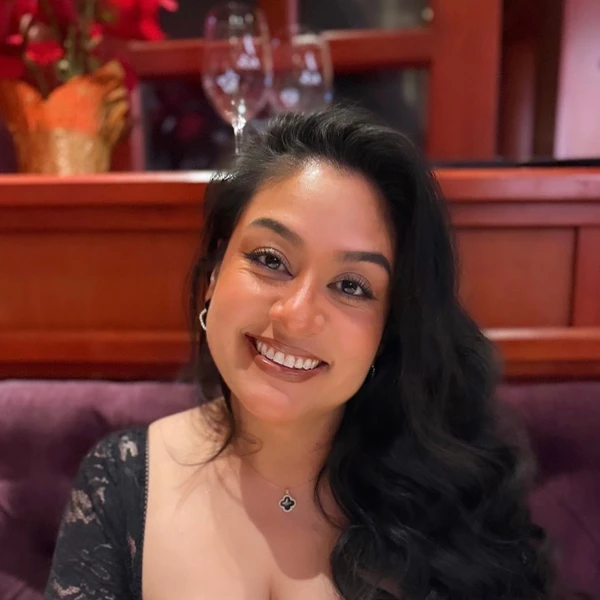
Jessika Bade
1x
Finalist
Jessika Bade
1x
FinalistBio
I am a dedicated educator with 12 years of experience serving students in low-income schools. I’m currently balancing my professional role with my journey as a graduate student at UTSA, where I am pursuing my Master’s in Literacy on the track to become a Certified Academic Language Therapist (CALT) as well as Reading Specialist-certified.
My three daughters keep me busy with varsity cheer, varsity/club softball, club volleyball, and everything in between, but they also inspire my passion for literacy and community leadership.
Whether I’m leading outreach through Northrock Church for “Serve Day” or training to support students with dyslexia, my goal is to empower the next generation of readers and leaders in San Antonio.
Education
The University of Texas at San Antonio
Master's degree programMajors:
- Literature
Texas A & M University-Kingsville
Bachelor's degree programMajors:
- Sociology
- Psychology, General
Del Mar College
Associate's degree programMajors:
- Liberal Arts and Sciences, General Studies and Humanities
Tuloso-midway High School
High SchoolMiscellaneous
Desired degree level:
Doctoral degree program (PhD, MD, JD, etc.)
Graduate schools of interest:
Transfer schools of interest:
Majors of interest:
Career
Dream career field:
Education
Dream career goals:
Public services
Volunteering
NorthRock Church — Community Outreach Group Leader2024 – 2025
Future Nonprofit Leaders Award
The most impactful advice I ever gave wasn’t found in a textbook; it was delivered to a friend sitting on my porch, overwhelmed by a local housing crisis that threatened her family. While others offered "side with me" sympathy, I found myself pulling out a legal pad to map out the root causes and potential resources. I realized then that my greatest strength isn't just empathy, it is the ability to look at a chaotic problem and find the thread of a solution. This drive to be a "solution-seeker" is what draws me to the nonprofit sector. I don’t just want to witness change; I want to engineer it.
I am pursuing a career in the nonprofit world because I believe that the most sustainable way to help people is to help them find the good in themselves. My passion for this sector is rooted in a holistic, "whole-person" approach to advocacy. In my experience, the issues facing our communities, whether they be educational gaps, food insecurity, or social injustice, are never isolated incidents. They are symptoms of deeper, systemic root causes. My mission is to move past the temporary "band-aid" and engage in the restorative work that allows individuals to regain their agency and presence.
I hope to create a positive impact by building systems where social-emotional competencies are treated as essential tools for success. Too often, nonprofit interventions focus strictly on the "what", providing food, shelter, or clothing, while neglecting the "how", the emotional resilience and self-worth required to maintain long-term stability. I want to work within organizations that prioritize restorative justice over punitive measures. For example, when working with at-risk youth, a "mistake" should not lead to automatic exclusion. Instead, I plan to advocate for strategies that get to the "why" behind a behavior.
By addressing the root cause of a crisis, we can create consequences and pathways that actually make sense. This allows the people we serve to experience a sense of growth rather than a sense of shame. I am the friend that people come to for "real advice" because I believe in the power of truth and objective guidance; I plan to bring that same candor to the nonprofit sector, ensuring our programs are as effective as they are empathetic.
In the long term, I hope my work creates a ripple effect of self-sufficiency. I want to be a bridge between high-level policy and the human beings those policies affect. My goal is to ensure that the "whole person" is met, not just their immediate physical needs, but their need for dignity and self-awareness.
By focusing on these core competencies, I aim to help individuals recognize their own strengths and "presence." I am passionate about this profession because it allows me to combine my love for solving problems with my love for people. To me, a successful career in the nonprofit sector isn't measured by how many people we "save," but by how many people we empower to navigate the world with a kind heart, a sharp mind, and the tools to solve their own challenges.
RonranGlee Special Needs Teacher Literary Scholarship
The hallmark of a great educator isn't the ability to fill a bucket, but the ability to light a fire. However, in the realm of Special Education, the challenge is often more fundamental: helping the student realize they are the one holding the match. Professor Harold Bloom, after sixty-five years of scholarly devotion, captured this essence perfectly when he stated: "The purpose of teaching is to bring the student to his or her sense of his or her own presence."
To many, "presence" sounds like a lofty, abstract concept reserved for Ivy League seminars. But in a Special Education classroom, "presence" is the most practical and urgent goal we have. It is the difference between a student who merely exists within a system and a student who recognizes their own agency, their own voice, and their own right to occupy space in the world.
To bring a student to a "sense of their own presence" is to facilitate a moment of profound self-recognition. For a neurodivergent student or a student with physical and cognitive challenges, the world often feels like a place designed for someone else. They are frequently told, either explicitly or through the structure of their environment, what they cannot do, where they lack, and how they must conform. Under the weight of these external labels, a student’s true self can become buried.
"Presence," in this context, means self-efficacy combined with self-awareness. It is the internal "I am" that precedes the "I can." It is the moment a non-verbal student realizes their choice of a communication icon can change their environment. It is the moment a student with autism understands that their unique sensory processing is not a "broken" version of normalcy, but a specific way of experiencing the world. To have a sense of one's own presence is to stop being a passive recipient of "help" and to start being an active participant in one's own life
My mission as a Special Education teacher is to act as a mirror and a bridge. I am the mirror that reflects back to the student their strengths when they can only see their struggles, and I am the bridge between their current frustration and their future autonomy.
To accomplish Bloom’s vision, I utilize a three-pillar approach:
-The Validation of Voice: Every behavior is communication. By practicing restorative justice and deep, empathetic listening, I validate a student’s internal reality. When a student feels truly seen and heard, their "presence" solidifies. They learn that their thoughts and feelings have weight.
-The Scaffolding of Autonomy: I do not believe in doing for a student what they can do for themselves with the right support. By breaking down complex problems into solvable steps, I allow students to earn their own success. Each small victory is a brick in the foundation of their "presence."
-The Holistic Environment: Meeting the "whole child" means recognizing that social-emotional health is the prerequisite for academic growth. I plan to create a classroom culture where "consequences" are replaced by "learning opportunities." If a student loses control, we don't just punish; we investigate the root cause. This teaches the student that they are not "bad," but rather a person learning to navigate a complex internal landscape.
The Weaver of Shadows: A Brief Fairy Tale
Once, in a kingdom that valued only the swiftest runners and the loudest singers, there was a dense, mist-covered forest known as the Labyrinth of Silences. In this forest lived children whom the kingdom had forgotten, for they spoke in riddles, moved with heavy feet, or saw colors that others could not perceive.
Enter the Heroine, a Weaver named Maya. She did not carry a sword or a shield; instead, she carried a loom made of starlight and a satchel of golden thread.
The kingdom’s elders told Maya, "Go into the forest and fix them. Make them run fast and sing loud like the others."
But when Maya entered the Labyrinth, she did not try to change the children. She sat on the mossy floor and watched. She saw a boy named Leo who stared at the veins of leaves for hours. She saw a girl named Elara who spun in circles to feel the wind.
Maya began to weave. She didn't weave a map out of the forest; she wove a tapestry for each child that showed them exactly who they were. For Leo, she wove a cloak that shimmered like the veins of the leaves he loved. For Elara, she wove a dress that whistled a beautiful melody only when she spun.
One by one, the children looked at the Weaver's work and then at themselves. They saw that the Weaver wasn't looking at their "shadows", their silences, or their stumbles. She was looking at their light.
As Leo donned his cloak, he stood taller. "I am the Keeper of the Leaves," he whispered. In that moment, the mist around him cleared. He wasn't lost in the forest anymore; he was present in it. Elara stopped spinning just long enough to realize the wind she felt was her own power.
Maya’s goal was never to lead them back to the kingdom to be "normal." Her goal was to turn the Labyrinth into a home where every child knew their name, their worth, and their own magic. She knew her mission was complete not when the children became like everyone else, but when they finally recognized the heroes in their own stories.
*THE END*
I am passionate about Special Education because I believe there is no greater calling than helping a human being "show up" for their own life. Every child deserves a teacher who looks past the diagnosis to the soul beneath.
By embracing Professor Bloom’s philosophy, I commit to a career of patient observation and radical empathy. I will be the teacher who waits, who listens, and who provides the tools necessary for my students to step out of the shadows of their disabilities and into the light of their own presence. To teach is to witness a soul realizing its own value, and there is no place I would rather be than in the front row of that transformation.
Dr. Connie M. Reece Future Teacher Scholarship
The moment I realized I was meant to teach didn’t happen in a classroom; it happened on a rickety bench behind my childhood elementary school, where a classmate sat with her head in her hands. While others offered platitudes or took sides in a playground dispute, I found myself instinctively asking the questions that mattered. I didn't want to just tell her she was right; I wanted to help her see why she felt wronged and how she could fix it. Even then, I was the "real advice" friend. The one people sought out not for a hollow echo of their own frustrations, but for a mirror that reflected the truth and a roadmap toward a solution.
That innate drive to solve problems and see the inherent good in people is the cornerstone of my journey into education. I am not drawn to teaching merely to deliver a curriculum; I am drawn to the profound responsibility of helping children discover the best versions of themselves. My inspiration stems from the belief that every child is a complex puzzle, and as an educator, my role is to provide the pieces of emotional intelligence, resilience, and self-worth they need to feel complete.
My philosophy is rooted in a holistic, "whole-child" approach. In many traditional settings, education is viewed as a purely cognitive exercise, but I believe that a child cannot learn effectively if their social and emotional needs are neglected. When a student disrupts a lesson or retreats into silence, I don't see a "problem student"; I see a student with a problem. My goal is to move past the symptoms and address the root causes of behavior.
I plan to use my classroom as a laboratory for social-emotional competency. Rather than relying on punitive measures that often leave children feeling shamed or misunderstood, I am committed to restorative justice. If a student makes a mistake, the consequence must make sense. It must be a bridge to growth, not a wall of punishment. By facilitating conversations that allow students to understand the impact of their actions, I empower them to take accountability and heal the community they may have disrupted. This is where real learning happens: in the space between a mistake and a resolution.
My experiences as the person others turned to for objective, grounded advice have shaped my pedagogical voice. I've learned that you cannot inspire someone if you don't first see them clearly. I love kids because of their raw potential and their capacity for change, but I also respect them enough to hold them to a high standard of self-awareness.
In my future classroom, I will use my background in problem-solving to teach students how to navigate their own internal landscapes.
We will focus on:
-Identifying Triggers: Understanding what causes emotional shifts before they escalate into behavioral issues.
-Empathetic Listening: Moving beyond "siding" with friends to understanding multiple perspectives.
-Conflict Resolution: Viewing disagreements as opportunities to find creative, win-win solutions.
By modeling this behavior, I aim to be the teacher who doesn't just manage a room but builds a culture. I want my students to leave my care not just knowing how to solve a math equation, but knowing how to solve a life conflict with grace and logic.
Ultimately, I am becoming a teacher because I believe the future depends on our ability to raise humans who are as emotionally intelligent as they are academically proficient. I want to inspire my students by being a consistent, empathetic presence who refuses to give up on them, even when they have given up on themselves.
I plan to share my own journey of being a "solution-seeker" to show them that their unique traits. Whether it’s their curiosity, their sense of justice, or their ability to listen, I want them to find their greatest strengths. By meeting children where they are and addressing their needs holistically, I am not just teaching a grade level; I am helping to shape a generation of resilient, thoughtful, and compassionate leaders. My mission is to ensure that every child who walks through my door leaves knowing that they are seen, they are capable, and they have the tools to navigate the world with a kind heart and a sharp mind.