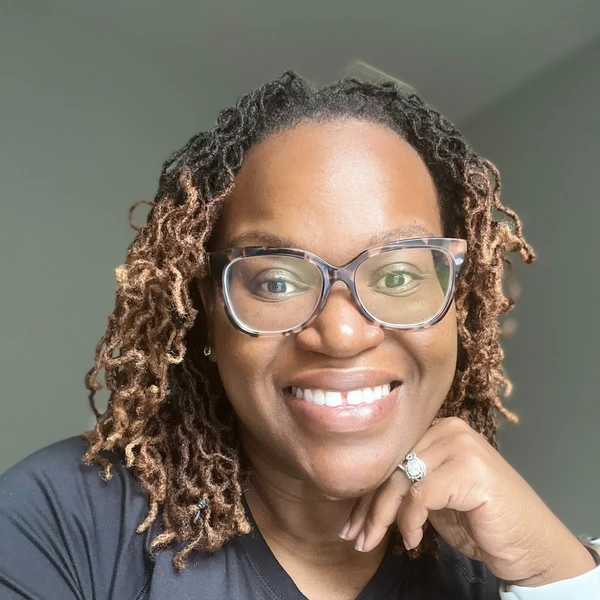
Jessica Wright-Jennings
1x
FinalistJessica Wright-Jennings
1x
FinalistBio
Stretching from Mortgage to Medicine is always a surprise when I share my story. I am an accomplished professional whose journey from business to healthcare advocacy has been shaped by resilience, sacrifice, and purpose. As a first-generation college graduate, I earned my bachelor’s degree 20 years ago. I built a career in finance and real estate, achieving professional recognition, and financially enough to help survive the turmoil that illness brought to my family—yet I ultimately chose to walk away from what was "tried and true" to my first calling: medicine.
That decision came at a real cost. I deliberately lowered my income, stepped away from long-standing professional networks, and accepted spending less time with friends and family. I am even relocating to another state to fully commit to the rigorous demands of this educational path. These sacrifices were not made lightly, but they were made with clarity and conviction.
My passion for healthcare was forged through more than a decade of caregiving for my husband as he navigated dialysis and transplant recovery. Witnessing the power of compassionate, competent medical care—and the consequences when patients feel unseen—solidified my desire to become a PA. To support others on similar non-traditional paths, I founded the #Mortgage2Medicine social media community, encouraging career-changers to pursue meaningful work with courage and intention.
Education
University of Alabama at Birmingham
Master's degree programMajors:
- Medicine
Dillard University
Bachelor's degree programMajors:
- Psychology, General
Miscellaneous
Desired degree level:
Master's degree program
Graduate schools of interest:
Transfer schools of interest:
Majors of interest:
- Medicine
Career
Dream career field:
Medicine
Dream career goals:
Physican Assistant
Public services
Volunteering
The Pantry, Big Brothers and Big Sisters, — Volunteer, Key Note Speaker, Philanthropy Coordinator2014 – Present
Future Interests
Advocacy
Politics
Volunteering
Philanthropy
Entrepreneurship
ADHDAdvisor Scholarship for Health Students
My understanding of mental health grew not in a classroom, but in the hospital rooms and clinics where I worked and served. As a behavioral health technician and later as a medical scribe, I learned that emotional wounds often cut deeper than physical ones. I’ve sat with patients who felt invisible in their pain, and I’ve seen how a few minutes of compassion can be just as healing as medication. Those moments taught me that true healthcare extends beyond diagnoses—it’s about restoring hope.
I’ve always believed that helping others with their mental health starts with presence. Whether it’s listening to patients who feel unheard, mentoring younger coworkers who are struggling with burnout, or supporting families coping with a loved one’s illness, I’ve learned that empathy is a form of medicine in itself. At The Pantry community outreach program, I’ve led initiatives to connect struggling families with resources, food, and counseling support. Through these experiences, I’ve realized that sometimes the most powerful thing we can offer is simply showing up and creating a safe space for others to be seen and understood.
My path to becoming a Physician Assistant is deeply rooted in this philosophy. Medicine, to me, is both science and soul work. As I study at Meharry Medical College—a place committed to service and equity—I plan to integrate mental health awareness into every patient interaction. I want to help normalize conversations about anxiety, depression, and trauma, especially in communities of color where stigma still runs deep.
In my future practice, I plan to champion a holistic model of care that prioritizes both the physical and emotional well-being of patients. I hope to develop community-based wellness programs that merge medical education with accessible mental health support, bridging the gap between healthcare systems and the people they serve.
Ultimately, my goal is to help others see that healing isn’t linear, and that asking for help is a sign of strength. My career will be about more than treating illness—it will be about reminding people that they are not alone, that their stories matter, and that compassion can be just as transformative as any cure.
Dr. Samuel Attoh Legacy Scholarship
Legacy, to me, isn’t about money or material possessions—it’s about the values, resilience, and determination that are passed down through generations. It’s the foundation you inherit, not in wealth, but in willpower. My legacy began with two parents who, despite limited means, planted seeds of faith, discipline, and education in their children.
My mother became pregnant with my oldest brother at seventeen, during her senior year of high school. While many might have allowed that to derail their future, she refused to give up. She attended night school, balancing motherhood and coursework until she earned her diploma. Her determination taught me early that success doesn’t always follow a traditional path—it’s forged through perseverance. From as far back as I can remember, she reminded me that education was the key to freedom, telling me, “Whatever you do, do it with excellence.” Those words have carried me through every chapter of my life.
My father worked as a cross-country truck driver, often gone for weeks at a time. He sacrificed time at home to make sure that my brothers and I had everything we needed to succeed. There were things we went without—luxuries, vacations, sometimes even his presence at school events—but preparation for academic success was never one of them. Each mile he drove represented a sacrifice that allowed me to thrive as a gifted student, with access to the books, opportunities, and encouragement I needed to believe in myself.
Growing up, our family didn’t have much, but what we lacked in resources, my parents replaced with resilience. They showed my brothers and me that hard work and faith could overcome any obstacle. Watching them persevere instilled in me the same grit that has carried me through my own journey. Their sacrifices became my blueprint for strength.
As I now pursue a career in medicine, training to become a Physician Assistant, I realize that my journey is the continuation of their legacy. My parents may not have had college degrees, but they gave me the determination to earn one. They built the foundation; I am building upon it. My goal is to take the opportunities they fought for and multiply them—using my education to serve others, particularly in underserved and minority communities.
At the same time, I recognize that I’m also breaking generational cycles. Where my mother had to fight to finish high school, I will fight to make education more accessible for those like her. Where my father worked tirelessly to provide opportunities, I will work to ensure future generations can dream without such heavy burdens.
To me, legacy is about transformation. It’s taking the lessons of those who came before you and turning them into a greater impact for those who will come after you. I stand on the shoulders of two parents who gave everything so that their children could dream bigger and reach higher. Every achievement I earn is not mine alone—it’s ours. Their legacy lives through my determination, my compassion, and my commitment to lift others just as they lifted me.
Learner Tutoring Innovators of Color in STEM Scholarship
My journey into the STEM field was not a straight line—it was a calling shaped by lived experience, perseverance, and purpose. For years, I stood on the other side of the hospital bed as a caretaker for my husband, who battled end-stage renal disease and underwent a kidney transplant. I watched as science, compassion, and innovation intertwined to sustain his life. That experience was my first intimate education in applied medicine. It was in those sterile rooms, surrounded by beeping monitors and weary faces, that I realized STEM isn’t just about equations or anatomy—it’s about saving lives, restoring dignity, and creating hope where it often seems lost.
After a successful career in real estate and finance, I made the decision to return to school and pursue a degree in medicine, enrolling in a Physician Assistant program. This decision meant beginning again at forty, learning new material, and embracing technology and scientific concepts that had evolved dramatically since my undergraduate years. But I’ve learned that there is no expiration date on purpose. My motivation comes from knowing that the science I’m studying today will translate into care that changes lives tomorrow.
As a Black woman, entering the STEM and medical fields carries both personal and cultural weight. Representation in healthcare is still scarce, particularly in advanced practice roles. Too often, patients of color experience bias, misdiagnosis, or lack of understanding due to cultural or communication gaps. My presence in this field is not just about achieving a professional milestone—it’s about representation, advocacy, and rewriting the narrative for others who look like me. I carry the responsibility of being visible in spaces where people of color have historically been excluded or underrepresented.
Through my studies and future practice, I aim to merge science with service by focusing on equitable healthcare access in underserved communities. I want to be part of closing the gap between patients and providers by building trust, improving education, and addressing social determinants of health that disproportionately affect minority populations. My background in business and community outreach has taught me how to connect with people, manage systems, and lead with empathy—skills that complement my STEM education and amplify its impact.
My goal is to specialize in transplant or emergency medicine, where rapid decision-making and advanced medical knowledge converge to make a tangible difference. I envision using my platform to mentor young students of color who may not see themselves reflected in STEM careers, helping them understand that science is not reserved for the privileged few—it is for anyone with curiosity, grit, and compassion.
Choosing a STEM path was about aligning my life’s experiences with my purpose. It was about turning years of caregiving, observation, and advocacy into a profession rooted in evidence, ethics, and empathy. Every formula I learn, every procedure I practice, and every patient I encounter will carry the weight of that purpose.
I am not simply pursuing a STEM degree to wear a title—I am pursuing it to open doors, challenge disparities, and become a bridge between science and humanity. In doing so, I hope to show others that where you start in life does not limit where you can go, especially when passion meets perseverance and science meets service.
Skin, Bones, Hearts & Private Parts Scholarship for Nurse Practitioners, Physician Assistants, and Registered Nurse Students
My decision to pursue a career as a Physician Assistant (PA) was born not from a textbook, but from the bedside of my husband as he fought through years of dialysis and, eventually, a kidney transplant. For over a decade, hospitals, treatment centers and doctor's offices became a second home. I witnessed not only the clinical expertise of providers but also the humanity behind their care—the empathy that transforms medicine into healing. During those long nights in the ICU, I learned to translate lab results, advocate for clarity, and bridge communication gaps between providers and patients. That experience reshaped my purpose. I realized that I didn’t just want to understand medicine—I wanted to practice it.
Transitioning into healthcare after a successful career in business was not easy. Returning to school at forty required immense discipline and sacrifice. I left behind the comfort of entrepreneurship and financial stability to follow a calling that demanded academic rigor and emotional resilience. Yet, every late-night study session and every shift as a wound-care technician or emergency department scribe has reaffirmed that I made the right choice. The same drive that once fueled my business growth now fuels my pursuit of clinical excellence and compassionate patient care.
As a nontraditional student, I bring a depth of life experience that strengthens my empathy and determination. I’ve learned to lead teams, manage resources, and think critically under pressure—skills that now translate into how I approach patient interactions and complex clinical situations. My goal as a future PA is to specialize in cardiac transplant medicine and work within underserved communities, helping patients navigate the kind of health disparities my own family faced. I want to be the provider who listens when others are too busy, and who teaches patients that their lives are worth fighting for.
Receiving this scholarship would mean more than financial relief—it would be a validation of this long and transformative journey. As I prepare to attend Meharry Medical College, an institution rooted in service to underrepresented communities, the cost of education presents a real challenge. Balancing tuition, textbooks, and living expenses while maintaining clinical work hours can feel overwhelming; especially as I am called to move away from my family during this 27- month program. This scholarship would not only ease that burden but also allow me to focus more fully on my studies, clinical rotations, and community outreach initiatives that align with Meharry’s mission.
Ultimately, my ambition is not defined by personal gain but by impact—creating a legacy of service, mentorship, and advocacy. I believe that when one person chooses to serve with compassion and competence, it creates ripples that reach far beyond the exam room. My journey has been anything but traditional, but it has been deeply intentional. I am ready to stand at the intersection of skill and service, helping to heal both the medical and human side of care.
Andrea Worden Scholarship for Tenacity and Timeless Grace
I’d describe myself as anything but traditional. While I did earn my bachelor’s degree just three years after graduating high school, I did so under the financial strain of being a first-generation college student—working two jobs to make it through the process while maintaining a 3.8 GPA. That early experience taught me grit, discipline, and the value of perseverance long before I ever knew how deeply I’d rely on those traits later in life. My path since then has been shaped not by straight lines, but by detours of responsibility, caregiving, and faith.
After college, I balanced entrepreneurship and family life while caring for my husband as he battled end-stage renal disease and underwent a kidney transplant. Hospitals and dialysis centers became our second home. When he finally recovered, I made the decision to begin my academic journey again—two decades after I had last sat in a classroom. This time, instead of studying what was most lucrative, I chose to let passion and calling drive my decisions. At forty years old, I committed to pursuing medicine.
Returning to school after twenty years was both humbling and transformative. The biggest challenge wasn’t just re-learning material but adapting to a world that had changed entirely through technology. I had to learn how to submit assignments online, navigate digital learning platforms, and complete virtual labs—skills that seemed second nature to younger students. There were nights I felt completely out of place, staring at screens that once intimidated me. But through prayer, patience, and persistence, I learned to adapt. Every technical hurdle became a reminder that faith and determination could bridge any gap.
My faith has guided every step of this journey. It sustained me when I questioned whether it was too late to start over and when responsibilities pulled me in every direction. As part of my new line of study, I began earning patient-care hours on nights and weekends—often after long days of work or family commitments. Those hours were exhausting but sacred, each one confirming that I was walking in purpose. Whether documenting for physicians as a medical scribe or helping in wound care, I found peace in service and strength in seeing lives changed through compassion. I learned how to authentically replicate the same compassion and hope that once inspired my husband and me to keep fighting during our darkest hours.
One person who shaped my journey in a profound way was a nurse manager named Ashlee. During my husband’s recovery, she prayed with us and for us through some of the hardest moments of his illness. Her faith and encouragement became a lifeline through adversity. Years later, as I began my education, Ashlee became one of my prayer partners—this time as she fought her own battle with breast cancer. Our shared faith, through both healing and hardship, reminded me that service and purpose are never one-sided; sometimes the ones who once prayed for you become the ones you lift up in return. That connection affirmed that my steps were ordered and that I was exactly where I was meant to be.
After completing my post-baccalaureate studies, I was graced with a seat at Meharry Medical College—a school I had dreamed of attending since I was seventeen. Ironically, Meharry’s motto is “Worship of God Through Service to Mankind.” As a younger woman, I didn’t fully grasp the depth of that statement. But today, it fuels my purpose. My faith has transformed from something I believed privately into something I now live through service—an extension of worship through action.
The Andrea Worden Scholarship for Tenacity and Timeless Grace honors a woman whose life reflected faith, perseverance, and generosity—values that have carried me through every chapter of my own journey. It celebrates those who have faced adversity with courage, who invest in others, and who continue to rise with grace. My story reflects that same spirit. I didn’t follow the traditional path; I returned to school after twenty years, overcame a technology gap, balanced business and caregiving, and pursued patient care through nights and weekends—all sustained by faith and purpose.
Andrea’s legacy of perseverance and selfless investment in others mirrors my own faith walk. My unconventional path has taught me that faith doesn’t remove challenges—it transforms them. It is the reason I continue showing up—with resilience, gratitude, and a heart ready to serve.
Saswati Gupta Cancer Research Scholarship
My journey to medicine began long before I applied to PA school; it started through years of community involvement, leadership, and the realization that serving others gives life its deepest meaning.
Professionally, I’ve always approached my work in healthcare as a form of service. As a wound-care technician and emergency department scribe, I’ve supported providers and advocated for patients during some of their most vulnerable moments. Working overnight in a children’s hospital has shown me the importance of empathy and presence—the small acts of kindness that can make a big difference in how a family experiences care. Every role I’ve held has deepened my conviction that medicine is a ministry as much as it is a profession. As a future Physician Assistant, I want to focus on transplant and cardiac medicine, areas that have deeply affected my own family. I plan to provide equitable, compassionate care to patients who might otherwise feel overlooked or unheard, especially in communities of color where health disparities remain high.
But my vision goes beyond direct patient care. I want to use my platform as a PA to mentor and empower other women who aspire to enter healthcare. I plan to create mentorship initiatives that connect aspiring students to shadowing opportunities, financial literacy resources, and faith-based encouragement to help them stay the course. Representation changes what people believe is possible, and I want to be a living example of that possibility.
Giving back has taught me that impact doesn’t always come from grand gestures—it often comes from showing up, consistently, with compassion and purpose. My goal is to live a life of service that continues to echo through the lives I touch, using my education, my faith, and my voice to make healing and hope accessible to all.
Boatswain’s Mate Third Class Antonie Bernard Thomas Memorial Scholarship
Each day, I strive to live out five qualities that define who I am—strong leadership and communication, resilience, selflessness, focus, and a strong work ethic. These traits are not abstract ideals; they have been built through years of experience as a caregiver, business owner, student, and healthcare professional.
Leadership and communication are central to everything I do. As a former business owner, I learned that leadership isn’t about position—it’s about connection. Whether guiding a team or communicating with patients in the hospital, I’ve learned to listen first, speak with purpose, and create an environment where others feel seen and valued. As a wound-care technician and emergency department scribe, clear communication has been essential in ensuring that patients receive timely, accurate care. Leadership, to me, is about service—lifting others so we can all succeed together.
Resilience was forged in me through challenge. Supporting my husband through years of dialysis, transplant complications, and recovery taught me what it means to keep going when everything feels uncertain. Later, balancing full-time hospital work, family responsibilities, and post-baccalaureate coursework required me to draw on that same strength. Every obstacle—financial strain, fatigue, and self-doubt—became an opportunity to grow stronger in faith and perseverance. Resilience, for me, is not just enduring hardship; it’s finding purpose in it.
Unselfishness has guided both my personal and professional life. In healthcare, it means prioritizing others’ needs even on the most demanding days. At home, it’s being present for my family no matter how busy I am. Through community service with The Pantry and Women Impacting West Georgia, I’ve learned that real service comes without expectation of recognition. Giving back isn’t something I do for others—it’s something that keeps me grounded.
Focus and determination are what turned my calling into action. When I made the decision to return to school later in life to pursue a career as a Physician Assistant, I knew it would take discipline and sacrifice. There were nights I studied between hospital shifts and days when sleep was a luxury, but I stayed focused on my goal: to serve others through medicine. My determination comes from knowing this journey isn’t just about me—it’s about every patient and every woman who needs to see that it’s never too late to start over.
Finally, my strong work ethic is the glue that holds it all together. Whether it’s arriving early to prep patient charts, volunteering at community drives, or maintaining my academic excellence, I give every task my best effort. Hard work, to me, is a reflection of gratitude—showing appreciation for the opportunities I’ve been given by giving my all in return.
My future goal is to become a compassionate and skilled Physician Assistant serving in transplant and cardiac medicine. I plan to use my education to improve access to care and to mentor underrepresented women in healthcare, helping them see their own potential.
To me, leadership means service with integrity—using your gifts to uplift others, lead by example, and create change that lasts. I’ve learned that real leadership doesn’t seek the spotlight; it builds others up until they shine. That’s the kind of leader, and provider, I strive to be every single day.
William A. Lewis Scholarship
One of the greatest obstacles I’ve had to overcome in pursuing higher education was learning how to balance responsibility and purpose—being both a caregiver and a breadwinner while returning to school later in life. My journey toward medicine began not in a classroom, but in a hospital room, as I sat beside my husband through years of dialysis, surgeries, and finally, transplant complications. During that time, I became his advocate, his voice, and his caretaker. I learned to navigate medical systems, communicate with providers, and push for answers when things didn’t make sense. Those experiences changed me. They revealed a calling to serve others through medicine, particularly as a Physician Assistant who could combine clinical skill with compassion.
But following that calling wasn’t simple. After years of running a successful real estate and lending business, I made the decision to scale back and return to school for the prerequisites required to apply to PA programs. At the time, my husband was still recovering, and I was the primary financial provider for our household. I worked full-time in healthcare—often overnight shifts at a children’s hospital—while taking my post-baccalaureate courses online during the day. I was constantly moving, rarely sleeping, and trying to find a rhythm between caring for patients, caring for my family, and caring for myself. There were moments when the weight of it all felt unbearable. I questioned whether I could really start over, whether my age or circumstances would hold me back, or whether this dream had come too late.
What kept me going was faith—and my husband’s unwavering belief in me. Even in his weakest moments, he would remind me that everything I was learning, every hardship I was enduring, had purpose. When I doubted myself, he reminded me of the strength he had seen in me when I was the one holding him up in the ICU. He would pray with me before exams, leave notes of encouragement on my desk, and remind me that what I was pursuing wasn’t just for me—it was for every patient who would one day need someone to fight for them the way I fought for him.
My family and faith community also played a huge role in helping me overcome that obstacle. They stepped in when I needed help with meals, encouragement, or rest. My parents and close friends reminded me that perseverance is not meant to be done alone and that asking for help is not weakness but wisdom. Their support gave me the space to stay grounded, and their belief in my purpose reminded me of the “why” behind all the sacrifice.
That season of my life tested every part of me—emotionally, financially, and spiritually—but it also shaped who I am becoming. It taught me that resilience is not about doing everything perfectly; it’s about refusing to give up when the road gets heavy. Balancing caregiving, work, and academics forced me to find strength in vulnerability and to see faith as an active, daily choice.
Now, as I prepare to begin my Physician Assistant education, I carry that strength with me. The obstacles that once felt impossible became the foundation for the provider I will be—someone who understands perseverance, compassion, and the importance of meeting people where they are. Every late night, every prayer, and every setback led me here. And with the same faith and determination that carried me through those challenges, I’m ready to help others overcome their own.
Bulkthreads.com's "Let's Aim Higher" Scholarship
What I want to build isn’t made of brick or steel—it’s built on compassion, purpose, and access. I want to build a model of healthcare that treats people as whole beings, where mental, physical, and emotional health are cared for equally. My goal is to create integrated care clinics that combine counseling, wellness checks, and medical support in one accessible, affordable space.
This vision comes from experience. As a caregiver for my husband through years of dialysis, transplant procedures, and complications, I learned how heavy the emotional side of healthcare can be. The fear, exhaustion, and constant uncertainty tested my strength and faith. Later, during my post-baccalaureate studies, I felt that same weight—balancing night shifts, coursework, and family responsibilities while trying to stay mentally strong. There were moments I felt isolated and overwhelmed, but therapy and support felt out of reach. I know I’m not alone. Many caregivers, healthcare workers, and working parents face the same silent struggles.
That’s why I want to build in-service caregiver and breadwinner mental health support integrated into Urgent Care and Minute Clinic settings. These clinics already meet physical needs; with the right structure, they could also meet emotional ones. Counseling would be offered at no cost or at the same price as a wellness visit, providing immediate, stigma-free help to those who need it most.
Through my education at Meharry Medical College, I plan to gain the medical expertise and leadership foundation to bring this vision to life. Meharry’s mission—to serve the underserved and empower diverse healthcare professionals—aligns perfectly with my purpose. I want to advocate for policies that make mental health care preventive, affordable, and part of every patient’s routine visit.
Beyond medicine, I hope to build representation and mentorship. As a nontraditional student and a Black woman, I understand what it means to rebuild your life while balancing faith, family, and purpose. I want to help other women see that their story is not a setback—it’s a foundation for strength.
In the end, what I want to build is a system of healing that sees the whole person and opens the door for others to do the same.
Healing Self and Community Scholarship
If I could contribute one thing to the world, it would be to make mental health care as accessible and routine as a wellness check. Through my husband’s transplant journey and later during my post-baccalaureate studies, I carried the unseen weight of caregiving, work, and school while silently battling anxiety and exhaustion. I often felt overwhelmed, yet had no affordable or convenient access to counseling. I know I’m not alone—many caregivers, working parents, and healthcare workers quietly fight the same battle.
My vision is to create in-service caregiver and student support by integrating counseling into Urgent Cares and Minute Clinics across the country. Sessions would be offered at no cost or at the same rate as wellness visits, giving people a safe, stigma-free space to receive emotional care where they already seek medical care. This would make mental health assessments just as accessible as a blood-pressure check.
As a future Physician Assistant, I plan to advocate for behavioral-health integration and policy reform that makes emotional wellness part of everyday care. I especially want to inspire and support Black women who carry so much for others yet rarely prioritize themselves. My unique contribution is simple: to ensure no one holding everything together has to fall apart alone.
Priscilla Shireen Luke Scholarship
Service has always been at the heart of everything I do. Whether through community outreach, mentorship, or patient care, giving back is not something I schedule into my life—it’s woven into who I am. My journey to medicine began long before I applied to PA school; it started through years of community involvement, leadership, and the realization that serving others gives life its deepest meaning.
Currently, I give back through both healthcare and community initiatives. I volunteer with The Pantry, a local outreach program that provides food, hygiene products, and resources to families in need. What began as occasional volunteering has evolved into organizing drives and helping coordinate distribution days that serve hundreds of households. I’ve also served on the Women Impacting West Georgia scholarship committee, where I help raise funds and select recipients—many of whom are women pursuing education while balancing families, just as I have. Beyond these roles, I participate in youth and women’s events through my sorority and local church, mentoring young women on personal growth, education, and faith. These moments remind me that giving back is not only about providing resources, but also about offering hope and representation.
Professionally, I’ve always approached my work in healthcare as a form of service. As a wound-care technician and emergency department scribe, I’ve supported providers and advocated for patients during some of their most vulnerable moments. Working overnight in a children’s hospital has shown me the importance of empathy and presence—the small acts of kindness that can make a big difference in how a family experiences care. Every role I’ve held has deepened my conviction that medicine is a ministry as much as it is a profession.
Looking ahead, I plan to use my education at Meharry Medical College to extend that service on a larger scale. Meharry’s mission—to serve the underserved and prepare culturally competent healthcare professionals—aligns perfectly with my purpose. As a future Physician Assistant, I want to focus on transplant and cardiac medicine, areas that have deeply affected my own family. I plan to provide equitable, compassionate care to patients who might otherwise feel overlooked or unheard, especially in communities of color where health disparities remain high.
But my vision goes beyond direct patient care. I want to use my platform as a PA to mentor and empower other women—especially Black women—who aspire to enter healthcare. As a nontraditional student who balanced business ownership, caregiving, and coursework, I understand the obstacles many women face when pursuing higher education later in life. I plan to create mentorship initiatives that connect aspiring minority students to shadowing opportunities, financial literacy resources, and faith-based encouragement to help them stay the course. Representation changes what people believe is possible, and I want to be a living example of that possibility.
Giving back has taught me that impact doesn’t always come from grand gestures—it often comes from showing up, consistently, with compassion and purpose. Every patient I comfort, every student I encourage, and every community I serve is part of a ripple effect that grows far beyond me. My goal is to live a life of service that continues to echo through the lives I touch, using my education, my faith, and my voice to make healing and hope accessible to all.
Women in Healthcare Scholarship
Faith has always been the foundation that carried me through life’s most uncertain moments, but it was tested in ways I could never have imagined during my husband’s transplant journey. After years of dialysis, complications, and countless hospital visits, we finally reached the day of what was supposed to be his life-saving surgery. What began as hope quickly turned into fear when unexpected complications led to a medically induced coma and an open laparotomy that left us with more questions than answers. For weeks, I slept on the hard sofa in the ICU, praying for a sign that he would recover. Each day blurred into the next as monitors beeped, doctors rounded, and my heart wavered between faith and fear.
In that season of exhaustion and uncertainty, my faith became my only source of strength. I prayed over every monitor sound, every physician’s update, and every sunrise that followed another sleepless night. One morning, while reading my Bible beside his hospital bed, I came across Mark 11:22-24, where Jesus says, “Have faith in God… if anyone says to this mountain, ‘Go, throw yourself into the sea,’ and does not doubt in their heart but believes…it will be done for them.” Those words became my anchor. They reminded me that with faith and forgiveness in my heart, I could move the mountains of fear and exhaustion that stood before me.
That moment changed my perspective. I realized my purpose was not only to advocate for my husband but to witness God’s faithfulness in the process. Through that experience, I saw the power of compassionate, faith-driven care and felt called to serve others in the same way.
Answering that call required courage and sacrifice. I had built a successful real-estate and lending business that provided stability and flexibility, but I felt God urging me to step away from comfort and toward purpose. I scaled back my business, enrolled in post-baccalaureate science courses, and began working overnight shifts at a children’s hospital while completing classes online. Balancing full-time work, family responsibilities, and rigorous coursework was demanding, but I carried that same verse in my heart: “Whatever you ask for in prayer, believe that you have received it, and it will be yours.” (Mark 11:24)
There were moments when I doubted whether I could balance it all—my family, faith, and career shift—but each challenge became a reminder of God’s strength within me. Faith taught me that perseverance and purpose are inseparable.
As I enter the Physician Assistant program at Meharry Medical College, I know this journey is about more than earning a degree—it’s about legacy. Meharry’s mission to serve the underserved and empower African American healthcare leaders reflects my own purpose. I want to use my education to not only provide excellent clinical care but also to mentor and inspire other women—especially Black women—who may feel that their background, age, or circumstances disqualify them from pursuing medicine. Representation matters, and Meharry’s legacy shows that faith, education, and perseverance can transform generations.
My goal is to help open doors for women who look like me, who share similar dreams, and who need to see that success in medicine is possible through hard work, faith, and determination. Looking back, I see how faith turned my mountains into milestones. Now, as I step forward into Meharry’s halls, I carry the hope of inspiring the next generation of women in healthcare to believe that with faith and purpose, they can move mountains too.
John Nathan Lee Foundation Heart Scholarship
Cardiac disease has shaped my journey in ways I never expected. During my post-baccalaureate studies—while balancing night shifts in the hospital, online classes, and preparing for PA school—my mother began experiencing unsettling bouts of temporary blindness and dizziness. Soon after, her blood pressures began to fluctuate wildly, swinging from extreme highs to dangerous lows without warning. What we initially thought might be exhaustion or stress quickly revealed something far more serious. Tests showed she had over 90% arterial blockage in her carotid arteries. Within weeks, she underwent several angioplasty procedures to restore blood flow, and later, an echocardiogram revealed fluid building around her heart.
Those months changed everything for me. I studied from hospital waiting rooms, highlighting notes under fluorescent lights while listening to the steady rhythm of cardiac monitors. I watched my mother—once vibrant and independent—face fear and uncertainty as her body adjusted to each new procedure. Yet even in that uncertainty, I found inspiration. The healthcare teams who treated her combined precision with compassion, translating medical terms into reassurance and helping her—and me—understand what was happening. Their empathy reminded me that medicine is as much about heart as it is about science.
Balancing my coursework and family responsibilities through her illness was one of the hardest things I’ve ever done. There were days when I would leave the hospital and head straight into class, mentally and emotionally drained, but determined to push forward. Instead of discouraging me, that season strengthened my resolve to become a Physician Assistant. I saw firsthand how critical it is to have providers who bridge the gap between technical skill and human connection—especially in cardiac care, where fear and uncertainty can weigh as heavily as the illness itself.
To better understand the field that had become so personal, I sought out shadowing experiences in advanced heart failure and heart-transplant medicine. Watching PAs in these specialties was transformative. I observed them interpret complex diagnostics, assist in life-saving procedures, and educate patients and families through some of their most vulnerable moments. Their calm presence and ability to turn medical uncertainty into hope reflected exactly the kind of clinician I want to become.
There were times during my mother’s recovery when the exhaustion of managing her care, my studies, and my hospital shifts felt overwhelming. But those challenges taught me endurance, empathy, and perspective—the same qualities that define an impactful healthcare provider. Each experience, though difficult, refined my understanding of why I am called to medicine.
As a nontraditional student, I also carry insights from a prior career in real estate and lending. That background showed me the business side of healthcare—the pressures of cost, access, and equity that patients often face. I know what it’s like to need care and not be able to afford the full extent of it, and that perspective fuels my desire to advocate for patients who feel unseen or unheard in the system.
Cardiac disease brought fear and uncertainty into my life, but it also gave me clarity and direction. Watching my mother regain her strength after months of struggle reminded me why I chose this path. Her resilience—and the compassion of those who cared for her—continue to inspire my commitment to becoming a PA who leads with skill, empathy, and heart.
PAC: Diversity Matters Scholarship
To me, an impactful PA is someone who blends skill with compassion—someone who listens, adapts, and meets people where they are. The best PAs care just as much about what’s going on in a patient’s life as they do about what’s on their chart. They connect, educate, and advocate. I’ve met a few like that along my own journey, and it’s the kind of provider I want to be.
My understanding of what makes a great clinician didn’t start in a classroom—it started on a hard sleeper sofa in the ICU while my husband fought for his life after what was supposed to be a routine transplant. Those days taught me more about medicine and humanity than any textbook ever could. I saw the difference between being treated and being cared for. Some providers rushed through updates, but others took the time to explain, to listen, and to make sure I understood. That compassion made a lasting impact. I promised myself that one day, I would be that calm, steady voice for someone else’s family.
Adaptability is another quality I see in strong PAs—and it’s something I’ve had to develop in every part of my life. I’ve worked in emergency departments, wound care clinics, and children’s hospitals, sometimes overnight, sometimes on weekends, often while juggling online post-baccalaureate courses. I’ve learned to think on my feet, handle unexpected changes, and stay centered in chaotic situations. Patients don’t always follow a plan, and neither does life—but adaptability keeps me grounded and ready to serve no matter what the day brings.
Teamwork is just as important. In my earlier career running real-estate and lending businesses, success depended on collaboration—bringing people together, finding solutions, and earning trust. That same mindset carries over into medicine. Whether I’m helping a nurse comfort a frightened child or supporting a provider during a code, I understand that healthcare works best when no one tries to do it alone. Every role matters, and humility makes a team stronger.
I also know how blessed I am to be an accepted PA student. This opportunity is something I carry with deep gratitude because I know what it’s like to need care and not be able to afford the full extent of what’s needed. My path to this point has been anything but traditional, but that’s what makes my perspective unique. Coming from a business background, I understand the financial and operational side of healthcare—the pressures on providers, the barriers patients face, and how systems sometimes fail the people they’re meant to serve. Experiencing both sides has made me deeply passionate about bridging that gap, ensuring care is not just accessible but also compassionate and fair.
An impactful PA isn’t perfect—they’re present. They show up with compassion, listen with intention, and use both their hands and their heart to make a difference. As a nontraditional student, caregiver, and lifelong learner, I bring the humility of someone who’s been on the receiving end of care and the determination of someone who knows what a privilege it is to now give it. That balance—of empathy, perspective, and gratitude—is what I believe makes an impactful PA, and it’s the kind of provider I’m becoming.
Debra S. Jackson New Horizons Scholarship
My path toward higher education has been anything but traditional. For years, my life revolved around building businesses, caring for my family, and supporting my husband through a long and complex transplant journey. Those experiences, though challenging, revealed purpose and strength I didn’t know I had. They shaped my understanding of compassion, resilience, and service—and ultimately, led me to pursue a career in medicine as a Physician Assistant.
When my husband became critically ill after what was meant to be a routine transplant surgery, I spent weeks by his side in the ICU, sleeping on a small sofa while doctors searched for answers. During those nights, I learned what it truly means to advocate for someone you love. I watched the dedication of healthcare providers who not only treated his condition but also supported us through uncertainty and fear. Their compassion inspired me. It made me realize that healing extends beyond procedures and medications—it begins with empathy, communication, and presence. I knew then that I wanted to be that source of strength and understanding for other patients and families.
Answering that calling required both courage and sacrifice. I had built a successful real estate and lending business that provided financial stability and flexibility, but I felt a strong pull to shift my focus toward something more purposeful. I scaled back my business, enrolled in post-baccalaureate science courses, and began working overnight shifts at a children’s hospital while completing classes online. Balancing full-time work, family responsibilities, and rigorous coursework was demanding, but each challenge reaffirmed my commitment to this path. Every night I cared for sick children, I was reminded of why I chose this journey—to serve others with compassion and integrity.
These experiences have shaped my core values: perseverance, empathy, and service. I’ve seen what it means to be both a patient’s family and a healthcare professional, and I understand the responsibility that comes with both roles. My goal as a Physician Assistant is to work in transplant and underserved medicine, providing high-quality, compassionate care to patients and families who often feel overlooked or unheard. I also plan to build community outreach programs that educate families about chronic disease management and preventive health—bridging the gap between care access and understanding.
This scholarship represents more than financial support—it represents opportunity. It will allow me to focus fully on my education without the burden of financial strain, enabling me to continue serving my community both during and after my training. By supporting me, this scholarship also supports every patient I will one day serve, every student I will mentor, and every life I will touch through medicine and advocacy.
My journey has taught me that every season of life has a purpose. The perseverance that sustained me through entrepreneurship and caregiving now fuels my pursuit of medicine. Through higher education, I am not just earning a degree—I am stepping into a lifelong commitment to healing, advocacy, and service. My goal is to use my education to create meaningful change in both individual lives and the broader healthcare system, ensuring that every patient feels seen, valued, and cared for.
Nabi Nicole Grant Memorial Scholarship
Faith has always been the foundation that carried me through life’s most uncertain moments, but it was tested in ways I could never have imagined during my husband’s transplant journey. After years of dialysis, complications, and countless hospital visits, we finally reached the day of what was supposed to be his life-saving surgery. What began as hope quickly turned into fear when unexpected complications led to a medically induced coma and an open laparotomy that left us with more questions than answers. For weeks, I slept on the hard sofa in the ICU, praying for a sign that he would recover. Each day blurred into the next as monitors beeped, doctors rounded, and my heart wavered between faith and fear.
In that season of exhaustion and uncertainty, faith became my only source of strength. I prayed over every monitor sound, every physician’s update, and every sunrise that followed another sleepless night. One morning, while reading my Bible beside his hospital bed, I came across Mark 11:22-24, where Jesus says, “Have faith in God… if anyone says to this mountain, ‘Go, throw yourself into the sea,’ and does not doubt in their heart but believes…it will be done for them.” Those words anchored me. They reminded me that with faith and forgiveness in my heart, I could move the mountains of fear and exhaustion that stood before me.
That passage became my daily prayer. I realized my purpose in that moment was not only as a caregiver, but as a witness to God’s faithfulness in the waiting. As I trusted Him through the uncertainty, I began to sense a deeper calling—one that extended beyond my husband’s hospital room. Watching his slow recovery revealed the power of compassionate, faith-driven care. God guided me toward a life in medicine where I could serve others with the same empathy and perseverance that faith had taught me.
Answering that call required surrender. I had built a successful real-estate and lending business that offered stability and flexibility, especially as my husband healed. Yet I felt God urging me to step away from comfort and step into purpose. Scaling back my business to pursue a career in healthcare meant walking by faith, not sight. I enrolled in post-baccalaureate science courses online and began working night shifts at 3 hospitals to gain experience. Those nights were long—balancing classes, full-time work, and family responsibilities—but I carried the same verse in my heart: “Whatever you ask for in prayer... it will be yours.” (Mark 11:24)
There were moments I questioned whether I was strong enough to keep going. But each time doubt surfaced, God reminded me of His presence, - a kind word from a colleague, or an unexpected opportunity that affirmed I was on the right path. My faith became not just something I leaned on in crisis, but a daily practice that guided my patience and perseverance.
From the ICU to the classroom to the quiet hours of hospital corridors, He was there—steady and faithful. I learned that faith is not passive hope; it is active trust. It is believing that the mountains will move even before you see them shift.
Through His strength, I found the courage to exchange stability for purpose and comfort for calling. Mark 11 taught me that faith and forgiveness are not only spiritual virtues but forces that shape how we serve and endure. As I continue my journey to become a Physician Assistant, I carry that truth into every patient encounter: that treatment begins with medicine, but healing is enacted with faith and the unwavering belief that God is faithful to perform.