
Hobbies and interests
Drawing And Illustration
Cooking
Singing
Writing
Reading
Action
Academic
Adventure
Adult Fiction
Architecture
Art
Book Club
Classics
Contemporary
Cookbooks
Crafts
Criticism
Cultural
Health
Novels
Historical
Romance
I read books daily
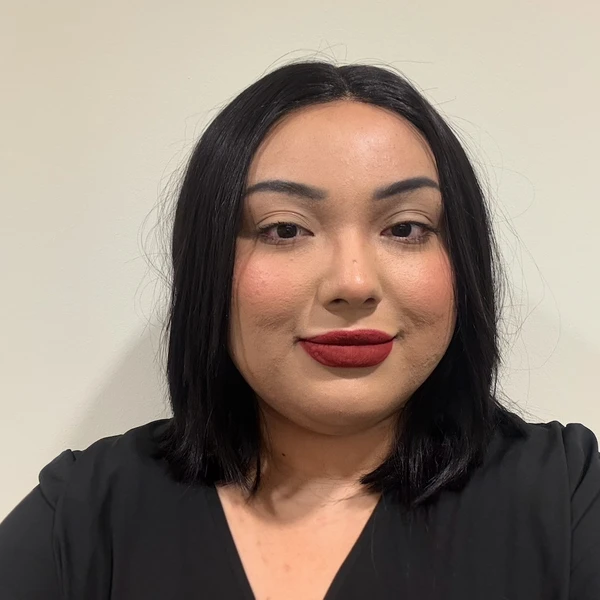
Jessica Meza perez
1x
Finalist
Jessica Meza perez
1x
FinalistBio
Greetings! My name is Jessica Meza Perez, and I am a medical studies major with a deep interest in data science. My volunteer experience in low-income clinics, hospice care, and community food banks has shown me the critical role that data can play in improving healthcare and social services. I aspire to leverage data science to analyze healthcare trends, optimize resource allocation, and ultimately make a positive impact on our communities.
Education
University of the Cumberlands
Doctoral degree program (PhD, MD, JD, etc.)Majors:
- Computer and Information Sciences and Support Services, Other
Minors:
- Data Science
Eastern University
Master's degree programMajors:
- Data Science
Arizona State University-West
Bachelor's degree programMajors:
- Medicine
Miscellaneous
Desired degree level:
Master's degree program
Graduate schools of interest:
Transfer schools of interest:
Majors of interest:
Career
Dream career field:
Technology
Dream career goals:
Data engineer
Microsoft technician
Education at Work2020 – 20222 yearsFront desk
Weecare2019 – 2019Team member
McDonald’s2018 – 20191 year
Sports
Golf
Varsity2018 – 20191 year
Research
Public Health
SHPEP, UNMC — Researcher and presenter2020 – 2020
Arts
PACH clinic
Photographyno2023 – 2024
Public services
Volunteering
Phoenix Allies of Community Health — Intake and social media2020 – 2022Volunteering
Hospice of the valley — Volunteer member2020 – 2022
Future Interests
Advocacy
Politics
Volunteering
Entrepreneurship
PrimePutt Putting Mat Scholarship for Women Golfers
Playing golf is more than just a hobby for me; it is a discipline that has shaped my character and provided a much-needed sanctuary from the high-pressure demands of my daily life. As a first-generation Hispanic woman and the primary breadwinner for my family, my life is often a series of constant battles involving work, data science studies, and family responsibilities. On the golf course, however, the world slows down. I love golf because it requires a unique blend of mental fortitude, patience, and strategic thinking. Unlike many other sports, golf is a game played primarily against oneself. It challenges me to maintain my focus and keep my head up, even after a poor shot, which is a lesson I carry directly into my academic and professional career.
However, my journey in golf has been marked by significant challenges, particularly regarding representation and accessibility. Growing up in a Hispanic household, I was the only golfer in my family. The sport was not a traditional part of my culture, and there was no pre-existing roadmap for me to follow. I often felt like an outsider, navigating a space where very few people looked like me or shared my background. This sense of isolation was magnified by the financial realities of being from a low-income household. Golf is an expensive sport, and as someone who provides the only income for my family, finding the resources for equipment and green fees was an early hurdle that required immense creativity and sacrifice.
In high school, I pushed through these barriers to play on the varsity golf team. Being a female golfer in a male-dominated environment presented its own set of obstacles. I frequently encountered underlying assumptions that I was less capable or less serious about the game because of my gender and my heritage. Overcoming this required me to let my performance speak for itself. I learned to lean into the discipline of the sport, using the quiet hours of practice to build a resilient mindset. I realized that my "alternative" status on the course was not a weakness, but a testament to my drive. I wasn't just playing for a score; I was playing to prove that a first-generation woman could excel in any arena she chose.
Today, my biggest challenge is finding the time to play while balancing a full-time job and a rigorous Data Science curriculum. Finding other young female golfers, especially other Hispanic women, remains a struggle. However, I continue to play because the sport keeps me healthy and afloat mentally. The patience I learned on the green helped me stay resilient during the darkest periods of my life, such as the loss of my uncle during my finals. Just as I learned to recover from a difficult hazard on the course, I have learned to recover from personal ruin in life.
I plan to use my experience in golf to make a positive impact by mentoring other young women who feel like outcasts in the sport. I want to show them that they belong on the course just as much as they belong in a coding lab or a boardroom. By continuing to play, I am honoring the work ethic and the servant’s heart that my family instilled in me. Golf has taught me that no matter how difficult the course of life becomes, if you stay grounded and keep moving forward one shot at a time, you will eventually reach your goals.
Lotus Scholarship
Coming from a low-income household as a first-generation student has been the primary driver of my resilience. As the sole breadwinner for my family, I have had to navigate the "constant battles" of balancing a full-time academic schedule in Data Science with the high pressure responsibility of being our only source of income. This journey reached a breaking point during my finals when I faced the tragic loss of my uncle to suicide. While this shattered my mental health, I chose to keep my head up and stay afloat. I understood that my family’s stability depended on my ability to persevere, so I finished my exams and continued my pursuit of the "first gen dream" despite the grief.
I plan to use this life experience to make a positive impact by becoming an senior data scientist in the healthcare sector. My background has given me a servant’s heart and a deep understanding of the barriers that low-income families face when navigating complex systems. By mastering data science and coding, I want to build digital infrastructures that are accessible and equitable, ensuring that healthcare technology acts as a bridge rather than a barrier for vulnerable communities.
I am actively pursuing these goals by maintaining a rigorous study schedule while volunteering in local clinics to see the real-world impact of data management. I also participate in online support groups and use social media to advocate for mental health, showing others that you can face "ruin" and still emerge as a leader. My work ethic is a testament to the idea that our struggles do not define us; they equip us to lead with empathy and technical excellence.
Edwards Scholarship
My journey as a student in the United States is defined by a commitment to resilience, a deep seated work ethic, and a vision for a more inclusive future in technology. As a first-generation Hispanic woman pursuing a degree in Data Science, I have navigated a path that required me to grow up quickly and shoulder immense responsibility. Currently, I serve as the primary breadwinner for my household, providing the only source of income for my family while maintaining a full-time academic schedule. Balancing the demands of professional work with the rigors of high level mathematics and coding is a constant battle, but it has instilled in me a level of discipline and time management that I consider my greatest professional asset.
The most significant obstacle I have faced occurred during a critical period of my education. In the middle of my final exams, my family suffered the tragic loss of my uncle to suicide. This event was a catastrophic blow to my mental health, occurring at a time when my academic and financial pressures were already at their peak. Navigating the profound grief of a sudden loss while trying to master complex statistical models felt nearly impossible. However, I understood that as the eldest daughter and the provider for my family, I could not afford to let this tragedy ruin the future we were building. I leaned into my faith, worked closely with my therapist, and chose to keep my head up. I finished my exams and stayed afloat, proving to myself that my spirit is stronger than the circumstances intended to break it.
I plan to make a positive impact on the world by merging my technical expertise in Data Science with a servant’s heart. Through my studies in the United States, I am gaining the tools necessary to lead in the healthcare IT sector as a Senior Data Scientist. My goal is to build and oversee digital infrastructures that prioritize equity and accessibility. Having volunteered in clinics, I have seen firsthand how disorganized data and poor system design can create barriers for vulnerable families. I want to ensure that healthcare technology serves as a bridge to healing rather than a source of confusion. By using data visualization to show clear stories of community needs, I can help healthcare companies make more compassionate, data driven decisions.
Furthermore, my impact will extend beyond the code I write. I want to be a visible leader for other women and first generation students who are balancing work, family, and education. I want to show them that it is possible to face debilitating grief and mental health challenges and still emerge as a leader in a competitive STEM field. By succeeding in the United States, I am fulfilling the "first gen dream" and creating a roadmap for others who feel like outcasts in technical spaces. I am committed to using my voice and my skills to build a world where technology is a force for good and where every hard-working student has a fair chance to succeed, regardless of the obstacles they carry.
Women in STEM Scholarship
Empowerment in the STEM field is not just about mastering technical skills; it is about the resilience to lead and the curiosity to solve problems that improve the lives of others. As a first-generation student and the primary breadwinner for my family, my journey into data science has been fueled by a commitment to transforming complex information into actionable help for my community. I am pursuing a degree in data science because I believe that data is the most powerful tool we have to identify inequalities and build more efficient, compassionate systems. My goal is to become a Senior Data Scientist, where I can use my expertise in coding and data visualization to lead a company that prioritizes human well-being.
My fascination with data science began with the challenge of high-level mathematics. I have always loved the logic of statistics and the way that data-heavy math can bring order to a chaotic world. To me, coding for fun is more than just a hobby; it is a way to practice the step by step problem solving that I use in my daily life. As a provider for my family, I have had to navigate many constant battles, balancing a demanding work schedule with rigorous academic requirements. This experience has taught me that data is not just a collection of numbers on a screen. It represents real people, families, and stories. Whether I am analyzing healthcare trends or optimizing a network, I approach my work with a servant’s heart, knowing that my technical accuracy has a direct impact on the people who rely on these systems.
A significant part of my vision for the future involves contributing to the STEM field by increasing the visibility and success of women in technical leadership. I know firsthand how it feels to enter a space where you are the first or the only one like you. I want to use my position as a Senior Data Scientist to mentor other women, showing them that their unique backgrounds and perspectives are their greatest assets. By excelling in coding and data storytelling, I plan to prove that women belong at the highest levels of technical management. I want to build a professional environment where curiosity is celebrated and where the barriers I faced as a first-generation student are dismantled for those who follow me.
Receiving this scholarship would be a vital investment in this vision. As the sole provider for my household, the financial pressure of tuition can often be a distraction from the deep focus required for data science. This support would allow me to dedicate more time to mastering the complex algorithms and visualization tools that are necessary to lead in this field. It would also give me more space to continue my volunteer work in clinics, where I see the practical need for better data management every day. I am ready to keep my head up and continue the hard work required to make the first-gen dream a reality.
In conclusion, I am driven by the belief that knowledge is meant to be shared and that data should be used to uplift the community. I am ready to contribute to the STEM field as a leader who understands the value of persistence and the importance of equity. By supporting my education, you are investing in a woman who is not only a skilled coder and statistician but a dedicated mentor and provider. I am committed to building a future where technology is a force for good, and where more women are empowered to lead the way in the data-driven world.
Learner Math Lover Scholarship
My love for mathematics stems from its unique ability to bring order to a complex and often unpredictable world. While many see math as a rigid collection of rules, I view it as a powerful language of logic that provides a clear path through even the most intricate problems. As a first-generation student and the primary breadwinner for my family, I have always appreciated the stability that math offers. In a life that has required me to navigate many "constant battles," the absolute nature of a mathematical solution provides a sense of certainty and accomplishment that is hard to find elsewhere.
I particularly enjoy the challenge of high-level mathematics, specifically within the realms of statistics and data science. There is a deep satisfaction in taking a massive, disorganized set of data and using statistical models to uncover the hidden story within the numbers. This process feels like solving a grand puzzle where every variable matters. My experience with data-heavy math has taught me that even the most overwhelming challenges can be broken down into manageable, logical steps. This "step-by-step" resilience is a skill I use every day, whether I am balancing my family’s budget or coding for fun in my spare time.
Furthermore, my passion for math is directly tied to my professional goal of becoming an IT Director for a healthcare company. In healthcare, data is not just numbers; it represents real people and life-saving systems. I love that math allows us to optimize these systems, ensuring that resources are distributed fairly and that technology operates with maximum efficiency. Mathematics is the engine that drives innovation in STEM, and I embrace the difficult equations because I know they are the key to building a more organized and equitable future. Ultimately, I love math because it rewards hard work and persistence, proving that with the right logic and a steady hand, any problem can be solved.
Learner Mental Health Empowerment for Health Students Scholarship
For a student, mental health is not just a personal matter; it is the silent engine that powers every academic achievement and every professional goal. As a first-generation student and the primary breadwinner for my family, I have learned that my mental well-being is the foundation upon which my entire future is built. Living with bipolar disorder while pursuing a degree in STEM has taught me that staying healthy and keeping myself afloat is a full-time responsibility that requires constant vigilance. Without a focused and stable mind, the complex logic of coding or the rigorous demands of a healthcare IT curriculum would be impossible to master. Mental health is important to me because it is the difference between simply surviving my education and truly thriving within it.
The unique challenge of being the oldest daughter in a high-pressure household means that I often feel the weight of everyone’s expectations on my shoulders. In the past, I struggled with the idea that I had to be perfect to be worthy of my family’s sacrifices. However, my journey with bipolar disorder forced me to redefine what strength looks like. I realized that true resilience is not about hiding my "constant battles" but about managing them with integrity. When I am mentally healthy, I am a better student, a more reliable provider for my family, and a more effective leader. My mental health is the key to breaking the cycle of silence that often exists in Hispanic households regarding emotional struggles, allowing me to pursue the "first-gen dream" with a clear and honest perspective.
Advocating for mental health in my community is a mission I take very seriously, and I focus my efforts where I can have the most direct impact: digital spaces and peer support networks. I use my social media platforms to repost educational content, share resources, and break down the stigma surrounding diagnoses like bipolar disorder. By being open about my own journey, I show others that you can face significant mental health challenges and still be a successful, hard-working person in a technical field. I want my peers to see that they do not have to choose between their ambitions and their well-being.
In addition to social media advocacy, I actively participate in online support groups. These spaces are vital for people who might feel like outcasts in their physical communities. By attending these meetings, I offer a listening ear and share the strategies I have learned from my own therapy with Christy. I advocate for the idea that asking for help is an act of bravery, not a sign of weakness. Whether I am encouraging someone to stay consistent with their treatment or simply validating their feelings during a depressive cycle, I am working to build a community where no one has to struggle alone.
Ultimately, my advocacy is rooted in the belief that we are all much more than our symptoms or our struggles. As I move toward my goal of becoming an IT Director in healthcare, I plan to carry this advocacy into the professional world. I want to build systems that prioritize the human element and create workplace cultures where mental health is respected. By keeping my head up and being vocal about my journey, I am proving that a mental health diagnosis is not a life sentence of failure, but a starting point for a life of profound empathy and leadership.
Learner Calculus Scholarship
Calculus serves as the fundamental language of the STEM field because it allows us to understand and predict how things change over time. While basic math deals with static numbers, calculus is the study of motion and accumulation. In the world of science, technology, engineering, and mathematics, nothing stays still. Whether we are looking at the flow of electricity, the spread of a virus, or the structural integrity of a bridge, we are looking at variables that are constantly shifting. Calculus provides the precise tools needed to measure these changes and find optimal solutions to complex problems.
In the field of Information Technology and computer science, calculus is particularly vital for the development of algorithms and data analysis. When we write code to simulate real world physics or to optimize a healthcare database, we are often relying on the principles of rates of change. For someone like me, who enjoys coding for fun and aspires to be an IT Director, understanding the mathematical logic behind software is essential. It allows us to create systems that can process massive amounts of information efficiently. Without calculus, the advanced machine learning and artificial intelligence that power modern healthcare systems would simply not exist.
Furthermore, calculus is a critical tool in the medical and healthcare sectors. It is used to model the way a patient’s body processes medication over several hours or to track the growth of cells. When doctors and researchers look at the rate at which a treatment is working, they are using the "derivative," which is a core concept of calculus. As a future leader in healthcare IT, I recognize that our software must be able to handle these complex calculations to ensure patient safety and accurate dosing. Understanding the math behind the medicine helps us build digital tools that are more reliable and effective for the people who need them most.
Beyond the technical applications, studying calculus builds a specific kind of mental discipline and problem solving resilience. It requires a student to look at a large, intimidating problem and break it down into infinitely small, manageable pieces. This "step by step" approach is exactly how I have navigated my own life as a first generation student and the primary breadwinner for my family. Just as you solve a difficult integral by focusing on one part at a time, I have learned to stay healthy and afloat by tackling my responsibilities with a steady, focused mind.
Calculus is important because it bridges the gap between abstract theory and practical reality. It takes the "constant battles" of changing variables and turns them into something we can calculate and control. Whether we are designing a new medical app or managing a hospital’s network infrastructure, the logic of calculus ensures that our systems are stable and our predictions are accurate. It is the invisible engine driving innovation in STEM, and mastering it is a key step toward making the first gen dream a reality for myself and my community.
Christian Fitness Association General Scholarship
Selecting a candidate for a scholarship is an investment in a future vision, and I believe my journey as a first generation Hispanic woman in STEM makes me a uniquely resilient candidate. My life has been defined by a series of significant challenges, from managing mental health and recovering from serious liver health setbacks to navigating the profound grief of losing my uncle to suicide during my final exams. Throughout these trials, I have served as the primary breadwinner for my family, balancing a demanding work schedule with my academic goals. This role has forced me to grow up quickly, but it has also instilled in me a sense of duty and perseverance that I carry into every classroom and laboratory. I should be considered for this scholarship because I possess the lived experience and the servant’s heart necessary to lead with compassion and integrity in a world that often lacks both.
My academic accomplishments are rooted in a deep passion for technology and its potential to improve lives. As someone who loves to code for fun, I see programming as a language of logic that helped me find order during times when my external world felt chaotic. Whether I am debugging a complex script or learning a new framework, I find a sense of peace in the precision of technology. My goal of becoming an IT Director for a healthcare company is a commitment to building more equitable systems. I want to ensure that families like mine never feel lost in a digital landscape that was not built for them. Working as the breadwinner while pursuing this degree has taught me a level of time management and discipline that few other students possess. I have learned to treat my education not just as a personal milestone, but as a professional responsibility to my family’s future stability.
Beyond the classroom, my extracurricular activities reflect a commitment to a balanced and healthy life. Athletics have been a vital part of my health strategy, allowing me to manage stress while building physical strength. Playing golf and pickleball has taught me the importance of patience, sportsmanship, and strategic thinking. In golf, every shot requires immense mental fortitude and focus, which mirrors the precision needed in the IT field. My passion for dance allows me to stay active, creative, and disciplined. These activities are the pillars that help me stay healthy and afloat, even when life becomes overwhelming. They have taught me that success is a result of consistency and that maintaining one’s physical well-being is essential for long term professional impact and leadership.
My commitment to service is best seen in my work volunteering in local clinics. In these environments, I have watched patients struggle to navigate online portals and seen the administrative hurdles that can delay critical care. These experiences have solidified my desire to lead in this field from a technical perspective. I want to take the technical skills I am honing and apply them to the systemic issues I witness every day in the community. My volunteer work has allowed me to act as a bridge, assisting those who are overwhelmed by the complexity of modern medicine. This hands on experience has taught me that the best IT solutions are those designed with the most vulnerable user in mind, ensuring that technology serves as a path to healing rather than a barrier.
One of the most noteworthy aspects of my journey is the resilience I showed following the loss of my uncle. Most students would have been completely overwhelmed by such a tragedy occurring during finals week, especially while managing my mental health and the physical toll of being a provider. However, I chose to keep my head up and honor his memory through my work. I leaned into the trust I built with my therapist, Christy, and the support of my faith and family to navigate that incredibly dark period. I finished my exams and continued my pursuit of higher education because I understood that my success is a tribute to my family’s sacrifices and a testament to the strength we carry.
I am a hard working woman who is ready to lead with a perspective shaped by both hardship and hope. This scholarship would alleviate the financial pressure on my family and allow me to focus more deeply on my studies during this critical stage of my education. I am ready to build a future where technology serves the human heart and where the first generation dream is accessible to all who are willing to work for it. I have the technical foundation, the professional work ethic, and the lived wisdom to make a lasting impact on the healthcare sector. I am committed to making sure that every door I walk through stays open for the next generation of hard working students who are fighting their own battles to succeed.
Tawkify Meaningful Connections Scholarship
The most meaningful relationship in my life is the one I have built with my therapist, Christy. For a long time, I moved through the world with a deep sense of isolation, feeling like a permanent outsider due to my queer identity and my complex experience with bipolar disorder. Growing up as the oldest daughter in a first generation Hispanic household, I felt a heavy, unspoken responsibility to be the strong one who never faltered. My role was to be the reliable pillar for my family, which meant I often suppressed my own needs to ensure the stability of everyone else. This dynamic created a persistent habit of wearing a mask and performing for others, making it nearly impossible to form genuine bonds because I was terrified that my true, messy reality would be too much for anyone to handle.
Christy was the first person to sit with me in that messiness and teach me that being my true self was not a liability but a requirement for real connection. Through our work together, she taught me the mechanics of trust. For someone who has faced judgment, cultural taboos regarding mental health, and constant internal battles, trust felt like a dangerous gamble that I wasn't sure I could afford to lose. She helped me realize that the struggle I was so desperate to hide was actually the most human part of me. By showing up to our sessions and being met with consistent empathy rather than the criticism I feared, I slowly learned to lower my guard. She encouraged me to embrace all the parts of my identity—the rock loving rebel, the scholar, and the person navigating mental health challenges—without feeling like I had to choose just one to be considered acceptable by society.
This shift from performance to authenticity has been the most transformative lesson of my life, especially as I navigated the darker periods of my recovery. When I struggled with alcohol and the resulting liver problems, it was this foundation of trust that allowed me to ask for help instead of drowning in shame. Christy helped me see that recovery is not a solo mission but a collaborative effort that requires us to be honest about our limitations. This relationship has fundamentally changed the way I build connections with others today. Because she provided a safe space for me to be vulnerable, I now strive to provide that same space for the people in my life. I no longer enter relationships trying to prove my worth through perfection. Instead, I lead with honesty about my journey, which invites others to be honest about theirs.
This has been especially impactful in my role as a mentor and as a future leader in healthcare IT. When I see other queer or first gen students struggling alone, I am able to connect with them on a deeper level because I am no longer afraid to share my own scars. I understand that the weight of being the first can be crushing, and I want to use the groundedness I found in therapy to help others keep their heads up. My relationship with Christy gave me the tools to navigate my life in STEM with a sense of purpose that is rooted in reality rather than a curated image. I have learned that the strongest connections are built when we are brave enough to be seen exactly as we are. As I move forward, I carry the lesson that my alternative identity is a bridge rather than a barrier, allowing me to build a community centered on the belief that we are all much more than the labels society places upon us.
Lost Dreams Awaken Scholarship
To me, recovery is the daily commitment to staying afloat and choosing health over the habits that once anchored me in place. My journey has been particularly complex, as I faced the dual challenge of managing bipolar disorder while dealing with a period of heavy drinking that eventually led to serious liver problems. It was a situation that felt impossible to navigate alone, especially within the high-pressure dynamics of being a first-generation oldest daughter.
Recovery did not happen in isolation; it required the humility to stop performing and start asking for help. It meant leaning into therapy and finally opening up to my family, allowing the support of those who love me to become my safety net. Today, recovery means being proactive about my mental and physical well-being so that I can pursue my goal of becoming an IT Director in healthcare. It is about maintaining a "servant’s heart" while ensuring my own vessel is strong enough to lead. Recovery is not a destination where the struggle disappears, but a continuous process of staying healthy, keeping my head up, and honoring the second chance I have been given.
Jean Ramirez Scholarship
The loss of my uncle to suicide was a catastrophic event that fundamentally altered the trajectory of my life. It did not happen in a vacuum; it occurred during my final exams, a time when the pressure of being a first-generation Hispanic oldest daughter was already at an all-time high. In our culture, there is an immense weight placed on the eldest to be the pillar of strength and the proof that our family’s sacrifices were worth it. When the news broke, that pillar crumbled. I was left trying to navigate complex STEM equations and IT theory while my mind was drowning in a sea of "what ifs" and the raw trauma of a sudden, violent absence. It felt as though my mental health, already taxed by my own battle with bipolar disorder, was being pushed past its breaking point.
The challenges I faced in the aftermath were both internal and external. Internally, I dealt with a crushing sense of guilt and the isolation of being a queer person in a traditional household where mental health is often a taboo subject. I felt I had to mourn in secret to avoid upsetting the family hierarchy, all while fighting the manic and depressive cycles that my grief intensified. Externally, the academic world does not stop for tragedy. I had to learn to advocate for myself in spaces that prioritize output over human emotion. This period of my life was a constant battle to keep my head up when every instinct told me to disappear. I realized then that resilience is not the absence of breaking; it is the act of deciding which pieces are worth putting back together.
Through this tragedy, I have learned that silence is the greatest enemy of healing. My uncle’s death taught me that carrying burdens alone, whether they are related to identity, mental health, or grief, can be a weight too heavy for one person to bear. This lesson has become the cornerstone of my resilience. I found hope by leaning into my relationship with my therapist, Christy, who taught me that my "alternative" identity and my rock-loving, rebellious spirit were actually tools for survival. By being my true self, I am reclaiming the narrative that my uncle felt he had to leave behind. I have found a sense of purpose in being the person who speaks the unspoken truths, especially for other first-generation students who feel they must be perfect to be loved.
Today, my journey as a survivor informs every one of my goals. As I work toward becoming an IT Director for a healthcare company, I am not just building systems; I am building a legacy of empathy. I want to use my technical skills to ensure that healthcare is a place where no one feels they have to struggle alone. My resilience is rooted in the fact that I am still here, still queer, and still pursuing my education despite the "ruin" that once felt permanent. I have found hope in the realization that my story can be a mentor’s map for others. By integrating my spiritual walk with my professional ambition, I am turning my tragedy into a commitment to live a life that is loud, authentic, and deeply connected to the well-being of my community.
Jackanow Suicide Awareness Scholarship
The loss of my uncle was not just the loss of a family member; it felt like the collapsing of a pillar that held up a significant portion of my world. He was a man who carried a quiet kindness, yet he struggled with shadows that eventually led to the tragic accident of his suicide. The timing of his death could not have been more devastating, as it occurred right in the middle of my final exams. As the oldest daughter in a first-generation Hispanic household, I was already carrying the immense weight of academic expectation and the pressure to succeed for my family. When the news hit, the intersection of that grief and the academic high stakes created a mental health crisis that threatened to ruin everything I had worked so hard to build.
The immediate impact of his death was a complete shattering of my mental stability. I found myself in a state of cognitive dissonance, trying to memorize complex IT and STEM concepts while my heart was processing a level of trauma that felt impossible to put into words. In my culture, we often deal with grief through stoicism and strength, especially as the eldest, but this loss was too loud to be ignored. It triggered a deep depressive episode that made my existing battle with bipolar disorder feel like an unwinnable war. I felt like I was failing him, my family, and myself as I struggled to focus on my exams while the reality of his absence began to sink in. The silence of the library felt suffocating, and the pressure to "keep my head up" felt like a physical weight on my chest.
Dealing with this loss required a radical shift in how I approached my own survival. For a long time, I tried to power through the pain, but I eventually realized that grief of this magnitude cannot be ignored or outrun. I had to learn how to mourn while also being a student, which meant being honest with my professors and myself about my capacity. I leaned heavily into my relationship with my therapist, Christy, who helped me navigate the specific guilt that often follows a suicide. We worked through the "constant battles" of my mind, and I began to understand that my uncle’s choice was not a reflection of my worth or my ability to save him. I had to learn to forgive him for leaving and forgive myself for being unable to stop it.
Overcoming this loss has been a slow and non-linear process, but it has taught me an invaluable lesson about the necessity of empathy in professional spaces. It is easy to look at a student or an employee and see only their output, but my uncle’s death taught me that everyone is carrying a hidden story. This experience has deeply influenced my goal of becoming an IT Director for a healthcare company. I want to build systems that recognize the human element behind the data. I want to lead with a "servant’s heart" because I know exactly what it feels like to have your world fall apart while the rest of the world expects you to keep performing.
This tragedy also solidified my commitment to my queer identity and my alternative rock-loving aesthetic as forms of resilience. My uncle’s struggle taught me that hiding who you are and carrying your burdens in silence is a dangerous path. By choosing to be my true, authentic selfloud, bilingual, and open about my mental health. I am honoring his memory by living the life of honesty that he perhaps felt he couldn't. I have learned that "keeping my head up" does not mean pretending I am okay; it means having the courage to stay standing even when I am not.
What this loss ultimately taught me is that my career in STEM and my spiritual walk are not separate from my trauma. They are fueled by it. I see the world now as a place where we must actively look out for one another. My uncle is no longer here to see me graduate or become a director, but his life and his death have given me a sense of mission that I never would have had otherwise. I am pursuing my goals not just for the "first-gen dream," but to ensure that I can be a mentor and a resource for others who are on the brink of being ruined by their own mental health battles. I have taken the broken pieces of that final exam week and used them to build a foundation of compassion that will define my entire professional journey.
Bulkthreads.com's "Let's Aim Higher" Scholarship
As I look toward my future as a first-generation Hispanic woman in STEM, the thing I most want to build is a bridge of radical accessibility within the healthcare IT sector. This is not just a career goal or a physical piece of software; it is a commitment to ensuring that the digital infrastructure of our medical systems actually serves the people who need it most. Growing up as the oldest daughter in a Spanish-speaking household, I was often the one translating complex medical information for my family. I saw firsthand how many barriers exist for those who are marginalized by language, mental health struggles, or identity. By pursuing a role as an IT Director for a healthcare company, I plan to build systems that prioritize equity and human connection.
Building this future requires me to draw on the resilience I have developed through my own constant battles. Navigating life as a queer, rock-loving individual with bipolar disorder has taught me that the world is not always designed for people who exist outside the traditional mold. However, these experiences have given me a unique vantage point. I understand that a truly "functional" system is one that accounts for the vulnerability of the user. In my future career, I want to build platforms that are not only technically superior but also culturally competent and sensitive to the needs of neurodivergent patients. This means creating interfaces that are accessible in multiple languages and ensuring that patient data is handled with the highest level of integrity and empathy.
The impact of this work on my community will be profound. For too long, the Hispanic community has faced a digital divide in healthcare that leads to poorer outcomes and a lack of trust in medical institutions. By building a career centered on advocacy and technical excellence, I can help close that gap. I want to be a visible leader who proves that you can be a "triple threat" of technical skill, spiritual groundedness, and authentic self-expression. My presence as an IT Director who is open about her identity and her mental health journey will serve as a blueprint for other outcasts who feel they do not belong in high-level leadership.
Ultimately, I am building a life where my "alternative" identity is my greatest professional asset. I want to build a legacy of mentorship where the next generation of first-gen students doesn't have to struggle in silence or hide their true selves to be taken seriously. By keeping my head up and integrating my faith, my culture, and my technical passion, I am building a future where the healthcare system feels like a place of healing for everyone, regardless of the labels society has placed upon them.
Ethel Hayes Destigmatization of Mental Health Scholarship
The journey of navigating mental health is rarely a quiet one, especially when it is experienced at the intersection of a first generation Hispanic household, a queer identity, and a diagnosis of bipolar disorder. My experience with these constant internal battles has not been a detour from my life path; rather, it has been the very thing that shaped my goals, my relationships, and my fundamental understanding of the world. For a long time, I viewed my struggles as a series of hurdles to be cleared in secret. However, I have come to realize that the resilience required to manage these challenges is the same strength that will allow me to succeed as a leader in the healthcare IT sector.
My goals have been directly influenced by the gaps I perceived in the systems around me. Growing up as the oldest daughter, I was expected to be the emotional bedrock of the family, a role that often felt at odds with the unpredictable cycles of bipolar disorder. In my community, mental health was rarely discussed in clinical terms, leading to a sense of isolation and a belief that I had to struggle alone. This experience ignited a passion for transforming how information and support are delivered. By pursuing a career as an IT Director for a healthcare company, I want to ensure that the digital infrastructure of medicine is accessible and inclusive. I plan to use my technical expertise to build systems that prioritize patient privacy and ease of access, particularly for those in Spanish speaking communities who may feel as marginalized as I once did.
In terms of relationships, my mental health journey has been a masterclass in the power of authenticity and trust. For years, I wore a mask of perfection to meet family expectations and academic standards. It was my relationship with my therapist, Christy, that finally broke this cycle. She taught me that trust is not built through a polished performance but through the courage to be my true self. This lesson has completely changed how I build connections with others. I no longer seek to hide my rock loving aesthetic or my queer identity to fit into traditional STEM molds. Instead, I lead with honesty, which allows me to form deeper and more meaningful bonds with peers and mentors. I have learned that when I am open about my journey, I give others the permission to drop their own masks.
My understanding of the world has evolved from seeing it as a place of judgment to seeing it as a landscape ripe for change. I used to feel like an outcast, but I now recognize that being "different" provides a unique vantage point. I understand that the world is not binary; it is not just "good" or "wicked," or "healthy" or "sick." Life exists in the nuances, and our struggles are often the catalysts for our greatest contributions. I see the world as a place where technical skill must be married to radical empathy. My constant battles have not weakened me; they have equipped me with a "servant’s heart" and a level of perseverance that cannot be taught in a textbook.
As I look toward the future, I keep my head up with the knowledge that my identity is my greatest asset. I am a rock loving, bilingual, queer woman who has navigated the complexities of bipolar disorder and the pressures of being a first generation oldest daughter. Each of these labels has contributed to a worldview that prizes resilience and equity. By integrating my spiritual walk and my past struggles into my professional life, I aim to be a mentor for the next generation of outcasts in STEM. I want to prove that you can face the darkest of internal battles and still emerge as a leader who changes the world for the better.
Julie Holloway Bryant Memorial Scholarship
Growing up as the oldest daughter in a first generation Hispanic household, my identity has always been a blend of tradition, responsibility, and a drive to break new ground. My first language is Spanish, and it remains the rhythmic heartbeat of my home life and the primary way I connect with my heritage. However, navigating the world as a bilingual individual has been a journey filled with both profound challenges and unique benefits. This duality has not only shaped my academic path in STEM but has also defined how I view my role in the world as I pursue my goal of becoming an IT Director for a healthcare company.
One of the primary challenges of being bilingual, particularly as a first generation student, is the phenomenon of code switching and the pressure of being a lifelong translator. From a young age, I was responsible for bridging the gap between my parents' world and English speaking institutions like schools and hospitals. This often felt like a heavy burden because I had to master complex terminology in two languages while still finding my own voice. In technical settings, there was often an internal struggle to ensure my thoughts were expressed with the same precision in English as they felt in my mind. The fear of being misunderstood or judged for an accent can sometimes lead to a quietness that belies one's true intelligence and leadership potential.
Despite these hurdles, the benefits of being bilingual are immeasurable, especially in the healthcare sector. Speaking Spanish has given me a double lens through which to view the world. It allows me to connect with a global community and provides a sense of cultural empathy that is essential when managing sensitive patient data and hospital systems. In IT, being bilingual is a practical superpower. It allows me to ensure that technology serves everyone, not just those who speak the dominant language. My language is not just a method of communication but a tool for equity in a healthcare system that often leaves Spanish speaking communities behind.
Upon graduation, my plans are focused on merging my technical skills with my passion for advocacy as I work toward a leadership role in healthcare IT. I intend to pursue a career where I can act as a bridge for other minority students and families who navigate the same oldest daughter pressures I faced. Whether I am managing a network or leading a team of developers, I plan to stay true to my rock loving, queer, and Hispanic roots. I want to show that you do not have to sacrifice your culture or hide your mental health battles to succeed in high level management.
My goal as a future IT Director is to prove that our first language is a strength that brings a unique richness to our professional work. By keeping my head up and embracing the constant battles I have faced, I hope to be a visible example of what is possible for people who feel like outcasts. Post graduation, I will continue to use my voice in both English and Spanish to ensure that the healthcare systems of the future are accessible, secure, and inclusive for everyone who follows.
Elijah's Helping Hand Scholarship Award
My journey has been defined by a series of quiet, internal battles that few around me fully understood. Growing up as a queer individual in a traditional first-generation Hispanic household, the pressure to be the perfect success story was often at odds with my reality. This weight was made even heavier by my experience with bipolar disorder, a condition that created a turbulent emotional landscape I often had to navigate entirely alone. In my culture, mental health struggles are sometimes dismissed as a lack of strength or a phase to be prayed away, which meant that my highs and lows were frequently met with confusion or judgment rather than the clinical support I needed.
The struggle of being first-gen means carrying the dreams of your parents on your shoulders, and adding a bipolar diagnosis to that load made the pursuit of higher education feel like an uphill climb during a storm. There were days when the depressive cycles made even the simplest tasks feel insurmountable, and other times when manic energy made me feel invincible yet scattered. Pursuing a degree while managing these constant shifts required a level of resilience that is rarely taught in a classroom. I had to learn how to advocate for myself in academic spaces that weren't always built for neurodivergent students, all while maintaining the "brave face" expected of the oldest child in a migrant family.
However, these experiences did not just create hurdles; they forged a deep sense of purpose. I realized that the isolation I felt was a symptom of a larger systemic silence surrounding mental health and LGBTQIA+ identities in the Hispanic community. This realization transformed my struggle into a mission for mentorship. I have dedicated myself to being the person I needed when I was younger. By being open about my queer identity and my journey with bipolar disorder, I provide a roadmap for others who are currently fighting those same solitary battles. I want to show them that having a mental health condition does not disqualify you from being a scholar or a leader.
Ultimately, my journey has taught me that true strength is found in vulnerability. Impacting my community means breaking the cycle of silence and proving that our identities are not obstacles to our success. As I continue my education and move into professional spaces, I carry these lessons with me. I am not just a student or a worker; I am a mentor who understands the specific ache of being "different" in a world that demands conformity. My goal is to ensure that the next generation of queer, first-gen, or neurodivergent individuals doesn't have to struggle in the dark the way I once did.
Goths Belong in STEM Scholarship
My journey in STEM has never been a linear path; it has been a loud, vibrant, and sometimes clashing composition of my intersecting identities. As a rock-loving, Hispanic, and queer individual, I often find myself standing at the crossroads of multiple worlds that do not always know how to talk to one another. Being the oldest daughter in a traditional Hispanic family adds a specific layer of pressure and responsibility to this mix. In my culture, the eldest daughter is often expected to be the pillar of tradition, the quiet nurturer, and the one who fits a very specific mold of femininity and compliance. My alternative presentation, from my aesthetic choices to my identity, has often been met with confusion or judgment from those closest to me.
The challenges I have faced began at home, where my "alternative" identity was frequently seen as a phase or a rebellion rather than a core part of who I am. Navigating the "oldest daughter struggle" means carrying the weight of family expectations while trying to carve out a space for an identity that feels like a departure from their norms. This judgment often followed me into the academic world of STEM. Science and technology spaces have historically been coded as conservative and rigid. Walking into a laboratory or a lecture hall with an appearance that screams rock-inspired rebellion while being openly queer and Hispanic can feel like an invitation for people to underestimate my intellect. I have dealt with the subtle "double-take" from peers and the underlying assumption that because I don’t look like a traditional scientist, I might not be as serious about the data.
Overcoming these hurdles has required a stubborn kind of resilience. I have learned to keep my head up by realizing that my presence in these spaces is an act of advocacy in itself. I refuse to quiet my music, dim my identity, or soften my presentation to make others more comfortable. By staying true to my rock-loving roots and my queer identity, I have found that I actually perform better because I am not wasting mental energy trying to hide who I am. My Hispanic heritage has given me a work ethic that is unbreakable, and my role as the oldest daughter has gifted me with natural leadership and the ability to manage chaos with a level head.
I see myself contributing to the future of STEM by being the representation I never had. I want to prove that the most innovative scientific breakthroughs come from minds that think outside the box and people who are comfortable being "different." The future of my field depends on diversity, not just in ethnicity or gender, but in thought and subculture. I plan to use my position to mentor other "outcasts" and first-generation students, showing them that you can love heavy metal, embrace your queer identity, and still be a pioneer in a lab. By bringing my full, authentic self to the table, I am helping to dismantle the gatekeeping that has kept STEM feeling so monochromatic for so long.
Wicked Fan Scholarship
My fascination with Wicked goes far deeper than the soaring high notes of "Defying Gravity" or the vibrant spectacle of the Emerald City. At its core, the story is a profound exploration of what it means to be an outsider, and as someone who has often felt like an outcast, I find Elphaba’s journey to be an essential source of comfort and strength. To be "green" in a world that demands a specific kind of perfection is a struggle I know intimately. It is the exhaustion of being misunderstood and the heavy weight of being judged before you even have a chance to speak your truth.
Elphaba represents everyone who has ever felt "different" or didn't quite fit the mold of what society considers "good." Watching her navigate Shiz University while being treated as an anomaly mirrors the real-life struggle of many young people who feel isolated by their unique perspectives or appearances. However, the brilliance of Wicked is that it doesn't just dwell on the pain of being an outcast. Instead, it reframes that difference as a superpower. It suggests that the very things that make us "other" are often the things that allow us to see the world’s injustices more clearly and, eventually, change them.
The concept of the show is particularly powerful because it challenges the black-and-white definitions of "wicked" and "good." It shows that labels are often tools used by those in power to silence those who are different. This theme provides a massive sense of hope. It tells me that even when the world is against you, you can still find your own voice and, perhaps more importantly, find a genuine connection in an unexpected friendship. The bond between Elphaba and Glinda proves that being different doesn't mean you have to be alone; it means you have to find people who see the real you behind the "green" exterior.
Ultimately, I am a fan of Wicked because it celebrates the courage it takes to be oneself. It has taught me that there is hope for a change, both within ourselves and in the world around us. Elphaba’s story is a reminder that being an outcast is not a life sentence of loneliness, but rather a starting point for a journey of self-discovery. Every time I hear the music, I am reminded that even if I feel like I am flying solo, it is better to be true to myself than to fit into a world that isn't ready for my magic.
Best Greens Powder Heroes’ Legacy Scholarship
My fascination with Wicked goes far deeper than the soaring high notes of "Defying Gravity" or the vibrant spectacle of the Emerald City. At its core, the story is a profound exploration of what it means to be an outsider, and as someone who has often felt like an outcast, I find Elphaba’s journey to be an essential source of comfort and strength. To be "green" in a world that demands a specific kind of perfection is a struggle I know intimately. It is the exhaustion of being misunderstood and the heavy weight of being judged before you even have a chance to speak your truth.
Elphaba represents everyone who has ever felt "different" or didn't quite fit the mold of what society considers "good." Watching her navigate Shiz University while being treated as an anomaly mirrors the real-life struggle of many young people who feel isolated by their unique perspectives or appearances. However, the brilliance of Wicked is that it doesn't just dwell on the pain of being an outcast. Instead, it reframes that difference as a superpower. It suggests that the very things that make us "other" are often the things that allow us to see the world’s injustices more clearly and, eventually, change them.
The concept of the show is particularly powerful because it challenges the black-and-white definitions of "wicked" and "good." It shows that labels are often tools used by those in power to silence those who are different. This theme provides a massive sense of hope. It tells me that even when the world is against you, you can still find your own voice and, perhaps more importantly, find a genuine connection in an unexpected friendship. The bond between Elphaba and Glinda proves that being different doesn't mean you have to be alone; it means you have to find people who see the real you behind the "green" exterior.
Ultimately, I am a fan of Wicked because it celebrates the courage it takes to be oneself. It has taught me that there is hope for a change, both within ourselves and in the world around us. Elphaba’s story is a reminder that being an outcast is not a life sentence of loneliness, but rather a starting point for a journey of self-discovery. Every time I hear the music, I am reminded that even if I feel like I am flying solo, it is better to be true to myself than to fit into a world that isn't ready for my magic.
Taylor Swift Fan Scholarship
While Taylor Swift’s discography is filled with stadium-sized spectacles, the most moving performances are often the ones where the glitter fades and the raw weight of her lyrics takes center stage. For many fans, especially those who carry the specific burden of being the oldest daughter, the most resonant performance in her career is her ten-minute rendition of "All Too Well" on Saturday Night Live. This performance is not just a musical feat; it is a cinematic exploration of memory, girlhood, and the exhaustion of having to grow up too fast.
The reason this particular performance hits so close to home for an oldest daughter is the sheer level of responsibility and emotional labor displayed. In the family dynamic, the eldest daughter is often the unofficial emotional anchor, the one who remembers every detail, and the one who has to stay composed while everything feels like it is falling apart. When Taylor stands on that stage, singing about a "crumpled-up piece of paper," she captures that exact feeling of being discarded after giving everything you have to a situation. She turns a personal heartbreak into a universal anthem for anyone who has ever felt like they were "too much" for someone who wasn't enough.
As she navigates the bridge of the song, the struggle is palpable. There is a specific kind of burnout that comes with being the reliable one, and you can see that reflected in her storytelling. It mirrors the oldest daughter's struggle of constantly performing and keeping the peace while internally processing deep frustration. Taylor’s ability to stand under that spotlight and claim her narrative without apology is an empowering sight. She validates the idea that our memories and our "struggles" are not burdens to be hidden, but stories that deserve to be told with complexity and length.
In the context of an album like The Life of A Showgirl, this performance serves as a reminder that behind the "show" is a person who has had to be strong for a very long time. It moves me because it bridges the gap between the superstar and the girl who is just trying to make sense of her past. For every oldest daughter who has felt the weight of the world on her shoulders, Taylor’s performance is a signal that it is okay to be fragile, it is okay to remember, and it is okay to take up all the space you need.
Love Island Fan Scholarship
If there is one thing Love Island fans love more than a recoupling, it is a challenge that reveals exactly what the Islanders are thinking behind closed doors. To shake up the villa, I am introducing a brand new challenge titled "The Heartbeat Warehouse." This high-stakes game is designed to test physical chemistry while simultaneously exposing the emotional secrets that have been whispered in the dressing rooms.
The Setup
The challenge takes place in a custom-built industrial warehouse set on the villa grounds. The floor is divided into two main zones: the "Sync-Up Station" and the "Truth Conveyor Belt." The Islanders are dressed in futuristic, neon-trimmed jumpsuits equipped with biometric heart-rate monitors that are displayed on giant digital screens for everyone to see.
Phase One: The Sync-Up Station
In the first round, couples are strapped together by a bungee cord and must navigate a series of physical obstacles, such as climbing over giant "red flag" walls and sliding through "honeymoon phase" foam pits. The goal is to reach the end of the course with their heart rates perfectly synced. If one partner is sprinting while the other is panicking, their scores will diverge. This phase tests how well they can communicate and stay "in tune" under pressure.
Phase Two: The Truth Conveyor Belt
The second round is where the drama truly ignites. One partner is placed on a treadmill that speeds up based on how high their heart rate climbs. The other partner is shown a series of anonymous quotes on a screen, all of which were taken from private conversations or "Beach Hut" confessionals. These quotes might be about their partner’s kissing technique, their doubts about the relationship, or even a wandering eye.
The partner on the treadmill must guess which Islander said the quote. If they guess correctly, the treadmill slows down. If they guess incorrectly, or if their heart rate spikes above 120 beats per minute upon hearing a particularly spicy revelation, the treadmill speeds up until they are eventually launched into a giant pool of pink slime at the end of the belt.
The Aftermath
The winning couple is the one with the lowest average heart rate and the most correct guesses. Their prize is a night in the Hideaway or a romantic sunset dinner away from the rest of the group. However, the real impact of "The Heartbeat Warehouse" is the fallout. By the time the Islanders walk back into the villa, the "Truth Conveyor Belt" has usually exposed enough secrets to trigger a very tense evening of "can I pull you for a chat?" sessions.
Sabrina Carpenter Superfan Scholarship
Sabrina Carpenter has evolved from a Disney Channel star into a definitive pop icon, capturing the hearts of millions through her blend of sharp wit and undeniable talent. My admiration for her stems from the way she balances high-fashion glamour with a relatable, self-deprecating sense of humor. In an industry that often demands young women be perfectly polished and serious, Sabrina leans into the fun of being a performer. Her ability to command a stage while maintaining a wink and a nod connection with her audience makes her stand out as an artist who truly enjoys her craft.
Her career has had a profound impact on me by serving as a masterclass in resilience and the power of staying true to oneself. For years, she worked steadily, navigating the complexities of the entertainment industry and refining her sound until the rest of the world finally caught up to her vision. This journey is incredibly empowering for girls everywhere because it demonstrates that success is not always an immediate explosion but a result of persistence. She encourages her fans to sing at the top of their lungs, dance without inhibition, and embrace their most authentic selves.
Beyond the catchy melodies and viral choreography, Sabrina’s impact lies in her message of self-assurance. She teaches her audience that it is possible to be vulnerable and heartbroken one moment, then confident and playful the next. By embracing her own "main character energy," she gives others the permission to do the same. Watching her own her narrative and celebrate her individuality has taught me that being "iconic" isn't about fitting a specific mold. Instead, it is about having the courage to be exactly who you are, regardless of the noise around you. Her career serves as a constant reminder that when you lead with authenticity, the world eventually listens.
Lady Gaga Fan No-Essay Scholarship
Wicked Fan No-Essay Scholarship
Finance Your Education No-Essay Scholarship
200 Bold Points No-Essay Scholarship
Miley Cyrus Fan No-Essay Scholarship
300 Bold Points No-Essay Scholarship
100 Bold Points No-Essay Scholarship
Strong Leaders of Tomorrow Scholarship
Leadership is often defined by one's ability to inspire, guide, and influence others toward a shared vision or goal. For me, being a leader encompasses a blend of personal attributes and experiences that drive me to lead with purpose and empathy. My journey has been shaped by my background, my commitment to service, and my dedication to continuous personal growth. These elements collectively define what makes me a leader.
Firstly, my background as a first-generation student from a low-income household has instilled in me a strong sense of resilience and determination. Growing up with immigrant parents who lived paycheck to paycheck, I learned the value of hard work and perseverance from an early age. These experiences have given me a deep understanding of the challenges faced by others and have fueled my drive to overcome obstacles. As a leader, this background allows me to empathize with those I lead and to approach challenges with a solutions-oriented mindset.
Secondly, my commitment to community service has been a fundamental aspect of my leadership journey. Volunteering at low-income clinics, food banks, and hospice care has taught me the importance of serving others with compassion and respect. These experiences have not only honed my ability to work effectively in diverse teams but have also reinforced my belief in the power of collective action. As a leader, I strive to inspire and mobilize others by demonstrating the impact of service and the importance of contributing to the greater good.
Moreover, my pursuit of a master’s degree in data science reflects my dedication to continuous learning and growth. Leadership, in my view, is about leading by example and continuously improving oneself. By investing in my education and seeking out opportunities for personal and professional development, I aim to set a standard of excellence and inspire others to pursue their own growth. This commitment to learning and self-improvement is integral to my leadership philosophy.
Additionally, I believe that effective leadership involves the ability to communicate clearly and to build strong relationships. My experiences in various volunteer roles have enhanced my communication skills and taught me how to foster collaboration and trust within a team. I prioritize active listening, constructive feedback, and inclusivity, which are essential for creating an environment where everyone feels valued and motivated.
In conclusion, what makes me a leader is a combination of resilience, commitment to service, dedication to personal growth, and strong interpersonal skills. My background has shaped my approach to leadership, teaching me to lead with empathy and purpose. Through my volunteer work and academic pursuits, including my master's degree in data science, I strive to inspire and empower others, demonstrating that leadership is not just about guiding others but also about continuously evolving and contributing positively to the community.
Career Test Scholarship
As I embark on my journey toward a career in data science, my aspiration is clear: to leverage data-driven insights to solve real-world problems and make a tangible impact in my community. My goal is to become a data engineer, where I can harness my skills in data analysis and engineering to address complex challenges and contribute meaningfully to societal advancement.
My pursuit of a career in data science began with a deep-seated passion for problem-solving and a commitment to helping others. Throughout my academic and volunteer experiences, I have consistently sought opportunities that align with these interests. My engagement with low-income clinics, hospice care, and community food banks has provided me with firsthand insight into the disparities and challenges faced by various communities. These experiences have fueled my desire to use data science as a tool to bridge gaps, optimize resources, and drive positive change.
To achieve my career goals, I have taken several strategic steps. Currently, I am pursuing a master's degree in data science, where I am developing a robust foundation in statistical analysis, machine learning, and data engineering. This academic endeavor is crucial for acquiring the technical skills necessary to excel in the field. In addition to my coursework, I am actively seeking internships and research opportunities to gain practical experience and apply my knowledge to real-world scenarios.
My background in writing and storytelling further complements my career aspirations. I have always found solace in writing as a means of self-expression, and this passion extends to my professional goals. As an aspiring non-fiction writer, I aim to document and share the experiences of first-generation students and individuals facing adversities. This narrative focus aligns with my data science ambitions, as it emphasizes the importance of human stories behind the data. By combining my writing skills with data analysis, I envision creating impactful reports and visualizations that effectively communicate insights and drive informed decision-making.
My skills in data science, combined with my experiences and interests, position me uniquely to make a positive impact in the field. My volunteer work has honed my empathy and understanding of diverse perspectives, which will be invaluable in designing data solutions that address real-world needs. Additionally, my proficiency in data manipulation, statistical analysis, and problem-solving equips me with the technical expertise required for a successful career as a data engineer.
Looking ahead, I am excited about the opportunities to contribute to advancements in data science and its applications. I envision working on projects that focus on optimizing resources in healthcare, improving access to essential services, and developing innovative solutions for community development. By utilizing data to inform decision-making and drive positive outcomes, I hope to play a pivotal role in creating a more equitable and efficient society.
In conclusion, my career path in data science is driven by a passion for problem-solving, a commitment to helping others, and a desire to make a meaningful impact. The steps I have taken, including pursuing a master's degree and seeking practical experiences, align with my goals and aspirations. My experiences, skills, and interests converge to support my chosen career, and I am eager to contribute to the field of data science with a focus on addressing societal challenges and fostering positive change.
Future Leaders Scholarship
Certainly! Here’s the essay divided into paragraphs:
---
One notable instance where I demonstrated exceptional leadership skills was during a pivotal group project in my master’s program in data science at Eastern University. The project involved developing a comprehensive data analysis solution for a local non-profit organization seeking to optimize its resource allocation and outreach efforts. This experience was a significant test of my leadership abilities and provided valuable insights into effective team management and problem-solving.
The project presented several challenges. Firstly, the team had diverse skill sets and working styles, which initially led to communication issues and a lack of cohesion. Additionally, the non-profit’s data was incomplete and messy, making it difficult to derive meaningful insights. The tight deadline added to the pressure, requiring efficient time management and coordination.
To address these challenges, I implemented several key strategies. Recognizing the importance of clear communication, I initiated regular meetings to ensure that all team members were aligned with the project’s goals and deadlines. I encouraged open dialogue, allowing each member to voice their ideas and concerns. This approach helped in resolving misunderstandings and leveraging the diverse perspectives of the team.
I also assessed the strengths and weaknesses of each team member and assigned roles accordingly. By matching tasks with individual expertise, we were able to work more efficiently and effectively. For example, I delegated data cleaning and preprocessing tasks to members with strong analytical skills while focusing on the development of the final model and report.
To address the data quality issues, I coordinated with the non-profit to obtain additional data sources and collaborated with my team to implement data imputation techniques. We also used data visualization tools to communicate our findings clearly and ensure that the non-profit could easily understand and act upon our recommendations.
The impact of our work was substantial. Our data analysis solution enabled the non-profit to better understand its resource allocation and identify key areas for improvement. The insights we provided helped the organization streamline its operations and enhance its outreach efforts, ultimately leading to more efficient use of resources and a greater impact on the community it served. The success of the project was also recognized by the non-profit, which expressed its gratitude and implemented our recommendations.
The leadership skills I developed during this project are directly applicable to my future career as a data engineer. The ability to manage a diverse team, communicate effectively, and solve complex problems is essential in any professional setting. In my future role, I plan to apply these skills by taking initiative in managing data engineering projects, ensuring that team members are motivated, tasks are clearly defined, and deadlines are met.
I will foster a collaborative environment by encouraging open communication and leveraging the diverse skills of my colleagues. This approach will help in developing innovative solutions and addressing challenges effectively. Additionally, I will use my problem-solving skills to tackle data quality issues and design robust data pipelines. My experience with resource management and strategic planning will help in optimizing data processes and contributing to the overall efficiency of data systems.
In conclusion, the experience of leading the data analysis project has equipped me with valuable skills and insights that I plan to apply in my future career. By effectively managing teams, addressing challenges, and delivering impactful solutions, I am committed to making a positive difference in the field of data engineering and contributing to the success of future projects.
Norton Scholarship
The concept of "my truth" has become a prominent part of modern discourse, often reflecting individual perspectives and personal experiences. This notion suggests that truth is subjective and varies based on one’s own experiences, feelings, and beliefs. However, from a biblical standpoint, there is a distinction between personal truth and the objective truth revealed in the Bible, which is considered God's ultimate truth.
In contemporary culture, "my truth" is commonly understood as a personal or subjective understanding of reality. It acknowledges that each individual’s experiences and perceptions shape their own sense of truth. This perspective emphasizes the diversity of human experiences and validates the idea that truth can be multifaceted, shaped by one's unique life circumstances and emotional responses.
However, the Bible presents a different view of truth, emphasizing an objective and absolute truth that is consistent and unchanging. According to Scripture, God's truth is the ultimate standard by which all truths are measured. For instance, in John 14:6, Jesus declares, “I am the way and the truth and the life. No one comes to the Father except through me.” This passage highlights that Jesus is the embodiment of divine truth and the only way to understand the true nature of reality from a Christian perspective.
Another important scripture is John 17:17, where Jesus prays, “Sanctify them by the truth; your word is truth.” This verse underscores that the truth of God is revealed through His Word, the Bible. The biblical concept of truth is grounded in God’s nature and His revelation to humanity, which is immutable and transcends individual perspectives.
The difference between "my truth" and God’s truth lies in their sources and their nature. "My truth" is often influenced by personal experiences and subjective interpretations, which can be fallible and limited. In contrast, God's truth, as presented in the Bible, is seen as absolute, universal, and not subject to personal biases or changes. The Bible’s truth is perceived as divinely inspired and authoritative, providing a moral and spiritual foundation that guides believers in their understanding of reality.
The cultural context of biblical scriptures also plays a significant role in understanding God's truth. For example, in the Old Testament, the Law given to the Israelites was intended to guide them in their covenant relationship with God (Deuteronomy 6:6-7). This law was not only a set of rules but a reflection of God's character and will. The New Testament further clarifies that God's truth is embodied in Jesus Christ and the teachings of the apostles, providing a clearer understanding of God’s will and purpose for humanity.
From a biblical perspective, the distinction between personal truth and divine truth emphasizes the need for alignment with God's revealed Word. While personal experiences and perspectives are valid and important, they are not seen as equivalent to the absolute truth found in Scripture. Believers are encouraged to seek God’s truth through prayer, study of the Bible, and guidance from the Holy Spirit, striving to align their understanding and actions with divine revelation.
In conclusion, the concept of "my truth" reflects individual perspectives shaped by personal experiences, whereas God’s truth, as revealed in the Bible, represents an objective and unchanging reality. Understanding the difference between these concepts helps in discerning the nature of truth from a biblical standpoint, emphasizing the importance of aligning personal beliefs with the ultimate truth revealed through Scripture.
Enders Scholarship
The loss of loved ones can be an incredibly transformative experience, profoundly affecting every aspect of one's life. For me, the passing of my uncles due to overdose has been a particularly significant and challenging chapter in my story. Navigating the emotions and reflections that accompanied their loss has not only shaped my personal growth but has also deepened my resolve to pursue further education and make a positive impact on the world.
The passing of my uncles was a devastating blow that left me grappling with a whirlwind of emotions. I experienced profound grief, sadness, and a sense of helplessness. Their deaths made me confront the fragility of life and the impact of substance abuse on individuals and families. This period of mourning was marked by a profound sense of loss, but it also compelled me to reflect on the meaning of their lives and the legacy they left behind. I found myself asking difficult questions about my own path and the kind of person I wanted to become in their absence.
Amidst this emotional turbulence, I turned to meditation and journaling as tools for processing my grief and finding solace. Meditation provided a sense of calm and clarity during the chaos of my emotions. Through mindfulness practices, I was able to center myself, navigate the waves of grief, and cultivate a sense of inner peace. Meditation helped me gain perspective and allowed me to approach my emotions with greater acceptance and understanding.
Journaling, on the other hand, became a valuable outlet for expressing my thoughts and feelings. Writing about my experiences, memories of my uncles, and my reflections on their passing allowed me to process my emotions more deeply. It was through journaling that I found a way to articulate my grief and slowly work through the pain. This practice also helped me recognize patterns in my emotional responses and identify areas where I needed healing and growth.
These experiences have underscored the importance of continuing my education and pursuing a career that allows me to contribute meaningfully to society. My desire to go to college and further my education is driven by a commitment to making a positive impact, particularly in areas related to public health and community support. I am determined to use the knowledge and skills I gain to advocate for substance abuse prevention, support those affected by similar challenges, and work towards creating a more supportive and informed community.
In terms of influence, my biggest inspirations come from both personal relationships and public figures whose work resonates with me. My family, particularly my parents, have been a source of immense support and strength. Their resilience in the face of adversity has taught me the value of perseverance and compassion. Additionally, I am deeply inspired by individuals such as public health advocates and community leaders who have dedicated their lives to addressing issues related to substance abuse and mental health. Their work has motivated me to pursue a path where I can contribute to meaningful change and support others in their journeys.
In conclusion, the passing of my uncles has been a profound experience that has shaped my emotional landscape and personal growth. Through meditation and journaling, I have learned to navigate my grief and gain clarity about my aspirations. My commitment to continuing my education is driven by a desire to make a positive impact, informed by the lessons learned from my personal experiences and the influences that inspire me. This journey has reinforced my dedication to contributing to a more compassionate and supportive society.
Endeavor Public Service Scholarship
My inspiration and passion for pursuing a career in public service are deeply rooted in my personal experiences and a strong desire to make a meaningful impact on the lives of others. Growing up in a low-income household with immigrant parents, I witnessed firsthand the challenges faced by many families in our community. These experiences instilled in me a profound understanding of the importance of support and advocacy, fueling my commitment to contribute to public service.
From an early age, I was exposed to the realities of navigating life with limited resources. My family often relied on community services such as food banks and low-income clinics. These experiences highlighted the crucial role that public services play in providing essential support to those in need. They also sparked my desire to give back and to work towards improving the quality of life for others who face similar struggles.
My journey into public service began with volunteering at various community organizations, including food banks, hospices, and clinics. These opportunities allowed me to see the direct impact of public service on individuals and families. I learned the value of empathy, resourcefulness, and advocacy through these experiences. Volunteering taught me that even small actions can make a significant difference, and it reinforced my commitment to pursuing a career in public service.
Currently, I am pursuing a master’s degree in data science, which is integral to my career aspirations in public service. This educational path provides me with the knowledge and skills necessary to address community challenges through data-driven insights. My coursework in data analysis, machine learning, and statistical methods will equip me with the tools to analyze complex datasets and derive actionable insights that can improve public services and community well-being.
In applying these skills to improve my local community, I plan to focus on several key areas. First, I aim to utilize data analysis to identify and address community needs. By analyzing data on health, education, and social services, I can help design targeted interventions and programs that address specific challenges faced by underserved populations.
Second, I plan to develop and implement data-driven community initiatives that promote effective resource allocation and program evaluation. By leveraging my skills in data science, I can help ensure that community programs are based on solid evidence and are continuously optimized to achieve the best outcomes.
Lastly, I am committed to advocating for policies that support data transparency and evidence-based decision-making. My expertise in data science will enable me to contribute to the formulation and implementation of policies that improve public service efficiency and effectiveness, ensuring that resources are allocated where they are needed most.
In conclusion, my inspiration for pursuing a career in public service stems from my personal experiences and a deep commitment to making a positive impact on my community. By applying the skills and knowledge acquired through my data science education, I am dedicated to improving community well-being, developing effective programs, and advocating for evidence-based policies. My passion for public service drives me to contribute meaningfully to the well-being of others and to work towards a more equitable and supportive community.
Minecraft Forever Fan Scholarship
In the vast and dynamic world of Minecraft, where the possibilities seem as boundless as the blocks that form its universe, one particular aspect of the game stands out as my favorite: the process of building and creating intricate, personalized worlds. This activity holds a special place in my heart for several reasons, and its resonance with me goes beyond mere gameplay.
At its core, Minecraft is a canvas for creativity. Unlike many other games that offer predefined paths or objectives, Minecraft provides an open-ended environment where players are free to construct and explore according to their imagination. The sheer freedom to design and build anything from towering castles to cozy cottages allows for a deeply personal expression of creativity. For me, this aspect of the game is incredibly fulfilling, as it offers a space to experiment and bring my visions to life without constraints.
One of the reasons why building in Minecraft resonates so deeply with me is the sense of accomplishment that comes from seeing a project evolve from a mere idea into a tangible creation. Whether it’s meticulously designing a sprawling cityscape or crafting a detailed replica of a favorite landmark, the process of constructing something from scratch is immensely satisfying. It requires a combination of planning, resource management, and problem-solving, all of which contribute to a rewarding experience. The feeling of pride when I step back and admire my creations is a testament to the effort and creativity invested in the project.
Moreover, Minecraft’s building aspect allows for a unique form of escapism. The game provides a virtual refuge where I can immerse myself in a world of my own making, free from the constraints and stresses of everyday life. This aspect of the game offers a meditative escape, where I can focus on the process of creation and lose myself in the satisfaction of building. The ability to construct a world that reflects my own tastes and preferences is both therapeutic and empowering, offering a sense of control and accomplishment.
Another reason why building in Minecraft resonates with me is the opportunity for collaboration and community engagement. The game’s multiplayer feature allows players to work together on ambitious projects, combining their skills and ideas to create something truly remarkable. This collaborative aspect fosters a sense of camaraderie and teamwork, as players come together to build and explore. Participating in these shared experiences enhances the enjoyment of the game and reinforces the value of cooperation and communication.
Additionally, the building aspect of Minecraft offers endless opportunities for learning and growth. As I experiment with different designs and construction techniques, I gain new skills and insights that can be applied both within and outside the game. The process of planning and executing complex structures enhances my problem-solving abilities and attention to detail, skills that are valuable in various aspects of life.
In conclusion, the process of building and creating in Minecraft holds a special place in my heart due to its capacity for personal expression, accomplishment, and escapism. The freedom to design and construct intricate worlds provides a deeply fulfilling experience that resonates with my creative spirit. Additionally, the collaborative opportunities and learning experiences that come with building enrich my engagement with the game. Minecraft’s building aspect is more than just a gameplay feature; it is a source of joy, pride, and personal growth, making it an integral part of my gaming experience.
Once Upon a #BookTok Scholarship
My ideal bookshelf, inspired by #BookTok recommendations, would be a vibrant collection of titles that reflect the diverse and dynamic range of stories that have captivated readers on this platform. The #BookTok community has transformed the way we discover and engage with books, bringing attention to both new releases and hidden gems through passionate reviews and recommendations. Curating an ideal bookshelf based on these recommendations would include must-have titles that have significantly impacted the #BookTok community.
First book would be, Colleen Hoover’s "It Ends with Us". This powerful novel has become a staple in the #BookTok community for its emotional depth and exploration of difficult themes such as love, resilience, and self-discovery. Hoover’s ability to weave a compelling narrative that resonates with readers has made this book a favorite for many. The story’s portrayal of complex relationships and personal growth has sparked widespread discussion and has encouraged readers to reflect on their own experiences and choices.
Second book would be, Sally Rooney’s , "Normal People". Rooney’s "Normal People" is another essential title on the ideal bookshelf. The novel’s exploration of modern relationships, intimacy, and the intricacies of personal connections has struck a chord with readers on #BookTok. Rooney’s nuanced characters and their evolving relationship have generated extensive conversations about the nature of love and the impact of socio-economic factors on personal development. The book’s ability to capture the subtleties of human interactions has made it a prominent recommendation.
Third book would be, Madeline Miller’s, "Circe". This book offers a fresh and feminist retelling of the mythological figure, Circe, which has captured the imaginations of #BookTok users. The novel’s lyrical prose and innovative storytelling have garnered widespread acclaim, and its reimagining of classic mythology through a modern lens has resonated with readers seeking rich, character-driven narratives. The book’s success on #BookTok has highlighted the growing interest in mythological retellings and feminist perspectives in literature.
Fourth book would be, TJ Klune’s, "The House in the Cerulean Sea". This heartwarming and whimsical novel by TJ Klune has been celebrated on #BookTok for its unique blend of fantasy, charm, and emotional resonance. The story’s themes of acceptance, love, and found family have struck a chord with readers, creating a sense of community and shared enthusiasm among fans. Klune’s ability to craft a magical world with relatable characters has made this book a beloved addition to the #BookTok bookshelf.
Fifth book would be, Erin Morgenstern’s, "The Night Circus". Erin Morgenstern’s "The Night Circus" is another must-have for the ideal bookshelf. Its enchanting and imaginative narrative, combined with Morgenstern’s lyrical writing style, has captivated #BookTok readers. The book’s whimsical and atmospheric setting has led to extensive discussions about its intricate plot and vivid world-building. The novel’s impact on the community highlights the appreciation for beautifully crafted, immersive stories.
Incorporating these titles into an ideal bookshelf reflects the diverse interests and emotional experiences that #BookTok readers seek. Each book has made a significant impact by sparking meaningful conversations, inspiring readers, and shaping the literary trends of the platform. This curated collection not only represents the most beloved recommendations but also embodies the spirit of discovery and connection that defines the #BookTok community.
Lotus Scholarship
Growing up in a low-income household with immigrant parents who lived paycheck to paycheck profoundly shaped my perspective and instilled a strong sense of perseverance. My family often relied on food banks and low-income clinics, experiences that highlighted the crucial role of community support and the challenges faced by many families in similar situations. These experiences taught me resilience and empathy, as I witnessed firsthand the struggles of navigating life with limited resources.
These challenges did not deter me; rather, they fueled my determination to overcome adversity and to help others facing similar difficulties. My upbringing ingrained in me a deep appreciation for the importance of giving back and making a positive impact. I channeled this drive into volunteering at various community organizations, including food banks, low-income clinics, and hospice care. Through these experiences, I learned the value of service and the profound effect it can have on individuals and communities.
My goal is to use my life experiences to create positive change in my community and beyond. I am currently pursuing a master’s degree at Eastern University, focusing on medical studies and data science. I aim to leverage these skills to develop solutions that address systemic issues such as healthcare disparities and food insecurity. By combining my academic knowledge with my practical experience in community service, I plan to work on projects that can improve access to resources and support for underserved populations.
In actively working towards my goals, I am committed to continuing my education, expanding my volunteer efforts, and advocating for policies that support those in need. My background has not only taught me perseverance but has also inspired me to make a meaningful impact, ensuring that others can benefit from the support and opportunities that were crucial in my own journey.
Harvest Achievement Scholarship
My name is Jessica Meza Perez, and I am someone who believes deeply in the power of personal responsibility and accountability. These values have been the foundation of my journey through both my academic pursuits and my personal life. As a first-generation student pursuing a master’s degree at Eastern University, I’ve faced numerous challenges, but it is my commitment to holding myself accountable that has been key to overcoming these obstacles and achieving success.
Growing up in a family where education was highly valued but not always accessible, I learned early on the importance of setting goals and working diligently to achieve them. My parents, who immigrated to the United States with the hope of providing better opportunities for their children, instilled in me the belief that education is a pathway to a better life. However, being the first in my family to navigate the complexities of higher education came with its own set of challenges. There were times when I felt overwhelmed by the pressure to succeed, but I knew that my success was not just for me—it was for my family and community as well.
To ensure that I stayed on track, I developed a system of accountability that has guided me through my academic journey. This system involves setting clear, achievable goals, regularly assessing my progress, and being honest with myself about where I can improve. For example, when I started my master’s program, I set a goal to maintain a high GPA while also gaining practical experience through internships and volunteer work. I broke this down into smaller, manageable tasks, such as setting aside specific hours each day for studying, networking with professionals in my field, and seeking out opportunities to apply what I was learning in real-world settings.
Another crucial aspect of holding myself accountable is being reflective and open to feedback. I regularly take the time to reflect on my actions and decisions, considering what worked well and what could be improved. This habit of self-reflection allows me to learn from my mistakes and make better choices in the future. Additionally, I seek feedback from mentors, professors, and peers, recognizing that their perspectives can provide valuable insights that I might not have considered.
This commitment to accountability has not only helped me achieve academic success but has also been instrumental in my personal growth. As someone who is passionate about helping others and making a positive impact in my community, I recognize that accountability extends beyond just my own goals. It also involves being responsible for the ways in which I contribute to the lives of others. Whether through my volunteer work at low-income clinics, hospice care, or community food banks, I hold myself accountable by ensuring that I am fully present and giving my best effort in every situation. This sense of responsibility drives me to continuously improve and to strive for excellence in all that I do.
In conclusion, holding myself accountable has been a cornerstone of my success. It has allowed me to navigate the challenges of being a first-generation student, to excel in my academic and professional pursuits, and to grow as an individual. By setting clear goals, being reflective, and seeking feedback, I have developed a strong sense of personal responsibility that continues to guide me on my journey. As I move forward, I remain committed to these principles, knowing that they will help me achieve my aspirations and make a meaningful impact in the world.
Love Island Fan Scholarship
The challenge name would be in a "Heartbeat Havoc". In "Heartbeat Havoc," couples on Love Island will face a challenge designed to test their emotional connection, chemistry, and ability to handle pressure. This high-energy game combines elements of physical endurance, trust, and strategic communication, all while keeping their heart rates in check.
The challenge takes place in a specially designed arena divided into three sections: "The Climb, The Trust Fall, and The Final Pulse". Each couple will start together, with heart rate monitors strapped to their wrists. The goal is to complete all three sections while keeping their combined heart rate below a certain threshold. The couple that maintains the lowest average heart rate while completing the tasks wins.
Couples begin with a physically demanding climb up a steep incline. One partner is blindfolded, relying entirely on their partner’s guidance to reach the top. This section tests communication and trust, as the sighted partner must calmly direct their partner while maintaining a steady pace to avoid spiking their heart rates.
At the top of the climb, couples transition to the Trust Fall. Here, the blindfolded partner must lean backward off a platform, trusting their partner to catch them. The fall isn’t far, but the adrenaline rush is real. Couples must remain calm and composed to prevent their heart rates from skyrocketing during this intense moment.
The final section, The Final Pulse, involves a puzzle that can only be solved by working together. The puzzle requires careful thinking under pressure, with time ticking away and their heart rates being closely monitored. Couples must stay focused, communicate clearly, and avoid panicking, as any spike in heart rate could jeopardize their chances of winning.
To conclude, in a "Heartbeat Havoc" is a true test of a couple's connection. It combines physical and emotional challenges, forcing couples to rely on each other in moments of vulnerability. The challenge highlights trust, communication, and the ability to stay calm under pressure, all of which are crucial for any relationship. The winning couple not only gets bragging rights but also a romantic date in the hideaway as their reward!
CREATIVE. INSPIRED. HAPPY Mid-Career Writing Scholarship
Writing has always been a powerful tool for self-expression, a way to convey thoughts, emotions, and experiences that might otherwise remain unspoken. For me, writing is more than just putting words on a page; it’s a form of liberation, a way to navigate and understand the complexities of my own life and the world around me. This passion for writing is deeply rooted in my desire to tell stories that matter, particularly those of first-generation students like myself, who face unique challenges and adversities as they strive to achieve their dreams.
One of the things I love most about writing is its ability to connect people across different backgrounds and experiences. Through words, I can reach out to others who may feel isolated or misunderstood, offering them a sense of solidarity and hope. Writing allows me to explore and share my journey as a first-generation student, highlighting the struggles, triumphs, and the resilience that defines this experience. It’s a way to give voice to those who are often underrepresented in mainstream narratives, and to shed light on the realities we face, from navigating the complexities of higher education to overcoming cultural and financial barriers.
My aspiration to become a non-fiction writer is driven by a deep commitment to authenticity and truth. I believe that real stories, especially those that capture the raw and unfiltered experiences of individuals, have the power to inspire change and foster understanding. As a first-generation student, I have encountered numerous challenges, from the pressure to succeed academically to the struggle of balancing cultural expectations with personal aspirations. These experiences have shaped me in profound ways, and I feel a strong responsibility to share them with others who might be walking a similar path.
Through my writing, I hope to not only document my own journey but also to explore the broader experiences of first-generation students. I want to delve into the systemic issues that create barriers for us, as well as the personal stories of perseverance and determination that define our community. By doing so, I aim to create a body of work that resonates with others, providing both a source of comfort and a call to action.
Furthering my education in the field of writing is essential to achieving these goals. I am eager to hone my craft, learning new techniques and refining my voice so that I can tell these stories with the depth and clarity they deserve. I am particularly interested in exploring narrative non-fiction, a genre that combines the storytelling elements of fiction with the factual foundation of non-fiction. This approach allows for a more immersive and emotionally resonant reading experience, one that can truly capture the nuances of the first-generation experience.
Additionally, I believe that continued education will provide me with the opportunity to engage with other writers and scholars who share my passion for social justice and representation. Collaborating with others in this field will not only enhance my own skills but also broaden my perspective, allowing me to approach my writing from new angles and with a deeper understanding of the issues at hand.
In conclusion, writing is not just a passion for me—it’s a calling. It’s a way to express myself, to connect with others, and to advocate for those whose voices are often marginalized. By furthering my education in the field of writing, I hope to develop the skills necessary to tell the stories that matter most, particularly those of first-generation students who continue to fight against adversity in pursuit of their dreams.
LeBron James Fan Scholarship
I am a devoted fan of LeBron James, not just because of his remarkable talent on the basketball court, but also because of the character, leadership, and dedication he has shown throughout his career. LeBron's journey from a young phenom to one of the most accomplished athletes in history is a testament to his hard work, resilience, and commitment to excellence. His ability to dominate the game in every facet—scoring, passing, rebounding, and defending—sets him apart from other players, making him, in my view, the greatest basketball player of all time.
LeBron's versatility is one of the key reasons I consider him the greatest. He has the unique ability to play and excel in all five positions on the court, adapting his game to the needs of his team. Whether it's leading the offense as a point guard or defending the rim as a center, LeBron consistently performs at an elite level. This adaptability, combined with his basketball IQ, allows him to impact the game in ways that few others can. His understanding of the game, ability to read defenses, and his vision on the court make him not just a scorer, but also one of the greatest playmakers in NBA history.
Another aspect of LeBron's greatness is his longevity and consistency. For over two decades, he has maintained an unparalleled level of performance, breaking records and setting new standards. His commitment to maintaining his physical condition, even as he ages, is inspiring and speaks to his dedication to the sport. LeBron’s ability to sustain such a high level of play across multiple teams and eras, all while facing intense competition, is a feat that no other player has matched.
Off the court, LeBron's influence extends far beyond basketball. His commitment to social justice, philanthropy, and community building is as impressive as his athletic achievements. Through initiatives like the LeBron James Family Foundation and the I PROMISE School, he has used his platform to make a significant impact on the lives of countless individuals. This dedication to making a difference is another reason I admire him deeply.
In conclusion, I believe LeBron James is the greatest basketball player of all time because of his unmatched versatility, consistency, and impact both on and off the court. His ability to excel in every aspect of the game, combined with his leadership and social contributions, makes him a true icon in the world of sports and beyond. Being a fan of LeBron is about more than just appreciating his basketball skills; it's about recognizing the legacy he continues to build as a player, leader, and human being.
Make Your "Truth" Your Own Scholarship
Leaving a faith community as closely-knit as the Jehovah’s Witnesses is not a decision made lightly. It’s a process that involves deep introspection, significant emotional upheaval, and, ultimately, a commitment to personal growth and self-discovery. For me, this journey was shaped by several key factors, each of which played a crucial role in my decision to step away from the faith I had been raised in.
The decision to leave the Jehovah’s Witnesses was driven by a combination of doctrinal disagreements, a growing sense of personal dissonance, and the restrictive nature of the community. As I grew older, I began to question many of the teachings that had been presented as absolute truths. This questioning was not out of rebellion, but rather a genuine desire to understand the world more fully. The more I learned, the more I realized that many of the beliefs I had been taught did not align with my own values and understanding of the world. The strict interpretations of scripture, particularly around issues like gender roles, sexuality, and the shunning of those who leave the faith, were particularly difficult for me to reconcile with my evolving sense of self.
One of the most significant factors that led me to consider leaving was the realization that my identity as a queer individual was not something I could suppress or change. The Jehovah’s Witnesses have strict teachings regarding sexuality, and I found it increasingly difficult to live a life that felt authentic while adhering to these beliefs. The internal conflict between my identity and the teachings of the faith created a profound sense of unease and led to feelings of guilt and shame. Over time, it became clear that in order to live a life true to myself, I would need to step away from the community that had been such a central part of my life.
Since leaving the Jehovah’s Witnesses, I have embarked on a journey of personal growth and self-discovery. This journey has been both challenging and rewarding, as it has allowed me to explore new perspectives, develop my own beliefs, and grow as an individual. One of the most significant areas of growth has been in the development of my own values and beliefs, separate from the doctrines I was raised with. I have come to embrace values of inclusivity, compassion, and social justice, which are central to my identity and guide my actions in the world.
Leaving the Jehovah’s Witnesses has also allowed me to develop a deeper understanding of myself and my place in the world. I have learned to embrace my identity as a queer individual and to see it as a source of strength rather than something to be hidden or ashamed of. This process of self-acceptance has been incredibly empowering and has given me the confidence to pursue my goals and dreams with a renewed sense of purpose.
In addition to these internal developments, I have also made a conscious effort to engage with the broader world in ways that were previously closed off to me. I have pursued higher education and am currently working towards a master’s degree at Eastern University, where I am focusing on developing skills that will allow me to make a positive impact in my community. This has been an incredibly fulfilling experience, as it has opened up new opportunities for learning and growth, and has allowed me to connect with like-minded individuals who share my passion for making a difference in the world.
Throughout this transition, I have been fortunate to have the support of several key individuals and communities. My school mentor has been an invaluable source of guidance and encouragement, helping me to navigate the challenges of leaving the Jehovah’s Witnesses and to find my own path forward. Their support has been instrumental in my success, as they have provided me with the tools and resources I need to thrive academically and personally.
In addition to my mentor, I have also found support in joining clubs focused on overcoming adversities. These clubs have provided me with a sense of community and belonging that was crucial during a time of significant upheaval. Being surrounded by individuals who have faced similar challenges has given me the strength to persevere and the confidence to continue pursuing my goals.
These support systems have not only contributed to my success and well-being but have also helped me to see the value in creating and maintaining strong connections with others. As I continue to evolve and grow, I am committed to building on these relationships and to using the lessons I have learned to support others who may be facing similar challenges.
In conclusion, leaving the Jehovah’s Witnesses was a decision driven by a need for personal authenticity and growth. While the process was difficult, it has allowed me to develop my own beliefs, embrace my identity, and pursue my goals with a sense of purpose and determination. With the support of my mentor and the communities I have joined, I am confident in my ability to continue on this path and to make a positive impact in the world.
Diva of Halo Legacy Scholarship
I am Jessica Meza Perez, a proud member of the LGBTQIA+ community and someone deeply committed to making a meaningful difference in the world. My journey has been shaped by my identity as a queer individual and by my passion for helping others, solving complex problems, and creating a positive impact in my community. I am currently pursuing a master’s degree at Eastern University, where I am honing the skills and knowledge that will enable me to turn my passions into concrete actions.
From a young age, I’ve always felt a strong drive to help others. Growing up in a community where resources were often limited, I witnessed firsthand the challenges that many people face on a daily basis. This ignited a passion within me to be a force for change, to not only address immediate needs but also to tackle the underlying issues that perpetuate inequality and hardship. My volunteer work at low-income clinics, hospice care, and community food banks has given me a deeper understanding of these challenges and has fueled my determination to find innovative solutions that can improve the lives of those around me.
My biggest life passion is this: helping others by solving problems that seem insurmountable and, in doing so, leaving a lasting impact on my community. I believe that everyone deserves access to basic necessities, quality healthcare, and the opportunity to thrive, regardless of their background or circumstances. This belief is at the core of everything I do, whether it’s in my academic pursuits or my volunteer work. I am particularly drawn to data science, as I see it as a powerful tool for analyzing complex issues, identifying patterns, and developing strategies that can lead to real, sustainable change.
As someone who identifies as queer, my identity has played a significant role in shaping my goals and dreams. Being part of the LGBTQIA+ community has taught me the importance of empathy, resilience, and the value of diversity. It has also instilled in me a deep sense of responsibility to advocate for those who are marginalized and to work towards a world where everyone is treated with dignity and respect. My experiences as a queer person have made me more aware of the systemic barriers that exist in society, and they have driven me to pursue a career where I can contribute to breaking down these barriers and creating a more just and inclusive world.
The opportunity to receive financial support to carry on Coco’s legacy would be an incredible honor and a tremendous boost to my efforts. With this funding, I would be able to further my education and expand my work in data science, focusing on projects that address critical issues such as healthcare disparities, food insecurity, and access to education. I envision using the skills I am developing to design data-driven solutions that can be implemented at the community level, empowering local organizations and leaders to make informed decisions and create lasting impact.
In conclusion, my identity as a queer individual and my passion for helping others are deeply intertwined. They have shaped my journey and fueled my desire to make a difference in the world. With the support of this funding, I am confident that I can continue to carry on Coco’s legacy by using my skills and passion to create positive change in my community and beyond.
Billie Eilish Fan Scholarship
Billie Eilish's latest album has introduced a new range of emotions and introspective lyrics that speak to the complexities of life. Among her new tracks, three songs stand out to me due to their profound resonance with my personal experiences and aspirations. These songs are "What Was I Made For?", "Getting Older," and "My Future." Each of these tracks reflects different facets of my journey, from self-discovery to grappling with change, and ultimately, to hope and determination.
"What Was I Made For?" is a song that strikes a chord with my current journey of self-discovery. As someone deeply involved in medical studies and community service, I often find myself reflecting on the purpose of my efforts and the broader impact I want to have on the world. The lyrics of this song encapsulate the internal dialogue of questioning one's purpose, a feeling that is both universal and deeply personal. Eilish's delivery is soft yet powerful, mirroring the vulnerability I feel when contemplating my future. This song reminds me that it's okay to not have all the answers right now and that the journey of finding one's purpose is just as important as the destination.
"Getting Older" is another track that resonates with me on a profound level. This song explores the inevitability of change and the bittersweet nature of growing up. As I progress through my studies and volunteer work, I've become acutely aware of the passage of time and the responsibilities that come with it. The lyrics of "Getting Older" speak to the challenges of navigating adulthood, the weight of expectations, and the need for self-compassion. Eilish's introspective tone in this song mirrors my own feelings of uncertainty and the realization that growing older doesn't necessarily mean having everything figured out.
Finally, "My Future" is a song that fills me with hope and determination. This track is about embracing the unknown and looking forward to the possibilities that lie ahead. As someone who aspires to work in data science to positively impact communities, "My Future" resonates with my vision of creating meaningful change. The song's upbeat tempo and optimistic lyrics remind me to stay focused on my goals and to trust in the process of becoming who I want to be.
In conclusion, these three songs from Billie Eilish's new album resonate with me deeply because they reflect different aspects of my personal journey. They provide comfort in times of doubt, inspiration in moments of uncertainty, and hope for the future. Through her music, Billie Eilish has captured the essence of what it means to grow, learn, and strive for something greater, making these songs a source of both solace and motivation for me.
Learner.com Algebra Scholarship
Math is important because it allows you to become a critical thinker, learn to analyze and develop skills for solving complexity. Algebra Is a concept of math that builds upon itself to the point that it can reach College algebra. I have always enjoyed solving quadratic equations and being able to understand how to graph certain quadratics. When I first started learning math I remember finding it a bit difficult to learn because I was not interested in it. As a kid I didn't see how math and my other favorite subject science went hand in hand. Yet, the older I got the more I recognized that math was engrained in courses like chemistry, physics, and biochemistry. Not only was math involved in the science courses I took but in my undergraduate pathway, I needed to take college algebra plus a few advanced courses. I started learning college algebra which involved learning concepts from both Algebra 1 and Algebra 2 with some more multi-step equations. In pre-calculus, I found it very fun since there's lots of trigonometry and a bit of algebra. The reason math is pretty much everywhere is because it helps engineers, stem majors, and other fields calculate things that are important for data reasons. Math allows growth opportunities where we can make mistakes and learn from the mistakes by practicing countless quantities of equations. The more you focus and practice then the easier it is to solve equations and be able to successfully understand the lesson.
Overall math is just a beautiful method for our brain to acquire skills in solving complex equations and understanding patterns. I find it very important to dedicate time to learning new concepts and math and appreciating the procedures that were created to help us solve any problem. My love for learning math has revolutionized because of how I matured and recognized the importance of using mathematics for research. Even in my future career, I will need to use math for looking up patient information, and vitals, and being able to research. No matter area of studies you are interested in, you will always find yourself having to solve a problem and take a math course. As you continue to pursue higher education, you gain countless skills from solving equations, recognizing patterns, and being a part of a math course. These skills will forever be a part of your life and help you grow as an individual.
Learner Math Lover Scholarship
Growing up, math was one of the most challenging subjects for me. I often struggled to understand how to solve for variables in quadratics and polynomials. I was lucky to have teachers who taught me skills such as critical thinking, analyzing, and having a love for math.
I fell in love with math the moment I practiced it more and got acquainted with the rules of mathematics, which made it easier for me to understand. In high school, I was in mostly honors math, which was a more advanced version of regular mathematics. They often challenged me to complete more practice and reach out to the teachers for tutoring. After high school, I started completing the required maths for my bachelor's degree. My favorite professor in my undergraduate class is named, Dr. Franklin, who taught me to recognize the patterns and truly become passionate about maths. The class the professor taught me was pre-calculus, where I learned trigonometric functions, vectors and matrices, and complex numbers. It was difficult being in precalculus because in previous classes I could solve equations without the use of calculators and remember simplified procedures when solving. Yet, in pre-calculus, we require calculations from the calculator and often use the graph to understand specific details about points. Not only do we use more technology, but there are more steps to solving the equations because it would involve multi-step equations. Fortunately for me, there were several practice exams before each exam. Also, Dr. Franklin had her office hours available for students like me who required extra attention and help in understanding the lecture of the week. I learned how she struggled with learning math and continued to pursue it as a career because she adored the challenge.
After the semester was over, they offered me to become a tutor for college algebra and pre-calculus. I helped students and taught them methods that I've learned to help them memorize steps and follow through with the lectures. I am super grateful for having professors like Dr. Franklin, who was very passionate about the subject and paid attention to students who were struggling. Math taught me patience plus a few skills like, critical thinking, analyzing, and becoming passionate. When doing mathematics, I remember this quote from a professor, “practice makes permanent”. The more practice you do, the more you'll become better and eventually fall in love with the subject.
Book Lovers Scholarship
I enjoy reading books often based on an idea of a future dystopian world that faces issues we don't consider problematic in today's world. Back in 7th grade, I read a book called Uglies by Scott Westerfeld that focuses on society's themes of beauty, adolescent growth, and change in physical and emotional ways. When I read the book, in the seventh grade, plastic surgery was not as common as it is now. In the book, the main character, Tally, faces a dilemma that at 16 everyone immediately gets a surgery that makes them pretty, but if you don't get a surgery, you are ugly. As time has passed, I have seen the increase of people around me getting surgery. Often surgery corrects a medical issue or helps for a cosmetic reason. I have noticed a trend where girls mimic celebrities such as Kim Kardashian and a few others who have denied surgery but later publicly admitted to it. The issue is we are normalizing plastic surgery to be a part of the pretty body-image culture in our society. Uglies emphasizes how the youth falls into society's toxic norms to fit in. I have struggled with belonging in today's society because my ideologies are different in which I don't feel the need to go under the knife to be like everyone else. Reading this novel at a young age inspired me to feel comfortable going against everyone else's opinions and being comfortable in my skin. Uglies also mentions the advancements in technology, since it makes it easier to influence the younger generation to undergo cosmetic surgery to become a part of this toxic trend. For example, social media displays unrealistic expectations for young girls and boys who are trying to still find themselves. People’s pictures display features that are completed through plastic surgery and the viewer can darkly compare themselves. The message portrayed in the book reveals that living in a body-image-based society is toxic and that true beauty is inner beauty, which is the most beautiful thing of all. I enjoyed reading this book, and I am excited that soon it will premiere as a movie. I hope the movie inspires everyone to look into the book and check out the full series because it is a fascinating story!
Barbie Dream House Scholarship
Playing with Barbies was the best thing I ever did as a kid because it helped me learn to be creative. The Barbie Dream House was the prettiest pink house that was paradise to Barbies and Kens. Even now, I look at the iconic Barbie Dream House for inspiration for my ideal home. If I were to build my very own Barbie Dream House, it would be in San Francisco, California. The reason for this location is that San Francisco is a place full of diversity, panoramic views, and urban-based. Since San Francisco has a historical architectural style, I would have the outer design of a modern Victorian. It would be three stories tall with an asymmetrically shaped entrance. Wrapped around the porch would be a white lacey decorative trim. The color of the outer home would be a pastel pink with white window frames. I would have six windows in the home's front, including a French-style door as the main entrance. The second floor would have a balcony for outer space use and a castle tower side. The home would have columns on the front porch and the second-floor porch. As for the roof, it would be a light gray mixture of tile shingles. The driveway would be a circular drive with a three-car garage on the side using the same architectural design as the house. On the back side of the house, we will have an outdoor porch that is a white framed greenhouse style. The backyard would have a pool that has a mixture of pink tiles at the bottom and a pastel pink slide. I would place a few flamingos on the grass alongside the rose garden. I would use the backspace patio for grill parties and a space for my family to come together. Moving to the interior decor and features, I would continue to use a modern Victorian-style approach. Such as adding arches in the hallways and having open space concepts for the main living spaces. The color palette of the interior would be shades of pink and white. I would add some pop art of Barbie and put a large picture containing the diverse collection of Barbies. The inside will use woodwork and plenty of textured rugs that are different shades of pink as well. Without a doubt, the entrance will have a grand staircase that is below a stained glass roof window. Having plenty of natural light will brighten the house. Incorporating new concepts of architecture and old helps connect all approaches to design. Home will be inspired by both old and new versions of Barbie since the doll has been a timeless icon for helping children develop creativity and imagination to create anything.
Barbara J. DeVaney Memorial Scholarship Fund
When I was little I dreamed of attending University and being able to follow my career choice and becoming a medical care provider. In kindergarten, my mom would buy me a kit to dress up as a doctor and I would start to patch up my dolls when they needed attention. I grew up in a low-income neighborhood in Phoenix, Arizona. My parents both only received a middle school education and have worked hard to teach me how to follow my dreams. Unfortunately, after being born, my mother fell into the darkness of postpartum depression. For over a decade, my father worked out of state, forcing my mother to raise my sister and me. My mother suffered from poor mental health, so I often had to step up and fill the shoes of an adult. Now, as an adult, I can see the everlasting impact of having a mother who suffered from postpartum depression and the experiences I faced in my childhood inspired me to want to help heal those suffering from trauma. Subsequently, my career choice as a physician assistant aligns with my values in providing care to the community and those around me. Growing up, I would dedicate my days off school volunteering in libraries, food banks and low-income clinics for underprivileged communities in Arizona. I began working on becoming an advocate for the Hispanic community and other minorities who could not afford healthcare services. I worked with Phoenix Allies for Community Health for two years and helped post health awareness in both Spanish and English for the community. I helped fundraise with our social media committee and our team to continue to afford to offer free care to those in need. I helped in the clinic and graduated as a first-generation student from Arizona State University with a bachelor's in medical studies. Since being accepted into physician assistant school, I hope to make a difference and be able to provide care to those who need it the most. The Barbara J. DeVaney Memorial Scholarship Fund would help me fund my books and pay for the certifications I need during the program. As a first-generation student entering a master’s program, I am beyond proud of my efforts in pursuing a career in helping those who need the most. Becoming a physician assistant would help me provide more care to those patients in rural areas and underserved communities. Not only would I be a bilingual medical provider, but it would help my patients feel comfortable in advocating for their health. I plan to positively impact students who come from similar backgrounds to me. A career in medicine as a physician assistant is rewarding and completely life-changing for both myself and the patients whom I will attend soon.
Taylor Swift ‘1989’ Fan Scholarship
Taylor Swift has been one of my favorite artists since I was 10 years old. I listened to all her albums and memorized almost every lyric in all her songs. Her album ‘1989’ was life-changing since it allowed Taylor Swift to own her music and display the variation of melodies she could perform. This album was specific to Taylor Swift since it was named after the year of her birth and it made me feel like I was closer to her as a fan since I could relate to a time when I had to own what I was doing in my life. One of my absolute favorite songs in this album is This Love. When I first heard this song, the enchanting melody caught my attention. It brought me back to prior songs like Enchanted and Love Story. The song starts by describing a beautiful ocean with a view in the beginning that is affected by a storm in which you lose the beauty of the view you originally had and you lose the person who was by your side. It takes a toll since losing two important things, like a calming view and your special someone, is something we don’t want. The chorus is catchy and goes like this, “This love is good, this love is bad, this love is alive back from the dead, these hands had to let it go free, and this love came back to me”. I remember all the people I adored and loved who have come and gone from my life. It also relates to the saying, “If you love someone, let them go. If they come back to you, they were yours, but if they don't come back, they were never actually yours”. Those who returned continue to share a bond with me and have remained in my life as special individuals. Yet after the chorus, I return to a reality I’ve faced after losing a partner which is grief and adapting to new relationships while still having the old partner cross your mind from time to time. By the end of the song I hear these lyrics, “When you're young, you just run, but you come back to what you need”. This reminded me of how in my youth I have been running around trying to find myself and by the time I come back around, I do end up finding who I am and realize that the love I have been chasing is self-love. Taylor Swift teaches us to love what we do and love ourselves throughout her music, especially in the album 1989.
Mind, Body, & Soul Scholarship
When I first applied to college I was immediately excited to get a head start and be able to start working towards my degree to attend graduate school. As first-generation students, we often face many challenges such as adjusting to college life, finding support systems, and reaching our full capacity with little knowledge of college. Maintaining a healthy mind, body, and soul was difficult at the start but throughout my undergraduate years, I was able to find ways to cope with the struggles I encountered. I began focusing on maintaining my mind and body healthy by doing yoga as an elective course in my junior and senior years. Attending yoga allowed me to understand the importance of meditation and complete body relaxation through methods of breathing. I also began to build the confidence to go to the gym on my own regularly and actively worked out. Once I started attending yoga I began to change my mindset into a growth mindset. My body began changing for the better after the yoga sessions, yet my mental health required attention. I wanted to work on myself and began attending counseling to grow healthier relationships with those around me. The counseling I received helped me build healthy coping mechanisms when it came to my depression and anxiety. In my undergrad, I was greatly affected by the COVID-19 pandemic, lost two close relatives and my parents divorced by the time I was going to graduate. It took an emotional toll on me since the life-changing events that were occurring were starting to torment me. The counseling helped me express myself without being judged and to reanalyze what I was missing in my life. From there, I began to attend a church that helped heal my soul because I found peace and serenity in a place of worship. Having yoga, counseling, and a place of worship connected me to becoming a better version of myself. I faced the challenges head-on and gained strength. Despite the challenges I faced in school, I was able to graduate from my undergrads and apply to a master's program. I was recently accepted into the physician assistant program and I am still as excited to pursue a career in the medical field helping communities build healthy habits and focus on the health disparities that affect our nation. Developing ways to maintain a healthy mind, body and soul amidst the challenges we face in school sets us up to succeed in anything we do.
Your Health Journey Scholarship
Since I started my undergrad, I gained 30 pounds more because of the amount of fast food I consumed and the stress-eating. College students are often having difficulties eating healthy food and being able to find time to consume meals without being in a time crunch. Around my university, there are at least eight or more fast-food restaurants on campus. Reinforcing healthy eating habits is a struggle especially when you are accustomed to picking up McDonald's on the way home from school or eating as fast as you can to make it to class. My class schedule often left me with little time to eat in between long lectures. In my senior year of undergrad, I began reinforcing my mind to think of healthier food options, taking my time to eat slower, and meal planning. The changes I have made allowed me to crave healthier foods, lose weight at an appropriate rate, and lower cholesterol levels. It is super important to have healthy eating habits because young adults, like myself and many other individuals who are affected by unhealthy eating habits, are prone to higher risks of diseases. Poor nutrition only leads to consuming high volumes of sodium, saturated fat, sugar, and chronic diseases such as diabetes. Apart from the physical damage that unhealthy food has, it deteriorates your mental health as well. Not consuming the right amount of nutrients can lead to food disorders which cause depression and affect you long-term mentally. After the changes made from my previous unhealthy habits, I have taken the time to attend counseling and find better-coping mechanisms besides overeating due to stress. Some of the skills I have gained in counseling are identifying triggers for my anxiety, eating more filling foods like proteins, and reframing the idea that food is a coping mechanism. I worked on setting healthy boundaries with diets and achieving weight loss. I feel more confident, stronger, and encouraged to help others in my community find resources to help start their journey to eating healthier foods. For now, I am dedicating hours volunteering with low-income families at a clinic to receive assistance and education on meal prepping. I hope that soon, I can continue to educate patients as a medical provider who can reach rural communities that face food deserts and struggle to create healthy meal plans for their families. Without a doubt, we can change one person's eating habits one step at a time by spreading awareness and continuing to educate those around us about the benefits healthy eating has for us.
Healthy Eating Scholarship
As of now, obesity is a public health issue that impacts over 100 million adults and children in the US which a study reported in 2019 by the CDC. Obesity has many factors including eating habits. Since I started my undergrad, I gained 30 pounds more because of the amount of fast food I consumed and the stress-eating. College students are often having difficulties eating healthy food and being able to find time to consume meals without being in a time crunch. Around my university, there are at least eight or more fast-food restaurants on campus. Reinforcing healthy eating habits is a struggle especially when you are accustomed to picking up McDonald's on the way home from school or eating as fast as you can to make it to class. In my senior year of undergrad, I began reinforcing my mind to think of healthier food options, taking my time to eat slower, and meal planning. The changes I have made allowed me to crave healthier foods, lose weight at an appropriate rate, and lower cholesterol levels. It is super important to have healthy eating habits because young adults, like myself and many other individuals who are affected by unhealthy eating habits, are prone to higher risks of diseases. Poor nutrition only leads to consuming high volumes of sodium, saturated fat, sugar, and chronic diseases such as diabetes. Apart from the physical damage that unhealthy food has, it deteriorates your mental health as well. Not consuming the right amount of nutrients can lead to food disorders which cause depression and affect you long-term mentally. After the changes made from my previous unhealthy habits, I have taken the time to attend counseling and find better-coping mechanisms besides overeating due to stress. I worked on setting healthy boundaries with diets and achieving weight loss. I feel more confident, stronger, and encouraged to help others in my community find resources to help start their journey to eating healthier foods. For now, I am dedicating hours volunteering with low-income families at a clinic to receive assistance and education on meal prepping. I hope that soon, I can continue to educate patients as a medical provider who can reach rural communities that face food deserts and struggle to create healthy meal plans for their families. Without a doubt, we can change one person's eating habits one step at a time by spreading awareness and continuing to educate those around us about the benefits healthy eating has for us.
Lost Dreams Awaken Scholarship
On my father's side of the family, they tolerated alcoholism for regular everyday use. When my only uncle passed away due to an alcohol and drug accident, it brought me down. My father left me in charge of handling my uncle's funeral and it affected me so much that I began to drink. Drinking only numbs the pain and doesn't solve the issues. The drinking took a toll since it started to cause my liver to become inflamed and swell. Not only was my medical provider supportive in my recovery but also my school advisor helped me seek the sources to find counseling help. I didn't want to follow the pathway of my father and the rest of his family since I had a mother, sister, friends, and life goals that were needing me instead of another drink. Being in recovery means having the ability to understand that there is such a thing called alcoholism and there are resources in the community for you to find professional help to conquer this addiction. Seeking help isn't an easy task but I needed my normal state of health, mind, and strength to be able to regain control of my life. As of now, I've been in counseling for my depression and anxiety, I am using new coping mechanisms besides drinking alcohol. When I stopped drinking everything got better because I was able to focus on my school, graduate as a first-generation student, and career plan for my master's program.
Johnna's Legacy Memorial Scholarship
Gasping for air, taking several medications, and relying on an air ventilator when you desperately cannot breathe are the worst experiences a child can have. Growing up, my chronic medical condition has followed me from elementary school to high school to the present day. I often had a doctor's note presented in school for the critical condition I had in the inability to be present in class when I was struggling to breathe. My pediatrician often prescribed several medicines that my mom had to keep track of what I had to take and what time to have my medication to keep my lungs in a healthy state. Life brings many stressful situations that often cause my body to tense and asphyxiate, which makes it incredibly difficult to obtain oxygen. I remember going to the emergency room and having to be put on oxygen because of a life-threatening mistake. The physician assistant immediately examined me and assessed the situation to make sure that I was stable enough to breathe on my own. I stayed a few hours in the hospital and from that experience of receiving compassionate care, I realized that I wanted to help other children who face situations similar to mine. As of now, I still take medication and continue to follow a routine to have basic lung function without having to go to the emergency room. Having a chronic medical condition limits your ability to participate in class daily and makes it difficult to focus when you are having issues with maintaining a human function, such as breathing. I often would have to come back to school later on and complete homework after school with the teachers available. In elementary school, my grades weren't at their best because of how many absences my chronic medical condition caused. In high school, I participated in honors and had a few teachers who were flexible with me due to my situation. My pediatrician worked with me on creating a treatment plan that allowed me to be more independent and still have the ability to continue pursuing an education that is high-stress. In my undergrad, I was able to complete volunteering with a low-income clinic and saw how many other individuals, especially in underserved communities, struggled with the chronic medical condition that I had. Receiving proper care and treatment is difficult when patients struggle to afford medications. This inspired me to become a medical provider such as a physician assistant and help reach those communities that desperately need affordable quality care. Despite the struggles I faced and often discouraging statements from my teachers who did not understand my chronic medical condition, I was able to graduate as a first-generation student from Arizona State University. I seek to impact the world and empower others who suffer from chronic medical conditions. Our Medical conditions, especially chronic, do not define who we are and our capabilities and becoming what we want to be in this life.
STAR Scholarship - Students Taking Alternative Routes
I was brought into this life by two unprepared individuals: my parents. When my parents brought me home from the hospital, a small, barely furnished apartment awaited us. Instead of the standard nursery with a crib prepared in advance for a newborn, it was just a dark room and a few blankets on the floor for the newly formed family of three. My parents are both immigrants who have only had a middle school education. I was brought up in one of Arizona's most dangerous neighborhoods, Maryvale. My family struggled with affording our daily necessities but despite the hardships my mother always pushed me to keep going in my school and focus on my dream career. Since kindergarten, I dreamed of becoming a doctor. I just didn’t know what type at the time. My family moved a few times while pursuing an education in middle school since we lost our home in the 2008 recession. I began to work in food banks, low-income clinics, and libraries. These places were a huge help since my family would receive help from the food banks, the clinics run by students and physicians who treated my parents' illnesses, and the libraries taught me to read. I wanted to serve my community and continue to pursue a career as a physician to shape the lives of others such as they shaped my life of mine. Unfortunately, things took a turn and I no longer could keep up with the expenses of applying to medical school since my parent's divorce made me focus on working to pay for living costs. I struggled with mental illness and faced depression since I felt my dreams were crushed. Luckily, my school advisor helped me find resources to help my mental health and I instead refocused to apply to a physician assistant program which I was accepted into which is a shorter career that offers many opportunities. I am grateful to have been offered a seat since I will still be working with patients and being able to give back to those in need of medical care. Despite the change of plans, this change helped redirect my life trajectory since I will still be one of my family's first physician assistants. I worked hard to get where I am and I know God always has a plan for all of us even when we least expect it. I can always apply later on in my life to medical school and lead a team of medical providers in the near future as a physician. For now, I will follow through and work towards shaping the medical field as a physician assistant and keep mentoring students with similar backgrounds to follow their dreams.
Szilak Family Honorary Scholarship
When I hear the word cancer, often the first few things that pop into my head are chemotherapy, countless medications, and a pool of worries. From the moment I was born, my godfather was always involved in my life. I would spend Christmas with his family, go on the best trips, and share countless laughs. While I was in high school, my godfather, Ruben, was diagnosed with late-stage three gastric cancer. My heart shattered into millions of pieces as the news of one of the most important people in my life was battling for his life. As soon as the news came out I would visit my godfather often and then I began to see his appearance change since the medication was starting to take a toll on him. The cancer spread aggressively in his body and he decided to put his family first by spending his remaining months surrounded by support. At the time, I didn't understand his decision in stopping treatment. As the months went by, my godfather kept his faith strong and his will to keep smiling despite the pain. Seeing his perseverance, love for god, and ability to keep being strong for our family made me realize how important it is to face your fears. In December, my godfather was no longer with us. From the day he passed, he affected my outlook on various aspects of my life. I went through several challenges after his passing and in each of those obstacles, I remembered him. Ruben’s perseverance, unconditional love for god, and tough despite the circumstances. I kept him in my heart and became fearless of what life throws at me. I had my mind made up that I was going to work hard to become a medical provider to assess patients efficiently, work with patients and their families to find the best treatments, and provide a compassionate experience no matter the outcome. In undergrad, I volunteered at a hospice and low-income clinic for the underserved. I saw many cases of physicians and physician assistants working together to find treatments for patients with breast cancer and I also spent time with patients in hospice who had terminal illnesses. I always carried a piece of my godfather and kept pushing myself to excel. This May of 2023 I graduated from Arizona State University as a first generation student. As I took my graduation photos I remembered Ruben and how he supported my dreams. I was accepted into a physician assistant program and will be working towards my lifetime career goal. I will never forget my godfather and his valuable life lessons that made me the person I am today.
Healing Self and Community Scholarship
In my undergrad, I volunteered at a low-income community clinic and was able to help provide affordable to free care for medically marginalized people. At Phoenix Allies for Community Health Clinic, I saw firsthand how minorities and many low-income families struggle with being able to treat their mental illness, and diabetes, and go to their annual wellness checks. I am currently pursuing a master's in physician assistant and the biggest contribution I can give to the world to make mental health care more affordable and accessible is by being a provider in a rural underserved community and advocating through social media the importance of health care affordability. Currently, in Arizona, we have a shortage of medical providers. By becoming a physician assistant, I can tend to patients who speak Spanish, and French, and help patients who use American Sign Language. I also relate to patients who have had difficulties with mental health since, in my undergrads, I suffered from depression and anxiety. Fortunately for me, I was redirected to my school's counseling and worked with a psychologist on improving my coping skills. I want to help others be able to find the best resources and receive the best mental health care. I hope to continue to contribute to the low-income clinic that I volunteered at, as a physician assistant and continue to advocate for mental health in my community one patient at a time.
Catrina Celestine Aquilino Memorial Scholarship
Immediately after being born, my mother fell into the darkness of postpartum depression. For over a decade, my father worked out of state, forcing my mother to raise my sister and I. My mother suffered from poor mental health, so I often had to step up and fill the shoes of an adult. Now, as an adult, I can see the everlasting impact of having a mother who suffered from postpartum depression and the experiences I faced in my childhood inspired me to want to help those suffering from trauma. My childhood was spent staying at school, playing with dolls, and helping my mom. Whenever my dolls were broken, I would patch them up. Due to my childhood struggles, I was inspired to help others heal from trauma. Subsequently, my career choice as a physician assistant aligns with my values in providing care to the community and those around me. Growing up, I would dedicate my days off school volunteering in libraries, food banks and low-income clinics for underprivileged communities in Arizona. I began working on becoming an advocate for the Hispanic community and other minorities who could not afford healthcare services. I worked with Phoenix Allies for Community Health for two years and helped post health awareness in both Spanish and English for the community. I helped fundraise with our social media committee and our team to continue to afford to offer free care to those in need. I helped in the clinic and graduated as a first-generation student from Arizona State University with a bachelor's in medical studies. Since being accepted into physician assistant school, I hope to make a difference and be able to provide care to those who need it the most. During my time in the clinic, I saw how the shortage of medical professionals was huge. Becoming a physician assistant would help me provide more care to those patients in rural areas and underserved communities. Not only would I be a bilingual medical provider, but it would help my patients feel comfortable in advocating for their health. I plan to positively impact students who come from similar backgrounds to myself. I mentor a few students and help with providing confidence, skills, and becoming more aware of our medical health care system. A career in medicine as a physician assistant is rewarding and completely life-changing for both myself and the patients whom I will attend in the near future.