Hobbies and interests
Band
Acting And Theater
History
Reading
Mystery
Thriller
Action
I read books multiple times per month
Jessica Blevins
1x
Finalist
Jessica Blevins
1x
FinalistBio
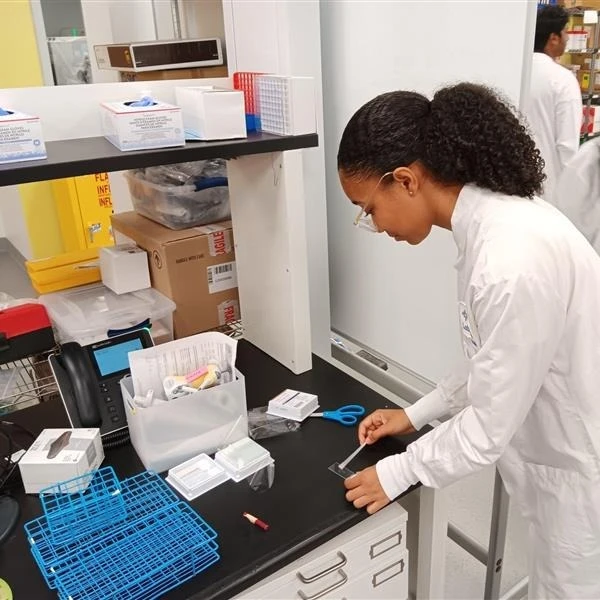
I’m Jessica, a Pennsylvania senior who somehow juggles AP classes, marching band, and a part-time job without losing my sanity or my amazing sense of humor. I’m planning to major in forensic biology because, honestly, I’ve always loved solving puzzles and finding answers (and yes, I’m the person who watches crime shows and actually pays attention to the science).
Band taught me patience (kind of, I'm still working on it), leadership, and how to stay calm when things go wrong. Balancing school, work, chores, college applications, scholarships, and life hasn’t been easy, but it’s shown me that progress beats perfection every time.
I care deeply about people and want to use science to help families find truth and closure. In short, I’m fueled by curiosity, coffee, and the belief that hard work (and a good laugh) can get you through just about anything.
Education
Easton Area High School
High SchoolMiscellaneous
Desired degree level:
Bachelor's degree program
Majors of interest:
- Biochemistry, Biophysics and Molecular Biology
- Cell/Cellular Biology and Anatomical Sciences
Career
Dream career field:
Medicine
Dream career goals:
Forensic Pathologist
Coach
gymTime2024 – 20251 yearTeam Member
Sheetz2025 – Present1 year
Arts
Easton Area High School Instrumental Music Association
Music2021 – PresentEaston Area High School Theatre Program
Theatre2022 – Present
Public services
Volunteering
National Honor Society — Volunteer2023 – PresentVolunteering
LINCS Center — Packer2019 – 2019
Future Interests
Advocacy
Volunteering
Philanthropy
“I Matter” Scholarship
When people think about helping someone in need, they often picture a big act of service or a life-changing event. For me, it looked much simpler. It looked like taking the time to notice someone who felt invisible.
As a section leader in my high school marching band, I learned that not everyone who needs help asks for it. Some people need help learning music or memorizing drill. Others need encouragement, confidence, and someone who believes in them before they believe in themselves.
One student in particular stands out to me. When I first got to know them, they were quiet, unsure of themselves, and often stayed on the sidelines. They rarely spoke up and seemed hesitant to put themselves out there. I knew what it felt like to question where you belong, so I made it a point to include them. I checked in during rehearsals, sat with them when I could, encouraged them when they were struggling, and celebrated their successes, no matter how small they seemed.
None of these things felt extraordinary at the time. They were simply small choices I made because I wanted them to know they mattered.
Over time, I watched their confidence grow. They became more involved, more willing to take risks, and more comfortable being themselves. Eventually, they earned a leadership position as a section leader. This year, they were selected as Drum Major for the 2026-2027 marching band season.
That accomplishment belongs entirely to them. They earned it through their own hard work, talent, and dedication. But seeing their growth reminded me of something important: when people feel supported, valued, and included, they often discover strengths they did not know they had.
That experience changed the way I think about helping others. People do not always need someone to solve their problems. Sometimes they just need someone to notice them. Sometimes they need someone to sit beside them, encourage them, and remind them that they belong.
As I continued in leadership, I tried to create that same environment for everyone around me. I wanted band to be a place where people felt respected, valued, and appreciated regardless of their background, experience, or personality. I made it a goal to encourage others, celebrate progress, and help people feel like they mattered.
At the end of this season, I was honored to receive the Positive Culture Award at our band banquet. The award recognized my efforts to inspire those around me and help create an environment where everyone felt respected, valued, and appreciated. While I was grateful for the recognition, the award itself was not the most meaningful part. The most meaningful part was knowing that the small actions I took every day had made a difference in someone else's life.
As I prepare to attend West Virginia University and pursue a degree in Forensic Biology, I hope to carry that lesson with me. Whether in my future career, my community, or my everyday interactions, I want people to feel seen, supported, and valued.
The Positive Culture Award hangs on my wall, but the real reward was learning that helping someone does not always start with a grand gesture. Sometimes it starts with something much simpler: making sure another person knows they matter.
Hines Scholarship
Most people move on. I don’t.
If something feels off, I sit with it. I replay conversations in my head. I notice when someone says they’re fine but something about it doesn’t match. I catch the small details that don’t fully make sense, and I have a hard time ignoring them. For a long time, I thought that just meant I was overthinking everything, but I’ve realized I actually like figuring things out.
That’s always been true. When I read mystery books growing up, I wasn’t reading for the ending. I cared more about the middle, where things didn’t quite add up yet. I didn’t just want to know what happened. I wanted to understand why it didn’t make sense in the first place.
A lot of that comes from how I’ve experienced the world. Being mixed, I’ve never fully felt like I fit into one specific group. There were moments where I felt like I had to adjust depending on who I was around or where I was, and that wasn’t always easy. But it forced me to pay attention. I learned how to read a room, understand different perspectives, and pick up on things people don’t always say out loud. Over time, I stopped seeing that as something that made me different in a negative way and started realizing it gave me an awareness that a lot of people don’t have.
My dad always kept things simple. He had three rules: ask questions, don’t be an ass, and work hard. It sounds basic, but that’s how I’ve learned to approach everything. If something doesn’t make sense, I ask. I treat people the right way. And I don’t expect anything without putting in the work.
That mindset is what led me to forensic science. It’s not just something that sounds interesting to me. It actually fits how I think. It’s detail, logic, and truth. It’s not guessing or assuming. It’s figuring things out when it matters and being able to stand behind it.
What people don’t expect is that I’m also an empath. I pick up on people easily, sometimes more than I want to. For a while, I didn’t know how that fit into anything I wanted to do, but now I understand that it matters. Behind every case is a real person and a real family waiting for answers. This isn’t just work to me. It’s responsibility.
Going to college isn’t about “finding myself” or just getting a degree. It’s about taking the way I already think and building the discipline and knowledge to actually use it. I want to become a forensic pathologist, and I know that path is long. It’s years of school, not just four, and I’m okay with that. I’d rather take the time to do something that actually fits me than choose something easier that doesn’t.
I’ve been doing my part to make that happen. I’ve applied for scholarships, I plan to work while I’m in school, and I’m trying to take responsibility for my education instead of expecting it to just work out. I know what this path requires.
I don’t expect anything to be handed to me, but I do know what I bring. I pay attention. I ask questions. I work hard. I’ve spent my whole life noticing what others miss. Now I’m ready to be someone people can trust to get it right.
Jose Montanez Memorial Scholarship
No, I was not in the foster care system.
Growing up, I never had just one place that shaped me. Instead, it was the rooms I walked into with my saxophone, the sidelines I stood on in a band uniform, and the little kids I coached at Gymtime who looked at me like I hung the moon. Those were the spaces where I learned who I was becoming. They taught me that impact is not always loud. Sometimes it is as simple as showing up, paying attention, and giving people a sense of steadiness when they need it most.
Band became the first place where I understood what community really means. I joined in fourth grade, took a break, and returned right before the world shut down. Coming back felt like stepping into something familiar when everything else felt uncertain. Eventually I grew into a leader, which surprised me. I was not the loudest voice or the most confident person, but I cared deeply. Being on Senior Council showed me that leadership is often quiet. It looks like listening, noticing when someone is struggling, and showing up even when you are tired. It helped me understand how much a single person can shift the energy of an entire group.
Working at Gymtime taught me something different. You cannot rush a child who is scared. You learn to meet people where they are and celebrate the small victories. Later, working at Sheetz, I learned how to stay patient when customers are overwhelmed or frustrated. Those experiences taught me that people turn to calm when things feel chaotic. Those lessons are a big part of why I chose forensic biology.
I want to help families during the hardest moments of their lives by giving them the answers they deserve. Forensic biology might sound clinical, but for me it is a way to support my community with clarity, compassion, and truth. Cases do not exist in a vacuum. They belong to real people who need closure and understanding. Knowing that my work can give someone peace matters to me more than anything.
In my community, I hope to be a source of steadiness in moments that feel impossible. I want to work in a lab where the details I notice can bring direction to people who feel lost. I want to use science to help bring resolution where there has been uncertainty. I do not take that responsibility lightly. It is the kind of work that requires patience, curiosity, and heart. Every job I have had, every leadership role, every late-night studying has taught me how important those qualities are.
When I receive my degree, my goal is to bring that same dedication back to the people around me. I want to mentor younger students of color who do not always see themselves represented in science. I want them to know that they belong in these spaces just as much as anyone else. I want my career to honor the people who poured into me and to reflect the kind of kindness and consistency that changed my own life.
My hope is simple. I want to make my community safer, more informed, and more supported. And I want to give back in the same spirit that shaped me.
Zedikiah Randolph Memorial Scholarship
When I was little, I watched Doc McStuffins almost every day. I didn’t just see a cartoon. I saw a little girl who looked like me, who loved science, helped others, and wasn’t afraid to take charge. What stood out to me even more was how many women doctors the show featured. They were pediatricians, veterinarians, and specialists in fields I had never even heard of. At the time, I thought that was normal. I thought the world was full of women like them, helping and healing in every corner of science. It wasn’t until I got older that I realized how rare that kind of representation really was.
As I went through school, I started to notice how few women, especially women of color, were pictured in textbooks or standing at the front of the classroom teaching science. I never saw many who looked like me in the labs, on the posters, or in the examples used to explain how things worked. It didn’t make me doubt myself, but it did make me think. Somewhere along the way, I realized that I didn’t just want to love science. I wanted to belong in it.
That realization led me to forensic biology. To me, it is the perfect mix of curiosity, compassion, and purpose. I have always been drawn to understanding how things work, but even more to understanding people. Forensic biology allows me to do both. It connects science to stories, answers to healing, and evidence to truth. Most people think of it as solving crimes, but to me, it is also about bringing peace to families who have lost someone or spent years wondering what happened. It’s about using science to give closure, even when the outcome is hard.
According to a 2025 Zippia study, only about 8.7 percent of forensic pathologists identify as Black or African American. Seeing that number reminded me of what Doc McStuffins showed me years ago. Representation matters. When young girls see someone who looks like them doing something they’ve never imagined, it opens a door that might have stayed closed. I want to be one of those people who holds the door open.
I have learned that change doesn’t happen all at once. It starts small, with someone choosing to stay curious, to ask questions, and to keep showing up even when they are the only one who looks like they do. That is what I want to bring to my field: consistency, compassion, and the courage to belong. Being a Black woman in science means carrying more than just ambition. It means knowing that every step forward can make the path a little clearer for someone else.
I plan to use my education in forensic biology to help families find answers and to mentor younger students who want to pursue STEM careers. I want to make science feel less intimidating and more human. I want it to feel like the world I saw as a little girl, where smart, capable women of color were doing extraordinary things every day.
I may not have all the answers yet, but I know that every lab I walk into, every question I ask, and every test I run gets me closer to building that reality. I want to be one of the reasons the next generation believes they belong in science. The little girl who once watched Doc McStuffins believed she could do anything. I plan to keep proving her right.