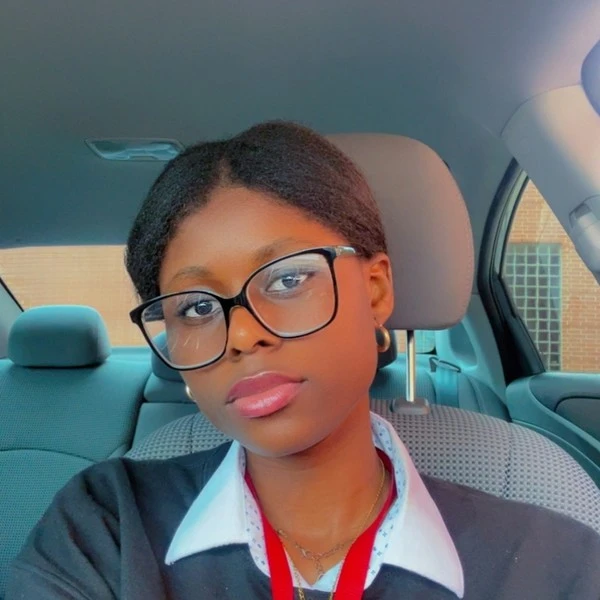
Hobbies and interests
Biology
Biochemistry
Reading
Women's Fiction
Biography
Health
Psychology
I read books daily
LOW INCOME STUDENT
Yes
FIRST GENERATION STUDENT
Yes
Jessica Adu-Gyamfi
1x
FinalistJessica Adu-Gyamfi
1x
FinalistBio
Future physician
Education
The University of Texas at San Antonio
Bachelor's degree programMajors:
- Biology, General
Minors:
- Biological and Biomedical Sciences, Other
GPA:
4
Cypress Woods High School
High SchoolGPA:
3.9
Miscellaneous
Desired degree level:
Doctoral degree program (PhD, MD, JD, etc.)
Majors of interest:
- Medicine
Career
Dream career field:
Medicine
Dream career goals:
Physician
Sports
Tennis
Intramural2020 – 20222 years
Volleyball
Intramural2020 – 20233 years
Public services
Volunteering
Key Club and Interact Club — Volunteer2022 – PresentVolunteering
Key Club and Interact Club — Member2022 – Present
Future Interests
Advocacy
Volunteering
Philanthropy
Entrepreneurship
Mohamed Magdi Taha Memorial Scholarship
To me, to be an up-stander means taking a stand to say something when it would be easier to stay quiet. It means stepping back and seeing that something is wrong and not just closing your eyes and moving on, even when the action you are taking seems so small. I have tried to do this in my own life, both in what I do for my community and in those moments when I choose to find my voice.
Developments between Ghana and America shaped my understanding of justice and community. I saw individuals relying on each other even though they had no resources in Ghana. I saw opportunity and inequality side by side in America. I felt as if I did not fit in, but I realized that remaining silent only made me invisible. I started standing up for myself and for others who were being left out, and I realized even little acts—such as standing up for someone who was isolated—could help.
In school, I took this with me into the extracurricular activities that I participated in. With Key Club, Interact Club, HOSA, and the African Student Association, I committed myself to service. Volunteering taught me that it is not always necessary to be an up-stander in that you have to be at the forefront of big movements. It could mean helping to coordinate a food drive, coaching lower-level students, or just consistently showing up week after week for individuals who depend on you. Those small things matter, because they build trust and dignity among a population.
The area where I have tried to be most engaged is in mental health. In my African community, mental health is often dismissed or stigmatized. Instead of avoiding the subject, I decided to come forward about what had happened to me and allow others to do the same. These are not comfortable conversations, but they are necessary. I've learned that even a quiet discussion can provide someone with hope and make them feel less alone. In a way, choosing to silence-proof is maybe one of the most powerful things that I can do for others.
I hope to use my voice in medicine in the future. I'm pre-med and have a major in biology, and I'd like to be a mental health doctor. My job will not only be to diagnose and treat but also to speak for patients and inform families, in my opinion. Most individuals are helpless when they are sick or stigmatized, and I want my voice to be that of knowledge and empathy. In the external world also, I want to keep offering spaces for youth, especially African and immigrant students, to be heard and seen.
While reading about Mohamed Magdi Taha's life, I was moved by the way he used his voice with both courage and empathy. He stood up for what was right, cared for his community, and had faith in purpose in big and little things. That's the kind of impact I want to create. Up-stander is never an easy position, but always worthwhile. I believe that one person can open the door for others, and I am going to continue doing just that and building communities of dignity and hope.
Manny and Sylvia Weiner Medical Scholarship
Ever since I was a child, I have been drawn towards the medical field. Firstly, it was the wonder with which the body works that intrigued me, but then I came to understand that medicine is something much greater than that. It is not only science, but care, service, and restoring dignity to human life when they are at their weakest. I want to be a medical doctor because I believe that this is one of the most deserving ways to serve humanity and because I have learned first-hand what it feels to have challenges in life, but still have a dream.
To me, being a doctor is not about scribbling out prescriptions. It is listening, hearing, and providing individuals with a place where they are seen and appreciated. I hope to be that physician who not only fixes symptoms, but revives hope and walks with patients through some of the most challenging times of their lives.
One of the largest challenges I've had in pursuing this career is financially. My family has always valued education, but there have been few resources. Growing up between Ghana and America meant having to start over more times than I can recall, both economically and academically. With each move came new opportunities, but also new expenses. As a pre-med, I already feel the weight of tuition, textbooks, lab costs, and even the most basic technology required to succeed. Looking down the road, the cost of medical school weighs even more. Without scholarships and financial assistance, this dream can be forever beyond our grasp.
I am always reminded of Emanuel "Manny" Weiner, whose story is the very heart of this scholarship. He had the passion and ability to attend medical school, but financial reality intervened. I carry that story with me as a reminder of how fragile chances are, and how important not to release them. I do not want to look back at life with regret. I want to move forward with courage and conviction, and awards like this allow me to do so.
While financial struggle has increased the obstacles of becoming a physician, it has also taught me to be resilient, resourceful, and extremely compassionate. I know what it is like to have obstacles that you feel are greater than yourself. I know how vital support is when the odds are stacked against you. These experiences have schooled me in an attitude that I will bring with me into my medical practice.
When I become a doctor, I dream of serving low-income and underserved populations. I dream of advocating for those most easily ignored, and that lack of resources will not mean lack of care. Having overcome adversity myself, I will be able to welcome patients with humility and compassion. I intend to use my medical school education not only to heal, but also to create a spirit of hope and possibility in individuals who find themselves constricted in their circumstances.
I want to be a doctor because it is my calling to blend science, compassion, and service. The economic obstacles that I face make the experience more difficult, but have also hardened me. They remind me that perseverance and mentoring will enable me to succeed where others have not succeeded before me. Most importantly, they remind me that medicine is not just a vocation. It is a way of healing others skillfully and with love.
With the help of this scholarship, I will be in closer reach of answering that call.
Fishers of Men-tal Health Scholarship
Mental health has never been merely a subject of interest to me; it has become, to this point, a living experience that has shaped my values, my relationships, and the trajectory of my professional life. My own journey with mental health is inextricably bound up with concerns of spirituality, family, and a growing commitment to becoming a compassionate, spiritually grounded professional capable of ministering to those in need. As the verse that underlies this scholarship—"Follow me, and I will make you fishers of men" (Matthew 4:19)—I see my calling to be casting my net not into water bodies for fish but into the depths of human pain, in order to reach those who are trapped into cycles of pain, shame, and secrecy.
Personal Experience and Beliefs
I came across the weight of mental illness initially through my father, who has spent much of his life providing support to individuals with PTSD. Seeing him unobtrusive in his dedication planted an early seed of interest and esteem in me. But beyond just observing him, I also walked through my own periods of concern, crises of identity, and the cultural stigma that ensnared itself around discussions of mental health. At home in Ghana, and in homes generally, conversation about mental illness was stifled or reduced to spiritual causes alone. Religion and prayer were pillars of resilience, but I knew that disregarding professional intervention left so many vulnerable and isolated.
This has reshaped my understanding of the relationship between religion and mental health. Instead of seeing them as separate, I have come to realize they are intensely interconnected. My religion became not only a personal comfort, but also an example of empathy. The Jesus miracle stories about healing the outcasts and the misunderstood resonated differently. Mental illness, I realized, can never be a reason for shunning or stigmatization, but only an opportunity for empathy, patience, and directed care. My belief in God's love motivates me to approach every person as of inherent value despite their issues and it has reinforced my dedication to an integrative approach to healing.
Impact on Relationships
My experiences with mental illness have also altered my relationships. I learned that being present to others is more than handing out advice; it is listening without judgment, recognizing their pain, and sometimes just sitting in silence with them. In high school, I often found myself unofficially in support roles with friends with depression, family problems, or anxiety. These experiences taught me to prioritize empathy over quick fixes and reconcile honesty with tact.
In my family, my increasing understanding of mental illness presented challenges and solutions. At times I felt the pressure of bucking cultural attitudes that dismissed counseling or therapy. But with ongoing conversation based on respect and love, I began to see differences. My family was more open to discussing mental well-being, and my own openness to discuss personal struggles gave others permission to speak up too. These interpersonal interactions made me realize that mental health care is not just about the individual, but it spreads to families and communities, bringing with it opportunities for healing at a larger level.
Shaping Career Aspirations
All of these experiences come through on my career goal to have a career in mental health. I am currently taking biology as a prerequisite for going into the medical field, where I plan on specializing in psychiatry. My academic interests are guided by science and service: I want to understand the neurological and biochemical etiologies of mental illness, but also integrate the relational, spiritual, and cultural dimensions of care.
The reality that nearly 50% of patients with severe mental illness also experience substance abuse on a personal level impacts me directly. Typically, the pain of untreated mental illness pushes an individual toward unhealthy coping mechanisms. My dream is to become part of breaking the cycle by becoming a professional who not only diagnoses and treats but also walks with the patients with compassion and respect. I see myself working in settings where clinical practice and religion overlap—presumably in faith clinics, community agencies, or global health settings with heavy cultural stigma.
This profession is not merely about professional development for me; it is about service and effect. I would like to speak out for greater access to mental health services in underserved communities, specifically in African and immigrant groups where silence and stigma tend to prevail. By combining my scientific education and spiritual heritage, I aim to provide care that is both effective and humane.
Ambition, Drive, and Impact
My vision is clear: to be a doctor of mental health, shattering stigma barriers while sharing God's love in what I do. My motivation stems from experience—my own battles, the strength I have seen within others, and how I have observed that faith has been both a solace and an irritant. I am motivated by a sense that no one has to be in pain and that healing is possible if compassion and science converge.
The effect I envision is three-pronged. One, I want to treat patients directly with culturally informed, faith-conscious psychiatric care. Two, I want to educate families and communities, so they can lose the myths that keep people from calling for help. Three, I want to mentor younger students who, like me, may see the conflict between faith, culture, and mental health, showing them that in fact it is possible to honor all three.
"Come, and I will make you fishers of men." This call to discipleship is a call to service, to mercy, and to courage. What I've learned on my journey with mental health has taught me to be a person who is passionately committed to the worth of every human being, who yearns to build relationships rooted in empathy, and who will do whatever it takes to have a career that brings hope to the hurting.
The journey has not been easy, yet it has been molding. By believing, I have become resilient; through relationships, I have become compassionate; and through academic and professional goals, I have learned purpose. I see the mental health profession not as a choice for a profession, but as a calling—a calling that brings together my life experience, my spiritual values, and my desire to serve.
As I cast my net into this book's waters, I do so in hope that every struggle—to hear a suffering friend, to labor towards cultural change, or to cure a patient—brings us closer to a world where mental illness is received with dignity, compassion, and hope.
Byte into STEM Scholarship
Every time I enter a lab or open a biology textbook, I have the excitement of possibilities—how science can be used to fix actual problems, improve lives, and transform communities. Growing up one of four children and moving to the United States from Ghana at the age of fifteen shaped the person that I am today. Adjusting to a new country, school system, and society while dealing with financial struggles taught me the value of resilience, perseverance, and diligence. These lessons instilled in me a deep passion for education and the opportunities that it provides, especially in fields like STEM where Black students are underrepresented.
I was interested in STEM through an interest in the human body and in biological science. I was fascinated at the idea that science could solve common problems and improve lives. This made me interested in taking demanding coursework in biology, chemistry, and molecular biology, and in research activities. I was particularly fascinated with human biology and biochemistry due to the potential that I would be able to make contributions to medicine development and public health.
Leadership and service have always been central to my growth. I am a mentor of younger students, helping them with academic problems and personal concerns, through PALs (Peer Assistance and Leadership Service). I am also actively involved in Key Club, Interact Club, HOSA, and the African Student Association, volunteering more than 200 hours of volunteer work combined among these clubs. My own experience at church has also instilled in me a sense of service, from organizing homeless drives to disaster relief missions to Haiti, and from serving weekly in kids ministry to greeting guests during services. From all that I have learned, I have come to understand that effective leadership is rooted in empathy, teamwork, and elevating others with you.
The program I am pursuing—a pre-medical curriculum with a bachelor's degree in biology—will allow me to set the scientific groundwork and research methods required to create a real impact in health care. My studies in human biology, biochemistry, and molecular biology will provide a strong foundation for medical school and allow me to be prepared to contribute to improved health care for the underserved. Beyond the classroom, I plan to continue mentoring and helping students with economic or social barriers to a career in STEM, toward an ever more diverse and inclusive scientific community.
Eventually, I hope to be a doctor who not only diagnoses patients but also advocates for equal access to health care and generates love of science in future generations. My intention is to lead projects integrating education, research, and mentorship and give Black students opportunities to grow into self-assured scientists and doctors. In merging my passion for science, with my commitment to service and leadership, I can leave a legacy—empowering others, opening doors to education, and enhancing a healthcare system that is innovative and humane.
In summary, the setbacks I've encountered, the leadership roles I've taken on, and my passion for STEM have all contributed to my motivation to create a positive impact in my community and wider world. This scholarship, not only would provide me with the necessary financial support to achieve my education but also give me the capability to keep striving towards my ambitions with determination, perseverance, and intent. I am committed to using my knowledge, skills, and experiences to teach and inspire others, further science, and leave a positive difference in the world.
Leading Through Humanity & Heart Scholarship
I am a high school senior with a keen interest in human biology, biochemistry, and the overall health sciences field. Having moved to the United States from Ghana at the age of fifteen opened my eyes to the challenges people must face while adapting to new systems, whether educational, social, or healthcare. Having been brought up as one of four siblings taught me resilience, responsibility, and compassion—values that continue to shape how I approach school, service, and life.
Volunteer work has been at the center of my personal growth. Through PALs (Peer Assistance and Leadership Service), I mentor younger students through academic and personal problems. I have also participated in homeless drives, Haiti disaster relief, and weekly service in my church's children's ministry. These experiences have taught me the importance of patience, comprehension, and uplifting others, and reinforced my desire to pursue a career in human health.
These, along with my academic focus on human biology, have shaped my passion for promoting wellness, creating inclusivity, and providing care with respect and compassion. I am driven to create meaningful change in the field of healthcare, approaching each challenge with a human-first approach and empathy.
Part 2: Empathy in Healthcare
Empathy is the capacity to understand and actually share the feelings of another, and to act in a way that dignifies their experience and needs. Empathy for me is not just an emotional response—it is an essential skill for anyone wishing to pursue a career in healthcare. Patients typically come from different backgrounds, have different issues, and feel exposed when they seek treatment. Empathy allows a clinician to build trust, to communicate effectively, and to make decisions that truly serve the person and not merely the disease.
My volunteer experiences have shaped my idea of empathy in practical ways. Serving every Sunday in the kids' ministry at church, I have been required to see the world through the eyes of a child, to feel their fears and their needs and to provide direction and nurture. Volunteering in homeless drives and disaster relief efforts, for example, during the Haiti crises, has taught me to approach every person with patience, dignity, and a focus on their humanity. These experiences have reaffirmed that quality care begins with actually listening and understanding the person behind the case.
In my future career as a physician or healthcare provider, I plan to ensure that my practice is guided by a human-centered approach. This means considering not only the biological but also the social, emotional, and cultural conditions of each patient. I wish to be a patients' advocate, to educate them on their health decisions, and to create care plans that meet their values and needs. I also wish to promote health equity and inspire others, especially young women of color, to pursue health sciences confidently through mentoring and community service.
Ultimately, empathy powers the quality of care, the depth of connection, and the significance of a healthcare professional's work. By synthesizing scientific knowledge and human insight, I aim to practice in a health system where patients are listened to, supported, and empowered. Every interaction, every patient, and every challenge will be approached with the belief that human health is something more than physical—it is personal, cultural, and lived.
Future Women In STEM Scholarship
Science has long interested me because it describes the world in terms of curiosity and action. Leaving Ghana to come to the United States at age fifteen was a big change, but it provided an opportunity to engage my interests in STEM in different ways. Being one of four children entering a new school district and way of life, I learned resiliency, flexibility, and perseverance—qualities which have guided my academic career and led me to become interested in a STEM career.
My passion for STEM was developed through my course of study in human biology, biochemistry, and molecular biology. Studying the complexities of the human body and how biochemical processes affect health captivated me. I learned that science is more than theory; it can change lives, enhance medicine, and address real-world issues. It was this realization that spurred me to delve deeper into research, enroll in rigorous courses, and seek out opportunities to prepare me for a pre-medical path in college.
Service and leadership have always been core to my development, and they are directly related to my passion for STEM. With PALs (Peer Assistance and Leadership Service), I teach lower students, helping them through academic challenges while fostering scientific curiosity. I am also an active member of Key Club, Interact Club, HOSA, and the African Student Association, contributing over 300 volunteer hours across those clubs. Through these, I have become aware that being a STEM leader does not only equate to science and innovation but also to inspiring others, mentoring, and communicating scientific potential to the world.
As a Black woman in STEM, I am aware of the challenges that exist, and yet I am determined to break through. Representation matters, and I would like to be able to empower other girls of color to enter science confident. My experiences as a mentor, volunteer, and leader in school and community organizations have also shown me that persistence, empathy, and mentorship can create lasting change, both in and out of STEM.
The pre-medical degree I am pursuing with a biology major will provide me with the scientific foundation I need to contribute to medical advancement and patient care. It will equip me with the ability to understand complex biological systems, do research, and ultimately contribute in healthcare. Apart from studies, I plan to continue mentoring students, especially those who have a financial or social barrier, and inspire them to see that STEM is a field where they can excel and be part of.
My upbringing in Ghana and immigration to the United States, and my persistence, curiosity, and desire to serve, have shaped my passion for STEM. I am motivated to contribute to scientific advancement, improve healthcare, and inspire the next generation of women in STEM. This award would allow me to pursue my dreams without constraint and empower me to create lasting change in my community and beyond
I Can and I Will Scholarship
There were moments when the weight of stress and worry seemed to overwhelm me, and I wondered how I was ever going to balance school, community responsibilities, and personal needs. Being among four siblings at a young age, I soon realized that life has struggles, but some issues run far deeper than homework or deadlines. My own household has battled mental illness, and watching the impact of anxiety and depression on loved ones greatly shaped my beliefs, relationships, and professional aspirations.
Gaining an understanding of mental health firsthand, and watching the way they affected my own household, taught me empathy and strength. I learned patience and tolerance in aiding someone struggling with battles that are not visible. This attitude has also influenced how I interact in my friendships, colleague relationships, and younger students I mentor through PALs (Peer Assistance and Leadership Service). I am more sensitive to other individuals' emotional needs and have been more encouraging, more actively listened to, and guided them more when they needed it most. Mental illness has taught me that help is not a one-time action—it involves persistence, understanding, and a willingness to step into another person's world.
These experiences also strengthened my resolve at school and outside of school. Despite the pressure of adapting to a new school system having recently moved from Ghana and juggling family responsibilities, I maintained a high GPA while participating in Key Club, Interact Club, HOSA, and the African Student Association. Volunteering at my church, ranging from organizing homeless drives to serving in kids ministry, gave me an outlet for my empathy to be converted into action. I realized that service not only serves others—it creates strength and purpose in me.
Mental health has also driven my career aspirations. I am passionate about medicine and hope to become a doctor who not only cures physical illness but stands up for mental well-being. Valuing the unity of body and mind has promoted the importance of comprehensive care, particularly for vulnerable populations with limited mental health options. I would like to combine medical acumen with compassionate care so that patients hear, see, and are understood in all their aspects of wellness. My experiences have also inspired me to mentor students, especially those who might be dealing with anxiety, depression, or other mental health issues, guiding them through school and life while building resilience and self-confidence.
Mental health has ultimately influenced my perspective and the individual I aim to be. It has instilled in me that strength lies not in the lack of struggle but in the capacity to endure with empathy, patience, and courage. It has impacted the way I establish relationships, how I lead, and how I serve. It has also fueled my desire for a career in medicine where I will work to make a positive difference in physical and mental health within my community and beyond.
In short, my mental health struggles have not only affected my spirituality, relationships, and calling—they have become the lens through which I perceive the world and my place within it. Through the power of resilience, compassion, and service, I am dedicated to empowering others, cultivating understanding, and creating lasting, positive impact in the lives that I touch.
Sherman S. Howard Legacy Foundation Scholarship
Being involved in my church at home has not only shaped my faith but also my dedication to serving others. Growing up, I learned that faith is not about believing, but about doing—using the gifts and resources you have to serve others. At church, I have been lucky enough to become involved in several service projects that have allowed me to put this principle into practice and challenged me to make a difference in my community.
One of the largest things that I do to serve is via volunteer efforts that serve the poor. I participate in weekly homeless drives, sorting and serving food and supplies. These experiences have been eye-opening and have shown me that even the smallest gestures of kindness, such as bringing a warm meal or a smile, can create dignity and hope. I have also been involved in disaster relief efforts, such as organizing drives to support the communities devastated by the earthquake in Haiti. Donation organizing, supplies sorting, and helping collect resources taught me about the importance of empathy, planning, and cooperation, and showed me how a whole community coming together could bring a tangible difference to the lives of those in need.
Other than these types of community outreach, I volunteer every Sunday in the children ministry of the church, helping teach and mentor younger kids. This role has developed my patience, communication, and leadership skills through counseling. I also assist in the church door, distributing notes to visitors during masses. While this seems to be a small duty, it has enabled me to understand that service is not something solitary in nature but something multiple and various, and constant endeavor in any kind contributes to the collective good.
I gained and developed a sense of leadership and responsibility from these experiences. Through PALs (Peer Assistance and Leadership Service), I assist and mentor younger students academically and personally, helping them navigate problems in school and life. With the church service as well, I learned that influence is most potent when it touches on multiple areas of life: body, soul, and mind.
In the years to come, I will carry these lessons with me throughout my career and community service. I am eager to pursue a career in medicine, and I would like to put my skills to use in providing loving care to disadvantaged communities. The compassion, dedication, and leadership skills that I have gained through church service have prepared me to face challenges with determination and a service mindset. I also hope to continue mentoring others, sharing what I have learned, and supporting them in paying it forward in meaningful ways.
In short, my experience at my home church has been the focus of the work that I do in my community. From organizing homeless drives and disaster relief events to mentoring children in ministry and supporting church services, I have come to understand that faith is lived out in action. By continued serving, leading, and mentoring, I will work to leave a lasting positive impact in my community and beyond
Linda Fontenot Memorial Scholarship
Growing up as one of four children with my mother, Linda Owusu, gave me the values of responsibility, resilience, and perseverance. It was not a walk in the park, and resources were limited, but encouragement and support from my family gave me the platform to dream bigger than our situation. I learned to share, sacrifice, and hustle—principally not just for myself, but for my siblings and family at large—since I was a child.
My family moved from Ghana to America when I was fifteen years old. It was a thrilling and challenging experience. I had to accommodate a different system of education, another way of life, and another world where I did not feel at home most of the time. Being one of four children introduced another dimension of complexity because each school, resource, and access decision had to be entered into cautiously. These experiences taught me resilience, flexibility, and the value of remaining committed to my goals despite challenges.
My anchor became education, and STEM rapidly became my interest. Biology especially fascinated me with its sophistication and its ability to better lives. I sought leadership and service through PALs (Peer Assistance and Leadership Service), Key Club, HOSA, and the African Student Association. Mentoring coworkers, volunteering in the community, and collaboration with others who are also passionate about my field showed me the worth of combining knowledge with action. These projects reaffirmed my goal of assisting others for good through a career in medicine.
My dream is to become a doctor that advocates for those who require it the most, providing care, education, and hope to those who are invisible in the medical system. I also dream of being able to mentor younger students to never lose hope and pursue their dreams in the fields of STEM and medicine.
This scholarship would help alleviate the financial burden of college and allow me to focus on my studies, leadership, and community service. It would allow me to continue building the skills and knowledge that I need to gain in order to be of difference in this world. My sacrifices, as well as my own determination, have shown me that adversity can be used as fuel for motivation—and that, through focus and persistence, I can achieve my goals and inspire others to do the same.
FIAH Scholarship
As a child, I learned early on that life is not always followed with a blueprint. My siblings and I migrated to the United States at age fifteen from Ghana. We left behind all that we knew—our home, friends, and lifestyle. Transcending into a new country as the fourth child meant balancing school, domestic duties, and economic hardship. I quickly realized that if I was going to make it, I had to step up, work hard, and seek opportunities to move forward in spite of the uncertainty that surrounded me.
School became my haven and my hope. I plunged headfirst into school, and I discovered an abiding interest in biology and the sciences. In the meantime, I sought opportunities to serve and to lead within my community. I assisted underperforming students with PALs (Peer Assistance and Leadership Service) by mentoring lower-level students. Through Key Club and Interact Club, I donated hundreds of service hours, organizing service projects that addressed local needs. HOSA allowed me to explore more in depth health sciences and medical leadership, and the African Student Association offered an avenue to share culture and foster inclusivity. These interactions taught me that leadership is about lifting others up even as you pursue your own dreams, and that service can be legacy-making.
Being a first-generation college student has shaped not only my perspective but also my goals. I have seen how access to healthcare and education can transform individuals's lives. My dream is to become a doctor, combining my STEM training with leadership and service to make a positive difference in my community. My vision is to provide equitable healthcare to poor communities, champion patients who are made invisible, and lead projects that educate and empower communities to give more priority to their health. I would like to use my knowledge of medicine and biology not just to cure disease but to offer hope and create opportunity for others.
I also wish to guide and counsel younger students, especially those experiencing challenges similar to mine. From my PALs and volunteer experience, I learned the strength of support and encouragement. By sharing what I have learned with regards to resilience, determination, and leadership, I hope to encourage others to pursue their dreams despite obstacles.
Ultimately, my experiences have taught me that making a positive difference is never a matter of being acknowledged but always one of service, compassion, and commitment. Whether through mentoring, volunteering, or my professional career as a physician, I am dedicated to leveraging my talents and opportunities for the improvement of other people's lives. I would like to generate a ripple effect of transformation, where each effort to empower one person inspires them to continue the chain of leadership and service.
Having transitioned from Ghana, having survived the financial challenges, and having embraced leadership in service has prepared me to make a positive impact not just within my community but within the world at large. This scholarship would allow me to continue striving for education without the excessive burden of debt, bringing me closer to creating a world where access, compassion, and opportunity are available to all.
Eric W. Larson Memorial STEM Scholarship
At fifteen, I left behind everything I knew: my home in Ghana, my childhood friends, and the rhythm of a life I thought I was familiar with just to start over in the United States. What should have been excitement at a new start felt more like being dropped into a world where I was a stranger. Suddenly, I had to adjust not only to a foreign country and school system, but the subdued, stifling presence of economic strain. My parents worked day and night, but work was scarce, and I soon discovered that if I was going to have a future at all, I would have to fight for it.
I had loved school in Ghana, but resources were limited. Books were reused year upon year, laboratory equipment was typically non-functional or being used by dozens of students, and dreams of college sounded more like indulgences rather than possibilities. Upon moving to the U.S., I hoped that education would be the open door that I had always envisioned. Instead, I struggled with isolation, cultural integration, and rising awareness of just how far-reaching our economic struggles influenced all decision-making. Coming from a family of four siblings made it even harder, as resources were scarce and every decision-school supplies to opportunities—had to strike balance for all of my siblings.
There were nights that I did not sleep, trying to do homework without my own computer, borrowing school equipment when I could. There were afternoons that I did not go to extracurricular activities because my family was not able to pay the fee or take me. Even a small luxury like having dinner with friends after school became an impossible idea when every dollar at home was pulled. It appeared countless times my dreams were too big for my circumstances.
But it was in the periods of limitation that I found my determination. Learning was my light, the only thing no economic struggle could ever take away from me. Biology, though, captured my heart. I was astonished at how the human body worked—how systems were so intricately connected, how cells held instructions for life itself, and how even the smallest disruption could transform health into illness. Studying biology made me feel like I was piecing together a puzzle that could change lives.
My passion for STEM grew with my service club leadership. Through PALs (Peer Assistance and Leadership Service), Key Club, and HOSA, I learned what it meant to go beyond my own adversity and be a source of aid for others. Volunteering gave me perspective: despite having my own problems, I was still able to make an impact. Whether it was teaching younger students, organizing community service activities, or heading health awareness campaigns, I discovered that my resilience could be tapped by others to stand against their adversity.
But behind each hour of service was the experience of sacrifice. I worked these responsibilities out while maintaining my schoolwork at high levels, often staying up late into the night, never wanting financial disadvantage or cultural adjustment to set the boundaries of my future. Each obstacle was a reminder as to why I could not fail—because education was not just about me. It was for the people I eventually hoped to serve as a physician.
It is not merely curiosity that drives me towards the practice of medicine, but empathy. I have seen too many people at home in Ghana and in America here who cannot access health care. I have seen neighbors forgo going for medical attention because it's too expensive, and have relatives who compromised on good care simply because better care was out of their reach. My dream is to be a physician who not only cures patients but also fights for justice in medicine, particularly for marginalized groups.
I plan to use my STEM training in biology and medicine to plug those gaps. In my local community, I hope to work in the parts of town where healthcare is not readily available, treating people who are often out of mind. Internationally, I hope to contribute to research making crises more accessible and prepared for, from pandemics to natural disasters. Through the combination of my STEM expertise and service leadership, I see myself spearheading initiatives to heal, yes, but also enable communities to thrive.
I was forged by financial hardship, but shattered I was not. Instead, it fueled my passion. It taught me to be creative, to be tough, and compassionate. It taught me the worth of perseverance in the face of adversity, something that today I take with me to each classroom, each service trip, and every goal I am brave enough to chase.
I might lack wealth or privilege in my past, but I have something just as potent: the determination to stand up, to learn, and to make a positive impact. Thanks to this scholarship, I will carry on down the path of STEM, dedicated to following the very same path that Eric W. Larson cherished with such passion—the belief that education, equality, and grit can change not only an individual life, but the world at large.
Dr. Terran Jordan International Excellence in Leadership, STEM & Emergency Management Scholarship
Leadership is most often exercised when things do not turn out as planned. For me, true leadership was shown to me not by position or title, but by the way I reacted when things felt too difficult and others were relying on me to keep it together. As a first-gen Black immigrant student who dreamed of a career in biology and medicine, I came into leadership long before I ever imagined I would. The struggles that I faced made me stronger, the struggles that I undertook made me wiser, and the people that I served provided me with purpose.
One of the greatest leadership struggles that I ever went through was when I had to relocate from Ghana to America. I was fifteen years old when we relocated, and it was horrific. Everything that I knew was behind me. The school system was different, the culture intimidating, and I found myself alone much of the time. In high school, I soon learned that if I did nothing, I could just disappear. Meanwhile, other students, especially those who thought they didn't fit or had personal problems, seemed to look to me. They saw someone who understood what it is to be underestimated, someone who felt how hard it was to keep going when everybody around you seemed to expect that you would not.
This made me join PALs, Peer Assistance and Leadership Service. PALs gave me a chance to mentor and advise younger students, many of whom were like me in my first experience when I arrived in the U.S. There was one student that I felt invisible to in class and doubted his capabilities. I spent time with him week after week, heeling him, listening to him, and reminding him that his value was not tied to grades or what others thought. Gradually, I watched his confidence emerge, and he began to engage more at school. From that experience, I learned that leadership is not demanding attention but lifting others when they are low.
In the meantime, I pressed myself to serve through leadership beyond PALs. I volunteered on hundreds of hours in Key Club, Interact Club, and HOSA for school activities, community drives, and health activities. Each experience offered chances for me to lead with empathy. I organized volunteer activities in Key Club to unite students with community projects. At HOSA, I worked with fellow students who shared my interests in the health sciences and learned to work in teams and lead in healthcare. Through the African Student Association, I was able to share my culture and build a place where students felt proud and belonged no matter their background.
It was never easy to balance school, leadership, and personal problems. There were times when I felt stressed too much, especially when it came to the extra work that came with being a first-generation student. I would very often translate documents, complete forms, and handle critical documents for my parents because they did not know the processes here in the United States. There were times when I was just too much, when I was more of a parent than a child. But from those struggles, I have learned to problem-solve under pressure, to adapt rapidly, and to remain calm in times of uncertainty.
These courses encourage me to become a doctor in the STEM field. I have always been captivated by biology, not just because of what it entails as a science, but because of what it represents. The human body is fragile and strong, and I identify with that balance. I hope to dedicate my life to medicine, not just to heal disease, but to comfort patients in their most defenseless states.
I plan to use my background in biology and medicine to improve healthcare access in underserved communities and serve on the frontlines during crises like public health emergencies and natural disasters. My goal is to not only treat patients in distress but also to lead efforts that strengthen healthcare systems, educate communities, and ensure that no one feels invisible in times of crisis. By integrating my STEM training with my experience as a leader, I will be prepared to make a change locally and internationally.
Crisis leadership entails courage, creativity, and compassion. These qualities were not taught to me by books but through practice, weathering turbulence, leading others, and taking on tasks years ahead of my age. The strength that I developed during my time is the same kind of leadership that I would want to infuse into medicine and the sciences. I am a strong believer that through the mix of my academic achievement, leadership exposure, and sense of duty, I can help create positive world change.
Dr. Terran Jordan's work highlights leadership, resilience, and representation. These are ideals I value. Black students and professionals are underrepresented in STEM areas and crisis management, and these representation gaps result in decision-making and innovation gaps. In becoming a doctor, I am not merely pursuing a personal dream but also fulfilling a higher purpose of representation and equity. I want to be a mentor for students such as myself, showing them that there is a method to conquer adversity and make a good impression.
Through the struggles I have faced, I am well prepared to lead in uncharted times, innovate in crisis, and help others as I rise. I know the path will not be easy, but I carry with me the belief that leadership is service, imagination, and determination. I want to dedicate my life to medicine and crisis care, using my knowledge of biology and passion for service to be an instrument of change on a world stage. Along this path, I will keep the legacy of leaders like Dr. Jordan alive and create a future where representation and power come together.
Anthony Belliamy Memorial Scholarship for Students in STEAM
I have always believed that strength is not measured by how easy life feels but by the courage to keep moving forward when everything seems too heavy. As a first-generation student, an immigrant, and a young woman chasing a dream in medicine, I have faced moments when I wondered if my goals were out of reach. Yet those same struggles revealed my resilience, my determination, and my reason to keep fighting for my future.
When I was fifteen, my family moved from Ghana to the United States. Everything familiar to me disappeared overnight. I left behind my friends, the school system I had known, and the culture that shaped me. Suddenly, I was in a place where I felt like an outsider. The curriculum was unfamiliar, the pace was different, and even simple conversations felt like a reminder that I was starting over. By the time I reached my senior year, I had attended three different high schools in three years. Each move forced me to restart socially and academically, and at times it felt like my future was slipping through my fingers.
There were nights when I cried quietly because I felt lost, wondering if I would ever find my place in this new world. It was exhausting to rebuild again and again while watching other students enjoy the stability I longed for. But instead of letting those circumstances break me, I pushed myself to grow stronger. I realized that even if my life felt unstable, I could choose to create stability by serving others.
That choice led me to become deeply involved in service and leadership. Through Key Club, Interact Club, HOSA, and the African Student Association, I found ways to connect, to contribute, and to make a difference. Volunteering hundreds of hours gave me purpose and reminded me that no matter how uncertain my own journey felt, I could still bring light into someone else’s. Joining PALs, Peer Assistance and Leadership Service, was one of the most transformative experiences of my life. In PALs, I mentored and encouraged younger students who often felt overlooked. I understood their feelings because I had lived them myself. Being a listening ear for them gave me strength and reminded me that my story could inspire others to hold on, even when life felt impossible.
As a first-generation student, I also carried responsibilities that were difficult for others to see. I often became the translator, the form-filler, the one navigating systems my parents did not fully understand. Some days, I felt like the parent instead of the child. It was lonely at times, but it shaped me into someone who could handle pressure, who could lead with patience, and who could stand strong even when I wanted to crumble.
Those experiences built the foundation for my career goal of becoming a physician. Biology has always fascinated me, not just because of the science but because of what it represents. The human body is fragile and strong all at once, and I see myself in that balance. My dream is to dedicate my life to medicine, not only to treat illness but to bring comfort to patients in their most vulnerable moments. I want to advocate for equity in healthcare and stand for those who often feel unseen, just as I once did.
Every obstacle I have faced has shaped me into someone who refuses to give up. Moving from Ghana to the United States, carrying the weight of being the first in my family to walk this path, and learning to lead through service have all prepared me for what lies ahead. I have learned to turn pain into compassion and setbacks into motivation. These lessons reflect the values Anthony Belliamy embodied, values of resilience, integrity, and unwavering strength in the face of adversity.
I know the road ahead will not be easy, but I carry with me the belief that hardship can create purpose. I want my journey to remind others that even in the middle of loss, fear, and instability, hope can grow. By pursuing medicine and dedicating my life to service, I hope to honor Mr. Belliamy’s legacy by living with resilience, by leading with integrity, and by lifting others as I rise.
Dulce Vida First Generation Scholarship
"Never confuse being the first with being alone", that's the best advice I can give another first-generation student.
When you step into a classroom where no one in your family has been before, it is easy to feel isolated. You may look around and wonder if you belong, or if you can handle the weight of carrying your family’s hopes. I have felt that weight. I have felt the pressure of translating paperwork, figuring out systems, and navigating opportunities that no one could guide me through. I have felt the loneliness of pretending I was fine while silently questioning whether I was enough.
But here is what I learned: you are not walking this path by yourself. Every sacrifice your family made walks with you. Every late night you push through, every assignment you finish, every barrier you break becomes part of a larger story. You are carrying generations of hope on your back, but you are also clearing the path for those who will come after you. That is not loneliness. That is legacy.
My advice is to embrace the struggle as part of your growth. The truth is, being a first-generation student is not supposed to be easy. It is supposed to stretch you, challenge you, and teach you to keep moving even when you feel like you cannot. Every time you overcome an obstacle, you are proving to yourself that you are stronger than the doubts that try to hold you back.
I know this because I live it. When I moved from Ghana to the United States, I had to start over in an unfamiliar system. I had to translate not only for my family but also for myself. There were times when I wanted to give up, when the exhaustion of being both a student and a guide felt unbearable. Yet those struggles shaped me into someone resilient. They reminded me why my dreams matter.
My dream is to become a doctor, to serve people who feel unseen, to provide care with both knowledge and compassion. What drives me is the belief that my journey, with all its struggles, has prepared me to understand others at their most vulnerable. I know what it means to feel powerless, and that is why I want to dedicate my life to helping others find strength.
To another first-generation student, I would say this: your story is not defined by the challenges in front of you. It is defined by your courage to face them. You belong here. You are capable. And the very fact that you are the first means you are already breaking barriers.
Bick First Generation Scholarship
There were nights when I sat at the kitchen table with a stack of papers, my hands shaking because I had no idea what to do next. I was only a teenager, yet I was expected to make sense of documents written in words that felt foreign and overwhelming. I had to be the translator, the problem solver, and the one who made sure my family did not fall behind. That is what being a first-generation student has meant for me. It has meant growing up quickly, carrying responsibilities that often felt too heavy, and still holding on to my own dreams.
When my family moved from Ghana to the United States, I thought the hardest part would be leaving my friends and the life I knew. Instead, the hardest part became the pressure I carried every day. At school I struggled to adjust to a new system that often made me feel like I was starting from scratch. Assignments piled up, teachers spoke faster than I could process, and I often sat in class pretending to understand while inside I felt completely lost. I went home not only with my own homework, but with the responsibility of translating bills, filling out forms, and explaining letters that shaped my family’s future.
There were nights when I cried quietly because I felt like I was failing at everything. I wanted to be just a student, but I could not. I wanted to ask for help, but I was too afraid of looking weak. So I kept going, even when exhaustion made me feel like I had nothing left to give. I learned to smile during the day and break down at night, only to wake up the next morning and try again.
Through this, I discovered what drives me. It is not only about surviving challenges. It is about transforming them into something meaningful. What keeps me moving forward is the belief that my family’s sacrifices will not be wasted and that younger students who come after me will not have to feel as lost as I once did.
That is why my dream is to become a doctor. I want to study biology, follow the pre-med track, and one day serve people who feel unseen or forgotten. My struggles have shown me that medicine is not only about science. It is about compassion and the courage to help people when they are most vulnerable.
This scholarship would mean more than financial support. It would allow me to focus on my studies without the constant fear of how to afford them. More importantly, it would remind me that every night I spent pushing through fear and doubt mattered, because they led me here.
Being a first-generation student is not just about being the first. It is about proving that hardship does not define me, but instead fuels me. It is about showing that dreams born out of struggle can grow into something powerful enough to change lives.
STEAM Generator Scholarship
When I think about entering higher education, my greatest hope is to create a future my family has never known, and my greatest concern is whether I can carry the weight of being the first to walk this path. As a first generation immigrant, I often feel like I live in two worlds at once. At home my family holds on to the traditions and values we brought from Ghana. At school I face the challenge of navigating a system none of us fully understand. There are no older siblings to guide me, no parents who can explain college applications, and no family footsteps to follow. Everything I do feels like I am stepping into the unknown and trying to figure it out as I go.
That has not been easy. There were times when I sat in class feeling invisible while others talked about college visits and tutors. I remember feeling lost when teachers mentioned things that seemed to be common knowledge for everyone else. I often kept my questions to myself, even when I was struggling, because I was afraid of standing out for the wrong reasons. There were nights when I lay awake wondering if I was good enough to make it, or if the system was quietly reminding me that it was not built for students like me.
And yet, these struggles have also shaped me. They taught me how to adapt quickly, how to ask for help even when it felt uncomfortable, and how to find strength when I felt like giving up. I learned that being first means carrying uncertainty, but it also means carrying possibility. Every small victory such as understanding something on my own, completing a difficult assignment, or reaching out for guidance felt like proof that I could keep going.
Being an immigrant has also shaped my vision for the future. I want to study human biology and eventually enter the medical field. My dream is to become a doctor who not only provides care but also understands the struggles of families who feel unseen. I know what it is like to feel overlooked, to carry questions with no clear answers, and to feel like you are walking into a room where no one expects you to belong. Those feelings give me the empathy and determination to serve others, especially people who are underrepresented or left behind.
As I look ahead, I feel both hope and fear. I am hopeful for the opportunities I will find in higher education the chance to study what I love, to grow as a student, and to prepare for medical school. I am also afraid of the challenges, from finances to fitting into an environment where not many share my background. But those fears remind me of what is at stake. I am not doing this for myself alone. I am doing it for my family, for those who never had this chance, and for the future I want to build.
Being a first generation immigrant means beginning as an outsider. But it also means carrying resilience, sacrifice, and hope. Higher education is not just my next step. It is the promise that every struggle was worth it
Cyrilla Olapeju Sanni Scholarship Fund
When my family and I moved from Ghana to the United States, I never imagined how much we would have to leave behind. Back home, my father was a respected doctor who dedicated his life to caring for others. Patients trusted him and our family’s sense of security came from knowing that his work provided stability and purpose. But when we arrived in the United States, everything changed. His medical license no longer counted. The years of studying, training, and serving his community meant nothing here. Suddenly he was no longer seen as the doctor he had always been. He was just another immigrant searching for a way to survive.
I remember watching him apply for job after job and come home with the same quiet look of disappointment. He was turned away because he did not have the “right” papers or the “right” experience, even though I knew how skilled and compassionate he was. Without steady work, it was difficult to even find an apartment. Landlords asked for proof of income that my parents could not provide. Without a job it was impossible to get a car, and without a car it was nearly impossible to get to the jobs that were available. It felt like an endless cycle of obstacles. As a child, it was painful to watch my parents struggle so much when I knew how hard they were trying.
What stayed with me the most was my father’s sadness. In Ghana, people came to him for healing and guidance. In the United States, his knowledge and years of sacrifice were invisible. To me, he was still the same doctor who saved lives and comforted families. But to the world around us, he was just another man searching for work. Seeing him lose that part of himself broke my heart.
At the same time, it changed me. Watching my father refuse to give up taught me what resilience looks like. He worked jobs far below his qualifications, swallowed his pride, and did whatever was necessary because he believed in building a future for us. That kind of perseverance left a deep mark on me. It taught me that nothing worth having comes without struggle, and that sometimes you have to endure hardship to make way for something greater.
This challenge also shaped my dream of becoming a doctor. I have seen what it feels like to lose your place in society and to feel overlooked in a system that does not value your voice. I want to pursue medicine not only because I love science but also because I want to give people dignity, respect, and care no matter who they are or where they come from.
Today, I carry my family’s story with me as a reminder of where I come from and why I cannot give up. My father may not be able to practice medicine in this country, but his legacy lives on in me. His sacrifices and struggles are the foundation of my determination. Every step I take in my education brings me closer to fulfilling both my dream and the dream my parents carried when they brought us here.
Eric W. Larson Memorial STEM Scholarship
Growing up in Ghana, my life was shaped by a supportive community and a deep appreciation for hard work and education. My family and I made a significant transition when I was 15, moving from Ghana to the USA. This shift marked a pivotal moment in my life, influencing my academic journey and shaping my aspirations, particularly in the field of STEM. As I prepare to enter my senior year of high school, I reflect on how this move has impacted my passion for medicine and my commitment to making a difference in the field.
The transition from Ghana to the USA was a major change. Adapting to a new educational system, cultural norms, and social dynamics posed significant challenges. I had to quickly adjust to a different way of learning while acclimating to a new environment. This adjustment was both daunting and enlightening. The American educational system presented new opportunities and expectations, requiring me to adapt my study habits and approach to learning. Balancing these academic demands with the cultural changes was a complex process, but it taught me resilience and adaptability.
One of the most significant challenges I faced was balancing my academic responsibilities with the emotional and social adjustments of moving to a new country. The move meant leaving behind the familiar routines and support systems I had in Ghana. As the eldest child, I also took on responsibilities at home, supporting my family through the transition. This dual role of managing new academic demands while providing support at home taught me valuable lessons in time management, perseverance, and flexibility. I learned to approach each day with a strategic mindset, prioritizing my studies while helping my family adapt to our new surroundings.
My experiences in Ghana had given me a strong foundation in the importance of healthcare, but moving to the USA provided me with a broader perspective. Witnessing the differences in healthcare systems between the two countries intensified my desire to pursue a career in medicine. In Ghana, I saw firsthand the challenges faced by individuals with limited access to healthcare resources. The contrast with the more advanced healthcare system in the USA highlighted the disparities and reinforced my commitment to addressing healthcare inequities. This realization has driven me to focus on finding ways to improve healthcare access and quality, especially for underserved communities.
Financial considerations have also been a challenge as I plan for higher education. Despite my family's support, affording college education is a significant concern. To overcome this, I have actively sought scholarships ,and utilized community resources. I have also participated in extracurricular activities such as volunteering at local clinics and engaging in science-related projects. These experiences have provided me with practical insights into the medical field and strengthened my resolve to pursue a career in medicine.
My passion for medicine is deeply rooted in a desire to address healthcare disparities and improve access to quality care. The advancements in medical science and the potential to make a meaningful impact on individuals’ lives inspire me. My experiences moving from Ghana to the USA have given me a unique perspective on the importance of equitable healthcare, and I am committed to contributing to this field by ensuring that innovations and improvements are accessible to those who need them most.
Looking ahead, my goal is to become a physician with a focus on global health and healthcare equity. I aspire to contribute to research and practice that addresses health disparities on a broader scale. I am particularly interested in working on projects that enhance healthcare delivery in low-resource settings and develop strategies for effective disease prevention and management. I envision being part of a collaborative effort to implement sustainable solutions that improve healthcare systems and promote overall well-being.
To achieve these goals, I am dedicated to excelling in my academic pursuits and seeking opportunities for hands-on experience. I plan to engage in internships, research projects, and volunteer work to gain the skills and knowledge necessary for a meaningful impact in the medical field. I am eager to collaborate with professionals who share my passion for healthcare equity and contribute to initiatives that drive positive change.
In addition to my academic and professional aspirations, the challenges I’ve faced through my move from Ghana to the USA have fostered a strong sense of resilience and resourcefulness. Adapting to a new country and overcoming obstacles has reinforced my ability to persevere and maintain a positive outlook. These experiences have become integral to my approach to pursuing my goals and overcoming future challenges.
In summary, my journey from Ghana to the USA and the adversities I’ve faced have shaped my commitment to a career in medicine. The resilience and adaptability I’ve developed, coupled with my passion for addressing healthcare disparities, drive me to contribute to advancements that improve healthcare access and quality. Through my future work, I hope to make a significant difference in the lives of individuals and communities, ensuring that everyone has the opportunity to achieve their best health.
Team USA Fan Scholarship
Simone Biles is undoubtedly my favorite athlete to cheer for on Team USA, and her story is truly inspiring. Watching her compete is like watching a masterclass in gymnastics. Her routines are not just technically flawless but also incredibly expressive, showing a level of artistry and precision that makes each performance unforgettable. Every time she steps onto the mat, she brings a combination of strength and grace that sets her apart from other athletes.
One of the reasons I’m so drawn to Biles is her extraordinary resilience. She’s overcome so many obstacles, both physically and mentally, and continues to perform at the highest level. Her decision to withdraw from several events during the Tokyo 2020 Olympics to focus on her mental health was a powerful statement. It showed that even the best in the world need to take care of themselves, and it was incredibly brave of her to prioritize her well-being over competition. This level of honesty and self-care is something I deeply admire and find very relatable.
Biles' impact goes beyond her performance. She has redefined what’s possible in gymnastics with her innovative routines and groundbreaking skills. Her signature moves, like the "Biles" and the "Biles II," are named after her because she’s set new standards in the sport. Watching her execute these moves is like watching history in the making. Her achievements inspire me to push my own limits and strive for excellence in everything I do.
Moreover, Biles embodies the true spirit of sportsmanship. She’s known for her encouraging words and support for her teammates, which speaks volumes about her character. Even though she’s often in the spotlight, she consistently highlights the importance of teamwork and community. Her ability to uplift those around her, while also handling the pressure of being a top athlete, is something I find incredibly admirable.
On a personal level, Biles’ journey is a reminder of the importance of perseverance and staying true to oneself. Her dedication to her sport, combined with her ability to overcome adversity, serves as a powerful example of how to face challenges head-on. Cheering for her isn’t just about celebrating her athletic achievements; it’s about honoring the strength and determination she represents. Her story is a testament to the incredible things that can happen when talent, hard work, and resilience come together, and it’s something that continues to inspire me every day.
Delon Hampton & Associates African Americans in STEM Scholarship
My name is Jessica Adu-Gyamfi, and my journey toward pursuing a career in STEM and community leadership began in Ghana before I moved to the United States at the age of 15. This transition marked a pivotal moment in my life, presenting new challenges and opportunities that have profoundly shaped my aspirations and outlook.
Arriving in the United States was a privilege that I do not take for granted. It exposed me to a wealth of educational resources and opportunities that have fueled my passion for STEM fields and community service. Despite the initial adjustments, I embraced the chance to immerse myself in a new culture and educational system, driven by a determination to excel academically and contribute meaningfully to my new community.
Throughout my high school journey at Cy Woods High School, I've actively sought out opportunities to lead and serve others. As a member of the National Honor Society, I've had the privilege of serving as an art secretary, where I've helped organize and promote various community service projects. Additionally, I've volunteered as a teacher at my church, where I've had the opportunity to mentor and educate young minds, instilling in them the values of compassion, integrity, and academic excellence.
My experiences in both academic and extracurricular pursuits have solidified my passion for STEM fields, particularly in the realm of medicine. I am deeply committed to becoming a doctor specializing in a STEM-related field, driven by a desire to make a tangible difference in people's lives. My goal is to pursue a rigorous education in STEM disciplines, focusing on biology and medicine, to equip myself with the knowledge and skills necessary to address pressing health challenges facing communities globally.
I envision utilizing my education and expertise to not only provide medical care but also to engage in research and innovation aimed at developing more effective treatments and healthcare solutions. Whether through clinical practice, research endeavors, or advocacy efforts, I am determined to leverage my STEM education to leave a lasting impact on the world. My ultimate aim is to improve healthcare accessibility, advance medical technology, and contribute to the overall well-being of individuals and communities worldwide.
In essence, my journey from Ghana to the United States has instilled in me a deep sense of gratitude, resilience, and purpose. I am committed to using my education, skills, and experiences to create positive change and leave a lasting legacy in the fields of STEM and community leadership.