Hobbies and interests
Business And Entrepreneurship
Machine Learning
Learning
Reading
Academic
I read books multiple times per week
Jerome Lewis
1x
FinalistJerome Lewis
1x
FinalistBio
Jerome Lewis
PhD Candidate in Organizational Leadership
North Carolina A&T State University
I grew up in a low-income family where college wasn’t something we expected. It was a dream that required grit, prayer, and a whole lot of sacrifice. I was the first in my family to graduate, and that moment changed the trajectory of my life.
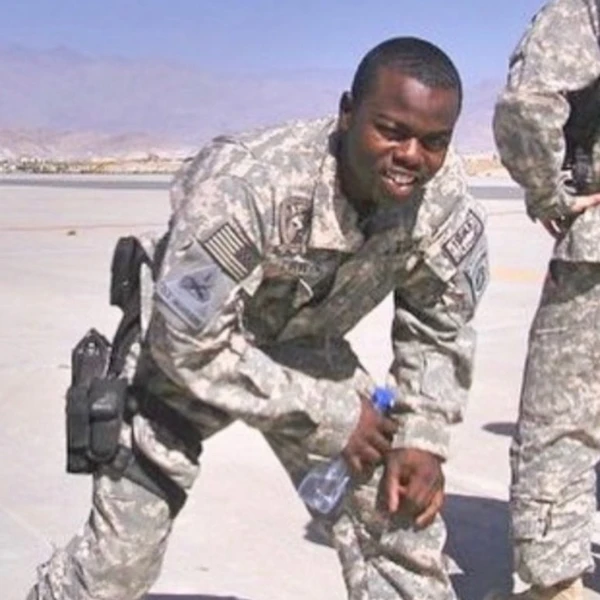
I went on to serve 11 years in the Army, and now I’m earning my doctorate at North Carolina A&T in Organizational Leadership. I’ve lived through some tough systems as a Black, gay, disabled veteran, and those experiences are exactly why I study leadership today. I want to help rebuild systems that don’t leave people like me behind.
Outside of school, I run a nonprofit called Them2us where we mentor young professionals, connect Black youth to STEM opportunities, and provide real support to orphanages in Africa. Everything I do comes back to service and helping the next person climb higher.
I’m applying for scholarships so I can finish my research and pour even more energy into this mission. I believe leadership is about creating space for others, and that’s exactly what I intend to keep doing.
Education
North Carolina A & T State University
Doctoral degree program (PhD, MD, JD, etc.)Majors:
- Business, Management, Marketing, and Related Support Services, Other
Capella University
Master's degree programMajors:
- Business, Management, Marketing, and Related Support Services, Other
Capella University
Bachelor's degree programMajors:
- Business Administration, Management and Operations
Coastline Community College
Associate's degree programMajors:
- Business, Management, Marketing, and Related Support Services, Other
Miscellaneous
Desired degree level:
Master's degree program
Graduate schools of interest:
Transfer schools of interest:
Majors of interest:
Career
Dream career field:
Information Technology and Services
Dream career goals:
Executive Director
Them2us2022 – Present4 years
Sports
Marathon
Club2014 – Present12 years
Research
Business, Management, Marketing, and Related Support Services, Other
North Carolina A&T State University — Doctoral Researcher2024 – Present
Arts
Them2us
Performance ArtNetworking 101 for Black professionals2023 – 2024
Public services
Volunteering
Them2us — Executive Director2021 – Present
Future Leaders Scholarship
One of the most meaningful leadership moments in my journey happened while I was working at the Defense Health Agency. I had been brought in to lead a project that involved moving a large number of internal systems over to SharePoint Online. On the surface, it sounded like a regular IT project. But in reality, this was a major shift that impacted how staff accessed clinical and operational data across the agency. It touched everything from day to day operations to how healthcare professionals worked with sensitive patient information.
From the beginning, it was clear this was not just a technical project. People were frustrated. There had been too many failed tech rollouts in the past, and no one wanted to waste time learning a system they didn’t trust. The team I was leading felt the pressure too. Developers were juggling multiple priorities and users were vocal about what they did not want. It was a challenge, but I saw it as a leadership moment.
Instead of diving into task lists and timelines, I started by listening. I set up calls and sat in meetings with staff from different departments. I asked them what was not working. I asked what they needed to do their jobs better. Those conversations changed everything. They gave me real insight into what mattered to them and helped me design a rollout that actually made sense.
I also knew people needed to feel informed and supported, so I created clear, easy to follow communication about what was changing and why. I worked with my team to build out simple training guides, recorded demos, and made sure every department had someone they could reach out to for help. I broke the project into smaller phases so we could celebrate progress and make adjustments along the way.
In the end, we completed the migration successfully. We had a 98 percent accuracy rate and downtime was cut nearly in half. But what I am most proud of is not the numbers. It is the trust we built. The people who were skeptical in the beginning became some of our biggest supporters because we included them in the process. They felt heard. And that made all the difference.
This experience taught me that leadership is about people. It is about patience, listening, and being willing to shift plans when needed. Since then, I have carried that same approach into everything I do.
Now, as a PhD student in Organizational Leadership, I study how unconscious bias shows up in leadership development and what we can do about it. I want to help organizations build cultures where people are not just included, but truly valued. In the future, I plan to keep consulting, mentoring, and teaching. I want to create programs and spaces that reflect the real world, where diverse voices help shape the direction of companies, nonprofits, and public agencies.
The skills I built through that project communication, empathy, and a people first mindset are tools I carry into every space I walk into. That is the kind of leadership I believe in. And that is the kind of impact I want to keep making.
Pastor Thomas Rorie Jr. Furthering Education Scholarship
Graduating with my PhD in Organizational Leadership will be more than a personal milestone. It will be the fulfillment of a mission grounded in lived experience, shaped by service, and driven by a purpose far greater than myself. As a Black, gay, disabled veteran from a low income family, my journey has been anything but traditional. I am the first in my family to graduate college, and now I stand on the path to earning a doctorate. But this journey is not about titles or credentials. It is about impact. It is about lifting others as I climb. It is about showing up as a leader who creates space, not just takes it.
My early life was marked by instability, financial hardship, and a deep understanding of what it means to go without. I watched my mother work multiple jobs, sacrificing her own dreams so her children might have a shot at something better. That shot came through the U.S. Army. At 18, I enlisted not just for a paycheck, but for purpose. The military taught me structure, resilience, and how to lead under pressure. It also exposed me to systems of inequality and bias that shaped how I view leadership today. I served 11 years with deployments to Afghanistan, Korea, Germany, and Iraq. And throughout those years, I saw leadership done right and wrong. I saw voices silenced and others uplifted. And I knew when I transitioned out, I would dedicate myself to creating change where it matters most. Inside the systems that shape people’s lives.
After the military, I earned my bachelor’s degree, then my MBA, while working full time and raising a family. I now attend North Carolina A and T State University, pursuing a PhD in Organizational Leadership. My research focuses on how unconscious bias impacts leadership development and employee engagement, especially in environments that claim to prioritize diversity, equity, and inclusion. I chose this field because I know what it feels like to be overlooked, underestimated, and left out of the conversation. My goal is to build leadership frameworks that truly reflect the people they serve. I want to take theory and make it practical. I want to take data and make it human.
Academically, this degree is helping me build a strong foundation in research, systems thinking, and strategic leadership. Professionally, it is preparing me to step into roles that influence policy, develop inclusive training programs, and advise organizations on culture and change. But beyond career goals, my education is personal. It is a tool for healing, for building, and for empowering those who come from backgrounds like mine.
One of the biggest extensions of my academic and leadership work is my nonprofit, Them2us. I founded it to close the gaps I have seen over and over again in the professional world. Especially for Black and Brown professionals trying to navigate spaces where they do not see themselves reflected. We host networking events, mentor young adults, create educational content, and provide real resources to orphanages in Africa. We also build STEM pathways for underserved youth because we know that talent exists everywhere but opportunity does not.
What makes my work different is that I do not just show up when the cameras are rolling. I am there when things are tough, when people need help with a resume, or when a kid in Nairobi needs school supplies. I am there because I know how it feels to have no one show up for you. And I believe that showing up, consistently and with heart, is what leadership really looks like.
Receiving this scholarship would be transformational. As a full time PhD student, nonprofit leader, and father, the financial strain is real. But I have never let that stop me and I do not plan to. This scholarship would allow me to stay focused on my dissertation, travel to present my research, and scale the programs we are building through Them2us. It would free up mental space that is often consumed by the weight of financial stress. More importantly, it would serve as affirmation that people believe in this mission and in me.
I hope to one day partner with schools, governments, and tech companies to create inclusive leadership pipelines that reflect the communities they serve. I want to launch fellowships that prepare young leaders of color for the boardroom and the classroom. I want to develop training that helps hiring managers see potential in someone who does not come from a traditional background. My long term goal is not just to lead. It is to multiply leaders.
My long term goal is to consult with organizations, universities, and government agencies on leadership and inclusion. I want to design leadership development programs that are rooted in equity, backed by research, and driven by lived experience. I want to write books and speak at conferences, sharing what I have learned not just from classrooms but from life. I want to keep mentoring, keep serving, and keep creating spaces where people who have been marginalized can thrive without shrinking themselves.
I also plan to teach. I believe that representation in academia matters. When students see a professor who understands their journey, who respects their story, it shifts the dynamic completely. I want to be that professor. The one who does not just grade papers but invests in futures. The one who brings real world leadership into the classroom and leaves students better than he found them.
This scholarship would help me bring all of this to life. It would be more than financial aid. It would be fuel for the work I am already doing and the impact I plan to scale. I am committed to building a better future through leadership, education, and service. I have come a long way but I am just getting started. And with your support, I can continue to walk this path with clarity, strength, and purpose. Not just for me, but for every person who sees themselves in my story and dares to dream a little bigger because of it.
Learner Tutoring Innovators of Color in STEM Scholarship
Growing up, I never saw people who looked like me in technology roles or leading conversations about innovation. As a Black child from a low-income family, the focus was survival, not science. But I was always curious—curious about how things worked, how systems connected, and how decisions were made that affected people like us.
When I joined the Army, I started to see how important technology was in every part of life. I saw how the right systems could save time, improve communication, and even save lives. I started working in knowledge management and software development, and I fell in love with solving problems through data, tools, and teamwork. That’s when I knew I wanted to build a future in the STEM field.
After my military service, I went back to school and earned my bachelor’s degree in business with a concentration in computer science, then earned an MBA in project management. Now, I’m pursuing my PhD in Organizational Leadership at North Carolina A&T. I chose this path because STEM is not just about technology—it’s about people. It’s about making systems smarter, fairer, and more human. And as a Black, gay, disabled veteran, I want to be a voice in those rooms where decisions are made.
My research centers on unconscious bias and how it affects leadership development and employee engagement. Too often, STEM spaces overlook the lived experiences of people of color. We’re either seen as tokens or not seen at all. I want to change that by designing leadership frameworks that account for equity from the ground up. I believe that inclusion should be built into the core of every team, platform, and product. Not as an afterthought, but as the standard.
Beyond academics, I run a nonprofit called Them2us that connects Black professionals across industries, mentors youth, and builds STEM pipelines for underrepresented students. We’ve donated STEM equipment to orphanages in Africa, hosted networking events for young professionals, and created educational programs that make tech feel more accessible. I want kids to see someone like me and believe they can do it too.
Being a person of color in STEM means carrying the weight of both responsibility and opportunity. We have a chance to open doors, break cycles, and redefine what leadership looks like in this space. I don’t just want to work in STEM—I want to help transform the culture around it. I want to use my voice to challenge bias, my education to design better systems, and my life to build bridges for those coming behind me.
This degree is not just about a title. It’s about using my experiences, my identity, and my drive to make STEM more inclusive, more effective, and more real. With the right support, I know I can help lead that change.
Byte into STEM Scholarship
I was raised in a home where hard work was expected but college wasn’t guaranteed. My mom did what she could, and we leaned on faith when resources ran thin. We didn’t have much, but we had each other. I became the first in my family to graduate from college, and I’ve been climbing ever since. That experience taught me how to push through when the odds aren’t in your favor, and it’s still what drives me today.
I spent 11 years in the Army, serving in places like Afghanistan, Korea, and Germany. I was young when I joined, and at first, I was just trying to survive and figure out who I was. But as I rose through the ranks, I realized I had a gift for leadership. Not the kind that barks orders, but the kind that builds trust. I learned that leadership is about listening, showing up, and making people feel like they matter. That stayed with me long after I hung up my uniform.
After the military, I made the decision to keep going. I earned a bachelor’s degree, then an MBA, and now I’m working toward my PhD in Organizational Leadership at North Carolina A&T. Along the way, I’ve faced bias, doubt, and even moments of burnout—but I’ve also found purpose. As a Black, gay, disabled veteran, I’ve seen how systems can exclude people who don’t fit the mold. That’s why I’m focused on studying unconscious bias in leadership and how it affects engagement and equity in the workplace.
My goal is to use this research to build more inclusive leadership programs, especially for organizations that say they care about DEI but struggle to live it out. I believe real change happens when we stop treating equity as an initiative and start embedding it into the foundation of how we lead and serve.
But I’m not waiting until I finish school to make an impact. I’m already doing the work. I’m the Executive Director of a nonprofit called Them2us. We mentor Black professionals, help young people explore STEM careers, and support orphanages in Africa with supplies, education tools, and hope. I’ve also served on a congressional military advisory board and continue to speak at events that uplift veterans, LGBTQ+ folks, and underserved communities. Whether I’m building out IT systems for federal agencies or creating safe spaces for young leaders, everything I do connects back to service.
This degree is not just about my resume. It’s about making me a better tool for the mission I’ve already committed my life to. The more I learn, the more I can give. I want to create leadership pipelines that support people who are too often overlooked. I want to consult with organizations, nonprofits, and government agencies on how to build workplaces that are truly inclusive. I want to write, speak, and teach—so others coming from where I come from can see what’s possible.
At the heart of it all is a simple belief: we rise by lifting others. That’s what guides my leadership, shapes my research, and keeps me grounded. This scholarship would help me continue that mission, expand my reach, and stay focused on building something bigger than myself.
Monti E. Hall Memorial Scholarship
I grew up in a low-income family where stability was not promised. Joining the Army gave me that structure and discipline I was missing. It also gave me a front-row seat to the good and the bad in leadership. I saw what it meant to lead people with purpose, and I also saw what happens when people in charge ignore those who serve under them. As a Black, gay, disabled veteran, I learned early that I would have to work twice as hard to be heard, and that pushed me to not just want a seat at the table, but to help rebuild the table entirely.
After serving 11 years, I knew I wanted to do more than just survive. I wanted to help others like me find a way forward. That is what brought me back to school. I earned my bachelor’s and MBA while juggling work, family, and life. Now I’m working on my PhD in Organizational Leadership at North Carolina A and T. I came back not just to collect degrees, but to learn how to create real change in spaces that still treat diversity like a checkbox.
My research focuses on unconscious bias in leadership. I want to understand how these hidden biases affect how people are hired, promoted, and supported. Too often, folks like me get overlooked or undervalued in the workplace, no matter how hard we work. I want to change that. I want to help organizations not just talk about equity but actually build it into their leadership from the ground up.
Outside of school, I run a nonprofit called Them2us. We mentor young professionals, create opportunities in STEM for Black youth, and support orphanages in Africa with hands-on help. I believe in reaching back while reaching forward. Everything I am doing now is about making it easier for the next person to succeed.
Going back to school has helped me grow, but more than anything, it has sharpened my mission. I am not just here to lead. I am here to serve. I am here to help fix systems that were never designed with people like me in mind. My military service showed me how to lead under pressure. My education is teaching me how to lead with impact. And my community is the reason I will keep going.