user profile avatar

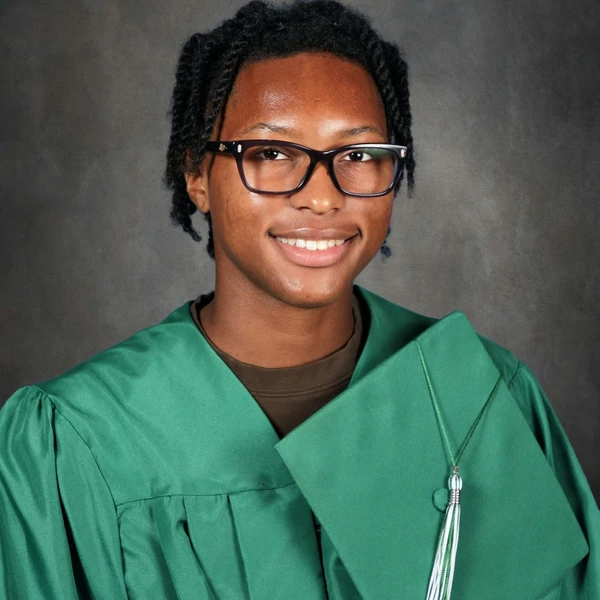
Jermiah Johnson

1x

Finalist

Bio

Pursuing education at the University of Kansas and then going on to become a family medicine physician and working in a rural area.

Education

Derby High School

High School
2022 - 2026

Miscellaneous

  • Desired degree level:

    Doctoral degree program (PhD, MD, JD, etc.)

  • Majors of interest:

    • Biological and Biomedical Sciences, Other
    • Physiology, Pathology and Related Sciences
    • African Languages, Literatures, and Linguistics
    • Biological and Physical Sciences
  • Planning to go to medical school
  • Career

    • Dream career field:

      • Medicine
    • Dream career goals:

    • Cashier

      TJMAXX
      2024 – 20251 year

    Sports

    Cross-Country Running

    Varsity
    2022 – 20264 years

    Public services

    • Volunteering

      KAY-CLUB — President
      2022 – 2026
    Hines Scholarship
    To me, college is a way to access opportunities that were previously not available to African Americans historically. College has become the agency needed to equalize minorities with the overwhelming majority of white Americans that denied them these opportunities until only recently. That is why I value college and education so much. My goal in the future is to become a family medicine physician, so I can do just that. I want to have a clinic where I can not only save lives and keep people safe and healthy but also build personal relationships with my future patients in order to create a sense of community around my clinic. Moreover, I want to become a first-generation doctor in my family and be an example to other African Americans, so they have a role model that can help them achieve their dreams, which a doctor, named Dr. Duggins, was to me. In becoming a family medicine physician, I hope to make a difference in the lives of my patients and create a positive impact in the community where my clinic is. I recognize that rural areas are very underserved, so I plan on working in a rural area in Kansas in order to improve their access to healthcare and promote a healthy environment. To prepare for my huge goals, I have strived to embody a work ethic, service and leadership during my time at Derby High School. Concerning my work ethic, I chose to take rigorous AP courses offered at my high school, so I could build new perspectives and work with like-minded individuals who wanted to make an impact on society. Two of my favorite AP courses are AP Biology and AP Chemistry because they presented me with a challenge and an opportunity to understand the basics of medicine. For service and leadership, I decided to participate in multiple sports and clubs, which provided me with social skills and amazing experiences. The sports I participated in are Cross Country, Swim, and Track. While participating in these sports, I had the opportunity to work alongside an astounding group of athletes that pushed me past my limits and held me accountable. Because of this, I was able to break out of my comfort zone and create relationships that will last a lifetime while also taking a leadership role as a senior. The clubs I am involved in are Future Health Professionals (HOSA), the Kansas Association of Youth (KAY-CLUB), and National Honors Society (NHS). I joined HOSA because I wanted to network with individuals who shared goals similar to mine, but also because I wanted to perform acts of service. In the club, I served as a Co-President and completed service projects while also competing at the state conference and earning the opportunity to compete at nationals with students around the globe. I joined KAY-CLUB because it is a Kansas-centered service club that wanted to make a genuine impact on Kansas. I serve as the President of the club, and I help to facilitate service projects including serving at the Food Banks, sending Christmas cards to local nursing homes, and hosting a mental health awareness month at the high school. Finally, I joined the National Honors Society because the club is a nation-wide service organization that embodies many of the characteristics I find in myself like service and leadership. In the club, I am a chapter member, and I participated in the school Blood Drive and cleaning up local parks. Through these experiences, I was able to perform acts of service and hone my leadership skills.
    Peter and Nan Liubenov Student Scholarship
    My goal in the future is to become a family medicine physician, so I can be a positive force in society. I want to have a clinic where I can not only save lives and keep people safe and healthy but also build personal relationships with my future patients in order to create a sense of community around my clinic. Moreover, I want to become a first-generation doctor in my family and be an example to other African Americans, so they have a role model that can help them achieve their dreams, which a doctor, named Dr. Duggins, was to me. In becoming a family medicine physician, I hope to make a difference in the lives of my patients and create a positive impact in the community where my clinic is. I recognize that rural areas are very underserved, so I plan on working in a rural area in Kansas in order to improve their access to healthcare and promote a healthy environment. To prepare for my huge goals and to be a positive force currently, I have strived to embody a work ethic, service and leadership during my time at Derby High School. Concerning my work ethic, I chose to take rigorous AP courses offered at my high school, so I could build new perspectives and work with like-minded individuals who wanted to make an impact on society. Two of my favorite AP courses are AP Biology and AP Chemistry because they presented me with a challenge and an opportunity to understand the basics of medicine. For service and leadership, I decided to participate in multiple sports and clubs, which provided me with social skills and amazing experiences. The sports I participated in are Cross Country, Swim, and Track. While participating in these sports, I had the opportunity to work alongside an astounding group of athletes that pushed me past my limits and held me accountable. Because of this, I was able to break out of my comfort zone and create relationships that will last a lifetime while also taking a leadership role as a senior. The clubs I am involved in are Future Health Professionals (HOSA), the Kansas Association of Youth (KAY-CLUB), and National Honors Society (NHS). I joined HOSA because I wanted to network with individuals who shared goals similar to mine, but also because I wanted to perform acts of service. In the club, I served as a Co-President and completed service projects while also competing at the state conference and earning the opportunity to compete at nationals with students around the globe. I joined KAY-CLUB because it is a Kansas-centered service club that wanted to make a genuine impact on Kansas. I serve as the President of the club, and I help to facilitate service projects including serving at the Food Banks, sending Christmas cards to local nursing homes, and hosting a mental health awareness month at the high school. Finally, I joined the National Honors Society because the club is a nation-wide service organization that embodies many of the characteristics I find in myself like service and leadership. In the club, I am a chapter member, and I participated in the school Blood Drive and cleaning up local parks. Through these experiences, I was able to perform acts of service and hone my leadership skills. Given that current social norms believe that bringing about positive social change is through social media influence, I hope to break this idea by bringing forth active social change through my individual endeavors as a family medicine physician.
    Treye Knorr Memorial Scholarship
    My goal in the future is to become a family medicine physician, so I can help others. I want to have a clinic where I can not only save lives and keep people safe and healthy but also build personal relationships with my future patients in order to create a sense of community around my clinic. Moreover, I want to become a first-generation doctor in my family and be an example to other African Americans, so they have a role model that can help them achieve their dreams, which a doctor, named Dr. Duggins, was to me. In becoming a family medicine physician, I hope to make a difference in the lives of my patients and create a positive impact in the community where my clinic is. I recognize that rural areas are very underserved, so I plan on working in a rural area in Kansas in order to improve their access to healthcare and promote a healthy environment. To prepare for my huge goals, I have strived to embody a work ethic, service and leadership during my time at Derby High School. Concerning my work ethic, I chose to take rigorous AP courses offered at my high school, so I could build new perspectives and work with like-minded individuals who wanted to make an impact on society. Two of my favorite AP courses are AP Biology and AP Chemistry because they presented me with a challenge and an opportunity to understand the basics of medicine. For service and leadership, I decided to participate in multiple sports and clubs, which provided me with social skills and amazing experiences. The sports I participated in are Cross Country, Swim, and Track. While participating in these sports, I had the opportunity to work alongside an astounding group of athletes that pushed me past my limits and held me accountable. Because of this, I was able to break out of my comfort zone and create relationships that will last a lifetime while also taking a leadership role as a senior. The clubs I am involved in are Future Health Professionals (HOSA), the Kansas Association of Youth (KAY-CLUB), and National Honors Society (NHS). I joined HOSA because I wanted to network with individuals who shared goals similar to mine, but also because I wanted to perform acts of service. In the club, I served as a Co-President and completed service projects while also competing at the state conference and earning the opportunity to compete at nationals with students around the globe. I joined KAY-CLUB because it is a Kansas-centered service club that wanted to make a genuine impact on Kansas. I serve as the President of the club, and I help to facilitate service projects including serving at the Food Banks, sending Christmas cards to local nursing homes, and hosting a mental health awareness month at the high school. Finally, I joined the National Honors Society because the club is a nation-wide service organization that embodies many of the characteristics I find in myself like service and leadership. In the club, I am a chapter member, and I participated in the school Blood Drive and cleaning up local parks. Through these experiences, I was able to perform acts of service and hone my leadership skills. Perhaps most importantly, I had the opportunity to shadow Dr. Duggins over the summer at his clinic in Wichita, which almost seems like a full circle moment. Over several days with Dr. Duggins from 8:30AM - 12PM, I watched him and sometimes was even able to help him with patients throughout the day. I wore a white coat and held a notepad and pen in my hand, documenting every patient interaction. We saw several patients, each with a different issue they wanted help with. As I watched Dr. Duggins interacting with the patients, I noticed he knew each of them extremely well as if they were life-long friends. That sold me. The ability to create interpersonal connections with patients was something I really enjoyed, which can be done the best by being a family medicine physician.
    Marie J. Lamerique Scholarship for Aspiring Scholars
    Amelia Earhart once said, “Some of us have great runways already built for us. If you have one, take off. But if you don’t have one, realize it is your responsibility to grab a shovel and build one for yourself and for those who will follow after you.” This is only partially true. While it may be the responsibility of those without a runway already built for them to build one for them and others, the responsibility should be held to a higher standard to those already with runways. Although the underprivileged have a greater understanding of what runways need to be built, the privileged should be held accountable for providing resources that the disadvantaged could use to build their runways. On the other hand, Earhart also knew that only those without runways would have the courage to build a runway for themselves and others that those with runways did not. Those without runways are conventionally poor, a part of a minority, or a woman. I fall under the second category. Since I am African American, I was born without a runway and I had to learn quickly to not only buy a shovel but also build my own runway. Early on in childhood, I was taught to fear the police because they feared me. At school, I always felt like the black sheep who was always asked about my different wool. I had to work ten times harder just to be recognized alongside my peers, and I always felt like it still was not enough. It felt like there was an impenetrable barrier between me and the perceived version of me because of my skin color. Whenever the class shared their dream careers and I said “doctor” I knew they thought it was nothing but a dream. I honestly thought the same. However, I will not allow myself to give up. I will continue to push through adversity, stay at the top of my class, and make my parents proud. I know that by giving up, I would not only be giving up my opportunity but also the opportunities of the black children after me. I realize that I not only represent myself, but also my entire race. Thus, I want to become a doctor and provide an example of what can happen if the black sheep is given a chance to shine. When I finally become a doctor, I will start a program in Kansas dedicated to supporting and exposing young, aspiring, black children to the healthcare industry at the middle school and high school level. In doing so, I hope to give opportunities to them that they were not afforded to like I was. The future where I am headed is towards a society where an individual's capability is not defined by the color of their skin but rather their character. Ultimately, I want to see a future where the black sheep is recognized. A future where the black sheep does not feel scared in a flock of white wolves.
    Ava Wood Stupendous Love Scholarship
    Amelia Earhart once said, “Some of us have great runways already built for us. If you have one, take off. But if you don’t have one, realize it is your responsibility to grab a shovel and build one for yourself and for those who will follow after you.” This is only partially true. While it may be the responsibility of those without a runway already built for them to build one for them and others, the responsibility should be held to a higher standard to those already with runways. Although the underprivileged have a greater understanding of what runways need to be built, the privileged should be held accountable for providing resources that the disadvantaged could use to build their runways. On the other hand, Earhart also knew that only those without runways would have the courage to build a runway for themselves and others that those with runways did not. Those without runways are conventionally poor, a part of a minority, or a woman. I fall under the second category. Since I am African American, I was born without a runway, and I had to learn quickly to not only buy a shovel but also build my own runway. Early on in childhood, I was taught to fear the police because they feared me. At school, I always felt like the black sheep who was always asked about my different wool. I had to work ten times harder just to be recognized alongside my peers, and I always felt like it still was not enough. It felt like there was an impenetrable barrier between me and the perceived version of me because of my skin color. Whenever the class shared their dream careers and I said “doctor” I knew they thought it was nothing but a dream. I honestly thought the same. However, I will not allow myself to give up. I will continue to push through adversity, stay at the top of my class, and make my parents proud. I know that by giving up, I would not only be giving up my opportunity but also the opportunities of the black children after me. I realize that I not only represent myself, but also my entire race. Thus, I want to become a doctor and provide an example of what can happen if the black sheep is given a chance to shine. When I finally become a doctor, I will start a program in Kansas dedicated to supporting and exposing young, aspiring, black children to the healthcare industry at the middle school and high school level. In doing so, I hope to give opportunities to them that they were not afforded to like I was. The future where I am headed is towards a society where an individual's capability is not defined by the color of their skin but rather their character. Ultimately, I want to see a future where the black sheep is recognized.
    Tawkify Meaningful Connections Scholarship
    Some scientists predict that AI will be capable of outperforming human function by 2060. What will we do then? We will have to adapt, though much sooner than we thought. AI has been developing more rapidly than earlier scientists predicted with its creation beginning in 1950 as an idea by Alan Turing. Then, in 1956 at the Dartmouth Conference, the idea became a reality as it was turned into a scientific area. Later in the 21st century did AI begin to shape the very fabric of our technological landscape in 2012 when deep learning, one of the prominent functions of AI that allows for rapid learning, had a breakthrough and started to outperform older technological methods we had been using. Given the importance and widespread use of AI in our contemporary society, people have to adapt to the expeditiously changing technological atmosphere that we have been forced to breathe in. The individuals that will be our leaders, though, especially must adapt the quickest in our society. In order for these leaders to lead effectively and with integrity, they must remain transparent in their actions, they have to continue fostering human relationships while navigating the AI landscape, and they must be able to adapt to the new societal standards set by this new landscape. To begin, to be able to lead in the novel infrastructure created by the presence of AI, leaders must remain transparent in their behavior. For example, AI has taken away the ability to be original anymore. Given the fact that AI uses recycled ideas and thoughts to create something seemingly original, the use of AI by leaders can be a breach of originality. The integrity of a leader can be compromised when they steal the ideas of others through using AI technology to create something and present it as their own. Leaders must remain transparent and honest when they use AI, so they demonstrate their integrity and originality in their work that is not manipulated by the use of AI. Secondly, while leaders navigate the contemporary technological atmosphere, they should continue to foster human relationships so their followers trust them. For instance, one of the major issues with the implementation of AI is the fear of AI taking over and replacing human jobs. Therefore, leaders have to assure and help people to adapt to the current landscape so no one is left behind. In doing so, leaders will prioritize their human employees, so they can feel safe and secure in their position without fear of being replaced. Leaders should have the insight to establish programs dedicated to ensuring an effective transition from the old ways to the new technologies and how to navigate them. Not only should leaders help others adapt to the new standards, but leaders should also learn to adapt as well. Finally, leaders must have the capacity to adapt to the ever changing standards set up by AI. To illustrate, back in the 1800s during the age of the industrial revolution, Russia was far behind their Western counterparts in terms of technological innovation as they relied on agricultural practices as a way to fuel their economy. Had Russia not adapted to the changing technological standards, their survival as a nation would have been compromised and their economy would have collapsed in the midst of an industrialized society. However, they adapted and rose as one of the greatest world powers as a result. Consequently, the leaders in our society must adapt like Russia did to ensure the survival of the working class. The leaders have to usher the rest of society into the age of artificial intelligence but to do so they have to be ready. To conclude, leaders in our contemporary society have to remain transparent, foster human relationships, and adapt to the new standards in order to ensure we are adequately led through the artificial revolution.
    Christian Fitness Association General Scholarship
    In the big city of Wichita, Kansas, a father and son visited a physician’s clinic. The father had brought his four-year-old son to the doctor for a routine checkup. As they entered the doors, his son felt like he had entered another world filled with the smell of antiseptics and white walls. He saw men and women in white coats with some tools that hung around their necks and a smile as wide as the night sky; he was immediately transfixed. Alongside the people in white, he saw a man with a black strap across his arm and a woman in a huge black chair. Before he could continue looking around the office, his father tapped onto his shoulder, breaking him from his trance, and they walked inside a smaller room with a white strobing light on the ceiling and a bent bed. The man in white greeted them inside the room and sat him on the bent bed, his father sitting in a chair across from him. The man wearing the white coat put on a cool looking blue glove and grabbed the tool around his neck. He said, “Hey Jermiah. I’m going to be your doctor today.” The boy replied, “Can I have one too?” He was gesturing to the blue glove covering the doctor’s hand. The doctor chuckled and grabbed a glove from a box, though it was much smaller than the one on his hand. The boy outstretched his hand, and the doctor put the glove on him, which was far too large to fit into his tiny hand. The boy smiled, saying, “I want to be a doctor too.” That boy was me. Now, thirteen years later and grown up, I still hold that same dream I did as a boy. However, the initial inquisition and the fascination with medical tools have transformed into a passion to help others. My goal in the future is to become a family medicine physician, so I can do just that. I want to have a clinic where I can not only save lives and keep people safe and healthy but also build personal relationships with my future patients in order to create a sense of community around my clinic. Moreover, I want to become a first-generation doctor in my family and be an example to other African Americans, so they have a role model that can help them achieve their dreams, which a doctor, named Dr. Duggins, was to me. In becoming a family medicine physician, I hope to make a difference in the lives of my patients and create a positive impact in the community where my clinic is. I recognize that rural areas are very underserved, so I plan on working in a rural area in Kansas in order to improve their access to healthcare and promote a healthy environment. To prepare for my huge goals, I have strived to embody a work ethic, service and leadership during my time at Derby High School. Concerning my work ethic, I chose to take rigorous AP courses offered at my high school, so I could build new perspectives and work with like-minded individuals who wanted to make an impact on society. Two of my favorite AP courses are AP Biology and AP Chemistry because they presented me with a challenge and an opportunity to understand the basics of medicine. For service and leadership, I decided to participate in multiple sports and clubs, which provided me with social skills and amazing experiences. The sports I participated in are Cross Country, Swim, and Track. While participating in these sports, I had the opportunity to work alongside an astounding group of athletes that pushed me past my limits and held me accountable. Because of this, I was able to break out of my comfort zone and create relationships that will last a lifetime while also taking a leadership role as a senior. The clubs I am involved in are Future Health Professionals (HOSA), the Kansas Association of Youth (KAY-CLUB), and National Honors Society (NHS). I joined HOSA because I wanted to network with individuals who shared goals similar to mine, but also because I wanted to perform acts of service. In the club, I served as a Co-President and completed service projects while also competing at the state conference and earning the opportunity to compete at nationals with students around the globe. I joined KAY-CLUB because it is a Kansas-centered service club that wanted to make a genuine impact on Kansas. I serve as the President of the club, and I help to facilitate service projects including serving at the Food Banks, sending Christmas cards to local nursing homes, and hosting a mental health awareness month at the high school. Finally, I joined the National Honors Society because the club is a nation-wide service organization that embodies many of the characteristics I find in myself like service and leadership. In the club, I am a chapter member, and I participated in the school Blood Drive and cleaning up local parks. Perhaps most importantly, I had the opportunity to shadow Dr. Duggins over the summer at his clinic in Wichita, which almost seems like a full circle moment. Over several days with Dr. Duggins from 8:30AM - 12PM, I watched him and sometimes was even able to help him with patients throughout the day. I wore a white coat and held a notepad and pen in my hand, documenting every patient interaction. We saw several patients, each with a different issue they wanted help with. As I watched Dr. Duggins interacting with the patients, I noticed he knew each of them extremely well as if they were life-long friends. That sold me. The ability to create interpersonal connections with patients was something I really enjoyed, which can be done the best by being a family medicine physician. At the clinic, I felt like the four-year-old in me was smiling wide as the night sky. However, this was me now.
    Brooks Martin Memorial Scholarship
    I was eleven years old when Cancer murdered my aunt, and I was in the womb when Cancer killed my grandma. I remember the day like it was yesterday. When my father told me my aunt was dead. I remember the pain I felt, but mostly the rage. Angry at the genetic mutations that made their own body kill itself from the inside out. Ironically enough, Cancer has in part led to my interest in science and medicine. When my aunt died, my passion for science blossomed to life. I remember the day very clearly. I was in the sixth grade. I was just eleven years old. So naive, happy and full of dreams. I had just gotten home after school. My dad told me to get ready for football practice, so I went downstairs and put my jersey on and my cleats. After I ran back upstairs for another dreadful football practice, I could feel the atmosphere change. Like time had stopped. I didn’t hear the usual chatter from my father. Just silence. A deafening silence. I saw my father standing in the kitchen, with a face that could only be described as defeated. Almost as if he had just seen a ghost or had witnessed the most terrifying moment in his life. He told me and my brother to come here; his phone clutched in his hand. My heart and stomach sank at the same time. I could see the redness in his eyes, the faint tears he had just rubbed away. He was trying to be strong for us. He said, “Auntie Coco died.” My face fell. At once, he enveloped both of us in his arms, clutching us tightly as we sobbed violently, my tiny fingers gripping his jacket like if I had I let go, I would have fallen beneath the floor. Now, at 17 and in my high school, I have had the privilege to study and understand science through some of my favorite classes like AP Biology and AP Chemistry. Through these classes, I was able to learn more about the basis of medicine and foster my love for science. I was especially interested in learning about Cancer, how it chooses its victims, and how it slowly kills them. How it has never been caught. Though I hope to change that or at least be a part of changing it. Since I was a boy, I have always wanted to become a doctor. And recently, after shadowing Dr. Duggins over the summer, have wanted to become a family medicine physician. I watched as he treated patients from a range of ages, and he inspired me because he was also African American, demonstrating that I can make it too. Additionally, I hope to help people and perform preventative care in order to promote the overall health of the community I serve in. However, oncology has not left my sights. After becoming a family medicine physician, I plan to join a research team and help be a part of a worldwide initiative dedicated to catching and killing the elusive murderer that has plagued humankind for millions of years. In doing so, I will avenge and bring justice to everyone who has lost their lives to Cancer and prevent it from reaping its future victims.
    RonranGlee Literary Scholarship
    “Mr. Darcy had at first scarcely allowed her to be pretty: he had looked at her without admiration at the ball; and when they next met, he looked at her only to criticise. But no sooner had he made it clear to himself and his friends that she had hardly a good feature in her face, than he began to find it was rendered uncommonly intelligent by the beautiful expression of her dark eyes”- Pride and Prejudice by Jane Austen In Pride and Prejudice, a romance novel, Jane Austen masterfully used characterization to reveal the personalities and behaviors of her characters. This unique aspect of her writing set her apart from other authors of her time period, and her writing even challenged male authors. Her books often discussed the women’s role in society, and she explored how these roles differed from person to person and how they perceived them to criticize the preconceived notions men had for women. In Pride and Prejudice, chapters 22-23, Jane Austen uses Mr. Collins and Charlotte Lucas to communicate the theme that a women’s role in society was perceived differently depending on the individual. This theme is further explored when considering the perceptions Jane and Elizabeth have towards the marriage between Mr. Collins and Charlotte Lucas and the different reactions Mr. Bennet and Mrs. Bennet have towards the marriage. To begin, the author communicates that Charlotte Lucas’ role in society was to marry through the marriage of Mr. Collins and Charlotte Lucas, which is juxtaposed with the reaction Elizabeth has towards discovering their union. Firstly, the author writes, “... and Miss Lucas, who accepted him solely from the pure and disinterested desire of an establishment, cared not how soon that establishment were gained” (pg. 109). This piece of evidence from the text established that Charlotte Lucas did not find Mr. Collins was an agreeable man, but she did realize that he had the finances to support her future. Thus, this demonstrates that Charlotte ultimately saw their marriage as a partnership in which she could elevate her station due to his inheritance. On the other hand, Elizabeth views their marriage differently as written, “She had always felt that Charlotte’s opinion of matrimony was not exactly like her own, but she could not have supposed it possible that when called into action, she would have sacrificed every better feeling to worldly advantage” (pg. 112). The juxtaposition of Elizabeth’s and Charlotte Lucas’ feelings towards marriage demonstrates that women have different imaginations towards their own roles in society. This is further supported by the fact that Elizabeth views that marriage should be one in which both partners are in love while Charlotte Lucas views marriage for material gain. Through the juxtaposition of Elizabeth’s reaction and the fabricated happiness Charlotte Lucas finds through her marriage with Mr. Collins, the author communicates that a woman's role in society varies and this is further discussed with Jane’s reaction. Secondly, the author discussed the changing roles of women through the marriage of Mr. Collins and Charlotte Lucas with the reaction displayed by Jane. First and foremost, the author writes, “‘I only ask only a comfortable home; and considering Mr. Collin’s character, connections, and situation in life, I am convinced that my chance of happiness with him is as fair as most people can boast on entering the marriage state’” (pg. 111). Charlotte Lucas demonstrates that her viewpoint towards her union with Mr. Collins is that he will provide her with financial gains that will facilitate her happiness. This supports how Charlotte Lucas believes that her role in society is to marry so that she can be successful. Furthermore, the author writes, “Jane confessed herself a little surprised at the match; but she said less of her astonishment than of her earnest desire for their happiness…” (pg. 114). Jane, who always saw the best in people, believed that Charlotte Lucas would be able to find happiness in her marriage, despite feeling that their marriage was spontaneous. This demonstrates that Jane feels that a woman's role can be anything they imagine as long as they are happy, which coincides with Jane’s personality perfectly. Through the marriage of Mr. Collins and Charlotte Lucas and Jane’s reaction, the author communicates that a woman's role is ever changing, although Charlotte Lucas and Mrs. Bennet share the same viewpoint towards marriage. Finally, the author communicates that a women’s role in society can be universal through the marriage of Mr. Collins and Charlotte Lucas and the reactions between Mrs. Bennet and Mr. Bennet. For instance, the author writes that Mr. Bennet believes “that Charlotte Lucas, whom he had been used to think tolerably sensible, was as foolish as his wife, and more foolish than his daughter” (pg. 114)! Through this piece of evidence, Austen communicates that Mr. Bennet views the union between Mr. Collins and Charlotte Lucas as insensible. He believes that because Mr. Bennet feels that Charlotte Lucas could settle for better and sees her role in society as something other than just being married off to Mr. Collins. Additionally, the author writes, “Mrs. Bennet was really in a most pitiable state. The very mention of anything concerning the match threw her into an agony of ill humor” (pg. 116). Although Mrs. Bennet is angry with their union, she is much angrier with Elizabeth for not sealing the marriage deal with Mr. Collins first because she views marriage as a wonderful thing all of her daughters should aspire to complete.
    Dream BIG, Rise HIGHER Scholarship
    Amelia Earhart once said, “Some of us have great runways already built for us. If you have one, take off. But if you don’t have one, realize it is your responsibility to grab a shovel and build one for yourself and for those who will follow after you.” This is only partially true. While it may be the responsibility of those without a runway already built for them to build one for them and others, the responsibility should be held to a higher standard to those already with runways. Although the underprivileged have a greater understanding of what runways need to be built, the privileged should be held accountable for providing resources that the disadvantaged could use to build their runways. On the other hand, Earhart also knew that only those without runways would have the courage to build a runway for themselves and others that those with runways did not. Those without runways are conventionally poor, a part of a minority, or a woman. I fall under the second category. Since I am African American, I was born without a runway, and I had to learn quickly to not only buy a shovel but also build my own runway. Early on in childhood, I was taught to fear the police because they feared me. At school, I always felt like the black sheep who was always asked about my different wool. I had to work ten times harder just to be recognized alongside my peers, and I always felt like it still was not enough. It felt like there was an impenetrable barrier between me and the perceived version of me because of my skin color. Whenever the class shared their dream careers and I said “doctor” I knew they thought it was nothing but a dream. I honestly thought the same. However, I will not allow myself to give up. I will continue to push through adversity, stay at the top of my class, and make my parents proud. I know that by giving up, I would not only be giving up my opportunity but also the opportunities of the black children after me. I realize that I not only represent myself, but also my entire race. Thus, I want to become a doctor and provide an example of what can happen if the black sheep is given a chance to shine. To prepare for my huge goals, I have strived to embody a work ethic, service and leadership during my time at Derby High School. Concerning my work ethic, I chose to take rigorous AP courses offered at my high school, so I could build new perspectives and work with like-minded individuals who wanted to make an impact on society. Two of my favorite AP courses are AP Biology and AP Chemistry because they presented me with a challenge and an opportunity to understand the basics of medicine. For service and leadership, I decided to participate in multiple sports and clubs, which provided me with social skills and amazing experiences. The sports I participated in are Cross Country, Swim, and Track. While participating in these sports, I had the opportunity to work alongside an astounding group of athletes that pushed me past my limits and held me accountable. Because of this, I was able to break out of my comfort zone and create relationships that will last a lifetime while also taking a leadership role as a senior. The clubs I am involved in are Future Health Professionals (HOSA), the Kansas Association of Youth (KAY-CLUB), and National Honors Society (NHS). I joined HOSA because I wanted to network with individuals who shared goals similar to mine, but also because I wanted to perform acts of service. In the club, I served as a Co-President and completed service projects while also competing at the state conference and earning the opportunity to compete at nationals with students around the globe. I joined KAY-CLUB because it is a Kansas-centered service club that wanted to make a genuine impact on Kansas. I serve as the President of the club, and I help to facilitate service projects including serving at the Food Banks, sending Christmas cards to local nursing homes, and hosting a mental health awareness month at the high school. Finally, I joined the National Honors Society because the club is a nation-wide service organization that embodies many of the characteristics I find in myself like service and leadership. When I finally become a doctor, I will start a program in Kansas dedicated to supporting and exposing young, aspiring, black children to the healthcare industry at the middle school and high school level. In doing so, I hope to give opportunities to them that they were not afforded to like I was. The future where I am headed is towards a society where an individual's capability is not defined by the color of their skin but rather their character. Ultimately, I want to see a future where the black sheep is recognized.
    Simon Strong Scholarship
    Amelia Earhart once said, “Some of us have great runways already built for us. If you have one, take off. But if you don’t have one, realize it is your responsibility to grab a shovel and build one for yourself and for those who will follow after you.” This is only partially true. While it may be the responsibility of those without a runway already built for them to build one for them and others, the responsibility should be held to a higher standard to those already with runways. Although the underprivileged have a greater understanding of what runways need to be built, the privileged should be held accountable for providing resources that the disadvantaged could use to build their runways. On the other hand, Earhart also knew that only those without runways would have the courage to build a runway for themselves and others that those with runways did not. Those without runways are conventionally poor, a part of a minority, or a woman. I fall under the second category. Since I am African American, I was born without a runway and I had to learn quickly to not only buy a shovel, but also build my own runway. Early on in childhood, I was taught to fear the police because they feared me. At school, I always felt like the black sheep who was always asked about my different wool. I had to work ten times harder just to be recognized alongside my peers, and I always felt like it still was not enough. It felt like there was an impenetrable barrier between me and the perceived version of me because of my skin color. Whenever the class shared their dream careers and I said “doctor” I knew they thought it was nothing but a dream. I honestly thought the same. However, I will not allow myself to give up. I will continue to push through adversity, stay at the top of my class, and make my parents proud. I know that by giving up, I would not only be giving up my opportunity but also the opportunities of the black children after me. I realize that I not only represent myself, but also my entire race. Thus, I want to become a doctor and provide an example of what can happen if the black sheep is given a chance to shine. When I finally become a doctor, I will start a program in Kansas dedicated to supporting and exposing young, aspiring, black children to the healthcare industry at the middle school and high school level. In doing so, I hope to give opportunities to them that they were not afforded to like I was. The future where I am headed is towards a society where an individual's capability is not defined by the color of their skin but rather their character. Ultimately, I want to see a future where the black sheep is recognized. If I had to give advice to someone facing adversity, I would tell them that the black sheep is not an oddity. The black sheep is normal in a flock of white sheep. Actually, it's the special sheep because it stands out.
    Julia Elizabeth Legacy Scholarship
    Amelia Earhart once said, “Some of us have great runways already built for us. If you have one, take off. But if you don’t have one, realize it is your responsibility to grab a shovel and build one for yourself and for those who will follow after you.” This is only partially true. While it may be the responsibility of those without a runway already built for them to build one for them and others, the responsibility should be held to a higher standard to those already with runways. Although the underprivileged have a greater understanding of what runways need to be built, the privileged should be held accountable for providing resources that the disadvantaged could use to build their runways. On the other hand, Earhart also knew that only those without runways would have the courage to build a runway for themselves and others that those with runways did not. Those without runways are conventionally poor, a part of a minority, or a woman. I fall under the second category. Since I am African American, I was born without a runway and I had to learn quickly to not only buy a shovel but also build my own runway. Early on in childhood, I was taught to fear the police because they feared me. At school, I always felt like the black sheep who was always asked about my different wool. I had to work ten times harder just to be recognized alongside my peers, and I always felt like it still was not enough. It felt like there was an impenetrable barrier between me and the perceived version of me because of my skin color. Whenever the class shared their dream careers and I said “doctor” I knew they thought it was nothing but a dream. I honestly thought the same. However, I will not allow myself to give up. I will continue to push through adversity, stay at the top of my class, and make my parents proud. I know that by giving up, I would not only be giving up my opportunity but also the opportunities of the black children after me. I realize that I not only represent myself, but also my entire race. Thus, I want to become a doctor and provide an example of what can happen if the black sheep is given a chance to shine. When I finally become a doctor, I will start a program in Kansas dedicated to supporting and exposing young, aspiring, black children to the healthcare industry at the middle school and high school level. In doing so, I hope to give opportunities to them that they were not afforded to like I was. The future where I am headed is towards a society where an individual's capability is not defined by the color of their skin but rather their character. Ultimately, I want to see a future where the black sheep is recognized. That is why it is important to have diverse representation in STEM careers. We need to be able to know that we can make it if we see others that look like us make it too. We need to know that the black sheep is normal and not an oddity in the flock of white sheep.
    Stephan L. Daniels Lift As We Climb Scholarship
    Amelia Earhart once said, “Some of us have great runways already built for us. If you have one, take off. But if you don’t have one, realize it is your responsibility to grab a shovel and build one for yourself and for those who will follow after you.” This is only partially true. While it may be the responsibility of those without a runway already built for them to build one for them and others, the responsibility should be held to a higher standard to those already with runways. Although the underprivileged have a greater understanding of what runways need to be built, the privileged should be held accountable for providing resources that the disadvantaged could use to build their runways. On the other hand, Earhart also knew that only those without runways would have the courage to build a runway for themselves and others that those with runways did not. Those without runways are conventionally poor, a part of a minority, or a woman. I fall under the second category. Since I am African American, I was born without a runway and I had to learn quickly to not only buy a shovel, but also build my own runway. Early on in childhood, I was taught to fear the police because they feared me. At school, I always felt like the black sheep who was always asked about my different wool. I had to work ten times harder just to be recognized alongside my peers, and I always felt like it still was not enough. It felt like there was an impenetrable barrier between me and the perceived version of me because of my skin color. Whenever the class shared their dream careers and I said “doctor” I knew they thought it was nothing but a dream. I honestly thought the same. However, I will not allow myself to give up. I will continue to push through adversity, stay at the top of my class, and make my parents proud. I know that by giving up, I would not only be giving up my opportunity but also the opportunities of the black children after me. I realize that I not only represent myself, but also my entire race. Thus, I want to become a doctor and provide an example of what can happen if the black sheep is given a chance to shine. When I finally become a doctor, I will start a program in Kansas dedicated to supporting and exposing young, aspiring, black children to the healthcare industry at the middle school and high school level. In doing so, I hope to give opportunities to them that they were not afforded to like I was. The future where I am headed is towards a society where an individual's capability is not defined by the color of their skin but rather their character. Ultimately, I want to see a future where the black sheep is recognized.
    Emerging Leaders in STEM Scholarship
    Amelia Earhart once said, “Some of us have great runways already built for us. If you have one, take off. But if you don’t have one, realize it is your responsibility to grab a shovel and build one for yourself and for those who will follow after you.” This is only partially true. While it may be the responsibility of those without a runway already built for them to build one for them and others, the responsibility should be held to a higher standard to those already with runways. Although the underprivileged have a greater understanding of what runways need to be built, the privileged should be held accountable for providing resources that the disadvantaged could use to build their runways. On the other hand, Earhart also knew that only those without runways would have the courage to build a runway for themselves and others that those with runways did not. Those without runways are conventionally poor, a part of a minority, or a woman. I fall under the second category. Since I am African American, I was born without a runway and I had to learn quickly to not only buy a shovel but also build my own runway. Early on in childhood, I was taught to fear the police because they feared me. At school, I always felt like the black sheep who was always asked about my different wool. I had to work ten times harder just to be recognized alongside my peers, and I always felt like it still was not enough. It felt like there was an impenetrable barrier between me and the perceived version of me because of my skin color. Whenever the class shared their dream careers and I said “doctor” I knew they thought it was nothing but a dream. I honestly thought the same. However, I will not allow myself to give up. I will continue to push through adversity, stay at the top of my class, and make my parents proud. I know that by giving up, I would not only be giving up my opportunity but also the opportunities of the black children after me. I realize that I not only represent myself, but also my entire race. Thus, I want to become a doctor and provide an example of what can happen if the black sheep is given a chance to shine. When I finally become a doctor, I will start a program in Kansas dedicated to supporting and exposing young, aspiring, black children to the healthcare industry at the middle school and high school level. In doing so, I hope to give opportunities to them that they were not afforded to like I was. The future where I am headed is towards a society where an individual's capability is not defined by the color of their skin but rather their character. Ultimately, I want to see a future where the black sheep is recognized.
    Maxwell Tuan Nguyen Memorial Scholarship
    My goal in the future is to become a family medicine physician, so I can do just that. I want to have a clinic where I can not only save lives and keep people safe and healthy but also build personal relationships with my future patients in order to create a sense of community around my clinic. Moreover, I want to become a first-generation doctor in my family and be an example to other African Americans, so they have a role model that can help them achieve their dreams, which a doctor, named Dr. Duggins, was to me. In becoming a family medicine physician, I hope to make a difference in the lives of my patients and create a positive impact in the community where my clinic is. I recognize that rural areas are very underserved, so I plan on working in a rural area in Kansas in order to improve their access to healthcare and promote a healthy environment. My foundation to becoming a family medicine physician stem from my work ethic, service and leadership during my time at Derby High School. Concerning my work ethic, I chose to take rigorous AP courses offered at my high school, so I could build new perspectives and work with like-minded individuals who wanted to make an impact on society. Two of my favorite AP courses are AP Biology and AP Chemistry because they presented me with a challenge and an opportunity to understand the basics of medicine. For service and leadership, I decided to participate in multiple sports and clubs, which provided me with social skills and amazing experiences. The sports I participated in are Cross Country, Swim, and Track. While participating in these sports, I had the opportunity to work alongside an astounding group of athletes that pushed me past my limits and held me accountable. Because of this, I was able to break out of my comfort zone and create relationships that will last a lifetime while also taking a leadership role as a senior. The clubs I am involved in are Future Health Professionals (HOSA), the Kansas Association of Youth (KAY-CLUB), and National Honors Society (NHS). I joined HOSA because I wanted to network with individuals who shared goals similar to mine, but also because I wanted to perform acts of service. In the club, I served as a Co-President and completed service projects while also competing at the state conference and earning the opportunity to compete at nationals with students around the globe. I joined KAY-CLUB because it is a Kansas-centered service club that wanted to make a genuine impact on Kansas. I serve as the President of the club, and I help to facilitate service projects including serving at the Food Banks, sending Christmas cards to local nursing homes, and hosting a mental health awareness month at the high school. Finally, I joined the National Honors Society because the club is a nation-wide service organization that embodies many of the characteristics I find in myself like service and leadership. In the club, I am a chapter member, and I participated in the school Blood Drive and cleaning up local parks. Through these experiences, I was able to perform acts of service and hone my leadership skills.
    Sunshine Legall Scholarship
    My goal in the future is to become a family medicine physician, so I can make a positive impact on the world. I want to have a clinic where I can not only save lives and keep people safe and healthy but also build personal relationships with my future patients in order to create a sense of community around my clinic. Moreover, I want to become a first-generation doctor in my family and be an example to other African Americans, so they have a role model that can help them achieve their dreams, which a doctor, named Dr. Duggins, was to me. In becoming a family medicine physician, I hope to make a difference in the lives of my patients and create a positive impact in the community where my clinic is. I recognize that rural areas are very underserved, so I plan on working in a rural area in Kansas in order to improve their access to healthcare and promote a healthy environment. To prepare for my huge goals, I have strived to embody a work ethic, service and leadership during my time at Derby High School. Concerning my work ethic, I chose to take rigorous AP courses offered at my high school, so I could build new perspectives and work with like-minded individuals who wanted to make an impact on society. Two of my favorite AP courses are AP Biology and AP Chemistry because they presented me with a challenge and an opportunity to understand the basics of medicine. For service and leadership, I decided to participate in multiple sports and clubs, which provided me with social skills and amazing experiences. The sports I participated in are Cross Country, Swim, and Track. While participating in these sports, I had the opportunity to work alongside an astounding group of athletes that pushed me past my limits and held me accountable. Because of this, I was able to break out of my comfort zone and create relationships that will last a lifetime while also taking a leadership role as a senior. The clubs I am involved in are Future Health Professionals (HOSA), the Kansas Association of Youth (KAY-CLUB), and National Honors Society (NHS). I joined HOSA because I wanted to network with individuals who shared goals similar to mine, but also because I wanted to perform acts of service. In the club, I served as a Co-President and completed service projects while also competing at the state conference and earning the opportunity to compete at nationals with students around the globe. I joined KAY-CLUB because it is a Kansas-centered service club that wanted to make a genuine impact on Kansas. I serve as the President of the club, and I help to facilitate service projects including serving at the Food Banks, sending Christmas cards to local nursing homes, and hosting a mental health awareness month at the high school. Finally, I joined the National Honors Society because the club is a nation-wide service organization that embodies many of the characteristics I find in myself like service and leadership. In the club, I am a chapter member, and I participated in the school Blood Drive and cleaning up local parks. Through these experiences, I was able to perform acts of service and hone my leadership skills.
    Kalia D. Davis Memorial Scholarship
    My goal in the future is to become a family medicine physician, so I can do make a positive impact on the world. I want to have a clinic where I can not only save lives and keep people safe and healthy but also build personal relationships with my future patients in order to create a sense of community around my clinic. Moreover, I want to become a first-generation doctor in my family and be an example to other African Americans, so they have a role model that can help them achieve their dreams, which a doctor, named Dr. Duggins, was to me. In becoming a family medicine physician, I hope to make a difference in the lives of my patients and create a positive impact in the community where my clinic is. I recognize that rural areas are very underserved, so I plan on working in a rural area in Kansas in order to improve their access to healthcare and promote a healthy environment. To prepare for my huge goals, I have strived to embody a work ethic, service and leadership during my time at Derby High School. Concerning my work ethic, I chose to take rigorous AP courses offered at my high school, so I could build new perspectives and work with like-minded individuals who wanted to make an impact on society. Two of my favorite AP courses are AP Biology and AP Chemistry because they presented me with a challenge and an opportunity to understand the basics of medicine. For service and leadership, I decided to participate in multiple sports and clubs, which provided me with social skills and amazing experiences. The sports I participated in are Cross Country, Swim, and Track. While participating in these sports, I had the opportunity to work alongside an astounding group of athletes that pushed me past my limits and held me accountable. Because of this, I was able to break out of my comfort zone and create relationships that will last a lifetime while also taking a leadership role as a senior. The clubs I am involved in are Future Health Professionals (HOSA), the Kansas Association of Youth (KAY-CLUB), and National Honors Society (NHS). I joined HOSA because I wanted to network with individuals who shared goals similar to mine, but also because I wanted to perform acts of service. In the club, I served as a Co-President and completed service projects while also competing at the state conference and earning the opportunity to compete at nationals with students around the globe. I joined KAY-CLUB because it is a Kansas-centered service club that wanted to make a genuine impact on Kansas. I serve as the President of the club, and I help to facilitate service projects including serving at the Food Banks, sending Christmas cards to local nursing homes, and hosting a mental health awareness month at the high school. Finally, I joined the National Honors Society because the club is a nation-wide service organization that embodies many of the characteristics I find in myself like service and leadership. In the club, I am a chapter member, and I participated in the school Blood Drive and cleaning up local parks. Through these experiences, I was able to perform acts of service and hone my leadership skills. With this scholarship, I hope to have the financial support to move one step closer to my goal in helping others, and I know winning it would do just that.
    Valerie Rabb Academic Scholarship
    Amelia Earhart once said, “Some of us have great runways already built for us. If you have one, take off. But if you don’t have one, realize it is your responsibility to grab a shovel and build one for yourself and for those who will follow after you.” This is only partially true. While it may be the responsibility of those without a runway already built for them to build one for them and others, the responsibility should be held to a higher standard to those already with runways. Although the underprivileged have a greater understanding of what runways need to be built, the privileged should be held accountable for providing resources that the disadvantaged could use to build their runways. On the other hand, Earhart also knew that only those without runways would have the courage to build a runway for themselves and others that those with runways did not. Those without runways are conventionally poor, a part of a minority, or a woman. I fall under the second category. Since I am African American, I was born without a runway and I had to learn quickly to not only buy a shovel but also build my own runway. Early on in childhood, I was taught to fear the police because they feared me. At school, I always felt like the black sheep who was always asked about my different wool. I had to work ten times harder just to be recognized alongside my peers, and I always felt like it still was not enough. It felt like there was an impenetrable barrier between me and the perceived version of me because of my skin color. Whenever the class shared their dream careers and I said “doctor” I knew they thought it was nothing but a dream. I honestly thought the same. However, I will not allow myself to give up. I will continue to push through adversity, stay at the top of my class, and make my parents proud. I know that by giving up, I would not only be giving up my opportunity but also the opportunities of the black children after me. I realize that I not only represent myself, but also my entire race. Thus, I want to become a doctor and provide an example of what can happen if the black sheep is given a chance to shine. When I finally become a doctor, I will start a program in Kansas dedicated to supporting and exposing young, aspiring, black children to the healthcare industry at the middle school and high school level. In doing so, I hope to give opportunities to them that they were not afforded to like I was. The future where I am headed is towards a society where an individual's capability is not defined by the color of their skin but rather their character. Ultimately, I want to see a future where the black sheep is recognized.
    Byte into STEM Scholarship
    My goal in the future is to become a family medicine physician, so I can do make a positive impact on the world. I want to have a clinic where I can not only save lives and keep people safe and healthy but also build personal relationships with my future patients in order to create a sense of community around my clinic. Moreover, I want to become a first-generation doctor in my family and be an example to other African Americans, so they have a role model that can help them achieve their dreams, which a doctor, named Dr. Duggins, was to me. In becoming a family medicine physician, I hope to make a difference in the lives of my patients and create a positive impact in the community where my clinic is. I recognize that rural areas are very underserved, so I plan on working in a rural area in Kansas in order to improve their access to healthcare and promote a healthy environment. To prepare for my huge goals, I have strived to embody a work ethic, service and leadership during my time at Derby High School. Concerning my work ethic, I chose to take rigorous AP courses offered at my high school, so I could build new perspectives and work with like-minded individuals who wanted to make an impact on society. Two of my favorite AP courses are AP Biology and AP Chemistry because they presented me with a challenge and an opportunity to understand the basics of medicine. For service and leadership, I decided to participate in multiple sports and clubs, which provided me with social skills and amazing experiences. The sports I participated in are Cross Country, Swim, and Track. While participating in these sports, I had the opportunity to work alongside an astounding group of athletes that pushed me past my limits and held me accountable. Because of this, I was able to break out of my comfort zone and create relationships that will last a lifetime while also taking a leadership role as a senior. The clubs I am involved in are Future Health Professionals (HOSA), the Kansas Association of Youth (KAY-CLUB), and National Honors Society (NHS). I joined HOSA because I wanted to network with individuals who shared goals similar to mine, but also because I wanted to perform acts of service. In the club, I served as a Co-President and completed service projects while also competing at the state conference and earning the opportunity to compete at nationals with students around the globe. I joined KAY-CLUB because it is a Kansas-centered service club that wanted to make a genuine impact on Kansas. I serve as the President of the club, and I help to facilitate service projects including serving at the Food Banks, sending Christmas cards to local nursing homes, and hosting a mental health awareness month at the high school. Finally, I joined the National Honors Society because the club is a nation-wide service organization that embodies many of the characteristics I find in myself like service and leadership. In the club, I am a chapter member, and I participated in the school Blood Drive and cleaning up local parks. Through these experiences, I was able to perform acts of service and hone my leadership skills.
    Our Destiny Our Future Scholarship
    Perhaps the greatest positive impact on the world happened in 1796 when Edward Jenner created the smallpox vaccine. So far, this vaccine has eradicated smallpox from the world, becoming the first disease to ever be eradicated. According to the World Health Organization, vaccines have saved more lives than any other medical invention in history, demonstrating the vast power vaccines hold. I write about vaccines because to me that is how I define positive impact. The impact to save lives so a person can live healthier and onto another day. I plan on pursuing this goal when I go on to college and then to medical school, so I can become a family medicine physician and save lives. By being a family medicine physician, I can help patients of all age ranges from infancy to geriatrics. Additionally, I will have the ability to perform preventative care, so my patients stay healthy longer and more often. However, I want to do more than just be a family medicine physician in an urban area. I want to help the people in the most need. Those people are in underserved areas that lack the needed primary care that they desperately deserve. Therefore, I plan on working in a rural area in my state, so I can both help to pay for my education and also to serve the people that need it the most. The reason rural areas are underserved usually stems from the fact their location and population make it economically nonviable to build a clinic or hospital there. Consequently, rural citizens must drive far to urban cities to receive the care they need since they do not have a local medical facility. Moreover, I plan on helping another underserved population that consists of individuals that are limited English proficient speakers or lack the ability to speak English at all. Recently, I have been researching this population and the language barrier issue in the healthcare industry, which has led me to the conclusion that we need to diversify our medical industries and require foreign language courses to provide a solution to the issue. An issue that has only exacerbated from the immigration waves America has been experiencing recently, which further demonstrates a need for a solution to this growing problem. In conclusion, I believe that making a positive impact on the world is to save another life. Whether that be done through music, resource services, protection, or medical assistance, a life can be saved, and positive impact can be done.
    Monroe Justice and Equality Memorial Scholarship
    Relationships between African Americans and law enforcement have always been fragile since the abolition of slavery. Tensions further escalated with the implementation of the Jim Crow Laws and the civil rights movement in the 1950s. Perhaps more recently, the country was faced with an eye-opening reminder that police brutality was still occurring during Covid-19 when George Floyd was wrongfully murdered by racist police officers. These shared conflicts represent a systematic flaw in our police system that drastically requires improvement and reflection. To improve the relationships between African Americans and law enforcement, we need to diversify law enforcement, increase transparency, and reduce policing in African American communities. One of the major issues with the police force is the lack of diversity in their ranks that spreads distrust and fear in minorities. This directly increases the chance of an African American to not report a crime and therefore increases the rate of crime in primarily African American spaces. However, if our police force represented the people they policed, people would feel seen and safer from seeing someone that looks like them protecting them. Additionally, including a more diverse workforce would introduce new perspectives that could allow for more productive and inclusive conversations to happen within these law enforcement agencies that could rebuild the fragile trust between African Americans and law enforcement agencies. Another issue within the police force is the lack of transparency that causes a breach of trust with African Americans. More often than not, police brutality can happen unchecked in African American communities, causing African Americans to feel unvalued, which prompted the Black Lives Matter movement. Also, the officers who commit these crimes usually do not face the adequate consequences that the law mandates, which leaves African Americans to also distrust our justice system as well. Therefore, we need to increase the transparency in our police organizations to promote honesty in which African American communities and law enforcement can collaborate and share honest conversations that lead to real change. Finally, statistics prove that African American communities are disproportionately policed as compared to other communities and their population in the United States. This over policing leads to skewed data of African Americans committing far more crimes than other communities and demonstrates bias in our research. Additionally, this biased data devalues African American individuals and also increases the likelihood of police brutality in African American communities. Thus, we desperately need to reduce policing in African American communities to demonstrate equality of policing, so African Americans do not feel an implicit bias from the law enforcement agencies that are supposed to act indiscriminately and that are supposed to protect them.
    Jermiah Johnson Student Profile | Bold.org