user profile avatar

Jeremiah Ageh\

1x

Finalist

Bio

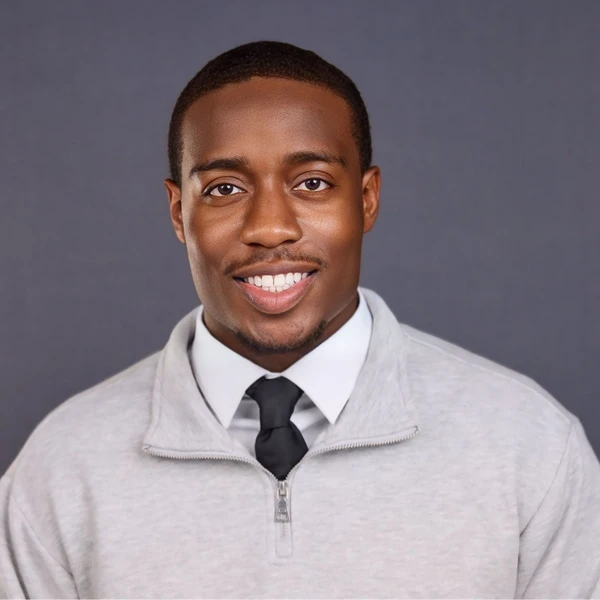
Jeremiah Ageh is a first-year medical student at UTHealth Houston McGovern Medical School, where he is pursuing his M.D. with a commitment to advancing health equity and community-centered medicine. He earned his B.S. in Biology with a Minor in Chemistry from the University of North Carolina at Chapel Hill, where he also completed a paid medical education internship earning recognition as Top Overall Scholar and Top Pre-Medical Scholar. As the Region III MAPS Liaison for the Student National Medical Association, he supports minority pre-medical students across Louisiana, Oklahoma, Arkansas, and Mississippi through mentorship, chapter outreach, and regional conference organizing. Jeremiah is actively seeking opportunities in clinical research and scholarship that align with his passion for health equity, minority health, and academic medicine.

Education

The University of Texas Health Science Center at Houston

Doctoral degree program (PhD, MD, JD, etc.)
2026 - 2030
  • Majors:
    • Medicine

University of North Carolina at Chapel Hill

Bachelor's degree program
2021 - 2024
  • Majors:
    • Biological and Biomedical Sciences, Other

Obra D Tompkins High School

High School
2017 - 2021

Miscellaneous

  • Desired degree level:

    Doctoral degree program (PhD, MD, JD, etc.)

  • Graduate schools of interest:

  • Transfer schools of interest:

  • Majors of interest:

  • Not planning to go to medical school
  • Career

    • Dream career field:

      • Medicine
    • Dream career goals:

    • Lead Medical Assistant/Scribe

      Complete Dermatology
      2025 – 20261 year

    Sports

    Football

    Varsity
    2017 – 20203 years

    Awards

    • Academic All District Honors
    • Academic All State Honors

    Arts

    • The King's Palace Music Academy

      Music
      2022 – Present

    Public services

    • Volunteering

      UNC Hospitals — Volunteer
      2022 – 2023
    • Volunteering

      Shop Docs — Volunteer
      2023 – 2024
    Catrina Celestine Aquilino Memorial Scholarship
    “I can’t feel my legs” was the sentence that made medicine stop feeling distant. My cousin JJ was thirteen when he said it during the Texas winter freeze. He had been sick for weeks, and what first seemed like another COVID-era illness became extensive blood clots, emergency open-heart surgery, and bilateral amputations. I remember standing in the hospital hallway trying to understand how a boy who loved breakdancing and basketball had entered a fight for his life so quickly. I did not feel anger in that moment. I felt clarity. I wanted to become the kind of physician who could recognize what others missed and advocate when families felt powerless. That desire also comes from my own story. I was born in Gretna, Louisiana, to Nigerian immigrant parents who were learning how to build a life in a new country. In those early years, my family relied on federal assistance, including food stamps, to stay afloat. After Katrina, access to steady healthcare around New Orleans became even more fragile. Families lost familiar clinics. Appointments became harder to secure. Preventive care became something people talked about, then put off. When my family evacuated to Texas, we started over, carrying the memory of what it meant to live where care felt thin and survival took priority. Those experiences shaped how I see people. I learned early that hardship is rarely simple from the outside. A missed appointment may carry the weight of transportation. A delayed diagnosis may begin with mistrust. A quiet patient may be carrying a fear they do not know how to name. As a Black Nigerian American and the first in my family to pursue medicine, I understand how isolating this path can feel without a blueprint. That is why mentorship has become one of the clearest parts of who I am. Through MAPS and SNMA, I have helped create spaces where underrepresented students can ask questions, find guidance, and see that medicine is possible for people like us. Service has taught me the same lesson in a different language. Through Shop Docs, I helped provide blood pressure screenings for Black men in barbershops around Chapel Hill. The barbershop was familiar. The conversations were honest. Some men told us they had not seen a physician in years. A number on a cuff became a doorway into headaches they ignored and fears they carried quietly. Through my church, I also served families during COVID testing events tied to food distribution in Houston. People came before shifts or after long days because that was the only window they had. These moments taught me that care must be practical before it can be transformative. I plan to make a positive impact through medicine by practicing with that understanding. I am drawn to orthopedic surgery and PM&R, especially sports medicine, because I care deeply about function and recovery. My own ankle fracture showed me how much identity can be tied to movement. JJ’s journey showed me how much dignity can depend on rehabilitation and access to the right care at the right time. I want to serve patients recovering from injury, disability, or chronic limitation with the kind of clarity that helps them trust the next step. My impact will come through the way I practice and the students I continue to mentor. I want to build care that feels reachable to families who have learned to wait. I want to be a physician who shows up early and listens closely enough for trust to grow over time. That is the kind of change I hope to leave behind wherever I am called.