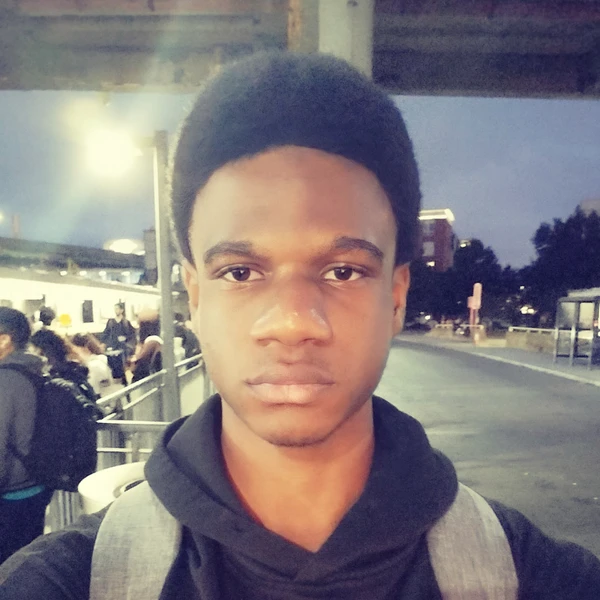
user profile avatar

Jean-David Kouame

1x

Finalist

Bio

My name is Kouame Myliet Jean-David, and I am pursuing a Bachelor of Economics at the University of Massachusetts Boston. Driven by a passion for continuous learning and a commitment to excellence, I maintain high standards in all my endeavors. I actively seek new knowledge and experiences, thrive on networking with like-minded professionals, and embrace challenges to deliver high-quality results. I am dedicated to making a meaningful impact in my community by using my skills to support causes I care about. My career interests lie at the intersection of technology, business, and social impact, with aspirations to leverage innovative solutions as a Financial Advisor or Budgeting Specialist to drive progress and create value.

Education

University of Massachusetts-Boston

Bachelor's degree program
2024 - 2027
  • Majors:
    • Economics

Miscellaneous

  • Desired degree level:

    Doctoral degree program (PhD, MD, JD, etc.)

  • Graduate schools of interest:

  • Transfer schools of interest:

  • Majors of interest:

  • Not planning to go to medical school
  • Career

    • Dream career field:

      • Financial Services
    • Dream career goals:

      Become an investment banker

      Future Interests

      Advocacy

      Volunteering

      Philanthropy

      Entrepreneurship

      Mark A. Jefferson Teaching Scholarship
      Education is the ultimate form of long-term investment. Like any high-stakes portfolio, its success depends on the diversity of its leadership and the rigor of its implementation. At the University of Massachusetts Boston, a 4.0 GPA in Economics is not merely a personal achievement: it is a demonstration that with the right systems and support, academic excellence is attainable for anyone. However, for many students, particularly those from communities of color, the necessary systems are often non-existent. Mentoring students through Student Support Services has shown me that being an educator is about providing a psychological and operational blueprint for success. Leading study sessions for first-year students involves more than just delivering content; it requires teaching the economics of time management and the value of self-reliance. When a student sees a Black man navigating these complex academic and professional environments with precision, the concept of success becomes tangible rather than theoretical. I do not just teach theory; I teach the practical habits required for social and economic mobility. The fact that Black men make up only 2% of the teaching force is a systemic failure that deprives students of essential perspectives. My goal is to bridge this gap by integrating technical fluency and financial literacy into the traditional curriculum. Professional experience in AI automation and workflow orchestration has proven that technology is a powerful equalizer. In a classroom setting, these tools can lower administrative barriers and allow for more direct mentorship. This approach moves education away from a one-size-fits-all model toward a data-driven strategy that recognizes individual potential. The responsibilities of serving as the Treasurer for the HSA organization have further reinforced the importance of accountability and transparency. I intend to bring this same level of precision to the classroom. I want to be the educator who challenges the soft bigotry of low expectations by pushing my students to achieve the same level of excellence that I demand of myself. Ultimately, my career as an educator will be dedicated to creating a new legacy of Black male leadership in academia. I want to show my students that being an intellectual is a position of power. Education is the most effective tool for dismantling systemic barriers. Winning the Mark A. Jefferson Teaching Scholarship will provide the support needed to become a leader who does not just teach the next generation how to navigate the system, but how to master it and build something better in its place.
      Marie J. Lamerique Scholarship for Aspiring Scholars
      Resilience is often depicted as a loud, explosive force, but in my experience, it is much quieter. It is the sound of a mother’s footsteps in a hallway at 2:00 AM, the rhythmic clicking of a keyboard, and the steady, unwavering commitment to a standard that no one else set for you. Growing up in a household where my mother was the primary pillar of support, the challenge wasn't just a lack of resources; it was the weight of an unwritten blueprint. Without a traditional father figure to model the path of a professional man, I realized early on that I would have to become my own architect. A defining moment occurred during my transition to the University of Massachusetts Boston. While many of my peers relied on familial legacies or parental guidance to navigate the labyrinth of higher education, I watched my mother manage the administrative and financial complexities of my enrollment alone, alongside her own responsibilities. One evening, seeing her overwhelmed by a stack of logistical documents, I felt a sharp realization of the disparity between my ambitions and my current circumstances. In that moment, I didn't just feel a sense of duty; I felt a demand for excellence. I realized that to honor her sacrifice and to secure my own future, I could not simply "get by." I had to master the systems that seemed designed to be obstacles. I responded to this challenge by adopting a philosophy of absolute self-reliance and analytical rigor. I took over the management of my academic and professional logistics, treating my education like a high-stakes operation. This drive led me to maintain a 4.0 GPA in my Economics major, a metric I view not just as a grade, but as a proof of concept. I extended this discipline into the professional world by founding Aether Automation, an AI agency. I realized that if I could automate complex workflows for businesses, I could create the financial stability and efficiency that was missing from my early life. I stopped viewing my "non-traditional" background as a deficit and began seeing it as a competitive advantage: I had learned to build from zero. This experience has fundamentally shaped my approach to the future. I no longer wait for a "perfect" set of circumstances to take action. Whether I am managing the budget as the Treasurer for the HSA organization or leading study sessions as a Peer Mentor for Student Support Services, I operate with the understanding that leadership is about providing the stability for others that you once had to forge for yourself. When I mentor first-year students who come from similar backgrounds, I don't just offer academic advice; I offer a strategy for psychological and operational independence. My upbringing taught me that while you cannot choose your starting point, you can absolutely engineer your trajectory. My goal is to continue scaling my business and my academic pursuits to a level where I can provide a new blueprint for Black men who feel the weight of an absent traditional structure. I want to prove that a "non-traditional" background is often the most fertile ground for innovation and leadership. Through education and entrepreneurship, I am not just building a career; I am building a legacy of discipline that honors the strength of the woman who raised me and the resilience of the man I have become. Winning the Marie J. Lamerique Scholarship would not just be a financial support; it would be a validation of the quiet, steady resilience that defines my journey. It would allow me to continue my mission of turning personal challenges into professional excellence and community impact.
      SIA Financial Planning Scholarship
      To excel in the financial advisory profession, one must combine analytical rigor with a forward-thinking approach to technology. As an Economics student at the University of Massachusetts Boston, I have dedicated my academic career to mastering the complexities of the markets, maintaining a 4.0 GPA as a testament to my commitment to excellence. However, my passion for finance extends far beyond the classroom; it is rooted in the belief that financial literacy and sophisticated planning should be accessible tools for wealth creation, not just privileges for the few. My journey into the world of finance began with a fascination for the mechanics of long-term value. Whether studying the historical resilience of the S&P 500 or analyzing the investment philosophies of leaders like Warren Buffett, I have always been drawn to the idea of "engineered" success. This interest eventually led me to found Aether Automation, a business focused on AI workflow orchestration. Through this venture, I learned that the most significant barrier to efficiency is often a lack of integrated systems. I quickly realized that these same principles of automation and optimization could and should be applied to the financial services sector to bridge the gap between complex fiscal data and the everyday consumer. Currently, I serve as the Treasurer for the HSA organization at UMass Boston. In this role, I am responsible for managing organizational expenses and overseeing budget allocations. Rather than settling for traditional, manual record-keeping, I have worked to implement automated tracking systems to ensure transparency and precision. This experience has reinforced my desire to lead within the financial profession, as it allowed me to see firsthand how streamlined operations can provide a clearer picture of financial health, allowing for better strategic decision-making. The current financial system, while robust, often suffers from a "gatekeeper" problem. High-level financial advisory services are frequently priced at a point that excludes the very individuals who would benefit most from expert guidance. My vision for improving the system involves the democratization of financial planning through the integration of AI-driven automation. By leveraging technology to handle the more routine aspects of portfolio management and lead qualification, financial advisors can lower overhead costs and focus their human expertise on high-level strategy and client relationships. As a Peer Mentor for Student Support Services, I see the impact that financial uncertainty has on my peers every day. Many brilliant students are deterred from pursuing their dreams because the path to fiscal security seems opaque. My goal is to be part of the solution by building systems that make sophisticated financial advice scalable and affordable. I want to develop frameworks where personalized, data-driven planning is available to everyone, regardless of their starting capital. Winning the SIA Financial Planning Scholarship would allow me to continue focusing on my studies and my mission to innovate within this field. I am driven by the belief that the future of finance lies at the intersection of human insight and technological efficiency. With the support of this scholarship, I intend to become a leader who doesn't just navigate the existing system, but actively works to rebuild it into something more inclusive, transparent, and effective for the next generation.
      American Dream Scholarship
      The traditional narrative of the American Dream often centers on individual prosperity including a house, a car, and financial independence achieved through sheer willpower. However, as an international student navigating the complexities of studying in the United States, my definition has evolved into something more collaborative. To me, the American Dream is the freedom to access world-class knowledge and the opportunity to transform that knowledge into systems that empower and elevate the surrounding community. It is not just about succeeding alone; it is about building the infrastructure for others to succeed alongside you. Pursuing an education thousands of miles from my foundation has required a deep well of resilience. From maintaining rigorous academic standards in my Economics coursework to managing the logistical and financial frictions of living abroad, the journey is challenging. Yet, the core promise of the American Dream makes this friction worthwhile: the belief that hard work and innovative thinking can break down barriers. I have come to realize that this dream is not passively received; it is actively constructed through service, adaptability, and leadership. I view the American Dream as an inherently collective endeavor, which is why community service has become a cornerstone of my college experience. Recognizing that artificial intelligence will be a defining economic driver, I wanted to ensure my peers were not left behind. This drive led me to spearhead the merger of our campus AI club with the AI Futurism club. By building a unified, dynamic hub for students to learn, discuss, and build with emerging technologies, I am working to democratize access to the tools of the future. Earning a Certificate of Recognition from my university for these community contributions was a profound milestone. It validated my core belief that true success is measured by the value you add to your environment. Looking forward, my entrepreneurial ambitions are deeply tied to this redefined American Dream. I am actively working to launch an agency focused on AI automation and web design. My goal is to bridge the technological gap for local businesses, equipping them with the cutting-edge systems needed to streamline their operations and compete in a rapidly shifting economy. I want to drive economic empowerment from the ground up, proving that technological advancement does not have to be concentrated exclusively at the top. As a non-citizen striving to make a tangible impact, the American Dream Scholarship would be a vital catalyst. Navigating higher education without traditional safety nets demands significant financial and mental resources. This support would not only alleviate the financial pressures of my education but also afford me the critical time and bandwidth to expand my community initiatives and entrepreneurial projects. Ultimately, this scholarship would empower me to continue building my version of the American Dream: a life dedicated to shared progress, technological accessibility, and community resilience.
      John Young 'Pursue Your Passion' Scholarship
      Growing up, I was always fascinated by how decisions—big and small—shape the world around us. Why do some businesses thrive while others fail? Why do some countries struggle with poverty while others flourish? I realized that behind these questions was the study of economics, a field that isn’t just about numbers but about people, choices, and impact. As a first-year Economics major at UMass Boston, I see this field as a powerful tool for change. I want to use economics to help businesses and communities make smarter financial decisions, create sustainable opportunities, and ultimately improve lives. My interest isn’t just academic; I have real-world experience running my own plant-based nutrition business in Côte d'Ivoire. Through that experience, I learned firsthand how market demand, pricing strategies, and consumer behavior play a role in a company’s success. More importantly, I saw how small businesses could empower communities and create jobs. Beyond entrepreneurship, I’ve also worked in community service, raising funds to provide food for orphanages. That experience reinforced my belief that economic policies and financial planning can do more than generate wealth—they can lift people out of hardship. I want to be part of that change, using my skills to design economic policies that promote financial stability and sustainability, especially in underserved communities. I believe ambition, hard work, and a clear purpose can lead to meaningful impact. My goal is to not just succeed in economics but to use it as a force for good. Whether through entrepreneurship, policy-making, or financial consulting, I want to make a tangible difference. This scholarship would help me take another step toward that vision, allowing me to continue learning, growing, and working toward creating real economic change.
      Student Life Photography Scholarship
      Angelia Zeigler Gibbs Book Scholarship
      The Roots of My Passion for Economics Growing up in Côte d'Ivoire, I witnessed firsthand the challenges faced by communities struggling with poverty and economic instability. These early experiences left an indelible mark on me and inspired my decision to pursue a degree in economics. I saw how systemic issues could trap people in cycles of hardship, and I realized that understanding economics could help me contribute to breaking those cycles. One pivotal experience was during my volunteer work with a non-profit organization that provided food supplies to orphanages. I led fundraising efforts, coordinated logistics, and ensured timely delivery of resources. While fulfilling, this role also exposed me to inefficiencies and inequities within local economic systems. I began to question how resources could be better allocated to maximize impact and ensure sustainability. These questions ignited my curiosity and fueled my ambition to understand how economies function at both micro and macro levels. My passion deepened when I founded Yemissa, a plant-based nutritional business. Managing operations, maintaining product quality, and satisfying consumer needs taught me the importance of sustainable business practices. It also showed me how entrepreneurship can empower individuals and communities. This hands-on experience reinforced my desire to study economics, as I realized the transformative potential of sound economic policies and entrepreneurial innovation. Today, as a first-year undergraduate student at UMass Boston, I am committed to using my education to drive meaningful change. I aspire to work in international development, addressing economic disparities and fostering opportunities in underserved communities. My journey is grounded in a deep passion for learning and an unwavering belief in the power of economics to create a better world. Winning this scholarship would support my education and enable me to access the resources needed to achieve my goals.
      Mental Health Profession Scholarship
      Dealing with mental health challenges has been one of the most difficult experiences of my life, but it has also given me a deep sense of purpose and direction. For as long as I can remember, I have struggled with anxiety and bouts of depression. There were days when I felt overwhelmed by negative thoughts, self-doubt, and an inability to see the path ahead. For a long time, I kept my feelings to myself, thinking that I could handle it alone and not wanting to burden anyone with my problems. However, pretending that everything was fine only made things worse. As time passed, I realized that I needed to confront my mental health struggles head-on. One of the key turning points for me was accepting that seeking help wasn’t a sign of weakness. I started attending therapy, which allowed me to gain perspective and better understand how my mind works. With guidance from a counselor, I began developing coping mechanisms—practices like mindfulness, exercise, and journaling, which have helped me manage my emotions more effectively. Therapy has taught me to recognize the importance of being open and honest about mental health, both with myself and others. It's still an ongoing journey, but I’m proud of the progress I’ve made in understanding and managing my mental health. These experiences have driven me to support others who may be going through similar struggles. Over the past few years, I have made it a priority to be a source of support for friends and peers who are also navigating their own mental health challenges. Whether it’s offering a listening ear, checking in on someone regularly, or helping them find resources, I try to be as available and compassionate as possible. By sharing my own experiences, I’ve also found that it helps reduce the stigma around mental health issues and encourages others to open up about what they’re going through. Looking ahead, I am committed to advocating for mental health awareness and support on a broader scale. I plan to pursue a degree in psychology, with a focus on counseling and mental health services. My goal is to become a mental health professional who can provide empathetic, effective care to those in need. I know from personal experience how isolating mental health struggles can feel, and I want to create a space where people feel safe and understood. In the future, I plan to use my platform and education to not only provide individual care but also to raise awareness about mental health in my community. I believe that education is one of the most powerful tools for change, and I hope to work with schools and organizations to promote mental health literacy, reduce stigma, and make mental health resources more accessible to everyone. Through workshops, support groups, and public speaking, I want to help break down the barriers that prevent people from seeking the care they need. Receiving this scholarship would be a huge step in helping me achieve these goals. It would allow me to focus on my education and continue developing the skills I need to make a real impact in the mental health field. More importantly, it would give me the opportunity to honor the struggles I’ve faced and use them to create positive change for others who are going through their own battles.
      Michael Valdivia Scholarship
      My name is Jean-David, and I’ve experienced firsthand the challenges that depression brings. Growing up, I wasn’t always able to articulate what I was feeling. There was this constant weight on my chest, an emptiness that I couldn’t explain. It felt like I was fighting a battle in my mind every day, but no one could see it. My family did their best to support me, but as a young male, I often felt pressure to "just deal with it" or "toughen up." I internalized those expectations, which only made things worse. There were days when getting out of bed felt impossible. I withdrew from friends, stopped participating in things I used to enjoy, and often felt like I was a burden to those around me. Depression isolated me. At my lowest points, I even considered whether life was worth continuing. The hardest part of it all was the feeling of shame—I thought I was weak for feeling this way and didn’t want anyone to know how much I was struggling. I never turned to drugs or substances to cope, though the temptation was there. Instead, I tried to distract myself, throwing myself into work or other activities. But the reality was, no matter how much I tried to run from it, depression was always lurking in the background, ready to pull me down again. What made a difference for me was reaching out for help, though it took me a long time to get there. I realized that I couldn’t fight this battle on my own. With the support of my family and a few close friends, I started to see a counselor. It was a slow process, but therapy allowed me to understand that I wasn’t broken—I was dealing with an illness that needed to be treated with the same compassion and care as any physical ailment. Now, I’m on a path toward healing, but I also recognize that depression is something I will continue to manage throughout my life. I’ve learned strategies to cope and understand the importance of reaching out when things get tough. More importantly, I’ve learned to accept that asking for help doesn’t make me weak—it makes me human. Pursuing higher education has always been a dream of mine, but the road has not been easy. Depression made it hard to stay focused on my goals, and there were many times when I doubted whether I would ever get here. But now, I’m ready. I’m passionate about my studies in economics and want to use my education to make a difference in my community. I know the challenges of living with mental illness, and I hope to contribute to creating a world where mental health care is more accessible and the stigma is reduced, especially for men. Receiving this scholarship would mean more than just financial help—it would be an affirmation that despite everything I’ve been through, I’m on the right path. It would also allow me to focus on my studies without the constant worry of how I’m going to afford school. Most of all, it would help me honor my commitment to not only pursue my passions but also help others who are struggling with their own mental health battles. I want to be an example of resilience and show that no matter how dark things may seem, there is always hope for a brighter future.
      ADHDAdvisor's Mental Health Advocate Scholarship for Health Students
      My journey with mental health advocacy began when someone close to me—my younger cousin—struggled with severe depression. He was just 16 and silently battled feelings of hopelessness and isolation. When he finally opened up to me, I was shocked at how long he had been suffering without seeking help. I made it my priority to be there for him, offering support and encouraging him to talk about his emotions openly. We spent countless hours discussing his feelings and finding ways to cope. I also helped him seek professional help, guiding him through the process of getting therapy. Thankfully, he is now doing much better, and seeing his progress inspired me to want to support others on their mental health journeys. Helping my cousin was a turning point for me. It opened my eyes to the importance of having someone to lean on, especially when the world feels overwhelming. Since then, I’ve made a conscious effort to be that person for others around me. I’ve had friends confide in me about anxiety, stress, and the weight of their personal struggles. I listen without judgment and make sure they feel heard, offering whatever support I can, whether it’s helping them access resources or just being there for emotional comfort. I’ve also participated in initiatives to reduce the stigma around mental health. In high school, I helped organize a mental health awareness event where students could share their experiences and discuss the importance of mental health openly. I knew from personal experience that many people suffer in silence because they fear judgment. Looking forward, my goal is to integrate mental health advocacy into my career. I want to use my education to improve systems and policies so that others won’t face the same barriers my cousin did when seeking help. By analyzing and shaping healthcare policies, I hope to make mental health support a priority in underserved communities, ensuring that emotional well-being is seen as just as important as physical health. Through my studies and future career, I am committed to continuing this journey. I want to create a world where seeking help for mental health is not stigmatized but encouraged. Whether through policy work, personal advocacy, or community engagement, I will strive to ensure that no one feels alone in their mental health struggles.
      Barbara Cain Literary Scholarship
      Books were more than just a source of entertainment; they became my refuge and a means to understand the complexities of the world around me. My parents instilled in me a deep appreciation for education and literacy, which led to countless hours spent lost in stories that ignited my imagination. The lessons I learned from these books have profoundly shaped my character and aspirations, influencing how I see myself and my role in the world. One of the most transformative books I encountered was "The Alchemist" by Paulo Coelho. This novel follows a young shepherd named Santiago on his journey to discover his personal legend. As I read about his quest, I felt an intense connection to his struggles and dreams. Santiago’s unwavering determination to pursue his purpose despite numerous obstacles inspired me to reflect on my own dreams, particularly my passion for economics. The story taught me that the pursuit of one’s dreams is a journey filled with challenges, but each step is valuable in shaping who we become. This realization sparked a desire in me to not only pursue my studies but to do so with intention and purpose, knowing that each experience contributes to my growth. In addition to fiction, I sought out books that explored human behavior and psychology, such as "Thinking, Fast and Slow" by Daniel Kahneman. This book opened my eyes to the cognitive biases that influence our decisions and interactions. Before reading it, I often approached problems instinctively, relying on gut feelings rather than analytical thinking. However, understanding the mechanics behind our thought processes changed my perspective. I became more reflective, asking critical questions about my assumptions and decisions. This shift in thinking has not only improved my academic performance but has also equipped me with the tools to make more informed choices in my personal life. Another pivotal book in my journey has been "Meditations" by Marcus Aurelius. Through his reflections on stoicism, I learned the importance of resilience and self-control. Aurelius’s teachings on focusing on what I can control and accepting what I cannot has been particularly impactful. I often faced setbacks, whether in school or in personal endeavors, and these moments could easily lead to frustration and self-doubt. However, embracing stoicism allowed me to maintain a calm mindset, turning challenges into opportunities for growth. This change in perspective has made me more adaptable and has strengthened my resolve to achieve my goals, especially as I aspire to become a Financial Advisor. Additionally, "The 48 Laws of Power" by Robert Greene taught me about the nuances of social dynamics and influence. Initially, I approached this book with skepticism, concerned about its implications for manipulation. However, as I delved deeper, I recognized that understanding power dynamics is essential for advocating positive change. Learning how to navigate these complexities empowers me to work towards social justice and economic equity, ensuring that marginalized voices are heard. This insight drives my ambition to use my education to advocate for policies that address economic disparities in my community. Through these diverse readings, I have undergone a significant transformation. I emerged with a stronger sense of identity and purpose. My understanding of the world has deepened, and I have developed a commitment to lifelong learning. I now approach challenges with curiosity and resilience, seeking to apply my knowledge to make a meaningful impact. Books continually inspire me to grow and learn. They shape my perspectives and motivate me to make a positive impact in the world.Through the wisdom and experiences found in literature, I am encouraged to pursue my goals and contribute meaningfully to my community.
      Mohamed Magdi Taha Memorial Scholarship
      How I Use My Voice to Stand Up for What’s Right and Build My Community Being an "up-stander" means not only recognizing injustice but also taking action to create meaningful change. For me, standing up for what’s right isn’t just about grand gestures; it’s also about the small, everyday moments where I can make a difference. Growing up in Cote d'Ivoire, I saw firsthand how a single act of kindness or courage could spark change, and those experiences shaped who I am today. One of the defining moments for me was during my high school years, when I noticed the lack of environmental awareness on campus. Trash was often left scattered around, and there was no proper recycling system in place. Rather than just complaining, I decided to take action by organizing an outdoor cleanup event. I recruited over 50 volunteers, and together, we made a visible impact, reducing waste by 30%. But beyond that, I realized the power of rallying people around a cause. This small initiative grew into a larger movement, leading to the introduction of recycling bins throughout the school and increased awareness about environmental responsibility. I learned that being an "up-stander" doesn’t always mean standing alone—it means inspiring others to take action with you. In addition to environmental advocacy, I’ve used my voice to uplift my community in other ways. During my volunteer work with a non-profit organization in Cote d'Ivoire, I helped organize fundraising efforts to provide food supplies to orphanages. It was important to me not only to raise funds but to make sure the donations reached those in need. By coordinating with local businesses and community members, we successfully gathered enough resources to improve the living conditions of children in multiple orphanages. This experience reinforced my belief that even when faced with significant challenges, we all have the power to make a difference if we work together. Looking ahead, I plan to use my voice to continue building my community and advocating for change. As an economics major, I’m passionate about creating opportunities for others and addressing inequalities within the system. My goal is to use the skills I’m learning to push for economic policies that benefit underserved communities and create pathways for more people to succeed. I believe that real, lasting change starts with understanding the problems people face and amplifying their voices. Mohamed Magdi Taha’s legacy of standing up for what’s right and using his voice to build a better future deeply resonates with me. Like Mohamed, I want to be remembered as someone who not only recognized injustice but took action to address it, both in small and big ways. Whether through my advocacy for environmental sustainability or my future work in economic policy, I am committed to using my voice to help build a stronger, more just community. In conclusion, being an "up-stander" is about seizing opportunities to make a positive difference, no matter the size. Through my experiences, I’ve learned that I have the power to inspire others and create change, and I plan to continue using my voice to advocate for the issues that matter to me and my community. Just like Mohamed, I believe that small acts of courage can lead to great transformations, and I am dedicated to making that my life’s mission.
      Jean-David Kouame Student Profile | Bold.org