Hobbies and interests
African American Studies
Anatomy
Biology
Counseling And Therapy
Reading
Academic
Drama
Fantasy
Horror
Romance
I read books multiple times per week
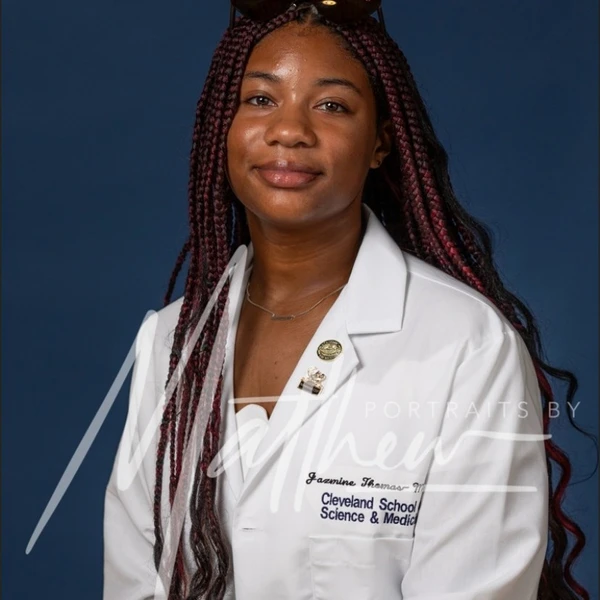
Jazmine Thomas-Mallett
1x
Finalist
Jazmine Thomas-Mallett
1x
FinalistBio
I am a first-generation college student and biochemistry major at Spelman College with aspirations of becoming an interventional radiologist. My passion for medicine comes from a desire to combine science, technology, and compassionate patient care to improve the lives of others. Growing up, I faced family instability and financial challenges, including navigating college without support from my father while watching my mother work tirelessly to provide for our family. These experiences taught me resilience, determination, and the importance of education as a tool for creating opportunity.
Beyond academics, I am committed to serving my community through organizations such as SpelREADS, where I promote literacy among young students, and the L.O.V.E. Letters Project, which spreads encouragement to individuals in nursing homes and county jails. I am also involved in the Pre-Alumnae Council and other campus organizations that support leadership and professional development.
My goal is not only to become a physician but also to advocate for underserved communities and help increase access to quality healthcare. I am a strong scholarship candidate because I have remained dedicated to my education despite financial obstacles and continue to pursue opportunities that allow me to grow academically, professionally, and personally. Through hard work, service, and perseverance, I hope to make a meaningful impact in medicine and in the lives of those I serv
Education
Spelman College
Bachelor's degree programMajors:
- Biological and Biomedical Sciences, Other
Minors:
- Foods, Nutrition, and Related Services
GPA:
3.5
Cleveland School Of Science & Medicine
High SchoolGPA:
3.7
Miscellaneous
Desired degree level:
Doctoral degree program (PhD, MD, JD, etc.)
Graduate schools of interest:
Transfer schools of interest:
Majors of interest:
- Biological and Biomedical Sciences, Other
- Biopsychology
Career
Dream career field:
- Medicine
Dream career goals:
Intern
University Hospitals2023 – 20252 yearskennel technician
Petland2026 – Present7 monthsSales Associate
Tjx Companies2024 – 20262 years
Sports
Volleyball
Club2012 – Present14 years
Awards
- no
Research
Biochemical Engineering
Case Western Reserve — Intern2022 – 2022
Arts
Body rocks
DanceNo2023 – 2024
Public services
Volunteering
Spelaman Serves — Treat maker2026 – 2026Volunteering
Spelreads — Reading guide2025 – Present
Future Interests
Advocacy
Volunteering
Entrepreneurship
Women in STEM Scholarship
I chose to pursue STEM because I believe science has the power to change lives. Growing up, I was always fascinated by how the human body works and how medical advancements can restore health and give people a second chance. That curiosity eventually led me to study Biochemistry at Spelman College, where I am preparing for a career as an interventional radiologist. What excites me most about STEM is that it combines curiosity, innovation, and compassion to solve real-world problems that directly improve people's lives.
My passion for STEM is also deeply personal. As a first-generation college student raised by a single mother, I have seen how access to opportunity can transform a person's future. My mother worked tirelessly to provide for our family while continuing to pursue her own education and career goals. Watching her persevere through challenges taught me that success is earned through resilience and determination. Her example motivates me to approach every obstacle as an opportunity to grow and reminds me that my education is about more than personal achievement. It is about creating opportunities for others.
As a woman in STEM, I hope to help increase representation in medicine and inspire young girls to believe they belong in scientific fields. Representation matters because seeing someone who looks like you succeed can make a dream feel possible. Throughout my education, I have participated in programs, volunteer work, and leadership opportunities that have reinforced my commitment to serving others. Whether tutoring students through SpelREADS or participating in research experiences, I have learned that sharing knowledge is one of the most powerful ways to create lasting change.
My goal as a future interventional radiologist is to provide compassionate, high-quality care while helping address healthcare disparities that disproportionately affect underserved communities. I also hope to embrace emerging technologies, including artificial intelligence and medical imaging innovations, to improve patient outcomes and make healthcare more accessible and efficient.
Beyond my career, I want to mentor students from backgrounds similar to my own and encourage more young women to pursue STEM careers. I understand what it feels like to question whether you belong in challenging academic spaces, and I want to be the kind of mentor who provides guidance, encouragement, and opportunities for others to succeed. One of my long-term goals is to establish scholarship opportunities that reduce financial barriers for students pursuing STEM education, allowing them to focus on learning rather than worrying about affordability.
To me, being a woman in STEM means more than earning a degree or building a successful career. It means using my education to open doors for others, challenge barriers, and demonstrate that women belong at the forefront of scientific discovery and innovation. I hope my career will not only improve the lives of my patients but also inspire the next generation of women to pursue their passions with confidence, knowing they have the ability to make a meaningful difference in the world.
LeadHer Learning Scholarship
Education means possibility. It is the bridge between where I come from and the future I hope to build. As a first-generation college student, education represents more than earning a degree or achieving good grades. It is an opportunity to change the trajectory of my life, honor the sacrifices my family has made, and create opportunities that will extend far beyond myself. Every class I take, every exam I study for, and every challenge I overcome reminds me that education is a privilege that has the power to transform not only individuals but entire families and communities.
Growing up, I watched my mother work tirelessly to provide for our family. She had me when she was only twenty years old, and while many people would have seen that as a setback, she refused to let it define her future. She worked twelve-hour overnight shifts, came home exhausted, got me ready for school, and drove me there before finally taking time to rest herself. Despite the challenges of raising a child as a single mother, she continued to pursue opportunities that would improve our lives. Over the years, I watched her grow professionally from working overnight shifts to becoming the Administrative Supervisor of the Office of Opioid Safety. Even after advancing in her career, she chose to return to school and will earn her bachelor's degree in business in the spring of 2027. Watching her determination taught me that education is not confined to a certain age or stage of life. It is a lifelong investment in yourself and in the people you love.
Through opportunities like tutoring students with SpelREADS, participating in campus organizations, volunteering in my community, and conducting research experiences, I have learned that education carries a responsibility. Knowledge should never be kept to yourself. It should be used to solve problems, uplift others, and create opportunities for those who may not have had the same advantages. These experiences have reinforced my belief that education is most meaningful when it is shared.
Education has also given me confidence. As an out-of-state student, there were moments when I questioned whether I belonged at Spelman. I was surrounded by talented, accomplished students, and I often doubted whether I was capable of achieving my goals. Over time, I found mentors, built friendships, and discovered a community that encouraged me to believe in myself. Those experiences taught me that education is about more than mastering academic material. It is about learning to overcome fear, embrace challenges, and recognize your own potential.
In the future, I hope to use my education to improve healthcare in underserved communities, mentor aspiring healthcare professionals, and establish scholarship opportunities for students facing financial barriers. I know firsthand how difficult it can be to pursue higher education while worrying about the cost, and I want to help ensure that future students can focus on their dreams instead of their financial burdens.
To me, education is not simply a pathway to a career. It is the foundation for a life of service, growth, and purpose. It has given me the opportunity to dream beyond my circumstances and the tools to make those dreams a reality. Most importantly, it has inspired me to create opportunities for others, just as so many people have created opportunities for me. That is the true meaning of education: not only changing your own life, but using what you learn to change the lives of others.
Ruthie Brown Scholarship
As a first-generation college student, I have always viewed student loan debt as more than a financial obligation. It is a responsibility that I take seriously because I understand the sacrifices that have made my education possible. While I recognize that pursuing higher education and eventually medical school may require me to take on student loans, I am committed to managing that debt strategically while continuing to invest in my future.
Currently, I work to minimize the amount I need to borrow by applying for scholarships, maintaining employment, and carefully managing my finances. Throughout college, I have consistently searched for scholarship opportunities because every award I receive reduces the financial burden on both myself and my family. I also work while attending school, which has taught me valuable lessons in budgeting, time management, and financial responsibility. Balancing work with a rigorous Biochemistry curriculum has not always been easy, but it has strengthened my work ethic and reinforced the importance of making thoughtful financial decisions.
In addition to working and applying for scholarships, I take advantage of leadership opportunities, volunteer experiences, and research programs that strengthen my medical school application. By building a competitive academic and extracurricular profile now, I hope to increase my eligibility for future scholarships, grants, and financial aid throughout medical school. I understand that investing time into these opportunities today can significantly reduce financial challenges later in my educational journey.
After completing my education, my plan is to approach student loan repayment with discipline and purpose. As an aspiring interventional radiologist, I hope to secure stable employment that will allow me to make consistent loan payments while maintaining responsible financial habits. Rather than allowing debt to dictate my future, I plan to create a financial plan that prioritizes repayment, budgeting, and long-term financial stability. I also hope to take advantage of loan repayment and forgiveness programs available to physicians who serve in underserved communities if those opportunities align with my career goals.
More importantly, my experiences with financial hardship have shaped the kind of physician I hope to become. I know what it feels like to worry about the cost of education and the uncertainty that comes with financial barriers. Those experiences have inspired me to dream beyond simply paying off my own loans. One of my long-term goals is to establish scholarship opportunities or contribute to financial assistance programs that help students pursue higher education without carrying the same financial burdens. I want future students, especially first-generation students, to have access to opportunities that allow them to focus on learning rather than constantly worrying about affordability.
Ultimately, I view student loan debt as an investment in a career dedicated to serving others. While I understand the challenges that come with financing a medical education, I am determined to face those challenges with perseverance, careful planning, and gratitude for every opportunity I receive. My goal is not only to achieve financial stability for myself but also to use my future success to create opportunities for others. By reducing my debt through hard work, scholarships, and responsible financial planning, I will be better positioned to give back to my community and help ensure that future students can pursue their dreams with fewer financial obstacles than I faced.
Charles B. Brazelton Memorial Scholarship
Growing up, I was always teased for my taste in music. While many of my friends had one favorite genre or listened to whatever was popular at the time, my playlists were impossible to predict. One moment I was listening to R&B, the next it was classic rock, jazz, Latin music, gospel, country, indie, or alternative music. People often looked at me strangely when I handed them an earbud or connected my phone to the speaker. I was asked questions like, "How do you even know this song?" or "Why do you listen to that?" More than once, I was called weird because my music taste didn't fit into a single category.
For a while, I wondered if I should change. It is easy to want to fit in when you're growing up, and I thought maybe I should only listen to what everyone else liked. But no matter how hard I tried, I always found myself searching for new artists, exploring different cultures through music, and appreciating songs simply because they made me feel something. I realized I didn't want my interests to be limited by what was considered normal.
As I got older, something unexpected happened. The very thing that made me stand out became one of the easiest ways for me to connect with people. Music became my universal language. Whether I was talking with classmates, coworkers, or people I had just met, I could almost always find a song, artist, or genre we had in common. Sometimes I introduced friends to artists they had never heard before, and other times they introduced me to music that expanded my own perspective. Those conversations often turned into discussions about culture, family traditions, memories, and life experiences. I learned that when people share the music they love, they are often sharing a part of themselves.
My love for music also taught me to appreciate differences instead of fearing them. Every genre has its own history, style, and message. Learning about those differences made me more curious about people and their experiences. Instead of making assumptions, I became someone who enjoys listening and learning. I realized that everyone has a story worth hearing if you are willing to listen.
Looking back, I see that my music taste reflects the kind of person I have become. I am naturally curious, open-minded, and eager to understand perspectives that are different from my own. Those qualities extend far beyond music. They influence the way I approach my education, my relationships, and my future career in medicine.
As an aspiring interventional radiologist, I know I will care for patients from countless backgrounds, cultures, and life experiences. Every patient will have a different story, just as every song tells a different story. My ability to appreciate differences, listen without judgment, and connect with people will be just as important as my medical knowledge. Medicine is about more than diagnosing illnesses; it is about understanding people.
Today, I no longer see my "random playlist" as something awkward. Instead, I see it as a reminder that being different is something to embrace. What once made me feel like I didn't fit in has become one of my greatest strengths. It has taught me that genuine curiosity creates connection, and that some of the most meaningful relationships begin when we are willing to step outside of what is familiar and appreciate what makes each person unique.
Sola Family Scholarship
Growing up with a single mother shaped my character, my ambitions, and the way I view success. My mom had me when she was just 20 years old, at a time when most people are just beginning to figure out their own lives. Instead of allowing that responsibility to limit her future, she made the decision every day to keep moving forward. Watching her build a life for both of us has been one of the greatest sources of inspiration in my life.
When I was younger, my mom worked 12-hour overnight shifts while trying to establish her career. I remember watching her come home exhausted in the morning, yet she never went straight to bed. She would get me ready for school, make sure I had everything I needed, and take me to school before finally taking time to rest. Looking back, I realize how much strength and sacrifice those mornings required. At the time, I simply thought that was normal. Now I understand that she was carrying responsibilities that would overwhelm most people, yet she never let me feel the weight of them.
One of the most inspiring parts of watching my mom grow has been seeing her refuse to settle. She continuously advocated for herself, sought new opportunities, and proved that hard work and perseverance create opportunities. Over the years, I watched her rise professionally from working overnight shifts to becoming the Administrative Supervisor of the Office of Opioid Safety. Every promotion represented years of dedication, resilience, and a willingness to believe in herself even when others may have overlooked her potential.
Her journey has also taught me that learning never stops. Despite working full time and raising me, she made the decision to return to school to earn her bachelor's degree in business. In the spring of 2027, she will finally graduate, achieving a goal that has taken years of sacrifice and determination. Watching her pursue her education as an adult has reinforced the idea that success is not defined by how quickly you reach your goals but by your willingness to keep working toward them, regardless of the obstacles.
Because of her example, I have learned to approach challenges with resilience instead of fear. Whenever I face financial stress, demanding coursework, or moments of self-doubt, I think about everything my mother overcame to give me opportunities she never had. Her sacrifices motivate me to continue pursuing my dream of becoming an interventional radiologist and remind me that perseverance always has purpose.
My mother's story has also shaped the kind of person I want to become. She showed me that true success is measured not only by professional accomplishments but by the lives you impact along the way. She dedicated herself to caring for others while building a better future for our family, and I hope to honor her example by using my education to care for patients, mentor future students, and create opportunities for others facing challenges similar to my own.
Everything I achieve is possible because of the foundation she built. Her resilience became my resilience, her determination became my motivation, and her unwavering belief in a better future taught me that no obstacle is too great to overcome.
Sloane Stephens Doc & Glo Scholarship
The impact I want to make begins with a simple belief: everyone deserves access to opportunities, support, and quality healthcare regardless of their background or circumstances. As a first-generation college student and aspiring interventional radiologist, I have experienced firsthand how education can transform a person's future. Because of this, I am committed to using my education not only to build a successful career but also to create opportunities for others and contribute to a stronger, healthier community.
Many of the people who inspire me are those who have quietly sacrificed for others. My mother is one of my greatest inspirations. As a single parent, she worked tirelessly to provide for our family while encouraging me to pursue my goals. Watching her persevere through challenges taught me the value of hard work, resilience, and selflessness. She showed me that success is not just about personal achievement but about lifting others up along the way. Her example motivates me to use every opportunity I receive to make a meaningful difference in the lives of others.
My vision for the future is rooted in service. As a physician, I want to provide compassionate, high-quality healthcare to patients, particularly those in underserved communities. Too often, people face barriers to healthcare because of financial limitations, lack of resources, or systemic inequities. I hope to help bridge those gaps by providing care that is both accessible and patient-centered. I want patients to feel heard, respected, and valued during some of the most vulnerable moments of their lives.
However, my impact extends beyond medicine. Through experiences such as tutoring students in SpelREADS and participating in community service projects, I have learned that creating change often begins with investing in people. Education has opened doors for me, and I want to help open doors for others. I hope to mentor young people who aspire to careers in healthcare and STEM, especially students who may not see themselves represented in these fields. By sharing my experiences and providing guidance, I want to help students recognize that their dreams are achievable regardless of where they come from.
One of my long-term goals is to establish scholarships or financial assistance programs for students pursuing higher education. As someone who has faced financial challenges throughout my academic journey, I understand how life-changing financial support can be. I want future students to spend less time worrying about how they will afford their education and more time focusing on their goals and potential.
Ultimately, the change I am determined to create is a cycle of opportunity. I want to use my education to heal, mentor, advocate, and empower. If I can improve the health of my patients, inspire students to pursue their ambitions, and create opportunities for others to succeed, then I will have made the kind of impact that lasts far beyond my own lifetime. My goal is not simply to achieve success but to ensure that my success becomes a pathway for others to thrive as well.
Bick First Generation Scholarship
Being a first-generation college student means carrying both a responsibility and an opportunity. It means stepping into spaces that no one in my family has navigated before and learning how to succeed while creating a path for those who will come after me. While earning a college degree is a personal achievement, it is also a way to honor the sacrifices my family has made and to build a future that can change generations.
My journey to college has not been easy. I was raised by a single mother who worked tirelessly to provide for our family. Watching her balance multiple responsibilities taught me the value of hard work, resilience, and perseverance. Financial challenges have been a constant part of my educational journey, and there have been times when I worried about how I would continue paying for school. In addition to financial obstacles, I have faced personal challenges that tested my confidence and independence. As an out-of-state student, adjusting to college life initially left me feeling isolated and unsure if I truly belonged. However, through building friendships, seeking support, and becoming involved on campus, I found a community that helped me grow into a more confident and determined individual.
These experiences have strengthened my commitment to my goals. I am currently a Biochemistry major at Spelman College with aspirations of becoming an interventional radiologist. My dream is to combine my passion for science and medicine with a commitment to serving others. I want to provide compassionate, high-quality healthcare while helping address disparities that affect underserved communities. I also hope to mentor students who come from backgrounds similar to my own and show them that their circumstances do not define their potential.
What drives me is the desire to create opportunities for others. Because I understand the challenges that come with pursuing higher education without a roadmap, I want to use my future success to help students who face similar barriers. One of my long-term goals is to establish scholarships or mentorship programs that provide both financial support and guidance to students pursuing their dreams. I want future generations to have access to opportunities that may have seemed impossible to them.
This scholarship would help relieve the financial burden of college and allow me to focus more fully on my education, research opportunities, community service, and preparation for medical school. More importantly, it would bring me one step closer to achieving my goals and creating the impact I hope to have in the future.
Being a first-generation student has taught me that success is not measured only by what you achieve for yourself, but by how you use those achievements to uplift others. I am determined to turn every challenge I have faced into motivation to succeed, serve my community, and leave a legacy of opportunity for those who come after me.
WCEJ Thornton Foundation Low-Income Scholarship
Higher education is the foundation that will allow me to transform my goals into reality and create a lasting impact on the lives of others. As a first-generation college student and Biochemistry major at Spelman College, pursuing higher education is about much more than earning a degree. It represents opportunity, growth, and the ability to break barriers that have limited opportunities for previous generations in my family. Through higher education, I am gaining the knowledge, skills, and experiences necessary to pursue my dream of becoming an interventional radiologist while positioning myself to serve my community in meaningful ways.
My decision to pursue medicine stems from both my passion for science and my desire to help others. I have always been fascinated by the complexity of the human body and the ways medical advancements can improve quality of life. As I explored different healthcare careers, I became particularly interested in interventional radiology because it combines cutting-edge technology, critical thinking, and patient-centered care. The field offers the opportunity to perform minimally invasive procedures that can significantly improve patient outcomes while reducing recovery times and discomfort. Higher education is providing me with the scientific foundation and academic preparation necessary to eventually enter medical school and pursue this career path.
Beyond academics, higher education has helped me develop as a leader, mentor, and community member. Through organizations such as SpelREADS, where I tutor elementary and middle school students, I have learned the importance of service and community engagement. Working with students has shown me how powerful education can be in shaping confidence, opportunity, and future success. These experiences have reinforced my belief that knowledge should not only be acquired but also shared. As I continue my education, I hope to gain additional leadership experiences, research opportunities, and professional development that will help me become a well-rounded physician and advocate.
Attending college has also exposed me to diverse perspectives and experiences that have broadened my understanding of the world. As an out-of-state student, adjusting to college initially challenged me. There were times when I questioned whether I belonged, but through friendships, mentorship, and campus involvement, I found a community that encouraged me to grow. These experiences strengthened my resilience and taught me the importance of creating spaces where others feel supported and valued. In the future, I hope to carry these lessons into my career by fostering trust and understanding with patients from all backgrounds.
My long-term goal is to use my education to address healthcare disparities and increase access to quality medical care in underserved communities. Many individuals face barriers to healthcare because of financial limitations, lack of resources, or systemic inequities. As a physician, I want to advocate for patients, provide compassionate care, and help bridge gaps in healthcare access. I believe everyone deserves the opportunity to receive high-quality medical treatment and feel respected throughout their healthcare journey.
In addition to serving patients, I hope to make a positive impact through mentorship and educational support. As someone who has faced financial challenges while pursuing higher education, I understand how transformative scholarships and mentorship can be. One of my goals is to establish scholarship opportunities or financial assistance programs for students pursuing higher education, particularly those interested in STEM and healthcare fields. I want future students to focus on their ambitions rather than worrying about whether they can afford to continue their education.
Ultimately, higher education is equipping me with the tools necessary to achieve my professional goals and create meaningful change. Through medicine, mentorship, and community service, I hope to use my education to improve lives, expand opportunities, and leave a legacy of compassion, service, and empowerment. By investing in my education today, I am preparing to make a positive impact that will extend far beyond my own success and benefit future generations.
Stephan L. Daniels Lift As We Climb Scholarship
I want to pursue a career in STEM because I am passionate about using science to solve problems, improve lives, and create meaningful change in my community. From a young age, I was fascinated by how the human body works and how medical advancements can transform patient outcomes. This curiosity led me to pursue a degree in Biochemistry at Spelman College and inspired my goal of becoming an interventional radiologist. STEM offers a unique opportunity to combine innovation, critical thinking, and service, allowing me to make a direct impact on the lives of others through healthcare.
My interest in medicine is rooted not only in my love of science but also in my personal experiences. Growing up, I witnessed the challenges that many families face when trying to access resources and opportunities. As a first-generation college student from a single-parent household, I understand how financial and social barriers can affect a person's future. These experiences taught me resilience and strengthened my desire to pursue a profession where I can help others overcome obstacles and improve their quality of life.
What excites me most about STEM is its ability to create solutions that benefit entire communities. Scientific discoveries and technological advancements have the power to improve healthcare, increase access to information, and address problems that affect millions of people. As an aspiring physician, I hope to contribute to these advancements while providing compassionate, patient-centered care. Interventional radiology particularly interests me because it uses cutting-edge technology and minimally invasive procedures to treat a wide range of conditions, often resulting in shorter recovery times and improved outcomes for patients.
In the future, I plan to use my degree to uplift my community in several ways. First, I hope to help address healthcare disparities by providing quality medical care to underserved populations. Many communities face barriers to healthcare, including limited access to providers, financial constraints, and a lack of health education. I want to be a physician who not only treats patients but also advocates for equitable healthcare and helps individuals better understand their health.
I also hope to inspire and mentor young people who are interested in STEM careers. Representation is important, and as an underrepresented minority pursuing medicine, I want students to see that careers in science and healthcare are attainable. Through mentorship, outreach programs, and community engagement, I hope to encourage the next generation of scientists, researchers, and healthcare professionals.
Additionally, I want to use my future success to create opportunities for others. Having experienced financial challenges throughout my educational journey, I understand the importance of scholarships and support systems. One of my long-term goals is to help fund scholarships or educational initiatives for students pursuing higher education, particularly those interested in STEM fields.
Ultimately, STEM is important to me because it allows me to combine my passion for science with my commitment to service. Through medicine, mentorship, and community advocacy, I hope to use my degree to improve lives, expand opportunities, and create a lasting impact that extends far beyond my own career.
Our Destiny Our Future Scholarship
I plan to make a positive impact on the world through service, medicine, and the ability to connect with people from all walks of life. While my long-term goal is to become an interventional radiologist and improve access to quality healthcare, one of the most important things I have learned is that making a difference often begins with understanding people. For me, that understanding has come from an unexpected place: music.
Growing up, my music taste never fit neatly into one category. While many of my peers listened to the same artists and genres, I was constantly exploring different sounds, cultures, and styles. My playlists could move from R&B to classic rock, jazz to Latin music, gospel to alternative music, all within a few songs. Because of this, I was often seen as different or even "weird." People would question why I listened to certain artists or why my interests seemed so scattered.
For a while, I felt self-conscious about it. However, as I got older, I realized that my love for music was actually teaching me something important. Music became a way for me to connect with people whose experiences were different from my own. It allowed me to appreciate different cultures, perspectives, and stories. I discovered that when people talk about music they love, they often share pieces of themselves. Conversations that started with a favorite song often turned into discussions about family traditions, personal struggles, dreams, and memories.
Over time, I became known as the person who was always introducing friends to new artists and genres. Some of my favorite moments have been watching someone discover a song they never would have listened to on their own and seeing how excited they become. Music helped me build friendships with people from different backgrounds because it gave us common ground. It taught me that differences should not divide us; they can help us learn from one another.
This lesson has shaped the way I approach life and my future career. As a future physician, I know I will meet patients from many different cultures, backgrounds, and life experiences. Every patient will have a unique story, just as every song has its own message. My love for music has taught me to listen carefully, remain open-minded, and appreciate perspectives that may be different from my own. These are qualities that are essential in healthcare.
Beyond medicine, I hope to continue making a positive impact through mentorship and community involvement. I want to encourage others to embrace what makes them unique rather than hiding it. For years, I worried that my interests made me stand out in the wrong way. Now, I understand that our differences often become our greatest strengths. The same curiosity that led me to explore different kinds of music is the curiosity that drives me to learn, grow, and connect with others.
Ultimately, I hope to make a positive impact by helping people feel seen, heard, and valued. Whether through healthcare, mentorship, or simple conversations, I want to build bridges between people and create opportunities for understanding. Music taught me that connection has the power to change lives, and I hope to carry that lesson with me throughout everything I do.
Kristinspiration Scholarship
Education is important to me because it represents opportunity, growth, and the ability to create a better future not only for myself but also for others. As a first-generation college student, I understand that earning a degree is about much more than receiving an education. It is about breaking generational barriers, creating opportunities that did not previously exist, and building a foundation for long-term success. Education has given me the chance to pursue my dream of becoming an interventional radiologist while developing the skills, knowledge, and confidence needed to make a meaningful impact in the world.
Growing up, I witnessed the sacrifices my mother made to provide for our family. As a single mother working hard to support me, she taught me the importance of perseverance, resilience, and determination. Watching her overcome challenges inspired me to approach my own obstacles with the same mindset. While my journey has included financial hardships and personal challenges, these experiences have only strengthened my appreciation for education. I view every class, opportunity, and achievement as a step toward a future that once seemed out of reach.
Education has also allowed me to discover my passion for helping others. As a Biochemistry major at Spelman College, I am preparing for a career in medicine because I want to improve the lives of people in my community. I am particularly interested in interventional radiology because it combines science, technology, and patient care in a way that can significantly improve outcomes for patients. Through my education, I am learning how to apply scientific knowledge to real-world problems while developing the compassion and empathy necessary to be an effective healthcare professional.
The legacy I hope to leave is one of service, opportunity, and empowerment. I want to be remembered as someone who used their success to create pathways for others. As a future physician, I hope to provide quality healthcare to underserved communities and advocate for greater access to medical resources. I believe that everyone deserves compassionate care regardless of their background, and I want my work to contribute to a more equitable healthcare system.
In addition to serving patients, I hope to mentor students who share similar experiences to my own. Throughout my educational journey, mentors, teachers, and community members have encouraged me to pursue my goals, and I want to provide that same support to others. I hope to guide students who may feel uncertain about their future and help them recognize their potential.
One of my long-term goals is to establish scholarships or financial assistance programs for students pursuing higher education. Having experienced the stress that comes with financial barriers, I understand how transformative support can be. I want future students to focus on their education and dreams rather than worrying about whether they can afford to stay in school.
Ultimately, I hope my legacy will be measured not by personal accomplishments alone but by the lives I impact. If I can help others access opportunities, achieve their goals, and believe in themselves, then I will have created the kind of lasting change that education has made possible in my own life.
Love Island Fan Scholarship
Heart Rate Heist: A New Love Island Challenge
Love Island is famous for its exciting challenges that test relationships, reveal hidden feelings, and create unforgettable moments of drama. A brand-new challenge called Heart Rate Heist would bring all of these elements together while introducing strategy, trust, and temptation. Unlike many challenges that focus primarily on physical attraction or compatibility, Heart Rate Heist would encourage Islanders to think carefully about their relationships, friendships, and personal choices. This challenge would create excitement for both the contestants and viewers while generating conversations and storylines that could last long after the game ends.
The villa would be transformed into a glamorous vault-themed arena centered around a giant structure called the Heart Vault. Gold decorations, heart-shaped scoreboards, and individual lockboxes would give the challenge a luxurious yet competitive atmosphere. At the start of the game, each Islander would receive ten Heart Coins and a lockbox containing a mystery envelope that would not be opened until the final round.
The first stage of the challenge, called Secret Admirers, would require each Islander to answer several questions privately before the game begins. Questions would include who they would choose if their current partner was unavailable, who they believe is the most attractive person in the villa, and which couple they think is least likely to survive the next recoupling. During the challenge, these answers would be revealed anonymously. Islanders would then have to guess who gave each answer. Correct guesses would earn Heart Coins, while incorrect guesses would cost coins. This round would immediately create curiosity, suspicion, and plenty of discussion among the contestants.
The second stage, known as The Heart Heist, would introduce a strategic twist. Every Islander would receive a secret mission card with a unique objective. Some contestants might be instructed to convince another Islander to give them a coin, while others may need to gather information or protect their coins from being stolen. Because no one knows anyone else's mission, Islanders would constantly question one another's motives. This would create entertaining interactions and force contestants to think strategically while maintaining trust within their relationships.
Next comes Couple's Lockdown, a round designed to test how well couples truly know each other. Partners would be separated and asked questions about one another's habits, goals, and personalities. For every matching answer, the couple would earn a key. These keys could later be exchanged for clues about the secret missions completed during the previous round. This stage rewards strong communication while highlighting weaknesses in newer or less secure relationships.
The challenge would then move into the Temptation Auction, where Islanders bid their Heart Coins on mystery rewards. Possible prizes include a private date, immunity from a future challenge penalty, a message from home, or information about secret crushes in the villa. However, some prizes would be disguised traps that reveal personal secrets instead of providing advantages, creating even more tension and drama.
The final stage, The Final Accusation, would involve Islanders voting anonymously for categories such as Biggest Game Player, Most Loyal Contestant, and Most Likely to Have Their Head Turned. The contestants receiving the most votes would open their lockboxes to reveal rewards or consequences. At the end of the challenge, the person with the most Heart Coins would be crowned the Heart Thief and receive exclusive advantages moving forward.
Heart Rate Heist would be an exciting addition to Love Island because it combines romance, strategy, trust, and competition in a unique way. By revealing secrets, testing relationships, and encouraging strategic gameplay, this challenge would create memorable moments and keep viewers invested in the Islanders' journeys.
Zelaya Creativity Scholarship
The Missing Pen
Most people would not consider a missing pen a crisis.
When Maya realized her favorite blue pen was gone, she knew everyone else would tell her to simply use another one. After all, she owned plenty of pens. There were pens in her backpack, pens in her desk drawer, and even a few forgotten ones at the bottom of her tote bag. Yet none of them felt quite the same.
This particular pen had been with her for years. She had used it to take notes in difficult classes, complete college applications, and write scholarship essays late at night. Somehow, it had become her lucky pen. Whenever she faced something important, she reached for it without thinking.
The problem began on a rainy Tuesday morning.
Maya arrived at her chemistry lecture and reached into her backpack to grab the pen. Her hand searched every pocket once, then twice.
Nothing.
Her stomach dropped.
She emptied the contents of her bag onto the desk. Notebooks. Highlighters. A granola bar. Three other pens.
But not the blue one.
Throughout the lecture, she could barely focus. Instead of listening to the professor explain molecular structures, she replayed the previous day in her head. Had she left the pen in the library? Did it fall out in the dining hall? Had someone accidentally picked it up?
After class, she began her search.
First, she checked the library. She walked through every aisle she had visited the day before. Then she searched the study room where she had spent three hours preparing for an exam. No luck.
Next, she visited the student center.
Still nothing.
When she told her friends what she was doing, they laughed.
"You've spent four hours looking for a pen?" one asked.
"It's not just a pen," Maya replied.
Her friends exchanged amused looks.
"It literally is."
Maya laughed with them, but deep down she knew why the missing pen bothered her so much.
The truth was that college had been harder than she expected. Between demanding classes, financial stress, and being far from home, she often felt overwhelmed. Every day seemed filled with uncertainty. She worried about grades, tuition bills, internships, and the future.
The pen had become a small source of comfort. It reminded her of all the challenges she had already overcome. Every time she used it, she remembered the late nights studying, the scholarship applications she had completed, and the goals she was working toward. It was proof that she had made it this far.
That evening, exhausted and slightly embarrassed by her obsession, Maya returned to the library one final time.
She wasn't expecting to find anything.
As she walked past a row of chairs near a window, something caught her eye.
A small blue object rested beneath one of the seats.
Her pen.
For a moment, she simply stared at it.
Then she picked it up and laughed.
The relief she felt was completely unreasonable. The world had far bigger problems than a missing pen. Yet as she slipped it safely into her backpack, she realized the search had never truly been about the pen itself.
It was about finding something familiar in a season of constant change.
The next morning, Maya used the pen to take notes in class. The ink flowed just as smoothly as before.
As she wrote, she smiled to herself.
The pen was never magical. It couldn't improve her grades or solve her problems. But sometimes the smallest things help us remember who we are when everything else feels uncertain.
And for Maya, that was enough.
Catrina Celestine Aquilino Memorial Scholarship
From a young age, I have been driven by a desire to help others and create meaningful change in my community. As a first-generation college student and Biochemistry major at Spelman College, I have learned the value of perseverance, hard work, and service. Growing up, I faced personal and financial challenges that taught me resilience and gave me a deep appreciation for the opportunities education can provide. These experiences have shaped my goal of becoming an interventional radiologist and using medicine as a way to improve lives.
My passion for healthcare comes from both my love of science and my desire to support people during some of the most vulnerable moments of their lives. I am fascinated by the ways medical technology can diagnose and treat complex conditions, and I am especially drawn to interventional radiology because it combines innovation, problem-solving, and patient-centered care. I want to be a physician who not only provides excellent treatment but also makes patients feel heard, respected, and supported.
Beyond medicine, I am committed to serving my community. Through programs such as SpelREADS, where I tutor elementary and middle school students, and the L.O.V.E. Letters Project, where I write encouraging letters to individuals in nursing homes and county jails, I have seen how even small acts of kindness can make a lasting impact. These experiences have reinforced my belief that service is not just something you do, it is a responsibility to uplift others whenever possible.
In the future, I plan to make a positive impact by addressing healthcare disparities and increasing access to quality medical care in underserved communities. As an underrepresented minority in medicine, I understand the importance of representation and the role it plays in building trust between healthcare providers and patients. I hope to advocate for equitable healthcare, educate communities about health and wellness, and help ensure that all individuals receive the care they deserve.
I also hope to mentor students who aspire to careers in healthcare, particularly those who come from backgrounds similar to my own. As someone who has benefited from the guidance of mentors and educators, I want to help the next generation navigate the path to higher education and professional success. Ultimately, my goal is to use my medical career not only to heal patients but also to inspire, support, and create opportunities for others. Through compassion, service, and advocacy, I hope to leave a lasting impact on both my community and the field of medicine.
SigaLa Education Scholarship
I chose to study biochemistry because I have always been fascinated by the science behind the human body and the ways medicine can improve people's lives. My passion for healthcare, combined with my desire to serve others, inspired me to pursue a career in medicine. As I have progressed through my education, I have become especially interested in interventional radiology because it combines advanced technology, critical thinking, and patient care to provide minimally invasive treatments that can significantly improve outcomes and quality of life.
My short-term goals are to successfully complete my undergraduate degree at Spelman College, maintain strong academic performance, and take advantage of as many opportunities for growth as possible. I am actively involved in student organizations, community service initiatives, and volunteer opportunities because I believe these experiences help me become a more well-rounded student and future physician. I hope to continue gaining leadership experience, conducting research, and building meaningful connections with mentors and peers who will help guide me on my journey to medical school.
My long-term goal is to become an interventional radiologist who not only provides exceptional healthcare but also gives back to the community. As a first-generation college student who has faced financial challenges, I understand how difficult it can be to pursue higher education without adequate support. Once I am established in my career, I hope to mentor students interested in healthcare careers and provide financial assistance through scholarships or mentorship programs so that others do not have to face the same obstacles I have encountered.
As an underrepresented minority pursuing a career in medicine, I am motivated by the need for greater diversity within healthcare. Representation matters because patients often feel more comfortable and understood when they see healthcare professionals who share similar backgrounds and experiences. My experiences have given me a unique perspective on the challenges many underserved communities face, and I hope to use that perspective to advocate for equitable healthcare and improve access to quality medical services.
This scholarship would provide much-needed financial support as I work toward my educational goals. As a student from a single-parent household, I have had to navigate the financial challenges of college while remaining focused on my academics and future career. Receiving this scholarship would help reduce the burden of tuition, books, and educational expenses, allowing me to dedicate more time to my studies, community involvement, and professional development. Most importantly, it would bring me one step closer to achieving my dream of becoming a physician and creating opportunities for others in the future.
Shaunterrio Hudson Memorial Scholarship
One of the most meaningful ways I have shown up for someone was through my work with SpelREADS, a literacy program where I tutor elementary and middle school students. While helping students improve their reading skills was part of my role, I quickly realized that many of them needed more than academic support. They needed someone who believed in them.
One student I worked with often became frustrated when reading aloud. She would hesitate before speaking, apologize for mistakes, and sometimes shut down completely when she struggled with a passage. Rather than focusing solely on correcting errors, I focused on encouraging her. I celebrated small improvements, reminded her that learning takes time, and created a space where she felt comfortable trying again. Over time, I watched her confidence grow. She began volunteering to read aloud, asking questions, and approaching challenges with a more positive attitude.
That experience asked me to be patient, present, and empathetic. It taught me that sometimes the most important thing you can offer someone is not a solution but your support. The difference was not made through a grand gesture. It came from consistently showing up, listening, and making someone feel seen and capable.
What that moment revealed to me is that meaningful care often happens in quiet ways. People may not always remember every word you say, but they remember how you made them feel. As I continue pursuing a career in medicine, this lesson remains with me. Patients are more than diagnoses, test results, or procedures. They are individuals navigating uncertainty, fear, and vulnerability. Just as that student needed encouragement and understanding, patients often need healthcare professionals who will listen, advocate for them, and treat them with compassion.
Shaun's legacy reminds us that healthcare is ultimately about showing up for others, especially during moments when they need it most. Whether through a simple conversation, a reassuring presence, or a commitment to providing excellent care, healthcare professionals have the opportunity to make a lasting impact. My experience with that student reinforced my belief that service begins with empathy and that small acts of kindness can create meaningful change.
As an aspiring interventional radiologist, I hope to carry this mindset throughout my career. I want to be a physician who combines technical expertise with genuine compassion. I want patients to know that they are heard, respected, and cared for as people, not just as medical cases. The lesson I learned through tutoring is one I will continue to apply in medicine: showing up for others with patience, empathy, and consistency can make a difference that extends far beyond the moment itself.
RonranGlee Literary Scholarship
"Human knowledge is never contained in one person. It grows from the relationships we create between each other and the world."
— When Breath Becomes Air by Paul Kalanithi
In this passage from When Breath Becomes Air, Paul Kalanithi argues that knowledge is not an individual possession but a collective process that develops through human relationships and lived experiences. The underlying meaning of this statement is that true understanding comes not only from studying information but also from engaging with people, confronting challenges, and interacting with the world around us. Kalanithi challenges the idea that intelligence and knowledge are achieved independently. Instead, he suggests that growth occurs through connection, collaboration, and a willingness to learn from others. Through this statement, Kalanithi emphasizes that human knowledge is dynamic and constantly evolving because it is shaped by the relationships we build throughout our lives.
At first glance, the quote appears to be a simple observation about learning. However, a deeper examination reveals that Kalanithi is making a broader claim about the nature of human existence. Modern society often celebrates individual achievement and personal success. People are frequently praised for their intelligence, academic accomplishments, and professional expertise. While these achievements are important, Kalanithi reminds readers that no person acquires knowledge in isolation. Every idea, skill, and discovery is influenced by teachers, family members, mentors, colleagues, and communities. Even the most accomplished individuals rely on knowledge that has been passed down through generations. By recognizing this reality, Kalanithi highlights the interconnected nature of human learning.
The significance of this idea becomes even clearer when considering Kalanithi's life experiences. Before becoming a patient, he was a neurosurgeon who dedicated years to studying medicine and caring for others. He spent countless hours mastering scientific concepts and surgical techniques. Yet despite his extensive education, Kalanithi eventually realized that some of life's most important lessons could not be found in textbooks or lecture halls. After being diagnosed with terminal lung cancer, he was forced to confront questions about mortality, meaning, and purpose. The answers to these questions emerged not from scientific research alone but from his relationships with loved ones, patients, colleagues, and the broader world around him. His experiences taught him that knowledge extends beyond facts and data; it also includes wisdom gained through human connection.
Another important aspect of this passage is its emphasis on humility. By stating that knowledge is never contained within one person, Kalanithi acknowledges the limitations of individual understanding. No matter how educated or experienced someone may be, there is always more to learn. This perspective encourages intellectual humility because it reminds people that they do not possess all the answers. Instead of viewing knowledge as something that can be completely mastered, Kalanithi presents it as an ongoing process of discovery. Individuals grow by listening to others, considering different perspectives, and remaining open to new ideas.
This lesson is particularly relevant in today's world, where people are often exposed to differing opinions, cultures, and experiences. Meaningful learning occurs when individuals engage with perspectives outside their own. By interacting with people from different backgrounds, individuals gain a broader understanding of society and develop greater empathy. Kalanithi suggests that relationships are valuable not only because they provide emotional support but also because they expand our understanding of the world. Human connection becomes a source of knowledge that allows individuals to grow intellectually and personally.
The quote also highlights the relationship between knowledge and experience. While formal education provides important foundations, many of life's most meaningful lessons come through direct experience. A student may learn about compassion in a classroom, but truly understanding compassion often requires witnessing suffering or helping someone in need. Similarly, a future physician can study medical conditions extensively, but understanding the emotional realities of illness requires interacting with patients. Kalanithi's statement suggests that knowledge becomes more complete when academic learning is combined with real-world experiences and relationships.
As a biochemistry major aspiring to become an interventional radiologist, I find this message especially meaningful. Medicine is often viewed as a highly technical field that requires extensive scientific knowledge. While scientific expertise is essential, Kalanithi reminds readers that healthcare is ultimately centered on people. Physicians must not only understand diseases and treatments but also understand the individuals they serve. Every patient brings unique experiences, fears, and concerns that cannot be fully understood through medical textbooks alone. Effective healthcare requires listening, empathy, and meaningful communication.
This passage reinforces my belief that becoming a physician involves lifelong learning. Medical school and professional training will provide me with valuable scientific knowledge, but my education will also come from interactions with patients, mentors, colleagues, and communities. Each person I encounter will teach me something new about healthcare and humanity. By remaining open to these lessons, I can become a more knowledgeable and compassionate physician.
The quote also resonates with my personal experiences as a first-generation college student. Throughout my educational journey, I have learned that success is rarely achieved alone. Teachers, mentors, friends, and family members have played important roles in helping me reach my goals. Their encouragement and guidance have provided knowledge that extends far beyond academics. Through these relationships, I have learned resilience, perseverance, and confidence. Kalanithi's statement reminds me that personal growth is often rooted in the support and wisdom of others.
Furthermore, the passage suggests that relationships create opportunities for positive change. When people share knowledge and experiences, they contribute to collective growth and understanding. Communities become stronger when individuals collaborate, support one another, and exchange ideas. This principle applies not only to education and medicine but also to broader social issues. Progress often occurs when people work together to solve problems and address challenges. By emphasizing the importance of relationships, Kalanithi highlights the role that human connection plays in creating a better society.
Another layer of meaning within the passage involves the relationship between individuals and the world itself. Kalanithi does not limit knowledge to interactions between people. He also notes that knowledge grows through our relationship with the world around us. This suggests that learning occurs through exploration, observation, and engagement with life's experiences. Every challenge, success, failure, and opportunity contributes to a person's understanding. The world becomes a classroom where individuals continuously develop new insights and perspectives.
Ultimately, Kalanithi's statement presents knowledge as a shared and evolving process rather than a fixed possession. The quote argues that human understanding is built through relationships, experiences, and ongoing curiosity. Knowledge is not something that can be stored entirely within a single individual because it depends upon the collective contributions of countless people and experiences. Through this perspective, Kalanithi encourages readers to value connection, remain open to learning, and approach life with humility.
The lasting significance of this passage lies in its reminder that growth is never achieved alone. Whether in education, medicine, careers, or personal development, people become wiser through the relationships they build and the experiences they embrace. Kalanithi's words challenge readers to recognize the importance of community, empathy, and lifelong learning. In doing so, he offers a powerful vision of knowledge as something that flourishes through human connection and enriches both individuals and society as a whole.
Bulkthreads.com's "Let's Aim Higher" Scholarship
If I could build one thing for my future, it would be a legacy of compassionate healthcare and mentorship. While buildings and products can change communities, I believe the most meaningful thing a person can build is an impact that continues long after they are gone. As a biochemistry major at Spelman College with aspirations of becoming an interventional radiologist, I hope to build a career that improves lives, creates opportunities, and inspires others to pursue their own goals.
My journey has shown me the importance of resilience and support. Growing up, I faced personal and financial challenges, including family instability and the responsibilities that come with being a first-generation college student. There were times when my future felt uncertain, but I learned that success is often built one step at a time. Through the encouragement of mentors, friends, and educators, I developed the confidence to pursue medicine and believe in my ability to make a difference.
As a future physician, I want to build trust within communities that have historically faced barriers to quality healthcare. Too many individuals lack access to medical resources, health education, and providers who understand their experiences. I hope to use my medical training to help close those gaps by providing compassionate care and advocating for patients who may not always have a voice in the healthcare system. My goal is not only to treat illnesses but also to help people feel seen, heard, and respected.
I also hope to build opportunities for others. As someone who has benefited from mentorship and community support, I want to guide younger students, particularly those from underrepresented backgrounds, who are interested in STEM and healthcare careers. Representation matters, and I want students to see that their circumstances do not determine their potential. Through mentorship, I hope to encourage others to pursue ambitious goals and overcome obstacles with confidence.
Building this future will positively impact both me and my community. For me, it will allow me to turn my passion for science and service into a meaningful career. For my community, it will mean greater access to healthcare, stronger support systems, and more opportunities for future generations. Ultimately, I want my life to demonstrate that success is not measured only by personal achievements but by how many people you help along the way. By building a legacy of service, compassion, and opportunity, I hope to create lasting change that extends far beyond myself.
Pay It Forward Scholarship
I chose to pursue a career in healthcare because I have always been passionate about helping others and making a meaningful difference in people's lives. Throughout my life, I have experienced challenges that taught me the importance of compassion, resilience, and having access to supportive resources. These experiences inspired me to pursue a profession where I can combine my love of science with my desire to serve others. As a biochemistry major at Spelman College, I am working toward my goal of becoming an interventional radiologist, a physician who uses advanced imaging technology to diagnose and treat patients through minimally invasive procedures.
My interest in medicine developed from both my fascination with science and my desire to improve the lives of others. I have always been curious about how the human body functions and how medical advancements can transform patient care. As I learned more about different healthcare careers, I became particularly interested in interventional radiology because it combines innovation, critical thinking, precision, and direct patient impact. I am drawn to the field's ability to treat complex conditions using procedures that often result in less pain, shorter recovery times, and better outcomes for patients. The constant advancement of medical technology also excites me because it creates opportunities to continue learning and improving the quality of care available to patients.
My experiences have reinforced my desire to enter the healthcare field. Growing up in a single-parent household and facing personal and financial challenges taught me that many people encounter obstacles that affect not only their opportunities but also their overall health and well-being. These experiences helped me develop empathy and a deeper understanding of the importance of accessible, high-quality healthcare. They also motivated me to pursue a career where I can help individuals navigate difficult circumstances and receive the care they deserve.
In the future, I plan to use my degree to address healthcare disparities and improve access to medical services in underserved communities. I believe that everyone deserves access to compassionate and equitable healthcare regardless of their background, income, or circumstances. As a physician, I hope to build trusting relationships with patients, advocate for their needs, and ensure they feel respected and supported throughout their healthcare journey. I want to be someone who not only provides treatment but also helps patients feel empowered and informed about their health.
Beyond direct patient care, I hope to contribute to advancements in medicine through research and innovation. As technology continues to transform healthcare, particularly in fields such as radiology and medical imaging, I want to be part of efforts that improve diagnostic accuracy, treatment options, and patient outcomes.
I also hope to use my education to mentor and inspire future generations of students interested in STEM and healthcare careers. As a first-generation college student, I understand the importance of representation, mentorship, and encouragement. I want to help young people, especially those from underrepresented backgrounds, see themselves in careers where they may not always feel represented. Through mentorship, community outreach, and service, I hope to encourage others to pursue their goals and overcome barriers they may face.
Ultimately, I view my degree as more than a pathway to a career. I see it as a tool that will allow me to create positive change, advocate for others, and make a lasting impact in my community. By combining scientific knowledge, compassion, innovation, and service, I hope to become a physician who improves lives, advances healthcare, and helps build a more equitable future for all.
Ethel Hayes Destigmatization of Mental Health Scholarship
My experiences with mental health have profoundly shaped my goals, relationships, and understanding of the world. For many years, I navigated the emotional impact of family instability and the effects of mental and verbal abuse from my father. Living in an environment where I often felt unheard, criticized, or unsupported affected the way I viewed myself and my future. While those experiences were difficult, they ultimately taught me resilience, self-awareness, and the importance of prioritizing mental and emotional well-being.
One of the most significant lessons I learned was that mental health affects every aspect of a person's life. During challenging periods, it became difficult to focus on my goals because so much energy was spent coping with stress and uncertainty. Over time, I realized that acknowledging my struggles and seeking support were not signs of weakness but acts of strength. Making the difficult decision to cut off contact with my father allowed me to begin healing and focus on building a healthier future for myself. That decision taught me the importance of setting boundaries, protecting my peace, and choosing environments that encourage growth rather than fear.
My experiences have also influenced my relationships with others. Because I understand what it feels like to struggle internally while appearing fine on the outside, I have become more empathetic and attentive to the needs of those around me. I try to approach people with kindness and understanding because I recognize that everyone may be carrying challenges that are not immediately visible. Whether supporting friends, participating in community service, or simply listening to someone who needs encouragement, I strive to create the type of support system that I once needed myself.
These experiences have played a major role in shaping my career goals. As a biochemistry major aspiring to become an interventional radiologist, I am drawn to medicine not only because of my passion for science but also because of my desire to help people during vulnerable moments in their lives. My experiences with mental health have taught me that healing is not limited to physical conditions. Patients deserve healthcare professionals who recognize the emotional and mental challenges that often accompany illness and who treat them with compassion and respect. I hope to become a physician who sees patients as whole individuals rather than simply diagnoses or procedures.
My understanding of the world has also changed because of my experiences. I have learned that strength is not the absence of hardship but the ability to continue moving forward despite it. I have come to appreciate the importance of mental health resources, supportive communities, and meaningful connections. Through friendships, mentorship, and involvement in organizations at Spelman College, I discovered that healing often happens through community and shared experiences.
Although my journey has not always been easy, it has made me more resilient, compassionate, and determined. My experiences with mental health have taught me the value of self-care, empathy, and perseverance. They have shaped my goals, strengthened my relationships, and inspired me to use my future career to support and uplift others. Most importantly, they have shown me that challenges do not define who we are; how we grow from them does.
“I Matter” Scholarship
One time I helped someone in need was through my involvement with SpelREADS, a literacy program where I worked with elementary and middle school students to improve their reading skills and build confidence in the classroom. While reading with one student, I noticed that they were hesitant to participate and often became discouraged when they struggled to pronounce certain words. Rather than rushing through the lesson, I took the time to encourage them, break down difficult words into smaller parts, and celebrate their progress, no matter how small.
Over time, I noticed a significant change in their confidence. The student became more willing to read aloud, ask questions, and engage with the material. What stood out to me most was seeing them smile after successfully reading a passage that they initially thought was too difficult. In that moment, I realized that helping someone is not always about solving a major problem. Sometimes it is about being patient, offering encouragement, and believing in someone when they may not yet believe in themselves.
This experience taught me the importance of empathy and service. It reinforced my belief that education has the power to change lives and that even small acts of support can make a meaningful difference. As someone who has benefited from the encouragement of others throughout my own journey, I understand how valuable it is to have someone who is willing to invest time and care into your success.
The experience also strengthened my desire to pursue a career in medicine. Just as that student needed patience, support, and guidance to overcome a challenge, future patients will need healthcare professionals who are willing to listen, encourage, and advocate for them. Helping that student reminded me that meaningful impact often begins with simple acts of kindness and a willingness to help others grow.
AROC AI/ML Scholarship
My hands on experience with AI, machine learning, and technology began through coding educational games and incorporating them into an application called Quia. As part of my work with Latin, I designed and coded interactive learning games that helped students practice vocabulary, grammar, and comprehension skills in a more engaging way. While the final product appeared simple to users, the process behind creating it was far more complex than I initially expected. Developing the games required careful planning, coding, testing, troubleshooting, and continuous revisions to ensure they functioned correctly and met educational goals.
This experience was eye opening because it gave me a deeper understanding of the amount of time, creativity, and technical skill required to develop applications that people use every day. I learned that creating technology is not simply about writing code; it is about understanding the needs of users, solving problems, and making information accessible in meaningful ways. Through this process, I strengthened my critical thinking, problem solving, and attention to detail while gaining a greater appreciation for the role technology plays in education and society.
One of the most valuable lessons I learned was the importance of persistence. There were many moments when code did not work as expected, games would not function properly, or small errors created larger problems. Learning how to identify issues, research solutions, and continue improving the project taught me patience and adaptability. These are skills that I know will continue to serve me throughout my academic and professional career.
Although my direct experience with machine learning is still developing, my exposure to coding and educational technology has sparked a strong interest in the ways artificial intelligence can be used to improve lives. As a biochemistry major aspiring to become an interventional radiologist, I recognize that AI and advanced technologies are becoming increasingly important in healthcare. Artificial intelligence is already transforming the field of radiology by assisting physicians in analyzing medical images, detecting abnormalities, improving diagnostic accuracy, and streamlining workflows. In the future, these technologies have the potential to improve patient outcomes, reduce healthcare disparities, and make medical care more efficient.
What excites me most about AI is its ability to serve as a tool that enhances human decision making rather than replacing it. As a future physician, I hope to combine technological innovation with compassionate patient care. While AI can provide valuable insights and support clinical decision making, I believe the human connection between physician and patient remains essential. My goal is to help bridge the gap between technology and healthcare by ensuring that advancements are used responsibly, ethically, and in ways that benefit all patients.
Looking ahead, I hope to make an impact by contributing to the integration of AI and emerging technologies within medicine. Whether through medical research, advanced imaging technologies, or healthcare innovation, I want to be part of efforts that improve accessibility, efficiency, and quality of care. I am particularly interested in how data science and artificial intelligence can be used to identify patterns, support earlier diagnoses, and expand access to medical services for underserved communities.
My experience creating educational games showed me how technology can empower learning and solve real world problems. As I continue my education, I hope to build upon those experiences by exploring the growing intersection of science, medicine, and artificial intelligence. Ultimately, I want to use both my technical curiosity and my passion for helping others to contribute to innovations that improve lives and create a more equitable future in healthcare.
Gladys Ruth Legacy “Service“ Memorial Scholarship
One thing that makes me different is my love for all types of music. Growing up, I was often seen as "weird" because my playlists did not fit into one genre or stereotype. While many people expected me to listen to only certain kinds of music, I enjoyed everything from R&B and hip hop to rock, pop, country, jazz, and international artists. At times, people questioned my music taste because it was so diverse, and I felt self conscious about standing out. However, as I got older, I realized that my appreciation for different types of music was actually one of my greatest strengths.
Music has taught me to keep an open mind and appreciate perspectives that are different from my own. Every genre tells a different story and reflects a unique culture, experience, or emotion. Because of this, I have developed a genuine curiosity about people and their backgrounds. My music taste often becomes a conversation starter, allowing me to connect with people I might not otherwise meet. Whether someone listens to country music, alternative rock, gospel, Afrobeats, or rap, I can usually find common ground with them.
What I once viewed as something that made me different has become a way for me to build relationships and bring people together. I love introducing friends to artists, songs, and genres they may have never considered listening to before. Some of my favorite moments are when someone tells me they discovered a new favorite song because of a recommendation I made. In those moments, music becomes more than entertainment. It becomes a bridge between people.
This openness to different kinds of music has also influenced the way I approach life. It reminds me that there is value in experiences outside of what is familiar and that we can learn from people whose interests, backgrounds, and perspectives differ from our own. As a result, I strive to create spaces where others feel accepted for who they are and comfortable sharing what makes them unique.
I may never know who is watching, but I hope that by confidently embracing what makes me different, I encourage others to do the same. My love for music has taught me that diversity should be celebrated rather than hidden. By staying true to myself and remaining open to others, I hope to inspire people to embrace their individuality and connect with those around them in meaningful ways.
7023 Minority Scholarship
Growing up, I learned that resilience is often built through challenges. As a first-generation college student from a single-parent household, I have faced financial hardships and personal obstacles that have shaped my determination to create a better future. Watching my mother work tirelessly to support our family taught me the value of perseverance, sacrifice, and service to others. These experiences inspired me to pursue higher education and dedicate my life to helping people overcome challenges of their own.
I am currently a biochemistry major at Spelman College with aspirations of becoming an interventional radiologist. My passion for medicine comes from a desire to combine science, innovation, and compassionate care to improve people's lives. Through my career, I hope to increase access to quality healthcare, advocate for underserved communities, and help reduce healthcare disparities. I believe that everyone deserves to receive respectful and equitable medical care, regardless of their background or circumstances. By becoming a physician, I hope to make a lasting impact by serving patients, mentoring future healthcare professionals, and promoting health education within communities that often lack access to resources.
One cause that is especially important to me is educational equity and community service. Throughout my first year at Spelman, I have participated in SpelREADS, a literacy program where I read to elementary and middle school students and encourage a love of learning. Education has transformed my own life, and I believe every child deserves access to opportunities that help them reach their full potential. I have also participated in the L.O.V.E. Letters Project, where I write letters of encouragement to individuals in nursing homes and county jails. These experiences have shown me the power of compassion and human connection, even through small acts of service.
If awarded this scholarship, it would help me continue pursuing my educational goals while reducing the financial burden of college expenses. As someone who still faces a gap in tuition costs, this support would allow me to focus more fully on my studies, research opportunities, and community involvement. More importantly, it would bring me one step closer to achieving my dream of becoming a physician and using my education to uplift others.
Like Addie James Hamerter, I believe that meaningful change begins with a commitment to justice, service, and opportunity. Through my education, career, and community involvement, I hope to honor those values by creating positive change and helping others build brighter futures for themselves and their communities.
Junie Project Scholarship
When I arrived at Spelman College as a first-generation college student, I carried more than my books and belongings I carried the hopes of my family, the lessons of my upbringing, and a determination to create a future that looked different from my past. My journey toward a career in medicine has been shaped by resilience, personal challenges, and a deep desire to help others.
Growing up, I experienced family instability, financial hardship, and years of mental and verbal abuse from my father. Those challenges often made it difficult to focus on the future because I was focused on simply getting through each day. Eventually, I made the difficult decision to cut off contact with my father and begin prioritizing my own well-being and growth. Although painful, that decision became a turning point in my life. It taught me resilience, self-advocacy, and the importance of creating healthy environments where people can heal and thrive. These lessons continue to influence the way I approach both my education and my future career in medicine.
My interest in becoming a physician stems from a passion for science and a desire to make a meaningful impact on people's lives. As a biochemistry major, I am fascinated by the ways medicine combines innovation, critical thinking, and compassionate care. I am particularly drawn to interventional radiology because it allows physicians to use advanced imaging technology and minimally invasive procedures to improve patient outcomes. What excites me most is the opportunity to help patients during vulnerable moments while utilizing cutting-edge medical advancements to improve their quality of life.
Attending Spelman College has profoundly shaped my goals, values, and sense of purpose. As an HBCU, Spelman has provided me with an environment where Black excellence is celebrated, leadership is cultivated, and service is emphasized. Being surrounded by ambitious women who aspire to make a difference in their communities has inspired me to dream bigger and believe in my ability to succeed in spaces where people who look like me are often underrepresented. Through my coursework, leadership opportunities, and community service experiences, I have developed confidence in my abilities and a stronger understanding of the impact I hope to make in the world.
My involvement in programs such as SpelREADS and the L.O.V.E. Letters Project has further reinforced my commitment to service. Working with young students and supporting vulnerable populations has shown me the importance of empathy, mentorship, and community engagement. These experiences have strengthened my belief that healthcare professionals have a responsibility not only to treat illness but also to uplift and advocate for the communities they serve.
Receiving The Junie Project Scholarship would provide critical financial support as I continue my journey toward medical school. Despite working hard academically, I still face financial barriers that make pursuing higher education challenging. This scholarship would help reduce the burden of educational expenses, allowing me to focus more fully on research opportunities, academic achievement, and experiences that will prepare me for a career in medicine.
More importantly, The Junie Project Scholarship would support my efforts to help bridge the diversity gap in medicine. Representation matters, especially in healthcare. Patients often feel more comfortable and understood when they see providers who share similar backgrounds and experiences. As a future Black physician, I hope to increase representation in medicine, advocate for health equity, and serve communities that have historically faced disparities in access to quality healthcare. By supporting my education, this scholarship would not only invest in my future but also contribute to creating a more diverse, inclusive, and compassionate healthcare system for generations to come.
Byte into STEM Scholarship
The decision to leave behind what was familiar in pursuit of a better future has shaped nearly every part of who I am today. From navigating family instability and financial hardship to becoming a first-generation college student at Spelman College, I have learned that resilience is not simply about enduring challenges—it is about transforming them into motivation. The obstacles I have faced have strengthened my determination to pursue a career in medicine and have inspired my commitment to serving others through both leadership and community engagement.
As the daughter of a single mother who works multiple jobs to support our family, I witnessed firsthand the sacrifices required to create opportunities for future generations. At the same time, growing up without a healthy relationship with my father presented emotional and personal challenges that forced me to mature quickly. These experiences taught me independence, perseverance, and the importance of advocating for myself. Rather than allowing my circumstances to limit my ambitions, I chose to view education as a pathway toward stability, growth, and meaningful impact.
Today, I am a biochemistry major with aspirations of becoming an interventional radiologist. My passion for medicine stems from both my love of science and my desire to help people during some of the most vulnerable moments of their lives. I am fascinated by the ways technology and innovation continue to transform healthcare, particularly through minimally invasive procedures that improve patient outcomes while reducing recovery times. What excites me most about interventional radiology is the opportunity to combine technical expertise, critical thinking, and compassionate patient care to make a tangible difference in people's lives.
My values of service, empathy, and leadership have guided my involvement both on and off campus. Through SpelREADS, I have worked with elementary and middle school students to promote literacy and encourage a love of learning. Seeing students gain confidence in their reading abilities reinforced my belief in the power of education to change lives. I have also participated in the L.O.V.E. Letters Project, where I wrote letters of encouragement to individuals in nursing homes and county jails. These experiences taught me that even small acts of kindness can create meaningful connections and positive change.
The degree I am pursuing will provide the scientific foundation, research experience, and critical thinking skills necessary to achieve my goal of attending medical school and becoming a physician. Beyond preparing me for a profession, my education is equipping me to become an advocate for healthcare equity and community wellness. I hope to use my knowledge to address healthcare disparities, improve access to quality care, and promote health literacy within underserved communities.
Ultimately, my goal is to create a legacy of service, compassion, and opportunity. I want to show others that difficult circumstances do not determine one's future. By combining my education, experiences, and passion for medicine, I hope to uplift those around me, mentor future generations, and make a lasting impact both within my community and throughout the healthcare field. My journey has taught me that adversity can be transformed into purpose, and I am committed to using that purpose to improve the lives of others.
Tia Lukeya Woods from Books Pages to Boarding Passes Scholarship
Growing up, travel was something I read about far more often than I experienced. As the daughter of a single mother working two jobs and a student navigating financial challenges, opportunities to see the world beyond my immediate surroundings often felt out of reach. Yet my curiosity about the world has never been limited by my circumstances. In many ways, that curiosity is what brought me to Spelman College, where I am pursuing a degree in biochemistry with the goal of becoming an interventional radiologist.
I want to study abroad because I believe that medicine, like learning, extends beyond borders. While textbooks can teach me anatomy, physiology, and disease processes, they cannot fully teach me how culture, history, and lived experiences influence health outcomes. I want to learn how healthcare systems operate in other countries, how different communities approach wellness and prevention, and how physicians serve diverse patient populations. These are questions that cannot be fully answered from a classroom alone.
One question I continually ask myself is: How can I become the best physician possible for patients whose experiences differ from my own? As an aspiring interventional radiologist, I know that technical skill will be important, but I also understand that empathy, cultural awareness, and communication are equally essential. Crossing a border would allow me to gain firsthand exposure to perspectives and practices that challenge my assumptions and expand my understanding of the world.
As a student who has overcome family instability and financial hardship, I have learned that growth often happens when we step beyond what is familiar. Coming to college as an out-of-state student initially felt overwhelming. However, that experience taught me resilience and showed me the value of embracing new environments. Studying abroad would be another opportunity to grow in that way. It would push me to adapt, learn, and develop a broader perspective that I could carry into both my academic and professional life.
The financial realities of my life have significantly shaped my access to global learning opportunities. I currently help cover educational expenses while pursuing my degree, and opportunities such as study abroad often feel financially unattainable despite my strong interest. Receiving this scholarship would help remove a barrier that has prevented me from transforming curiosity into experience. It would allow me to engage in meaningful global learning without adding additional financial strain to my family and educational journey.
Most importantly, I would carry what I gain forward into my community and future career. As a physician, I hope to serve diverse populations with cultural humility and compassion. As a mentor, I hope to encourage other students from underrepresented backgrounds to pursue opportunities that may seem beyond their reach. And as a lifelong learner, I hope to continue approaching the world with the same curiosity that defined Tia Lukeya Woods' life.
This scholarship would not simply help me travel. It would help me become a more informed student, a more empathetic future physician, and a more thoughtful citizen of the world.
GD Sandeford Memorial Scholarship
I plan to use my degree to make a meaningful and lasting impact on my community by improving access to healthcare, advocating for underserved populations, and serving as a source of education and support for others. As a biochemistry major with aspirations of becoming an interventional radiologist, I am passionate about using science, technology, and medicine to improve people's lives. My goal is not only to provide medical care but also to address barriers that prevent individuals from receiving the quality healthcare they deserve.
My desire to help others is rooted in my personal experiences. Growing up, I witnessed how financial challenges and family instability can affect a person's well-being and opportunities. These experiences taught me resilience, empathy, and the importance of having access to supportive resources. They also helped me understand that many individuals face obstacles that extend beyond medical conditions alone. Because of this, I want to become a physician who treats patients with compassion and recognizes the broader circumstances that can impact their health.
As an interventional radiologist, I hope to use advanced imaging technology and minimally invasive procedures to improve patient outcomes while reducing recovery times and discomfort. I am particularly interested in the ways that innovation in medicine can make treatments safer and more effective. However, I believe that excellent healthcare goes beyond technical expertise. Patients deserve to feel respected, informed, and empowered throughout their healthcare journey. I hope to build strong relationships with my patients and ensure they feel heard and supported during some of the most vulnerable moments of their lives.
In addition to practicing medicine, I want to use my education to promote health literacy within my community. Many people struggle to access reliable health information or fully understand their medical conditions and treatment options. As a future healthcare professional, I hope to educate individuals about preventive care, healthy lifestyles, and available healthcare resources. By helping people make informed decisions about their health, I can contribute to stronger and healthier communities.
I also plan to mentor and encourage young students, particularly those from underrepresented and underserved backgrounds, who are interested in pursuing careers in science, technology, engineering, mathematics, and medicine. As a first-generation college student, I understand how valuable mentorship and guidance can be when navigating higher education and professional opportunities. I want to help students see that their goals are achievable regardless of the challenges they may face. By sharing my experiences and providing support, I hope to inspire the next generation of healthcare professionals and leaders.
My commitment to serving others has already been demonstrated through my involvement in community service initiatives such as SpelREADS and the L.O.V.E. Letters Project. These experiences have shown me that meaningful change often begins with small acts of service and genuine care for others. As I continue my education and eventually enter the medical field, I plan to remain actively involved in community outreach, volunteer work, and advocacy efforts.
Ultimately, I view my degree as more than a personal achievement. It is a tool that will allow me to create opportunities, improve lives, and give back to the communities that have supported me throughout my journey. Through compassionate healthcare, education, mentorship, and service, I hope to make a positive difference and leave a lasting impact on the lives of others.
ESOF Academic Scholarship
My educational goal is to earn a bachelor's degree in Biochemistry from Spelman College and continue my studies in medical school. Ultimately, I aspire to become an interventional radiologist, a career that combines advanced medical technology, problem-solving, and direct patient care. I am particularly drawn to this field because of its ability to improve patient outcomes through minimally invasive procedures that reduce recovery times and enhance quality of life. Through my education, I hope to develop a strong foundation in science, research, and clinical practice while gaining the knowledge and skills necessary to become a compassionate and effective physician.
My professional goals extend beyond simply practicing medicine. I hope to use my career to address healthcare disparities and advocate for equitable access to quality medical care, particularly in underserved communities. As a future physician, I want to build trusting relationships with patients and ensure that they feel heard, respected, and supported throughout their healthcare experiences. I also hope to contribute to advancements in medical technology and research that improve patient outcomes and expand access to innovative treatments.
My commitment to civic and public service has been shaped by both my personal experiences and my involvement in community-based organizations. Growing up, I learned the importance of resilience, compassion, and helping others through difficult circumstances. These values have motivated me to seek opportunities to serve my community and make a positive impact.
At Spelman College, I have participated in several service-oriented programs that have strengthened my commitment to civic engagement. Through SpelREADS, I worked with elementary and middle school students to promote literacy and encourage a love of reading. This experience allowed me to see firsthand how education can empower young people and create opportunities for future success. Working with students taught me the importance of patience, mentorship, and investing in the growth of others.
I have also participated in the L.O.V.E. Letters Project, where I helped write letters of encouragement to individuals in nursing homes and county jails. This experience reinforced my belief that even small acts of kindness can have a meaningful impact on someone's life. By reaching out to individuals who may feel isolated or forgotten, I learned the importance of empathy, human connection, and community support.
In addition to these experiences, I believe that service is most impactful when it creates lasting relationships and opportunities for growth. My involvement in community-based initiatives has shown me that meaningful change often begins with consistent effort and genuine care for others. Whether helping a child gain confidence in reading or offering words of encouragement to someone facing difficult circumstances, I have learned that service is about meeting people where they are and providing support that empowers them. These experiences have strengthened my leadership skills and reinforced my desire to pursue a career centered on helping others.
My commitment to service is rooted in the belief that education and professional success carry a responsibility to give back. As I continue my academic journey and eventually enter the medical field, I plan to remain actively involved in service initiatives that promote health, education, and community well-being. Whether through mentoring students, volunteering in healthcare settings, or advocating for underserved populations, I hope to use my skills and experiences to create positive change.
Ultimately, my educational and professional goals are driven by a desire to serve others. By combining my passion for science, medicine, and community engagement, I hope to build a career that not only fulfills my personal aspirations but also improves the lives of those around me.
William A. Lewis Scholarship
One obstacle I have had to overcome in pursuit of higher education was adjusting to life as an out-of-state student and finding a sense of belonging in a completely new environment. When I arrived at Spelman College, I was excited to begin this new chapter of my life, but I quickly realized that the transition would be more difficult than I expected. I was far away from home, my family, and everything that felt familiar. As a first-year student, I was already navigating the challenges of college academics, but doing so in a new state made the experience even more overwhelming.
During my first few weeks on campus, I often felt isolated and out of place. Many students seemed to have quickly formed friendships, while I struggled to find my community. I questioned whether I truly belonged and worried about how I would balance the academic, social, and personal demands of college. Being away from my support system made those feelings even stronger. There were times when I felt lonely and uncertain about my place at the institution I had worked so hard to attend.
What helped me overcome this obstacle was the people I met along the way. As I began attending campus events, joining organizations, and putting myself in new situations, I slowly started building meaningful friendships. The friends I made became more than classmates, they became my support system. They encouraged me when I felt discouraged, celebrated my successes, and reminded me that many students were experiencing similar challenges. Through those relationships, I learned that I was not alone in my feelings and that finding a sense of belonging takes time.
These friendships helped me become more involved on campus and more confident in myself. I joined organizations that aligned with my interests, participated in community service activities, and became more comfortable engaging with the Spelman community. Over time, the campus that once felt unfamiliar began to feel like home. Instead of focusing on what made me different, I learned to appreciate the unique perspective I brought as an out-of-state student.
This experience taught me valuable lessons about resilience, community, and personal growth. I learned that belonging is not something that happens instantly, it is built through connection, effort, and openness to new experiences. Most importantly, I learned the importance of seeking support and building relationships with others. Overcoming this obstacle has made me a more confident student and has strengthened my ability to adapt to new challenges. As I continue my educational journey, I carry these lessons with me and strive to help others feel welcomed and supported, just as my friends helped me.
HBCU LegaSeed Scholarship
The day I decided to cut off contact with my father was one of the most difficult decisions I have ever made. After years of mental and verbal abuse, I realized that continuing the relationship was preventing me from becoming the person I wanted to be. While walking away was painful, it became a turning point in my life. For the first time, I was able to focus on my own growth, goals, and future. That experience taught me that sometimes building a better life requires making difficult choices, even when they are emotionally challenging.
My upbringing was shaped by both hardship and resilience. As a child, I experienced family instability that often made it difficult to feel secure. At the same time, I watched my mother work tirelessly to provide for our family. As a single mother working multiple jobs, she sacrificed countless hours to ensure that I had opportunities she never had. Her determination taught me the value of hard work, perseverance, and responsibility. Seeing her overcome obstacles inspired me to push forward despite my own challenges.
Growing up without a strong support system from my father also forced me to become independent at a young age. When I entered college, I quickly realized that I would need to take an active role in managing my future. I became more intentional about financial literacy, budgeting, and seeking opportunities that would help me achieve my goals. Rather than allowing my circumstances to limit me, I used them as motivation to work harder and remain focused on my education.
Today, I am a biochemistry major at Spelman College with aspirations of becoming an interventional radiologist. My interest in medicine comes from both my love of science and my desire to help others. I am fascinated by the ways technology and innovation can improve patient care, and I hope to one day use those advancements to make a meaningful difference in people's lives. My personal experiences have given me a deep sense of empathy and an understanding of how important support and compassion can be during difficult times.
Beyond academics, I have worked to serve my community through organizations such as SpelREADS, where I help promote literacy among young students, and the L.O.V.E. Letters Project, where I write encouraging letters to individuals in nursing homes and county jails. These experiences have reinforced my belief that positive change begins with small acts of kindness, service, and commitment.
The legacy I hope to build is one centered on resilience, education, and service. I want to break cycles of hardship and create opportunities not only for myself but also for those who come after me. By earning a college degree, pursuing a career in medicine, and continuing to give back to my community, I hope to demonstrate that difficult beginnings do not determine a person's future. My upbringing taught me strength, perseverance, and compassion, and I plan to use those lessons to create a future defined not by adversity, but by purpose, achievement, and positive impact.