Hobbies and interests
Biomedical Sciences
Reading
Academic
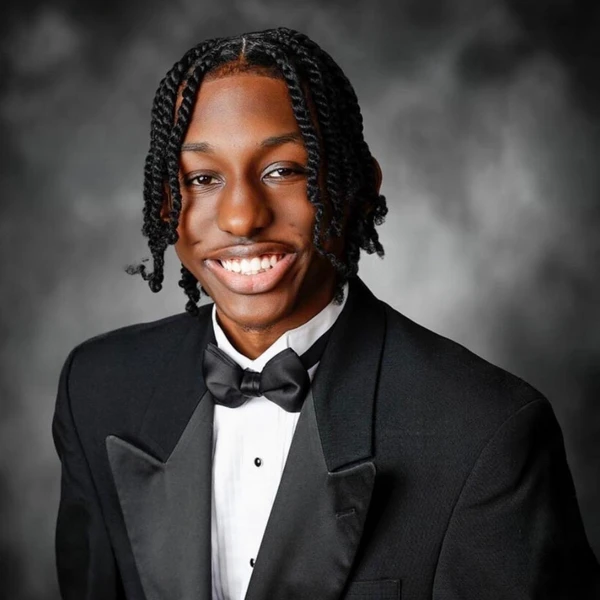
Jaylin Brown-Woodson
1x
Finalist
Jaylin Brown-Woodson
1x
FinalistBio
As a 17-year-old New Jersey native, my journey has been a whole lot of "take a leap of faith" moments. Getting a new scar from open-heart surgery and figuring out my learning disability taught me that setbacks aren't dead ends—they're just detours that make you stronger. I'm ready to transform that intense resilience into the focus I need for college, and I plan to use my story to uplift everyone around me and totally live up to the name of my future school.
Education
Hudson Catholic Regional Hs
High SchoolImmaculate Conception High Sch
High SchoolSaint Benedict's Preparatory School
High SchoolMiscellaneous
Desired degree level:
Bachelor's degree program
Majors of interest:
- Biology, General
Career
Dream career field:
- Medicine
Dream career goals:
Pediatric Cardiologist
Junior Camp Counselor
South Orange Township2026 – Present8 months
Sports
Track & Field
Junior Varsity2023 – 20241 year
Public services
Volunteering
Berkeley Elementary School — Track & Field Day Assistant Coach2023 – PresentVolunteering
Hackensack Meridian Mountainside Medical Center — Patient Transport2024 – Present
Future Interests
Volunteering
Marcia Bick Scholarship
Motivated and high-achieving students from disadvantaged backgrounds deserve access to scholarships and grants because the playing field is not level. In more affluent communities, students are surrounded by resources that make success more accessible. They often attend schools with updated technology, smaller class sizes, access to rigorous coursework, and opportunities like field trips that enhance learning. Many also have parents or networks that can connect them to internships, tutors, and academic support systems that further position them for success.
I have seen this difference firsthand. My mother is a sixth-grade teacher in Bloomfield, NJ, and the resources available in her classroom are vastly different from her friend’s sixth grade classroom just a few miles away in Newark. My mother has access to supplies, one-to-one Chromebook learning, and enrichment opportunities that can completely change a student’s educational experience. Students in more affluent areas are often already ahead of the curve, not necessarily because of ability, but because of access. Meanwhile, students from disadvantaged communities must work harder to reach the same starting line.
My own educational journey has shown me just how unequal access can be. At Saint Benedict’s Prep in Newark, I was exposed to opportunities that expanded my perspective; programs with Navy SEALs, golf caddying programs, and a strong alumni network that emphasized discipline, leadership, and long-term success. I have also experienced environments like Montclair, where classrooms had two teachers and students regularly went on field trips across New Jersey and New York. These differences are not about effort or potential, they are about access. And access shapes outcomes. In contrast, when I attended Irvington High School in my own town, there were not even enough teachers to consistently cover classes. At one point, my Spanish class was entirely self-taught online because there was no instructor available.
While in Irvington, I did not always have access to the same academic support systems as others. In addition, I was diagnosed with a learning disability in high school, which helped explain struggles I had faced for years. Instead of allowing these obstacles to define me, I made the decision to take accountability and push myself to improve. Through discipline and perseverance, I worked to strengthen my academic performance and earned achievements such as Honor Roll and Student of the Quarter.
Scholarships and grants are essential because they provide students like me with opportunities that might not otherwise be possible. They help bridge the gap between potential and access. Without financial support, many capable students are limited in their options, often forced to choose paths based on cost rather than ambition.
Receiving this grant would allow me to pursue my goal of studying Biology on a pre-med track without placing additional financial strain on my family. More importantly, it would allow me to focus on my long-term goal of becoming a cardiologist and giving back to underserved communities like the one I come from. I want to use my education to provide care, representation, and advocacy for patients who often feel overlooked.
Bick New Jersey Scholarship
New Jersey is the only place I have ever called home. Born and raised here all seventeen years of my life, I have grown up surrounded by the fast pace, diversity, and resilience that define this state. My roots run across Essex and Hudson counties; from living in Irvington, to attending schools in Montclair, Newark, and Jersey City, to going to church in Orange, my life has been shaped by the constant movement and energy of North Jersey.
Irvington, in particular, has taught me what it means to persevere. As a low-income community, resources are not always abundant, and challenges are a part of everyday life. Growing up in a single-parent household, I watched my mother work tirelessly as a public school teacher in both Newark and Bloomfield, doing everything she could to provide for me. Her sacrifices showed me the value of hard work, discipline, and pushing forward even when things are difficult.
One of the biggest challenges I have faced came from my health. At a young age, I was diagnosed with a congenital heart defect that eventually required open-heart surgery at fourteen. That experience changed my life. Balancing hospital visits, recovery, and school was overwhelming at times, and there were moments when I felt uncertain about my future. However, being treated at Newark Beth Israel Medical Center here in New Jersey gave me more than just medical care, it gave me a second chance at life. The doctors who cared for me not only helped heal my body, but also inspired me to pursue a future in medicine.
In addition to my health challenges, I was diagnosed with a learning disability in high school, which helped me understand academic struggles I had faced for years. Instead of letting it discourage me, I chose to take accountability and push myself to improve. Through discipline and perseverance, I was able to raise my academic performance and earn recognition such as Honor Roll and Student of the Quarter. These challenges taught me resilience and showed me that growth is always possible with the right mindset and support.
Growing up in New Jersey has shaped my goal of becoming a cardiologist and serving communities like the one I come from. I want to give back by providing quality healthcare to underserved populations and being a source of representation for patients who rarely see doctors who look like them.
I plan to stay right here in New Jersey and attend Kean University in Union. This scholarship would help ease the financial burden on my family and allow me to focus fully on my education as I pursue a Biology degree on the pre-med track. More importantly, it would be an investment in my future and in the communities I plan to serve.
Byte into STEM Scholarship
My journey has been shaped by my upbringing. I come from a single-parent household in Irvington, New Jersey, where my mother, a public school teacher in a Title I district, has sacrificed endlessly to support me. Watching her navigate financial challenges while still prioritizing my education instilled in me values of resilience, gratitude, and a deep sense of responsibility. I am grateful for everything she has given up for me, and I carry that with me in everything I pursue, because I will be honest, I have not always been the strongest student. For years, I struggled with focus, discipline, and academic performance without fully understanding why. It was not until I received a learning disability diagnosis my junior year in high school that things began to make sense. That moment forced me to reflect and face my weaknesses instead of avoiding them. I realized that while I faced challenges, they did not have to define my future. Through discipline, perseverance, and accountability, I committed to improving both personally and academically; a process that reshaped how I value growth, resilience, and self-awareness. With the support I had long needed, I am proud to have earned Honor Roll, Student of the Quarter, and First Honors, achievements that once felt out of reach.
But even more, before my disability diagnosis, at nine years old, my mother switched my pediatrician, and that single decision changed everything. What started as a suspected heart murmur turned into the discovery of collapsing pulmonary arteries, an anomalous left coronary artery, and eventually the need for open-heart surgery at fourteen. I refused at first. My cardiologist looked at me and said two words I have never forgotten: sudden death. I also live with scoliosis requiring surgery still ahead of me. Heart conditions. Scoliosis. Learning Disability. Three conditions. Years of unknowns. Years of struggling.
Rather than becoming a passive participant in my own story, I eventually became deeply engaged in understanding my condition. I asked questions, built relationships with my doctors, and found a sense of purpose in the process. This is what drives my passion for medicine. My educational and career goals are rooted in a desire to pursue science and use that knowledge to serve others. I plan to major in Biology on a pre-med track, with the intention of pursuing a career in cardiology or a related field; learning not only how the heart functions, but also how to diagnose, treat, and manage complex conditions. As I prepare to major in Biology, I am committed to intellectual growth, critical thinking, and lifelong learning, not just for myself, but so that I can better serve others.
I also recognized that very few doctors looked like me, which strengthened my desire to become a symbol of representation for under-served communities. My commitment to service reflects this purpose. I have served as a student leader, volunteered as a Junior Patient Transport at Mountainside Hospital, supported elementary students, and participated in community service through my church. These experiences reinforced my values of empathy, service, and connection.
Attending Morehouse College will be a critical step in achieving my goals. Its legacy of producing Black men who lead in medicine and service will provide the environment I need to grow academically and personally. Through my education and future career, I plan to serve under-served communities like my own, where patients are Black, Hispanic, Caribbean, or African, and where quality care is not always guaranteed. Representation, empathy, and advocacy are just as important to me as clinical skill. That is the kind of physician I am committed to becoming.
Dr. Michal Lomask Memorial Scholarship
At nine years old, my mother switched my pediatrician. That single decision changed everything. My new doctor noticed something during a routine visit and suspected a heart murmur, so she referred me to a cardiologist. What that cardiologist found was far more serious and required immediate attention; and from that moment forward, my childhood would never look the same.
The first discovery was my pulmonary arteries. They had grown so small they were on the verge of collapse. He also identified an anomalous left coronary artery, a defect in how one of my heart's main vessels was positioned. I couldn't walk to the end of my street without struggling to breathe. Before anything else could be addressed, I required cardiac catheterization interventions that placed four stents in my pulmonary arteries to help them grow back to their proper size and restore normal blood flow. But that was only the beginning. Once those interventions were completed, my cardiologist told us the next step was open-heart surgery. I was fourteen. And I refused. My anxiety was through the roof. I could not stop thinking about what it meant to be cut open; to be placed on a table and have someone operate on my heart. My cardiologist looked at me and said two words I have never forgotten: sudden death.
The medical challenges did not stop there. I was also diagnosed with scoliosis, a curvature of the spine that progressed despite attempts to manage it with back braces. The curve did not stop, and surgery has been recommended. That is still ahead of me: another chapter I will have to face and work through while pursuing my education and my goals.
On top of all of this, I have a learning disability that went undiagnosed until my junior year of high school. For years I struggled in the classroom without understanding why; falling behind, feeling misunderstood, and not having the language to explain what I was experiencing. When I finally received that diagnosis it gave me the tools to understand how I learn and the permission to ask for the support I had always needed.
Three conditions. Years of unknowns. A body that required fighting for before I even had the words to fight.
But I refused to be a passive participant in my own story. Every appointment with my cardiologist, Dr. Rowan Walsh at Newark Beth Israel Medical Center, I came prepared with questions. Some were medical. Some were the questions of a teenager who just wanted his life back; when could I ride a rollercoaster again, when could I return to track and field. Dr. Walsh never dismissed me. He explained what was happening inside my body in ways I could understand and treated me like someone whose voice in my own healthcare mattered. That experience taught me more about medicine than any classroom ever could.
These experiences shaped my career path. I am pursuing cardiology, and it didn’t come from an amazing high school biology teacher. It came from lying in a hospital bed, asking questions, and realizing I wanted to be the doctor who explains things clearly, listens without rushing, and makes a patient feel seen during one of the most frightening moments of their life. I looked around during my treatment and noticed that very few physicians looked like me. That observation became a calling. Black Americans face disproportionately high rates of heart disease, and yet Black cardiologists remain rare. I want to close that gap, not just by being present, but by bringing cultural competence, genuine advocacy, and deep personal understanding to every patient I serve.
Bobby and Kanesha Jones Scholarship
I will be honest, I have not always been the strongest student. President’s Day, Feb 19, 2024, my sophomore year in school, my mother had to come down to Saint Benedict’s Preparatory School for what felt like the one hundredth time to sit in the headmaster’s office and listen to how much I was struggling academically. Not listening to teachers. Catching an attitude. Eventually, receiving a learning disability diagnosis in high school helped explain struggles I had long felt but did not fully understand. But that diagnosis did not define me. It forced me to reflect and face my weaknesses instead of avoiding them. Through discipline, perseverance, and a commitment to growth, I had to hold myself accountable and commit to improving both personally and academically. Once I started receiving the support I never knew I needed, I am humbly proud to have earned Honor Roll, Student of the Quarter, and First Honors, an invitation to the National Society of High School Scholars and was thrilled when I earned my acceptance letter to Morehouse College. That redirection is what brought me to those doors and allowed me to push further than I once thought possible.
I come from a single-parent household in the low-income township of Irvington, New Jersey. My mother is a public school teacher in a Title I district who has invested everything into my education, health, and future. In addition to financial challenges, my family has faced ongoing medical expenses.
My career goal is to become a cardiologist; a dream that started with my own heart. I was born with a congenital heart defect and had open-heart surgery at fourteen. Navigating hospitals and recovery while keeping up with school was one of the hardest things I have ever done, but I did not let it deter me. Instead, I built a strong relationship with my cardiologist and became determined to better understand my own body. While I am grateful for the care I received, I recognized that very few doctors looked like me. That realization planted a seed: I want to be the representation I did not see and provide compassionate care to my community.
My goal is to serve underserved communities like the one I come from, where many patients are Black, Hispanic, Caribbean, or African, and where access to consistent, quality care is not always guaranteed. I want to be a physician who not only treats medical conditions but also advocates for patients who may feel overlooked or unheard. In my future career, I want to combine knowledge with empathy and cultural understanding, because that is how real change happens in healthcare and in the communities that need it most.
Morehouse College is the ideal place for me to begin this journey because of its legacy of producing Black men who are leaders in medicine, public service, and advocacy. Being surrounded by driven young men who challenge and support one another will strengthen me academically and personally, especially as I prepare to enter a field where representation is often limited.
To prepare, I have stayed active in service. I was chosen as a student leader at Immaculate Conception High School, served as a Junior Patient Transport volunteer at Mountainside Hospital, supported students at Berkeley Elementary School, and participated in Global Youth Day through my church. These experiences taught me patience, adaptability, and how to connect with others.
Representation, empathy, and advocacy are just as important to me as clinical skill. And that is exactly the kind of physician I am committed to becoming.