user profile avatar

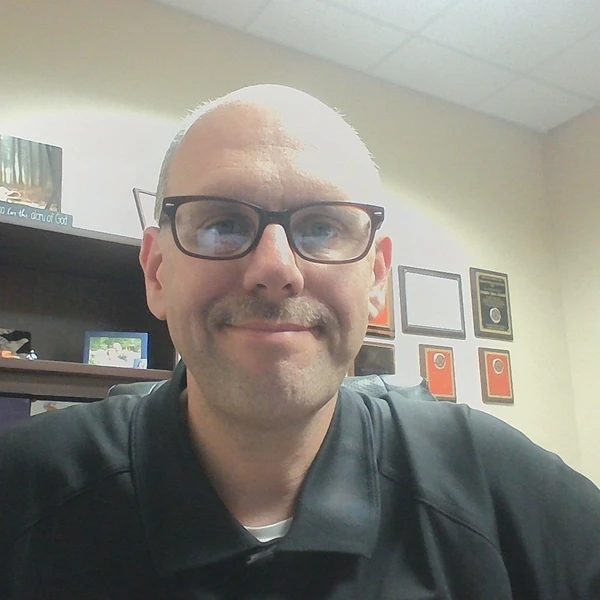
James Franklin

1x

Finalist

1x

Winner

Bio

Fire service runs in my blood. My father, grandfather, and great-grandfather were all firefighters, and I knew from childhood this was my path. Once I joined the department, I discovered a natural talent for public speaking and connecting with people, and that became my calling: protecting my community through fire prevention education, before an emergency ever happens. Today I serve as Fire Safety Educator for Newton County Fire Service in Georgia, supervising our educator team and managing the entire Fire Safety Education Division. Over 23 years, I've built a program rooted in partnership and prevention: working with the American Red Cross to install smoke alarms in high-risk homes, developing a life jacket loaner program at two local lakes, and securing over $500,000 in grant funding for prevention and education. I personally educate over 12,000 children each year. That work has real impact. In 2022, a child I had educated used what she learned to safely alert her family and evacuate during a house fire. Moments like that are why I've been named Firefighter of the Year three times and why Firehouse Magazine honored me with its 2026 Valor Award for community risk reduction. Now I'm ready for the next step. I've built my division and planned for succession, and I'm pursuing this degree to earn a promotion to Chief of Administration, expanding my influence and continuing to grow a prevention-focused culture across the department. This scholarship would help me take that step, for myself and the community I serve.

Education

Purdue University Global

Bachelor's degree program

2026 – 2028

Majors:
  • Homeland Security, Law Enforcement, Firefighting and Related Protective Services, Other
SUNY Broome Community College

Associate's degree program

1998 – 2000

Majors:
  • Fire Protection

Miscellaneous

Desired degree level:
Bachelor's degree program
Majors of interest:
Homeland Security, Law Enforcement, Firefighting and Related Protective Services, Other
Desired degree modality:
Online
Medical school interest:
No
English as first language:
Yes
Homeschooled:
No

Career

  • Fire Safety Educator/Firefighter

    Public Safety · Newton County Fire Services

    Jan 2003 – Present

Miscellaneous

Dream career field:
Public Safety
Dream career goals:
Chief of Administration
Work experience:
10+ years
Has nursing license:
No
Leadership experience:
Yes

Future Interests

  • Advocacy
  • Volunteering
Learner Math Lover Scholarship
I didn’t fall in love with math in a classroom. I fell in love with it on the fireground, where I learned that numbers can decide whether a crew goes home safe. I started in the fire service as a volunteer at seventeen, as a fourth-generation firefighter. Early on, I learned that pump pressure, hose length, nozzle size, and friction loss are not abstract. Get the math right and water reaches the fire with enough force to stop it. Get it wrong and people are in danger. That was the first time I saw math as a tool for protecting lives, not just a subject to pass. What I love most is that math gives you a way to think clearly when things feel chaotic. It teaches you to break a big, frightening problem into smaller pieces, test your assumptions, and trust evidence over instinct. After twenty-nine years in the fire service, I still rely on that habit every day. Today I work as a fire safety educator, and math has shaped that work too. Community risk reduction is built on data: which neighborhoods have the most fires, which homes lack working smoke alarms, and how much a prevention program lowers the odds of a tragedy. When I can show a family that a working smoke alarm greatly improves their chance of escaping a fire, a number becomes a reason to act. Math lets me turn good intentions into measurable results, and it helps me make the case for the programs and funding that keep a community safe. I also love that math never stops teaching. Every grant budget, every response-time analysis, and every risk assessment reminds me there is more to learn. As I continue my own education, I want to deepen those skills, because the better I understand the numbers, the better I can serve the people who depend on us. Math is logic, problem solving, and, in my world, a quiet form of protection. That is why I love it.
Arthur and Elana Panos Scholarship
When a firefighter on my crew lost his newborn baby to SIDS, and that baby died in my arms, something in me broke. I had been in the fire service since I was seventeen, a volunteer and the fourth generation of my family to answer that call, and I had seen hard things. Nothing had prepared me to hold a child who could not be saved, or to stand beside one of my own in the worst grief imaginable. The images followed me home, and over time they became post-traumatic stress that I could not outwork or ignore. My faith carried me through, and my wife carried me with it. Every day she prayed for me and with me, and she opened the Scriptures to meet me where I was hurting. Her biblical counsel reminded me that I was never meant to carry this alone. Psalm 34:18 became my anchor: “The Lord is close to the brokenhearted and saves those who are crushed in spirit.” I had never felt more crushed, and I had never felt God closer. My faith gave me a place to set the weight down and a reason to keep going when I wanted to quit. It also taught me humility, how to ask for help, and compassion for people who suffer, because I know what suffering feels like. That same faith led me into a life of service. As a fire safety educator, I teach families and children how to prevent the emergencies I once responded to. After seven years in that role, I now supervise other educators and manage our fire safety education program. I believe every person deserves to be protected and treated with dignity, and I try to serve every community member with honesty, patience, and care. For me, teaching someone to install a smoke alarm or plan an escape route is a way of loving my neighbor. My faith will shape my career in the same way. I am pursuing my undergraduate degree in fire and emergency management because I want to lead at a higher level: to build programs that reduce risk before tragedy strikes, to steward public resources responsibly, and to mentor younger firefighters who may someday face what I faced. I want to show them that asking for help is a strength and that serving others doesn't mean losing yourself. This scholarship honors two people who came to this country with nothing and built something lasting through hard work and integrity. I understand that spirit. I have built my career one day at a time, guided by faith and a commitment to doing the right thing when no one is watching. With this degree, I intend to keep building: stronger programs, stronger communities, and stronger people.
Eddie Hankins Medical Service Scholarship
I became a firefighter at seventeen, the fourth generation in my family to do so. At that age, I believed the job was about courage in the moment: the door you force open, the ladder you climb. Twenty-nine years in the fire service have taught me that the harder part comes afterward, in the quiet, when the calls follow you home. My struggle with post-traumatic stress did not come from a single event. It built slowly, call after call, through repeated exposure to death and scenes no one should have to see. Like many in my profession, I told myself it was part of the job and that strong people carry it silently. For a long time, I did. That silence cost me my health, my relationships, and the way I felt about the work I loved. What changed was admitting I needed help. I sought counseling and began medication, and I learned that asking for help is not the opposite of resilience. It is how resilience is built. Recovery hasn't been a straight line, and I don't claim it is finished. But it taught me patience with myself, honesty about my limits, and a conviction that no one in my profession should have to carry this alone. That conviction shaped what I did next. I set out to normalize mental health struggles in my fire department and started a peer support group, so firefighters could talk with people who understand before a hard season becomes a crisis. Speaking openly about my own experience was uncomfortable, but I have come to believe that a department’s culture changes when someone is willing to go first. Service has defined my life since I volunteered at seventeen. Today I am a Fire Safety Educator with Newton County Fire Service, where I deliver fire and life safety education, work with community partners on risk reduction, and supervise the educators who carry that mission into schools and neighborhoods. After twenty-three years as a professional, I have learned that the best emergency is the one that never happens. Prevention is compassion practiced in advance. Caring for the public and caring for the people who serve them have never felt like separate callings to me. They are the same work. That is why I am pursuing an undergraduate degree in fire and emergency management. I want to move into an administrative role, such as Chief of Community Risk Reduction, where I can shape programs that keep our community safe. While my job will focus on protecting the public, the wellness of the fire department community will always come first in my career. Responders cannot protect others if no one is protecting them. A chief who understands this firsthand can build budgets, policies, and a culture that treat mental health with the same seriousness as equipment and training. The legacy this scholarship honors, compassion for others and resilience in the face of what the work demands, is the legacy I hope to carry forward. Paramedic Eddie Hankins gave his career to helping people on their worst days. I hope to do the same and make sure the people who answer those calls are cared for, too.
Bulkthreads.com's "Let's Aim Higher" Scholarship
Building a Fire Department That Prevents Fires I want to build a community where fewer emergencies happen in the first place. For 29 years, I’ve served in the fire service, and for 23 of them I’ve done it professionally. Most of that time, I’ve seen how much of our work happens after something has already gone wrong. I respect that work deeply. My family has done it for four generations. But I have also seen what happens when prevention gets there first. In 2021, two days after we taught fire safety to every child in a school, a third grader woke to smoke at home and got her parents out. The house was lost, but all three of them were alive. That morning showed me what I want to build: a department where prevention is a leading priority, not an afterthought. My goal is to become Chief of Community Risk Reduction. In that role, I would build a division that studies the risks our community faces, such as home fires, drowning, and drought-driven brush fires, and then designs programs to reduce them. Our fire safety trailer reached 5,412 students in 2025. Our August canvassing found that 80 percent of the homes we visited had no working smoke alarm. Numbers like these show where the need is, and I want to build a system that uses them to guide every decision, from where to canvass to which classrooms to visit first. Part of what I’m building is people. I supervise fire safety educators now, and I want to develop more of them. A strong prevention program shouldn’t depend on one person. It should have trained staff, strong partnerships with schools, businesses, and agencies, and a funding base that lasts. I’ve already seen what’s possible, from securing a donated shed for a life jacket station at Lake Varner to partnering with Newton County Career Academy students on a second one. The most personal thing I’m building is my own education. I’m earning a fire administration degree at Purdue Global while working full-time. Experience has taught me how to do the work, but leadership requires skills in budgeting, policy, administration, and data that I want to master. I’m not waiting until I have every credential to lead. I’m earning them while I continue to serve. If I succeed, my community will benefit directly. More families will have working alarms, more children will know what to do in an emergency, and more of our neighbors will be safe in water, in their homes, and in the dry seasons ahead. I also hope I’ll leave behind a team and a system that keep doing this work long after I retire. This scholarship would help me finish my degree and carry this vision forward.
J&Y Law Yahouda Yahoudai Service Scholarship
Building a Community That Looks Out for Itself I believe a safe community isn’t something a fire department can deliver on its own. It’s built when schools, businesses, churches, senior centers, and neighbors all decide to look out for one another. For 29 years in the fire service, and now as Fire Safety Educator for Newton County Fire Service in Georgia, my work has been to bring those people together. The most visible part of that work is our fire safety trailer, which visits elementary schools across all five county commission districts. In 2025 it reached 5,412 students. This fall the schedule is full again, from September through November. I do this work with the support of Newton County Schools, and I rely on the same kind of cooperation with the Newton County Senior Center, the American Red Cross, and Newton County Water Resources, which helped me launch a “Drought = Higher Fire Risk” campaign when dry conditions made brush fires more likely. None of these partnerships happened by accident. Each took time, trust, and a willingness to ask for help on behalf of people who needed it. Working with local businesses has been just as important. When we needed a place to store life jackets for families at Lake Varner, I asked Home Depot to donate a storage shed for a Life Jacket Loaner Station, so any family could borrow a life jacket instead of going without one. I also worked with local State Farm agents to bring NFPA Fire Prevention Week education materials to local classrooms. Asking a business to invest in children’s safety is not always comfortable, but I’ve learned that most people want to help when they are shown how. I also care about the people who will carry this work forward. I supervise our fire safety educators, and I try to teach them what I’ve learned about speaking to children, earning a community’s trust, and treating every home and every classroom with respect. For our second life jacket station at Lake Varner, students from Newton County Career Academy will assemble the shed themselves. I want them to see that they can build something that may someday keep a child from drowning, and that service is a skill they can practice as young people. Teaching has also taken me beyond fire safety. I’ve taught CPR to 350 students at Providence Christian School and the Washington Street Community Center, giving them the ability to act in the first minutes of an emergency, which often matter most. All of this has taught me that I can do more good when I understand the work’s larger picture. That is why I’m earning a fire administration degree at Purdue Global while working full-time. I want to lead community risk reduction for an entire department, so that the partnerships and programs I’ve built can last beyond me. This scholarship would help me get there, and I would put every dollar toward the education that lets me serve my community better.
Michael Rudometkin Memorial Scholarship
How I Embody Selflessness I joined the fire service as a volunteer at seventeen, before I was old enough to understand what the work would ask of me. Twenty-nine years later, I understand it fully, and I still choose it. To me, selflessness means showing up where the need is greatest, especially for people who don’t know to ask for help. In August, my team canvassed neighborhoods in Newton County, Georgia, going door to door to check smoke and carbon monoxide alarms. We focused on senior citizens and low-income areas, because those households are the most at risk and the least likely to be able to afford a fix. We visited 57 homes. Eighty percent had no working smoke alarm, and 95 percent had no working CO alarm. We installed 303 smoke alarms and 79 CO alarms and taught 157 people what to do if one sounds. Behind each number is someone, often an older neighbor living alone, who went to bed that night safer than the night before. No one thanked me with a trophy. The reward was knowing that a family might get out in time. Helping people also means making room for the next person to help. In 2021, as schools reopened after the pandemic, I asked a principal to let us teach fire safety to every child from pre-K through fifth grade. She said yes. Two days after our class, a third grader woke to smoke in her home, remembered what she had learned, and got her parents out. The family of three escaped safely. The house was a total loss, but they were alive. I think about that morning often, and it reminds me that a small act of service can be multiplied by the people it reaches. My service extends beyond fire safety. I’ve taught CPR to 30 students at Providence Christian School and the Washington Street Community Center. I helped establish and maintain life jacket loaner stations at Factory Shoals Park, and I’m now working on a second station at Lake Varner, where students from Newton County Career Academy will help assemble the shed. I want young people to see that serving their community is something they can do right now, not just when they’re older. Perseverance matters here, because this work rarely comes easily. Prevention work is hard to measure, because success means something didn’t happen. I have asked for donations, written grant applications, and made my case to officials and business owners many times, sometimes hearing no before getting a yes. I’m also earning a fire administration degree while working full-time and supervising our fire safety educators. I believe in this work enough to keep learning how to do it better and to lead others in doing it. I don’t think of any of this as sacrifice. It’s what I was raised to do, as a fourth-generation firefighter, and what I choose again every day. This scholarship would help me finish my degree and prepare to lead community risk reduction for a whole department. Michael Rudometkin’s legacy was making time for people in need, and I hope to honor it by doing the same for as long as I’m able.
Champions Of A New Path Scholarship
Why I Deserve This Scholarship Most applicants will tell you what they hope to become. I can show you what I’ve already done, and what I’m still working to become. I am a fourth-generation firefighter. I started as a volunteer at seventeen, and I now have 29 years in the fire service, 23 of them as a professional. Today I’m the Fire Safety Educator for Newton County Fire Service in Georgia, where I manage our fire safety education program and supervise the educators who deliver it. My advantage is simple: I’m not guessing that this work matters, and I’m not guessing what a degree will let me do with it. In 2021, as schools reopened after the pandemic, I asked a principal to let us teach fire safety to every child from pre-K through fifth grade. She agreed. Two days after our class, a third grader woke up to smoke in her home. She remembered what she had learned, got her parents out, and all three of them escaped safely. The house was a total loss, but the family was alive. I can’t take credit for her courage. What I can say is that the program existed because someone was willing to ask for more, and that is the kind of impact I want to multiply. Experience has taken me far, but I have also learned what it can’t give me on its own. I’m enrolled at Purdue Global, working toward a degree in fire administration, and I’m petitioning for college credit for what I’ve already learned on the job. I’m doing this while working full-time, supervising a team, studying for promotional exams, and writing the grant applications that fund our prevention work. I know how to manage a demanding schedule and keep going when it gets heavy, because I’ve done it for decades. My goal is to become a Chief of Community Risk Reduction. Fire departments are very good at responding to emergencies, but the best fire is the one that never happens. Leading a department-wide prevention strategy takes more than field experience. It takes formal training in administration, budgeting, data, and policy, and that is what this degree will give me. I don’t have the advantage of being the youngest or the most polished applicant. My advantage is that I’m a proven performer who is investing in the next stage of a career already built on service. A scholarship given to me won’t be a bet on potential. It will go to someone who has a long record of results, a clear plan, and a community that depends on the work. Every dollar will go toward finishing the education that lets me protect more families, train more educators, and build prevention programs that outlast my own career.
Ethel Hayes Destigmatization of Mental Health Scholarship
What the Silence Cost Me, and What It Taught Me For most of my career, I believed strength meant carrying things quietly. I became a firefighter at seventeen, the fourth generation of my family to serve, and I learned early that you do the job, process nothing out loud, and go on to the next call. After many years of doing exactly that, I learned what the silence costs. How it changed my understanding of the world. I used to believe that the people who needed help were the ones I was sent to serve, and that I was there to give it, never to receive it. PTSD, anxiety, and depression taught me otherwise. Nightmares of calls I had responded to followed me home. Seeing loss of life, again and again, settled into a depression I couldn’t name. I now understand that those who run toward the worst moments of other people’s lives are not immune to them. Strength is not the absence of struggle. It is what you do when you finally admit you are struggling. How it changed my relationships. Mental illness was the quiet thief of my closest relationships. I pulled away from friends and family, telling myself I was protecting them from what I carried. In truth, I was shutting out the very people who could have helped me. The turning point came when my wife told me I was not the same person and that something had to change. It was hard to hear, and it was an act of love. She saw what I couldn’t, and her honesty gave me a reason to act. Getting help rebuilt those relationships. I saw a psychiatrist who diagnosed my PTSD, anxiety, and depression, and we set up a medication regimen. I also started counseling, which made a lasting difference. Having a name for what I was experiencing, and a safe place to work through it, brought relief I had not felt in years. Recovery has not been a straight line, but I have come a long way, and I am far more present with the people I love than I was. How it changed my aspirations. I spend my career teaching communities to prepare for emergencies. Recovery made me see that firefighters need preparation for the invisible kind too. Too many in my profession stay silent because they fear looking weak in front of the people they trust with their lives. I know that fear, because I lived it. So I started a program in my department to help fellow firefighters break the stigma of asking for help. Today, our department offers peer support and works with local counselors to connect firefighters with the care they need, so that reaching out becomes a normal step instead of a last resort. That experience has shaped where I want to go next. I am pursuing a fire administration degree because I want to move into leadership, with the goal of serving as Chief of Community Risk Reduction. In that role, I want to build prevention into every part of how a fire service protects people, and that includes protecting its own. A community is safer when the people who serve it are well, and a department that treats mental health as part of readiness will save more lives, including its own members’. My vision is a fire service where no one waits as long as I did. I want a culture where a firefighter can say “I’m struggling” as easily as “I need backup,” and where family members never have to be the first to notice. Stigma survives on silence, and I have seen how quickly it weakens once people start talking. This scholarship would help me finish the degree that prepares me to lead that change, and it honors the same belief I hold: bringing mental health into the open saves lives. I know now that asking for help was not the end of my strength. It was the start of using it for something that matters.
Priscilla Shireen Luke Scholarship
In 2021, as our community was coming out of the pandemic, I asked a school principal to let us expand our fire safety program to every child from pre-K through fifth grade, so that no child missed this critical training. The principal agreed. Two days after our class, a third grader who normally would not have been included woke to smoke in her house. She ran to her parents' bedroom and insisted they get out, because that is what I had taught her to do. The family escaped safely. The house was a total loss, but three lives were saved by one lesson. I think about that morning often, because it captures why I do this work and how I try to give back. I became a firefighter at seventeen, as a volunteer, because that is what my family does. I am a fourth-generation firefighter, and I grew up understanding that service isn't something you do when it's convenient. It is something you show up for at any hour. Nearly three decades later, that lesson still shapes everything I do. Today I serve as a Fire Safety Educator with Newton County Fire Service in Georgia, where I supervise a team of educators and manage our fire safety education program. The work is less visible than a response to a structure fire, but I believe it matters just as much. The best fire call is the one that never happens. My team and I teach children, families, and older adults how to prevent fires and what to do if one starts: how to test a smoke alarm, how to plan and practice an escape, and how to spot risks in a home before they become emergencies. We partner with schools, community organizations, and local agencies to reach people who might otherwise never hear this information. And I mentor the educators I supervise, because a program is only as strong as the people who carry it into the community. That third grader taught me something too: reach matters. She would have missed the lesson if I hadn't asked for more. Since then, I have tried to ask for more in everything I do, whether that means a bigger audience, a better program, or a stronger partnership. My plans for the future build on that. I am pursuing a degree in fire science and emergency management, which allows me to formalize decades of hands-on experience. I want to deepen my understanding of community risk reduction, data-driven planning, and grant funding so I can bring prevention programs to the people who need them most. I want to build and sustain those programs, not just deliver them. Longer term, I hope to help other fire departments, especially smaller and under-resourced ones, develop their own prevention and education programs, and to train the next generation of educators to lead them. To me, service means leaving behind systems that keep working after I'm gone. Priscilla Shireen Luke spread hope to those around her. In my own way, I try to do the same, by giving people the knowledge and tools to protect what matters most to them. This scholarship would support my education and, through it, my ability to reach more families like that one.
Elijah's Helping Hand Scholarship Award
For 29 years, I have answered the calls other people hope they never have to make. For a long time, I believed that carrying what I saw was simply part of the job. I was wrong, and it strained the relationships I value most. It didn't happen all at once. Calls I had responded to followed me home as nightmares. Seeing loss of life again and again settled into a depression I didn't have a name for. Anxiety kept me on edge. Slowly, I pulled away from my friends and family, telling myself I was protecting them from what I carried. In reality, I was shutting them out. The turning point came when my wife told me I wasn't the same person and that something had to change. It was one of the hardest things I have ever heard, and one of the most loving. She was right. In a profession built on being the one who helps, I had to admit that I needed help myself. Asking for it was harder than any call I have run. I saw a psychiatrist who diagnosed PTSD, anxiety, and depression, and we set up a medication regimen. I also began counseling, which made a lasting difference. Having words for what I was experiencing, and a safe place to work through it, gave me something I hadn't felt in years: relief, and a path forward. Recovery has not been a straight line, but I have come a long way. What I did not expect was how much it would change my sense of purpose. I spend my career teaching people to prepare for emergencies, and I realized firefighters need preparation for the invisible kind too. Too many of us stay silent because we fear looking weak to the very people we trust with our lives. I know that silence firsthand. So I started a program in my department to help fellow firefighters break the stigma of asking for help with mental health struggles. Today, our department offers peer support and works with local counselors to connect firefighters with the help they need, so that reaching out is a normal step instead of a last resort. My goal is simple. No firefighter should have to face this alone or wait as long as I did. If even one person reaches out sooner because of this program, it is worth it. To me, perseverance is not never falling. It is being willing to say "I need help" and then doing the work. I am still doing that work, and now I am helping others do it too. This scholarship would support my fire administration degree, which will prepare me to lead this effort on a larger scale, so the next generation of firefighters inherits a culture where taking care of your mind is as normal as taking care of your gear.
Trees for Tuition Scholarship
I became a firefighter at seventeen as a volunteer, the fourth generation in my family to serve. Twenty-nine years later, I know the most important work in the fire service happens before anyone calls 911. Today, as a Fire Safety Educator and program supervisor at Newton County Fire Service, I spend my days teaching people how to stay safe. I lead community fire and life safety education, supervise a team of educators, and partner with schools, businesses, and neighborhood organizations to reduce risk. I also write grant proposals to secure funding for prevention work, including one to put fire safety books in the hands of Newton County students. In 2021, as we were coming out of the pandemic, I asked a school principal to let us expand our fire safety program to every child from pre-K through fifth grade, so that no child missed this critical training. The principal agreed. Two days after the class, a third grader who normally would not have been included woke to smoke in her house. She ran to her parents' bedroom and insisted they get out, because that is what I had taught her to do. The family escaped safely. The house was a total loss, but three lives were saved by one lesson. That story is why I keep going. Education changes outcomes, and after 23 years in this field, I have also seen the cost when those lessons never reach people. I am now pursuing a fire administration degree at Purdue Global because I want to multiply my impact. Good programs depend on strong leadership, sound budgeting, data-driven risk assessment, and stable funding. My experience taught me the work, and a degree will give me the formal training to lead it on a larger scale. After graduating, I plan to pursue a leadership role as Chief of Community Risk Reduction, where I can expand school-based education and smoke alarm programs, secure the funding to sustain them, and mentor the next generation of fire safety educators. Newton County is growing quickly and is home to major commercial and industrial facilities and a diverse population. Risk reduction has to keep pace, and the people leading it need both field experience and formal administrative training. I intend to be one of them. I will also keep volunteering my time, because service is not just a job title to me. It is how I was raised. This scholarship would remove a real barrier. My spouse is a teacher, and I am a public servant, and money has never been the reason either of us chose our profession. But I work full-time while pursuing my degree and paying tuition out of pocket, and with bills mounting, that has put real strain on our household. With this support, I can focus on finishing my degree and put what I learn back into the community I have given my life to serving.
Neetu Watumull Scholarship Program for Those Who Serve Managed by Rupa Shah
I began serving in the fire service at 17 as a volunteer firefighter. As a fourth-generation firefighter, this work runs in my blood; it's all I ever wanted to do. At 23, I started my career as a professional firefighter, and over the next 17 years I worked my way through the ranks, learning every layer of what it means to protect a community. In 2019, I was promoted into the fire prevention bureau as a fire safety educator. This is where I feel I've truly left my mark. For most of my career, my job was to respond after something had already gone wrong. As an educator, I get to work upstream of the emergency, teaching children, families, and businesses how to prevent fires before they start. Watching a family install a smoke alarm or a classroom of kids rehearse an escape plan has a different kind of impact than pulling a hose line, but it's just as real, and it compounds. Every home that doesn't burn, every life that isn't lost, is proof that prevention work matters. My faith has shaped how I carry out this service. It calls me to care for my neighbors in tangible ways, and educating my community is one of the clearest expressions of that calling I've found. It brings me genuine joy to know that the time I spend teaching fire safety today may be the reason a family never has to face a fire tomorrow. Now, as I pursue further education in fire science, I'm working to sharpen the tools I bring to this mission, so I can keep serving Newton County, one prevented emergency at a time.
Sweet Dreams Scholarship
Winner
The story that changed mine belongs to a little girl I never expected to hear from again after a single classroom visit. I had spent maybe an hour with her class, teaching the basics: check your smoke alarms, know two ways out, get low and go. It was routine work, one of thousands of visits I've made over 23 years as a fire safety educator. Then, just two days after that class, her house caught fire. She remembered what I'd taught her, safely alerted her family, and got everyone out. That moment changed how I see my own work. I had always believed prevention mattered, but she proved it, in the most literal way possible. Her story reminds me constantly that the quiet, unglamorous work of education is not separate from lifesaving, it is lifesaving, it just happens before the emergency instead of during it. That lesson shapes how I see problems in my community, too, ones most people walk past without noticing, because they don't announce themselves the way a fire does. The first is invisible until it's too late. Homes, often belonging to elderly residents or lower-income families, without a single working smoke alarm. People drive past these houses every day and see nothing wrong. I see a five-minute fix that never gets made because no one asked, or no one could afford it. Where I have the resources, through grant funding and partnerships like the American Red Cross, I've installed alarms directly in high-risk homes rather than waiting for people to come ask for help. The second is our local lakes, where drownings happen every summer, often among families who simply didn't have access to a life jacket in the moment they needed one. Most people see a lake and think of recreation. I see a resource gap, one solvable with something as simple as a loaner station, which is why I built one at two lakes in our county. It's a small structure with an outsized effect: it puts a life jacket within arm's reach of a family who doesn't own one. The third is harder to see because it hides behind a uniform. First responders, myself included, carry the psychological weight of this job in silence, because our culture rewards toughness over honesty about struggle. I live with anxiety and PTSD from 23 years in this field, and for a long time I said nothing, assuming that was simply the cost of the badge. Most people never think about what a firefighter carries home after the call ends. I started a peer support program in my department because I refused to let colleagues suffer the way I once did, quietly and alone. What connects all three is the same thing that connects a single classroom visit to a family surviving a house fire: the belief that the resources to solve a problem are worthless if they never reach the person who needs them. If I had more resources, I would keep closing that gap, more alarms in more homes, more life jackets at more lakes, more support available before a crisis instead of after one. That is the work I want to keep building, and the reason I'm pursuing further education now: to lead these efforts at a scale big enough to match the size of the problems I see every day.
Elizabeth Schalk Memorial Scholarship
I've lived with anxiety for as long as I can remember. It was present long before I ever put on a uniform, quietly shaping how I moved through the world as a child and young adult. What I didn't expect was that a career built around helping others through crisis would deepen that struggle rather than resolve it. Over 23 years in the fire service, the accumulated weight of what firefighters see and carry, the calls that don't leave you, the moments you can't unsee, developed into PTSD. Both conditions are ongoing. I don't say that as a confession, but as a fact of my life that I've had to learn to work alongside, not around. For a long time, like many in this profession, I didn't talk about it. The fire service has a culture built on strength and stoicism, where showing vulnerability can feel like admitting weakness, and mental health struggles can feel like something to hide rather than share. I spent years believing that pushing through in silence was simply part of the job. But living with anxiety and PTSD has given me something I wouldn't trade: a deep, personal understanding of what it costs to serve, and an empathy for others carrying the same weight, often silently, behind a uniform that says everything is fine. That empathy became purpose. I started a firefighter peer support program in my department because I knew firsthand how isolating it can feel to struggle in a profession that prizes toughness. The program gives responders a confidential, judgment-free way to talk to someone who has been where they are, before a crisis becomes a breaking point. Building it meant having honest conversations with leadership about a topic our culture had avoided for decades, and it meant being willing to let my own experience inform how the program was shaped. Watching colleagues use that program, watching people take the first step toward getting help because someone made it feel safe to ask, has been some of the most meaningful work of my career, and it exists because of what I've lived through, not in spite of it. This experience has also shaped where I want to take my career next. My professional path has centered on fire safety education and community risk reduction, teaching the public how to prevent harm before it happens. But I've come to see mental health support as an equally critical form of prevention, one aimed inward, at the people who do this work every day. I'm pursuing a degree in fire administration because I want a stronger voice in shaping department policy, including how we support the mental health of the people who serve. Firefighters are trained extensively to protect the public from physical harm; I believe just as much investment needs to go into protecting responders from the psychological toll of the job, long before that toll turns into a crisis. I want to be one of the people pushing that priority forward at a leadership level, where policy and funding decisions are made. Anxiety and PTSD are part of my story, but they haven't defined its ending. They've shaped my empathy, my sense of purpose, and the direction I want my career to take. My hope is to keep building programs, both for the public I've spent my career educating and for the responders who serve alongside me, that make it a little easier for the next person to ask for help before they reach a breaking point. That, to me, is what turning a personal struggle into something meaningful looks like.
Debra S. Jackson New Horizons Scholarship
My decision to return to school at 46 wasn't sparked by a single dramatic moment so much as a gradual pull I couldn't ignore. Over the past several years, as I built and led our fire safety education division, I found myself increasingly drawn toward the administrative side of the work: the strategy behind programs, the policy decisions that shape what a department can offer, the leadership that determines whether good work is sustained or lost when one person moves on. I realized that the next chapter of my impact wouldn't come from doing more myself, but from building systems and leading people who could do even more than I had. If there's a moment that crystallized this shift in values, it was in 2022. A child I had personally educated used the fire safety knowledge she'd learned just days earlier to safely alert her family and get everyone out of their burning home. That moment didn't just confirm that my work mattered, it changed how I thought about scale. One conversation, one classroom visit, had rippled out to save an entire family. I began to ask myself: what would it look like if I could shape that kind of impact not just for the children I personally reach, but across an entire department, an entire county, through policy, funding, and leadership decisions? That question has stayed with me ever since, and it's what ultimately pushed me to pursue a degree at this stage of my career and my life. Over 23 years in the fire service, I've built partnerships with organizations like the American Red Cross to install smoke alarms in high-risk homes, developed a life jacket loaner program at two local lakes to prevent drownings, and secured over $500,000 in grant funding for prevention programs. I now supervise our team of educators and reach over 12,000 children a year. But I've also seen the limits of what I can do without a seat at the administrative table. Grant applications get stronger with formal training behind them. Policy conversations carry more weight with credentials to back up decades of field experience. Returning to school is how I close that gap. My goal is to earn a promotion to Chief of Administration, where I can expand prevention-focused programs, shape department policy, and make sure the culture of community risk reduction I've spent my career building outlasts any one person, including me. Going back to school later in life hasn't been the easiest choice, balancing coursework with a demanding, decades-long career takes discipline, but it's the clearest expression of the values that have guided me all along: that service means preparing others, not just responding in the moment. This scholarship would directly support that goal. It would ease the financial pressure of pursuing a degree while working full-time, and it would let me focus more fully on translating what I've learned in the field into the credentials and knowledge I need to lead at a higher level, so the next child, and the next generation of educators, benefit from an even stronger program than the one I inherited.
Brian Chellios Memorial Scholarship
To me, belonging to the fire service means accepting a responsibility that doesn't end when the shift does. It's a calling passed down in my family through three generations before me, my father, grandfather, and great-grandfather all wore the uniform, and I knew from childhood it would be mine too. After 16 years on the job, I discovered my own way of serving wouldn't just be through the truck bay, but through the classroom. I found I had a talent for reaching people with words, and I realized prevention could save as many lives as response. That discovery became my mission: protecting my community before the emergency ever happens. To make it in the fire service, I believe you have to measure yourself by lives changed, not just rank earned. Over 23 years as a firefighter and now fire safety educator, I've built partnerships with organizations like the American Red Cross to install smoke alarms in high-risk homes, developed a life jacket loaner program at two local lakes to prevent drownings, and secured over $500,000 in grant funding to expand our prevention programs. I now lead our division and supervise our team of educators, reaching over 12,000 children with fire safety education every year. That work has been recognized with three Firefighter of the Year awards and, in 2026, Firehouse Magazine's Valor Award for community risk reduction, honors I see less as personal achievements and more as proof that prevention work matters as much as response work. The impact of that work is not abstract. In 2022, a child I had educated used what she learned when fire broke out in her own home, she safely alerted her family and got everyone out. That moment is what making it in this career actually looks like: preparation meeting a moment that matters, years before it arrives. Making it also means never being finished. I've spent my career building something lasting, a program, a team, a culture of prevention, and now I'm pursuing my degree to carry that work further, into a Chief of Administration role where I can shape policy and expand prevention efforts across my entire department. Belonging to the fire service means showing up for your community for the long haul, through the calls that make headlines and the quiet, unglamorous work of teaching a child to check their smoke alarm. Making it means making sure that when you eventually step back, the community is safer than when you started.
James Franklin Student Profile | Bold.org