Chicago, IL
Hobbies and interests
Advocacy And Activism
Law
Public Policy
Community Service And Volunteering
Reading
Science Fiction
Historical
Education
Law
I read books multiple times per month
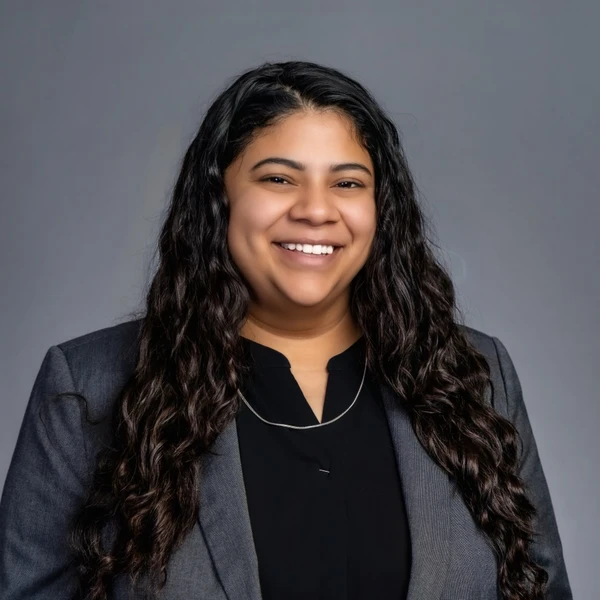
Jasmine Flores
5x
NomineeJasmine Flores
5x
NomineeBio
I am a first-generation law student at Northwestern Pritzker School of Law. I am dedicated to transforming the legal system from a barrier into a bridge for marginalized communities. As a Central American Latina raised in Compton, I grew up navigating systems that were rarely designed with my community in mind. These early experiences defined my mission: to be the first in my family to enter a courtroom not as a defendant, but as a fierce and informed advocate.
Currently, I am immersed in my 1L year, focusing on the foundational doctrines of contract law, civil procedure, and torts to build the technical expertise required for high-level public interest work. My education is more than a personal achievement; it is a tool for systemic change. I am committed to expanding access to justice and ensuring that the law serves as a shield for those it has historically overlooked.
My ultimate goal is to practice public interest law, specifically empowering disenfranchised youth to rewrite their own stories. By providing the representation and advocacy they deserve, I aim to prove that our beginnings do not have to dictate our endings.
Education
Northwestern University
Doctoral degree program (PhD, MD, JD, etc.)Majors:
- Law
California State University-Sacramento
Bachelor's degree programMajors:
- Political Science and Government
- Criminal Justice and Corrections, General
Miscellaneous
Desired degree level:
Doctoral degree program (PhD, MD, JD, etc.)
Graduate schools of interest:
Transfer schools of interest:
Majors of interest:
Career
Dream career field:
Law Practice
Dream career goals:
Open up a non-profit agency for justice involved youth
Program Coordinator
Los Angeles Superior Court2023 – 20252 yearsSite Lead
GEAR UP - Bridge2020 – 20222 yearsJudicial Fellow
Los Angeles Superior Court2022 – 20231 yearProofreader
Office of Legislative Counsel2018 – 20213 years
Sports
Soccer
Club2010 – 20166 years
Research
Educational Assessment, Evaluation, and Research
Los Angeles Superior Court — Researcher2022 – 2023
Arts
various - Los Angeles
Ceramics2021 – 2025
Public services
Advocacy
Street Law — Provide students with an interactive & engaging discussion to make laws accessible. Cover topics such as tenant rights, employment discrimination, & searches and seizures. Students become equipped to be civically engaged & informed citizens.2025 – PresentVolunteering
Greater Chicago Legal Clinic — Assist in completing documents for individuals to expunge or seal criminal records in Cook County2026 – PresentVolunteering
Illinois Free Legal Answers — Through legal research and memo drafting, I help increase access to advice and information about non-criminal legal matters for low-income residents.2026 – PresentVolunteering
Kappa Delta Chi — As the volunteer coordinator, I coordinated weekly and monthly volunteer opportunities. I acted as the primary liaison, managing volunteer databases, coordinated assignments for events, and ensured volunteers felt recognized and motivated.2018 – 2021Advocacy
CSUS College Democrats — Supported over ten local and state campaigns through weekly canvassing. Met weekly discuss campaigns, volunteerism, community outreach, fundraising and political activism.2017 – 2021
Future Interests
Advocacy
Politics
Volunteering
Philanthropy
Entrepreneurship
Jack Saunders Memorial Scholarship
The biggest challenge I have faced did not happen in a single moment. It accumulated over years, in a home shaped by my father's addiction. He turned to drugs and alcohol to cope with the trauma he faced throughout his life. By the time I was old enough to understand what was happening, he had been cycling in and out of jail for years.
By sixteen, I had stopped going to school and was slowly losing my way. I wasn't thinking about the future. I was thinking about getting through the day. The turning point came when I was caught writing graffiti on school property. When my mom found out, the stress sent her to the emergency room. I remember standing at her bedside feeling the full weight of what I had been doing, not just to myself, but to her. She had already survived so much. Watching her in that hospital bed, I couldn't pretend anymore that my choices weren't hurting people I loved. Something shifted. I decided I didn't want to keep walking the path I was on, and for the first time, I confronted the direction my life was heading.
What followed was slow. I returned to school, worked to rebuild my record, and started paying attention to the world around me differently. Through reflection and therapy, and eventually a PTSD diagnosis, I came to understand that my father's addiction was rooted in trauma that preceded me. He turned to substances to cope with war and displacement, long before I was born, in a country he had no choice but to leave. I stopped seeing his story as something that had happened to me and started seeing it as something that had happened to him first. That shift made it possible to move forward without the weight of resentment pulling me back.
That clarity extended outward. I began to see the systems underneath the surface of my neighborhood: how schools were resourced, how young people ended up in courtrooms, how policies made in rooms far from Compton shaped what was possible for people like my father and me. That curiosity eventually led me to a Judicial Fellowship at the Los Angeles Superior Court, where I researched recidivism among youth in Teen Court and supported Spanish-speaking families navigating proceedings most of them didn't fully understand. That work made clear what I wanted to do with my life.
That understanding is what pointed me toward law. I kept thinking about all the moments where a different intervention could have changed the trajectory for my father, for me, and for the people I grew up around. Law felt like a way to be present at those moments, through advocacy, education, or direct representation, and to fight for the idea that no one should be defined by one moment or one mistake. That belief became a framework for everything that followed.
I am now a first-year student at Northwestern Pritzker School of Law, focused on juvenile justice and public interest work. I am finding ways to stay connected to the communities I come from. I participate in Street Law and pro bono work including expungement clinics, where I sit across from people navigating a system that has too often treated them as disposable. That work keeps me honest about why I am here. Getting here required breaking a pattern that had defined my family for generations. I do not take that lightly, and I do not intend to waste it.
Ella's Gift
When my father fled El Salvador during the Civil War, he left behind repression and violence, but the trauma came with him. He had turned to drugs and alcohol to survive the journey, and by the time he arrived, the addiction had taken hold. By the time I was old enough to understand what was happening in our home, he had been cycling in and out of jail for years. The United States was supposed to be the escape for our family, but it wasn't. Growing up in that environment took a toll on me in ways I couldn't articulate at the time. I didn't have the words for what I was carrying. I was also quietly figuring out that I was queer, in a home and community that didn't have much space for that. I just knew that school felt pointless and that the people around me were making choices that numbed the same pain I felt, so I was starting to follow their lead.
By sixteen, I had stopped going to school and slowly started losing myself to drugs. I wasn't thinking about the future. I was thinking about getting through the day. The turning point came when I was caught writing graffiti on school property. When my mom found out, the stress sent her to the emergency room. I remember standing at her bedside feeling the full weight of what I had been doing, not just to myself, but to her. She had already survived so much. Watching her in that hospital bed, I couldn't pretend anymore that my choices weren't hurting people I loved. Something shifted. I decided I didn't want to keep walking the path I was on, and for the first time, I confronted the direction my life was heading.
What I understood later, through years of therapy and eventually through a PTSD diagnosis, was that I had been living out my father's story in a different chapter. He turned to substances to cope with war and displacement. I turned to them to cope with the chaos his addiction created at home. That parallel took a long time to sit with. It didn't make my choices easier to explain, but it made them easier to understand, and understanding them was the first step toward doing something different. I stopped seeing his addiction only as something that had happened to me and started seeing it as something that had happened to him first, long before I was born, in a country he had no choice but to leave.
That understanding is what pointed me toward law. I kept thinking about all the moments where a different intervention could have changed the trajectory for my father, for me, and for the people I grew up around. Law felt like a way to be present at those moments, through advocacy, education, or direct representation, and to fight for the idea that no one should be defined by one moment or one mistake. That belief became a framework for everything that followed.
It became clearest during my time as a Judicial Fellow at the Los Angeles Superior Court, where I researched recidivism among youth who participated in Teen Court. Through that work, I saw how young people respond when they receive guidance and accountability instead of exclusion. Too many are pushed from classrooms into courtrooms because they lack resources, stable support systems, or advocates who understand their circumstances. I want to challenge the policies that contribute to that pipeline.
I am now a first-year student at Northwestern Pritzker School of Law, focused on juvenile justice and public interest work. I want to work at the intersection of law, mental health, and substance abuse policy to build systems that intervene early and treat the root causes of the behavior that lands young people in court. I know what it looks like when no one intervenes. I also know what it looks like when someone does.
Managing my recovery is ongoing and intentional. It means staying connected to community, including queer and Latina spaces, and showing up for people navigating the same instability I grew up in. It means staying honest about the patterns I grew up inside, and maintaining therapy as part of that work, because intergenerational trauma doesn't disappear just because you recognize it. Law school is part of that plan too. Having a purpose that is directly tied to the people and places I come from keeps me grounded in a way that nothing else does. I carry my father's story with me not as a burden but as a reminder of what recovery can look like, and what it costs when it doesn't happen. I intend to spend my career making sure fewer families have to pay that cost.
Dr. G. Yvette Pegues Disability Scholarship
Navigating school with invisible disabilities often means carrying struggles that others cannot see. For much of my life, I believed the difficulties I experienced in school were a personal failure. I worked longer hours, pushed myself harder, and assumed that if I just tried enough, I could overcome the constant feeling that I was falling behind. It was not until college that I was finally diagnosed with attention-deficit/hyperactivity disorder (ADHD) and complex post-traumatic stress disorder (C-PTSD).
Before receiving those diagnoses, I often blamed myself for the ways I struggled in academic settings. Concentrating during class often felt overwhelming and out of reach. My thoughts moved faster than I could organize them, and anxiety and hypervigilance made it difficult to feel fully present. For years, I believed the solution was simply to work harder than everyone else.
Receiving my diagnoses changed how I understood those experiences. For the first time, I had language to explain why certain environments felt so difficult to navigate. I began to understand that the barriers I faced were not a reflection of my intelligence or work ethic, but the result of navigating trauma and neurodivergence in institutions that were not designed to support students like me.
Learning how to advocate for myself was its own challenge. Accessing disability accommodations required navigating unfamiliar systems and asking for support in environments where mental health and neurodiversity are often misunderstood. Within many Latino families, including my own, conversations about trauma, disability, and mental health are often stigmatized or avoided altogether. Struggling in school is sometimes interpreted as a lack of discipline rather than a signal that someone may need support.
Speaking openly about my experiences required vulnerability, but it also helped me understand the importance of representation and advocacy. I have seen gradual progress as more students and educators begin to speak openly about neurodiversity and trauma. These conversations help create environments where students feel less isolated and more empowered to seek the support they need.
Now, as a first-generation law student at Northwestern Law, I carry these lessons with me. My experiences navigating ADHD and C-PTSD have deepened my commitment to advocating for marginalized communities. Many individuals who face educational inequities or involvement with the justice system are also navigating trauma, mental health challenges, or disabilities that remain unseen and unsupported.
Through my legal career, I hope to advocate for policies and institutions that better recognize the role trauma and disability play in shaping people’s experiences. Living with invisible disabilities has required resilience, but it has also given me empathy and perspective. I intend to use that perspective to help build more inclusive systems and ensure that students and communities facing similar barriers are not left to navigate them alone. I hope to advocate for policies and legal frameworks that recognize the role trauma and disability play in shaping people’s experiences within institutions.
I want to help build systems that recognize human dignity and provide the support necessary for individuals to thrive. Living with invisible disabilities has required resilience, but it has also given me a deeper understanding of the barriers many students face. I intend to use that perspective to advocate for more inclusive institutions and expand opportunities for communities that have historically been overlooked.
Margot Pickering Aspiring Attorney Scholarship
By the time I was sixteen, I had seen the inside of a courtroom more times than I could count. Half of my family members were in and out of the system, and I was going down the same road at one point. I was mimicking the patterns I was seeing at home and in my community. Like so many that came before me, the zip code I was born into was dictating my destiny and turning me into another self-fulfilling prophecy.
I grew up listening to my parents’ stories of violence and instability back home, but in many ways, those issues persisted for us here in the United States. My father fled the repression and violence of the Salvadoran Civil War, but on his journey to the United States, he turned to drugs and alcohol to cope with his trauma. At eighteen, my mother fled a domestically abusive relationship but entered another one with my father. For years, I watched my father’s substance abuse issues destroy his ability to be a parent, result in years of incarceration, and create an abusive monster. I nearly lost my father to the criminal justice system and struggled with the possibility of losing my mother to the immigration system as she sought a path to citizenship.
My parents, who both came to this country to escape the violence in their communities, created a household rampant with violence, abuse, and neglect. When I came out as queer, my situation at home became even more unsafe. My hostile home and school environment subsequently led me to become involved with the wrong influences, thus beginning my disregard for school and myself.
My apathy for school was challenged once I was caught writing graffiti on school property when I was sixteen. When my mom found out, her body could not take the stress, and she ended up in the emergency room. I became overwhelmed with guilt as I stood by my mother's bedside in the hospital. Witnessing her pain, I was forced to reflect on my choices and the damage I was causing. I knew I did not want to follow the same predictable road of criminality and pain as my father. I wanted to create a different future for my mother, siblings, and myself. So, I chose to go down a different road full of change, reform, and freedom.
I vowed to be the first in my family to step into a courtroom, not as a defendant, but as an aid in providing justice for all. I have done exactly that during my time working for the Los Angeles Superior Court. I have learned that the criminal justice system, despite its many flaws, has the potential to do more than just punish. I see now that the law can help victims and vulnerable individuals. I aspire to continue being part of that positive impact as an attorney.
My personal experiences shaped me into someone who works toward creating more equitable systems for underserved and marginalized communities. The challenges I faced have shaped my desire to change the systems that failed me and so many others. I want to be the advocate I never had to ensure that the law works to uplift others, not oppress them.
My path has not been linear, but each step has strengthened my resolve to fight for those who cannot speak up for themselves. I bring a unique set of perspectives and skills to the legal profession. My combined experiences as a queer, Central American, Latina from Compton have given me the strength to become adaptable, thrive in the face of stigma and discrimination, and be accustomed to unpredictability. I am determined to use my lived experiences and resiliency to help others overcome similar barriers.
My next step in life is going to law school, but the law has been with me since childhood. Law is not just a career for me; it is how I will create lasting change for individuals, families, and communities like mine. With a degree from Northwestern Pritzker School of Law, I can continue to delve into my passions, strengthen my skills, and bring my real-world perspectives and experiences to the table.
Elizabeth Schalk Memorial Scholarship
Growing up in Compton as a queer Latina and the daughter of Central American immigrants, I witnessed firsthand the ways systemic neglect and cultural stigmas compound struggles for marginalized families. I saw this firsthand in my father’s battle with substance abuse and incarceration after fleeing the Salvadoran Civil War, in my mother’s fear of seeking help for domestic abuse because of our family’s mixed-status immigration, and in my own experiences navigating stigma surrounding my undiagnosed C-PTSD. Though these struggles isolated me as a child, they also taught me resilience, empathy, and how to bridge differences.
When I was diagnosed with C-PTSD and ADHD in college, my experience was initially dismissed by family and educators alike. Yet, that moment was pivotal, made me realize the immense harm caused when resources are denied to those who need them most. My diagnosis motivated me to confront systemic failures head-on, whether through my studies or direct work addressing disparities in education and juvenile justice. These experiences shaped my belief that well-rounded, wrap-around approaches, ones that account for trauma, family and cultural dynamics, and community needs, are critical to preventing cycles of harm.
I have carried these values into every space I enter. I vowed to be the first in my family to step into a courtroom, not as a defendant, but as an aid in providing justice for all. I have done exactly that during my time working for the Los Angeles Superior Court. I have learned that the criminal justice system, despite its many flaws, has the potential to do more than just punish. I see now that the law can help victims and vulnerable individuals. I aspire to continue being part of that positive impact as an attorney.
My experiences shaped me into a person committed to justice and inclusion. My journey has taught me resilience and empathy, which allows me to contribute to conversations on mental health, educational equity, and systemic reform. I have turned my pain into purpose, working to reshape the systems and structures that often rob my community of the belief that their voices can impact the future. I want to improve disparities in juvenile justice by advocating for early intervention and prevention programs that help youth break cycles of harm and incarceration.
Today, my work is driven by a commitment to tackle the systems of oppression and create opportunities for individuals to thrive, not just survive. My experiences have given me the strength to be adaptable and thrive in the face of stigma and discrimination. My influences have instilled in me a deep commitment to advocacy and justice.
Law school is my next step because I want to give back to the communities that led me here. Law is not just a career for me; it is how I will create lasting change for individuals, families, and communities like mine. I want to advocate for early intervention and prevention programs that help break the cycles of incarceration.