user profile avatar

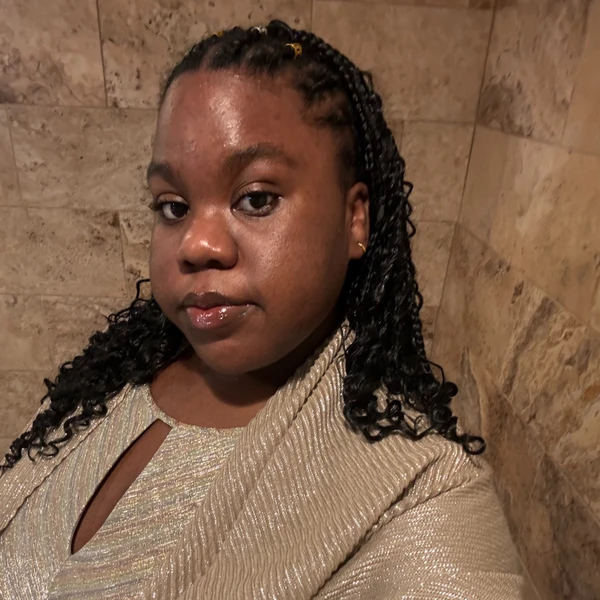
Jaslene Jean-Francois

1x

Finalist

Bio

I’m a first‑generation Haitian‑American college student studying Health Science on my path to becoming a Registered Dietitian. My journey has been shaped by resilience, family, and a deep desire to make health and wellness feel accessible to people who’ve never had it explained to them with care. I’m passionate about community health, culturally informed nutrition, and creating spaces where people feel seen, supported, and empowered. Every step I take is about breaking barriers, building stability, and giving back to the communities that raised me.

Education

Framingham State University

Bachelor's degree program
2026 - 2030
  • Majors:
    • Foods, Nutrition, and Related Services
    • Dietetics and Clinical Nutrition Services
Bunker Hill Community College

Associate's degree program
2023 - 2026
  • Majors:
    • Health Professions and Related Clinical Sciences, Other

Somerville High

High School
2019 - 2023

Miscellaneous

  • Desired degree level:

    Bachelor's degree program

  • Graduate schools of interest:

  • Transfer schools of interest:

  • Majors of interest:

    • Health Professions and Related Clinical Sciences, Other
    • Dietetics and Clinical Nutrition Services
  • Not planning to go to medical school
  • Career

    • Dream career field:

      Registered Dietitan Nutritionist

    • Dream career goals:

    • Front Desk Receptionist

      Harvard Square Chiropractics
      2024 – Present2 years
    • Bank Teller

      Winter Hill Bank
      2022 – 20242 years
    Sloane Stephens Doc & Glo Scholarship
    The impact I want to make begins with the community that raised me. Growing up as a first‑generation Haitian‑American girl in a low‑income household, I learned early how deeply health, access, and education shape a person’s life. I also learned how often people like my family are overlooked in conversations about wellness. That is why I am majoring in Food and Nutrition Science and working toward becoming a Registered Dietitian. My goal is to bring culturally aware, accessible nutrition education to the communities that need it most. My vision is rooted in my own story. I grew up eating what we could afford, which often meant overprocessed foods that filled our stomachs but not our nutritional needs. Living with PCOS made everything even more confusing. I did not understand why my body felt different or why the advice I received never seemed to fit my reality. I did not have a nutritionist who understood my culture, my family’s budget, or the emotional weight of navigating health without guidance. Those experiences shaped me. They made me want to understand the science behind health and the humanity behind care. They made me want to be the person I needed growing up. My education is the tool that will allow me to turn that vision into real impact. Through my classes, I am learning how food, biology, culture, and access intersect. I am learning how to design programs that meet people where they are instead of expecting them to fit into systems that were never built for them. I want to use that knowledge to create community workshops, school‑based nutrition programs, and culturally relevant resources that help families understand their health without shame or judgment. The people who inspire me most are the women in my family. They worked long hours, stretched every dollar, and still found ways to care for everyone around them. They taught me resilience, generosity, and the importance of showing up for your community even when you are tired. They also taught me what it feels like to navigate health challenges without support. I want to honor them by making sure other families do not have to go through the same confusion and fear. This scholarship would help me continue my journey with stability and focus. As a first‑generation student, I carry the responsibility of building a future that no one in my family has had the chance to experience. Financial stress is a constant weight, and support like this allows me to put more energy into my education and my goals. It brings me closer to becoming a Registered Dietitian who can serve my community with knowledge, compassion, and cultural understanding. The impact I want to make is simple. I want to help people feel seen, supported, and empowered in their health. I want to give back to the communities that shaped me by becoming the kind of professional who listens, understands, and leads with heart. My education is the tool. My community is the reason. And my purpose is to create change that lasts, the kind of change that lifts people up and makes their lives feel a little lighter, a little healthier, a little more possible. In the words that have guided me since childhood, “Heal the world, make it a better place.” — Michael Jackson
    WCEJ Thornton Foundation Low-Income Scholarship
    Higher education has always represented more than a degree to me. It is a lifeline. It is the rope I have been climbing, hand over hand, out of cycles that were never meant to define me. As a first‑generation Haitian‑American student from a low‑income family, college is not just a milestone. It is the moment where everything I have worked for finally has room to breathe. Growing up, my relationship with health was complicated long before I had the language to describe it. We ate what we could afford, which often meant overprocessed, shelf‑stable foods that stretched across the week. It kept us fed, but it did not keep us healthy. I grew up overweight, not because I did not care, but because the options available to us were not built for a young girl with PCOS. That condition already makes weight, hormones, and hunger feel like a constant tug of war. I did not understand why my body felt like it was working against me. I just knew something was wrong. What I remember most is not the weight itself. It is the confusion. The shame. The feeling of being told to “just eat better” when “better” was not something we could afford. I did not have a nutritionist who understood my culture, my family’s budget, or my diagnosis. I did not have someone who could explain why my body reacted the way it did. I had questions, but no guidance. That was the moment, even if I did not realize it yet, when the seed was planted for me to become a Registered Dietitian. I want to be the person I needed at twelve, at fifteen, at seventeen. Someone who does not just hand out meal plans, but understands the realities of food insecurity, cultural foods, chronic conditions, and the emotional weight that comes with all of it. That is why I chose health science. And that is why higher education matters so deeply to me. Every class I take, from microbiology to nutrition to anatomy, gives me language for things I have lived through. Suddenly, the patterns I saw in my own body and in my community have explanations. Suddenly, the problems have names, and more importantly, they have solutions. Being a first‑generation student means learning everything the hard way. I have had to figure out financial aid, course planning, transferring schools, and navigating systems that assume you already know how they work. I did not. I had to teach myself. In the process, I learned how to advocate for myself, how to ask better questions, and how to keep going even when the path was unclear. That resilience is part of why I am here. It is also part of why I want to give back. My long‑term goal is to create programs that make nutrition accessible and culturally relevant. I want to build workshops, community partnerships, and school‑based initiatives that help people understand their health in ways that feel empowering instead of overwhelming. I want to help families learn how to take care of themselves without feeling judged or dismissed. I want to be the person who says, “Your culture is not the problem. Your access is.” Beyond my career, I want to mentor other first‑generation students, especially young Haitian‑American women who are trying to find their place in higher education. I know what it feels like to walk into a room and not see anyone who looks like you. I also know how powerful it is when someone tells you, “You belong here.” I want to be that voice for someone else. Receiving support from the WCEJ Thornton Foundation would mean more than financial relief. It would mean time, focus, and the ability to pour myself fully into my education without constantly worrying about how to afford it. As a low‑income student, every scholarship is a step toward graduating without debt and entering my field ready to serve, not weighed down by financial stress. Higher education is my lifeline, but it is also my launchpad. With your support, I can continue building a future where I use my education to uplift others, create change, and bring compassion into spaces that desperately need it.
    Stephan L. Daniels Lift As We Climb Scholarship
    As a future Registered Dietitian, my goal is to make nutrition feel accessible, culturally respectful, and empowering for the families I serve. Growing up Haitian‑American, I saw firsthand how deeply health and nutrition shape a family’s quality of life. My grandmother has diabetes, and over the years, it has led to complications like glaucoma that have left her legally blind. It’s heartbreaking to see how much her health has changed since her life in Haiti, where she was vibrant, active, and always moving. Even now, she still cooks and supports my grandfather, but we’ve had to adapt her meals with so much more care. I’m always finding teas she can enjoy, introducing her to kombucha, cooking with avocado oil instead of heavier fats, and helping her switch from wheat bread to sourdough because it’s easier on her blood sugar. My grandfather has heart issues and survived a stroke in 2014, so managing their diet has become a family effort. These experiences taught me that nutrition isn’t just about food, it’s about preserving dignity, independence, and joy for the people you love. It’s about meeting people where they are and helping them make changes that feel possible rather than overwhelming. I’ve also had to learn how to manage my own health. Living with PCOS means constantly navigating symptoms, fatigue, and the pressure to “fix” everything through diet. But so much of the advice online doesn’t represent my culture at all. I’ve been told to cut out rice, avoid gluten, or replace entire meals with sweet potatoes, advice that erases the foods I grew up with and the traditions that connect me to my family. Learning how to adapt Haitian meals in a way that supports my health has shown me how important culturally informed nutrition truly is. It shouldn’t feel like choosing between your health and your heritage. Peer‑reviewed research shows nutrition plays a major role in preventing and managing chronic conditions like heart disease, diabetes, cancer, and autoimmune disorders. But information alone doesn’t change lives. People need guidance that honors their culture, their comfort, and their capacity. My grandparents didn’t need someone to tell them to “cut everything out.” I didn’t need someone to tell me to erase my culture to manage my PCOS. We needed someone who understood our food traditions and could help us adapt them in ways that support our health. That experience shaped the kind of RDN I want to become. If awarded this scholarship, I would use my education to help patients and families understand not just what to eat, but why it matters and how small, realistic changes can improve both their quantity and quality of life. I aim to provide culturally informed nutrition counseling that respects traditions while supporting long‑term health. I want to create simple, evidence‑based tools that break down complex research into everyday language. And I will advocate for accessible nutrition care, especially for low‑income and immigrant communities who often face the highest rates of chronic illness but the lowest access to support. My goal is to help people feel seen, understood, and capable of change. Just like I do with my grandparents and for myself, I want to meet patients where they are and walk with them toward healthier, more joyful lives.
    Haiti Rising Love Wins Scholarship
    Sola Family Scholarship
    Growing up with a single mother shaped every part of who I am, my work ethic, my resilience, my sense of responsibility, and my understanding of what it means to show up for the people you love. My mom raised me and my siblings with limited resources, constant transitions, and more challenges than most people ever face, yet she did it with strength, creativity, and love. Watching her navigate life on her own taught me that stability isn’t something you’re given, it’s something you build, piece by piece, even when the odds are stacked against you. When my family moved from Florida to Massachusetts, nothing about our lives was certain. We lived with relatives until we were kicked out, then spent months in a single rented bedroom while my mom worked in Connecticut to earn enough to keep us alive. My siblings, just teenagers themselves, took care of me while balancing school and their own responsibilities. Eventually, my mom found an apartment and moved us in the same day, determined to give us a home even when everything felt unstable. Those experiences taught me how to adapt quickly, stay grounded, and keep moving forward no matter how unpredictable life became. As the youngest, I grew up watching my mom juggle bills, paperwork, job applications, and the emotional weight of raising three children alone. I learned how to help her with forms, errands, and responsibilities that most kids my age never had to think about. Over time, I stepped into a leadership role within my family, organizing, planning, and supporting my mom and siblings whenever I could. That sense of responsibility didn’t make my childhood easier, but it made me stronger, more mature, and more aware of the realities many families face. Growing up with a single mother also taught me empathy. I understand what it feels like to struggle quietly, to work hard without recognition, and to carry more than people realize. It made me someone who listens deeply, supports others without judgment, and values community. It taught me that strength isn’t loud; sometimes it’s the quiet decision to keep going. My upbringing shaped me into someone who refuses to give up, who values education as a path to stability, and who wants to build a future where my family’s sacrifices turn into opportunities. Everything I am today, disciplined, compassionate, determined, comes from growing up with a mother who did everything she could with what she had. And I carry her strength with me into every goal I pursue.
    Harry & Mary Sheaffer Scholarship
    One of my greatest strengths is my ability to connect with people from different backgrounds and make them feel understood. As a first‑generation Haitian‑American student, I grew up navigating multiple cultures at once, switching between languages, expectations, and perspectives. That experience shaped my empathy long before I had the words for it. It taught me how to listen deeply, communicate patiently, and approach people with curiosity rather than judgment. These skills are at the heart of how I hope to build a more empathetic and understanding global community. Growing up in an immigrant household meant constantly bridging gaps between generations, cultures, and the worlds inside and outside my home. I learned how to translate not just words, but feelings and intentions. I learned how to explain things in ways that made sense to everyone involved, and how to create understanding where there was confusion. These everyday moments taught me that empathy is not passive; it’s an active practice of slowing down, paying attention, and choosing to see the humanity in someone else’s experience. In school and in my community, I naturally take on the role of bringing people together. Whether I’m helping classmates navigate a group project, supporting a friend through a difficult moment, or simply listening when someone needs to be heard, I try to create spaces where people feel safe and valued. I’ve learned that people open up when they feel respected, and that understanding grows when we take the time to truly hear one another. These are small actions, but they build the foundation for a more compassionate world. As I continue my education, I want to use my communication skills, cultural awareness, and emotional intelligence to uplift communities that are often overlooked or misunderstood. I believe that global empathy starts with everyday interactions, choosing kindness, asking questions, and being willing to learn from people who are different from you. I want to encourage conversations that build bridges instead of walls, and I want to be someone who helps others feel seen, respected, and included. My goal is to contribute to a world where empathy is the norm, not the exception. By using my ability to connect across cultures, my commitment to understanding others, and my belief in the power of community, I hope to help create a more compassionate and connected global society. I want to be part of a generation that leads with heart, one that chooses understanding over division and humanity over fear.
    Hines Scholarship
    Going to college means claiming a future that once felt out of reach. As a first‑generation Haitian‑American student, higher education has never been something I could take for granted. It represents possibility, stability, and the chance to build a life that isn’t defined by constant uncertainty. For me, college is not just about earning a degree; it’s about rewriting what is possible for myself and for the generations that come after me. My education journey has been shaped by movement, transition, and resilience. Growing up, my family and I moved often, and each new place came with its own challenges. I learned how to adapt quickly, stay focused even when everything around me felt unstable, and keep pushing forward without a clear roadmap. There were times when school felt like the only consistent thing in my life, the one place where my effort directly connected to my future. Taking long commutes, balancing responsibilities at home, and navigating the pressure of being first‑gen taught me discipline long before I ever set foot on a college campus. College is where all of that hard work finally has room to grow. It’s where I’m learning how to build a stable future for myself, one rooted in independence, financial security, and purpose. Being in college means I get to choose my path instead of having it chosen for me. It means I can pursue a career I’m passionate about, create opportunities my family never had, and build a life that reflects my values and my determination. What I’m trying to accomplish goes far beyond academics. I want to break generational barriers and lay a foundation of stability for my future family to stand on. I want to show younger students, especially those who come from immigrant, low‑income, or first‑gen backgrounds, that their story doesn’t limit their potential. I want to build a life where my hard work turns into something real: a career I’m proud of, a future I can depend on, and a sense of accomplishment that belongs entirely to me. College is my chance to transform resilience into opportunity. It means stepping into the version of myself I’ve been working toward for years and building a future that honors where I come from while expanding what’s possible for where I’m going. It’s not just a degree, it’s the beginning of the life I’ve always imagined for myself and will make my parents proud.
    Amber D. Hudson Memorial Scholarship
    As a future Registered Dietitian, my goal is to make nutrition feel accessible, culturally respectful, and empowering for the families I serve. Growing up Haitian‑American, I saw firsthand how deeply health and nutrition shape a family’s quality of life. My grandmother has diabetes, and over the years, it has led to complications like glaucoma that have left her legally blind. It’s heartbreaking to see how much her health has changed since her life in Haiti, where she was vibrant, active, and always moving. Even now, she still cooks and supports my grandfather, but we’ve had to adapt her meals with so much more care. I’m always finding teas she can enjoy, introducing her to kombucha, cooking with avocado oil instead of heavier fats, and helping her switch from wheat bread to sourdough because it’s easier on her blood sugar. My grandfather has heart issues and survived a stroke in 2014, so managing their diet has become a family effort. These experiences taught me that nutrition isn’t just about food, it’s about preserving dignity, independence, and joy for the people you love. It’s about meeting people where they are and helping them make changes that feel possible rather than overwhelming. I’ve also had to learn how to manage my own health. Living with PCOS means constantly navigating symptoms, fatigue, and the pressure to “fix” everything through diet. But so much of the advice online doesn’t represent my culture at all. I’ve been told to cut out rice, avoid gluten, or replace entire meals with sweet potatoes, advice that erases the foods I grew up with and the traditions that connect me to my family. Learning how to adapt Haitian meals in a way that supports my health has shown me how important culturally informed nutrition truly is. It shouldn’t feel like choosing between your health and your heritage. Peer‑reviewed research shows nutrition plays a major role in preventing and managing chronic conditions like heart disease, diabetes, cancer, and autoimmune disorders. But information alone doesn’t change lives. People need guidance that honors their culture, their comfort, and their capacity. My grandparents didn’t need someone to tell them to “cut everything out.” I didn’t need someone to tell me to erase my culture to manage my PCOS. We needed someone who understood our food traditions and could help us adapt them in ways that support our health. That experience shaped the kind of RDN I want to become. If awarded this scholarship, I would use my education to help patients and families understand not just what to eat, but why it matters and how small, realistic changes can improve both their quality and quantity of life. I aim to provide culturally informed nutrition counseling that respects traditions while supporting long‑term health. I want to create simple, evidence‑based tools that break down complex research into everyday language. And I will advocate for accessible nutrition care, especially for low‑income and immigrant communities who often face the highest rates of chronic illness but the lowest access to support. My goal is to help people feel seen, understood, and capable of change. Just like I do with my grandparents and for myself, I want to meet patients where they are and walk with them toward healthier, more joyful lives.
    Jaslene Jean-Francois Student Profile | Bold.org