user profile avatar

Jared Kunzler

1x

Finalist

Bio

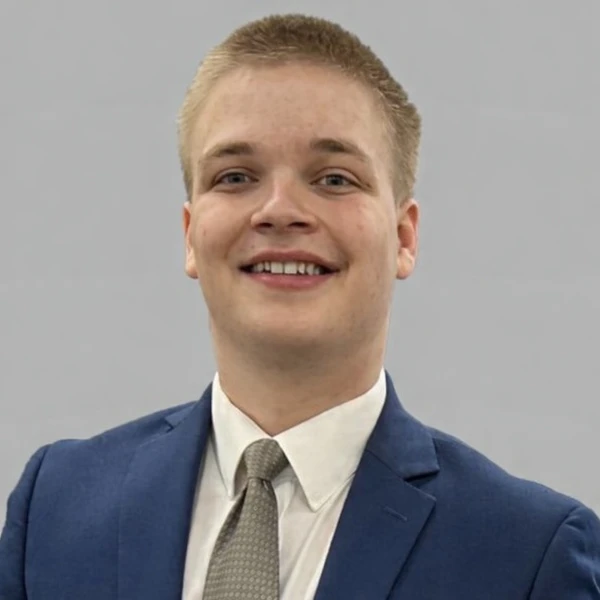
Jared Kunzler was born at Andrews Air Force Base, MD on July 30, 2004. He grew up in a military family with five siblings and moved five times (living in MD, Russia, AZ, FL, and VA, before his family finally settled in Utah. After graduating from high school, he served as a non-paid, church service missionary for two years. In that position, he freely gave 3,500+ hours of his time for community service in a dry-food production facility, a thrift store, a food pantry, and an office building...all to better provide for the poor and the needy in the local community and for disaster areas around the country and the world. He is currently studying computer science at Utah State University and is very interested in specializing in video game design and cyber security studies.

Education

Utah State University

Bachelor's degree program
2024 - 2028
  • Majors:
    • Computer Science

Farmington High

High School
2018 - 2022

Miscellaneous

  • Desired degree level:

    Bachelor's degree program

  • Graduate schools of interest:

  • Transfer schools of interest:

  • Majors of interest:

    • Computer Science
  • Not planning to go to medical school
  • Career

    • Dream career field:

      computer science

    • Dream career goals:

      Sports

      Badminton

      Intramural
      2026 – Present6 months

      Ultimate Frisbee

      Intramural
      2024 – 2024

      Mixed Martial Arts

      Intramural
      2019 – 20201 year

      Public services

      • Volunteering

        Church and Community — Church Service Missionary
        2022 – 2024
      Dick Loges Veteran Entrepreneur Scholarship
      My dad’s life has shown me that military service and entrepreneurship can fit together, and that example has shaped both my education and my career goals. He is a retired veteran who spent more than twenty years in the military, including work as a Foreign Area Officer helping reduce global threats. At the same time, for about thirty years he has run a side business in property management, keeping a growing set of rental properties maintained, occupied, and profitable. He has also steadily invested in the stock market, and now in retirement he works full-time for himself, managing his rentals and investments. Watching him balance discipline, risk, and long-term planning has deeply influenced how I think about my own future. From his entrepreneurial journey, I’ve learned that financial stability usually comes from consistent effort and smart, patient decisions rather than quick wins. I’ve seen him handle late-night maintenance calls, vacancies, difficult tenants, and market downturns, yet he keeps going because he believes in building lasting assets. That mindset has inspired me to treat my education in computer science as a long-term investment. I’m not just trying to “get through” classes and semesters; I’m working to build skills that can support me and a future family, much like his retirement, properties, and investments support him now. His example has also made me interested in possibly starting my own business one day—whether that’s a small software company, a game development studio, or a tech consulting practice—so I can have the same kind of independence and flexibility he enjoys. My dad’s military service has also shaped my educational journey in very personal ways. Growing up as a military dependent, I moved frequently—living in multiple states and even spending several years in Russia. That meant changing schools, making new friends, and adjusting to new expectations again and again. Academically, it was challenging, especially with my ADHD. Just as I would start to get used to one environment, we would move and I would have to learn a new system, new teachers, and new routines. At times it was exhausting, but it also forced me to become adaptable, resilient, and willing to start over without giving up. His service taught me that duty and responsibility matter, even when life is unstable. When I struggled with organization, focus, and time management because of ADHD, he encouraged me to seek help, use resources, and keep working toward my goals instead of giving in to discouragement. That support helped me pursue accommodations, enroll in TRIO and academic skills classes, and stick with college when it felt overwhelming. The same qualities he used in the military—discipline, planning, and commitment to a mission—are the ones he quietly expects from me in school. Because of him, my educational and career goals are not just about personal success. I want to study computer science so I can build tools and systems that make people’s lives better—whether that’s in healthcare, accessibility, video games, or everyday software. I also hope to one day have the freedom he has created for himself: to be self-employed, to manage my own time, and to use my skills in ways that align with my values. His journey from active-duty service member to self-employed veteran entrepreneur has shown me that it’s possible to serve your country, provide for your family, and still design a life you’re proud of. That is the path I hope my education will help me follow.
      Jules Ehlers-Danlos Syndrome Resilience Scholarship
      Living with ADHD has shaped almost every part of my education. For much of my life, I felt like I was pushing a boulder uphill while everyone else was walking on flat ground. I could understand concepts and ideas, but planning, organizing, remembering instructions, and working at a steady pace felt incredibly difficult. Homework that took my peers an hour could take me an entire evening. I often misplaced assignments, forgot deadlines, or got stuck halfway through tasks because my attention drifted or I felt overwhelmed. These struggles affected more than my grades; they affected my self-esteem. I knew I was capable, but the gap between my effort and my results made me feel inadequate and frustrated. For a long time, I blamed myself and thought I was just lazy or undisciplined. That mindset made school feel like a constant test of my worth, not just my knowledge. A major turning point came with a comprehensive neuropsychological evaluation in 2024. The results showed that I have ADHD-neuro-divergence, with above‑average intellectual and academic abilities but significant challenges in processing speed and executive functioning. Seeing that in writing changed everything. It gave me a clear explanation for why school had always felt so uneven. My struggles weren’t proof that I didn’t belong in college; they were signs that my brain works differently and needs different tools. Since then, resilience for me has meant learning how to work with my brain instead of constantly fighting against it. I started using planners, task lists, alarms, and digital calendars consistently, breaking big assignments into smaller steps with specific deadlines. I set timers to help me focus in short bursts, took intentional breaks to avoid burnout, and created routines for studying, sleeping, and exercising. I reached out to my university’s disability services and Student Support Services-TRIO program, where I took “keys to academic success” classes that taught concrete strategies for time management, note‑taking, and test preparation. I have been meeting weekly with an "academic coach". I also took courses in resiliency and interpersonal communication and sought out mental health cognitive behavior therapy-counseling services, which helped me manage stress, reframe negative thoughts, and communicate more openly with professors and classmates. All of this has not made my ADHD disappear—but it has made success seem possible. I still have days when focusing is hard and tasks take longer than I wish, but now I have systems to fall back on and people I can ask for help. I’ve learned that needing support is not a weakness; it’s a smart response to a real challenge. Continuing my academic journey has become an act of persistence and self‑belief rather than just endurance. Receiving this scholarship would make a real difference in my ability to keep moving forward. ADHD doesn’t just affect how I study; it can also make balancing work and school more complicated and tiring. Financial support would reduce the pressure to work long hours while taking demanding classes, giving me more time and mental energy to focus on learning and using the strategies that help me succeed. It would also allow me to continue taking advantage of academic resources, mentoring, and support programs without constantly worrying about how to pay for everything. My goal is to earn a degree in computer science, build a stable career that can support a future family, and eventually mentor other neurodivergent students so they know they are not alone. This scholarship would not just help me pay for school; it would be an investment in that larger goal—helping me turn the challenges of ADHD into strengths I can use to serve others.
      Learner Mental Health Empowerment for Health Students Scholarship
      Mental health is important to me as a student because it often determines whether my effort turns into growth or into frustration and burnout. Growing up as a military dependent, I lived in six different states and spent three years in Russia. Constant moves meant new schools, new teachers, and new expectations. On the outside, I became good at adapting—learning new customs, meeting new people, and starting over. On the inside, though, the instability made it easy to feel lost, anxious, and out of sync. Mental health became the difference between simply surviving each transition and actually being able to learn and build a future. Living with ADHD, combined type, adds another layer to this. My brain struggles with planning, organization, working memory, and processing speed, so schoolwork often takes two or three times longer for me than for my peers. I misplace assignments, lose track of instructions, and can feel overwhelmed by tasks that seem simple to others. In new schools, where routines and expectations kept changing, these challenges were magnified. When my mental health is neglected, those difficulties feel crushing; when I have support, structure, and understanding, I can use my strengths—like strong reasoning and problem‑solving—to succeed. For a long time, I interpreted my struggles as personal failure. I knew I was capable, but the mismatch between my effort and my results hurt my confidence. A comprehensive neuropsychological evaluation in 2024 finally helped me understand myself more clearly. It showed that my intellectual and academic abilities are above average, while my processing speed and executive functioning lag behind. That explanation was a turning point. Instead of seeing my challenges as laziness or lack of discipline, I began to see them as part of how my brain works—something that could be managed with the right tools and support. Because of this, I treat my mental health as seriously as any class. I work with my doctor to manage my ADHD, use planners, timers, and checklists, and break big projects into smaller, manageable steps. I pay attention to sleep, exercise, and breaks because I’ve seen how quickly stress and exhaustion can make my symptoms worse. Asking for help—from family, leaders, or professors—has become part of how I stay healthy rather than a last‑resort option. My experience as a military child and as someone with ADHD also shapes how I advocate for mental health in my community. At age eighteen, I served as a full‑time church service missionary for two years, volunteering over 3,500 hours in a food production plant, thrift store, food pantry, and church office building. I met people facing financial stress, family struggles, and deep loneliness. It became clear that many of them weren’t just dealing with physical needs; they were carrying emotional burdens too. I learned that advocacy can start with simple things: listening without judgment, offering kindness, and making sure people know they are not alone. In my home, church, and school communities, I try to normalize conversations about mental health and neurodivergence. I am open about having ADHD and needing structure and accommodations. When friends or younger students talk about feeling “lazy” or “broken,” I share my own story and encourage them to seek support. As I continue my education, I hope to be a steady advocate: someone who works hard, takes care of his own mental health, and quietly makes it easier for others to do the same.
      Lyndsey Scott Coding+ Scholarship
      Why I Became Interested in Computer Science (CS) Growing up in a military family taught me how to adapt quickly to change. Over the course of my childhood, I lived in six different states and spent three years living in Russia. Each move meant learning new customs, meeting new people, and starting over—skills that, while challenging to master, became second nature. My dad served in the Air Force as a Foreign Area Officer in the Defense Threat Reduction Agency’s Cooperative Threat Reduction program, where he worked with Russian officials to help secure and eliminate weapons of mass destruction. Watching him address such high-stakes global challenges left a deep impression on me. It showed me that technology, collaboration, and clear thinking could make the world safer. That lesson planted a seed that grew into my fascination with CS. I came to see computers as modern tools for solving complex problems—much like how my dad’s work combined diplomacy and technical expertise. When I began exploring programming, I was captivated by the same sense of purpose: solving real-world problems through logic and creativity. Whether debugging a small coding project or designing an app prototype, I discovered that every challenge could be broken down into smaller, solvable pieces—an approach I had already internalized from years of moving between countries and schools. At age 18, I spent two years as an unpaid church service missionary, dedicating over 3,500 volunteer hours to helping others. During this time, I worked in a food production plant, a thrift store, a food pantry, and an office building. My daily work involved gathering, organizing, and distributing food and clothing to those in need in my local community, across the country, and around the world. That experience deepened my sense of responsibility and compassion. It taught me how small, consistent efforts could create meaningful impact—an insight that later shaped how I view technology’s role in improving lives. Service became more than an act of charity; it became a mindset I wanted to carry into my career. My experiences abroad also shaped how I think about communication and security. Living in Russia gave me an early awareness of how global systems—political, economic, and digital—are interdependent. In college, that awareness translated into an interest in cybersecurity and data ethics. The idea that a piece of code could protect critical systems or defend personal privacy resonated with the values I grew up with: responsibility, service, and integrity. CS became more than just a technical field to me; it became a way to make a tangible difference in people’s lives. One of the things I enjoy most about CS is its combination of creativity and precision. Writing code feels like composing a language that brings ideas to life. It requires persistence and discipline, traits I learned from constantly adapting to new environments. Every project is a puzzle waiting to be solved, and each line of code holds the potential to create something meaningful—from a simple automation tool to a platform that helps others communicate securely across borders. Ultimately, my interest in CS stems from a desire to contribute to something larger than myself. The field offers both the intellectual challenge I crave and the chance to apply technology toward global good. Just as my father worked to reduce physical threats abroad, I hope to use CS to address digital ones—building systems that are not only efficient and innovative but also safe and trustworthy. My journey across countries and cultures taught me that technology can bridge divides and protect what matters most. That’s the kind of impact I aspire to make through computer science.
      Ben Brock Memorial Scholarship
      Why I Became Interested in Computer Science (CS) Growing up in a military family taught me how to adapt quickly to change. Over the course of my childhood, I lived in six different states and spent three years living in Russia. Each move meant learning new customs, meeting new people, and starting over—skills that, while challenging to master, became second nature. My dad served in the Air Force as a Foreign Area Officer in the Defense Threat Reduction Agency’s Cooperative Threat Reduction program, where he worked with Russian officials to help secure and eliminate weapons of mass destruction. Watching him address such high-stakes global challenges left a deep impression on me. It showed me that technology, collaboration, and clear thinking could make the world safer. That lesson planted a seed that grew into my fascination with CS. I came to see computers as modern tools for solving complex problems—much like how my dad’s work combined diplomacy and technical expertise. When I began exploring programming, I was captivated by the same sense of purpose: solving real-world problems through logic and creativity. Whether debugging a small coding project or designing an app prototype, I discovered that every challenge could be broken down into smaller, solvable pieces—an approach I had already internalized from years of moving between countries and schools. At age 18, I spent two years as an unpaid church service missionary, dedicating over 3,500 volunteer hours to helping others. During this time, I worked in a food production plant, a thrift store, a food pantry, and an office building. My daily work involved gathering, organizing, and distributing food and clothing to those in need in my local community, across the country, and around the world. That experience deepened my sense of responsibility and compassion. It taught me how small, consistent efforts could create meaningful impact—an insight that later shaped how I view technology’s role in improving lives. Service became more than an act of charity; it became a mindset I wanted to carry into my career. My experiences abroad also shaped how I think about communication and security. Living in Russia gave me an early awareness of how global systems—political, economic, and digital—are interdependent. In college, that awareness translated into an interest in cybersecurity and data ethics. The idea that a piece of code could protect critical systems or defend personal privacy resonated with the values I grew up with: responsibility, service, and integrity. CS became more than just a technical field to me; it became a way to make a tangible difference in people’s lives. One of the things I enjoy most about CS is its combination of creativity and precision. Writing code feels like composing a language that brings ideas to life. It requires persistence and discipline, traits I learned from constantly adapting to new environments. Every project is a puzzle waiting to be solved, and each line of code holds the potential to create something meaningful—from a simple automation tool to a platform that helps others communicate securely across borders. Ultimately, my interest in CS stems from a desire to contribute to something larger than myself. The field offers both the intellectual challenge I crave and the chance to apply technology toward global good. Just as my father worked to reduce physical threats abroad, I hope to use CS to address digital ones—building systems that are not only efficient and innovative but also safe and trustworthy. My journey across countries and cultures taught me that technology can bridge divides and protect what matters most. That’s the kind of impact I aspire to make through Computer Science.
      Veterans Next Generation Scholarship
      One of the most influential figures in my life has been my father, an Air Force Foreign Area Officer whose service extended far beyond uniforms, ranks, or titles. During one of his assignments at the U.S. Embassy in Moscow, he worked for the Defense Threat Reduction Agency as part of the Cooperative Threat Reduction program. His mission took him across Russia, where he helped the Russian government decommission nuclear submarines, secure nuclear facilities, and reduce biological threats left behind after the Cold War. This was not abstract policy work—it was hands-on, high-stakes problem solving with global consequences. Many days stretched 12 to 18 hours, yet he approached every task with focus, professionalism, and an unwavering sense of responsibility. Growing up as the son of a veteran, I came to understand that my father’s work was fundamentally about prevention—stopping disasters before they could occur. Watching him operate under pressure shaped how I think about meaningful work and long-term impact. He never framed his career as heroic; instead, he emphasized preparation, attention to detail, and ethical decision-making. Those lessons deeply influenced how I view responsibility and success. I learned that real service often happens behind the scenes, carried out by people who quietly ensure that systems, safeguards, and relationships hold together before anything goes wrong. Despite the intensity of his career, my father was also an exceptional parent to me and my five siblings. He was present, supportive, and deeply invested in our lives, modeling excellence not only in service to his country but also in service to his family. From him, I learned integrity through consistency, accountability, and patriotism as sustained commitment rather than symbolic gestures. His example showed me that discipline and care are not opposing values—they reinforce each other. These experiences directly shaped my career aspirations. I am currently pursuing a degree in computer science at Utah State University, where I will be a junior this fall. I am particularly drawn to cybersecurity because it reflects the same principles that guided my father’s work: identifying vulnerabilities, preventing harm, and protecting critical systems before failure occurs. Securing digital infrastructure requires the same mindset of foresight, precision, and ethical responsibility that I saw modeled throughout my childhood. In addition to cybersecurity, I am passionate about video game design. Game development allows me to combine technical skill with creativity to build experiences that encourage problem solving, connection, and stress relief. Whether designing secure systems or interactive digital worlds, my goal is to use technology in ways that positively impact others. Being the son of a veteran shaped my understanding of service as quiet, technical, and deeply consequential. As I continue my education, I strive to carry forward my father’s legacy by applying those values through technology and purposeful work.