user profile avatar

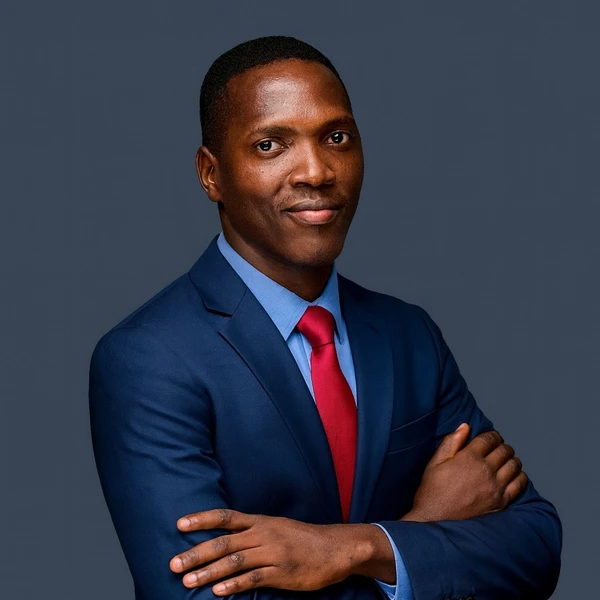
JANUARY MSEMAKWELI

1x

Finalist

Bio

My name is **January G. Msemakweli**, a Tanzanian public health researcher and data scientist currently pursuing a **Master of Science in Epidemiology at the Johns Hopkins Bloomberg School of Public Health**. My work focuses on applying epidemiology, data science, and advanced analytics to strengthen disease prevention and health systems in low and middle income countries. I earned my degree in Environmental and Occupational Health from the **Muhimbili University of Health and Allied Sciences**, where I received the **Professor Emeritus Japhet Killewo Award** for the best performance in Epidemiology. Since then, I have developed both research and applied data science experience, contributing to peer reviewed publications on environmental and population health while also building digital tools for real world public health programs. While working with the **Mo Dewji Foundation**, I designed data systems used during large scale health outreach programs to enable real time clinical data collection and analysis, improving program monitoring and decision making. At Johns Hopkins, I also serve as **Director of the J.B. Grant Global Health Society** and **Director of the Public Health AI Society**, where I promote interdisciplinary collaboration at the intersection of epidemiology, artificial intelligence, and global health. My long term goal is to become an epidemiologist developing advanced analytical approaches that help countries like Tanzania anticipate and prevent emerging health threats through stronger data systems and evidence driven public health policy.

Education

Johns Hopkins University

Master's degree program
2025 - 2027
  • Majors:
    • Public Health

Miscellaneous

  • Desired degree level:

    Doctoral degree program (PhD, MD, JD, etc.)

  • Graduate schools of interest:

  • Transfer schools of interest:

  • Majors of interest:

  • Not planning to go to medical school
  • Career

    • Dream career field:

      Research

    • Dream career goals:

    • Tutorial Assistant

      Muhimbili University of Health and Allied Sciences
      2024 – 20262 years
    • Research Assistant/Graduate Student

      Johns Hopkins University
      2025 – Present1 year

    Sports

    Soccer

    Junior Varsity
    2009 – 20123 years

    Awards

    • Best Goal keeper

    Research

    • Public Health

      Mo Dewji Foundation — Data Scientist / Public Health Researcher
      2024 – 2025

    Arts

    • NewGen Studios Tanzania

      Music
      Yes
      2016 – 2025

    Public services

    • Volunteering

      Charm City Care Connection — Intern Data Scientist
      2025 – 2026

    Future Interests

    Advocacy

    Volunteering

    Philanthropy

    Entrepreneurship

    Champions for Intellectual Disability Scholarship
    My interest in supporting individuals with intellectual disabilities comes from a broader commitment to building health systems that serve everyone, especially populations that are often overlooked. Throughout my academic and professional journey in public health, I have become increasingly aware that individuals with intellectual and developmental disabilities frequently face barriers in accessing healthcare, education, and social services. These barriers are not only medical but also structural, reflecting gaps in awareness, resources, and inclusive policy. I am currently pursuing a Master of Science in Epidemiology at the Johns Hopkins Bloomberg School of Public Health, where my work focuses on understanding patterns of disease and improving population health systems. Epidemiology provides powerful tools for identifying health disparities and designing interventions that can improve outcomes for underserved communities, including individuals with intellectual disabilities. One of the realities that motivates my work is the fact that many public health systems were historically designed without considering the needs of people with disabilities. As a result, individuals with intellectual disabilities often experience poorer health outcomes, reduced access to preventive care, and greater social isolation. These disparities highlight the need for research and policies that intentionally include disability perspectives. My experience living with noise-induced hearing loss has also shaped how I understand accessibility and inclusion. While hearing loss differs from intellectual disability, it has helped me recognize how easily environments can become barriers when accessibility is not considered. This awareness has strengthened my commitment to ensuring that health systems and community programs are designed with diverse needs in mind. In my academic and community work, I seek opportunities to translate these values into real-world impact. For example, through my work with Charm City Care Connection in Baltimore, I helped develop a geocoding system that supports harm reduction outreach programs. The system allows outreach teams to map service locations and identify where community needs are greatest. Projects like this demonstrate how data and technology can improve how public health programs reach underserved populations. Looking ahead, my career goal is to use epidemiology and public health research to better understand the health needs of populations that are often marginalized, including individuals with intellectual disabilities. By studying patterns in healthcare access, disease risk, and social determinants of health, I hope to contribute to policies and programs that create more inclusive health systems. Supporting the intellectual disability community requires more than medical care; it requires societal commitment to dignity, inclusion, and equity. Public health research has the potential to play an important role in this effort by generating evidence that informs policy and expands access to services. Ultimately, my goal is to ensure that the systems we build reflect the needs of all individuals, including those whose voices are too often excluded from decision-making processes. By combining research, data-driven solutions, and community engagement, I hope to contribute to a future where individuals with intellectual disabilities receive the respect, support, and opportunities they deserve.
    ADP Scholarship
    My name is January G. Msemakweli, a Tanzanian public health researcher currently pursuing a Master of Science in Epidemiology at the Johns Hopkins Bloomberg School of Public Health. I grew up seeing how health outcomes in many communities depend not only on medicine, but on whether systems exist to detect risks early and respond effectively. That reality shaped my decision to pursue public health and continues to drive the work I do today. I come from a modest background, and pursuing graduate education abroad required overcoming significant financial barriers. Although I was fortunate to receive a Public Health Grant and a Merit Tuition Scholarship from Johns Hopkins, financing graduate education as an international student remains challenging. These obstacles, however, have strengthened my determination to succeed and to ensure that the opportunities I have been given translate into meaningful impact for others. Service has always been central to my work. Before coming to the United States, I worked with the Mo Dewji Foundation, where I supported health outreach programs serving underserved communities. During these programs I saw firsthand how difficult it was for clinical teams to track patients and evaluate outcomes using paper records. To help address this challenge, I developed a digital system that allowed outreach teams to collect and monitor clinical data in real time during health camps. What had previously been fragmented and delayed reporting became a tool that helped teams make faster and more informed decisions about patient care. Experiences like this reinforced my belief that public health progress depends not only on compassion but also on strong data systems that allow limited resources to be used more effectively. My research now focuses on population health analytics and disease prevention. I have contributed to peer reviewed work examining environmental health risks and emerging disease patterns, and I aim to continue developing analytical tools that help health systems detect risks earlier and respond more effectively. Ultimately, my goal is to help strengthen data driven public health systems in Tanzania and across Africa. I want to contribute to a future where health systems do not simply react to disease after it spreads, but anticipate risks and prevent them before communities suffer the consequences. Support from the ADP Scholarship would help ease the financial pressures of graduate school and allow me to focus fully on the work I am committed to: using science, data, and service to improve the health of communities that need it most.