
Hobbies and interests
African American Studies
Cheerleading
English
Cooking
Psychology
Reading
Janelle Kennedy
1x
Finalist1x
Winner
Janelle Kennedy
1x
Finalist1x
WinnerBio
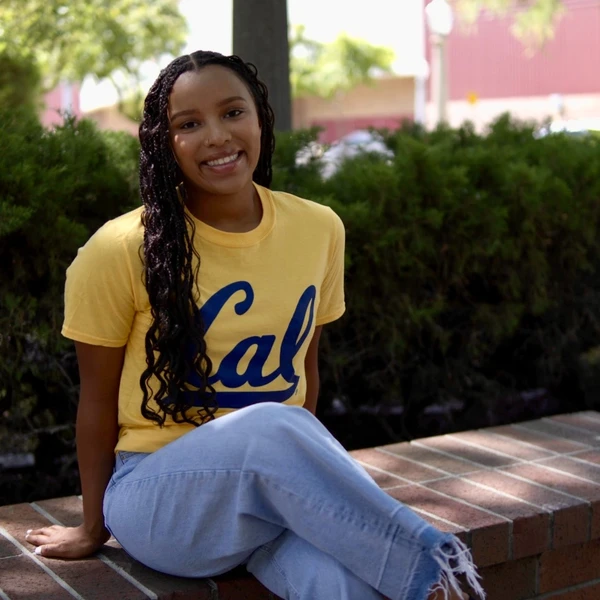
I’m a student at University of California, Berkeley passionate about leadership, advocacy, and community impact. In high school, I graduated near the top of my class with a 4.3 GPA while taking Honors and AP courses, and I co-founded and later led my school’s Black Student Union to create a more supportive and inclusive environment for students. Through leadership, service, and academics, I’ve developed strong communication and problem-solving skills that I plan to carry into a future career in law and public service.
I am currently majoring in psychology and plan to attend graduate school after college to become a psychiatrist, where I hope to support others through mental health care and advocacy.
Education
University of California-Berkeley
Bachelor's degree programMajors:
- Neurobiology and Neurosciences
- Psychology, General
Fowler High School
High SchoolMiscellaneous
Desired degree level:
Master's degree program
Graduate schools of interest:
Transfer schools of interest:
Majors of interest:
Career
Dream career field:
Medical Practice
Dream career goals:
To become a psychiatrist
Lifeguard Manager
City of Fowler2024 – Present2 years
Sports
Cheerleading
Varsity2022 – 20253 years
Awards
- CIF Valley Champion
- USA National Champion
- CIF State Champion
Research
Library and Archives Assisting
UC Berkeley Library — Undergraduate Library Fellow2026 – Present
Arts
Fowler High School
Music2021 – 2024
Public services
Volunteering
City of Fowler — Junior Ambassaodr2024 – 2025
Future Interests
Advocacy
Volunteering
Finestida Scholarship for Women
What excites me most about the natural sciences is how they have the ability to answer questions that directly improve people's lives. Ever since I was young, I have been so fascinated by why people think, feel, and behave the way they do. As I grew older, that curiosity evolved into a passion for understanding the our brains and the biological processes that shape our emotions, memories, and mental health. Today, I am pursuing a degree in psychology at the University of California, Berkeley with the goal of becoming a psychiatrist because I want to combine scientific knowledge with compassionate care to make a meaningful difference in people's lives.
Many people think of psychology as simply talking with patients, but what excites me is the science behind it. I am fascinated by neuroscience, brain chemistry, genetics, and how environmental factors interact to influence mental health. Learning how medications affect brain function and how research continues to uncover new treatments reminds me that science has the power to transform lives. Every breakthrough in understanding the brain creates opportunities to improve care for people living with depression, anxiety, PTSD, bipolar disorder, schizophrenia, and many other conditions.
My passion for this field also comes from personal experience. Growing up as one of the only Black students in my community, I often felt isolated and learned to suppress my emotions instead of talking about them. I believed that staying quiet meant being strong, but over time that mindset affected my mental health. It was not until I began therapy during my freshman year of college that I realized how valuable mental health care can be. Therapy gave me the opportunity to better understand myself and showed me the life-changing impact that compassionate, evidence-based care can have. It also opened my eyes to the disparities in mental health care, particularly within marginalized communities where stigma and limited access prevent many people from receiving the support they need.
That experience motivates me every day. I want to contribute to research that improves our understanding of mental illness while also providing culturally responsive care to patients from different backgrounds. I am especially interested in working with children, adolescents, and families because I have learned that early intervention can change the trajectory of a person's life. By combining my research with empathy, I hope to help patients not only manage mental illness but also thrive.
Beyond becoming a psychiatrist, I hope to inspire other young women, specifally Black women, to pursue careers in science and medicine. Representation really matters, and I know how powerful it can be to see someone who shares your background succeeding in a field where you may not always feel represented. I want to mentor future students, advocate for equitable access to mental health care, and encourage others to pursue careers that combine science with service.
The natural sciences excite me because they never stop evolving. Every discovery brings us closer to understanding the incredible complexity of the human brain and improving the lives of those affected by mental illness. I am excited to spend my career contributing to that progress while using science not only to understand people, but to help them heal.
Byte into STEM Scholarship
Growing up as a Black student in a predominantly non-Black town shaped a lot of how I see myself and the world. I often felt like I stood out in ways I didn’t always understand or have the language to process at the time. Experiences like being stared at in public spaces, followed in stores, or having comments made about my hair made me more aware of how quickly people can “other” someone based on appearance alone. For a long time, I coped by staying quiet and trying to appear strong and unaffected, but internally I was carrying more than I realized. Over time, I learned that suppressing those emotions was not going to help me in the long run, and it took a toll on my mental health.
That changed when I began attending therapy during my freshman year of college. It was my first time truly unpacking experiences I had carried for years, both related to my identity and personal family challenges. Therapy helped me understand how deeply mental health is shaped by environment, access, and cultural stigma, especially in communities of color where emotional struggles are often misunderstood. That experience became a major turning point in my life and is one of the reasons I am so committed to the field of psychology and psychiatry. I am currently a psychology major at University of California, Berkeley, where I am building the foundation to pursue graduate school and eventually become a psychiatrist.
What drives my passion for this field is the desire to understand people on a deeper level while also being able to help them in a life-changing way. I am especially interested in mental health care that is culturally responsive and trauma-informed, because I know firsthand how important it is to feel understood in spaces where vulnerability is required. I want to be the kind of provider who creates safety, trust, and validation for people who may feel unseen or misunderstood like I did.
Leadership and service have also played a major role in shaping my values. In high school, I founded and served as president of my school’s Black Student Union, where I worked to create community, celebrate culture, and support students who felt disconnected or underrepresented. Through organizing events and fostering conversations around identity, I learned how powerful it is to build spaces where people feel like they belong. That experience strengthened my commitment to mentorship, especially for younger students navigating similar challenges.
Through my psychology degree, I plan to gain the scientific knowledge, clinical understanding, and research experience necessary to become a psychiatrist who serves diverse communities. My long-term goal is to work with children, adolescents, and families, particularly in underserved areas, where access to mental health care is limited. Beyond direct patient care, I also hope to contribute to reducing stigma around mental health and increasing representation in the field so that more people feel encouraged to seek help.
Ultimately, I want to use my education not only to build a career, but to create lasting impact. Whether through clinical work, mentorship, or advocacy, I hope to uplift others by helping them feel seen, supported, and empowered to prioritize their mental health.
Carmen Jimenez Pride Memorial Scholarship
My passion for social work and mental health advocacy comes from a deep desire to help people feel seen, supported, and understood. My past experiences inspired me to pursue a path focused on emotional support and creating safe spaces for others. I want to dedicate my career to helping individuals and families navigate challenges while ensuring they feel respected and valued regardless of their background.
Growing up, I always knew I looked different from everyone else in my class because of my darker skin. There were very few African Americans in my town besides my dad and me, and because of that, we often felt out of place. We would receive strange looks in public, get followed around in stores, and people would make comments about or even pull at my curly hair. At the time, I did not fully understand how much those experiences were affecting me because I rarely talked about them. I always felt pressure to appear strong and unbothered. While my half-siblings were more open about their emotions, I tried to be the “easy” child who never complained or caused problems for my parents. Instead of expressing how I felt, I bottled up my emotions and convinced myself that staying silent was the same thing as being strong.
Over time, carrying those feelings alone took a serious toll on my mental health. The pressure of constantly feeling different, combined with personal struggles within my family, deeply affected me throughout my childhood and adolescence. It was not until my freshman year of college that I finally began attending therapy and allowing myself to process those experiences. Although I was initially hesitant to ask for help, therapy gave me the opportunity to reflect on the trauma of growing up as the only African American child in my town and understand how much suppressing my emotions had impacted me. Through that experience, I became increasingly aware of how mental health is often overlooked in communities of color and how many individuals struggle in silence because of stigma, limited access to care, or fear of being misunderstood. Those realizations are a major reason why I feel so passionate about pursuing a career focused on mental health advocacy and support.
I am currently a psychology major at University of California, Berkeley and plan to continue my education in order to work in the mental health field supporting children, adolescents, and families. I am especially interested in culturally responsive care because I believe mental health treatment should recognize and respect the lived experiences, cultures, and identities of every individual.
Leadership and service have already played a major role in shaping my goals and values. In high school, I founded and served as president of my school’s Black Student Union for a couple years, where I worked to create a stronger sense of community and belonging for students. Through mentoring peers, and encouraging conversations about culture and representation, I learned the importance of advocacy and uplifting others. Those experiences strengthened my communication, empathy, and leadership skills while showing me the impact that representation and a supportive environment can have on people’s lives.
Carmen Jimenez-Pride’s legacy strongly resonates with me because of her commitment to healing, cultural humility, and advocacy. I admire the way she centered compassion and inclusion in her work while supporting children and families from diverse backgrounds. I hope to embody her legacy by becoming a professional who advocates for greater equity and understanding within mental health services. I want to help create environments where people feel safe expressing themselves and receiving help without fear of being judged.
In the future, I hope to use my education and experiences to make a meaningful difference in the lives of others. Whether through direct mental health support or advocacy efforts, I want to continue serving others with empathy and cultural awareness.
Harry B. Anderson Scholarship
WinnerMy name is Janelle Kennedy, and I am currently a psychology major at University of California, Berkeley with plans to attend graduate school and become a psychiatrist. I have always been interested in understanding how the brain works, how emotions influence behavior, and most importantly, how mental health affects every aspect of a person’s life. Over time, that curiosity grew into a passion for psychology and a desire to pursue a STEM career where I can make a meaningful difference in the lives of others.
What draws me most to STEM is the combination of science and real-world impact. I enjoy learning how scientific research and innovation can play apart in improving people’s lives, especially in the field of mental health. Psychology allows me to explore both the biological and social aspects of human behavior. In the future, psychiatry will allow me to directly help individuals through treatment, support, and advocacy. Mental health is often overlooked or misunderstood, particularly in underserved communities, and I want to be part of changing that by becoming a compassionate professional who helps people feel heard and supported.
My academic journey has prepared me well for pursuing a STEM field. In high school, I challenged myself through rigorous Honors and Advanced Placement courses, including AP Chemistry and AP Calculus, while maintaining a 4.3 GPA and graduating near the top of my class. Those classes pushed me to strengthen my problem-solving, analytical thinking, and time management skills. STEM subjects are not always easy for me, but I enjoy the challenge because they encourage growth, discipline, and perseverance. I believe that being successful in STEM requires determination and a willingness to continue learning, both of which I strive to demonstrate every day.
Outside of academics, leadership and service have played a major role in shaping who I am. I founded and served as president of my school’s Black Student Union, where I worked to create a supportive and inclusive environment for students. Through organizing events, mentoring peers, and encouraging discussions about culture and representation, I developed strong communication and leadership skills that I know will help me in my future career. My experiences showed me how important it is for people to feel represented, understood, and valued. This is something I hope to bring into my work in mental health care.
In the future, I plan to use my education to become a psychiatrist and work with younger people and families. I want to provide care that is not only scientifically informed, but also compassionate and accessible. I am especially passionate about reducing the stigma surrounding mental health and increasing access to care in communities where resources are limited. Beyond working directly with patients, I hope to contribute to research efforts that improve mental health education and treatment.
Pursuing STEM is important to me because it gives me the opportunity to combine science with service. Through psychology and psychiatry, I hope to make a lasting impact by helping people improve their mental well-being and empowering them to live healthier, more fulfilling lives.