user profile avatar

James Hagler

1x

Finalist

Bio

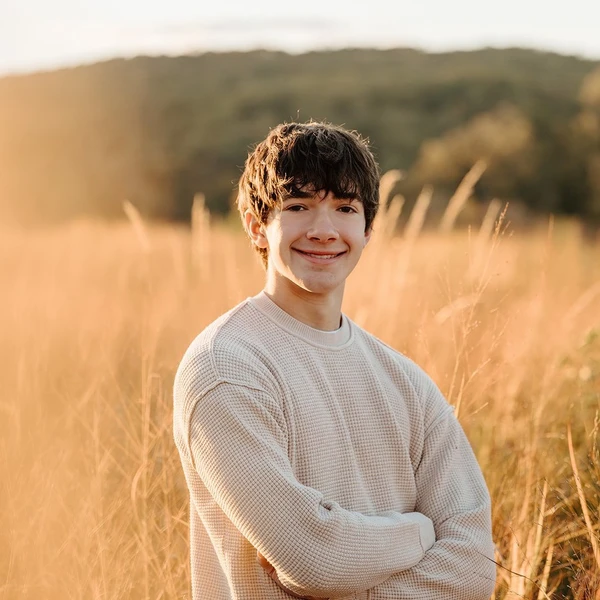
My name is James “Austin” Hagler, a future aerospace engineer and proud Purdue University Boilermaker in the Class of 2030. Growing up in a military family has taken me all over the country and taught me how to adapt quickly and aim high wherever I land. As an honors student, robotics super fan, and unapologetic math and science nerd, I’m driven to build a future fueled by curiosity, grit, and hard work.

Education

Purdue University-Main Campus

Bachelor's degree program
2026 - 2026
  • Majors:
    • Aerospace, Aeronautical, and Astronautical/Space Engineering
  • Minors:
    • Mechanical Engineering

Cherokee High School

High School
2022 - 2026

Miscellaneous

  • Desired degree level:

    Bachelor's degree program

  • Graduate schools of interest:

  • Transfer schools of interest:

  • Majors of interest:

    • Aerospace, Aeronautical, and Astronautical/Space Engineering
  • Not planning to go to medical school
  • Career

    • Dream career field:

      Aviation & Aerospace

    • Dream career goals:

      Aerospace Engineer

    • Camp Counselor

      JCC Camps at Medford
      2023 – 20263 years

    Sports

    Tennis

    Varsity
    2024 – 20262 years

    Public services

    • Volunteering

      Unified Robotics — Event Leader
      2024 – 2026
    • Volunteering

      First Lego League — Event Manager
      2023 – 2026
    • Volunteering

      Sports Unity Program — Volunteer
      2022 – 2026
    Learner Calculus Scholarship
    Calculus has a reputation for being intimidating, and I understand why. It demands patience, persistence, and a willingness to sit with uncertainty. But that challenge is exactly what makes calculus so important to the STEM field. At its core, calculus is the study of change. In STEM, where systems are constantly evolving and interacting, that understanding is essential. Before calculus, many problems feel static. You solve for a value, check your work, and move on. Calculus shifts that perspective by asking how systems behave over time and how variables influence one another. This way of thinking is critical in STEM careers, where real‑world problems are dynamic and rarely have simple solutions. I saw this firsthand through my experience in robotics. Designing a robot is not just about making something that works once. It is about understanding how it responds under different conditions. Increasing speed may improve performance, but how does it affect stability? How does changing weight distribution influence efficiency or control? These are not one‑step problems. They require analyzing relationships and rates of change, which is exactly what calculus trains you to do. As a peer tutor for underclassmen in calculus, I have also seen how powerful these ideas can be when they finally click. I enjoy breaking down concepts like limits or derivatives into understandable pieces and watching frustration turn into confidence. Those moments have shown me that calculus is not just about solving problems, but about learning how to think, communicate, and approach challenges from multiple angles. Teaching others has strengthened my own understanding and reinforced why calculus is such a vital foundation in STEM. Calculus also allows engineers and scientists to model the real world with precision. Derivatives and integrals are not abstract theories. They describe velocity, acceleration, energy, and optimization. As someone pursuing aerospace engineering, I see calculus as the language that makes flight possible. Designing systems that move safely and efficiently through air or space requires understanding forces in motion and predicting outcomes before they happen. Beyond its technical applications, calculus builds resilience. There are no shortcuts to mastering it. When a concept does not make sense, you must revisit earlier steps, try new approaches, and stay patient. That process mirrors real STEM careers, where progress often comes through iteration rather than immediate success. Calculus changed how I approach problems and why I believe it is critical to success in the STEM field. It provides the framework to model real systems, predict outcomes, and make informed decisions before mistakes happen in the real world. In engineering, technology, and science, success depends on understanding how variables interact, how systems respond to stress, and how to optimize performance under constraints. Calculus makes that possible. More than any single formula, it builds the analytical mindset STEM careers demand and serves as a foundation for innovation, problem solving, and meaningful impact.
    Nicholas Hamlin Tennis Memorial Scholarship
    For most of my life, I believed I knew exactly who I was meant to be. I was the student who thrived in advanced classes, who loved math and science, who stayed late for robotics and spent weekends volunteering. Engineering made sense to me because it was structured and predictable. If you followed the right steps, you could solve almost anything. But somewhere along the way, I started to feel like something was missing. I used to joke with my mom that she should have put me in sports when I was younger, but beneath the humor was honesty. I had built my identity entirely around academics and achievement, yet I felt disconnected from a part of the high school experience that shaped so many others. I did not just want to succeed; I wanted balance. Then, almost on a whim, I found tennis. With a schedule already packed with AP and honors classes, robotics, and volunteering, I decided to add one more thing to the list and teach myself tennis. I started by watching YouTube videos, studying technique like a physics problem, and spent hours hitting balls against the side of my garage. At first, I borrowed a racket, unsure if I would be any good. But as I improved and began holding my own in casual matches, I used money I earned as a camp counselor to buy my own. That moment felt like a promise to myself. What surprised me most was how natural tennis felt. The precision reminded me of math. Every shot had intention. Angle, force, timing. You hit here to make the ball land there. It was problem-solving in motion, but it was also something more. It required presence. You could not overthink or get stuck in your head. You had to adjust, react, and trust yourself. Of course, I also had to be humbled. Confident in our progress, a friend and I decided to challenge two girls from the varsity tennis team to a match. They beat us decisively. They were great sports, staying to give us tips, correct our form, and even inviting us to come back the next day to play again. That moment showed me what real sportsmanship and leadership looked like. It also made me better. Today, I am on my school’s tennis team, and it is one of the things I am most proud of. Not because it came easily, but because it did not. Tennis taught me discipline in a different way than academics ever had. It taught me how to fail, adjust, and come back stronger. It taught me confidence that is built, not assumed. More than anything, tennis gave me something I did not realize I needed. Everything else in my life has been about building a better future. My classes, my extracurriculars, my goals in engineering all serve that purpose. But tennis is different. It was the one thing I chose entirely for myself, simply because I loved it. That choice has shaped my future in ways I did not expect. It reminded me that being driven does not mean being one-dimensional. That balance matters. That growth happens when you step outside of what is comfortable and try something new. Nick Hamlin believed deeply in tennis as a force for building strong, grounded, and well‑rounded individuals. Through tennis, I have become exactly that. The sport did not distract me from my goals. It strengthened them. It helped me become someone focused not only on where I am going, but on who I am becoming along the way.
    Roy Nelson Memorial Scholarship in Engineering
    Growing up in a military family taught me that stability is not inherited; it is built through perseverance, service, and adaptability. In seventeen years, my family moved twelve times, each relocation shaped by my stepfather’s twenty-five years of service in the United States Army. Watching him endure deployments, missed milestones, and quiet sacrifices instilled in me a deep respect for service and a responsibility to contribute meaningfully to the world around me. For the past four years, New Jersey has been the place where that responsibility took shape. The strength of the public education available here played a defining role in my growth, giving me access to opportunities that transformed curiosity into direction. Through my high school’s Project Lead the Way curriculum, I was introduced to a structured engineering pathway focused on problem-solving, design, and applied STEM learning. That foundation allowed me to explore engineering not just as an interest, but as a discipline with real-world impact. Engineering became the way I envisioned serving others. As a child, I spent hours watching aircraft cut through the sky, captivated by the unseen forces that made flight possible. That curiosity evolved into purpose. I wanted to understand how systems work, design better solutions, and apply knowledge to challenges that matter. Competitive robotics, made accessible through my New Jersey public school, solidified that goal. Through hands-on design, iteration, and teamwork, I fell in love with engineering as both a technical and collaborative pursuit. This August, I will begin my engineering studies at Purdue University, a milestone made possible through persistence, sacrifice, and the educational opportunities I was given. I approach this next chapter with gratitude and urgency, knowing that education is not guaranteed for everyone. Roy Nelson’s story resonates deeply with me. Like him, I am driven by a passion for engineering and a desire to serve others through that work. Unlike him, I have the opportunity to pursue my education without interruption, and I do not take that privilege lightly. My ambition is matched by action. As a peer tutor in Chemistry and Geometry, I supported students who felt overwhelmed or left behind, helping them rebuild confidence alongside understanding. Through my robotics team, I organize and lead our annual car wash fundraiser, raising over one thousand dollars each year to ensure the program remains accessible to all students. I also mentor students with intellectual disabilities through Unified Robotics and FIRST LEGO League, helping create inclusive spaces where every student has the opportunity to innovate and succeed. These experiences have shaped the kind of engineer I aim to become. I plan to pursue a career in aerospace engineering, contributing to advancements that improve safety, expand exploration, and strengthen the systems people rely on every day. Just as importantly, I intend to use my education to make engineering more accessible by mentoring students and supporting programs that open doors for those who might not otherwise have the opportunity. The values I carry forward, discipline, resilience, and service, were shaped by my military upbringing and strengthened by the opportunities I found in New Jersey’s public education system. Roy Nelson’s unrealized dream strengthens my resolve to make the most of the opportunity I have been given. Through engineering, I am prepared to honor that legacy by building solutions that create lasting impact.
    Best Greens Powder Heroes’ Legacy Scholarship
    Growing up as the child of a U.S. Army soldier meant that home was never a single place. In seventeen years, my family moved twelve times. Each move brought a new school, new expectations, and the understanding that stability was never guaranteed. While other families planned years ahead, ours planned around deployments, orders, and uncertainty. My stepfather has served for twenty‑five years through long separations, missed milestones, and sacrifices that rarely receive recognition. From him, I learned that resilience is not simply enduring hardship, but choosing to rise from it with purpose. Military life demanded constant adaptation, but it also instilled drive. At every new school, I faced the same choice: remain on the sidelines or step forward into the unknown. I chose to step forward. I introduced myself first, joined teams without hesitation, and looked for ways to contribute immediately. Frequent change could have made me withdrawn. Instead, it made me decisive. Military children do not wait for belonging. We build it through action. That mindset defines how I lead and serve. As a peer tutor in Chemistry and Geometry, I gave up my lunch periods to support students who felt overwhelmed or left behind. I broke down complex concepts and rebuilt confidence one lesson at a time. My goal was never just improved grades. It was impact. Watching a student move from doubt to self‑belief reinforced what military life had already taught me: consistency and care create lasting change. I bring that same determination to my robotics team. I organize and lead our annual car wash fundraiser, raising over one thousand dollars each year to keep the program accessible to all students. I coordinate logistics, manage volunteers, and ensure every team member has a role. The work is demanding, but the impact is tangible. My ambition is not limited to personal success. It is centered on removing barriers so others can succeed alongside me. Service remains central to who I am beyond the classroom. Through Unified Robotics and FIRST Lego League, I mentor students with intellectual disabilities, ensuring they have equal opportunities to innovate and compete. I also volunteer with the Sports Unity Program, working with athletes of all abilities. When an athlete using a walker scored his first basket and the gym erupted in celebration, I was reminded that impact is measured by lives lifted, not recognition earned. Military families do not simply endure sacrifice. We grow through it. My stepfather embodies loyalty, duty, and selfless commitment throughout his service, and those values shape my own path. My ambition is to pursue a future in aerospace engineering, contributing to innovation that strengthens and protects our nation. My drive comes from years of adapting, rebuilding, and stepping forward without hesitation. My impact is reflected in the communities I serve and the opportunities I help create for others. Being the child of a military servicemember means learning to sacrifice stability, endure absence, and thriving in uncertainty. Those experiences have not held me back; they have propelled me forward. The greatest way I can honor my stepfather’s service is not only to acknowledge his sacrifices, but to live out their meaning through leadership, service, and purpose wherever I am needed. I am stronger because I was raised in a military family. Stronger because I learned early that service is not defined by a uniform, but by action, commitment, and showing up when it matters most. Those lessons have shaped me into someone who does not wait for certainty or comfort, but steps forward with purpose wherever I am needed.