
Gender
Male
Ethnicity
Black/African
Religion
Prefer Not To Answer
Hobbies and interests
Boy Scouts
Sports
Motorcycles
Dog Training
Cooking
Food And Eating
Football
Travel And Tourism
Volunteering
Medicine
Health Sciences
Global Health
Mental Health
Public Health
Biomedical Sciences
Robotics
Computer Science
Saxophone
Bass
Exploring Nature And Being Outside
Exercise And Fitness
Environmental Science and Sustainability
Sustainability
Business And Entrepreneurship
Genetics
Advocacy And Activism
Social Justice
Animals
History
Reading
Academic
Food and Drink
Health
History
How-To
Law
Leadership
Religion
Politics
Psychology
Science
Science Fiction
Self-Help
Social Issues
Social Science
Sociology
True Story
Sports and Games
I read books multiple times per week
US CITIZENSHIP
US Citizen
LOW INCOME STUDENT
Yes
FIRST GENERATION STUDENT
Yes
James Gainous
1x
Finalist
James Gainous
1x
FinalistBio
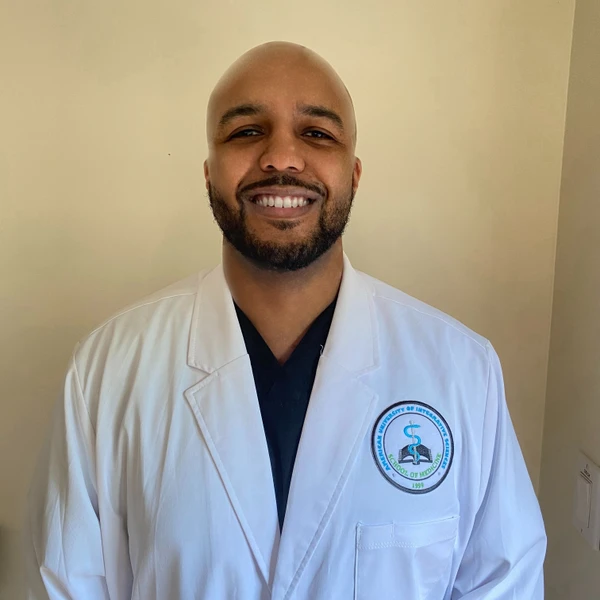
From EMT to Physician: First-Generation Medical Student Determined to Save Lives.
I am a first-generation medical student and former Emergency Medical Technician pursuing a career in high-acuity medicine and life-saving care. My mission is to use medicine, research, and mentorship to improve emergency and surgical care while helping future students from disadvantaged backgrounds pursue careers in medicine.
My path to medicine has not been traditional or easy, but it has shaped the physician I aspire to become. I began my journey in healthcare as an Emergency Medical Technician, where I witnessed how quickly lives can change and how critical and decisive medical care can be. Those experiences solidified my commitment to becoming a physician and dedicating my life to helping patients during their most vulnerable moments.
Throughout my education, I have taken on leadership and service roles in both my school and community. I served as class president, volunteered at COVID-19 vaccination clinics, and became an ACLS instructor, teaching healthcare providers how to respond to cardiac emergencies.
Coming from a low-income background and losing a parent during medical school forced me to navigate grief while continuing my education, strengthening my resilience and determination.
My long-term goal is to specialize in cardiothoracic or emergency medicine, combining clinical care with research to improve surgical techniques while expanding access to lifesaving care for underserved communities.
Education
Walden University
Master's degree programMajors:
- Business Administration, Management and Operations
Walden University
Master's degree programMajors:
- Health and Medical Administrative Services
International American University
Doctoral degree program (PhD, MD, JD, etc.)Majors:
- Medicine
American University of Health Sciences
Bachelor's degree programMajors:
- Health Professions and Related Clinical Sciences, Other
Virginia Commonwealth University
Bachelor's degree programMajors:
- Biochemistry, Biophysics and Molecular Biology
- Biological and Physical Sciences
- Biological and Biomedical Sciences, Other
Minors:
- Criminal Justice and Corrections, General
Virginia Commonwealth University
Bachelor's degree programMajors:
- Biology, General
- Human Biology
Minors:
- Chemistry
Miscellaneous
Desired degree level:
Doctoral degree program (PhD, MD, JD, etc.)
Graduate schools of interest:
Transfer schools of interest:
Majors of interest:
- Medicine
- Alternative and Complementary Medicine and Medical Systems, General
- Health and Medical Administrative Services
Career
Dream career field:
Medicine
Dream career goals:
Cardiothoracic Surgery
Hospital Unit Secretary-Thoracic/Lung Transplant ICU
Jackson Memorial Health System2023 – 20252 yearsDirector of Acquisitions/Property Analyst
Dobrin Property Management2019 – 20201 yearThe Christ Hospital
Medical Student Helper II-Participating in research focused on cardiothoracic procedures and cardiovascular outcomes.2021 – 2021Advanced Cardiac Life Support Instructor-Teach healthcare providers and medical trainees how to manage cardiac arrest, airway emergencies, and life-threatening cardiovascular conditions.
2022 – 20242 yearsResearch Associate
CoStar2017 – 20192 yearsMedical Scribe
ScribeAmerica2012 – 20164 years
Sports
Football
Junior VarsityPresent
Research
Medicine
The Christ Hospital — Medical Student Researcher2021 – 2021Biological and Biomedical Sciences, Other
AUACOM — Sample Collection, DNA Lab processing2022 – 2022
Arts
Saxophone Player
Music2002 – Present
Public services
Volunteering
Tuckahoe Volunteer Rescue Squad — Emergency Medical Technician (EMT)2012 – PresentPublic Service (Politics)
AUACOM — Class President — Medical School2020 – 2021Volunteering
Boy Scouts of America — Eagle Scout2005 – 2010Volunteering
AUACOM — Patient flow and post vaccination monitoring2020 – 2022
Future Interests
Advocacy
Politics
Volunteering
Philanthropy
Entrepreneurship
Bulkthreads.com's "Let's Aim Higher" Scholarship
I want to build a healthcare system where families can access the care they need in one place, without navigating a maze of appointments, locations, and financial barriers. Too often, healthcare in underserved communities is fragmented, requiring patients to travel between clinics, pharmacies, specialists, and other services just to receive basic preventive care. My vision is to create a one-stop medical care facility that connects healthcare providers with community resources so that care becomes accessible, coordinated, and focused on prevention. For families already facing financial stress, transportation challenges, or limited time off from work, these obstacles often delay care until serious health issues develop.
My goal is to help build a one-stop medical care facility that integrates healthcare with the broader social and economic resources that influence a person’s health. Instead of functioning as a traditional clinic, this model would bring together partnerships with local pharmacies, specialty physicians, schools, grocers, and other community organizations to create a coordinated network of support.
Within this system, patients visiting for primary care could easily access medication counseling and prescriptions through nearby pharmacies that work closely with the clinic. If specialized treatment is needed, referrals to trusted specialty physicians could be coordinated quickly within the same network. Schools could collaborate with the facility to support pediatric health services, vaccination programs, and health education for students and families. Partnerships with local grocers could help expand access to healthy foods and nutrition programs, particularly for individuals managing chronic conditions such as diabetes or cardiovascular disease.
By connecting these services in one coordinated environment, this model would help address the underlying factors that shape health outcomes. Preventive care becomes much more effective when healthcare providers work alongside the community resources that influence daily life.
My desire to build this kind of system comes from a belief that healthcare should focus not only on treating illness but also on strengthening the conditions that allow people to stay healthy. Too often, individuals in underserved communities face barriers that make preventive care difficult to access. When these barriers are removed, communities are better positioned to thrive.
Through my education and career in medicine, I hope to contribute to developing healthcare systems that prioritize accessibility, collaboration, and long-term community wellness. Building a one-stop care model would allow healthcare providers to address both medical needs and the social factors that affect health.
Ultimately, what I hope to build is more than a clinic. I hope to build a system that strengthens the connection between healthcare and community resources, helping families access the tools they need to live healthier lives. When healthcare is integrated with education, nutrition, and social support, prevention becomes possible—and stronger communities can grow from that foundation.
When healthcare, education, and community resources work together, we don’t just treat illness—we build healthier communities.
Champions for Intellectual Disability Scholarship
My interest in supporting individuals with intellectual and developmental disabilities comes not only from my career path in medicine but also from my personal experiences navigating learning challenges throughout my life. Living with Neurofibromatosis and learning disabilities has given me a perspective that many people in healthcare may not fully understand unless they have experienced it themselves. Those experiences have shaped both my motivation to pursue medicine and the way I hope to care for patients in the future.
Growing up, school often required more effort and persistence for me than it seemed to for many of my peers. Learning disabilities can sometimes create barriers that are not always visible to others. While some people assume intellectual or learning challenges reflect a person’s abilities, the reality is often much more complex. Many individuals with learning differences simply need different strategies, support systems, or environments that allow them to succeed.
Experiencing those challenges personally helped me develop patience, resilience, and empathy. I learned that progress sometimes requires finding alternative approaches and continuing forward even when things are difficult. Over time, these experiences strengthened my determination to pursue higher education and ultimately a career in medicine.
As I progressed through my education and eventually entered medical school, I began to see how intellectual and developmental disabilities are often misunderstood within both society and healthcare systems. Medical conditions and learning differences are frequently discussed in purely academic terms, but the lived experiences of individuals with those conditions are rarely part of the conversation. This disconnect can contribute to stigma and can make individuals with intellectual disabilities feel overlooked or misunderstood.
My own experiences have helped me see how important it is for healthcare providers to approach patients with intellectual or developmental disabilities with understanding and respect. Many individuals in this community face additional barriers when accessing healthcare, education, and other services. Having providers who are willing to listen, communicate clearly, and take the time to understand a patient’s needs can make a meaningful difference in their care.
Pursuing a career in medicine allows me to contribute to that change. As a future physician, I hope to help create healthcare environments where individuals with intellectual or developmental disabilities feel respected, supported, and understood. My goal is to approach patient care with empathy and patience while advocating for systems that improve accessibility and communication within healthcare.
In addition, I hope to use my experiences to help educate others in the medical field about the importance of recognizing and supporting individuals with learning differences and intellectual disabilities. When healthcare professionals understand these challenges more fully, they are better equipped to provide care that meets the needs of the entire patient population.
Living with Neurofibromatosis and learning disabilities has shaped my educational journey and my perspective on healthcare. While those challenges were not always easy, they have given me a deeper understanding of what it means to navigate systems that are not always designed with everyone in mind.
For these reasons, supporting individuals with intellectual and developmental disabilities is not only part of my professional goals, but also part of my personal mission. I hope to contribute to a healthcare system that is more inclusive, more understanding, and better equipped to serve individuals of all abilities.
Ruthie Brown Scholarship
Pursuing higher education, and especially medical education, comes with significant financial challenges. As a student from a low-income background, I have always been aware that financing my education would require careful planning and long-term commitment. While student loans have made it possible for me to pursue my goal of becoming a physician, I am also very conscious of the responsibility that comes with taking on that debt.
One of the most important ways I have worked to manage the financial burden of my education is by continuing to work while completing my studies. As a non-traditional student, balancing work and school has been a constant part of my academic journey. There have been many periods where I worked nights while studying during the day in order to support myself and continue moving forward in my education. While this schedule can be exhausting at times, it has also taught me discipline, time management, and the importance of persistence.
In addition to working, I actively seek out scholarships and financial support opportunities whenever possible. Scholarships like this one make a meaningful difference because every dollar that does not need to be borrowed helps reduce the long-term burden of student loan debt. Applying for scholarships has become an important part of my strategy for minimizing the financial impact of my education.
Another challenge that many people outside of medicine may not fully realize is the additional cost associated with medical licensing exams. Preparing for exams such as the USMLE requires purchasing study materials, question banks, and exam registration fees that can total thousands of dollars. These expenses often occur during periods when students are studying full time and have limited opportunities to work. Planning for these costs has been an important part of managing my finances during medical school.
Because of my background, I have always approached education with a strong sense of responsibility. I understand that student loans can follow graduates for many years, and I want to make sure that the decisions I make now allow me to manage that debt responsibly in the future. My goal is to pursue a career in medicine where I can make a meaningful difference in patients’ lives while also maintaining financial stability that allows me to repay my loans over time.
Scholarships that support students from underrepresented backgrounds are incredibly important in helping reduce the financial barriers associated with higher education. As a BIPOC student with a disability who is pursuing a demanding professional degree, support like this can make a significant difference in my ability to continue moving forward without being overwhelmed by debt.
Reducing the financial burden of my education is important not only for my own stability, but also for the kind of physician I hope to become. Lower student debt allows physicians to focus more on serving patients and communities that may not always have the greatest access to care. My goal is to build a career where I can contribute meaningfully to the communities that need healthcare the most, and managing educational debt responsibly is an important part of making that possible.
Through working, careful financial planning, and actively seeking scholarship opportunities, I am doing everything I can to address my current and future student loan debt while continuing to pursue the career I have worked so hard to achieve.
Dylan's Journey Memorial Scholarship
Living with Neurofibromatosis has shaped my life in ways that most people around me never see. To my classmates and professors, I am simply another medical student working through the long and demanding path toward becoming a physician. What most of them do not know is that the condition we occasionally study in lectures and discuss in group sessions is something I have personally lived with since childhood.
I was diagnosed with Neurofibromatosis at birth. Like many individuals with NF, my life has included regular medical monitoring, treatments, and learning to live with the uncertainty that comes with a genetic condition that can affect people in many different ways. Alongside this, I have also navigated learning challenges that required me to develop different strategies to succeed academically. School often required more time, patience, and persistence than it seemed to for others, but those challenges ultimately strengthened my discipline and determination.
One of the most unique aspects of pursuing a medical education while living with NF is learning the science behind a condition that you personally have. In medical school, we study genetics, pathology, and disease mechanisms in great detail. There have been moments when Neurofibromatosis appears on a lecture slide or becomes part of a group discussion. For most students, it is simply another condition to learn for an exam. For me, it is something I have lived with for most of my life.
Sitting in those discussions while hearing classmates analyze the disease from a purely academic perspective can be a strange experience, because I understand the science they are discussing, but I also understand the reality of living with it. At the same time, I have chosen not to share my diagnosis with most of my classmates. Medical school environments can be competitive, and early on, I made the personal decision to keep that part of my life private. As a result, I have participated in discussions about Neurofibromatosis while no one else in the room realized they were discussing something that affects me personally.
Experiences like these have reminded me that medicine is never just science on a page—it represents real people and real lives. Learning about NF from both a medical and personal perspective has deepened my appreciation for how complex and human medical conditions truly are.
Despite the challenges associated with NF and learning disabilities, pursuing higher education has always been important to me. Education represents opportunity, independence, and the ability to contribute meaningfully to the lives of others. Medical school has required discipline, persistence, and adaptability, but those same challenges have strengthened my commitment to continue moving forward.
Reading Dylan’s story resonates deeply with me. His determination to pursue education despite the challenges associated with Neurofibromatosis and learning disabilities reflects a perseverance that I understand well. The fact that he continued to pursue his goals and inspire others with similar challenges is incredibly meaningful.
Living with NF has taught me resilience, patience, and empathy. I believe those experiences will ultimately shape the kind of physician I hope to become.
For these reasons, I believe I am a strong candidate for the Dylan’s Journey Memorial Scholarship. Like Dylan, I have faced the challenges that come with Neurofibromatosis and learning disabilities while continuing to pursue my educational goals. His story is a powerful reminder that determination and perseverance can allow individuals to accomplish things that may once have seemed out of reach.
Continuing my education and eventually becoming a physician is part of my own journey, and I hope to carry forward the same message Dylan shared: that a diagnosis does not define a person’s potential.
Issa Foundation HealthCare Scholarship
One of the moments that challenged my assumptions about medicine happened while I was working as an Emergency Medical Technician before medical school. Early in my training, I believed that good patient care meant moving quickly, performing the correct interventions, and transporting the patient to the hospital as efficiently as possible. Emergency medicine often feels like a race against time, and I assumed that speed and technical accuracy were the most important qualities a provider could have.
That assumption was challenged during a call involving an elderly man experiencing severe chest pain. When we arrived, he was sitting at his kitchen table, pale and visibly uncomfortable, with his wife standing nearby. As we began our assessment—checking vital signs, placing him on oxygen, and preparing to obtain a 12-lead ECG—I focused almost entirely on the clinical steps we had been trained to perform. His blood pressure was elevated, his pulse was irregular, and the situation clearly required rapid transport.
As we prepared to move him to the stretcher, he hesitated and quietly said, “Can someone explain what’s happening to me?”
It was a simple question, but it stopped me for a moment. Up to that point, we had been moving efficiently through our checklist, speaking mostly to each other using medical terminology. We were focused on doing everything correctly, but we had not slowed down long enough to explain the situation to the person experiencing it.
One of the paramedics paused, knelt beside him, and calmly explained that his symptoms suggested a possible cardiac problem and that we were taking him to the hospital quickly so doctors could treat it. The change in the patient was immediate. His breathing slowed, his posture relaxed slightly, and he nodded before allowing us to continue moving him to the stretcher.
That interaction stayed with me long after the call ended. Clinically, the situation had been handled correctly from the beginning. We had followed protocol, performed the necessary interventions, and transported him without delay. But what truly changed the moment for the patient was not a medical intervention—it was communication.
Before that experience, I had assumed that technical competence alone defined excellent medical care. What I learned that day was that patients experience medicine very differently than clinicians do. To us, the situation was a familiar medical scenario requiring rapid response. To him, it was a frightening and uncertain moment where he did not know what was happening inside his own body.
Since then, I have tried to approach patient care with a different mindset. Clinical knowledge and technical skill are essential, but they are only part of what patients need. Taking a moment to explain what is happening, acknowledging fear, and making sure patients feel included in their care can be just as important as the medical treatment itself.
As I continue my training in medicine, this lesson remains central to the kind of physician I hope to become. Whether working in emergency medicine or cardiothoracic surgery, I want to combine technical excellence with genuine compassion. Medicine is demanding and unpredictable, but experiences like this remind me that every clinical decision ultimately affects a human being who deserves both skilled care and understanding.
Pay It Forward Scholarship
The moment that solidified my decision to pursue medicine came while working as an Emergency Medical Technician. Responding to emergencies means stepping into situations where fear, uncertainty, and urgency collide. In one moment, a patient can be speaking normally, and in the next, their condition can deteriorate rapidly. In those moments, healthcare providers must remain calm, decisive, and compassionate. Witnessing how skilled medical professionals could bring order to chaos and restore hope to patients and families left a lasting impression on me. I knew then that I wanted to dedicate my life to a career where my actions could help save lives.
Working as an EMT allowed me to see medicine from the front lines. I responded to calls involving cardiac emergencies, traumatic injuries, and severe illness, often meeting patients during the most vulnerable moments of their lives. Those experiences showed me that healthcare is not only about clinical knowledge; it is about empathy, teamwork, and the ability to make critical decisions under pressure. I began to understand the profound impact that healthcare professionals have not only on patient outcomes but also on the emotional well-being of families facing frightening and uncertain situations.
My path to medical school has not been easy. As a first-generation student from a low-income background, I often had to navigate higher education without the guidance that many students take for granted. Financial challenges, uncertainty about the process, and the pressure to succeed created obstacles along the way. During medical school, I also faced the heartbreaking loss of a parent, an experience that tested both my emotional strength and my commitment to continue pursuing my education. Although these challenges were difficult, they strengthened my resilience and reminded me why compassion and perseverance are essential qualities in healthcare.
Throughout my training, I have sought opportunities to give back to my community and support others pursuing healthcare careers. I served as class president, advocating for my fellow students and helping create a supportive academic environment. I also volunteered at COVID-19 vaccination clinics, assisting efforts to expand access to essential healthcare services during a global public health crisis. In addition, I became an ACLS instructor, teaching healthcare providers the skills necessary to manage cardiac emergencies and save lives.
I chose medicine because it allows me to combine service, leadership, and lifelong learning in a field where the work directly improves the lives of others. My goal is to specialize in emergency medicine or cardiothoracic surgery, fields where rapid decision-making and advanced medical interventions can determine whether a patient survives a critical situation. I am also interested in research that focuses on improving surgical techniques and exploring new therapeutic compounds derived from natural sources.
In the future, I hope to use my medical degree not only to provide high-quality care to patients but also to mentor students from disadvantaged backgrounds who aspire to careers in healthcare. As someone who understands the challenges of navigating education as a first-generation student, I want to help others overcome those barriers and pursue their goals.
For me, medicine represents more than a profession. It represents the opportunity to serve others during their most vulnerable moments and to use knowledge, skill, and compassion to make a meaningful difference in the lives of patients and communities.